Most guests think the club floor is just a nicer breakfast spread and a better view. It isn’t. Behind that private check-in desk, staff are quietly rerouting rooms, flagging health notes, and pulling rates off the system that never show up on the booking page – specifically for guests over 60. None of it shows up on the confirmation email, and almost none of it gets said out loud.
The strangest part is how invisible it all stays, even to the guests it’s built for. You just notice you slept better, or that housekeeping never seemed to knock at the wrong time. Here’s what concierge-floor staff actually do, one floor up, and why almost nobody ever finds out.
#15 – They Swap Your Ride-Share App for a Driver Who Actually Knows You

Surge pricing and a stranger’s Corolla are not what a concierge floor wants greeting a returning guest. Staff who work the club level often keep a short list of car services and drivers on standby, the kind who show up early and already know which entrance skips the stairs. It costs the hotel almost nothing, and it removes one of the most common travel-day stress points for older guests.
This is less about luxury and more about predictability. A guest who’s told “your car will be out front at 2:40” doesn’t spend the afternoon anxious about logistics. It’s a small fix, but it’s usually the first thing a concierge floor arranges once a return trip gets booked.
#14 – They Leave a Handwritten Cheat Sheet Instead of Assuming You’ll Ask
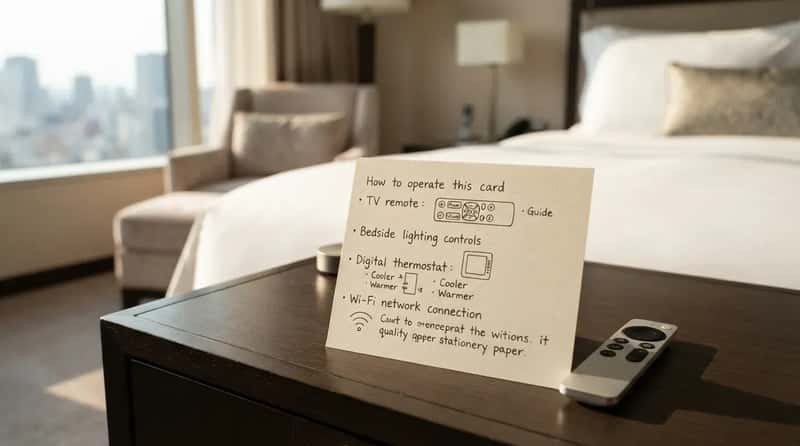
Hotel technology has quietly turned into an obstacle course. Digital keys, app-controlled thermostats, and QR-code menus trip up far more guests than any front desk will admit, and very few travelers over 60 want to call downstairs and confess they can’t figure out the television. A sharp concierge floor gets ahead of that by walking guests through the room in person at check-in and leaving plain, handwritten instructions behind.
That one small card prevents a low-grade frustration that would otherwise trail a guest through the entire stay. It’s rarely written into anyone’s job description. It’s simply the difference between a room that feels intuitive and one that feels like a puzzle.
Fast Facts
- Wi-Fi network name and password written out by hand, no scanning required
- Step-by-step notes for the digital key and door lock
- Direct-dial numbers for the front desk and housekeeping
- A quick fix for the thermostat’s most confusing setting
#13 – They Save Your Favorite Lounge Seat Without Being Asked

Club lounges are supposed to be a retreat, not a scramble for the last open chair. Staff who recognize a returning guest over 60 will often quietly reserve the same corner table or the same chair by the window, especially during the evening reception rush. It seems like a small courtesy, but repeat guests notice consistency more than almost anything else a hotel offers.
This habit rarely gets announced. The guest just sits down and the seat is somehow always open. It’s one of the quieter ways a concierge floor turns a transactional stay into something that feels personal.
#12 – They Relay Dietary Needs to the Kitchen Before You Even Order

Concierge-level staff routinely pass along dietary notes, medication storage needs, and accessibility preferences to the right department long before a guest arrives, and they handle it with discretion instead of fanfare. For a guest managing diabetes, a heart condition, or a simple allergy, that quiet handoff means dinner doesn’t turn into an interrogation at the table.
It also means the kitchen already knows before the plate ever arrives. Guests rarely see this conversation happen. They just notice the meal fits, every single time, without repeating themselves at every restaurant on property.
#11 – They Arrange Mobility Equipment So You Never Have to Ask Twice
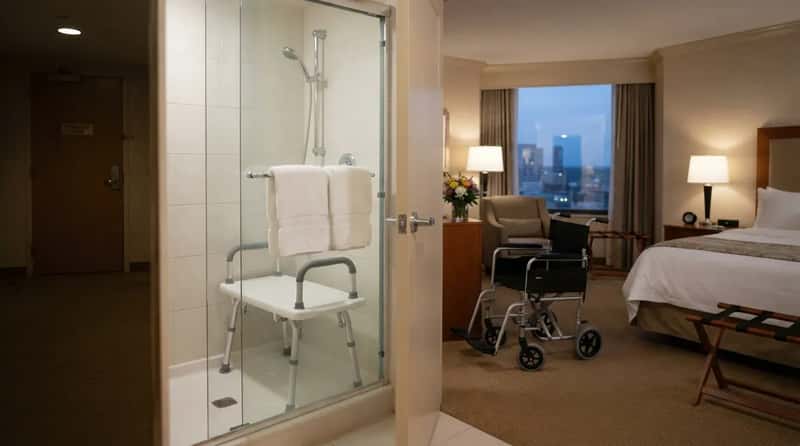
Wheelchairs, transport chairs, and shower benches don’t magically appear in a room. An experienced concierge floor confirms whether a guest needs mobility equipment during the pre-arrival call, then has it staged before check-in instead of scrambling once someone’s already tired from a flight. Many properties keep this gear in a back-of-house closet that’s rarely mentioned unless someone specifically flags the need.
The guests who benefit most are usually the ones who’d never think to ask. They assume nothing like this exists at a mid-size hotel. Often it does – it’s just never advertised on the room description.
#10 – They Time Your Dinner Reservation So Nobody Rushes You

A rushed dinner is one of the most common disappointments older travelers never say out loud – they just don’t go back, and they don’t return to the hotel that sent them there. A concierge who understands this books a slightly earlier or later table, then quietly tells the restaurant not to turn the seat quickly.
That one phone call is invisible to the guest but obvious to the server. It’s a small act of translation between departments that most guests never realize happened at all, and it’s exactly the kind of move that turns a one-time visitor into someone who books their next trip at the same hotel.
#9 – They Push Through Complimentary Upgrades That Never Show on the App

Room upgrades aren’t handed out automatically – someone has to actually push for them. Complimentary upgrades are frequently available at check-in, but only offered when a staff member actively advocates for a specific guest. Concierge-floor staff who recognize a loyal older guest will often make that case before the guest even reaches the desk.
Most travelers assume upgrades are random luck. In reality, they’re frequently the result of a staff member deciding a specific guest deserves the better room that day. It’s one of the quieter forms of loyalty that never appears on a receipt.
#8 – They Hold Early Check-In and Late Check-Out Without Making You Beg

Nobody wants to stand in a lobby at 10 a.m. with luggage, waiting three hours for a room to be ready. Experienced concierge staff flag arrival times for guests over 60 in advance, then quietly work with housekeeping to prioritize that specific room so it’s ready earlier than policy technically requires. The same happens in reverse at checkout, when a later flight means a later exit gets arranged before it’s ever requested.
None of this gets written into the confirmation email. It’s simply decided ahead of time by someone who noticed the flight time on the reservation. Guests just experience it as a room that happens to be ready right when they need it.
#7 – They Modify the Room Before You Ever Walk In
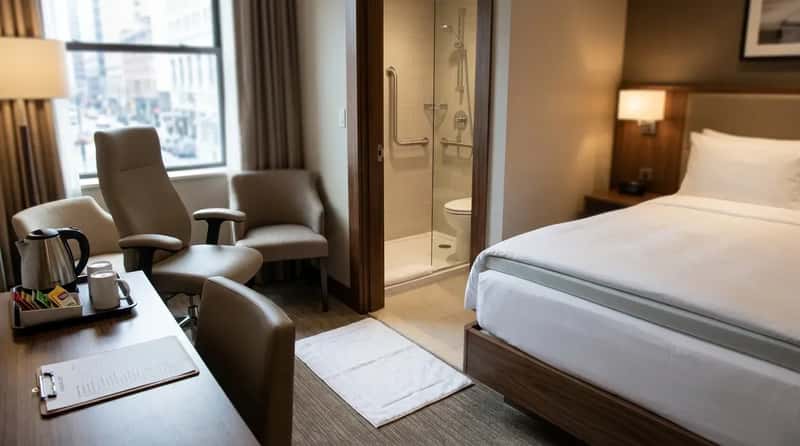
The pre-stocked room is one of the most powerful gestures a concierge makes, but the window to request it closes fast. Non-slip bath mats, grab bar placement, and bed height can all be adjusted before arrival, and many hotels stock foam mattress toppers, firmer pillows, and bed boards in an accessibility closet that’s rarely advertised. A concierge floor with real experience makes that call the night before, not the day of.
Most guests walk into a tailored room and assume they simply got lucky. An electric kettle, a chair swapped out for something easier to rise from, or a firmer mattress topper can take under a minute to arrange pre-arrival – but only if someone knows to ask. That gap between guests who ask and guests who don’t is bigger than most people realize.
Worth Knowing
- Non-slip bath mats and adjustable grab bar placement
- Firmer mattress toppers and extra-supportive pillows
- Bed boards for guests who need a sturdier sleep surface
- Electric kettles and chairs that are easier to rise from
#6 – They Reschedule Housekeeping Around Your Actual Morning
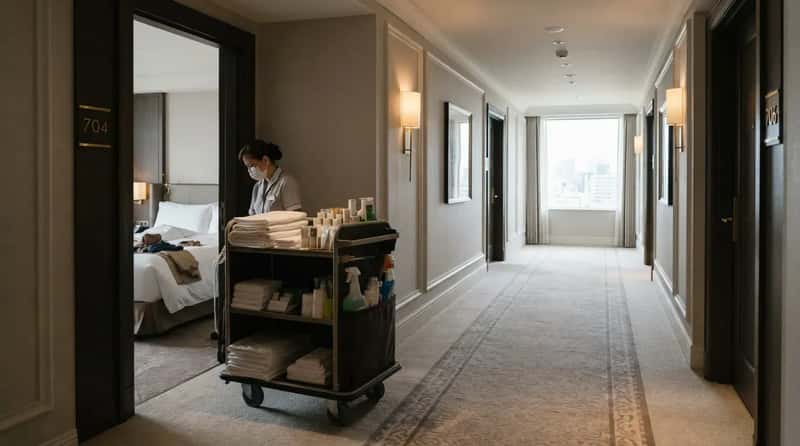
Standard housekeeping runs on whatever schedule fits the staff rotation, which often means an 8:30 a.m. knock on the door of a guest whose morning medication delays their start to the day. An experienced concierge intervenes quietly, coordinating with the housekeeping supervisor to set a service window that actually fits the guest’s rhythm – usually mid-morning or early afternoon, with no alarm-clock knock and no scrambling to answer the door.
This coordination almost never happens unless a concierge specifically requests it, and the guest rarely knows it was arranged at all. They just notice that housekeeping somehow always arrives at a reasonable hour. It costs the hotel nothing but a short conversation, yet it’s one of the most overlooked comfort fixes on any club floor.
#5 – They Quietly Run the Senior Rate That Isn’t on the Booking Page

Here’s something that costs a hotel almost nothing but rarely gets volunteered at the front desk. Senior rate programs, including certain membership discounts, are often loaded into the reservation system but never displayed on public booking pages. An attentive concierge checks for these before the bill is finalized instead of assuming the guest already found the best rate online.
Long-stay guests over 60 tend to be reliable, low-hassle, and, in many cases, eligible for rates that never surface anywhere a guest would think to look. Most travelers assume someone would have mentioned a discount if one existed. That assumption is usually wrong, which is exactly why this one still surprises people every time it’s applied.
At a Glance
- AARP member discounts, often buried below the standard rate options
- AAA member rates, sometimes better than the advertised sale price
- Hotel loyalty program “senior” or “mature traveler” tiers
- Government or retiree rates honored quietly at some properties
#4 – They Track Down Loyalty Points You Forgot You Had
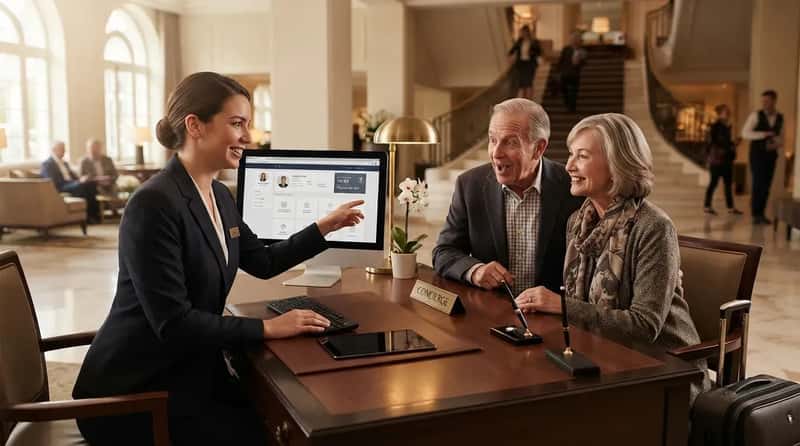
Points scattered across stays booked years apart tend to sit unused, quietly expiring in the background. A concierge who bothers to pull up a returning guest’s full profile can spot that balance and apply it before anyone even asks – sometimes turning into a free night, sometimes into a dining credit nobody expected.
Most guests assume someone would have said something if points were available. The best concierges know that assumption is almost always wrong, and they treat digging through an old profile as part of the job, not an extra favor. This one alone has quietly funded more free breakfasts than most guests will ever realize.
#3 – They Personally Walk You Through the Tech So You Never Have to Ask
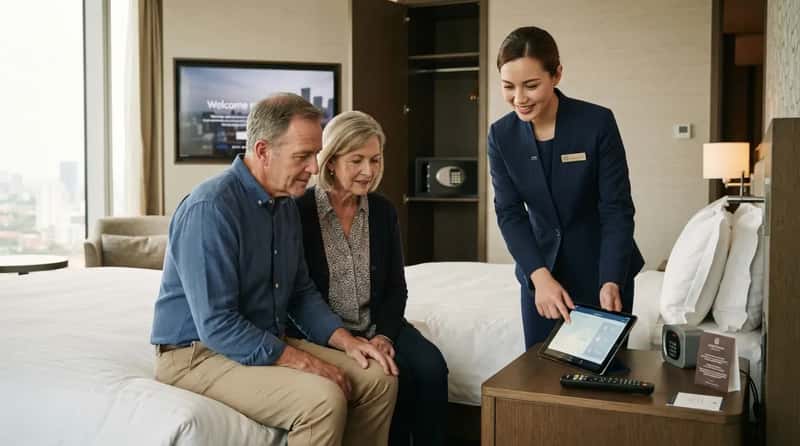
A rushed check-in leaves too many guests fumbling with a keypad safe or four different remotes later that night. Digital room keys, app-controlled thermostats, QR-code menus, and TV systems built around multiple remotes aren’t intuitive for anyone, and very few guests over 60 want to call the front desk and admit they can’t figure out the television.
A quietly attentive concierge doesn’t wait for that call. They walk guests through the room setup personally during check-in, demonstrating the safe, the thermostat, and the shower controls. It’s a five-minute walkthrough that changes the entire tone of a trip.
#2 – They Move Your Room Away From Every Noise Trap in the Building
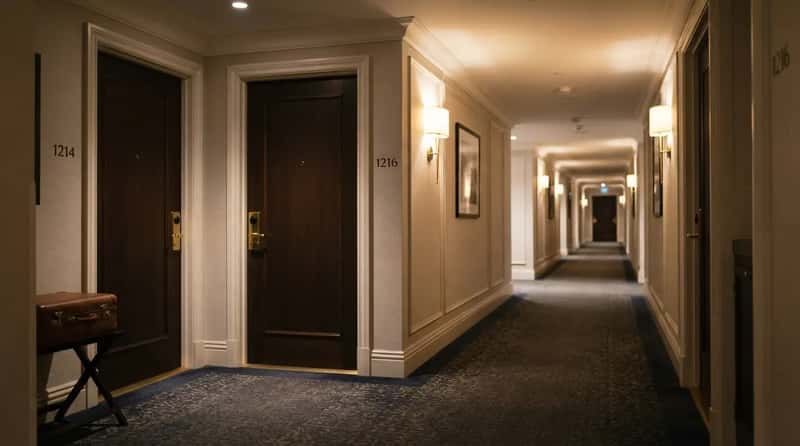
Where a room sits in the building matters more than almost anything else for sleep quality, and most guests never think to ask about it. Ice machines, elevator banks, stairwells, and the floors where louder groups tend to get booked are all things a sharp concierge keeps a mental map of, quietly steering older guests away from every one of them without being asked.
Most guests never realize their room assignment was switched on their behalf. They just notice they slept well. The best concierges don’t wait for a noise complaint to act – they eliminate the problem before check-in, tucking guests into higher floors, corner rooms, and positions far from the service elevator that never show up on any booking confirmation.
Why It Stands Out
- Ice machines and vending alcoves at the end of the hall
- Elevator banks and stairwell doors that slam late at night
- Floors block-booked by tour groups or wedding parties
- Corner rooms and higher floors, chosen specifically for quiet
#1 – They Quietly Build a Safety Net Before Anything Ever Goes Wrong
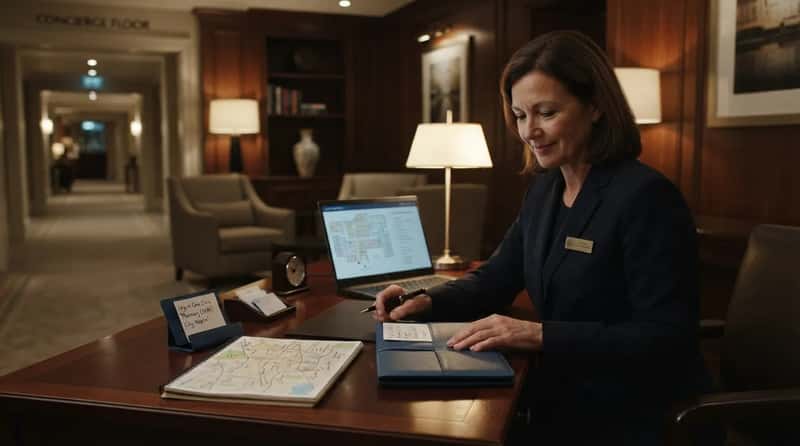
Travel among adults over 50 has been climbing steadily in recent years, according to AARP’s own travel research, and that shift has quietly changed what the best concierge floors prepare for behind the scenes. What that trend doesn’t capture is the quiet anxiety many older travelers carry about what happens if something goes wrong far from home – which is why a concierge who truly understands these guests identifies the nearest urgent care clinic, the closest late-night pharmacy, and the fastest route to the hospital, and keeps that information ready without ever raising the subject.
They note any health considerations mentioned at check-in, confirm the room phone dials the front desk in one button, and quietly brief the night shift about a guest in a specific room who mentioned they’re on blood thinners. Nobody announces this protocol and nobody posts about it, but it’s the most behind-the-scenes move on this entire list – and for a guest traveling alone, it may also be the most important one anyone ever makes on their behalf.
None of this shows up on a hotel’s website, and almost none of it gets mentioned unless a guest happens to ask the right question at the right desk. It’s quiet work, built on notes from a previous stay, a short phone call to housekeeping, or a rate that’s technically always been there.
So the next time a stay feels unusually smooth, it probably wasn’t luck. Somebody one floor up made a call, flagged a note, or held a room specifically for you.