You probably think your cabin steward meets you when you open the door. In reality, they’ve been reading you for a while. Your names, your bed setup, your loyalty tier and any anniversary note can already be in front of them before you’ve even found the buffet.
That’s only the paperwork half. The other half is how the two of you walk in, who talks, who says thanks and who stares at the balcony. Stay with the list, because one of the biggest clues is something almost every couple does without noticing.
#15 – Your Names Reached the Hallway Before You Did
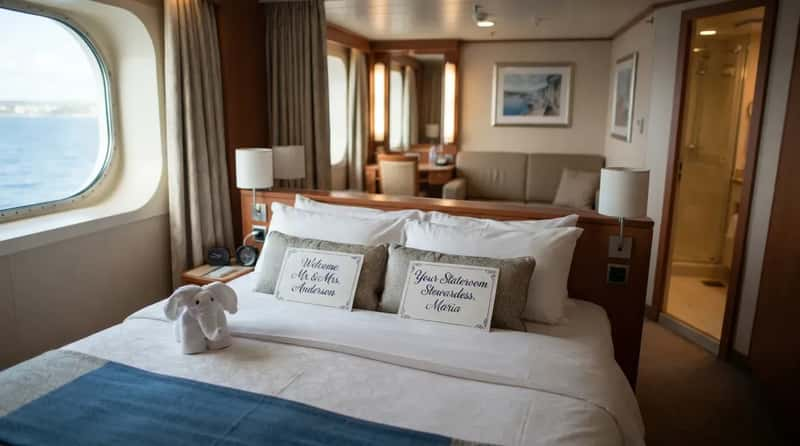
Your steward may greet you by name before you’ve said a single word. Cabin assignments are on the manifest, and it’s customary for a stateroom attendant to introduce themselves and already know who’s sleeping in their rooms. That isn’t a party trick. It’s homework.
Some crew go further. A Fred. Olsen stewardess told World of Cruising she leaves a card in each cabin so guests know her name, and she makes a point of learning theirs. A name card on the pillow is a tiny test: do you glance at it, and do you ever use it? Stewards notice, and the next clue is sitting right on the mattress.
#14 – The Bed Setup Is the First Quiet Verdict on Your Relationship

Few couples realize the bed configuration is a question, not a given. Stewards confirm it early, and your answer tells them something about how you travel. Two beds pushed into a queen and two singles kept apart each say something different.
Solo cruisers, couples, friends and families all signal different needs through the same simple choice. Two friends who keep the twins split are asking for privacy, not romantic turndown touches. A couple who asks for the beds pushed together might get offered extra throw pillows too, a small perk many guests never think to request.
#13 – The Anniversary They Knew About Before You Mentioned It

Celebrating something? Don’t be shocked if your steward already knows. Special-occasion notes attach to a booking long before anyone reaches the gangway, and stewards can see them before sailing. Some decorate the cabin, fold towel art or chill a bottle of bubbly.
If you mentioned a honeymoon or anniversary at booking, it’s in the file, and a good steward acts before you’ve finished unpacking. A couple celebrating quietly gets read very differently from one who made sure the whole deck knew. Plenty of guests assume the cruise line forgot. Often it hasn’t, and the steward is simply waiting for the right moment.
#12 – The Headcount Quietly Rewrites Their Whole Evening

Two adults in a cabin means one kind of afternoon. Four means a completely different one. A steward often looks after a station of around twenty or more staterooms, so they need precise occupancy details before a single bag arrives.
At a Glance
- Names of everyone sailing in the cabin
- How many people are sharing the room
- Bed configuration, whether twins or a queen
- Any special-occasion note tied to the booking
- Loyalty tier, where the line tracks it
That number decides how many towels get stocked and whether a sofa bed needs setting up. Standard cabins can’t fit two double beds, so extra guests mean extra bedding and extra work. A couple travelling alone is the simplest read in the whole hallway. Even then, the steward is quietly checking that you have everything you need, and your deck says something too.
#11 – Your Cabin Category Sets Expectations Before You Say Hello
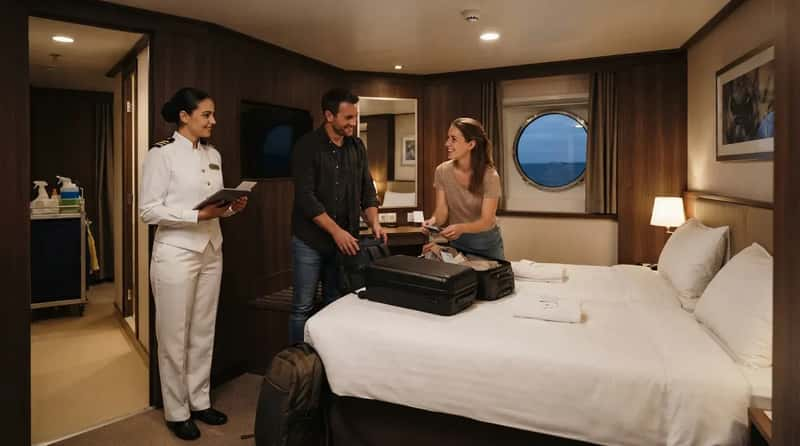
Suite or inside cabin? Stewards see it on the manifest. One travel feature noted that category can signal expectations, with suite guests tending to want more and inside-cabin guests traveling lighter and asking for less.
It’s a shortcut, and shortcuts misfire. Some of the warmest, most appreciative couples on a ship booked the cheapest room on it. Many stewards say the real tell isn’t the category. It’s how you treat them in the first conversation, and another status marker can change what ends up in your room.
#10 – Your Loyalty Tier Changes What Appears in the Cabin

Repeat cruisers get noticed. According to one feature on older passengers, stewards check loyalty status almost immediately, and it can change what gets offered without anyone asking. It’s not about playing favorites. It’s about what the cruise line has promised each tier.
Bathrobes, wine glasses, bed configuration and priority embarkation can all be shaped by loyalty status. A couple with a decade of sailings behind them may find a different setup than first-timers on the same hallway. Most first-timers never know what they’re missing, which is why it’s worth checking your account before you sail.
#9 – The Sixty-Second Hello Tells Them Almost Everything

Forget the paperwork. The real first impression is your face in the doorway. A quick hello and a smile tell the steward you still notice the person doing the work. Treat them like furniture and the read is just as fast.
Worth Knowing
- Eye contact and a name on day one tend to be remembered
- A split reaction between partners gets noticed too
- Politeness costs nothing and often shapes the whole week
- The first hello is usually the only one that’s truly unrehearsed
Crew accounts repeat this across lines. Passengers who make eye contact and learn the steward’s name on day one tend to get noticeably better service. Here’s the part nobody mentions: how you treat each other in that doorway matters too. If one of you says thanks and the other walks straight past, the steward sees that split. Then comes the question of who asks for what.
#8 – Who Asks for the Extras Gives Away the Dynamic

Not every couple asks the same way. Some request extra pillows before the suitcases are inside. Others insist everything is fine and mean it. Neither is wrong, and stewards learn to hear the difference.
Bed setup is one place it shows, since extra throw pillows are available on request to couples who want the beds pushed together. The couple who never asks may be the one who most wants the room to just be right. Stewards with years of sailings behind them say the quiet ones are often the easiest to please and the easiest to overlook.
#7 – The Do Not Disturb Sign Is a Message in Code

That little door hanger isn’t just a hanger. Whether you use it religiously or ignore it completely is one of the first behavioral cues a steward picks up, and it shapes how they plan their day around your cabin.
A couple who hangs it at 7 a.m. and sleeps until noon is a different puzzle from one who never touches it. Some couples leave it up all week, then wonder why the room feels untouched. Stewards say they’d rather you tell them directly. A two-second chat saves a day of guessing.
#6 – The Couple on a Schedule Becomes the Easiest Room in the Hall
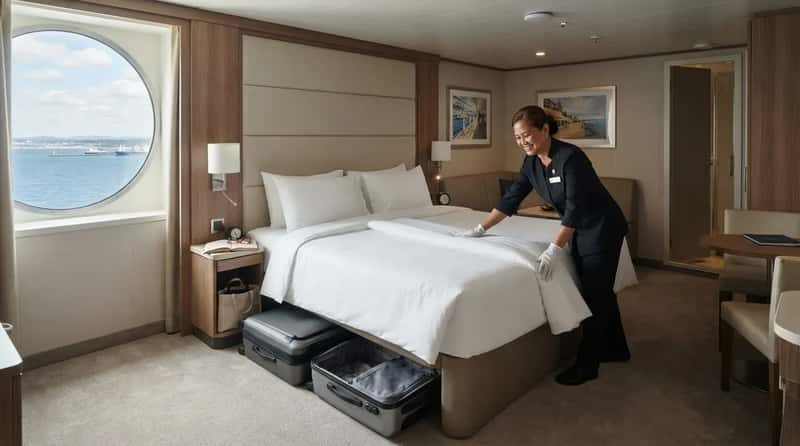
Here’s an odd truth about a job built on timing: stewards love routine. It makes an impossible workload easier to plan. A couple who heads out for breakfast at the same time every morning is a gift.
Quick Compare
- The routine couple: out at the same time daily, so the room is serviced without a hitch
- The wing-it couple: back at odd hours, so the steward works around them
- The couple who shares a plan: gets the best of both, with flexibility and a tidy room
Cruise advice sites suggest sharing your general routine, since some ships offer once-a-day housekeeping and others have morning and evening service. Telling a steward when you usually leave and return lets them fit you into their day. What about the couple who wings it? Stewards manage, but they plan around them instead of with them. Then the closet gives away something else entirely.
#5 – The Garment Bag Reveals Whether You’re a Dress-Up Couple
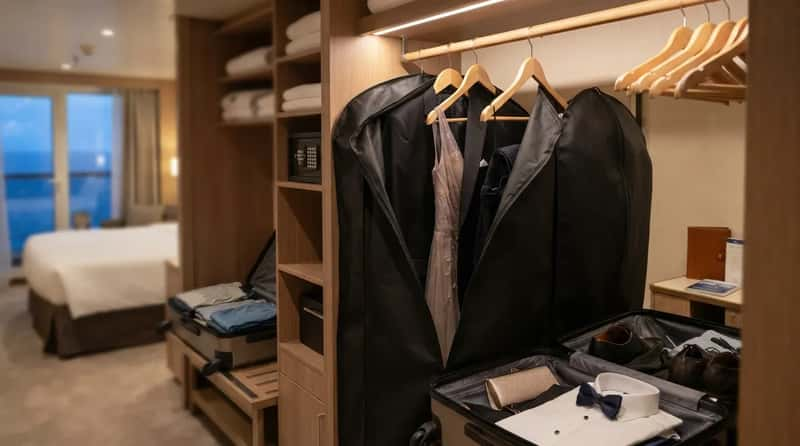
Formal night divides cruisers like few other topics. Stewards see where couples land before dinner. One feature said they notice which cabins send out garment bags for pressing and which guests ask for extra hangers just for suits and gowns.
Many mainstream lines have shifted toward “elegant casual” or optional dress-up nights. Some couples, though, still pack as though it’s 1995. Opinions clash on whether formal nights are fading, and stewards on certain sailings say the dress-up crowd is as committed as ever by night two.
#4 – The State of the Room by Evening Says It All

Many cruisers insist you should never tidy on vacation. That’s fair, and stewards agree you aren’t expected to. But a few small habits make their job easier, and they notice who has them.
Clothes cleared off the bed let them make it properly, and used towels kept in one spot help too. A couple who unpacks fully on day one signals a settled week, while one living out of suitcases signals the opposite. Neither is a mistake, but both tell a story. It may be the most visible habit in the whole cabin, and it leads to the touchiest topic on this list.
#3 – Cash on Day One Raises an Eyebrow

Tipping is where couples argue most. Some crew say they’d almost rather guests skip it at the very start, because an upfront envelope can feel like a bid for extra perks. Seasoned staff often prefer a thank-you later in the cruise.
Most big lines already add gratuities, commonly in the range of roughly $16 to $25 per passenger per day. Some lines, including Regent, Seabourn and Virgin Voyages, build gratuities into the fare. A couple handing over cash on arrival may be paying twice. Stewards still notice it, and whether they read it as generous or pushy depends on who you ask. The real test is what happens when something goes wrong.
#2 – The Couple Who Flags a Problem Early Wins the Week

Wrong bed, wrong setup, wrong towels. Stewards hear it all. Couples who speak up on night one tend to get quick fixes, while others end up stuck for days with a setup nobody knew they hated.
Whether you want twins pushed into a queen or split back into singles, a steward can usually switch it after check-in. Silent frustration is the most expensive habit a couple can have. Stewards can’t fix what they never hear about, and a polite, early mention reads as confident, not fussy.
#1 – Whether You’ll Be a Room Number or a Person by Day Three

This is the verdict that matters most. In one feature about older passengers, small personal touches were described as the fastest way to stop being a room number and become a person. Stewards say the rest of the cruise tends to follow from that.
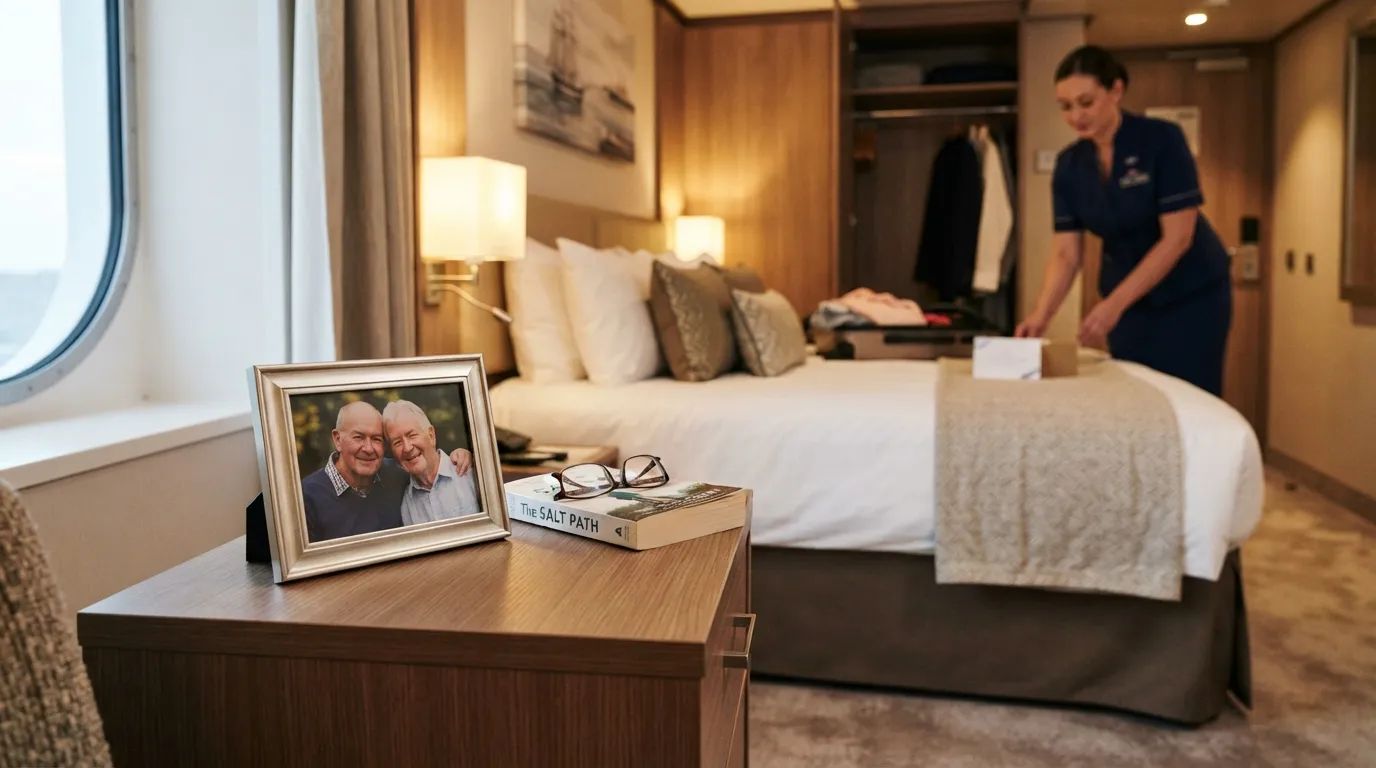
It can be as simple as a framed photo on the nightstand. A steward who learns the names of a guest’s grandchildren by day three is likely to remember that guest fondly. Couples who share a little of themselves get a steward who actually knows them. A Fred. Olsen stewardess made the same point about small, personal touches. It’s the clue hiding in plain sight.
Stewards don’t need a long chat to read a couple. Names, bed choices, special occasions, loyalty status and that first hello all feed a picture they’ve built before the first dinner bell.
The surprising part is how much of it you control. Say hello, state your preferences, flag problems early and don’t assume cash replaces kindness. The best service tends to follow the guests who treat the person in the hallway as a person.