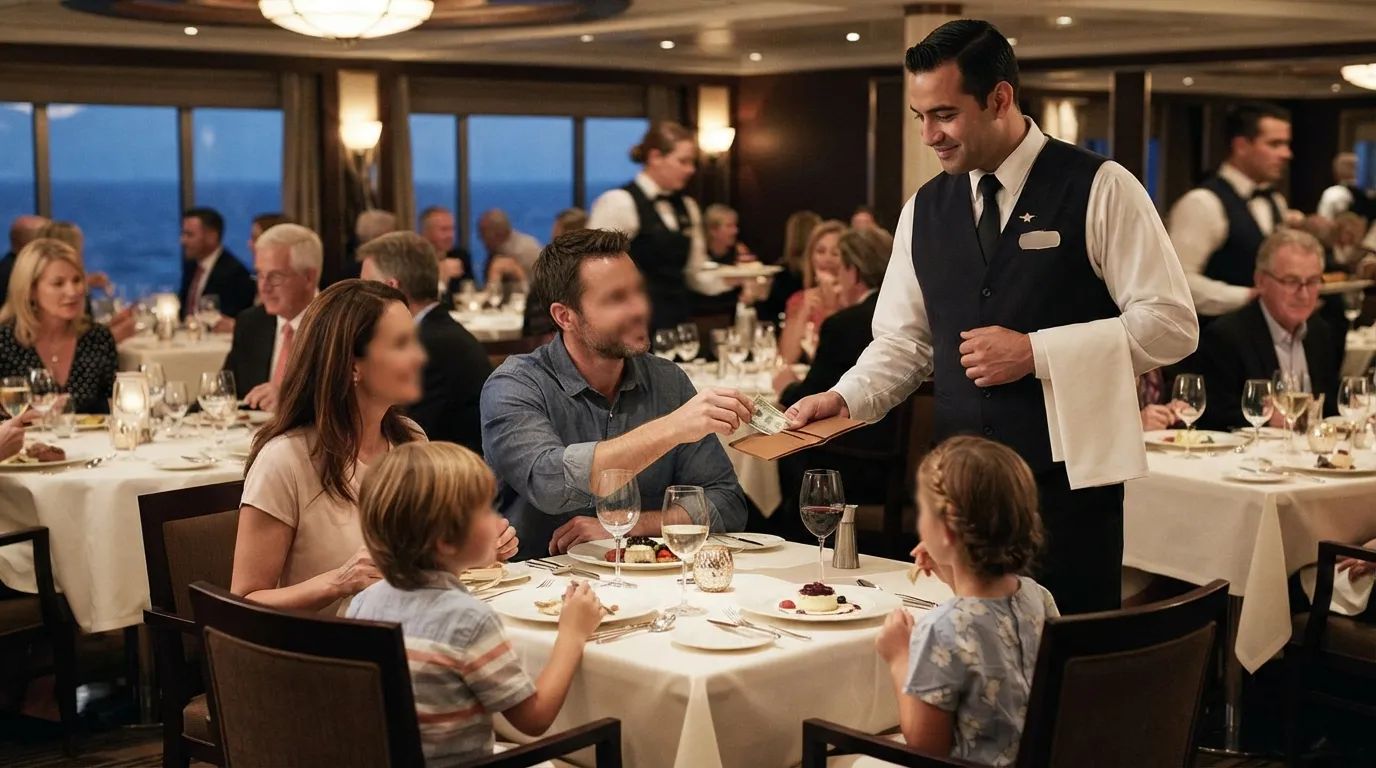
You probably think nobody is watching while you debate the salmon versus the steak. Somebody is. On a cruise, the dining team gets three nights at your table before the week has found its rhythm, and that is often enough to read a family like a menu.
It isn’t creepy, it’s the job. But what servers pick up on is rarely what families expect. The giveaways are smaller, funnier and sometimes a little uncomfortable, and the one waiting at #1 is the clue crews seem to remember longest.
#15 – The Arrival Time Tells Them Everything About the Trip’s Mood
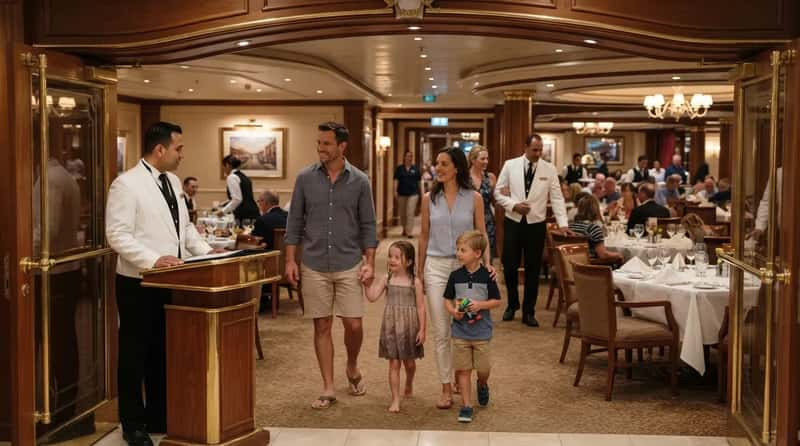
Walk in at the start of your assigned seating and you’ve already said something. On traditional fixed-seating dinners, tables turn on a schedule, so staff notice right away who shows up ready and who rushes in with wet hair and a stroller. A family that arrives late on night one very often does it again on night two. The team starts pacing the courses around that.
Anytime dining blurs the picture, but not completely. Servers still see who hits the opening rush and who drifts in after the show. By the third night, nobody is guessing anymore, because your table’s rhythm is already in their heads.
But the moment the menus open, the team learns something even more personal, in #14…
#14 – The Allergy Conversation Reveals Who Really Planned Ahead
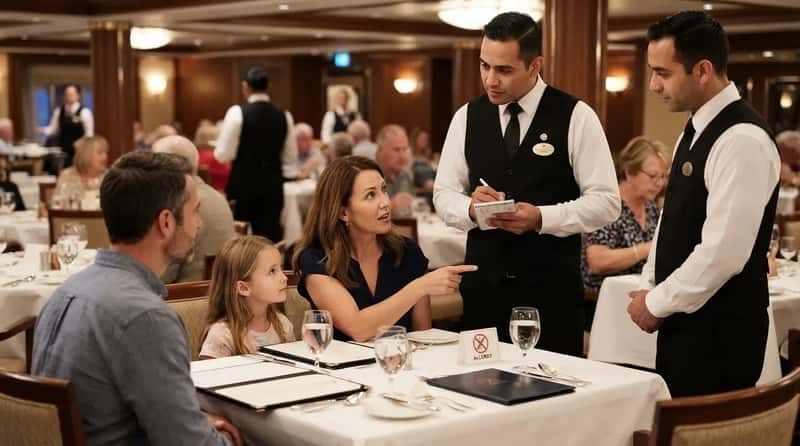
Major cruise lines ask guests to report food allergies before sailing, and the dining team usually follows up at the table, often on the very first evening. A family that already filed the paperwork gets a calm, quick chat. A family that never mentioned it can watch the whole first dinner get rebuilt around the menu. Suddenly the kitchen is involved and the appetizers are on hold.
Servers also learn how a family handles the topic. Some parents quiz the staff on every sauce, while others mention it in passing, and the team adapts to each style. On many ships the crew carries that information from night to night, so you shouldn’t have to repeat yourself. That’s the moment a nervous parent finally exhales.
What happens when the kids start ordering is even more telling, in #13…
#13 – Whoever Orders for the Kids Becomes the Real Boss of the Table
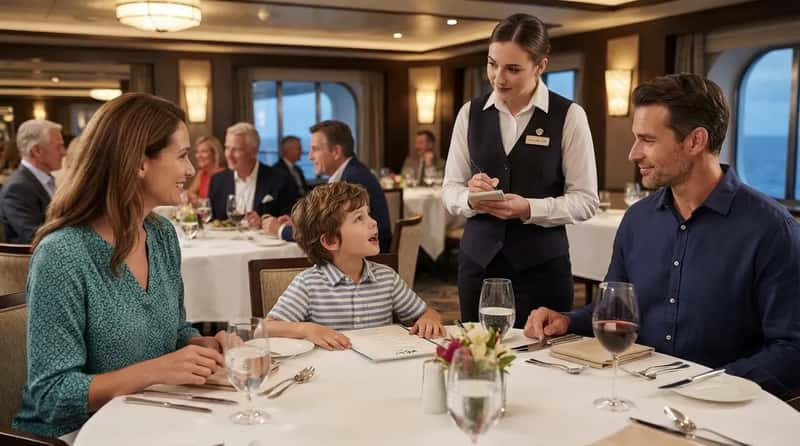
Servers notice fast who answers when a child is asked what they want. Sometimes a parent jumps in and orders for everyone. Sometimes a seven-year-old looks the server in the eye and orders chicken fingers like a seasoned diner. To the staff, those few seconds are a quick read on how the whole family works.
Kids’ menus on ships are built to be quick and easy, and staff will often bring a child’s food out early so the adults can relax. A picky eater gets noticed immediately. By night three, many servers are suggesting the kid’s favorite before anyone asks, and the parents look like they just won a small lottery.
And on one famous line, the staff go along for the whole ride, as you’ll see in #12…
#12 – On Disney Ships, the Servers Follow You and Learn Even Faster
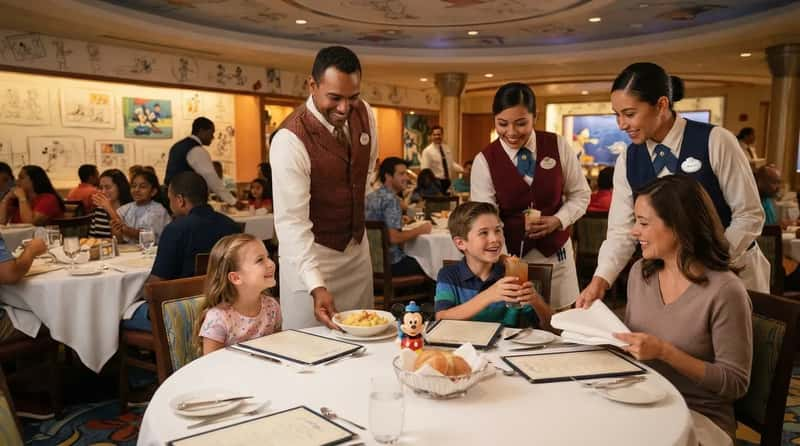
Disney Cruise Line uses rotational dining. Your family moves between different themed restaurants during the week, and your servers rotate with you. That means the same faces watch you at every dinner, not just one.
The payoff is instant familiarity. By the second night, the team may already know a child’s favorite drink and which parent always needs extra napkins. On most other lines, you either settle into one dining room team or meet a different set of staff each night under anytime dining. Disney’s setup gives servers a real head start on learning your habits.
Next is a habit that quietly shows who has sailed before, in #11…
#11 – Ordering Two Appetizers Is the Secret Mark of a Veteran
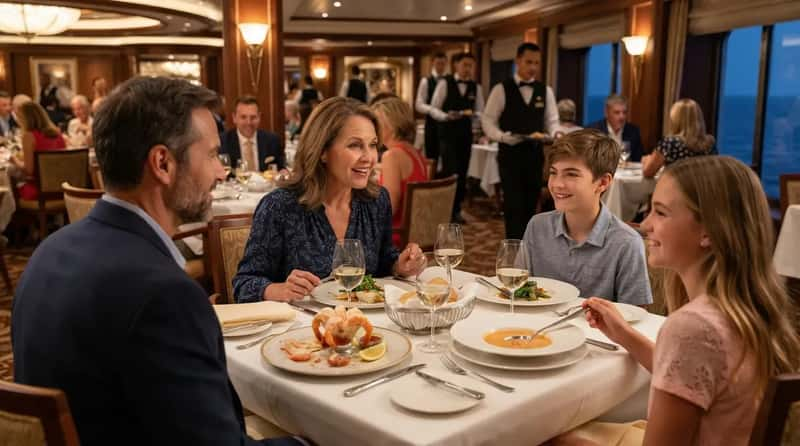
In most main dining rooms, the menu is included in your fare. That usually means you can order more than one starter, or even a second entrée, without paying extra. First-timers are the ones who politely order exactly one of everything. Veterans order like they’ve got a plan.
The team picks this up on night one. If a family orders sparingly, a good server may gently mention that more is welcome. By night three, many first-time families are ordering like regulars, with two desserts and a shrimp cocktail for the table. It’s a tiny learning curve, and crews watch it play out every single night.
Fast Facts
- Main dining room meals are typically covered by your base cruise fare.
- Ordering a second starter or dessert usually costs nothing extra.
- Asking for a smaller portion of a dish is generally a normal request.
- Specialty restaurants and a few premium items can carry a surcharge on some lines.
The next clue is where staff quietly start noticing money, in #10…
#10 – The Drink Order Shows Who Bought the Package and Who Regrets It
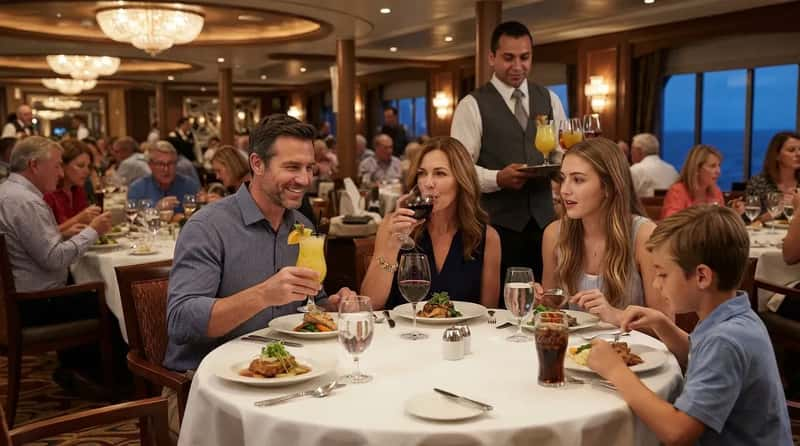
Drink packages are usually sold per person per day, and most lines require every adult in the same stateroom to buy one. Within a single evening, the dining team can often tell who has a package and who is counting every glass. The dinner order gives it away.
Servers also spot the families who bought a package and barely touch it. Others spend dinner trying to squeeze value out of every pour. Whether a package pays off depends on how much you really drink, which is exactly why the debate never dies, and the dining room is where it plays out nightly.
But things get louder when somebody has a birthday, as you’ll find in #9…
#9 – Mentioning a Birthday on Night One Changes the Whole Week
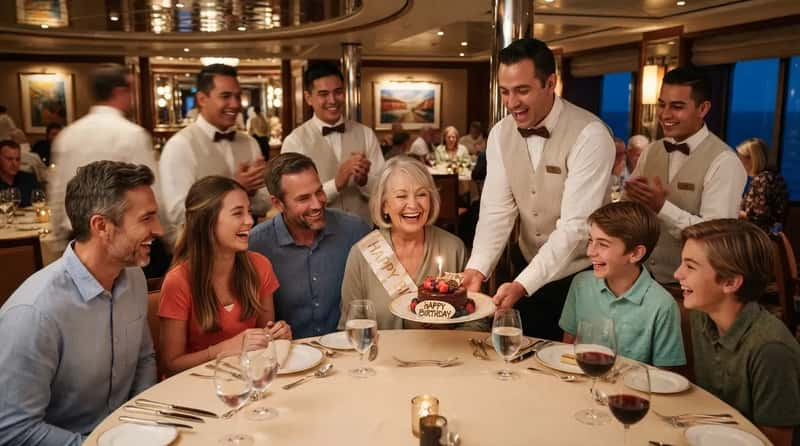
Cruise dining teams usually celebrate birthdays and anniversaries right at the table. That can mean a cake, a song, or both, delivered with a bit of crew-wide theater. Families who tell the staff early often get the best version of the surprise. Those who say nothing may watch the moment sail right past.
The staff also watch how the guest of honor reacts. A shy teen who winces at the singing gets a quieter treat next time. A grandmother who lights up may find the whole team swinging by her chair. Reading the room is a core part of the job.
What the team notices about the way you dress may surprise you in #8…
#8 – Formal Night Is Secretly a Personality Test
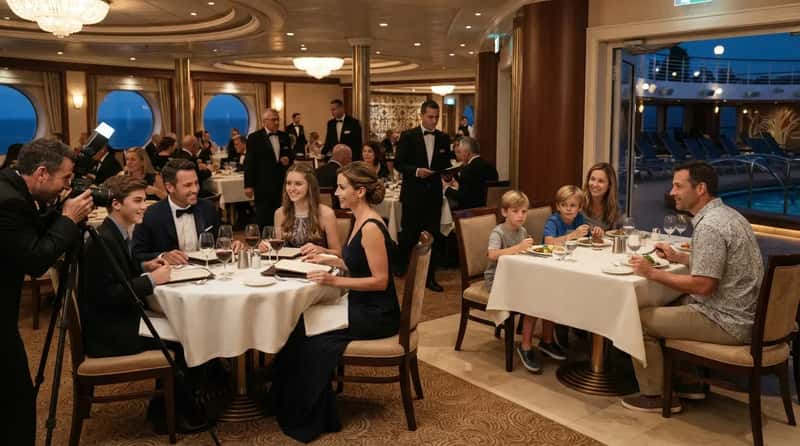
Most big mainstream lines have relaxed their dress codes in recent years. Many now use phrases like “smart casual” or “elegant evening” instead of demanding formal wear. Cunard is the famous holdout, still marking certain evenings as Gala nights. Some of the best-dressed tables turn up on ships that barely ask anyone to dress up.
By night two or three, when formal-night photos start up, the staff see the full spectrum. Some families arrive in matching outfits and perfect hair. Others wander in straight from the pool deck. Neither is wrong, but the team notices which families treat the evening like an event.
Quick Compare
- Mainstream lines: relaxed “smart casual” style evenings, with swimwear and flip-flops generally discouraged at dinner.
- Cunard Gala nights: tuxedos, dark suits and evening gowns are the expected look.
- Specialty restaurants: often ask for a bit more polish than the main dining room.
The next clue has nothing to do with clothes. It has everything to do with a glowing rectangle, in #7…
#7 – The Phone at the Table Tells Them How the Family Is Really Doing
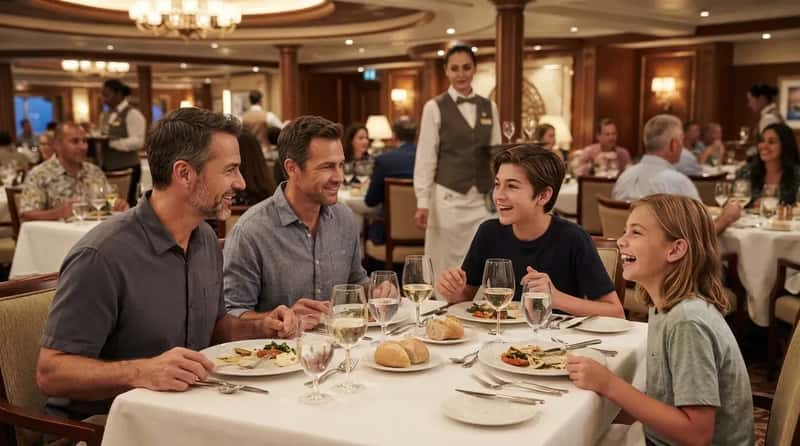
Servers describe two kinds of tables. One is a family glued to screens, and the other is a family talking, even when they’re tired and sunburned. A phone-free table is often the easiest one to read and the most fun to serve. It’s a pattern crews see nightly.
A phone on the table also changes the pacing. Plates get cleared slowly and orders get placed late, because nobody looks up. By the third evening, a sharp server has usually adjusted the timing to match. It’s a small thing, but it shapes the whole meal.
Still, the next detail says more about appetite than anything else, in #6…
#6 – The “Always Available” Order Is a Quiet Confession
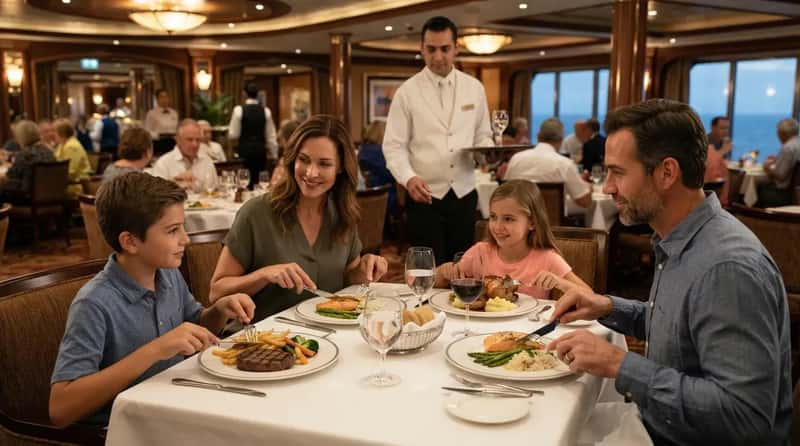
Many lines keep a short list of classics on the menu every night. Think steak, salmon and a chicken dish. A family that orders from that safe list all three nights is telling the team how adventurous this week will not be. Servers catch on quickly.
The opposite table is the one trying every odd dish on the nightly menu. Crews often enjoy that family the most, because they finally get to make recommendations. A server who sees a family go bold on night two may start steering them toward the chef’s more unusual picks.
And the next one is where the budget comes out to play, in #5…
#5 – The Specialty Dining Question Is the Quiet Test of the Budget
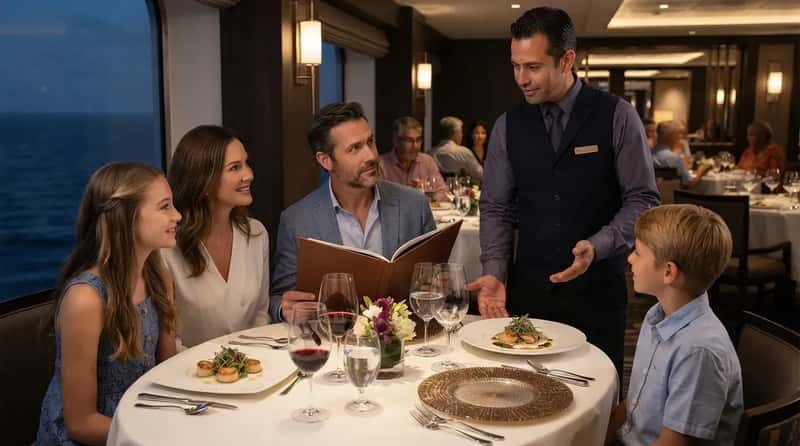
Specialty restaurants usually carry an extra charge, either a cover price or à la carte pricing. Dining staff are often asked about them on the first evening. How a family reacts to the price sets the tone for the week. Some book on the spot, while others say “maybe later.”
Good servers learn not to push. They describe the options once and then let it drop. Plenty of families end up booking a single specialty night mid-cruise, and others decide the main dining room is more than enough. Either way, the team has learned how this family spends.
Next comes an issue that quietly divides families, in #4…
#4 – Tipping Habits Show Up Faster Than Anyone Expects
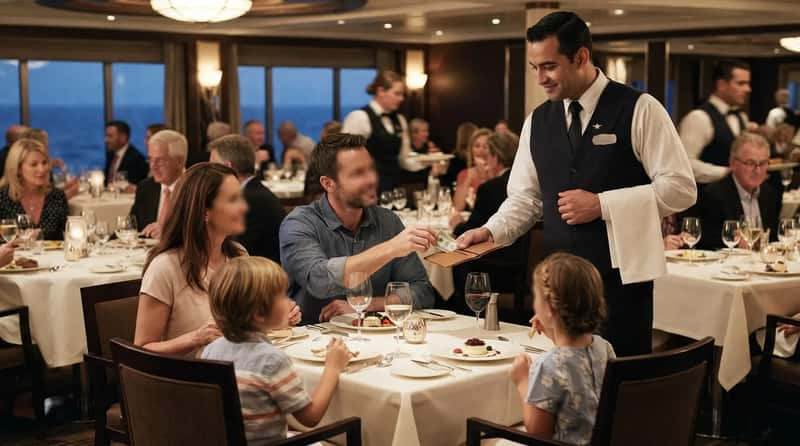
Major lines add automatic daily gratuities to your onboard account, and those charges are meant to be shared among the service crew, including dining staff. Many guests also hand over extra cash at the end of the week. The automatic charge is a big part of the picture, which is why the question of tipping more is such a loaded one. Policies vary by line, so check yours.
The staff listen to how families talk about it. Some ask on night one how it all works, while others avoid the subject completely. Whether to add extra is a real debate on ships, and servers have heard every version of it.
Worth Knowing
- Automatic gratuities are typically charged per guest, per day, to your onboard account.
- The daily amount differs by cruise line and often by cabin category.
- Many lines let you prepay or adjust the charge at guest services.
- Drink packages commonly add their own automatic gratuity on top of the price.
The next entry is about the oldest social skill of all, in #3…
#3 – Sharing a Table With Strangers Reveals the Family’s Social Style
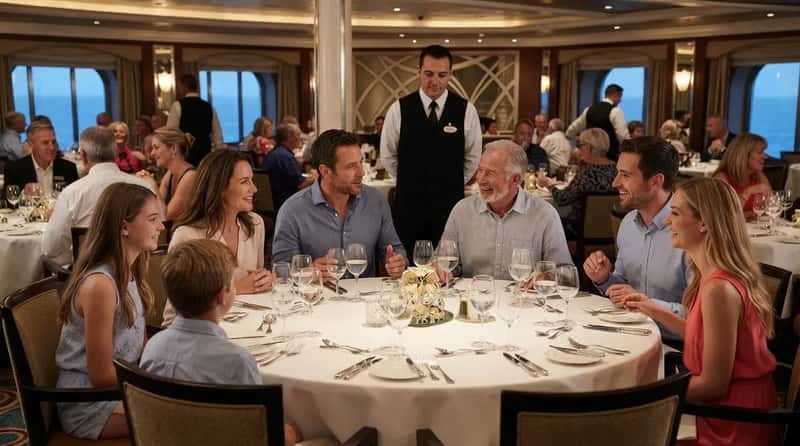
Some dining rooms seat families with other guests at large tables, and traditional dining gives you the same tablemates every night. The team can often tell by the end of night one whether a table will click or clash. It’s one of the first things they read.
If a table is awkward, a head waiter may quietly step in. If a table is thriving, nobody touches it. Families asking to move are not unusual, and the team is used to the request. The first night is usually the easiest time to make it.
But the real test is what happens when something goes wrong, in #2…
#2 – A Mistake in the Order Shows How the Family Handles Pressure
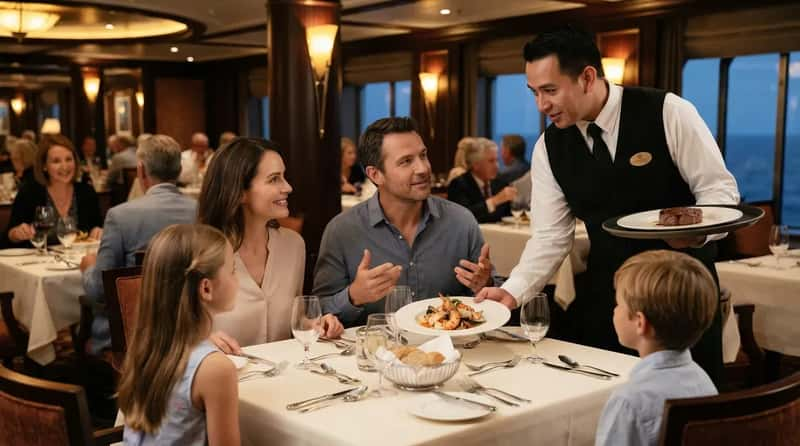
Every dining room gets the occasional wrong dish or slow course. Many crew members say how a family reacts is the clearest read they get all week. A calm family often gets the fastest fix. An angry table may get a fix too, but the mood sinks with every minute.
The team remembers it, too. A family that handled a mix-up gracefully on night one often finds the staff going the extra mile on night two. That isn’t magic. It’s just people responding to how they’re treated.
And the number one clue is the one crews bring up again and again…
#1 – How You Treat the Newest Crew Member Is the Whole Story
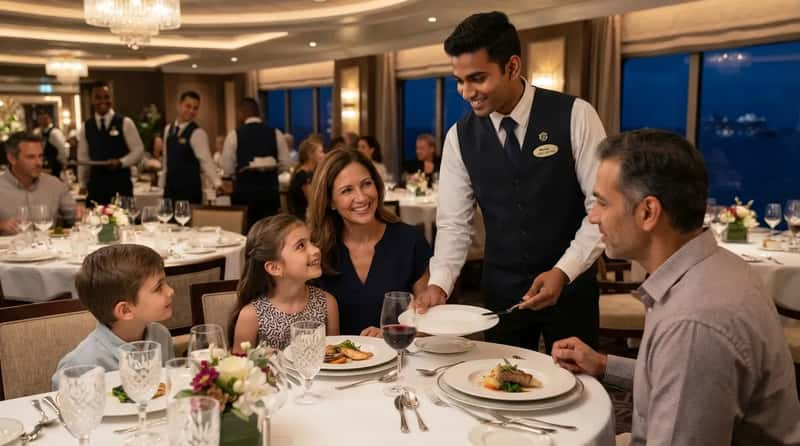
Dining rooms run on a chain of staff, from head waiters to assistants, and some of them are brand new to ships. What crews tend to remember most is how a family speaks to the most junior person at the table. Names, eye contact and a simple thank-you all register.
Parents are also teaching their kids in real time. A child who says “please” to the assistant clearing the plates gets noticed. By night three, the team knows whether this family sees them as people or as a service, and it’s the one thing a family can’t fake for long.
Why It Stands Out
- It costs nothing and works on every ship and every seating.
- The whole table sees it, including the kids who are taking notes.
- It shows up on night one, before any other clue has a chance to land.
- Unlike a dress code or a menu choice, it can’t be rehearsed.
In three evenings, a dining team can learn your timing, your stress points, your budget and your manners, often without a single word about any of them. None of it is dramatic. It’s just a lot of small moments, noticed by people who happen to be very good at noticing.
So which of these would your table be known for by Wednesday?