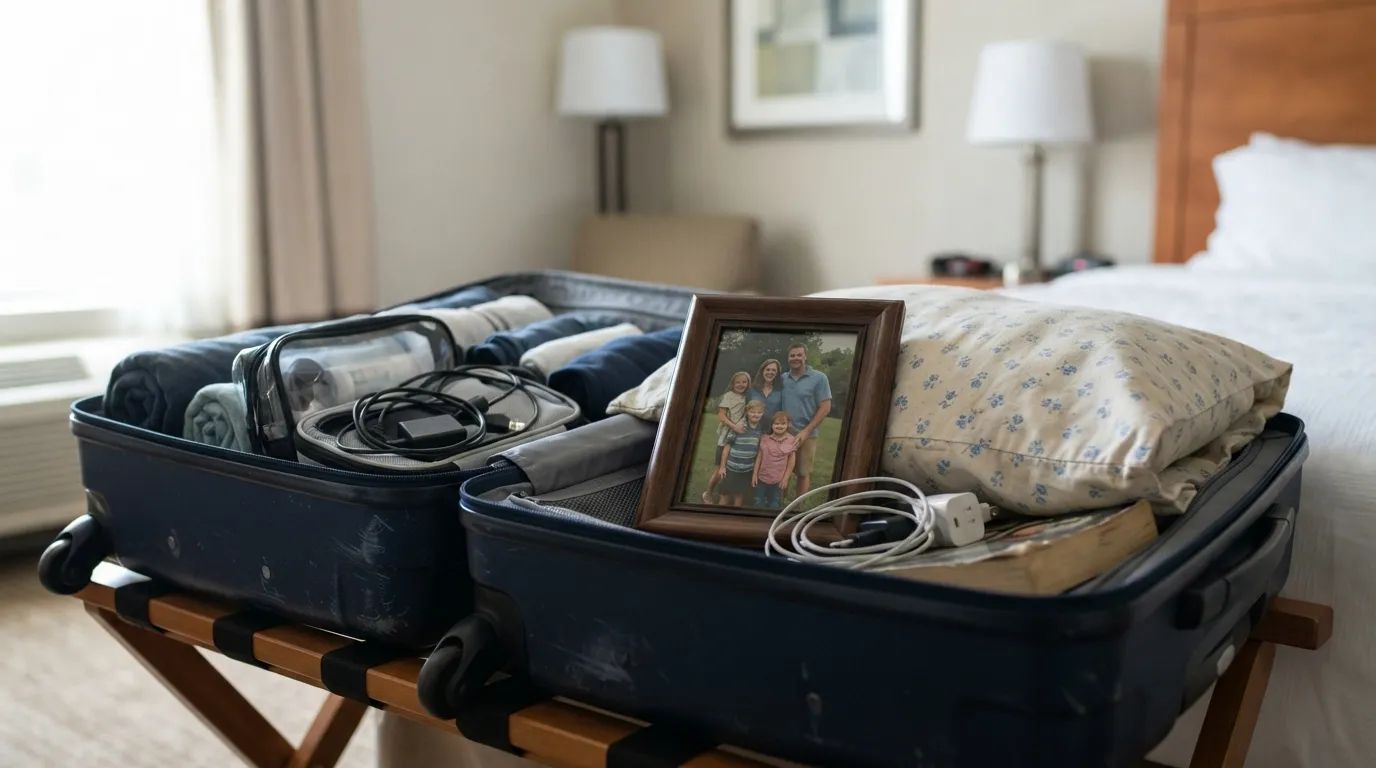
You’d expect a road warrior’s suitcase to look sleek and glamorous. Instead, it looks like a tiny, perfectly run apartment. One zip opens it, nothing gets dug through, and every item sits exactly where the hand expects it.
That’s the first giveaway, and there are 14 more. A few are small and a little odd, a couple are about safety, and one has nothing to do with gear at all. The last one isn’t something you can buy, and it changes how you read everything else on the list.
#15 – The Packing Cubes Sorted by Day, Not by Type
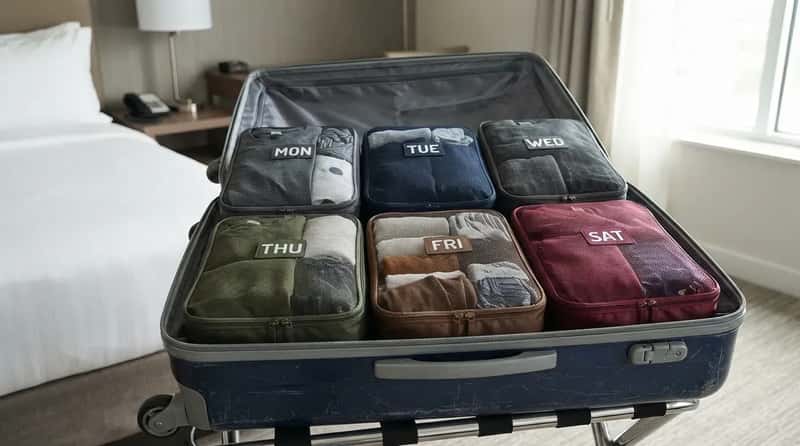
Open a veteran’s bag and the first thing you notice is order. Clothes sit in zippered cubes, often one per outfit or one per day of the trip. The goal isn’t neatness. It’s never having to fully unpack in a room they’ll leave in two nights.
Packing experts do argue about cubes. Some say they just help you cram in more, because a full cube feels like a job well done. And a cube doesn’t make anything inside it weigh less.
The real giveaway is a half-empty cube. A pro knows when to stop. The next item solves a problem most travelers just put up with.
#14 – The Wrinkle-Release Spray That Replaces the Hotel Iron
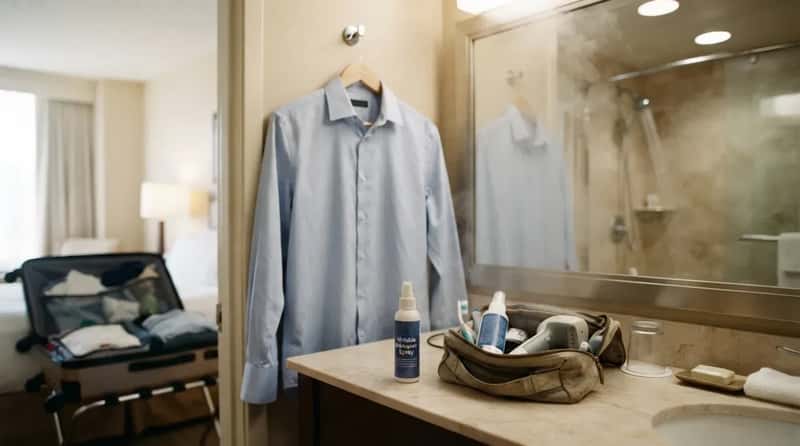
Hotel irons are a gamble. Some are crusty, some are missing, and the board is usually wedged in the back of a closet. Frequent travelers quit counting on them years ago. They pack a small bottle of wrinkle-release spray or a handheld steamer instead.
The cheapest trick needs no gear at all. Hang a shirt in the bathroom and run the shower hot for a few minutes. The steam relaxes light wrinkles while they get ready. Most people only learn this after one rumpled shirt at the wrong meeting.
Quick Compare
- Wrinkle-release spray: fastest fix for a single shirt, and it packs small.
- Handheld steamer: better on deeper wrinkles, but it takes up bag space and needs an outlet.
- Shower steam: free and slow, and best for light creases.
- Hotel iron: free when it works, but the condition is a coin flip.
#13 – The Mini Power Strip That Turns One Outlet Into a Command Center
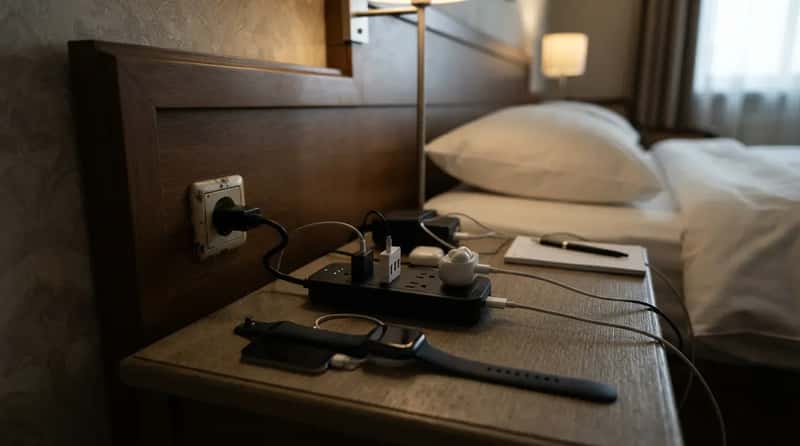
Hotel outlets are never where you need them. They hide behind the headboard, under the desk, or across the room from the bed. Road warriors carry a compact power strip with USB ports, so one wall socket charges a phone, laptop, watch, and earbuds at once.
Some travel writers call this overkill now that many newer rooms have bedside USB ports. Veterans disagree. One older hotel with a single working outlet is enough to convert you for life.
#12 – The Power Bank With a Readable Watt-Hour Label
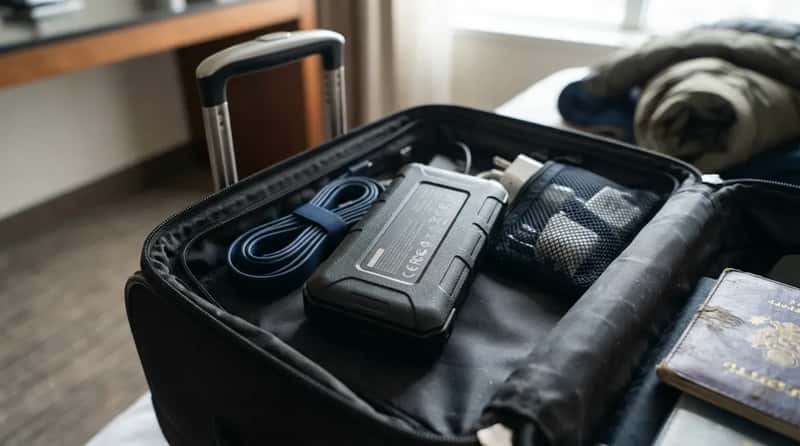
Every frequent flyer knows the rule that trips up casual travelers. Portable chargers and spare lithium-ion batteries go in your carry-on, never in checked luggage. Pros also keep the capacity label legible, because an unmarked battery can draw questions at security.
The limits are tightening, too. American Airlines started limiting passengers to two portable chargers, each rated at 100 Wh or less, on May 1, 2026. New ICAO specifications that took effect March 27, 2026 also allow up to two per passenger, in carry-on only. Veterans have already adapted.
#11 – The Rubber Door Wedge That Gets Zero Explanation
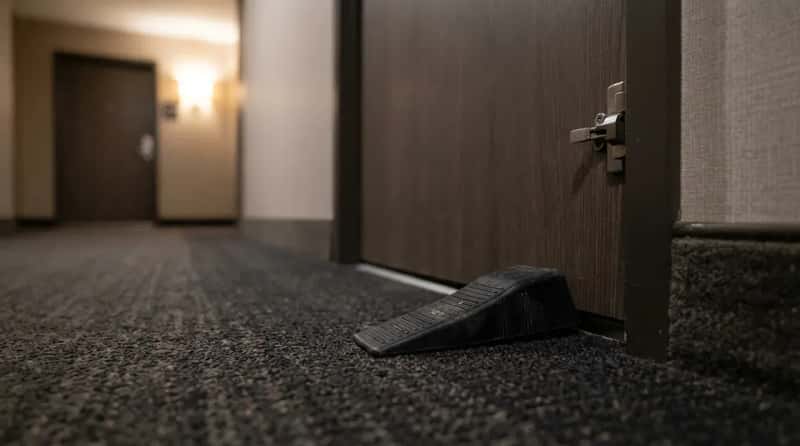
Tucked in a side pocket is a small rubber wedge. It costs a few dollars and weighs almost nothing. Slide it under the door from the inside and it adds one more obstacle between you and the hallway.
Critics call it paranoid. Frequent travelers call it the cheapest sleep aid they own. Plenty of road warriors who’ve never needed it still won’t leave home without it.
The wedge doesn’t replace the deadbolt or the latch. It’s a backup. The habit says a lot about someone who has slept in hundreds of unfamiliar rooms.
#10 – The Stash of Instant Coffee and Tea Bags
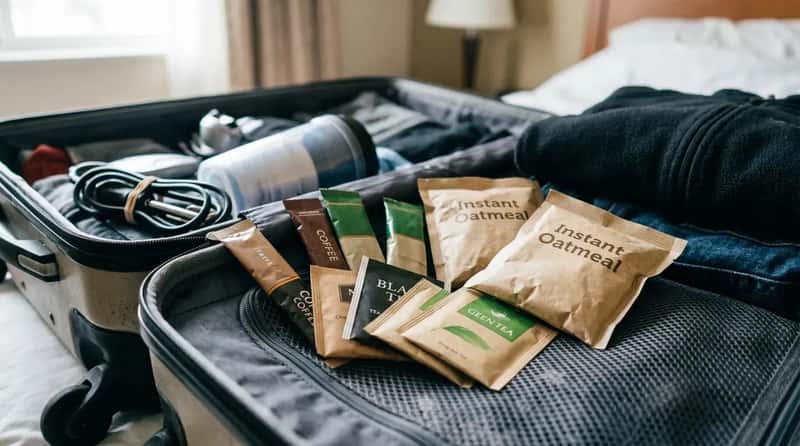
Ask a long-stay traveler what’s in the bottom corner of the bag. It’s often instant oatmeal, a few tea bags, and single-serve coffee sachets. They know the in-room pod machine makes mediocre coffee, and a hotel breakfast gets expensive fast.
Some travelers also run a plain water cycle through the room’s coffee maker before using it. It’s a small ritual, and it shows how many mornings they’ve spent in rooms like this. One packet of oatmeal can replace an overpriced room-service breakfast.
#9 – The Free Shower Cap Repurposed as a Shoe Cover
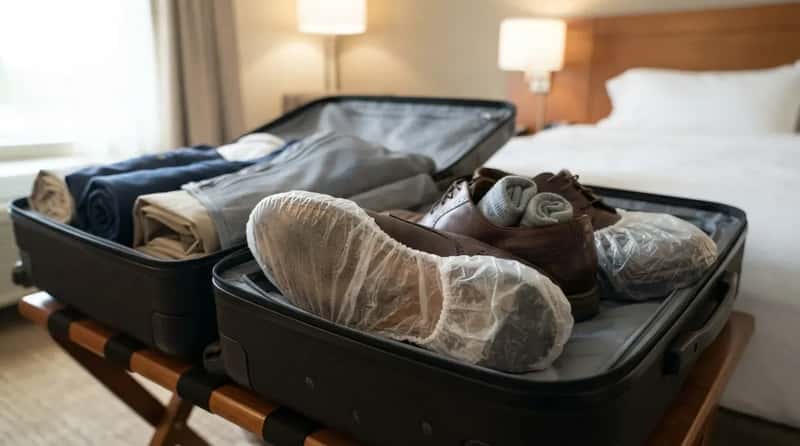
Here’s a hotel freebie most guests ignore. Frequent travelers grab the shower cap, but not for their hair. It slips over the soles of dirty shoes so street grime stays off the clothes in the bag.
The logic is simple. Shoes spend all day on sidewalks, lobbies, and airport floors, and then they sit next to your clean shirts. Many pros pack reusable fabric shoe bags for the same reason. The shower cap is the free quick fix.
Worth Knowing
- The elastic edge grips most shoe soles, so nothing slides around in transit.
- Pros pack shoes along the bottom or outer edge of the case, away from shirts.
- Socks or small items stuffed inside each shoe use space that would otherwise go to waste.
- A reusable fabric bag is the longer-lasting version if you travel constantly.
#8 – The Sink-Wash Laundry Kit
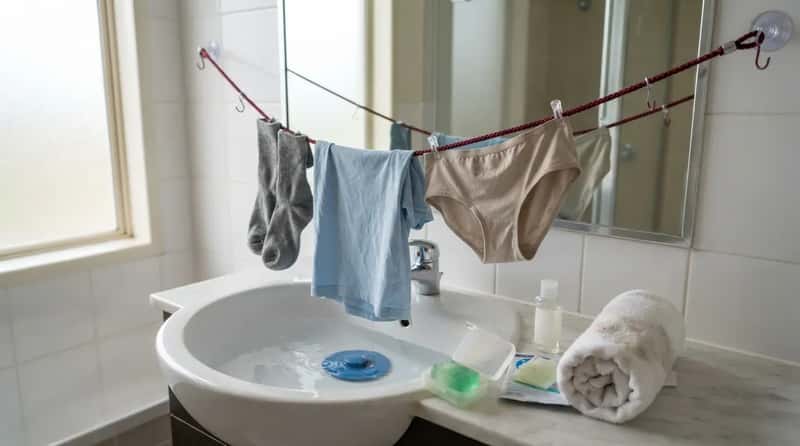
Long-stay travelers rarely pack enough clothes for the whole trip. Many experienced packers plan around a week of outfits, however long they’re gone. Instead, they carry a few detergent sheets or a small bottle, a flat sink stopper, and a braided travel clothesline.
Some people think washing clothes in a hotel sink is grim. Veterans call it one of the smartest moves they’ve made. A clothesline and a bar of soap can replace days’ worth of outfits in the suitcase.
#7 – The Elite-Status Bag Tag (And the Old Ones They Forgot to Remove)
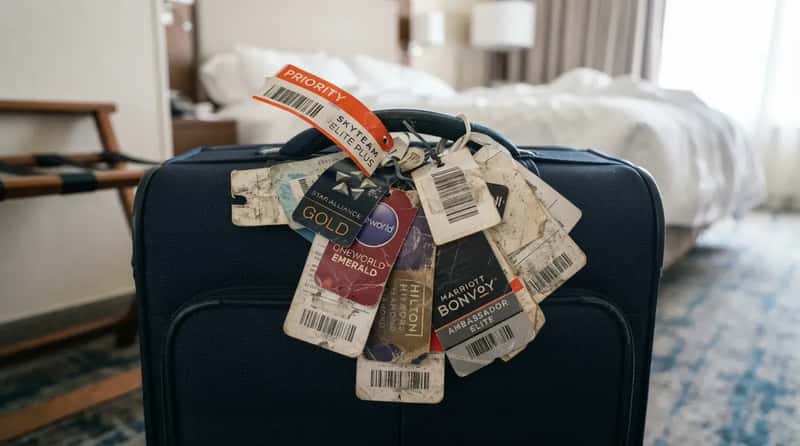
A tag that says ‘priority’ is the loudest signal on the suitcase. Airlines issue them to elite-status members, and frequent travelers often collect them like medals. Hotel programs have their own versions.
Here’s the irony. The real veterans often don’t check a bag at all. And a handle covered in old tags is a mistake, because airlines routinely advise removing outdated tags so the barcodes don’t confuse scanners.
A tag-covered handle can say ‘frequent flyer’ and ‘forgot to clean up’ at the same time.
#6 – Refillable Mini Bottles Instead of Hotel Toiletries
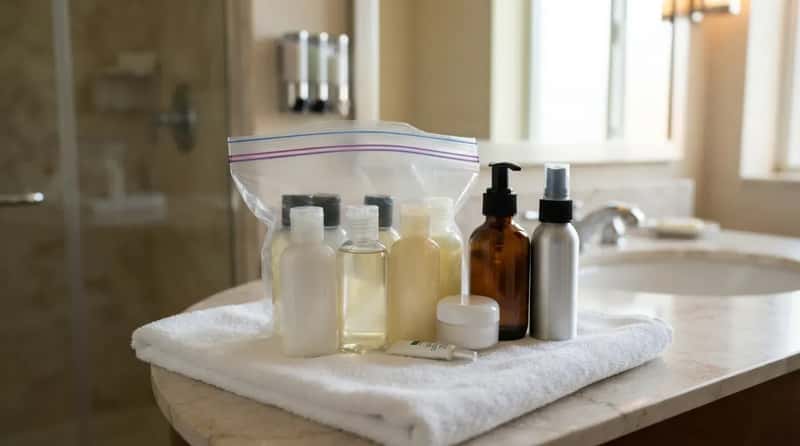
Hotel dwellers usually carry their own shampoo and lotion in small refillable bottles. The reason is consistency, since skin and hair don’t love swapping products every few nights. The bottles are also sized for the TSA rule that carry-on liquids must be 3.4 ounces or smaller and fit in one quart-size bag.
Some argue hotel toiletries are fine and bringing your own is just habit. Others say it’s the only way to know what’s in the shower. The quart bag is the one thing a pro can pack blindfolded.
#5 – The Sleep Kit: Eye Mask, Earplugs, and a Noise Machine
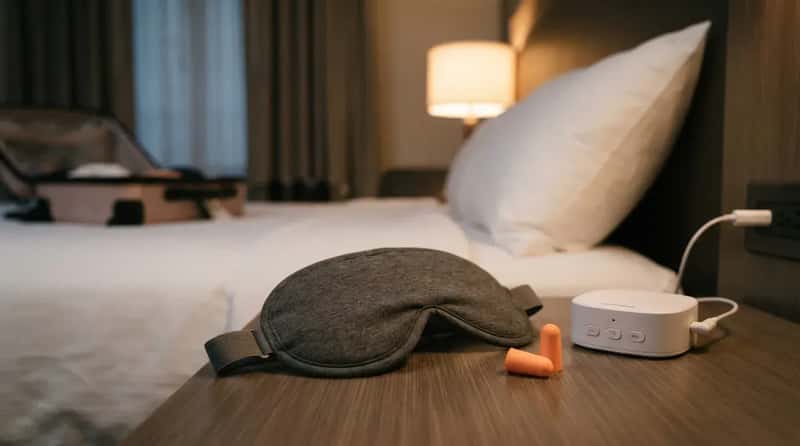
Ask any road warrior what they’d rescue first from a lost bag. Many say the sleep kit. It’s usually a soft eye mask, foam earplugs, and a small white-noise device or phone app.
That research helps explain why unfamiliar beds feel strange. Pros also ask for rooms away from the elevator and the ice machine. They’ve learned that one bad night can wreck the next day’s meeting.
#4 – The Pocket-Size Travel Router Nobody Else Notices
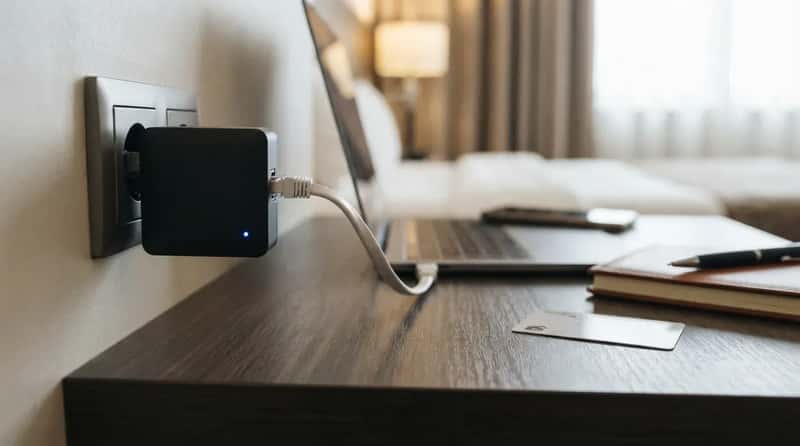
A small router can look like a plain black box. For people who live in hotels, it’s one of the most-used things they own. Many hotel networks make you log in through a portal, and some limit the number of devices per room.
A travel router connects to the hotel network once and shares it with everything else. One login can cover a laptop, phone, tablet, and streaming stick. Security experts have long warned that hotel Wi-Fi is shared with strangers, so many travelers add a VPN as a precaution. It’s a small bit of gear that shows how often someone has been stuck with bad hotel internet.
At a Glance
- The job: log in to the hotel network once, then share a private network with every device.
- The fix for: repeated portal logins and per-room device limits.
- The catch: it doesn’t encrypt anything by itself, so a VPN is still the add-on.
- The bonus: many models also work with a wired port if the Wi-Fi is weak.
#3 – The Wardrobe That Repeats the Same Three Colors
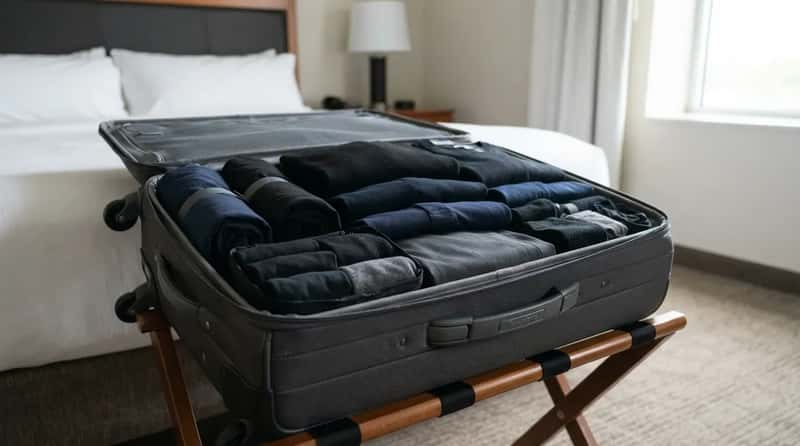
Open the bag and the clothes all seem to match. Black, navy, and gray show up again and again. Wrinkle-resistant fabrics and merino wool, which has a reputation for resisting odor, are common choices.
Critics call it boring. Veterans say picking outfits is the first thing to cut when you’re tired. Everything in the bag goes with everything else, so nothing gets stranded.
#2 – The Toiletry Bag That Never Gets Unpacked
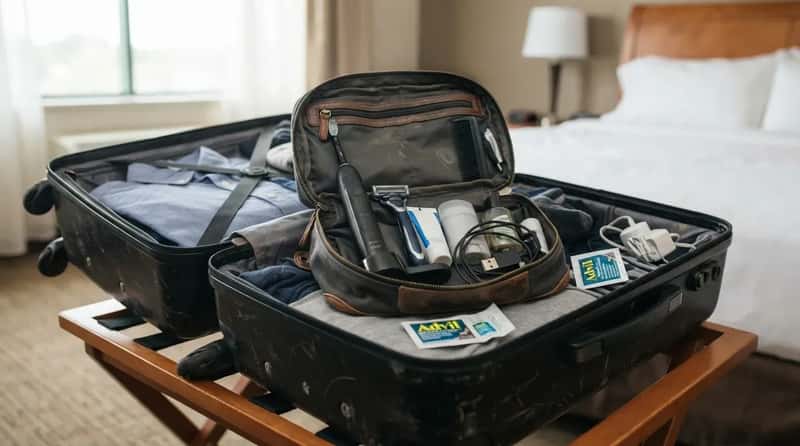
This one is easy to miss. Frequent travelers keep a second set of the basics in a toiletry bag that lives in the suitcase. It holds a spare toothbrush, razor, and charger, so they never pack from scratch.
The idea is to make packing mostly about clothes. A bag that’s always ready is the best protection against forgetting a charger. The cost is a few duplicates and a quick restock after each trip. It’s not glamorous, but it’s the quiet backbone of life on the road.
Fast Facts
- The usual residents are a toothbrush, razor, deodorant, and a dedicated charger.
- Liquids inside still have to follow the TSA limit of 3.4 ounces or less per container in carry-ons.
- A restock after each trip takes a few minutes and saves a panicked search the night before a flight.
- Keeping the bag zipped and packed means the suitcase is half ready before the trip is even booked.
#1 – The Small Piece of Home That Doesn’t Fit Any Packing List
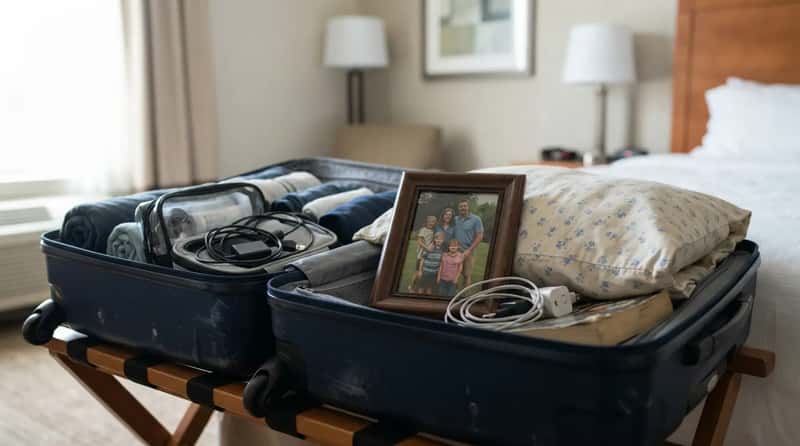
This is the real tell. Tucked into the bag is a pillowcase from home, a framed photo, a worn T-shirt, or a favorite mug. It has no practical function, and it sits next to the cables and chargers like it belongs there.
Here’s the truth. A hotel room is a home that resets to zero every morning. The small object is how someone who lives in hotels makes it feel like theirs for one night.
The gear tells you how long someone has been on the road. The small object tells you how long they’ve been away from home. What’s the one thing in your bag that never gets unpacked?