Most people picture the golden age of rail as wider seats and a nicer dinner. The real thing was stranger. Railroads once put post offices, barbers, nurses and even a newsroom on moving trains, and some of it vanished so completely that younger travelers assume it was made up.
Every item here is real, and each one disappeared for its own reason: money, law, safety or a shift in manners. Some were good riddance. Others still sting. The last entry isn’t a gadget or a snack, but a ritual so famous it left a phrase in everyday English. First, a teenager with a basket and a printing press.
#15 – The Teenage “Candy Butcher” Who Printed a Newspaper in the Baggage Car
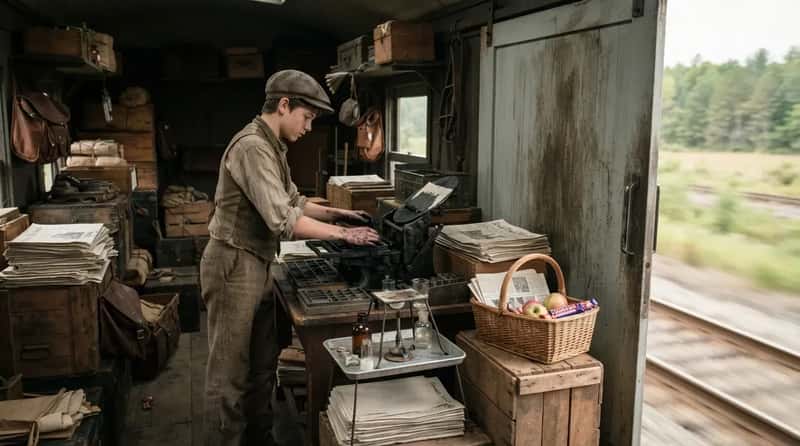
Long before snack carts, a teenage boy with a basket owned the aisle. Railroads let “news butchers,” also called “candy butchers,” board to sell newspapers, candy, fruit and cigars to passengers who had nowhere else to go. Most were boys, and they worked on commission instead of a salary. Thomas Edison was one of them, selling goods on the Grand Trunk Railway out of Port Huron, Michigan, as a young teen.
Edison didn’t stop at selling. According to widely told accounts, he set up a small lab and a printing press in a baggage car and produced his own paper, the Grand Trunk Herald, while the train rolled along. The same stories say a chemical mishap ended the arrangement. A future inventor of the phonograph ran a newsroom and a science lab on a moving train. Today the closest thing is a snack cart that rattles past every few hours.
But what passengers were once expected to share was far less pleasant than a newspaper. That’s #14.
#14 – The Shared Tin Cup Everyone Drank From
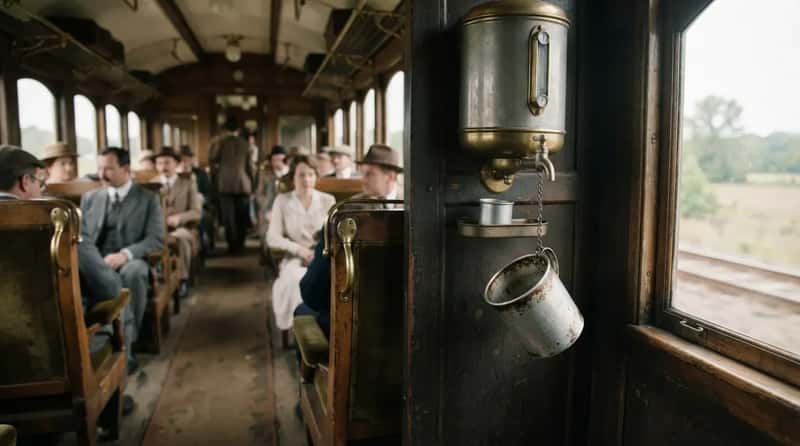
Passengers once drank from a single cup chained to the water cooler. Early trains offered drinking water from a tank, and one metal or glass cup hung beside it for everyone. Picture a whole coach of strangers pressing their lips to the same rim on a hot July afternoon. Nobody thought much about it at first.
Then public health officials began linking shared cups to the spread of disease. Early-1900s campaigns against the “common cup” led states to ban it, and federal regulators later moved against it on interstate trains. The rise of the disposable paper cup is closely tied to the fear of what was on that shared rim. Railroads quietly swapped the tin for paper, and nobody asked for the old way back.
Worth Knowing
- The cup usually hung by a chain beside the water tank, so every thirsty rider used the same rim.
- Health campaigns in the early 1900s singled out the “common cup” as a way germs traveled.
- Paper cups took over, and one early brand, Dixie, became a household name.
- Few other onboard habits were abandoned so fast and missed so little.
Not every old rail service was a hygiene problem. Some were just brutally basic, as #13 shows.
#13 – Emigrant Cars: The Bargain Seats Where You Brought Your Own Bedding
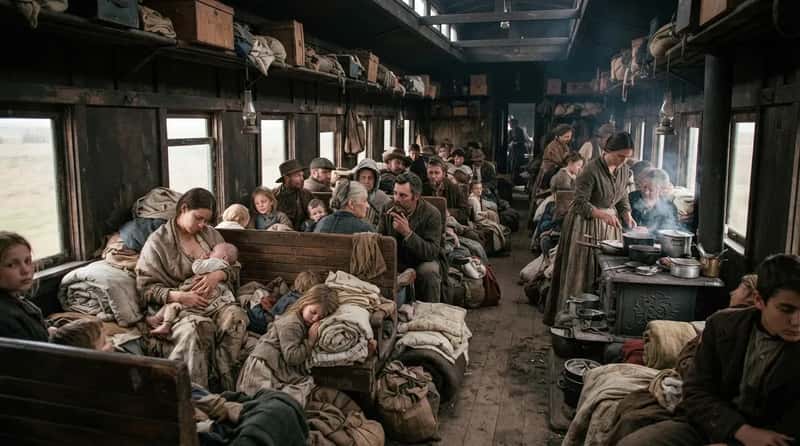
The cheapest ticket in the West once meant a bare wooden bench and a cooking stove. Railroads ran “emigrant” or “colonist” cars for settlers heading west. Passengers often had to bring their own bedding and food. Many cars had a stove at one end for cooking and hot water.
Robert Louis Stevenson crossed America this way in 1879 and wrote about it in “Across the Plains.” He described crowded, rough conditions and surprisingly close bonds between strangers. The railroads weren’t selling comfort. They were selling a one-way ticket to a new life at the lowest possible price. As ticketing and passenger classes changed, the dedicated emigrant car faded from the timetable.
Now for a service no train offers today: sorting your mail while racing down the track.
#12 – The Mail Clerks Who Sorted Letters on a Moving Train
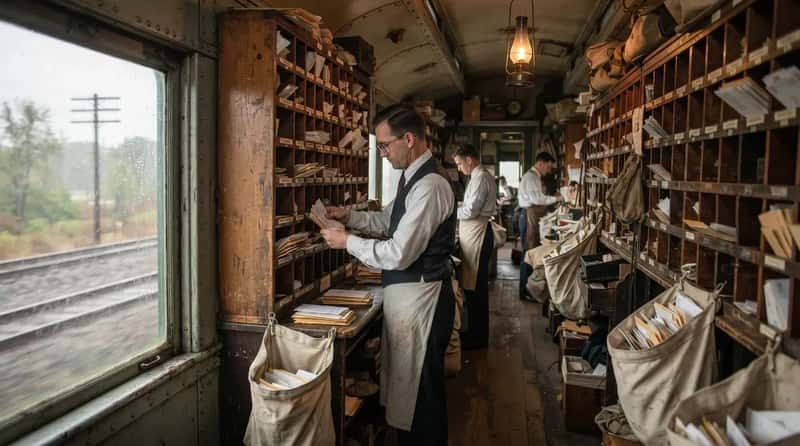
Your letter could be sorted, bagged and on its way without the train ever stopping. Railway Post Office cars were working offices on wheels. Clerks stood at wooden pigeonhole racks and sorted mail while the car swayed beneath them. Pouches were snatched from trackside hooks by a catcher arm, so a train could pick up mail at speed.
The job demanded memorizing thousands of destinations, and clerks were tested on it. Because mail was mostly sorted before the train arrived, delivery was fast. Highway trucks, airplanes and mechanized sorting plants made the whole setup obsolete. Many rail fans argue the loss of the RPO ended rail’s most useful public role. Postal officials saw a cost they could no longer justify.
The next item came with a rule that might surprise you: some cars were meant for women only.
#11 – The “Ladies’ Car” That Kept Women Away From Rowdy Passengers
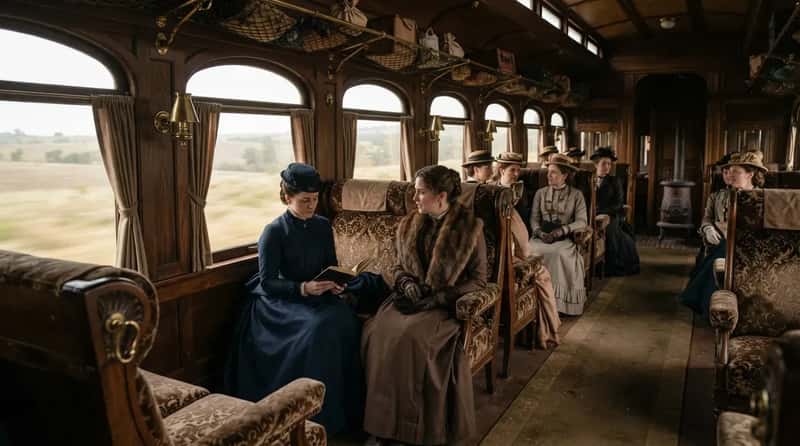
In the 1800s, many railroads set aside a car mainly for women and their escorts. The idea was to separate them from tobacco smoke, spitting and rough behavior in the other coaches. Some lines marketed the car as safer and more refined. For a woman traveling in an era of loud, crowded trains, that promise mattered.
These cars reflected the manners of their era, and the rules weren’t always applied evenly. Some women had no use for the protection, and others were kept out of the car altogether. As the rules for riding changed, the ladies’ car quietly disappeared. It left one lasting trace: railroads kept offering clean, comfortable ladies’ waiting rooms and lounges in stations for years.
And the very thing the ladies’ car was meant to avoid got a railcar of its own next.
#10 – The Smoking Car, Where the Air Was Thick and the Talk Was Loud
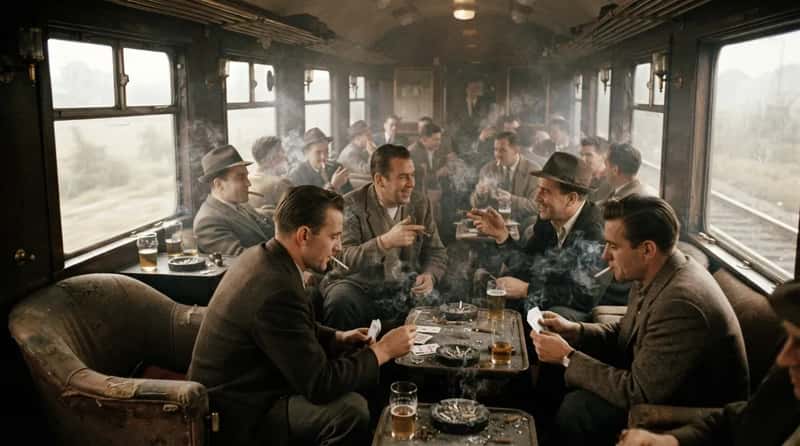
There was once an entire railcar where lighting up was the whole point. Smoking cars let cigar and cigarette users stay put without bothering everyone else. Windows fogged, ashtrays overflowed and the smell followed you home. Yet the cars became rolling clubhouses where strangers swapped stories, argued about politics and played cards.
As attitudes toward secondhand smoke shifted, railroads restricted smoking on trains step by step. Amtrak’s trains are smoke-free today. The smoking car didn’t fade because railroads got stricter. It faded because riders stopped wanting the smoke.
Then there was a service built for the opposite crowd: the sick, the nervous and the very small. Meet #9.
#9 – Registered Nurses Who Rode Along to Look After You
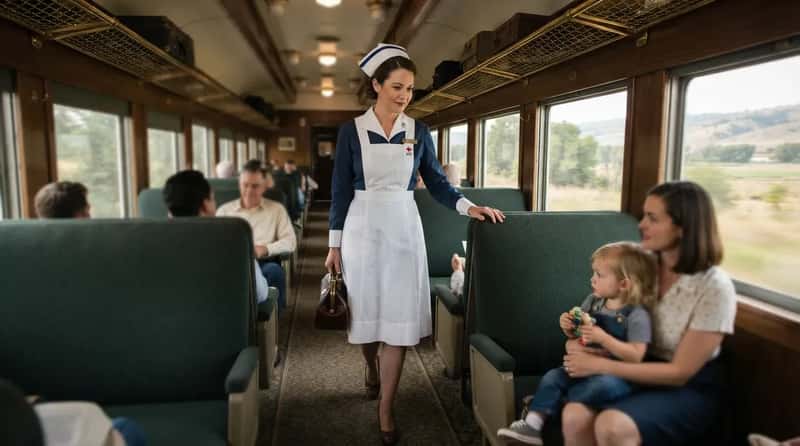
Some railroads once put trained nurses on the train just for the passengers. Lines including Union Pacific hired “stewardess-nurses” in the 1930s. They helped with sick children, babies and travelers who felt ill. They also calmed anyone new to long-distance rail.
The job pulled together first aid, hospitality and a steady presence. It echoed straight into early air travel, where the first airline stewardesses were also registered nurses. Before the flight attendant, there was a nurse in a crisp uniform walking a swaying train aisle. As trips got faster and hospitals got closer to stations, the nurse on the train became less necessary.
Staying well was one thing. Staying sharp was another, and that’s #8.
#8 – The Onboard Barber, Valet and Stenographer
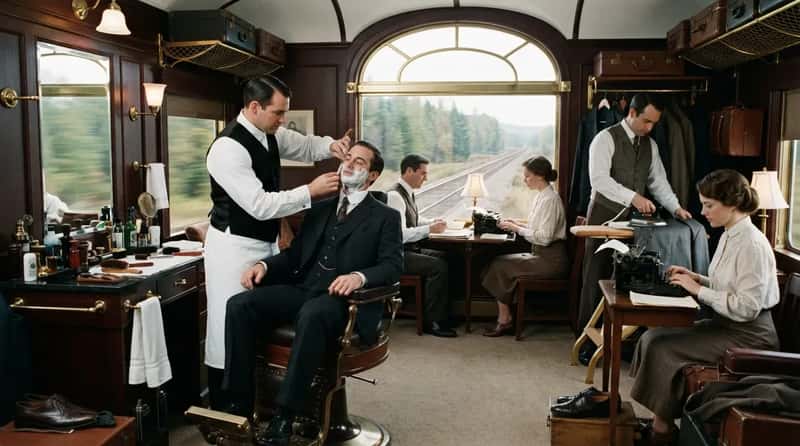
Business travelers once got a shave and a typed letter before breakfast. On premier limited trains, railroads offered barbers, valets who pressed clothes and stenographers who took dictation. The idea was that executives could keep working, and keep looking sharp, while crossing the country. By the time the train pulled in, the deal was already half done.
These were not tiny perks. They were selling points in a fierce competition for the wealthiest passengers. The train wasn’t just transport. It was a moving office and grooming room. Faster travel, cheaper phone calls and changing work habits killed the demand. Today the closest thing is a Wi-Fi password.
If a barber sounds extreme, wait until you hear about the bathroom service in #7.
#7 – The Hot Shower You Could Take at Full Speed
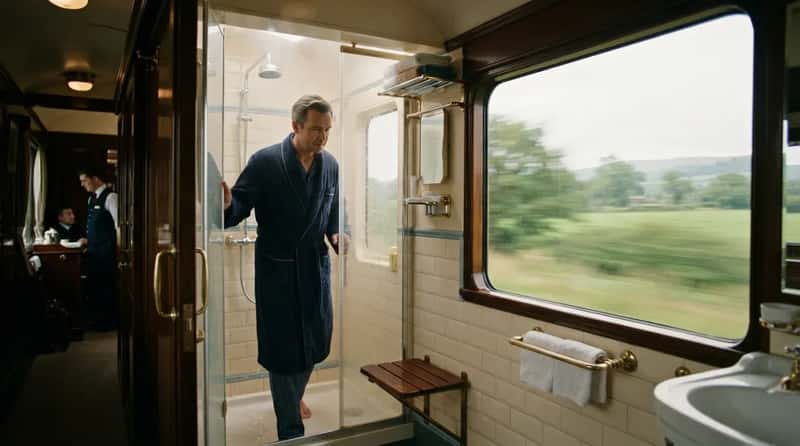
Some luxury trains let passengers take a hot shower while the scenery blurred past. Certain premier trains offered shower baths, usually with an attendant on hand. For travelers on journeys that lasted a day or more, it was a real selling point, not a gimmick. Stepping off clean after a long haul was part of the pitch.
The service made sense when trips were long and hotels were far apart. But water supply, space and cleaning added up to real cost. When faster trips and private rooms with their own facilities arrived, the shared bath lost its purpose. A few modern sleeping cars have showers, but the old attendant-run bath service is gone.
Cleaner and sharper was one thing. Better read was another, and that’s #6.
#6 – The Rolling Library Car That Let You Borrow a Book
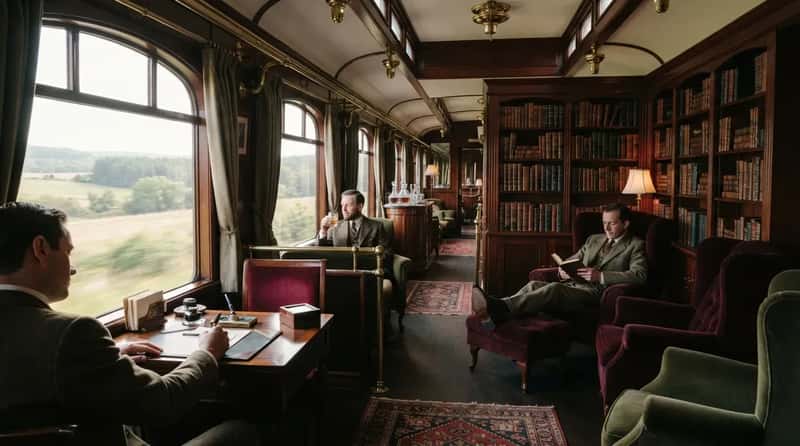
Some Pullman cars came with a bookshelf and a comfy chair instead of a TV. “Buffet-library” cars gave first-class passengers a place to read, write letters and have a drink. Writing desks and stationery were common touches. The point was to make a long ride feel like a gentleman’s club on wheels.
Passengers could browse, relax and chat in a quiet corner while the countryside slid by. The library car was a luxury built around slowing down. As travel sped up, and radio, TV and paperbacks became everyday companions, the dedicated library car stopped paying for itself. Today’s lounge cars are the closest descendants, and they usually come without the shelves.
Next up is the bed that was really a seat in disguise.
#5 – The Pullman Section Berth: A Bed Behind a Curtain
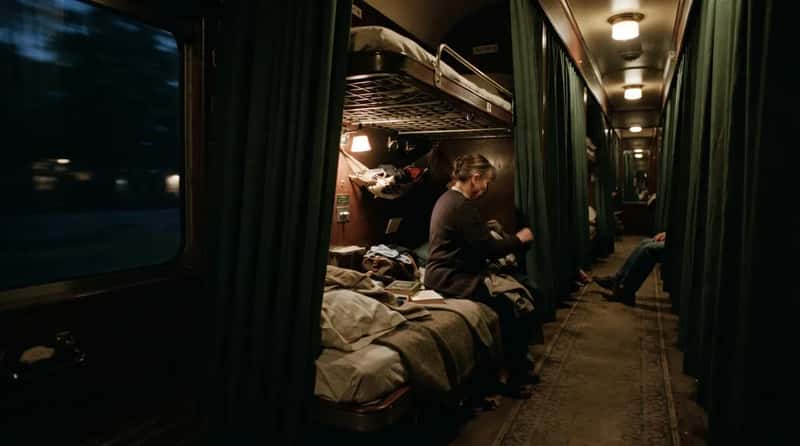
Sleeping on a train once meant undressing behind a curtain with strangers a foot away. In a Pullman “section,” two facing seats slid together to form a lower bed. An upper berth folded down from the ceiling. Porters made the beds up each night and put them away in the morning.
Quick Compare
- Section: Seats by day, bunks by night, with nothing but a curtain for privacy.
- Roomette: A compact private room for one traveler, with a real door and a fold-away bed.
- Bedroom: A bigger private room, with its own toilet and more space to move.
There was no door, only heavy curtains. Passengers changed clothes inside their berths, often in awkward positions and with a lot of elbow work. The same car was a lounge by day and a bedroom by night. That clever design made sleeper travel affordable. Roomettes and bedrooms with real doors eventually replaced the open section in regular service.
Still, the back of the train held something even more famous, and politicians loved it.
#4 – The Open-Air Observation Platform Where Presidents Gave Speeches
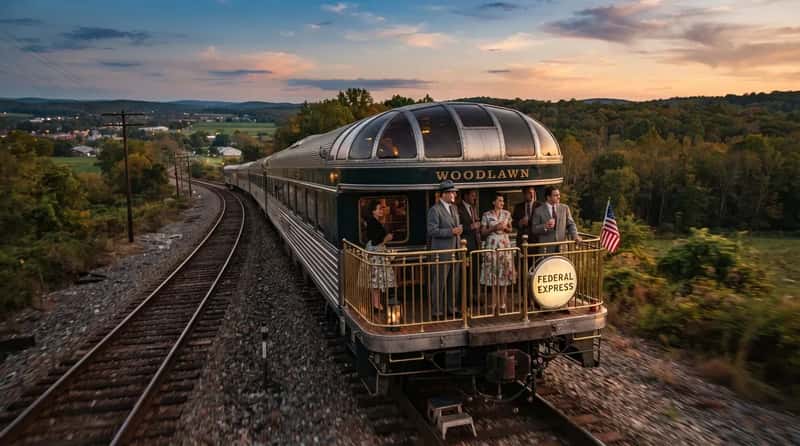
The last car on the train once had a porch. Observation cars ended in a rounded lounge with big windows and often an open rear platform with a brass railing. Passengers sat back and watched the track unspool behind them. On a clear evening, it may have been the best seat in America.
Politicians turned it into a stage. Harry Truman’s 1948 “whistle-stop” campaign relied on speeches from the back of his train in town after town. The rear platform was a campaign office, a stage and a scenic overlook in one. Streamlined designs, safety concerns and the rise of TV pushed campaigning toward airports and studios. Some tourist and private trains still run rear platforms, but not as regular public service.
But the people who kept the whole operation running have the most complicated legacy of all.
#3 – The Pullman Porter: A Job That Changed American History
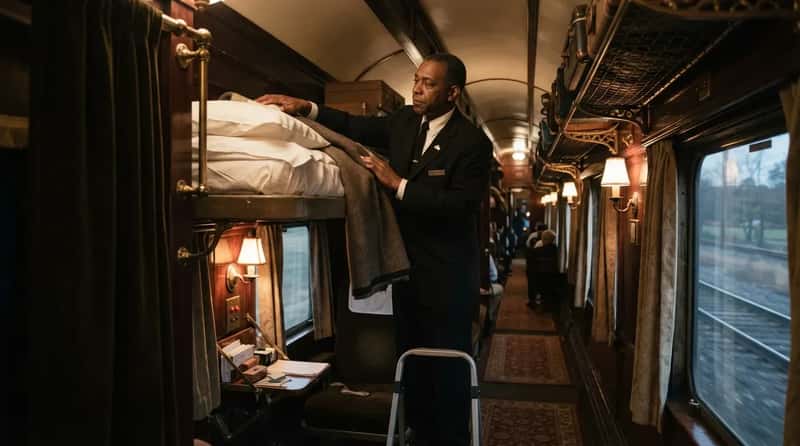
The man who made your bed also helped build the Black middle class. Pullman porters were mostly Black men who made up berths, shined shoes, carried bags and answered every call button. Passengers often called them “George,” after the company’s founder, a habit that stripped them of their own names. Behind the polite smile was a job with almost no room to say no.
Worth Knowing
- Tips made up a big share of a porter’s income, which kept many of them smiling through a long night.
- Before the union won its contract, porters commonly logged around 400 working hours a month.
- The union pushed for a 240-hour monthly cap and higher base pay.
- By the 1920s, Pullman was one of the largest private employers of Black men in the country.
Despite the low pay and long hours, the job was respected in many Black communities. Porters organized, and A. Philip Randolph led the Brotherhood of Sleeping Car Porters, founded in 1925. Its first contract with Pullman came in 1937, a landmark for Black labor. The porter’s job, as Pullman defined it, faded when the company ended its sleeping-car operations.
And then there’s the service railroads famously lost money on yet refused to give up.
#2 – The Full-Service Dining Car, a Restaurant Squeezed Into a Moving Hallway
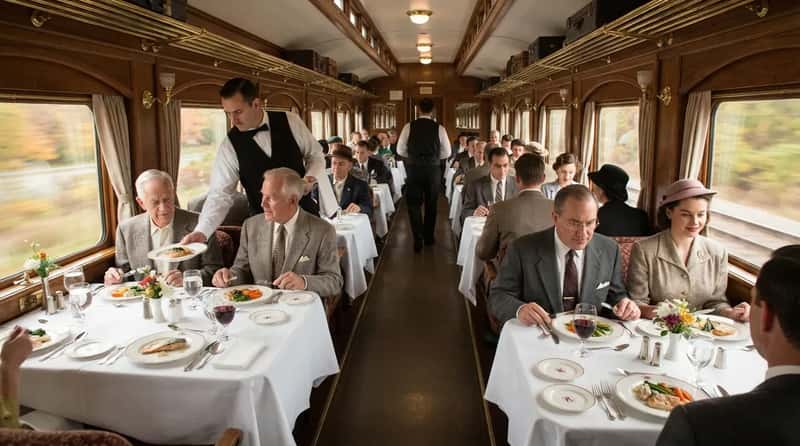
Railroads often lost money on dining cars, and they kept running them anyway. Cooks prepared multi-course meals in a kitchen only a few feet wide while the car swayed. Waiters in uniform served on linen with railroad-branded china and silver. Menus bragged about regional dishes.
The cars were a showpiece, and a great meal made passengers loyal to the line. But costs rose, passenger numbers fell, and accountants started asking why. Many rail fans argue that killing the full dining car was a mistake that hurt rail for decades. Accountants point out that few railroads could afford it. Where full dining survives today, it’s rare compared with the mid-century era.
But nothing here compares to what happened on the platform at Grand Central, and it’s the biggest loss of all.
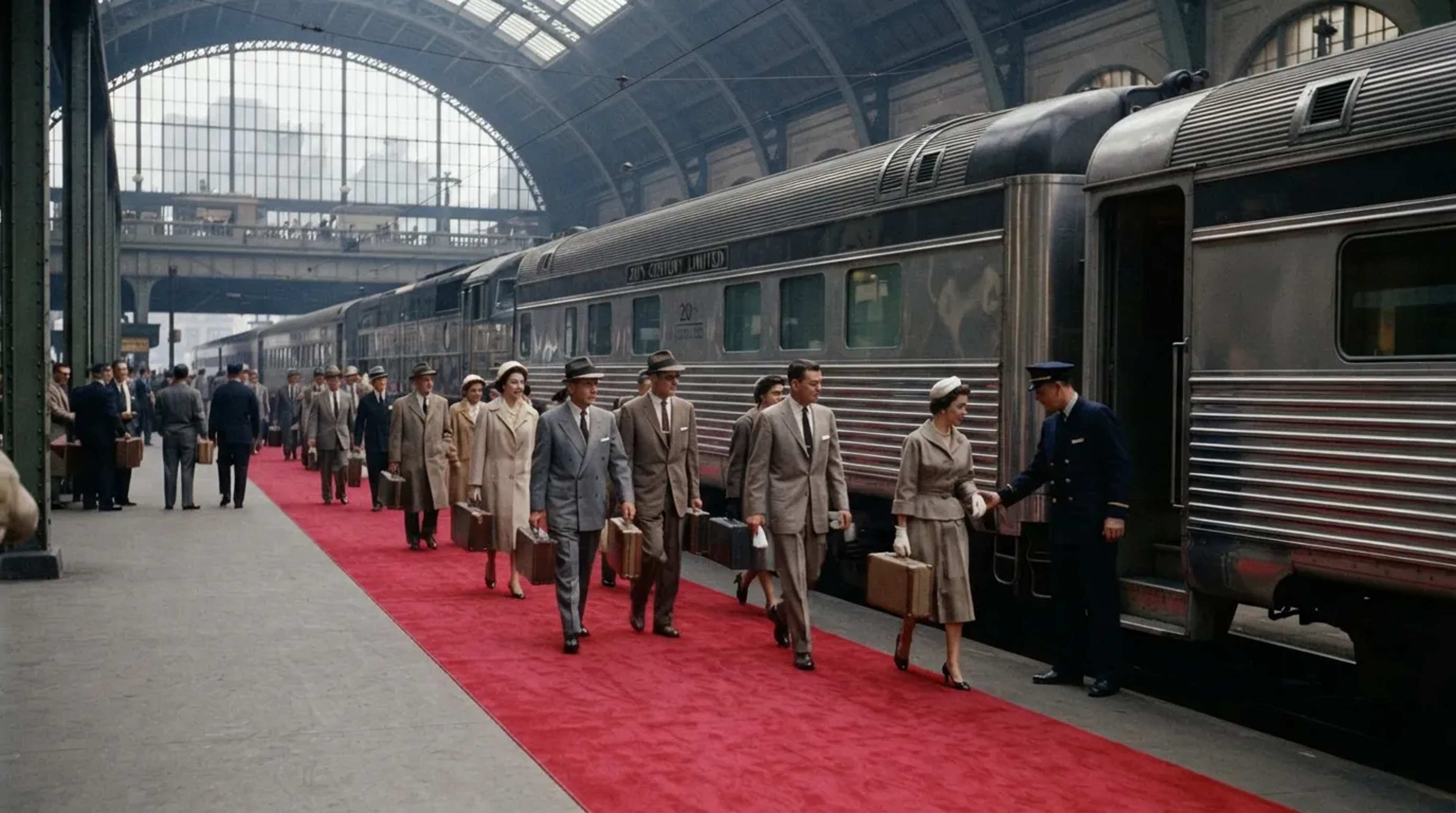
#1 – The Red Carpet Boarding of the 20th Century Limited
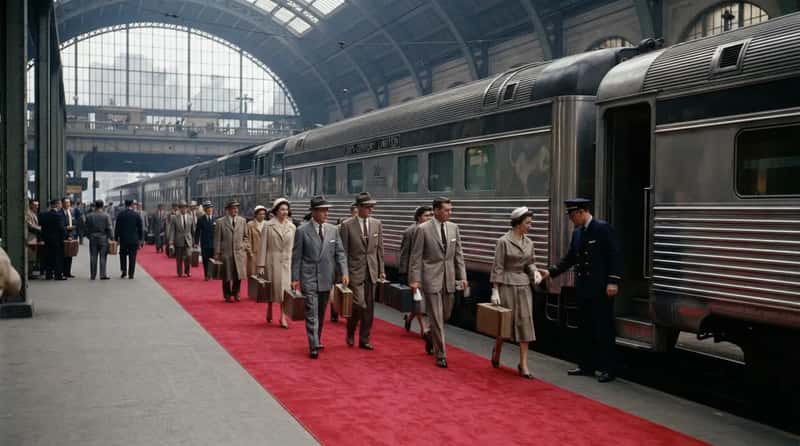
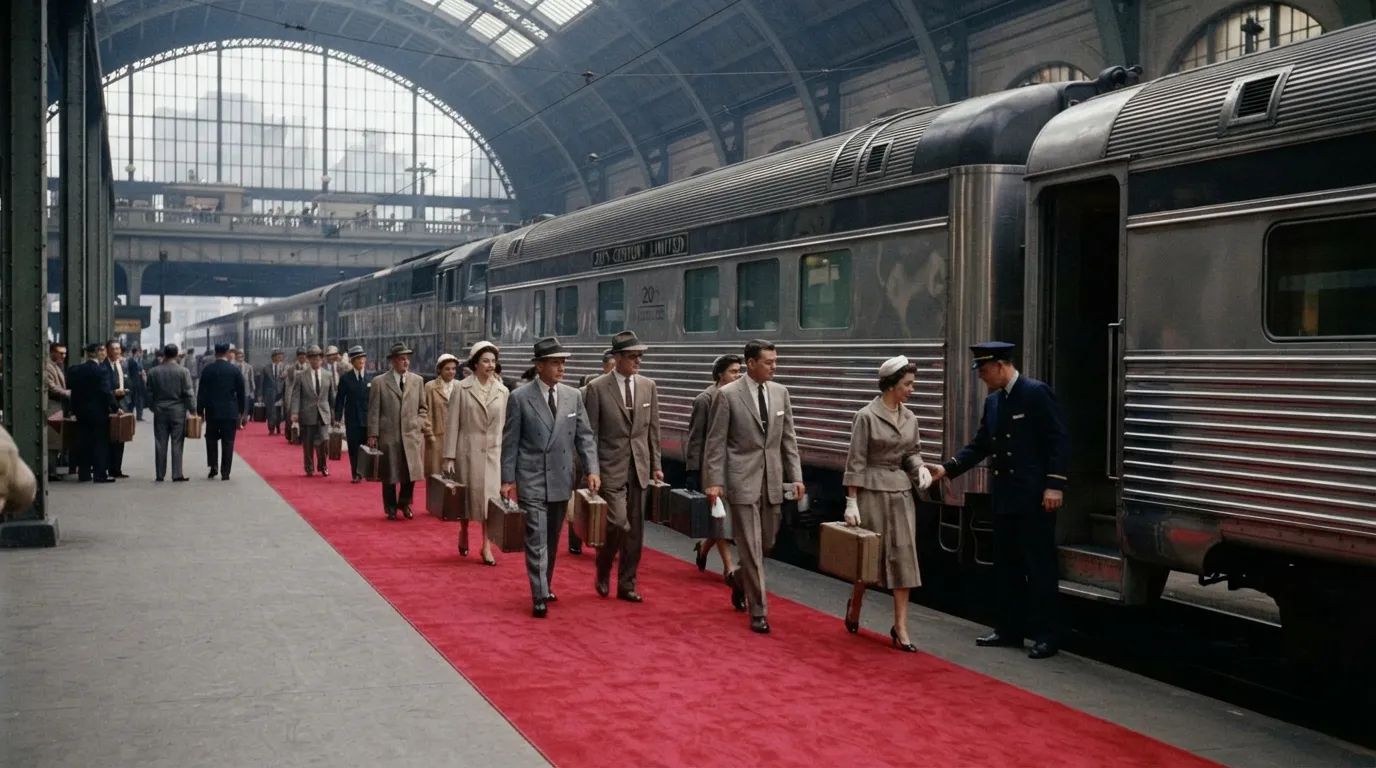
The most famous train in America made you feel like royalty before you even sat down. The New York Central’s 20th Century Limited ran between New York and Chicago, and boarding it became a ritual. A crimson carpet was rolled out along the platform, a custom often credited as the origin of the phrase “red carpet treatment.” Passengers walked it in their best clothes.
On the train, service came with the ticket, and the trip itself was the event. The 20th Century Limited made its final run in December 1967. Cheaper flights and new highways had drained the passengers. What vanished wasn’t just a train or a carpet, but the idea that a journey should feel like an occasion.
At a Glance
- Route: New York to Chicago, leaving from Grand Central Terminal.
- Debut: 1902, run by the New York Central Railroad.
- Trip time: About 20 hours at first, trimmed to 16 on the streamlined 1938 version.
- Signature touch: A crimson carpet rolled out for boarding passengers.
- Last run: December 1967.
Mail sorting, barbers, nurses, shower baths and libraries all rode the same rails. Most of it vanished for practical reasons: new technology, rising costs and changing manners. Some losses, like the shared cup and the smoking car, were improvements. Others, like the porter’s story and the full dining car, leave a harder question about what was really lost.
What’s striking is how recent it all was. The last mail-sorting run happened in 1977, and the 20th Century Limited ended a decade earlier. The trains still run. The sense of occasion is what got left on the platform.