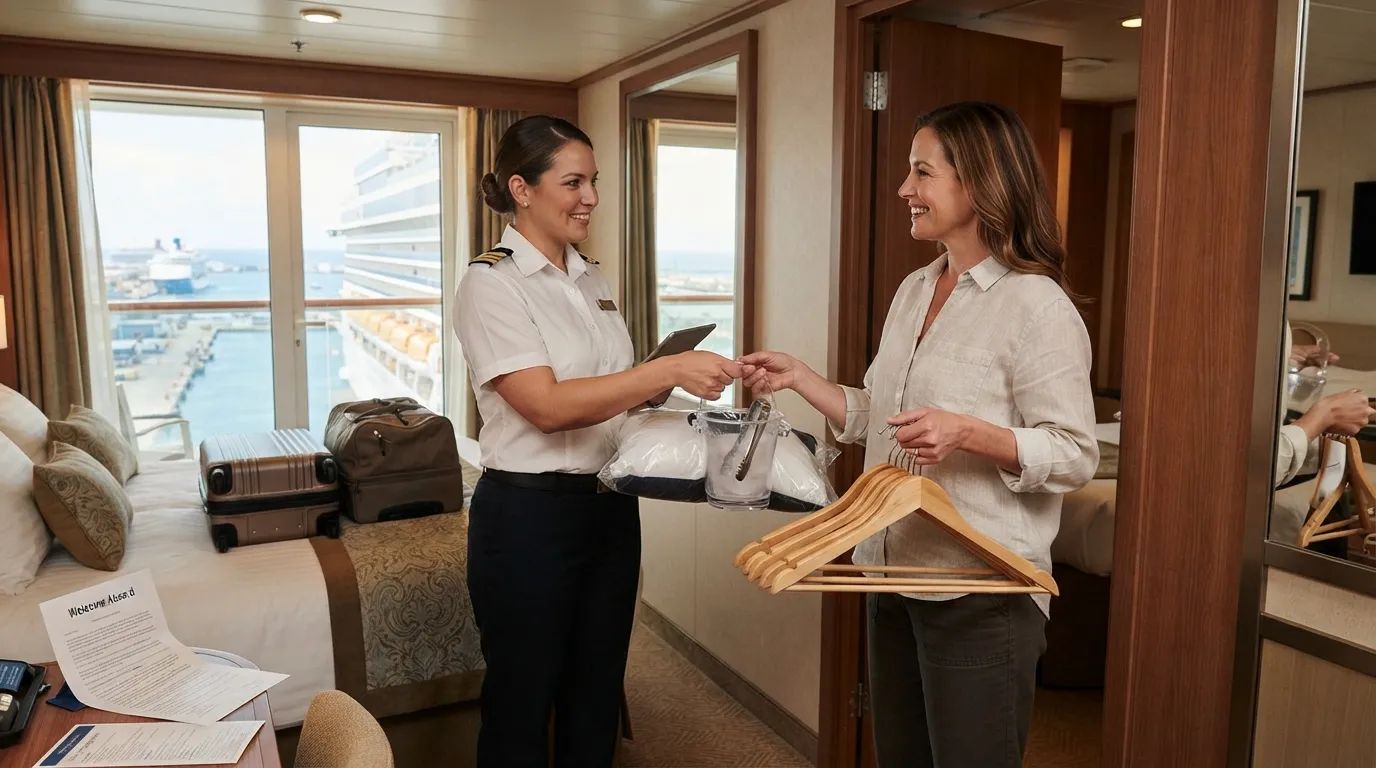
Picture the classic first-timer move: bags dropped, door swung shut, straight to the buffet. It feels like the right call, and it’s exactly why this list is worth your time. Repeat cruisers spend that first hour in a very different way, and it looks almost boring from the outside.
Here’s the twist. None of it is fancy, and a lot of it is free. The payoff shows up around day three, when their cabin still feels roomy and yours looks like a suitcase exploded. A few of these habits involve a magnet, one involves a name, and the last one changes how the whole week feels.
#15 – They Test the Walls With a Magnet Before Anything Else
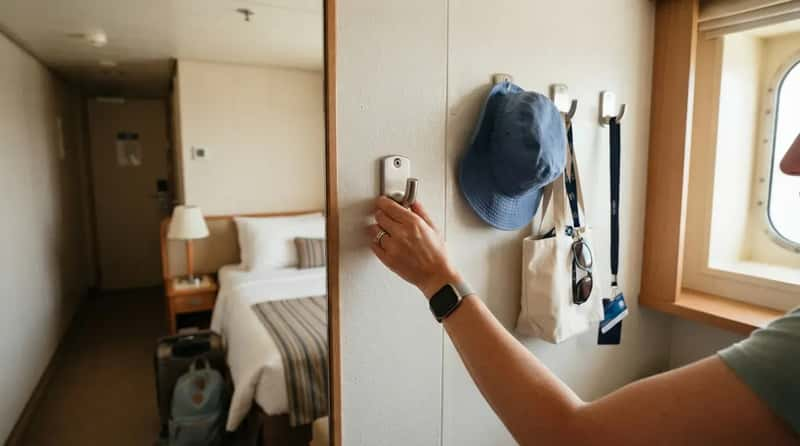
The biggest storage upgrade in the room is one most newcomers never notice. The walls in most cruise cabins are metal, which turns blank space into hanging space. Magnetic hooks give you spots for hats, bags and wet bathing suits, and your floor stays clear. Cruise Critic members even recommend looking for hooks rated to hold at least 10 pounds.
Cheap magnets won’t cut it, though. One cruise gear guide puts it bluntly: flimsy fridge magnets won’t hold anything useful. The bathroom plays by different rules too. Showers are usually tile, marble or fiberglass, so magnets won’t grip there. Plenty of seasoned cruisers say a cabin with no hooks is a cabin you’ll resent by day three.
But that’s nothing compared to what veterans check about the outlets next…
#14 – They Count the Outlets Before They Plug In a Single Thing
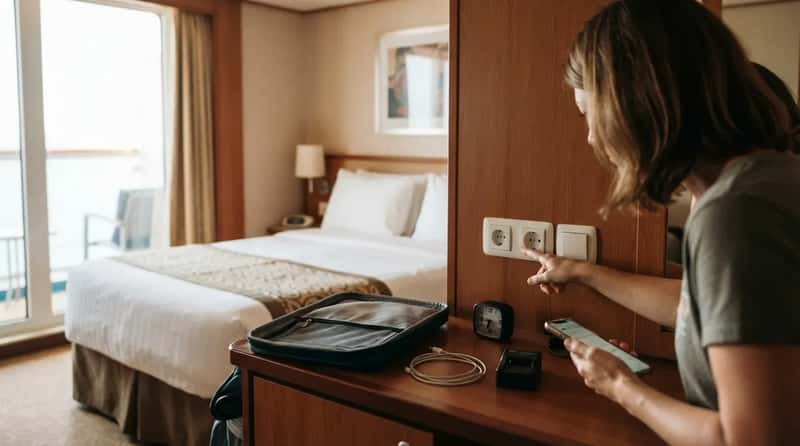
Ships were not built for the number of devices you’re carrying. Cabin outlets are famously scarce, and older ships sometimes have only one or two in the whole room. Veterans map out what they have before anything comes out of the bag. Phones, watches, cameras and a CPAP machine all fight over the same few sockets.
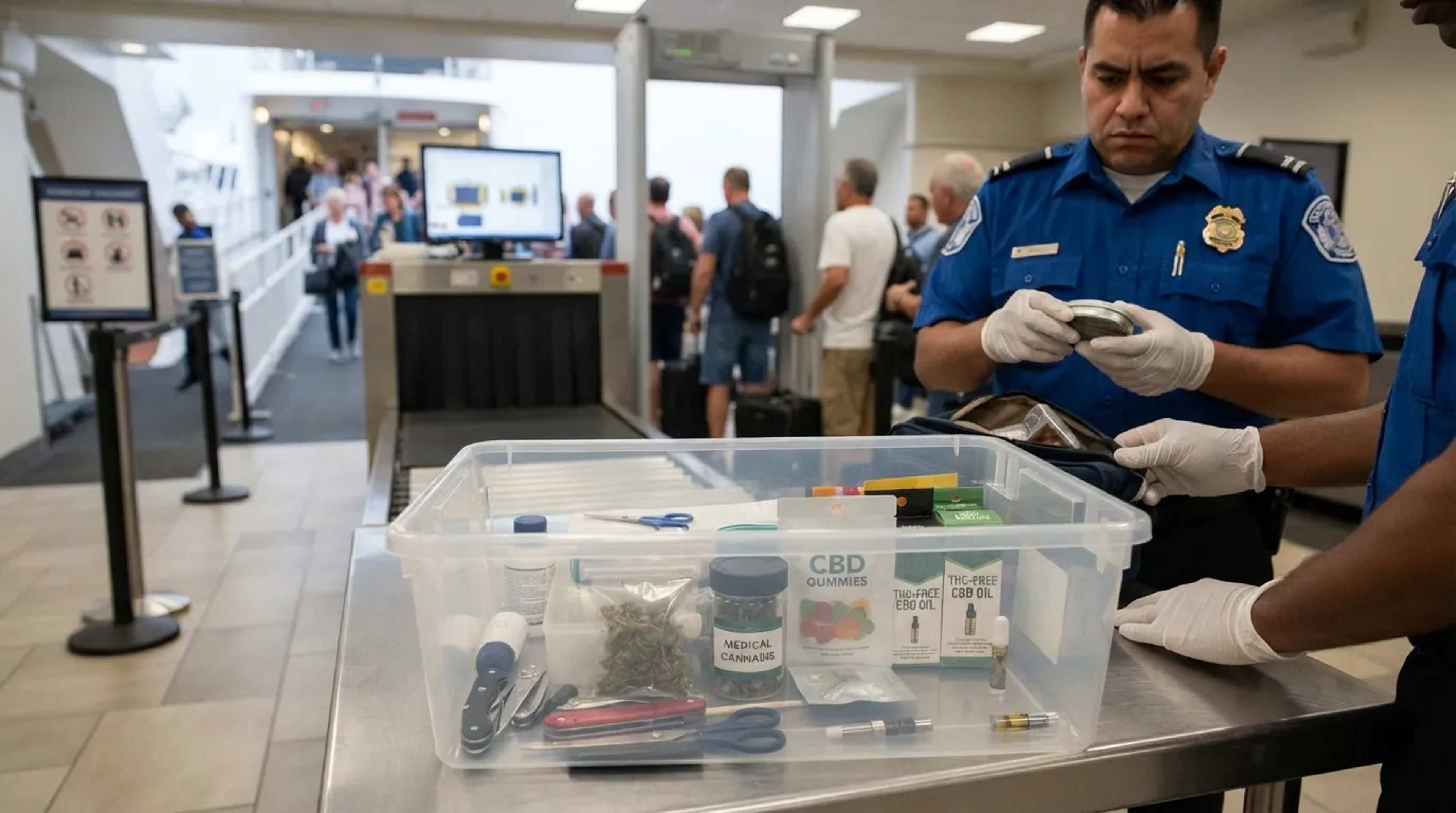
Here’s where newcomers get burned. Surge-protector power strips are banned on all the major cruise lines, and security can confiscate them at the terminal. The workaround is a basic power strip with no surge protection, and you should still check your specific line first. Plenty of cruisers think the rule is overcautious. The cruise lines say it prevents fires.
Next up is a move that makes the room feel twice as big…
#13 – They Fully Unpack in the First Hour, Suitcases Included

Living out of a suitcase is the quiet mistake that wrecks a week at sea. Veterans empty every bag on day one. One 2026 cabin guide lists unpacking completely on day one as a top habit. Clothes go in drawers, toiletries come out, and the cases vanish.
The trick is the space under the bed. Suitcases and rarely used gear slide under there, and the floor opens right back up. That one move kills the clutter that makes a small room feel like a storage unit. Some people argue a half-open suitcase is fine for a three-night sailing. Veterans say that’s exactly how you lose a sandal for two days.
At a Glance
- Empty every bag in the first hour
- Clothes go in the drawers and closet
- Toiletries come out onto the bathroom shelf
- Empty suitcases slide under the bed
- Hats, bags and swimsuits go on the metal walls
But the next habit has nothing to do with your stuff at all…
#12 – They Mark the Door So They Never Walk Into the Wrong Cabin

Ship hallways are brutal on the sense of direction. Long cruise corridors are famous for looking exactly alike. After two cocktails and a late show, every door starts to look like yours. Nobody wants to be the person jiggling a stranger’s handle at midnight.
So veterans stick a small magnet or decoration on their steel cabin door and spot it at a glance. It’s a tiny detail with a big following. Door decorating has become a full-blown tradition among Disney Cruise Line fans. One catch: some lines restrict what you can attach, so check the rules before you go wild.
The next habit is the one most first-timers treat as an annoying chore…
#11 – They Sort Out the Safety Drill Steps From the Cabin Right Away
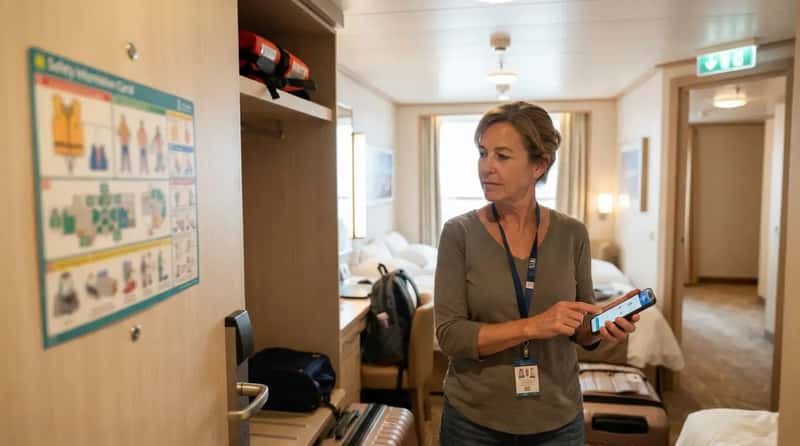
Skip this and you could be the one holding up a crowded deck. Most big lines have moved the drill online. On Royal Caribbean, eMuster is a streamlined, digital upgrade to the traditional muster drill. After reviewing the info on a phone or cabin TV, passengers finish by visiting their assigned assembly station, where a crew member checks that every step is done.
The setup varies by line. MSC lists a traditional drill at the station, while Carnival, Norwegian and others use apps. Life jacket rules differ too, so veterans confirm their own ship’s setup on day one. They also figure out the nearest stairwell from the cabin door.
But the next step catches problems before they ruin a night…
#10 – They Run a Quick Systems Check Before the Ship Even Sails
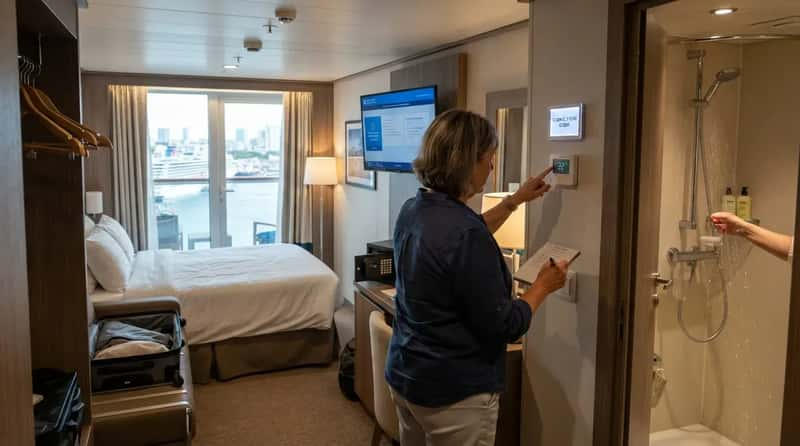
A cabin problem on day one is a quick fix. A cabin problem on day five is a headache. Veterans run through the basics early. They turn on the shower and check the water, flip the TV on, try the safe, and adjust the thermostat.
They also look at the room itself. Does the balcony door work? Are there enough towels and pillows? If something’s off, they tell the steward or guest services right then, because the earlier the report, the more time the crew has to fix it. Some cruisers think this is overkill. Anyone who has ever shivered in a cabin with broken air conditioning would disagree.
Worth Knowing
- Run the shower and confirm the water works
- Turn on the TV and test the thermostat
- Open and close the safe
- Try the balcony door if you have one
- Count towels and pillows, then report anything off
The next one is about sleeping, and it surprises almost everyone…
#9 – They Ask to Have the Beds Moved Before Bedtime

That bed layout isn’t permanent, and almost nobody asks. Beds, and sometimes the nightstands, in cruise cabins can be reconfigured. Whether you want two twins or one big bed, it’s a request your steward can handle.
Here’s the catch. The rest of the cabin furniture stays put, so the bed arrangement is your main lever for changing the layout. Veterans ask on day one so they don’t spend the first night in someone else’s idea of how a couple should sleep.
But the next habit sounds paranoid until you think about how many hands touch the room…
#8 – They Wipe Down the High-Touch Spots Like It’s an Airplane Tray
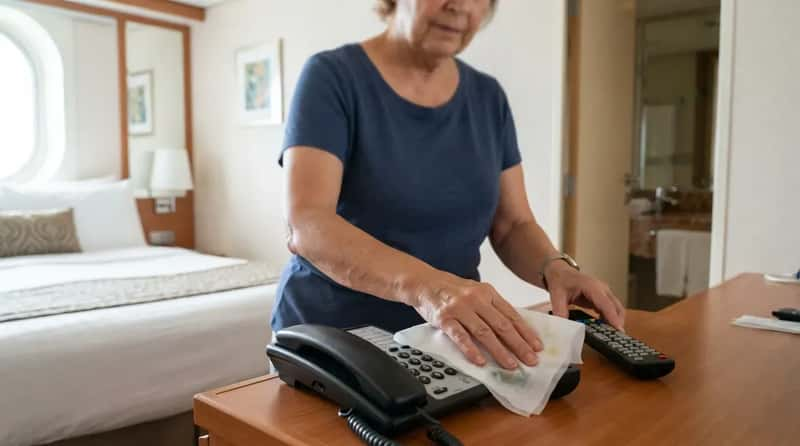
The cabin may look spotless, but it still sees plenty of hands. As soon as they walk in, veterans wipe down the phone, TV remote, door handles and bathroom surfaces with a few disinfecting wipes. They do it before they even sit down.
The reasoning is plain. A remote and a phone get touched by every guest who came before you, in a small shared room. Cruisers who’ve caught a cold on night two swear by this routine. Skeptics call it overkill. Repeat cruisers call it thirty seconds that costs nothing.
The next habit takes the bathroom seriously…
#7 – They Plan Around the Bathroom’s Biggest Flaw

The cabin bathroom has a problem that most guides rarely mention. According to Cruise Critic, cruise ship bathrooms often lack good ventilation. Steam lingers, and wet towels take forever to dry.
So veterans adapt. They bring suction cup hooks, toothbrush holders or small shelves, since magnets won’t stick in the shower. They hang towels where they can air out and keep damp swimsuits off the bathroom floor. It’s a small shift, but it keeps the room from smelling like a locker room by Thursday.
But the next move is what the best planners do with their phones…
#6 – They Open the Planner and Lock In Their Week Right Away

Day one in the cabin is when the smartest cruisers plan. The ship’s app often starts filling in weeks before sailing. On Celebrity, for example, you can use the Daily Planner to start planning a spa appointment or review fitness classes. You can even add activities to your calendar and save your favorites.
Many veterans also want a paper copy of the daily program, and they ask for it early. They sit on the bed with a pen, circle the must-dos, and ignore the rest. The result is a vacation that feels planned instead of chaotic. Some people hate this and say a cruise is supposed to be spontaneous. Veterans say the good dinner times and spa slots don’t wait.
Quick Compare
- App: save favorites, add activities to your calendar, book spa time
- Paper: circle must-dos with a pen, no screen or Wi-Fi needed
- Veteran move: use both and decide on day one
The next habit is about money, and it surprises people every time…
#5 – They Check the Automatic Tip Before It Becomes a Surprise

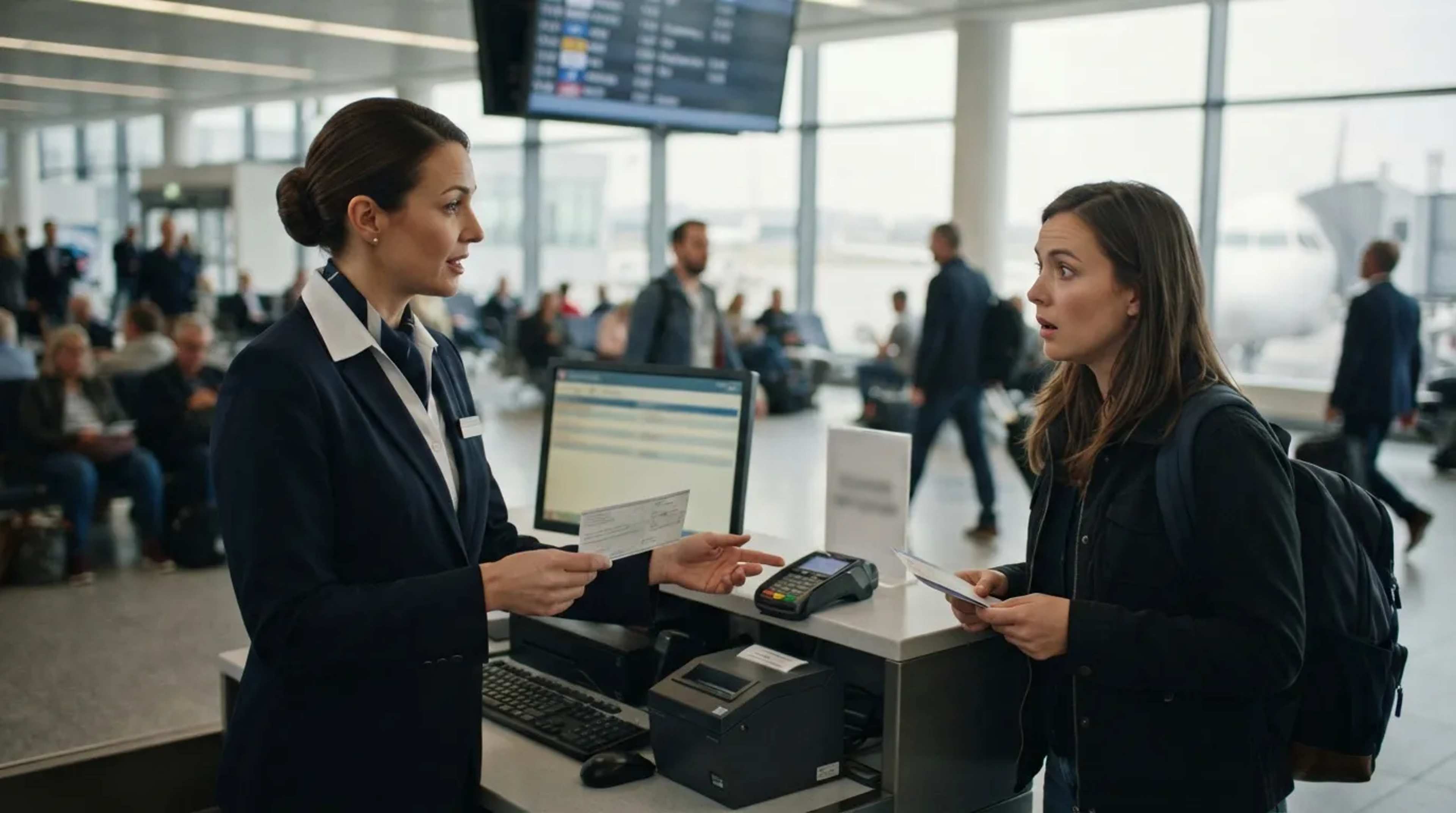
The daily gratuity is the charge that shocks first-timers. Automatic gratuities on cruise ships are charged per person, not per room. In 2026, Carnival lists $17 per person per day for standard rooms and $19 for suites. Royal Caribbean lists $18.50 per guest per day in non-suite staterooms and $21 in suites.
Repeat cruisers know it can be changed. Many major lines let you adjust or remove the daily charge at guest services before the morning of disembarkation. Some prefer to tip the crew in cash instead. Others believe the automatic system is exactly how crew members get paid. It’s a hot debate, but veterans at least know what’s on their account before they sail.
But the next trick makes embarkation day much less stressful…
#4 – They Treat the Carry-On Like a Day-One Survival Kit
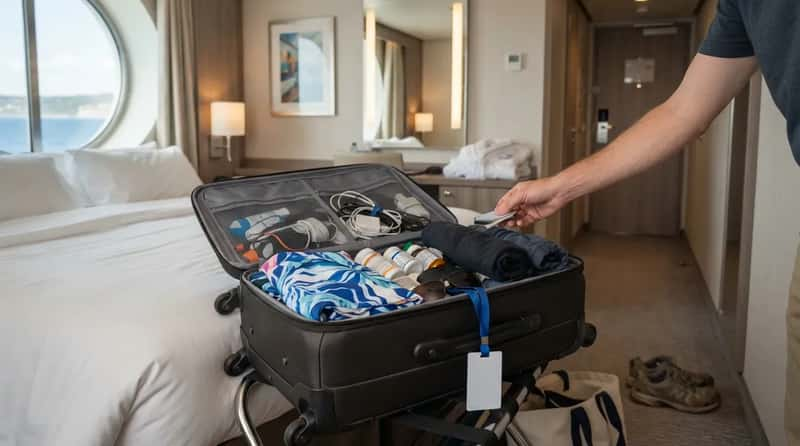
Your bags often don’t reach your door for hours after you board. Veterans plan for that gap. One 2026 cabin guide recommends a carry-on packed with essentials for embarkation day. Swimsuit, medication, chargers and a change of clothes all go in it.
They also keep the key card handy. One travel guide suggests a lanyard for your cabin keycard, and it’s one of those tiny habits that saves time on every port day. The newcomer digs through a bag at the door. The veteran taps and walks in. It may look like a gimmick, until you’ve lost a key card in the pool.
The next habit looks small, but it keeps whole families on the same page…
#3 – They Set Up a Message Board and Learn the Do Not Disturb Rules
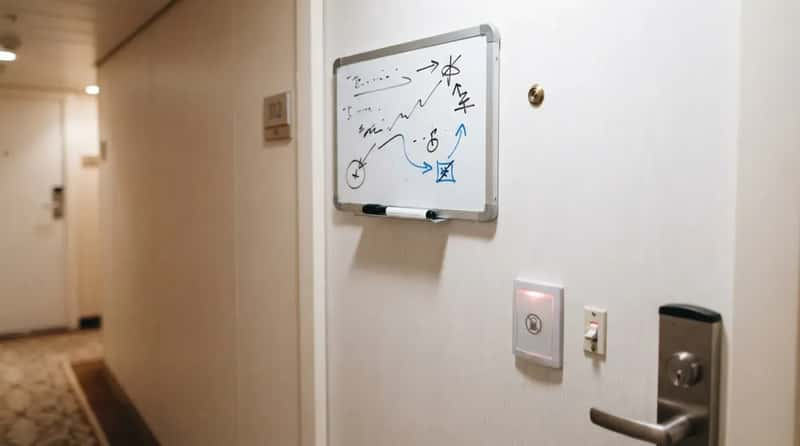
On a big ship, groups lose each other fast. So veterans bring a small magnetic whiteboard and stick it on the cabin door or wall. It tells the group where you are, which restaurant you’ve picked, or what the plan is for the next port day. It’s low-tech, and it works even when the Wi-Fi doesn’t.
They also learn the Do Not Disturb rules. Take the sign down or switch the light off if you want cabin service while you’re out for the day. Here’s the catch: your steward can’t come in while it’s on, so they can’t do their job. A forgotten sign explains many of those “my room never got cleaned” complaints. Veterans flip it back before they leave.
Why It Stands Out
- It works with zero Wi-Fi and zero battery
- Anyone in the group can read it at a glance
- It sticks to the metal door or wall with a magnet
- A quick sign check keeps the steward able to clean
The last two habits are the ones that change the whole trip…
#2 – They Ask for What the Room Doesn’t Come With

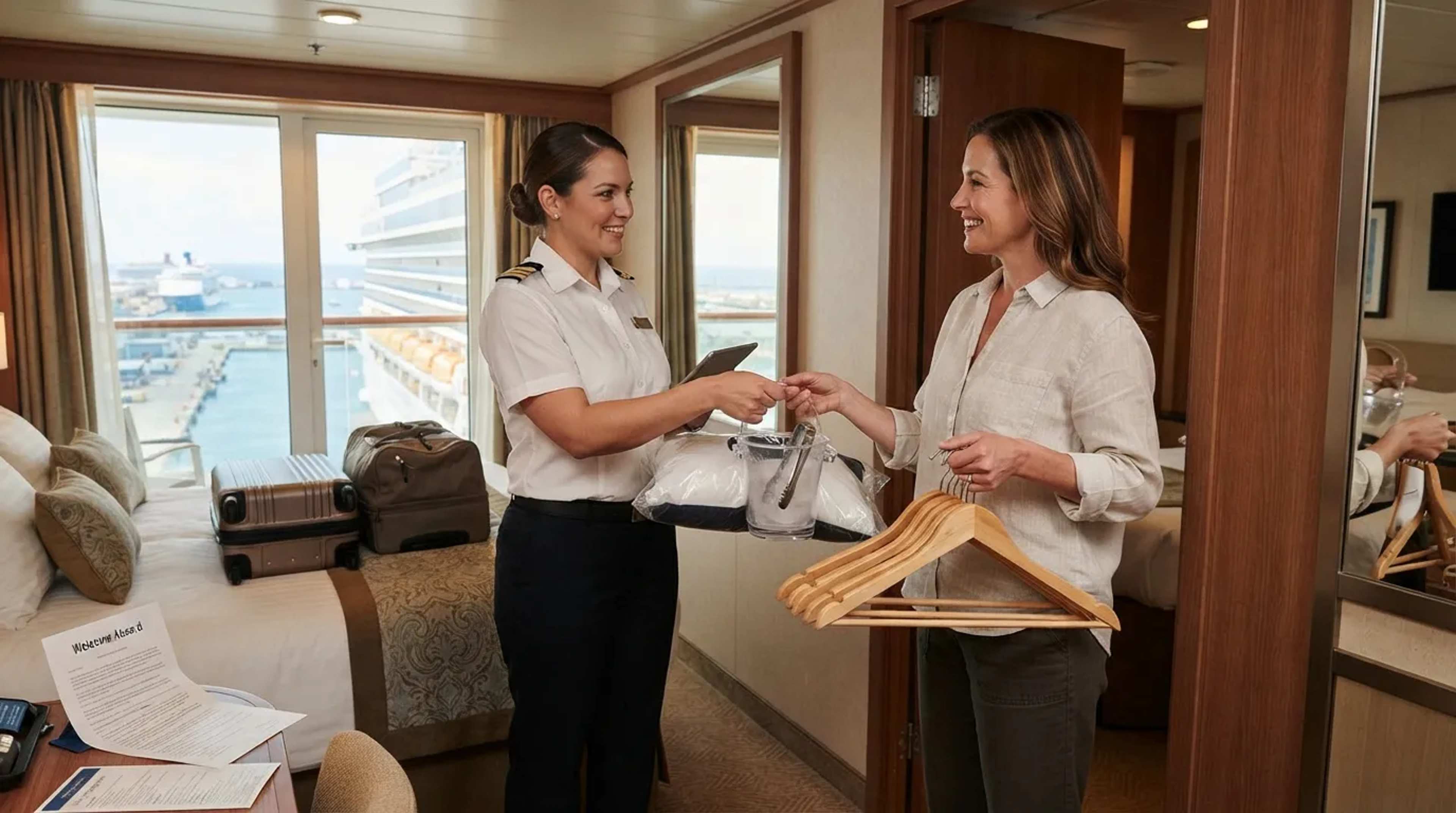
A cabin is a starting point, not a final offer. Veterans ask for extras on day one. They request extra hangers, ice or a different pillow, and they say thank you. Much of it is free for the asking, but you only get it if you speak up.
The list can go further. Some ships will lend a cruise-approved power strip or an adapter if you ask your steward. Plenty of cruisers also ask the steward to open the divider between connecting verandas when traveling with family or friends. Some people feel awkward asking. Cabin crews handle these requests all the time, and the first day is the easiest moment to make them.
But the number one habit isn’t about the room at all…
#1 – They Learn the Steward’s Name Before Anything Else

Here’s the real insider move, and it costs nothing. Veterans introduce themselves to their cabin steward on day one. Taking thirty seconds to swap names and mention preferences sets the tone for the entire week. It turns a stranger with a cart into someone who knows exactly how you like your room.
The payoff goes beyond a clean cabin. Experienced cruisers ask what perks their cabin grade includes, and they ask for tips about the ship, the itinerary and the ports. The steward sees what’s actually happening on board, deck after deck, every single day. Most newcomers treat that person like a ghost who tidies up. Veterans treat them like the best resource on the ship.
The surprise is how small these moves are. A magnet, a name, a quick look at the outlets and a few minutes with the app change how the whole cabin works. The ship’s rules, from banned power strips to automatic tips, are the same for everyone. Only veterans plan around them.
Newcomers find all this out around day four. Repeat cruisers sorted it out before the ship left the dock, and then went to the buffet with nothing left to worry about.