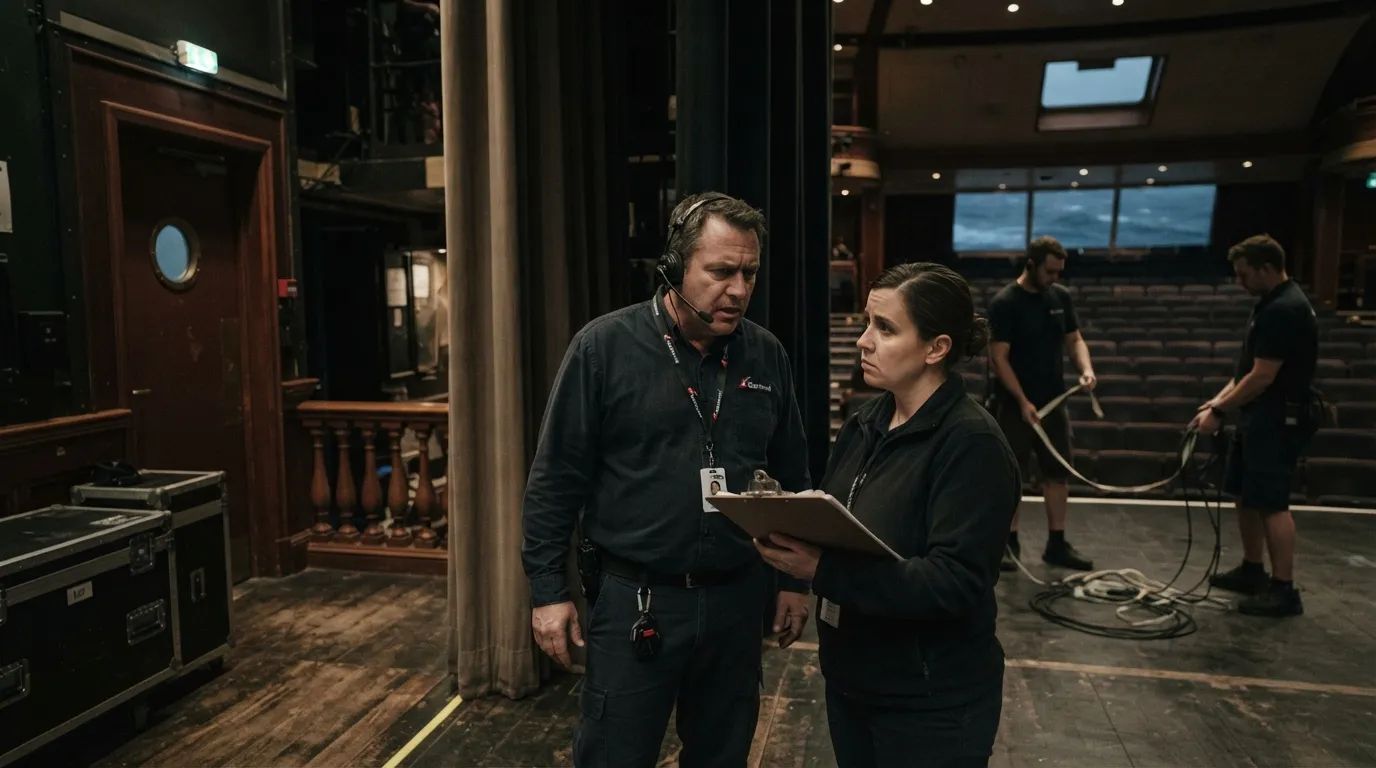
The first show ends, the applause fades, and most passengers wander off assuming the theatre is finally getting a breather. Backstage, it’s the opposite. For roughly an hour, a ship’s theatre becomes a repair shop, a dressing room and an emergency meeting room all at once, because a second audience is already lining up.
Some of the fixes take seconds. Others can quietly rewrite the show you’re about to watch. And the biggest thing on this list isn’t a wig, a mic or a piece of scenery at all, which is exactly why it’s waiting at #1.
#15 – The Wig That Refuses To Sit Straight
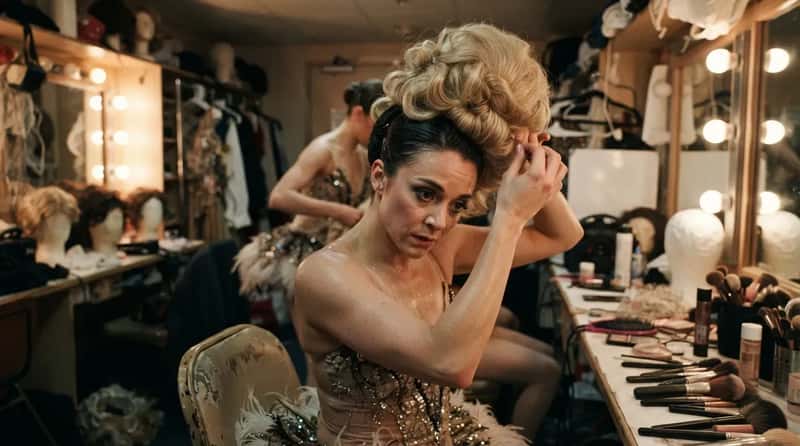
Nothing gives away a rushed quick change like a wig that has slipped. Dance Informa’s look at cruise ship dance gigs notes that many production shows use full stage makeup and wigs alongside “quite a few quick costume changes.” After a full show of spinning, kicking and sprinting offstage, hairpieces are rarely in the shape they started in.
So the break turns into a styling session. Dancers re-pin, re-curl and re-powder, then re-check makeup that has been through heat, sweat and stage lights. The audience never sees any of it. They just see someone who looks like they haven’t moved a muscle.
Worth Knowing
- Many production shows pair full stage makeup with wigs.
- Quick changes are part of the routine, so hairpieces take a beating.
- Re-pinning, re-curling and re-powdering all happen in the break.
- Makeup gets a fresh check after heat, sweat and lights.
But that’s nothing compared to what happens with #14…
#14 – Costumes That Come Back Torn, Damp and Out of Order
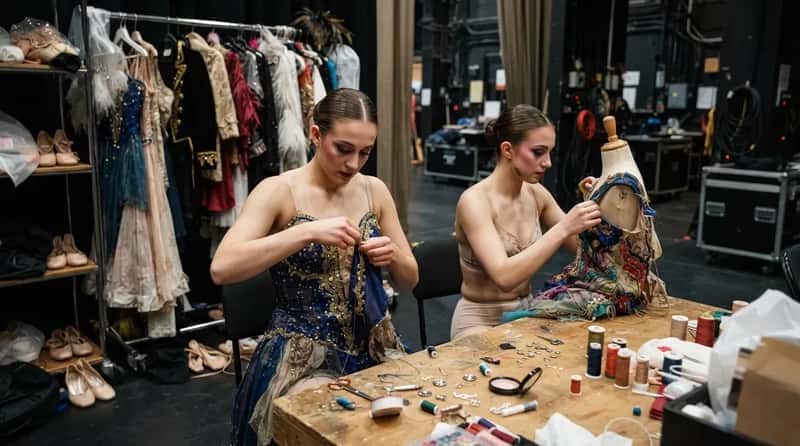
A costume rarely makes it through a full show without needing something. On many ships, dancers are responsible for their own costumes. As one dancer told Dance Informa, that responsibility teaches you to take good care of them and be extremely organized.
Bigger repairs may go to wardrobe, but the small daily fixes often land on the performers themselves. A loose snap sounds trivial until it eats seconds in a fast change. Seconds are exactly what these shows don’t have, so seams, hooks and elastic all get checked before the next curtain.
Next up is a trick that makes those changes possible at all…
#13 – The Quick-Change Station Rebuilt From Scratch
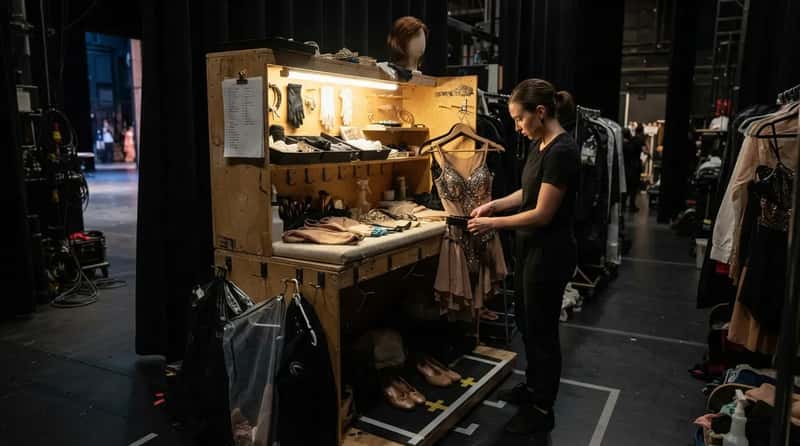
Those seemingly magical costume changes are built before the show even starts. One dancer says that in many numbers you have 30 seconds to change shoes, wig and costume and cross to the other side of the stage. Everything has to be laid out in exactly the right order.
Performer Martin of Crew Life at Sea explains that the costume has to be set and ready to put on quickly. Between shows, that setup gets rebuilt piece by piece. A shoe in the wrong spot isn’t a small mistake. It’s a missed entrance.
And the person helping with those changes has a job most guests never notice…
#12 – The Dresser Who Has To Be Exactly on Time
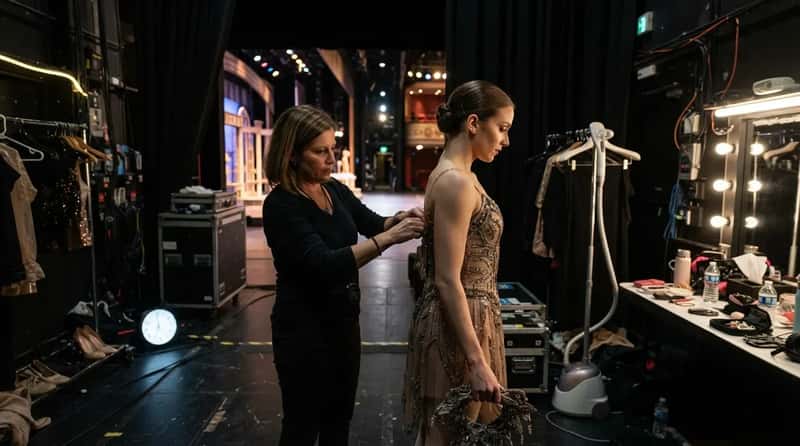
Quick changes often involve a second pair of hands waiting in the wings. One dancer describes a dresser as the person who dresses you side stage. That person has a precise job and a tight window to do it in.
Martin makes the point plainly: the helper needs to know exactly when to help, and it’s timed so you make the next change. If the timing slips, the dancer misses the number. Between shows, the pair can walk the sequence again so nothing is left to memory.
At a Glance
- The role: a helper who dresses the performer side stage.
- The pressure: a precise job inside a very tight window.
- The risk: slipped timing means a missed number.
- The fix: walk the sequence again before the next show.
Then there’s the gear that gets tossed around the stage…
#11 – Props That Were Never Where They Started
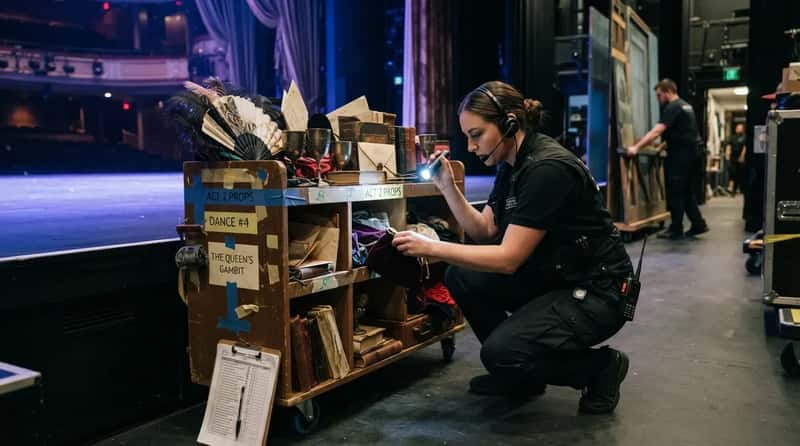
Props travel more than most passengers realize. Dancers on cruise contracts often reset their own costumes, wigs and props between shows, according to the schedule Dance Informa published. A missing prop can break a scene before it begins.
Stage staff also check the larger items. Job listings for cruise stage crew describe making sure all audio visual equipment, stage props and scenery is in working order. A damaged prop gets patched or swapped, and a scenery piece that sticks gets a hard look too.
Props are visible, though. The next fix is one the audience only notices when it goes wrong…
#10 – The Lighting and Sound Cues That Must Be Loaded Again
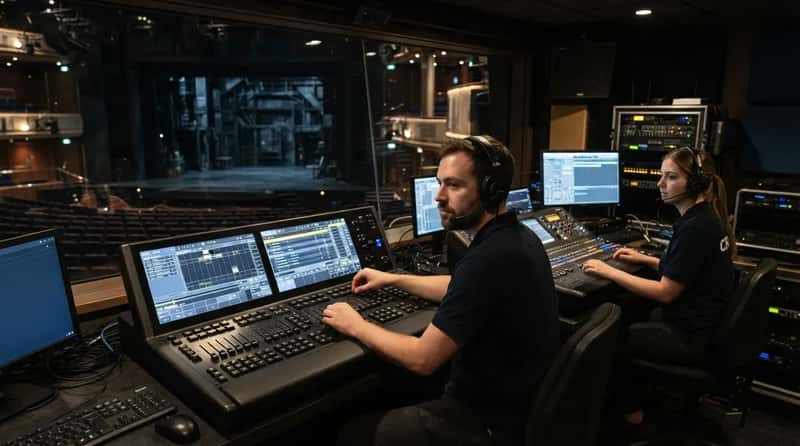
Every big production number runs on cues, and the crew has to be ready to fire them all again. One cruise stage-staff listing asks for people who understand how to load and operate basic cues on the main stage lighting and sound board. One wrong cue can leave a dancer in the dark.
Between performances, technicians check that the board is where it should be. They test whatever felt off in the first show. If a light flickered or a track dropped, now is the time to chase it down.
That brings us to a piece of gear that really can fail mid-song…
#9 – Wireless Mics That Quietly Run Out of Power
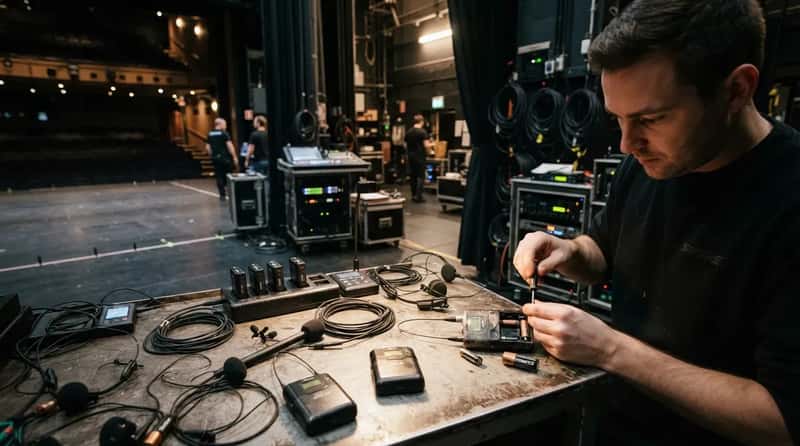
Singers moving across a big stage rely on wireless microphones. Those mics depend on battery packs, and the backstage crew is the reason they don’t die mid-chorus. Between shows, sound techs typically swap or check power and confirm each mic still reaches the board.
Sweat is a real enemy here. Packs and cables sit against bodies through two high-energy numbers. A quick wipe, a swap and a test can save a ballad from silence. It’s dull work, and it’s the reason you never hear the problem.
Quick Compare
- What you notice: a clear voice from the first note to the last.
- What the crew handles: battery swaps and power checks.
- What the crew confirms: every mic still reaches the board.
- What sweat threatens: packs and cables worn through two big numbers.
But the bigger machinery is harder to fix in an hour…
#8 – Moving Scenery and the Stage Machinery That Sticks
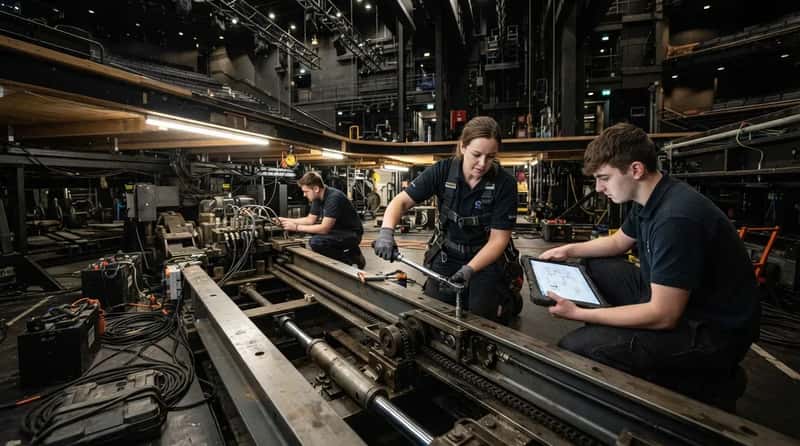
Modern ship theaters aren’t just curtains and a floor. Job postings for cruise stage staff list the ability to load and operate stage machinery systems, and some roles carry titles like Stage Staff, Rigger and Automation Technician. Those are real engineering jobs inside a theatre.
Between shows, they check that moving pieces travel and stop where they should. A single stuck platform can force a re-plan of a whole scene. Crews also look at the safety side, since performers dance close to moving parts.
Which brings us to the screens behind the cast…
#7 – The Giant LED Screens That Have to Sync Perfectly
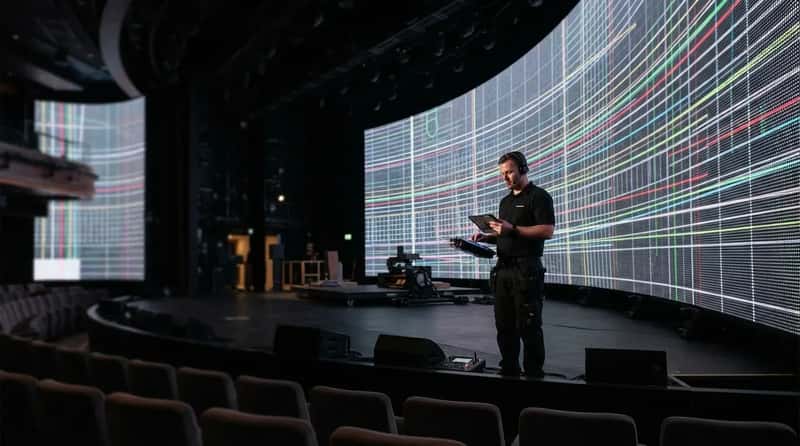
Video walls now carry a lot of the storytelling on newer ships. Cruise Critic notes that Holland America’s World Stage has a 270-degree LED projection screen that lends energy and light to stage shows. A screen that glitches can break the illusion in seconds.
Crew listings also ask for the ability to troubleshoot projection alongside audio, lighting and stage machinery. Between shows, that means checking that video cues still line up with the music. Because the visuals are timed to the song, even a small lag can look like a mistake.
But the toughest fixes aren’t about equipment at all…
#6 – A Dancer Hurt in Show One, and a Whole Show Re-Blocked
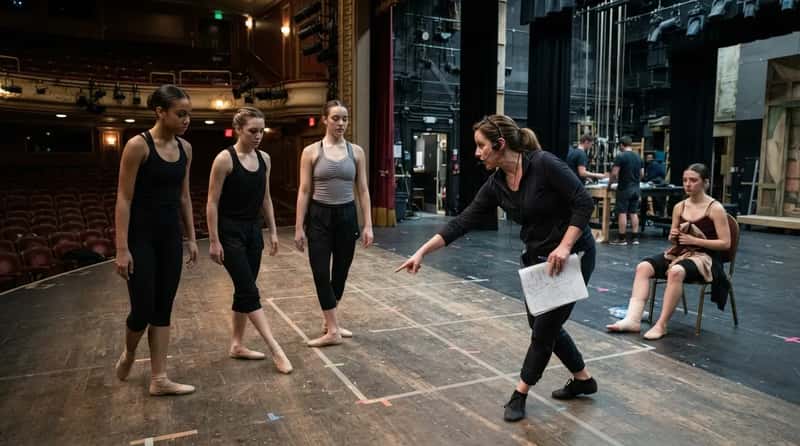
Dancers can get hurt between curtains, and the second show still has to happen. Dance Informa’s sample schedule gives a break of nearly an hour, and it notes that if someone is injured, that time also allows the entire show to be re-blocked. Re-blocking means rearranging the stage positions.
That means deciding who stands where, who takes which lift and who covers which number. It’s choreography rewritten in minutes. The late-show audience gets a complete performance without ever knowing it’s a different one.
And sometimes it isn’t an injury at all…
#5 – The Sick Castmate Nobody in the Audience Notices
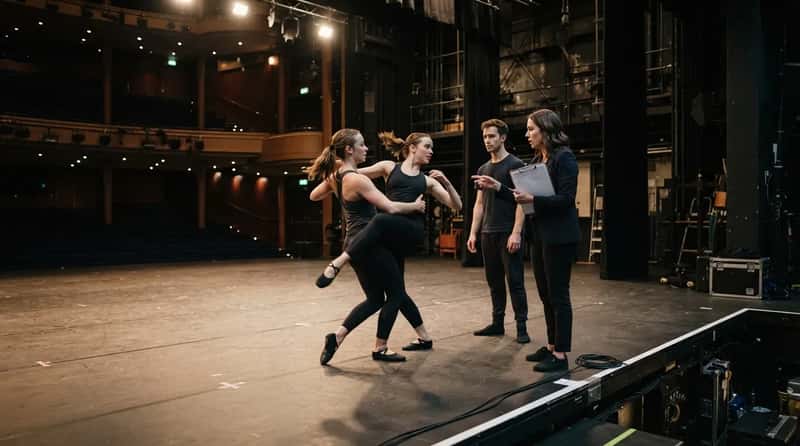
Illness travels fast when a cast lives together at sea. Dancer Amanda Sherwin describes how cast members are constantly joining and leaving, and you never know when you’ll have to re-block a show at the last minute for a sick castmate. The show goes on with fewer people.
Between performances, the cast manager and performers rework the staging. Someone covers a spot. A lift gets changed to suit the partners available. The goal is a show that still looks whole, even though the cast list on the wall no longer matches the stage.
Why It Stands Out
- The cast is always changing, so last-minute re-blocking is part of the job.
- Someone has to cover each empty spot.
- Lifts get reworked to suit whichever partners are available.
- The audience sees a full show, not the scramble behind it.
But some shows can’t be reshuffled at all…
#4 – The Show That Needs Six Voices, Not Five
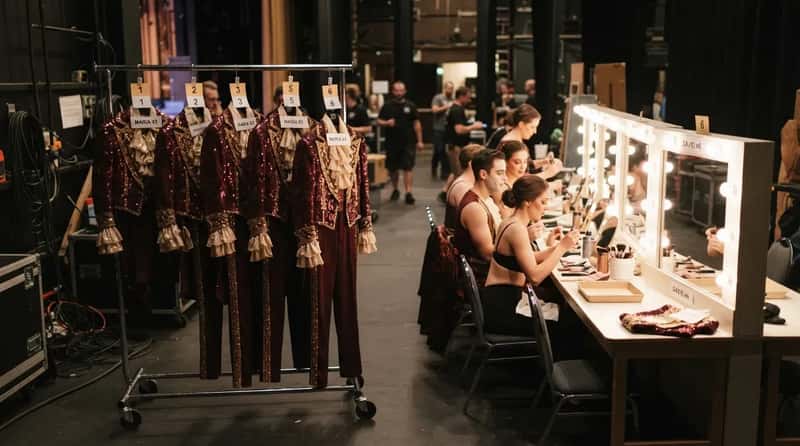
Some productions are built around an exact headcount. Martin says his show is blocked for six performers, and he’s never done one with five. His reasoning is blunt: he’d rather postpone than perform with a missing voice.
That’s because the harmonies and costume changes depend on all six. Fewer people means holes in both the staging and the sound. In a case like that, the crew may have no patch available, only the option to hold the curtain.
Meanwhile, the cast has one more thing to squeeze in, and it’s food…
#3 – The Dinner Sprint From One End of the Ship to the Other
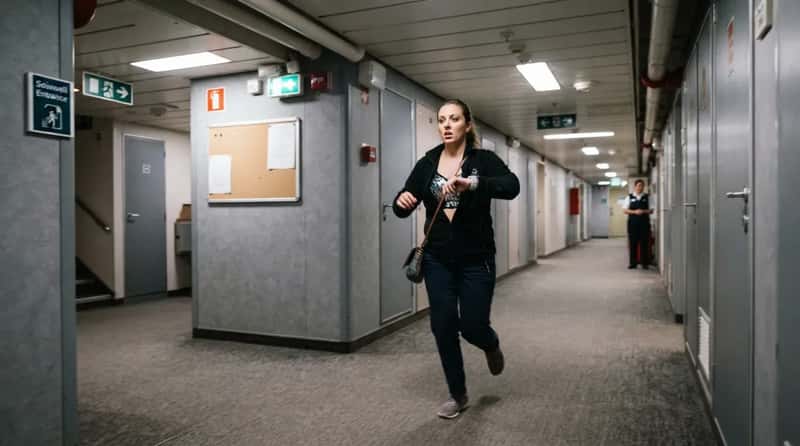
Performers don’t get a long meal. One former cruise performer says that with only an hour between shows, they’d change quickly, get out of costume, and run from the front of the ship to the back to eat. Then they ran back to do the next show.
The crew mess, often a long walk from the stage, becomes part of the schedule. A meal is one more thing to fit between curtains. Some cast members learn to eat fast and light, while others skip the walk entirely.
If the dinner dash sounds tough, wait until you see what the ocean adds…
#2 – Rough Seas and the Quiet Decision to Scale Back
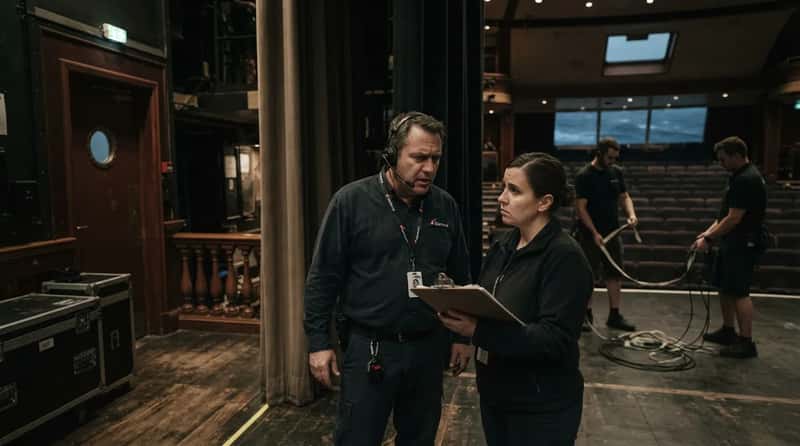
Weather can change a show between performances. Carnival’s John Heald explained that most often, the decision not to perform a full production is made by the cast manager because of rough seas. It’s a safety call, because a rocking ship puts performers at risk of injury.
Carnival lists two other reasons a full production can be altered or canceled: illness in the cast or technical team, or a technical problem that couldn’t be fixed just before showtime. So a late show can come out different from the early one. It’s a judgment call, not a failure.
And then there’s the one thing behind every fix on this list…
#1 – The Clock Itself: Under an Hour to Reset a Whole Production
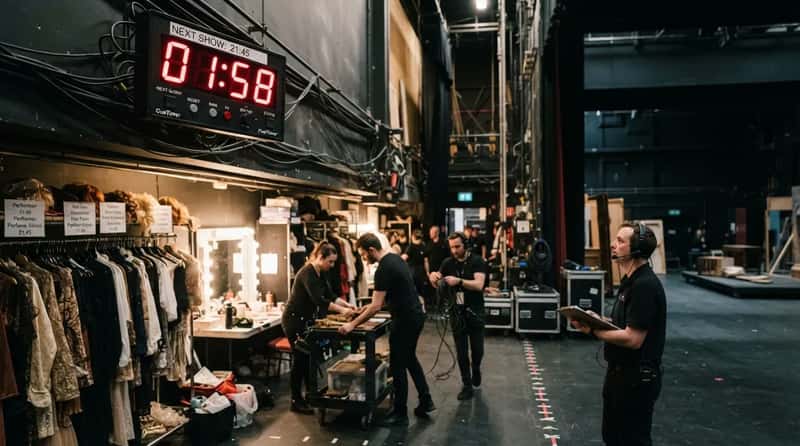
The biggest thing crews fix is time. In one dancer’s sample schedule, the break between shows ran from 8:50 to 9:45 p.m. That window was for stretching, resetting and preparing for the second show.
Then comes the second performance, followed by more than half an hour to organize and put away all costumes, accessories and props. What’s real is the physical load of two full workouts in one night. Every wig, mic, cue and quick change on this list has to be squeezed into that one narrow gap.
The late show isn’t a repeat of the early one. It’s the result of an hour of repairs, resets and quick decisions that most passengers never see. A sick castmate or a rolling deck can rewrite the staging, and a missing voice can pause a show.
So when the second curtain rises and everything looks effortless, remember that it was rebuilt in the time it takes most of us to finish dinner.