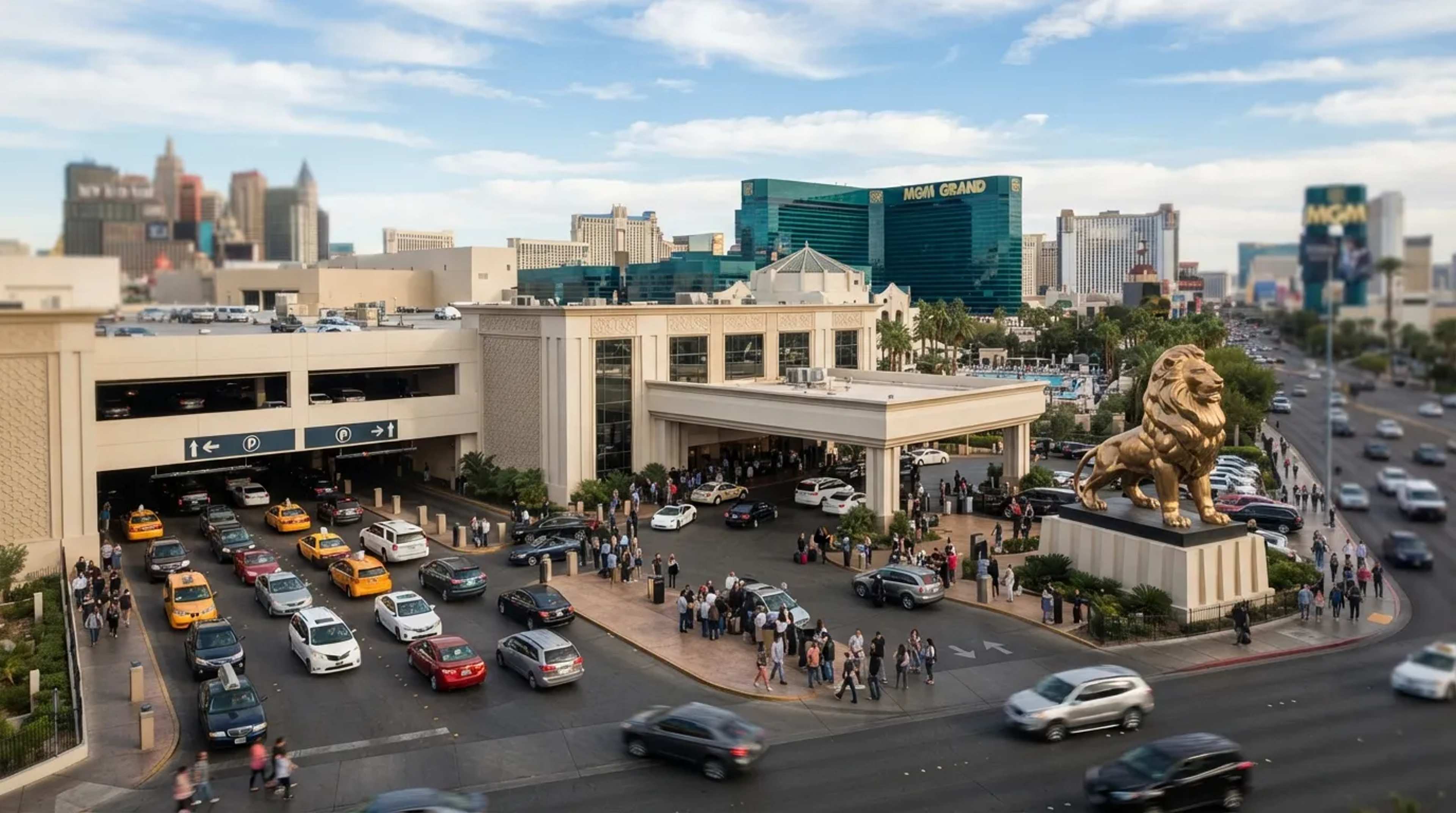
You spot a Vegas room for $89 a night and feel like you just beat the system. Then checkout morning arrives, and the bill looks like it belongs to somebody else’s trip. If that has happened to you, you’re in very big company.
Since 2025, federal rules have forced booking pages to show a total price, which fixed one famous ambush. It didn’t touch the rest: the tax on the fee, the garage, the freeze on your card, and one loyalty loophole that makes the “mandatory” charge disappear. Start at the bottom of the countdown, because the later items change how you read every room price.
#15 – The Resort Fee Quietly Gets Taxed Too
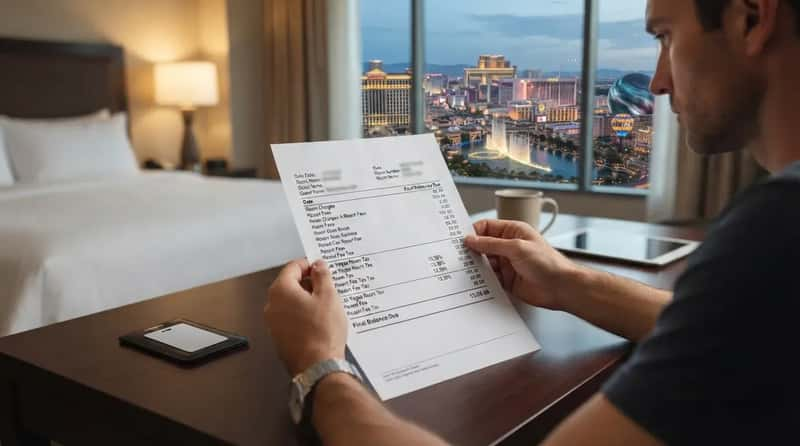
That fee isn’t the final fee. Clark County’s room tax is about 13.38% on the Strip, and it applies to the resort fee just like the room. A $55 fee therefore costs $62.36 a night, and a $50 fee costs $56.69. Most travelers only spot this on the final folio.
Quick Compare
- $45 fee becomes about $51.02 a night with Strip tax
- $50 fee becomes $56.69 a night
- $55 fee becomes $62.36 a night
Trackers put most Strip fees at roughly $45 to $55 before tax, which lands around $51 to $62 once tax is added. Downtown is slightly different, because inside the Las Vegas city limits the rate is 13%. The gap between headline and bill looks small, but it repeats every single night. And that’s before you multiply it by your stay, which is where the real shock begins…
#14 – The Fee Can Be Bigger Than the “Deal” Itself

Some Vegas rooms are advertised for less than the fee attached to them. Many Las Vegas hotels advertise room rates lower than the resort fee, which can push the total to more than double the advertised price. Picture a room at $89 and a fee near $51. That adds up to $140 a night before tax.
Experts who track hotel pricing have long called this a pricing trick. The president of Travelers United has said mandatory resort fees misrepresent the true price of the room. Plenty of travelers agree, and some now call the fee the most irritating charge in American travel. Hotels, of course, see it differently.
But the next surprise isn’t about what the page shows. It’s about what a calendar leaves out…
#13 – The Pretty Price Calendar Isn’t Always the Total

Those color-coded calendars are built to be scanned fast. MGM and other Las Vegas operators display calendars that show room rates by the day. That’s the number your eyes land on first, and it isn’t always the number your card ends up paying.
After the federal fee rule took effect, the Las Vegas Review-Journal checked how resorts were responding. It found that Resorts World and Fontainebleau had calendar displays with room rates only, not a total cost. Many websites selling Vegas rooms complied right away. The takeaway is simple: click through to the final screen before you trust the cheapest tile.
Still, the calendar is mild compared to what happens when you pull into the garage…
#12 – Hotel Guests Pay to Park at Their Own Hotel
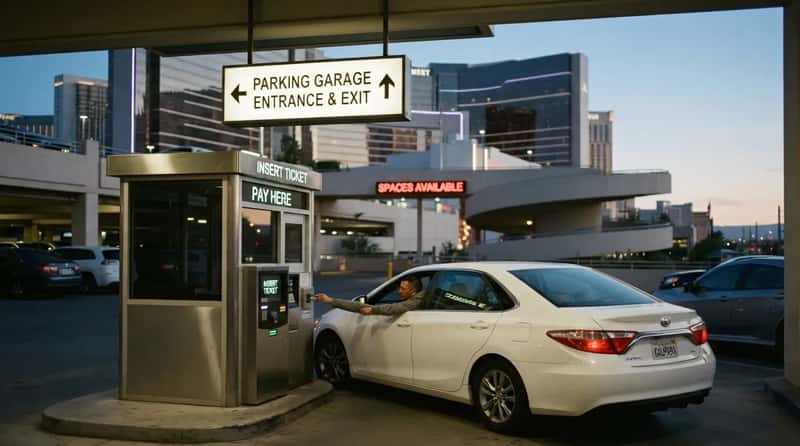
Sleeping there doesn’t mean parking there for free. Being a hotel guest does not automatically mean free parking in Vegas. At MGM properties, self-parking is $20 a day Monday through Thursday and $25 on weekends, though hotel guests stay at $20. Valet is $40 at Caesars properties and $50 at Caesars Palace.
There are exceptions, and they’re surprisingly specific. One 2026 check found parking still free at Wynn, TI, SAHARA and Circus Circus. So two hotels a short walk apart can differ by $20 or more per night. The booking page never puts that gap in front of you.
The twist is that a single piece of plastic can erase some of these charges, and almost nobody mentions it…
#11 – A Loyalty Card Can Make the “Mandatory” Fee Vanish

The fee is mandatory, except when it isn’t. MGM Rewards waives it for Gold, Platinum and Noir members, and Caesars Rewards waives it for Diamond and Seven Stars members. That’s what one 2026 guide lists, so check the current terms before you count on it. Critics say this proves the fee was never really about the amenities.
Parking works the same way. Self-parking is free for MGM Rewards Pearl members and above, and valet is free from Gold up. Caesars waives both self-parking and valet from Platinum upward. Status can erase hundreds of dollars on a long weekend. Most casual visitors never hear about it.
Of course, none of it matters if you think booking somewhere else gets you out of the fee…
#10 – Booking Through a Third-Party Site Won’t Save You

Plenty of travelers assume a travel site hides the fee, or removes it. Neither is true. Resort fees apply however you book, and third-party bookings don’t exempt you from them.
At a Glance
- The fee applies no matter where you book
- Since May 2025, third-party sites must show it inside the total
- Compare all-in totals, not headline rates
What changed is the display, not the charge. Since the federal rule took effect in May 2025, third-party sites must show the fee inside the total before checkout. So the smart move is to compare the all-in number across sites. The headline rate is no longer the number that matters. The fee stays the same either way.
But there’s one charge that doesn’t appear on any price list, and it can drain your bank account at the front desk…
#9 – The Front Desk Freezes Money You Haven’t Spent

Check-in can take more cash than the bill says. Hotels place a temporary hold on your card for incidentals, and the typical hold is $100 to $200 per night. It isn’t a purchase, but it shrinks what you can spend.
The pre-authorization reduces your available credit, and on a debit card it effectively lowers your bank balance. Some properties go higher. A 2023 listing showed Wynn and Encore at a $150 card hold, or a $300 cash deposit, per night. That’s a dated figure, so confirm the current amount.
Next up: the few places in town that skip the fee, and the catch hiding behind each one…
#8 – A Handful of Hotels Really Do Skip the Fee

A few Vegas hotels charge no resort fee at all. One tracker says the Strip’s only fee-free hotels are the Best Western Plus Casino Royale and the Jockey Club, a condo-style property. Downtown, Four Queens and Binion’s charge none. Trackers disagree on the exact list, so verify before you book.
Then there’s the luxury exception. The Four Seasons is described as the only major Strip property with no fee, but rooms start at $350 to $500 a night. “No fee” and “cheap” are not the same thing. The math only works when you compare the full total.
And the numbers on these fees have a history that explains why so many travelers are angry…
#7 – The Fee Has Roughly Doubled in a Decade

Resort fees weren’t always this big. One tracker says the average Strip fee was around $25 to $30 in 2015, and it’s roughly $52 now. That’s a steep climb for a charge that started as a small add-on. Nothing about the amenities doubled along with it.
Fast Facts
- 2015: average Strip fee of about $25 to $30
- Today: roughly $52 a night, per the same tracker
- Tax is added on top, at about 13.38% on the Strip
Some analysts think the climb has a cost. Resort fees and newer parking charges are believed to be a significant cause of reduced tourism to Las Vegas. That’s a belief, not a proven fact, and the industry may disagree. But it explains why the topic keeps resurfacing in travel forums.
Meanwhile, a short ride away, the same hotel math looks very different…
#6 – Downtown Charges Far Less Than the Strip
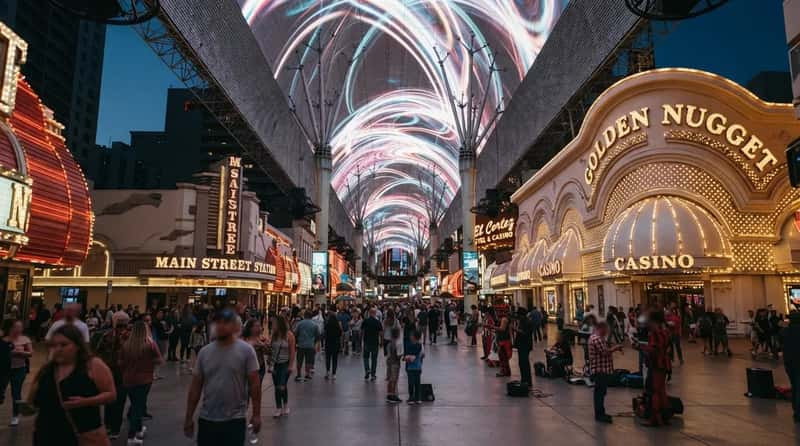
Move a mile or two and the fee can nearly halve. As of September 2026, one guide lists Main Street Station at $32 and El Cortez at $30, with the Golden Nugget at $46. Top-tier Strip names like Bellagio and Wynn are listed at $55. That’s a $25 nightly gap before tax.
Fremont Street’s tradeoff is atmosphere and location, not hidden costs. Downtown also sits inside the city limits, where the tax is 13% instead of 13.38%. Over a 4-night trip, the difference adds up fast. Whether it’s worth giving up the Strip view is an argument for another day.
Prices aren’t just different by neighborhood. They can change by the night, too…
#5 – Game Night Can Change the Garage Price
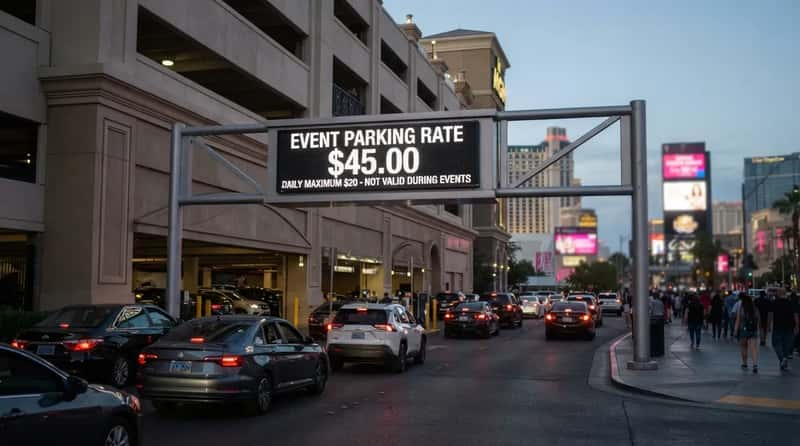
The same garage can cost more on certain nights. Parking fees may vary based on the day of the week, major events or peak demand. A quiet Tuesday and a packed weekend aren’t priced alike, and the booking page never says so.
Special events, like Raiders and Golden Knights home games, may bring increased fees at MGM properties. Even perks shift on busy nights. Nevada license holders get up to three free hours of parking at several resorts, except during events. So the “free” window can vanish exactly when the Strip is busiest.
Speaking of free parking, there’s one group that gets a perk you almost certainly don’t…
#4 – Locals Get a Perk Tourists Never See
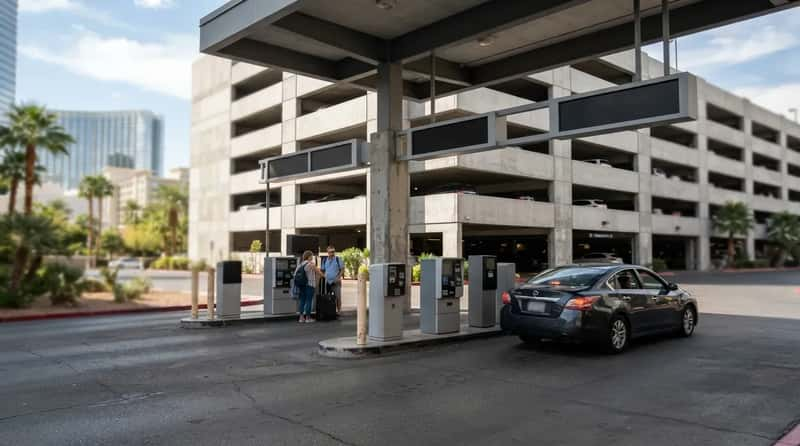
Some people walk into these resorts without paying a cent for the garage. With a Nevada license, MGM resorts, Caesars resorts and The Venetian give up to three free hours of self-parking, with one hour at Planet Hollywood. The person at the next table may have parked free. You, as a hotel guest, probably didn’t.
Worth Knowing
- Up to 3 free self-parking hours at MGM, Caesars and Venetian resorts
- Planet Hollywood offers 1 free hour
- Event nights can cancel the perk
- Hotel guests pay the daily rate
The idea is to keep locals coming back through the casino doors. Hotel guests, by contrast, pay the daily rate. Some visitors call that backwards, since they spend more per trip. It’s one more detail the booking page leaves out.
And what are you actually getting for the nightly fee? The answer is stranger than you’d expect…
#3 – You’re Paying for Newspapers You’ll Never Open

The resort fee comes with a list of inclusions. At Venetian and Palazzo, it covers fitness center passes, wireless internet, digital magazines and newspapers, boarding pass printing, and local and toll-free calls. Most travelers use two of those, if that. Nobody asked you to pick.
Wynn leans even harder into the bundle. Its fee includes bottled water, two daily fitness center passes, concierge services, unlimited domestic long-distance calls, and Alexa in-room services. Long-distance calling is still part of the fee in the age of smartphones. The list is real, but the value depends entirely on who’s using it.
Now for the rule that was supposed to fix all of this, and what it actually left untouched…
#2 – The Federal Rule Fixed the Surprise, Not the Charge
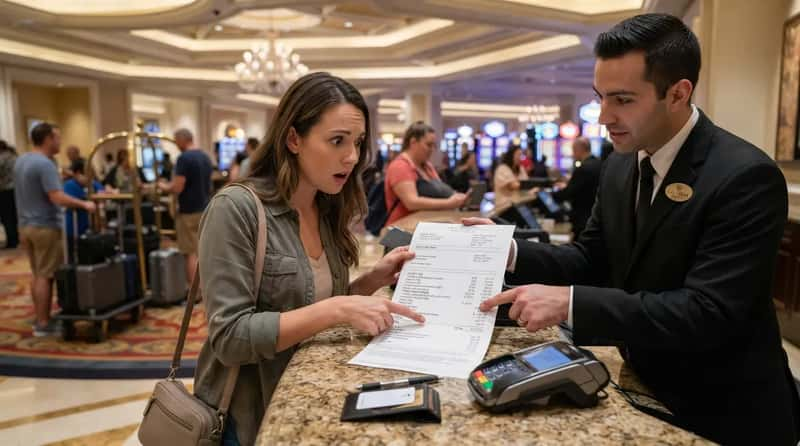
Plenty of people expected resort fees to disappear. They didn’t. The FTC’s Rule on Unfair or Deceptive Fees took effect on May 12, 2025. It requires businesses to disclose the total price, including all mandatory fees, whenever they advertise short-term lodging. That’s a real change at the booking stage.
But it’s a disclosure rule, not a price rule. The FTC says it isn’t banning any type of fee or amount, only requiring prices and fees to be shown up front. The fee survived. Only the ambush ended. That’s why the Vegas bill still stings even when the page is honest.
The biggest surprise, though, comes from adding everything together…
#1 – The Real Price of a Night Is a Stack, Not a Number
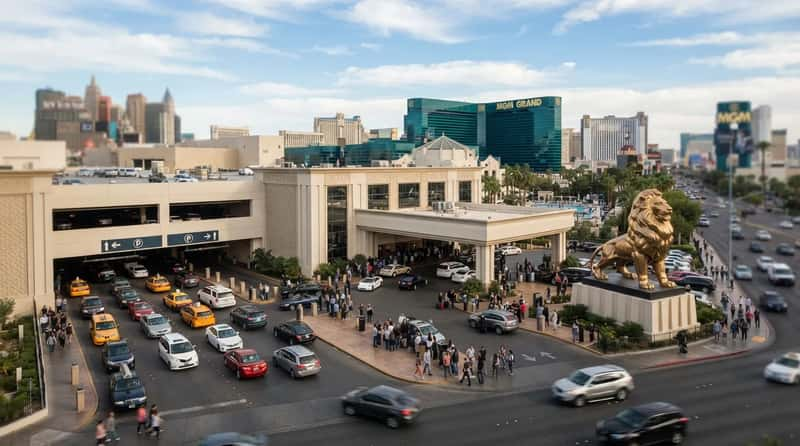
Put the pieces side by side and the room rate is only the base layer. Take a hypothetical 3-night stay at a $50-fee hotel like MGM Grand. A $50 fee costs $56.69 a night after tax, so three nights comes to about $170 in fees alone. That’s before the room itself.
Now add the garage. MGM’s hotel-guest self-parking rate is $20 a day, which adds another $60. That lands around $230 for fees and parking, plus a card hold of typically $100 to $200 per night that temporarily ties up your money. The room rate hasn’t even entered the math yet.
The booking page is more honest than it used to be, but it still isn’t the whole story. The fee gets taxed, parking costs extra, status can erase both, and the card hold waits at the desk. In Vegas, the number that sold you the room and the number that left your account are rarely the same one. What was the charge on your last Vegas bill that you never saw coming?