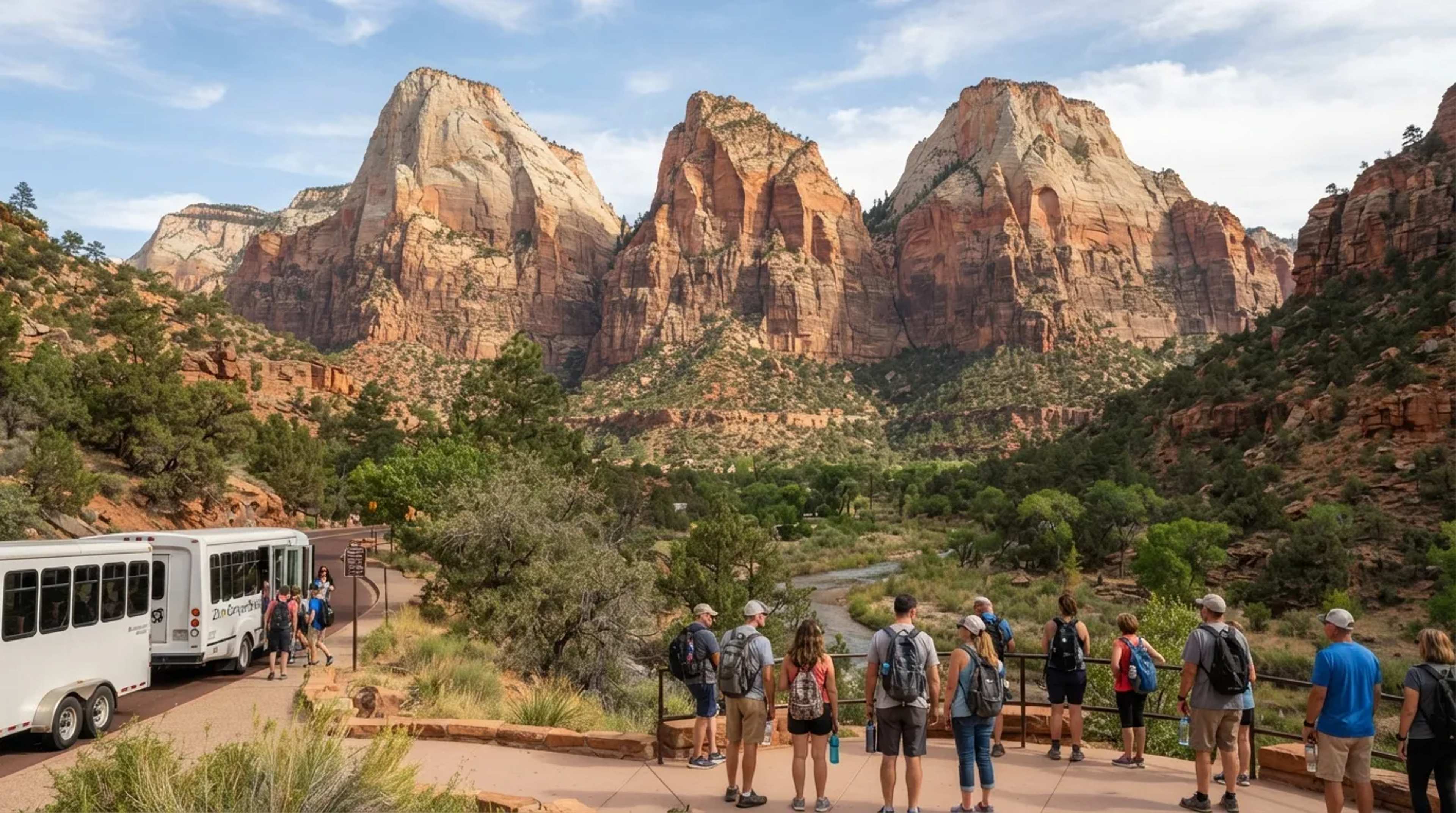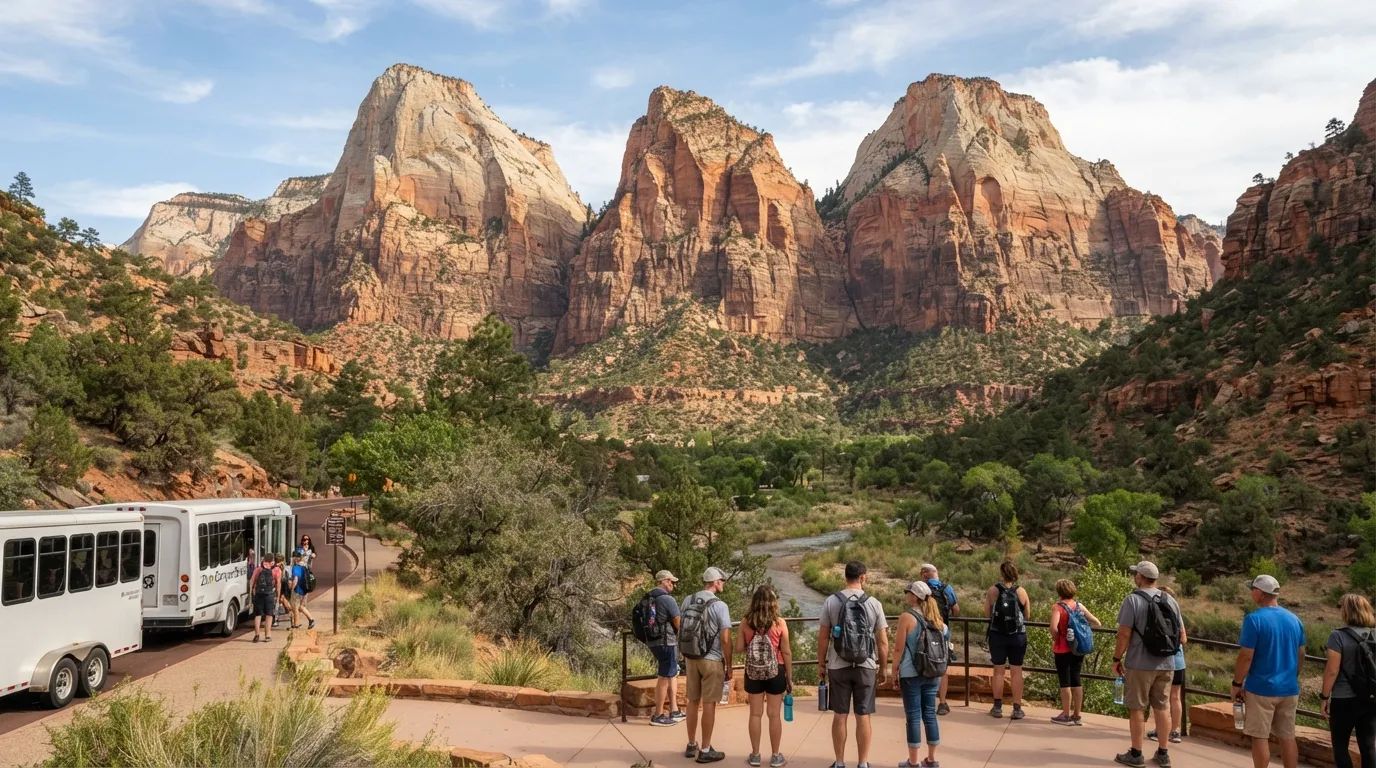
The Zion shuttle sounds like the dullest part of the trip: a free bus, a handful of stops, a ride to the trailhead. Then your first afternoon happens, and you realize that bus is quietly running the whole show. It decides where you park, how long you wait, which hikes are realistic, and what time your day actually ends.
Most first-timers learn this the same way. They hit a full parking lot, a long line, or a bus that rolls right past the stop they wanted. A few of these rules feel like traps until someone explains them, and one of the biggest has nothing to do with the bus at all. Here’s what visitors figure out, counting down from the bottom of the list.
#15 – The Ride Is Free, but the Park Fee Still Applies
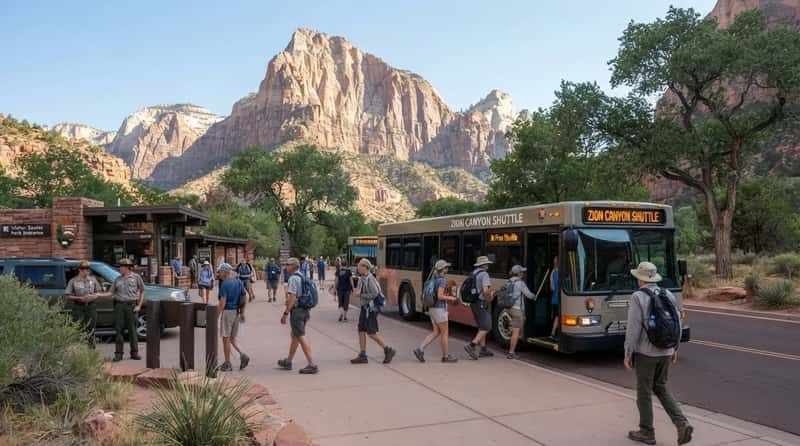
Visitors don’t need a permit, ticket, or reservation to ride the park shuttle. They do have to pay the park entrance fee. That surprises people who hear “free shuttle” and assume they’ve found a free day. The bus costs nothing, but the gate does.
Still, this makes the first hour much simpler than it could be. There is no timed ticket to chase for the bus itself. You show up, get in line, and board, and nobody checks a reservation.
The next thing visitors notice is what happens to their own car.
#14 – The Famous Canyon Road Is Off-Limits to Your Own Car
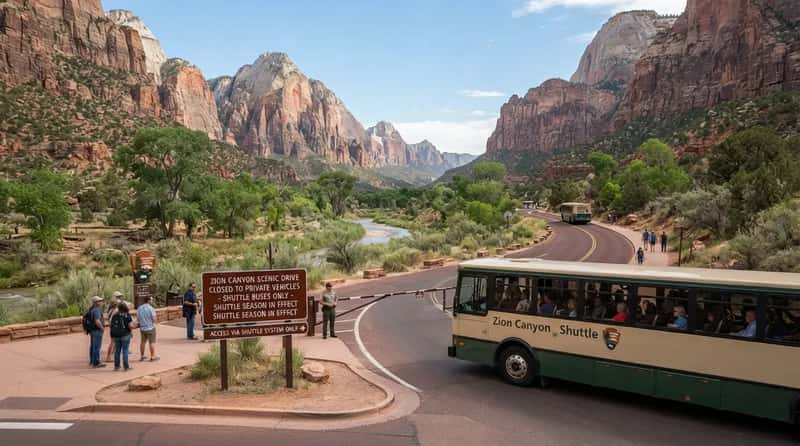
The road everyone has seen in photos is closed to regular traffic for most of the year. Personal vehicles aren’t allowed on the Zion Canyon Scenic Drive during shuttle season. When the shuttles run, private cars can’t go past Canyon Junction.
The 2026 shuttle season was listed as running March 7 through November 28, with brief holiday service December 26 through January 2. For most of the year, the canyon road belongs to the buses. Visitors who pictured a leisurely drive-through with the windows down find out quickly that it isn’t happening. That one rule shapes everything else, starting with a number that catches people off guard.
Fast Facts
- Private cars stop at Canyon Junction while the shuttles run.
- 2026 canyon shuttle season: March 7 to November 28.
- Holiday service: December 26 to January 2.
- The bus is free, but the park entrance fee still applies.
#13 – Nine Stops, 7.7 Miles, and a Ride Slower Than You’d Guess
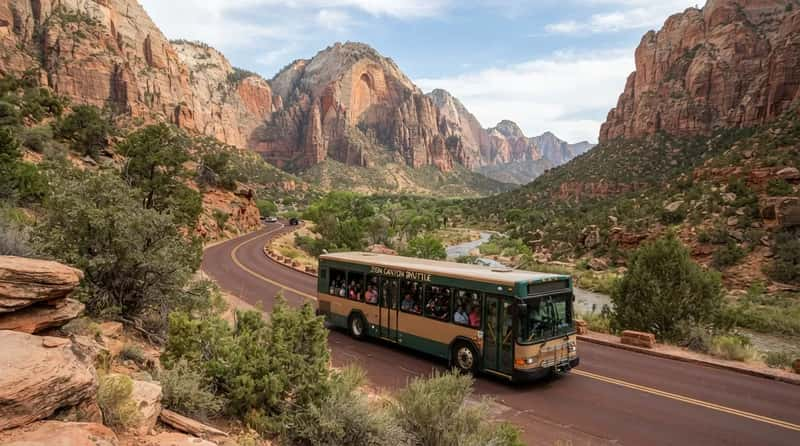
On a map, the route looks short. In real life, it takes a while. There are nine stops, and the full 7.7-mile route takes roughly 45 minutes one way, from the Visitor Center to the end of the road.
Buses arrive every 5 to 10 minutes, which sounds speedy until you do the math. A trip to the far end and back can eat about an hour and a half before you’ve taken a single step on a trail. Riders tend to rethink their afternoon plans fast.
And the slowest part of the day often happens before you ever get on a bus.
#12 – The Visitor Center Lot Fills Up Before Many People Wake Up
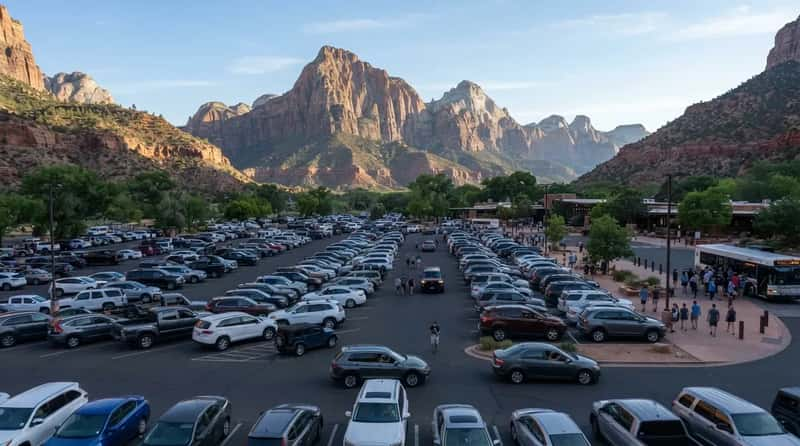
The biggest lot in the park is also the first thing to vanish. The Visitor Center lot holds over 350 standard spaces. That sounds like plenty until you see how early people show up.
One guide says the lot can hit two-thirds capacity before 6:30 a.m. on summer weekends. The park service itself says parking fills early year-round. An afternoon arrival almost never gets a spot. Some drivers circle anyway, watching the clock tick. Others skip the loop and head straight to town.
That backup plan turns out to be one that plenty of people end up preferring.
#11 – Springdale Has Its Own Shuttle, and It’s Secretly the Smart Play
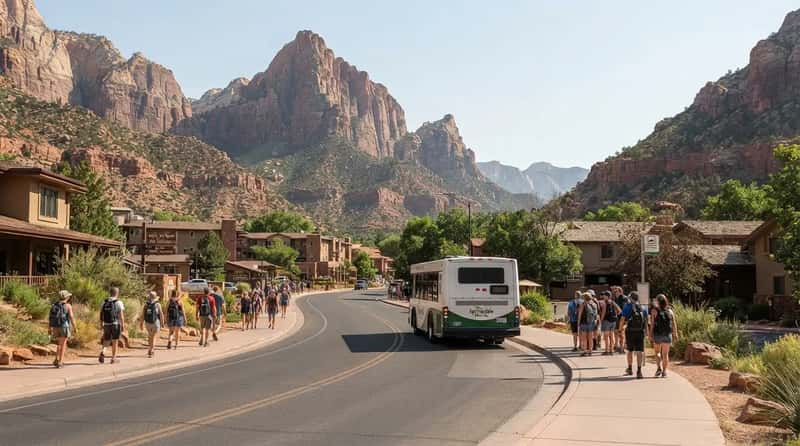
The town outside the park runs a separate bus line. It makes nine stops along Springdale’s main road, from Hotel De Novo on the south end to Zion Canyon Village near the pedestrian entrance. It’s free, too.
The park’s own advice is clear: if parking inside the park is full, park in Springdale and ride the shuttle to the pedestrian entrance. One guide goes further and says this is often less stressful than circling the Visitor Center lot. Plenty of regulars never touch the park lot at all. It still feels like a hassle to some drivers, and the next detail shows why.
Quick Compare
- Visitor Center lot: over 350 standard spaces, and it fills early.
- Springdale shuttle: free, nine stops, starts at 8 a.m.
- Springdale parking: paid, so the savings aren’t total.
- Canyon shuttle: starts at 7 a.m. and takes about 45 minutes one way.
#10 – The Town Shuttle Starts an Hour Later Than the Canyon Bus
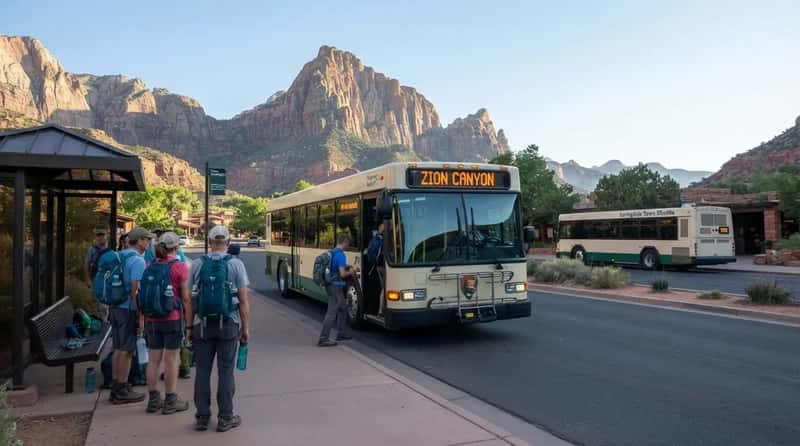
The two lines don’t share a clock. The Springdale line doesn’t start until 8 a.m., while the Zion Canyon shuttle starts at 7 a.m. For hotel guests who planned to catch the first bus, that gap stings.
One guide says that if you’re staying in town and want the first canyon bus, you have to walk or drive to the Visitor Center, or wait for the town shuttle an hour later. The evening end shifts too. The last shuttle leaves Zion Canyon Village at 6, 7, or 8 p.m., depending on the season. Missing it means a long walk back through town.
The next surprise is waiting inside the canyon itself.
#9 – The Longest Line Isn’t Where You’d Expect
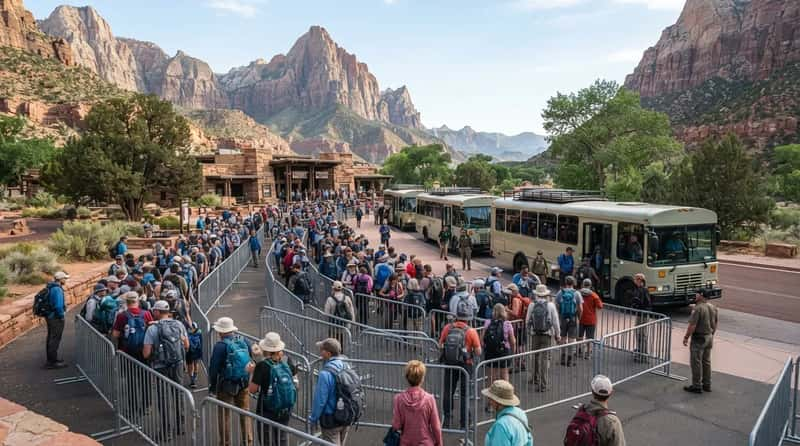
Lines don’t build evenly along the route. One guide says shuttle waits at the Visitor Center peak between 9 and 11 a.m. That’s when the whole day’s crowd is still funneling into the same spot.
The same guide notes that waits are shorter at mid-canyon stops, because riders have already scattered to their trailheads. The farther in you go, the thinner the crowd at the stops. Afternoon arrivals often miss the biggest morning crush, though a bus can still be packed. And one stop on the route plays by completely different rules.
Worth Knowing
- Visitor Center waits peak between 9 and 11 a.m.
- Mid-canyon stops tend to have shorter lines.
- Buses run every 5 to 10 minutes, so a missed one costs little.
- Afternoon buses can still fill up, even without a long line.
#8 – One Stop Only Works in One Direction
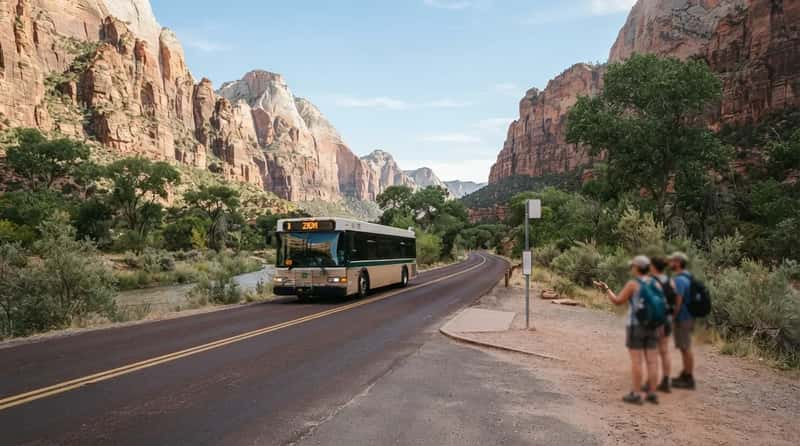
Not every stop is a two-way street. Every shuttle serves every location except Big Bend, which is skipped heading north into the canyon and served only heading south.
Visitors who want that stop learn the rule the hard way: they watch the bus roll right past. You can only get there by riding to the end and working your way back. The stop sits late in the route, just before the road ends.
But no quirk of the route matters as much as what the clock does to a first afternoon.
#7 – The Last Bus Is the Real Boss of Your Afternoon
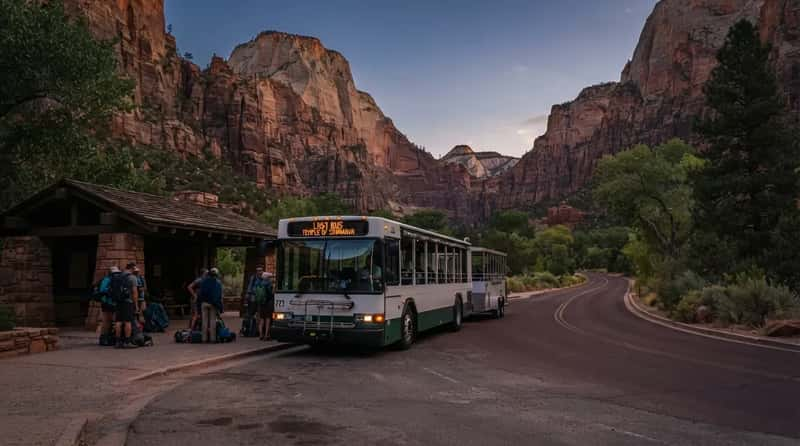
Sunset isn’t the deadline. The final departure is. In one spring and fall example, the last shuttle leaves the Visitor Center at 6 p.m., and the last bus out of the canyon from the Temple of Sinawava leaves at 7:15 p.m.
The cutoff moves with the seasons. One guide lists the last departure ranging from 5 p.m. in late fall to 7 p.m. in summer. Late-season visitors can face the earliest cutoff of the year. The posted time works best as a hard stop, not a suggestion.
Here’s a way to skip the whole Visitor Center scramble.
#6 – Zion Lodge Quietly Works as a Second Front Door
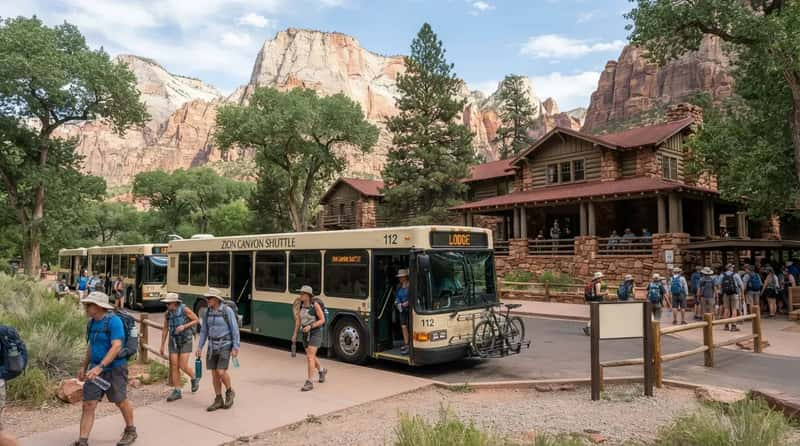
The Visitor Center isn’t the only place to start your day. Zion Lodge is the only lodging inside the canyon, and it sits by the trails to the Emerald Pools. If you’re staying there, you can board the shuttle at the Lodge instead of the Visitor Center.
That skips the entire parking fight. Lodge guests can sidestep the biggest bottleneck in the system. It also makes the Lodge one of the busiest stops mid-route. Next up is a stretch where some visitors skip the bus altogether.
#5 – The First Few Stops Can Be Walked Instead
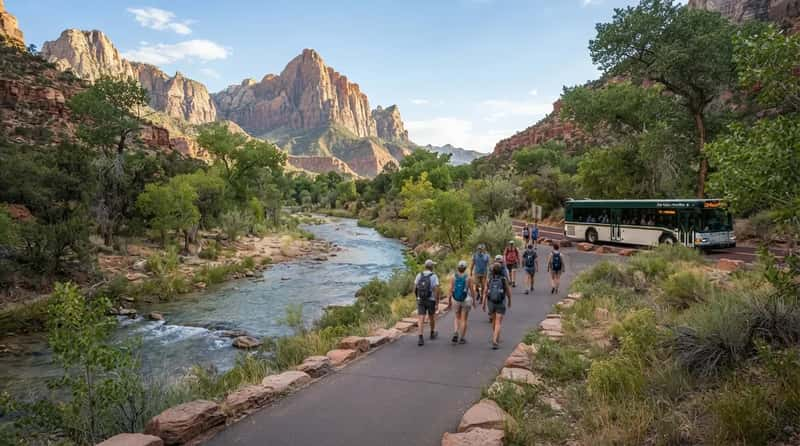
The first leg of the route has a built-in alternative. The Visitor Center is a starting point for easy walks like the Pa’rus Trail. And Canyon Junction, Stop 3, is where the Pa’rus Trail ends.
That means a short stretch of the route can be covered on foot. Stops 1 through 3 are linked by a trail, so the bus isn’t the only way to reach them. It’s a gentler way to spend the first hour.
Now for the stop that sends a lot of people hunting for permits.
#4 – The Grotto Is the Angels Landing Stop, and the Permit Is a Separate Hurdle
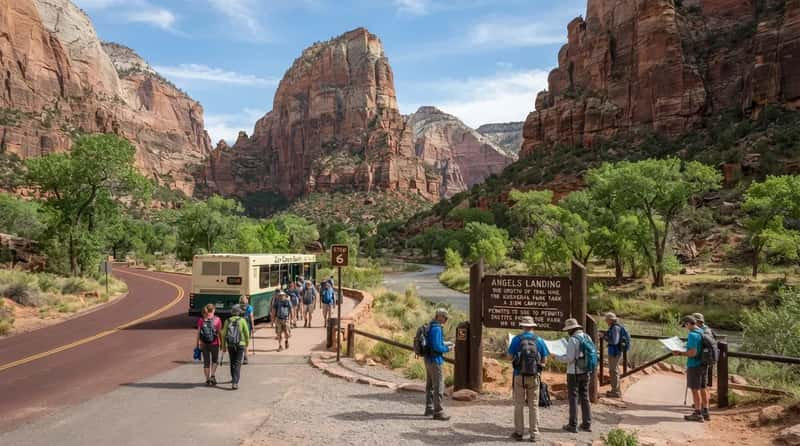
This is the stop most visitors have heard of. The Grotto is Stop 6 on the Zion Canyon Line and the usual stop for Angels Landing. The shuttle only delivers you to the door.
The hike itself has its own gate. Angels Landing needs a separate permit through the park lottery. A bus seat does not get you onto the famous trail. Plenty of visitors learn this at the trailhead instead of at home.
The stop at the very end has the opposite surprise.
#3 – The Last Stop Opens the Narrows Without a Permit
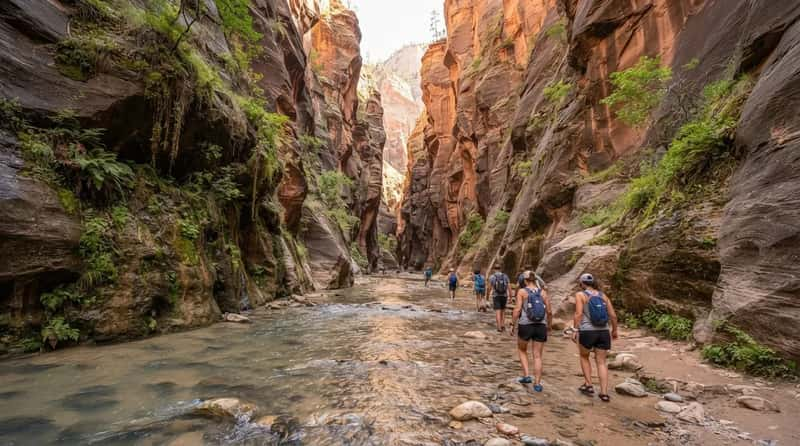
The far end of the road is where the canyon squeezes shut. The Temple of Sinawava is the last stop, serving the Riverside Walk and the Narrows. After that, the road simply ends.
After the Angels Landing story, this rule feels almost too easy. You don’t need a permit to hike the Narrows upstream from here. One of the park’s most famous hikes starts with no permit at all. River conditions can change, so check with rangers before heading in.
At a Glance
- Stop 6, The Grotto: Angels Landing and the West Rim Trail.
- Angels Landing: needs a separate permit through the park lottery.
- Stop 9, Temple of Sinawava: the Riverside Walk and the Narrows.
- Narrows upstream hike: no permit needed, but check river conditions first.
The next surprise isn’t about a stop. It’s about the whole experience.
#2 – One Afternoon Forces a Painful Shortlist
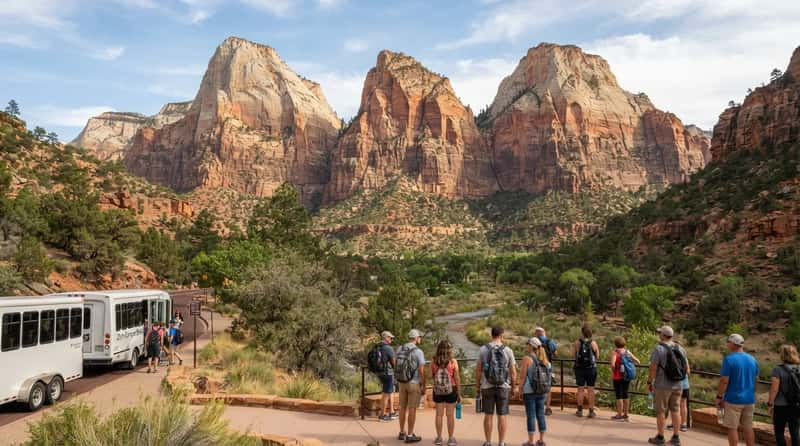
The shuttle makes you choose. One family-focused guide says that with only one day, you should hit Stops 4, 5, 7, and 9. That’s Court of the Patriarchs, Zion Lodge, Weeping Rock, and Temple of Sinawava.
Other visitors argue you’re better off spending the time on fewer stops. Both camps end up cutting something. Nobody sees all nine stops well in a single afternoon. The first afternoon is when most people make peace with that.
And the biggest realization comes last.
#1 – The Quiet Is the Whole Point, and the Schedule Is the Price
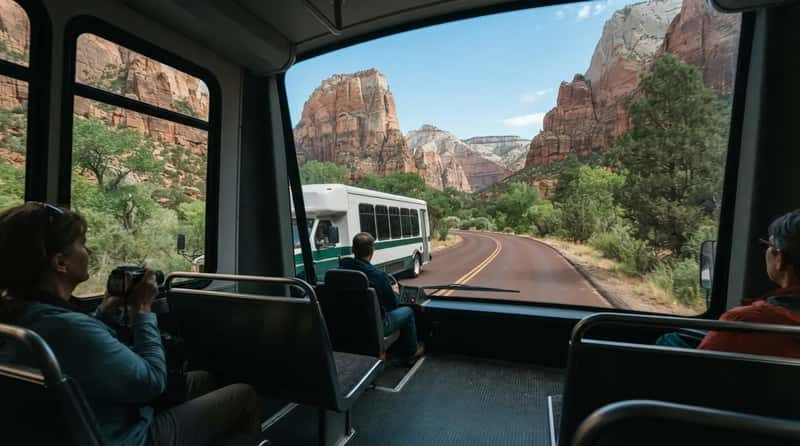
The shuttle’s real purpose shows up around the third stop. The traffic is gone. One guide says the system keeps the Zion Canyon Scenic Drive serene and free from traffic jams, and from the window it’s easy to see what that means.
Another guide describes how the stops unfold in a memorable order as the canyon walls close in. The price of that quiet is living on the bus’s clock. Visitors who accept the trade tend to love the canyon more. The ones who fight it spend the afternoon watching the time.
So the shuttle turns out to be more than a side detail. It’s free, it takes about 45 minutes one way, and it keeps personal cars off the canyon road during the season. The lot fills early, Springdale is the park’s own backup plan, and the last bus sets the real deadline.
Most visitors work all of this out within a few hours, usually a little later than they’d like. Which of these would you have guessed before you went?