You know the feeling. The photos look like a dream, and the lobby looks like something else entirely. This list ranks 16 famous American hotels from the smallest gap between picture and reality to the widest, and some of the gaps are stranger than a bad angle or a flattering filter.
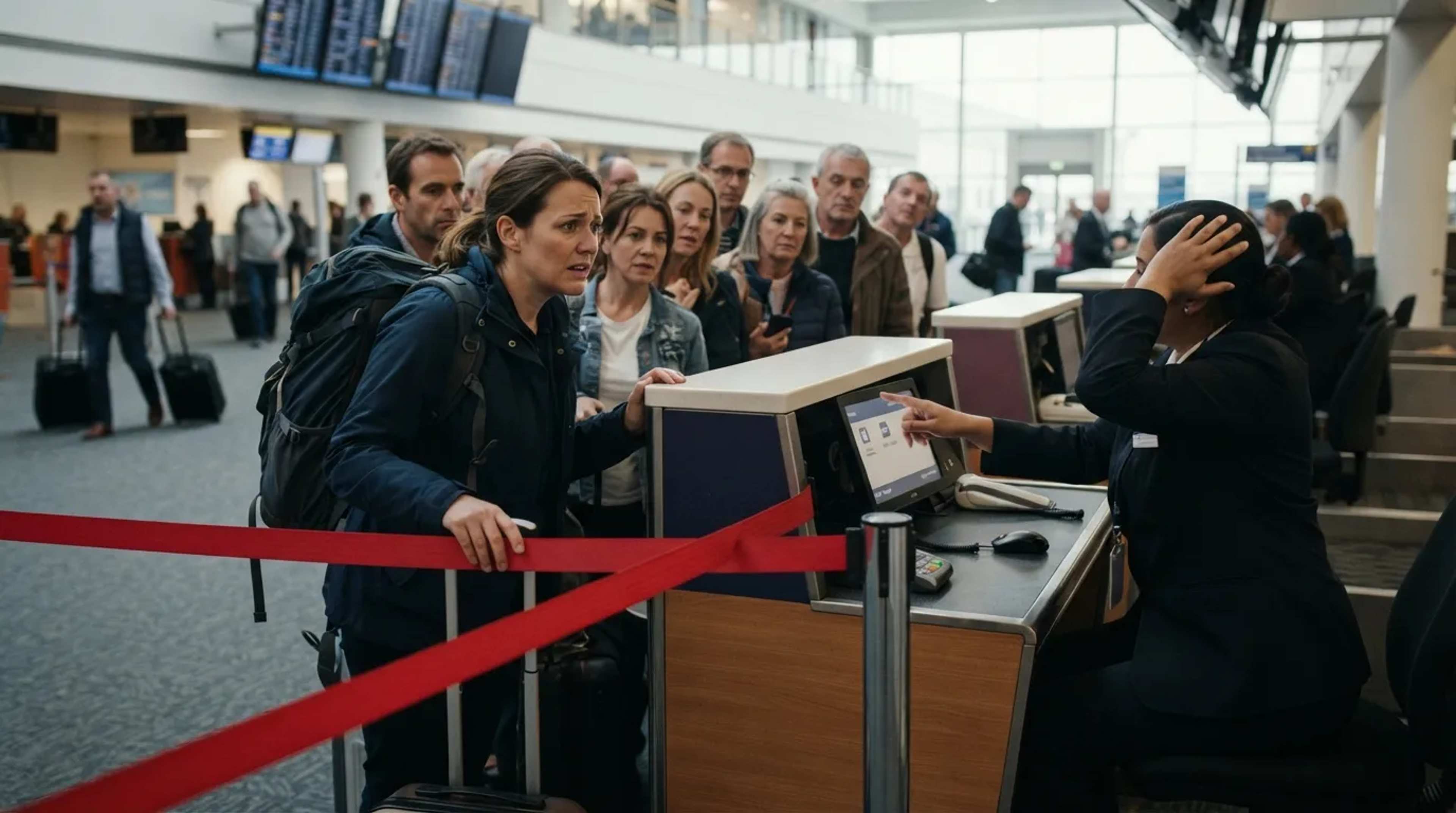
Since May 12, 2025, a federal rule has required hotels to show the total price up front, which says a lot about how long guests were guessing. But price is only one way a booking page can bend the truth. Some hotels match their photos almost exactly. Others turn out to be a different building, a different century, or a different movie set, and the one at #1 is famous for a story that mostly happened somewhere else.
#16 – The Waldorf Astoria’s Photos Are Honest, But the Room Count Isn’t What You Remember
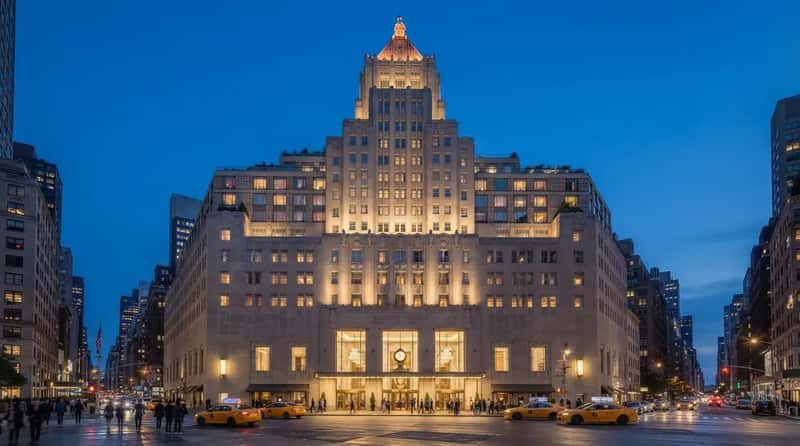
This is the smallest gap on the list, because the Art Deco glamour in the pictures is real. The hotel reopened on July 15, 2025, after closing in March 2017. Its room count dropped from about 1,400 to 375, so the hotel in your head is now roughly a quarter of its old size.
Most guest rooms now exceed 570 square feet, which is generous by Manhattan standards. The upper floors became private residences, with the hotel rooms kept below them. Rates were reported to start around $1,500 a night. So the only real gap here is who can afford the photo.
Next up is a hotel where reality actually beats the photos.
#15 – The Madonna Inn Looks Like a Joke, and Then You Walk Inside
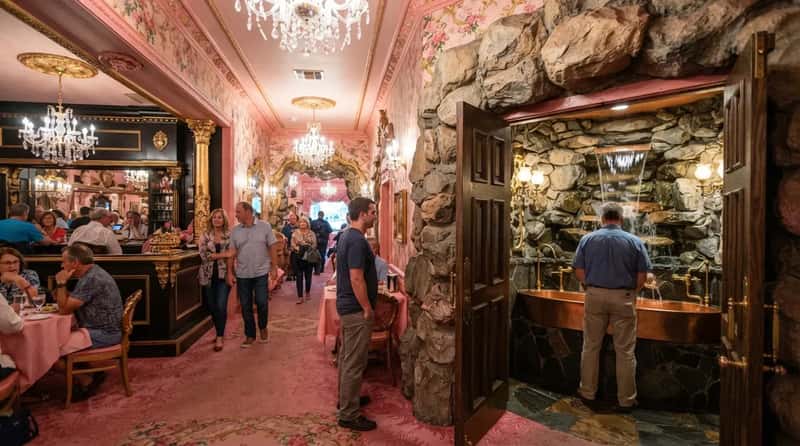
The pink-and-gold Madonna Inn in San Luis Obispo, California, is the rare hotel that undersells itself online. It opened in 1958 with just 12 rooms and grew to about 110, and no two rooms are themed alike. A photo of one room tells you almost nothing about the next.
The rock-walled Cave Man room is the classic example. The men’s restroom, with its famous waterfall urinal, has become a stop in its own right. Expect the full pink-frosting effect in person, plus the crowds who came for the same photos you did.
But the next hotel’s biggest twist is its name, not its walls.
#14 – The Ahwahnee Lost Its Name, and Its Look Ended Up in Hollywood
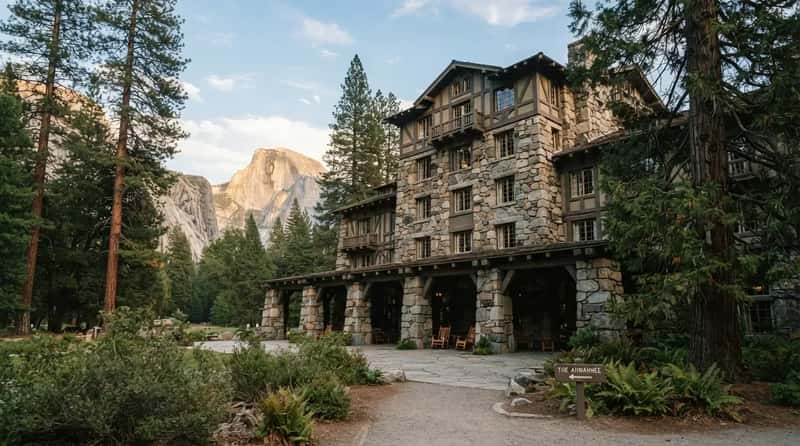
The granite-and-timber lodge in Yosemite Valley looks timeless in photos, and it is. It opened in 1927. In 2016 it was renamed the Majestic Yosemite Hotel during a trademark dispute with a former concessioner, and the Ahwahnee name returned in 2019. The reality here is a place with a very modern paperwork problem.
It also turns up in film history. The Great Lounge influenced the look of the Overlook Hotel’s lounge in The Shining, which was recreated on a studio set. If you’ve ever pictured that vast, firelit lounge, you’ve pictured a set inspired by this lodge. The photos love that one room, but the hotel also has ordinary rooms and cottages that look nothing like it.
Next is a porch that really is as long as the brochures say, with a catch.
#13 – Mackinac’s Grand Hotel Has the Porch, but Getting There Is the Real Trip
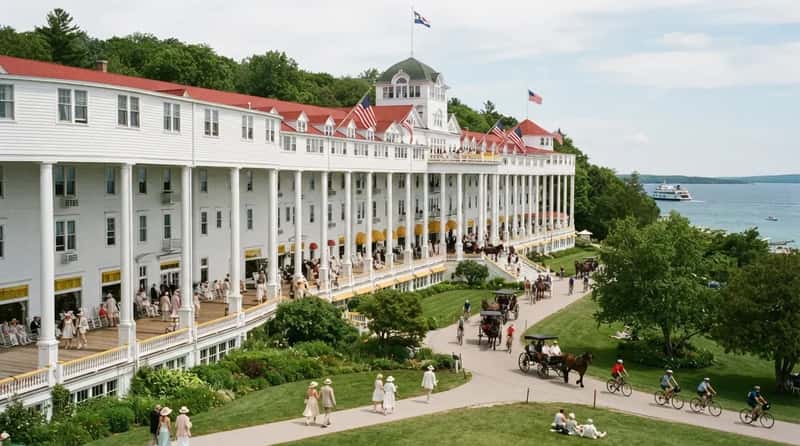
The Grand Hotel on Michigan’s Mackinac Island opened in 1887. It advertises what it calls the world’s longest porch, at about 660 feet. The island bans motor vehicles, so horses and bicycles carry you from the dock to the hotel. That’s why the photos look untouched by the last century.
Reality arrives in the logistics. You need a ferry or a small plane to reach the island at all. Day visitors are charged admission just to tour the hotel, which some critics call a toll to look at furniture. Evening dining has long come with a dress code, so pack accordingly.
The next hotel has a fame problem of a different kind.
#12 – The Hotel del Coronado Is a Wooden Victorian Wearing a Resort’s Crowds
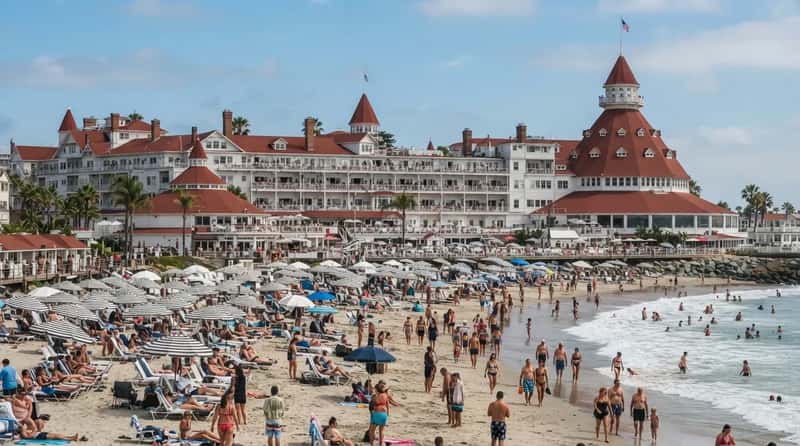
The red-roofed hotel on the San Diego coast opened in 1888. It’s a National Historic Landmark, and it played a starring role in the 1959 film Some Like It Hot, with Marilyn Monroe, Jack Lemmon, and Tony Curtis. Photos show a seaside castle with an empty beach. The real hotel is a busy, working landmark with two distinct eras of rooms.
Historic buildings come with historic floor plans. Rooms in the old wooden building can vary widely in size and layout, while newer sections feel more like a modern resort. Some guests happily pay for the history. Others wish they’d checked the room type first, so look before you pay.
Fast Facts
- Opened in 1888 on Coronado Island, just across the bay from downtown San Diego
- Named a National Historic Landmark in 1977
- Stood in for a Florida resort in the 1959 comedy Some Like It Hot
- The original wooden Victorian building and the newer wings feel like two different hotels
The next hotel hides something the photos never mention, buried under the lawn.
#11 – The Greenbrier’s Postcard Hides a Secret Bunker Built for Congress
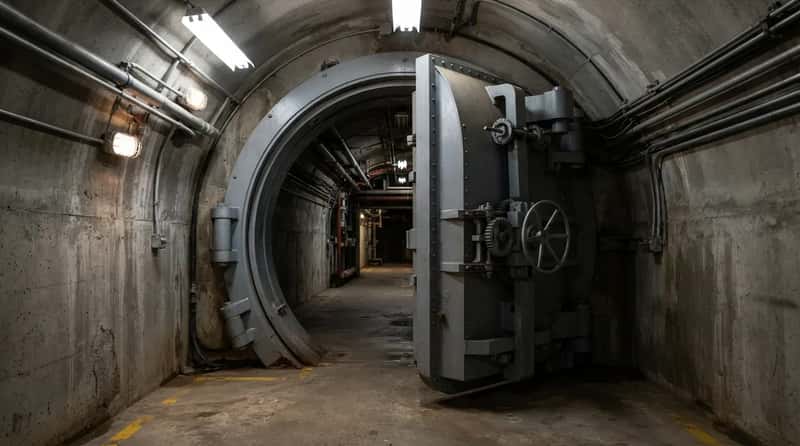
West Virginia’s Greenbrier looks like a pure luxury resort in its photos. Secretly, from 1958 to 1961, a Cold War bunker was built beneath its West Virginia Wing. It was meant to shelter Congress in a nuclear attack. It stayed secret for about 30 years, until a 1992 newspaper exposé.
Guests slept, golfed, and dined above it without knowing. The facility had enormous blast doors, dormitories, and a hidden entrance behind a resort exhibit hall. That’s the truth the brochures once left out.
Next, a legend whose address is the same but whose reality has changed.
#10 – The Chelsea Hotel Still Has the Legend, but Not the Grit
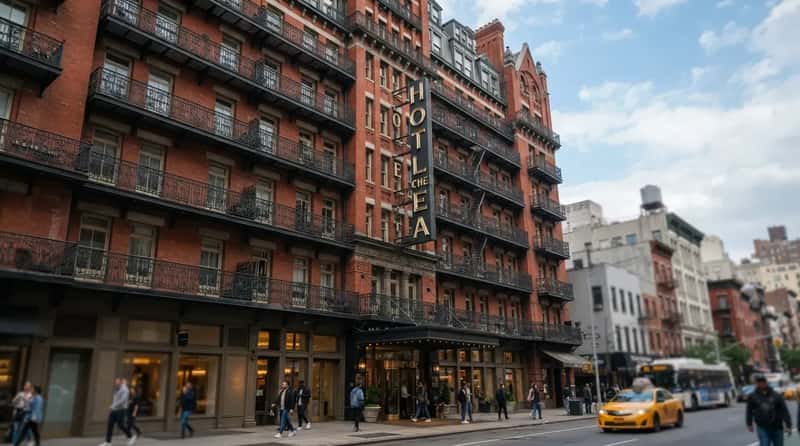
For decades, the Chelsea in Manhattan was a shrine of bohemian America. Writers, musicians, and artists lived there, including Dylan Thomas, Leonard Cohen, and Patti Smith. It was also the scene of the 1978 death of Nancy Spungen, which cemented its dark side in pop culture. The photos from that era show a building that no longer exists as it was.
After more than a decade of renovation, it reopened to guests in 2022. The brick facade and iron balconies remain recognizable. Inside, it’s polished and carefully curated. Purists say the soul left with the old tenants, while newcomers say it’s finally a place you can actually book.
The next stop is a Route 66 stay where nostalgia comes with a train horn.
#9 – The Wigwam Motel’s Retro Teepees Sit Beside a Working Railroad
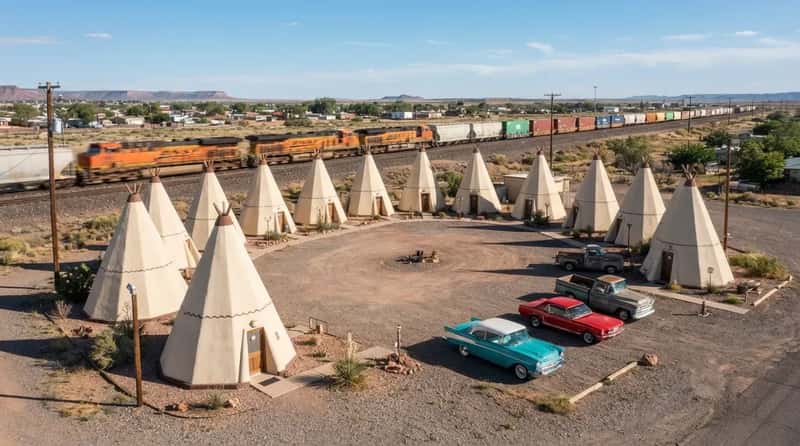
In Holbrook, Arizona, a ring of concrete teepees with vintage cars parked out front is a Route 66 icon. Photos make it look like a time capsule. The Wigwam Motel dates to 1950, and it still operates as a motel. That’s the best part and the biggest surprise.
Holbrook is also a railroad town, and freight trains run through it. The rooms are compact, since they’re shaped like teepees. Expect character over square footage. If you want a quiet, spacious suite, this isn’t it.
Worth Knowing
- The Holbrook property has 15 teepee-shaped rooms arranged around a central lot
- It was added to the National Register of Historic Places in 2002
- A sister Wigwam Motel survives in Rialto, California, also along old Route 66
- Train noise is part of the Holbrook setting, so light sleepers should plan for it
That’s tame compared to the pyramid on the Strip, which comes next.
#8 – Luxor’s Pyramid Is Real, but Its Walls Slant and Its Fee Doesn’t
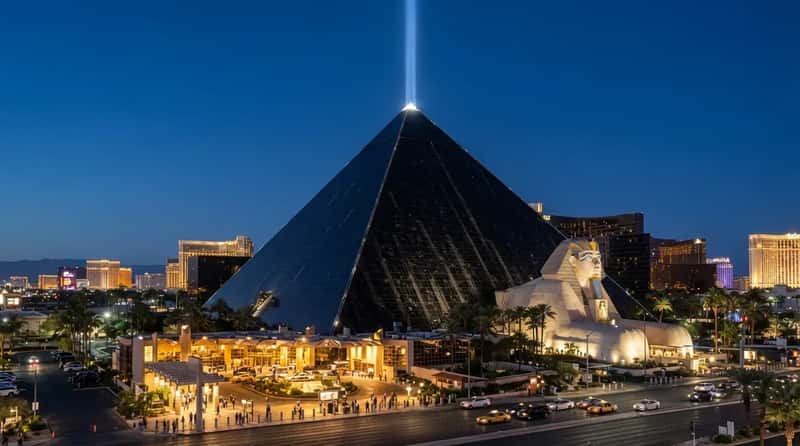
Luxor opened in 1993 as a 30-story black-glass pyramid with a sky-piercing light beam and a Sphinx out front. Photos at night are dramatic. The truth inside is that the elevators run at an angle, called inclinators, and the walls slope with the pyramid’s shape. Some rooms feel a little less square than the photos suggest.
It also charges a resort fee. Trackers in 2026 list roughly $39 to $45 per night before tax, depending on the source. A flat fee takes a bigger bite out of a cheaper room rate, and Luxor is one of the Strip’s more affordable stays.
Next, a skyline that turns out to be a casino’s front yard.
#7 – New York-New York Gives You a Skyline and a Casino Floor
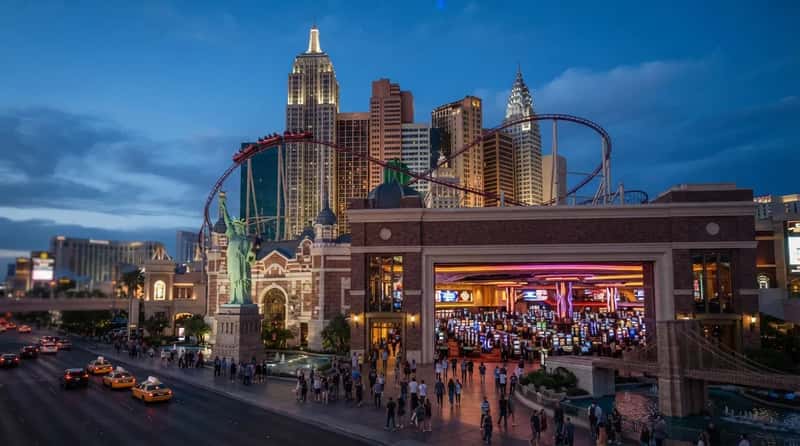
New York-New York opened in 1997 with a replica Manhattan skyline, a miniature Statue of Liberty, and a roller coaster looping around the towers. Photos make it look like a tiny city. Walk in and the first thing you see is slot machines, not a street. Plenty of visitors say it’s the least New York place with New York in its name.
The fee also shifts the price. One 2026 tracker lists New York-New York at $41 per night. Another puts it at $45. Either way, it’s added on top of the room rate.
But a bigger landmark replica is next, with an even bigger twist.
#6 – Paris Las Vegas Built Half an Eiffel Tower and Charged a Full Fee
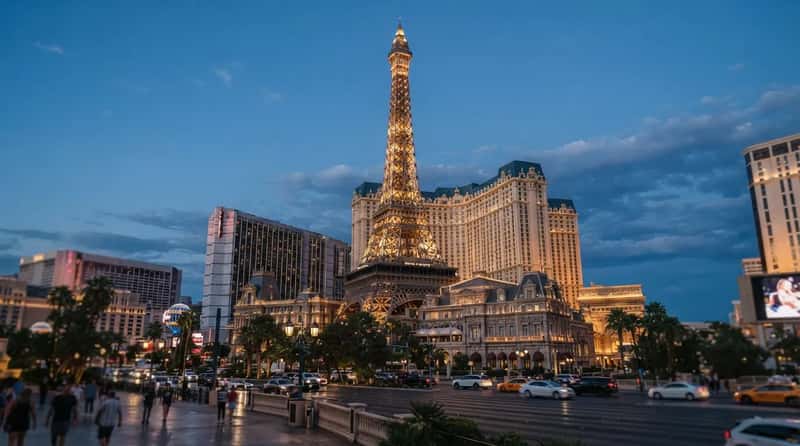
Paris Las Vegas opened in 1999 with a roughly half-scale Eiffel Tower out front. The photos make it look like a European street corner. The real Paris is a casino resort with a replica streetscape tucked around it. It’s fun, but it’s not subtle.
The fee is where it gets murky. One 2026 tracker lists Paris at $45 a night. Another lists it at $55. That conflict is the truth: check the current total before you book.
The next hotel lets you pay for an entire Italian city that’s indoors.
#5 – The Venetian’s Canals Are Indoors and the Sky Is Painted
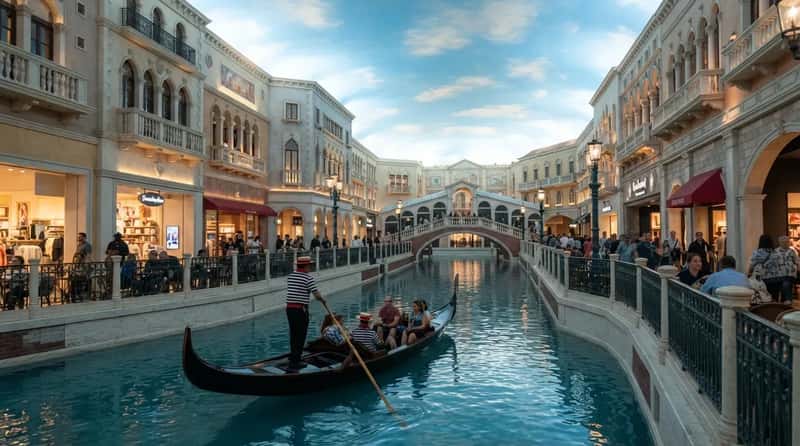
Photos of the Venetian show gondolas under a bright blue sky. Turns out the sky is a painted ceiling above an indoor shopping mall. The hotel opened in 1999, and the Grand Canal Shoppes are the main draw.
It’s also among the priciest for fees. The Review-Journal reported the Venetian and Palazzo at $55 a night plus tax. Another 2026 tracker lists $50. Fans point to the all-suite layout as proof the price is justified. Others call the whole indoor-Venice concept a tourist trap.
Quick Compare
- Luxor: roughly $39 to $45 a night
- New York-New York: $41 to $45 a night
- Paris Las Vegas: $45 to $55 a night
- Venetian: $50 to $55 a night
- Fontainebleau: $55 a night, plus $7.36 in fee tax
The fountain in front of the next hotel is free, but the stay isn’t.
#4 – Bellagio’s Free Fountains Come With a $329 Night
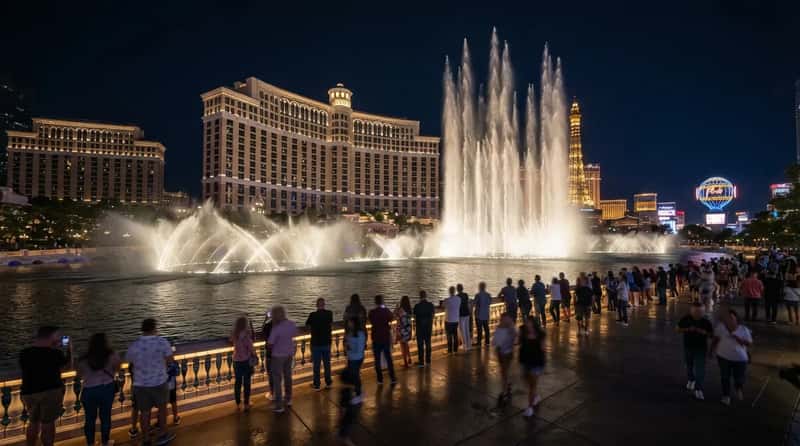
The Bellagio fountain show is free to watch from the sidewalk. That’s the part the photos get right. The stay is the other story: one fee tracker walks through a $220 room that actually costs $329.80 a night after fees, tax, and parking.
The example adds a $62.36 resort fee with tax, $29.44 in room tax, and $18 for self-parking. That’s about 50% more than the advertised rate. Reported fees vary from about $50 to $55 depending on the source.
The next hotel is new, shiny, and tied to a number that grabs headlines.
#3 – Fontainebleau Las Vegas Looks Sleek, and Its Fee Is Among the Strip’s Highest
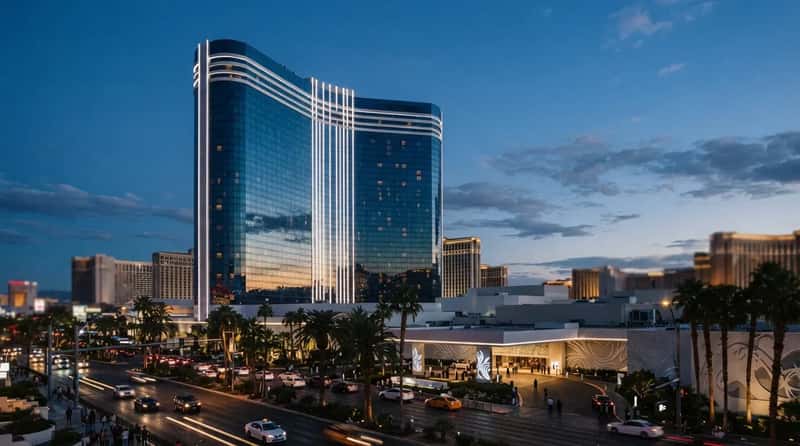
The blue-glass tower opened in December 2023, and its photos look like the future of Vegas. The Review-Journal reported a $55 nightly fee plus $7.36 in resort fee tax. That’s $62.36 a night before you’ve ordered anything.
The fee is charged per room, not per person. That’s a quiet advantage for groups and a sharp sting for solo travelers. Plenty of guests say the polished rooms earn the add-on. Plenty more say it’s the worst part of the stay.
The next two hotels are the real reason the Overlook tops this list.
#2 – Timberline Lodge Is the Overlook’s Face, but the Inside Was a Studio
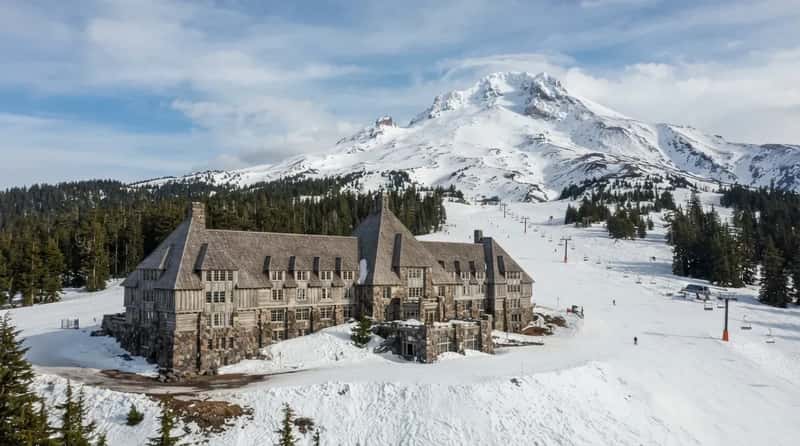
Timberline Lodge on Oregon’s Mount Hood was built by Depression-era workers and dedicated in 1937. It appears as the Overlook’s exterior in Stanley Kubrick’s 1980 film. But the rooms and halls you remember were mostly studio sets. Those interiors borrowed ideas from other places, including Yosemite’s Ahwahnee.
So the real lodge is a working ski lodge, not a horror house. The mountain weather in photos is real, though. Guests come for the snow, not the scares.
And the hotel at the top of this list is the one whose own famous movie wasn’t shot there.
#1 – The Stanley Hotel Inspired The Shining, but Kubrick Never Filmed There
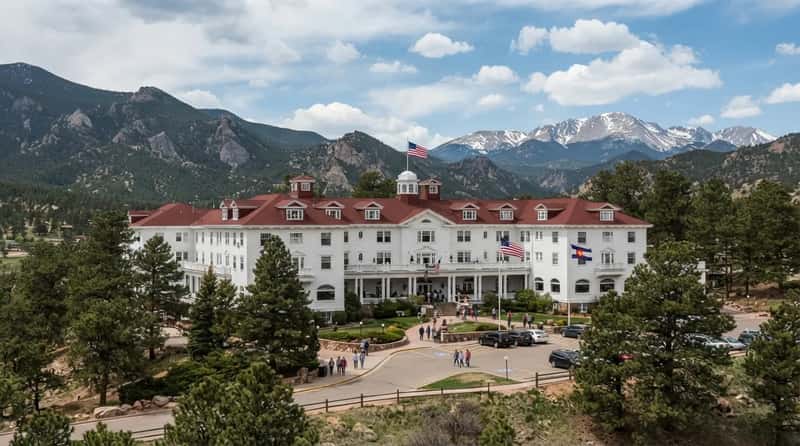
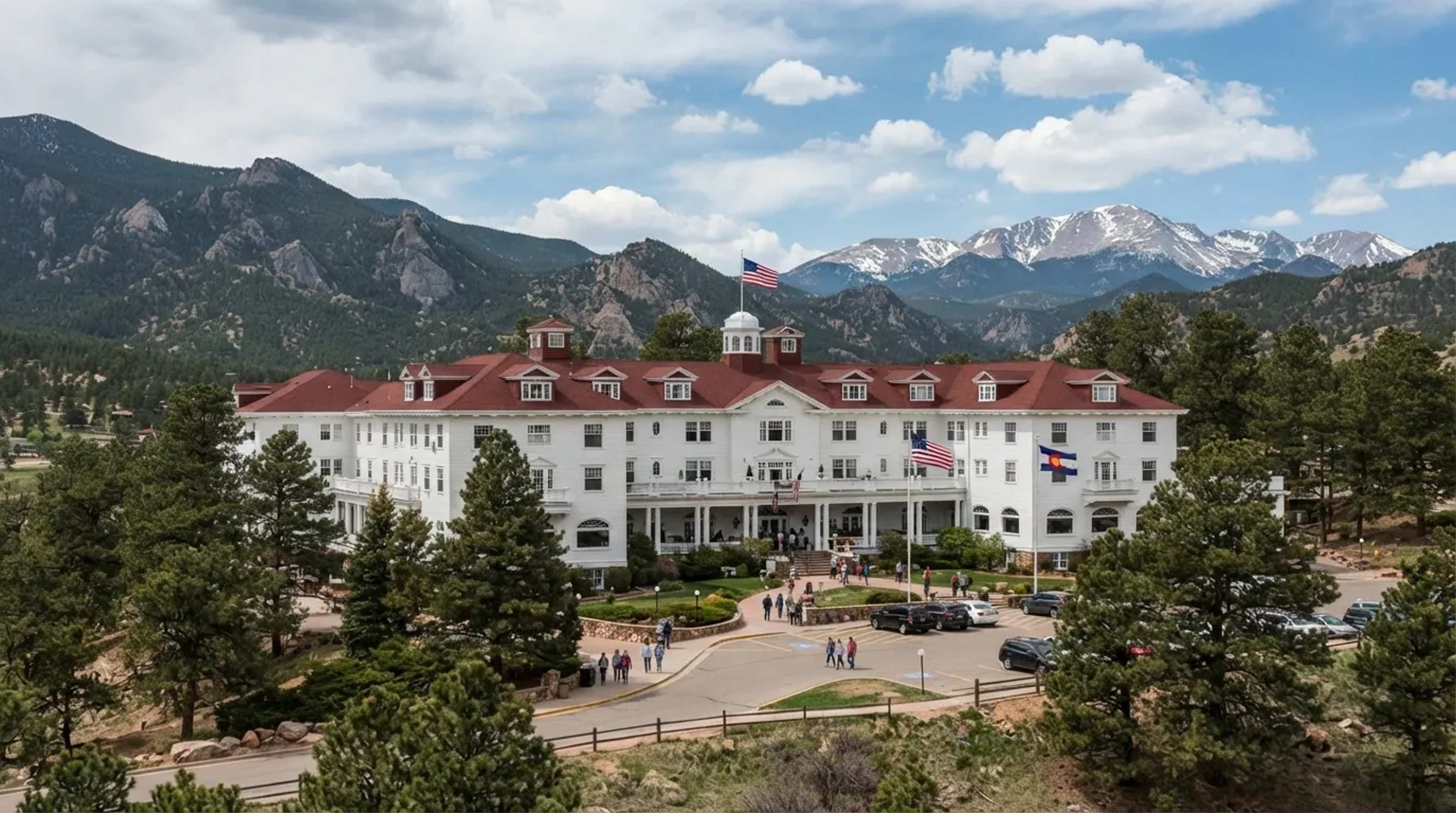
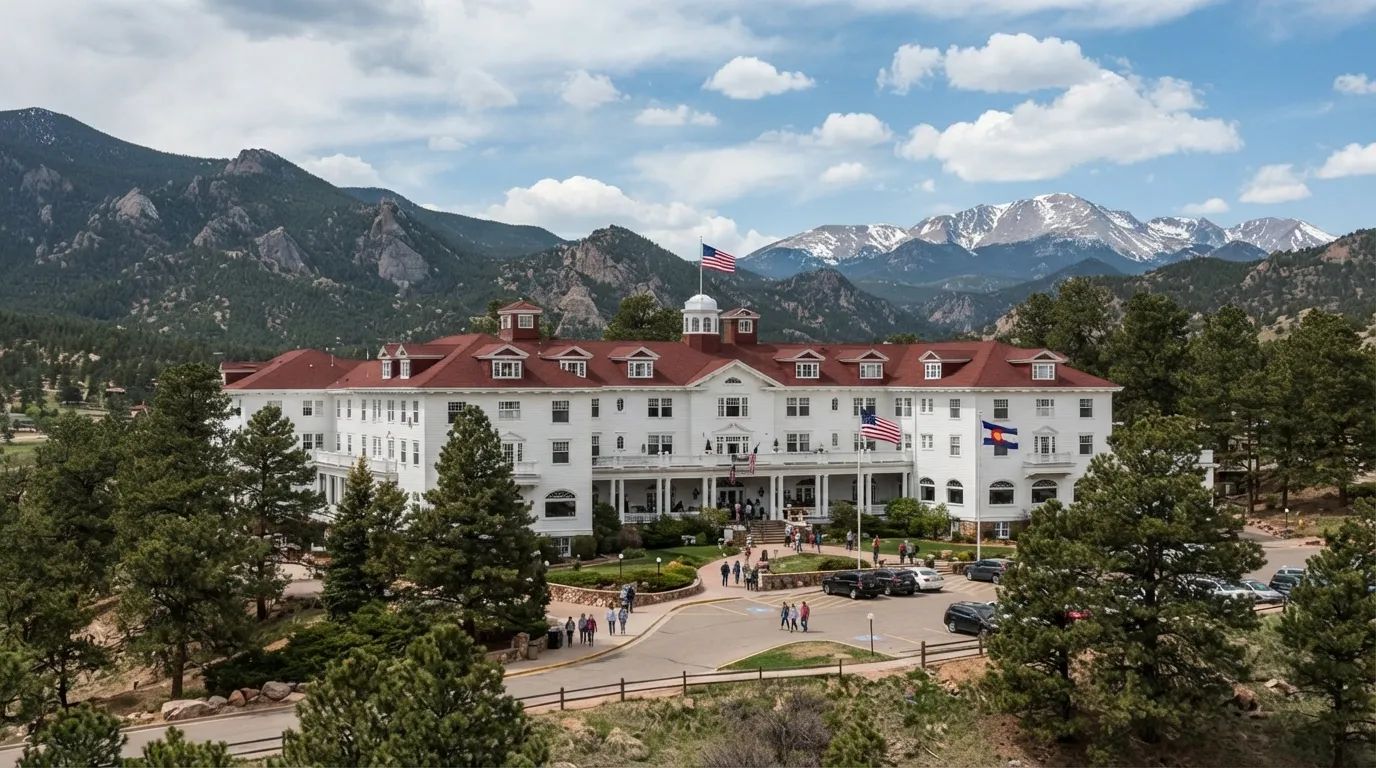
The Stanley Hotel in Estes Park, Colorado, is the building that gave Stephen King the idea for the Overlook. The famous 1980 film wasn’t shot there at all. It’s the single biggest gap between a hotel’s fame and its screen history. King and his wife, Tabitha, stayed in Room 217 in autumn 1974, right as the hotel was closing for the season.
The Stanley leans into the legend anyway. It plays Kubrick’s film on a continuous loop on guest-room TVs, and the 1997 television miniseries of The Shining was filmed there. Guests swap ghost stories about Room 217, but that’s lore, not proof. The reality is a historic mountain hotel selling a story that Hollywood told somewhere else.
At a Glance
- Opened in 1909, built by F.O. Stanley of Stanley Steamer fame
- Stephen King’s 1974 stay in Room 217 sparked the novel
- Kubrick’s 1980 film used Timberline’s exterior and studio interiors instead
- The 1997 miniseries was the version actually shot on the property
- The hotel also played the Danbury in the 1994 comedy Dumb and Dumber
The widest gaps on this list aren’t about dirty rooms or fake photos. They’re about fees, replicas, renovations, and the movies we think we remember. The Waldorf looks exactly like its photos but holds a quarter of its old rooms. Timberline’s exterior, not the Stanley’s, is what appears on screen. And the Vegas fees are the quietest surprise of all.
Which hotel looked nothing like its photos when you checked in?