Most people assume packing well comes down to better luggage or one more folding tutorial. It doesn’t. The people who fly 50, 100, even 200 times a year aren’t smarter packers – they’ve just been burned enough times that certain habits became non-negotiable.
Some of these look almost too small to matter, which is exactly why casual travelers skip them. But ask anyone who flies for a living, and they’ll tell you the boring stuff is what actually separates a smooth trip from a disaster at baggage claim.
#16 – The “First 24 Hours” Rule That Saves Every Trip
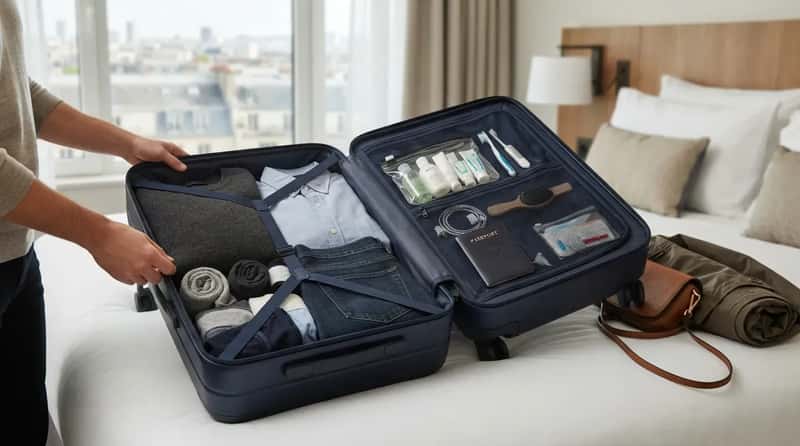
Seasoned travelers never let their only outfit sit in a checked bag. They keep a full change of clothes, plus any toiletries they truly can’t live without, inside their carry-on every single flight.
This habit exists because checked bags still miss connections or end up on the wrong plane. A lost bag doesn’t ruin a trip if you’re already dressed and ready to go the next morning – it’s just an errand.
#15 – Rolling Instead of Folding, and Not for the Reason You Think
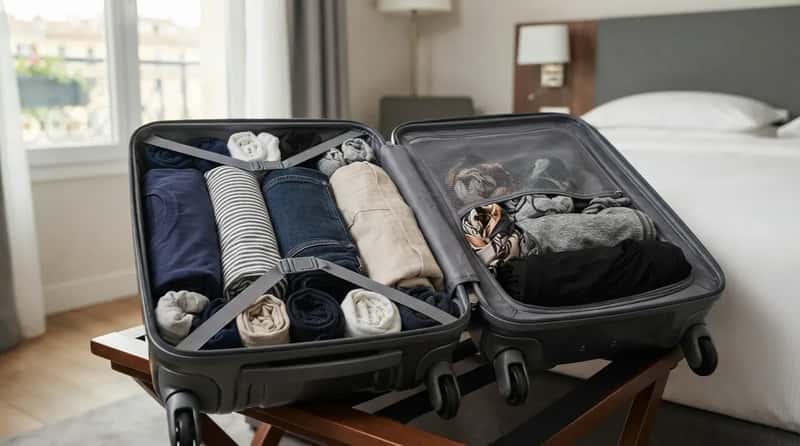
Frequent flyers roll almost everything, but not primarily to save space. That’s actually the secondary benefit.
The real reason is wrinkle control and visibility. Rolled clothes let you see every item at a glance instead of digging through folded stacks, and rolled fabric creases far less than folded fabric because the stress points never repeat in the same spot. It also makes repacking mid-trip dramatically faster, which matters when you’re living out of a suitcase for two weeks straight.
#14 – Packing Cubes Aren’t About Space, They’re About Speed
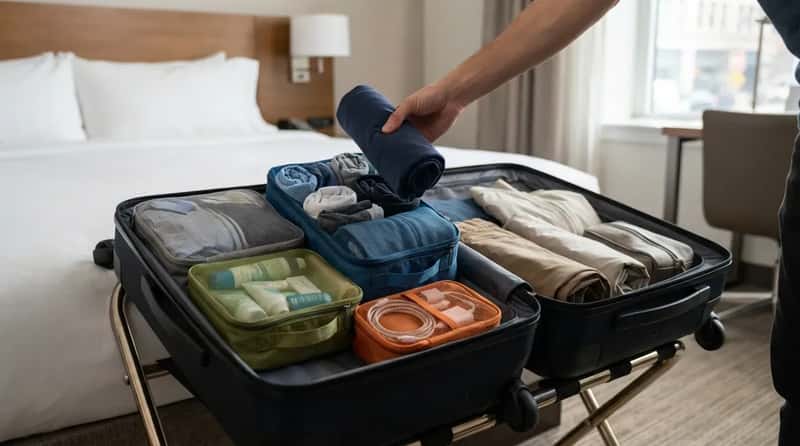
Most casual travelers assume packing cubes exist purely to compress clothing into a smaller footprint. Seasoned flyers know that’s only half the story.
The real advantage is retrieval speed at security, at hotel check-in, and during rushed layovers. Frequent flyers organize cubes by category – one for underwear, one for tops, one for chargers – so nothing gets dumped out searching for a single sock. It sounds minor until you’re repacking in an airport bathroom with five minutes before boarding.
Why It Stands Out
- One glance shows exactly which cube holds what – no digging through the whole bag
- Compressed cubes leave breathing room for souvenirs on the return leg
- Color-coding cubes by traveler makes shared luggage instantly sortable
- Swapping one dirty-laundry cube keeps clean clothes from touching worn ones
#13 – Wearing the Bulkiest Items Instead of Packing Them
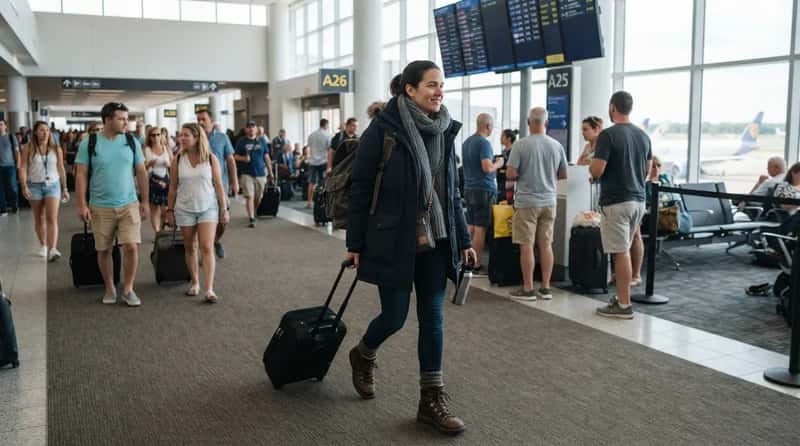
Experienced flyers treat their body as free luggage space, and it’s a surprisingly controversial habit among casual packers who find it “extra.”
Heavy boots, thick jackets, and bulky sweaters go on the body, not in the bag. This single habit can free up nearly a third of a carry-on’s usable space, since boots alone often eat more room than an entire outfit. Yes, it can look a little much walking through the terminal in a winter coat during summer, but frequent flyers don’t care.
#12 – The Battery Pack That Never Leaves the Bag
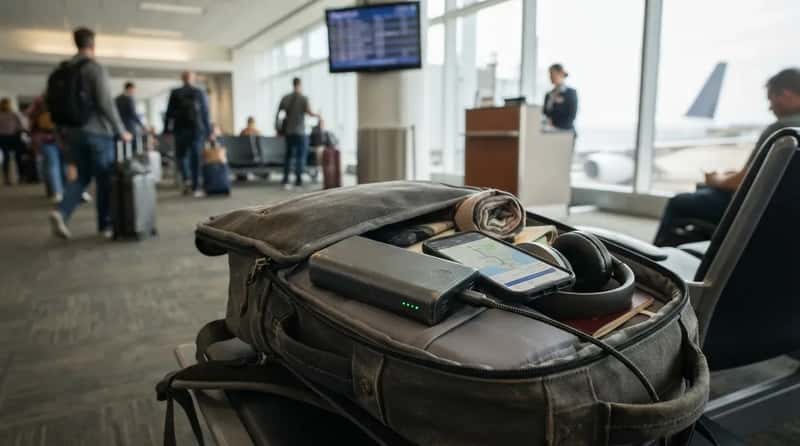
Seasoned travelers keep a fully charged portable battery pack in their carry-on at all times, not just for long flights.
Airport outlets are notoriously scarce and often already occupied, and a dead phone during a gate change or delay is more than an inconvenience. Most frequent flyers check the battery pack before every trip the same way they’d check their passport. It’s one of the first things they replace the moment it starts holding a weaker charge.
#11 – The Empty Bag Packed Inside the Bag
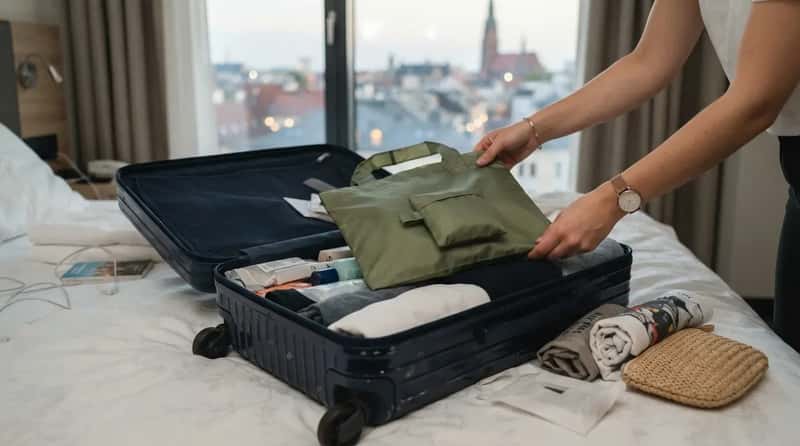
A folded, collapsible tote or duffel tucked into checked luggage looks unnecessary until the moment it isn’t.
Souvenirs, duty-free purchases, and dirty laundry all need somewhere to go on the way home, and seasoned travelers refuse to be caught without an overflow option. This habit alone prevents the classic airport scene of someone wearing three shirts at once just to avoid an overweight bag fee. It doubles as a beach bag, laundry bag, or emergency carry-on if the primary suitcase gets damaged.
#10 – Photographing the Suitcase Before It’s Checked
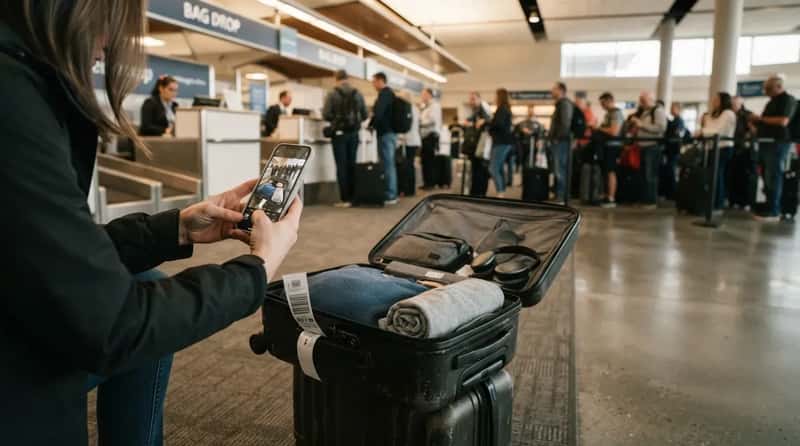
This one sounds paranoid until it saves someone’s entire claim after a lost or damaged bag.
Frequent flyers photograph the outside of the suitcase, the contents laid out, and sometimes the tag right before handing it over. This habit has become more common as checked bag fees have climbed, with U.S. airlines collecting well over $7 billion in baggage fees in a single recent year. With that kind of money on the line, travelers want proof of exactly what they handed over in case something goes missing or gets crushed.
#9 – Medications and Valuables Never Touch a Checked Bag
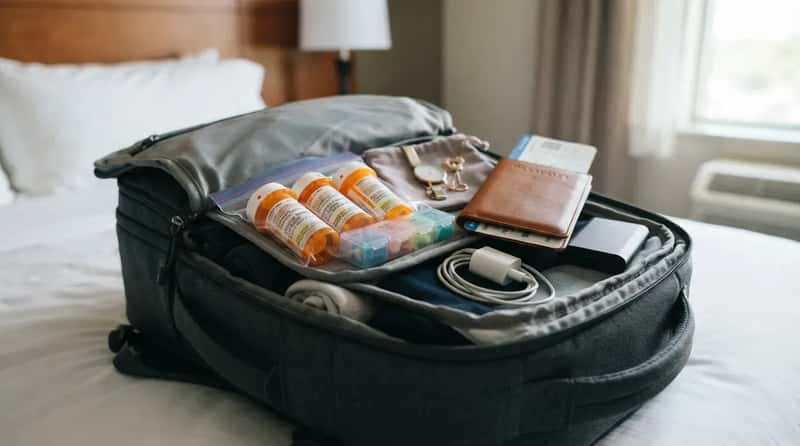
This is one habit seasoned travelers treat as non-negotiable, no exceptions, ever.
Prescription medications, chargers for medical devices, jewelry, and important documents stay in the carry-on at all times. Checked bags get lost, delayed, or occasionally rerouted to another continent entirely, and no traveler wants to discover that with their blood pressure medication inside. This single rule has prevented more travel emergencies than almost any other habit on this list.
Fast Facts
- Carry-on liquids still follow the 3-1-1 rule: containers of 3.4 ounces or less, all fitting in one quart-size bag
- Prescription medications and medical liquids are exempt from the 3.4-ounce limit but should be declared at screening
- Keeping originals of passports, IDs, and insurance cards in the carry-on avoids a full trip stall if a bag disappears
- A spare charging cable for medical devices takes seconds to pack and can prevent a real emergency mid-flight
#8 – Tracking the Bag Before It Ever Leaves Sight
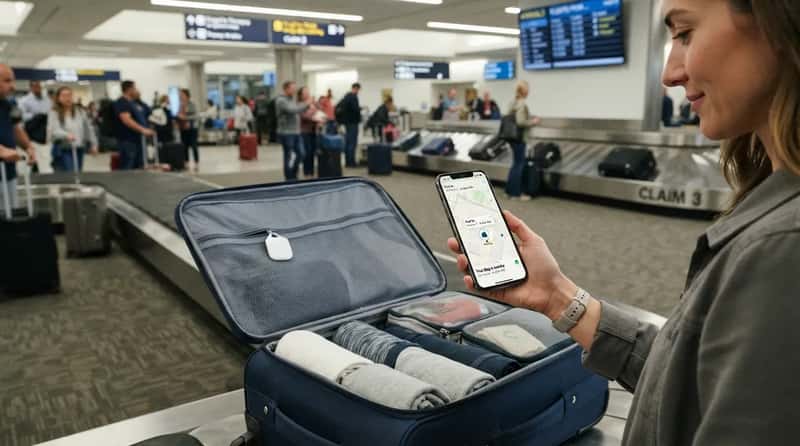
A small Bluetooth tracker tucked into checked luggage has become close to standard practice among frequent flyers.
It’s not about distrust of the airline so much as certainty during a stressful moment. When a bag doesn’t appear at the carousel, travelers with a tracker already know whether it’s still on the plane, stuck at a connection, or sitting in the wrong city entirely – information that used to require a frustrating conversation at a baggage service counter. It turns a helpless wait into an actual plan.
#7 – Splitting Outfits Across Multiple Bags When Traveling With Others
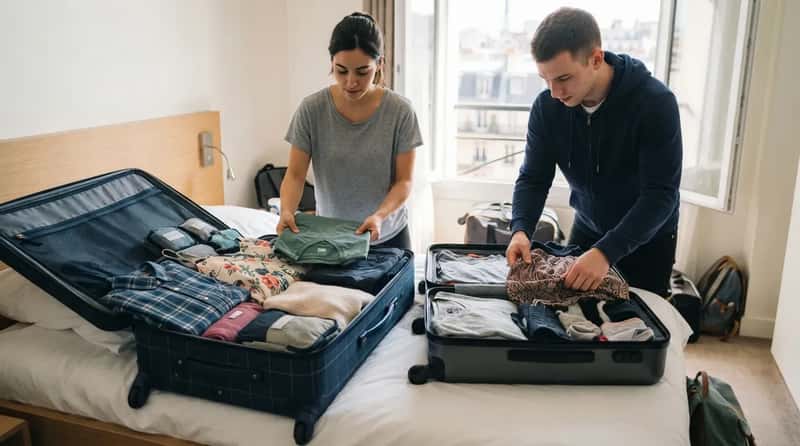
Couples and families who travel often rarely pack one person’s clothes entirely in one suitcase.
Instead, each traveler’s outfits get split evenly across every checked and carry-on bag in the group. It sounds like overkill to casual travelers, but for anyone who has stood at a foreign baggage carousel watching every bag come out except theirs, it becomes an unbreakable rule. This single habit turns a lost-bag disaster into a minor inconvenience instead of a wardrobe emergency.
At a Glance
- Every bag in the group carries a mix of each traveler’s clothes, not one person per bag
- Kids’ essentials get spread across at least two bags, never just one
- Shared items like chargers and medications ride in more than one carry-on when possible
- One lost suitcase still leaves everyone with something to wear
#6 – The Flat-Lay Test Before Anything Gets Zipped

Before packing a single item, seasoned travelers lay out every planned outfit on the bed first.
This exposes overpacking immediately – extra shoes that don’t match anything, jackets that duplicate each other, outfits nobody will actually wear twice. Most experienced packers admit they cut their initial pile by roughly a third once they see everything laid out together. It also reveals gaps, like forgetting a layer for a cold evening or a dressier option for one planned dinner.
#5 – Snacks and an Empty Water Bottle, Every Single Time
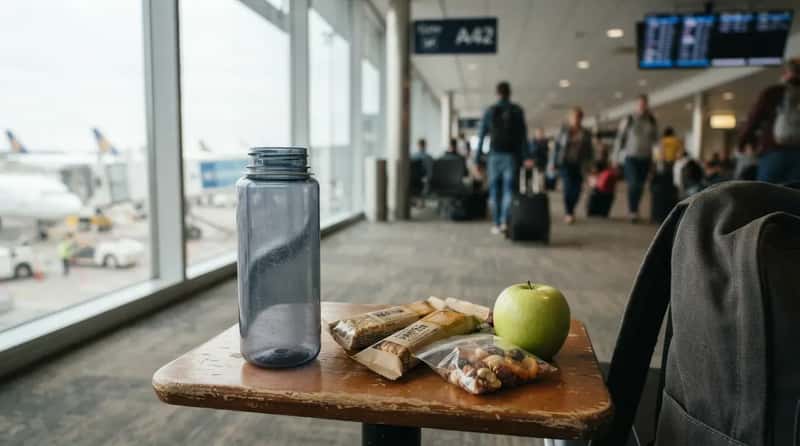
This habit sounds obvious, yet most casual travelers still forget it and pay for it later at airport prices.
Seasoned flyers pack an empty reusable water bottle to fill after security, along with protein bars or dried snacks that survive a long delay. This single habit avoids the airport reality of a single bottle of water routinely costing five dollars or more inside the terminal. It matters more than people realize on longer flights, where dehydration contributes directly to that miserable, foggy feeling after landing.
#4 – Never Zipping the Bag to Its Absolute Limit
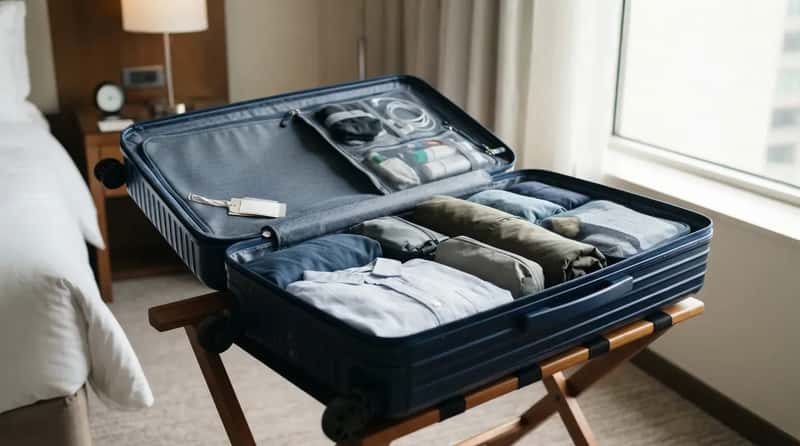
This is one of the more controversial habits on this list, because it goes against every instinct to “fit it all in.”
Experienced travelers deliberately leave roughly a fifth of their suitcase empty before departure, even if that means leaving something at home. That space exists for souvenirs, gifts, or unexpected purchases on the way home – and for the reality that clothes never fold back as neatly on the return trip. This single habit avoids the classic airport scene of someone sitting on their suitcase trying to force the zipper shut.
#3 – Building a Capsule Wardrobe Around One Color Story
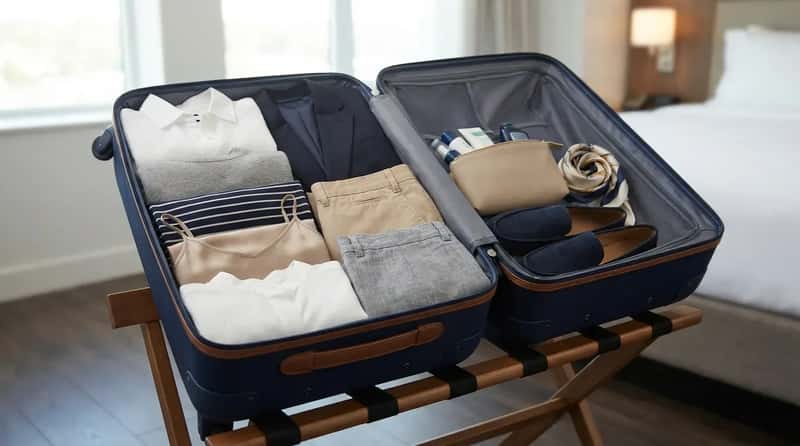
Frequent travelers rarely pack outfits – they pack a small, coordinated color palette where nearly every top matches every bottom.
This habit means five tops and three bottoms can generate more than a dozen usable outfit combinations instead of five fixed ones. This single approach can cut total luggage volume by roughly half compared to packing separate, unrelated outfits for each day. Some travel writers now argue that packing more than three colors for a single trip is simply a planning mistake, not a style choice.
#2 – The Permanent “Go Bag” That Never Fully Unpacks
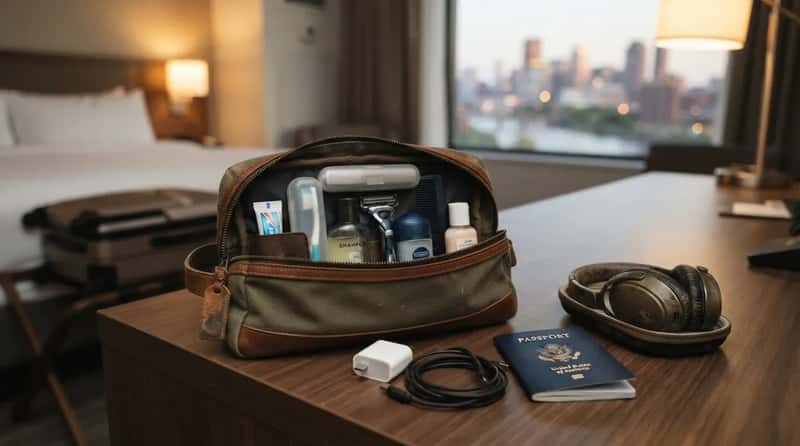
This is the habit that separates occasional travelers from people who genuinely fly for a living.
Seasoned flyers keep a dedicated toiletry kit, a spare phone charger, and a few travel-size essentials permanently packed and ready, even between trips. This habit alone can cut pre-trip packing time from an hour down to under fifteen minutes, which matters enormously for anyone traveling on short notice for work or a family emergency. It also means the essentials never get forgotten, because they never actually leave the bag in the first place.
#1 – Weighing the Bag at Home, Every Time, No Exceptions
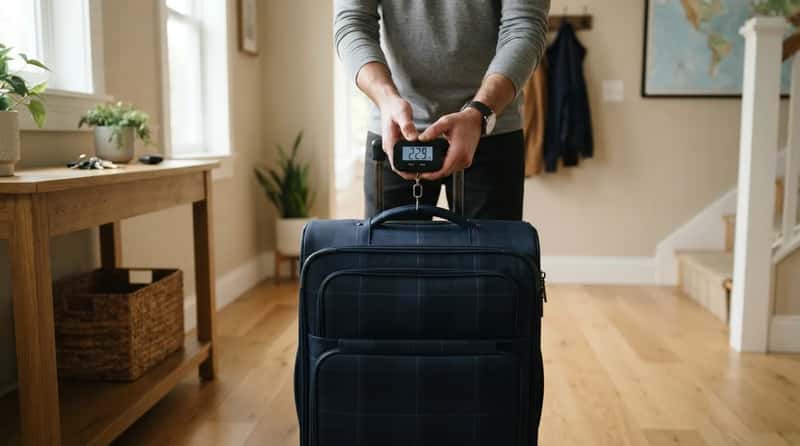
This is the single habit almost every frequent flyer names first, and it’s also the one most casual travelers skip entirely.
A cheap luggage scale at home takes thirty seconds to use, yet it prevents one of the most expensive and stressful moments in travel: standing at the check-in counter watching an agent point at a red number on the scale. With checked bag fees now averaging around $45 to $50 for a first bag on most major U.S. carriers, and overweight fees frequently adding another $100 or more on top of that, an unweighed bag can turn into a genuinely expensive mistake in seconds. It’s the least glamorous habit on this list and, according to almost every frequent flyer, the most important one.
Quick Compare: 2026 First and Second Checked Bag Fees
| Airline | First Bag (Prepaid) | Second Bag |
|---|---|---|
| American / Delta / United / Southwest | ~$45 | ~$55 |
| JetBlue | $39 off-peak / $49 peak | Varies by fare |
U.S. airlines brought in more than $7.4 billion in passenger baggage fees in 2025 – that’s a 162 percent increase over five years. The first checked bag is now $45 prepaid or $50 at the airport, with a second bag costing $55 on most major carriers, while JetBlue charges $39 for a first checked bag during off-peak travel times, or $49 during peak times. A scale that costs less than a fast-food meal can be the difference between a smooth check-in and an unexpected $50-plus surprise.
None of these habits require expensive gear or years of frequent-flyer status to copy. They’re small, almost boring adjustments – weighing a bag, splitting outfits, leaving zipper space – that only look obvious in hindsight.
The travelers who fly constantly didn’t learn these tricks from a guide. They learned them from missed connections, lost bags, and expensive lessons at the check-in counter – and now they never leave home without them.