Picture two guests at the same counter. One says, “Anything you can do?” and gets a polite shrug. The other asks one small, specific question and walks off with a quieter room on a higher floor. Here are 17 things front desk teams really do upgrade, adjust, or quietly fix for guests who know what to ask.
The surprise is that the advice everyone repeats, the so-called magic phrase, is the part insiders trust least. Some of the best wins cost nothing, and a few popular moves backfire right at the counter. The twist that ties it all together is waiting at #1.
#17 – The Quiet-Room Request That’s Easy for Desks to Grant
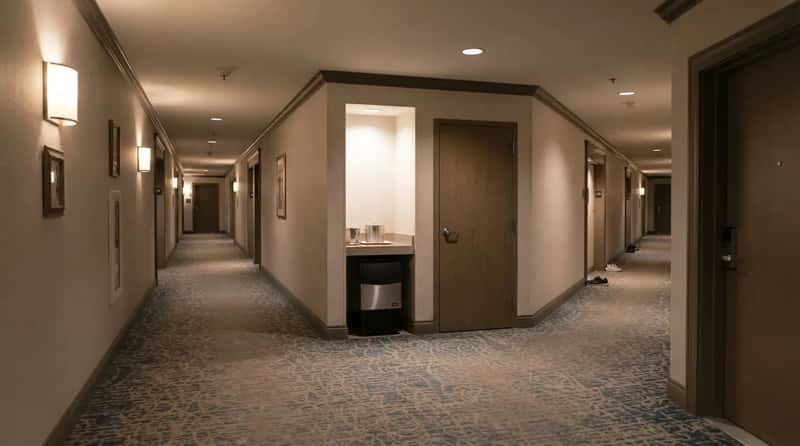
Asking for a room away from the elevator is one of the easiest wins at check-in. Noise complaints are among the most predictable hotel problems, and front desk staff usually know which rooms cause them. The usual suspects sit beside elevators, ice machines, and housekeeping closets. A guest who names the spot to avoid hands the agent a problem that is simple to solve.
It’s an especially smart ask for light sleepers. The desk can only dodge the loud rooms if someone mentions them. Say nothing, and you get whatever the system assigns, and some guests spend a whole night learning that the hard way.
A quiet room is only the start, though. The next request is about what you see when you wake up.
#16 – The Higher-Floor, Better-Light Ask Nobody Thinks to Make

Most guests ask for “a better room” and get a shrug. Front desk guidance quoted by Ask a Concierge says specific, actionable requests work best, such as a quiet room away from the elevator or a higher floor with more light. A vague wish gives the agent nothing to act on.
One travel expert suggests asking about higher-category rooms with a quieter floor or better view, either complimentary or at a reasonable upgrade. That invites the desk to present options. It turns a yes-or-no question into a menu, and it’s a small wording change that completely changes the conversation.
Quick Compare
- Vague: “Anything better available?” leaves the agent guessing what you want.
- Specific: “A higher floor with more light, if you have one” is easy to look up.
- Specific: “A quiet room away from the elevator” gives the desk a clear job.
- Menu-style: “What higher-category rooms are open, and at what cost?” invites options.
Next up is a request that sounds like a stretch, yet desks list it among the ones that work.
#15 – The Corner Room Insiders Quietly Name

Corner rooms get requested by guests who’ve done their homework. The same Ask a Concierge guidance lists a corner room among the specific requests that work at the desk. These rooms often have more windows and fewer shared walls than the ones in the middle of a hallway.
The catch is that nothing guarantees one. If the hotel is full, the corner room is probably already taken. That’s why desks respond best to guests who ask politely and stay flexible about the answer. A request can be specific without being a demand.
Now for a question that sounds greedy but is actually routine.
#14 – The “Any Complimentary Upgrades?” Check Most Guests Skip
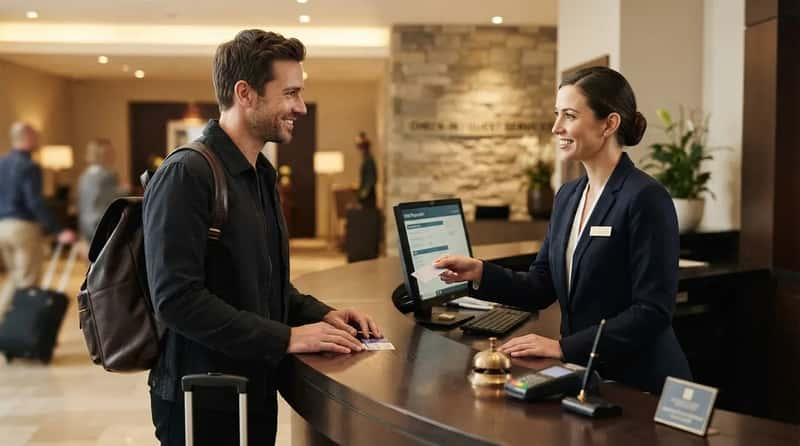
Most travelers hand over an ID and head straight for the elevator. Meanwhile, hotels frequently have unsold premium rooms, and agents often have discretion to upgrade guests, especially very polite ones. A guest who never asks never gets considered.
Phrasing matters. Asking whether any complimentary upgrades are available tonight keeps the pressure low and lets the agent say no without awkwardness. Staff also point out that the room has to exist, and some hotels have internal policies to upgrade only when required, or only certain guests.
Which brings up who the desk is looking for, and that story starts before you ever arrive.
#13 – The Free Sign-Up That Secretly Flags Your Booking
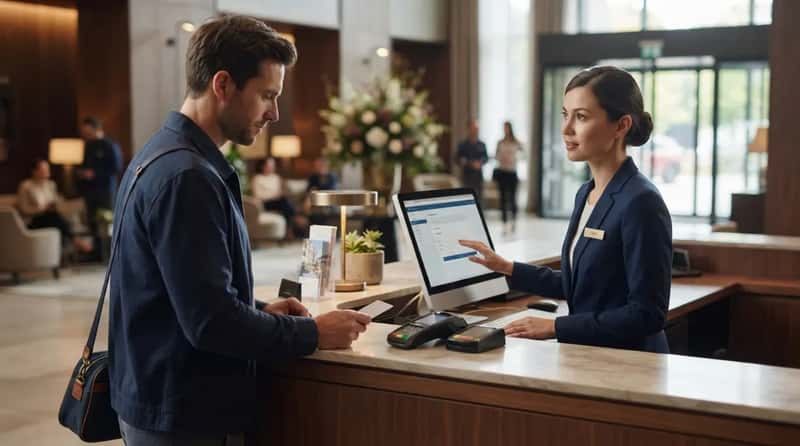
Loyalty status is one of the few things front desk agents can actually see on screen. According to The Points Guy, if you have elite status and the hotel is still selling several of the rooms you want, the desk might give you one. Even entry-level membership can matter.
One travel guide says hotels prioritize loyalty members over non-members for room assignments when upgrades are available. The same guide notes that membership is free. Some people will call that a small edge. Others argue it’s the whole game.
But where you book may matter even more than whether you joined, and that’s #12.
#12 – Why Booking Direct Can Win You the Better Room
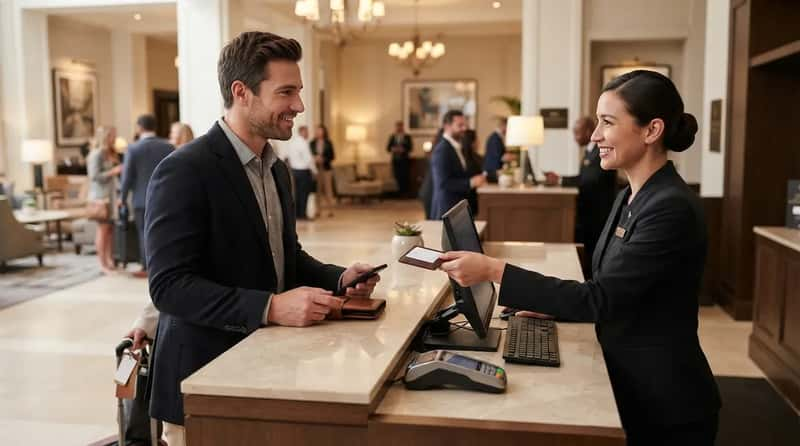
The cheapest listing isn’t always the best deal at the counter. One front desk agent’s account says guests generally earn elite benefits, including upgrades, only when they book directly with the hotel chain. That means an online travel agency booking usually lowers your odds.
Another guide says third-party sites may save a few dollars but often strip away your leverage at the front desk. Policies differ by brand and program, so this isn’t a universal rule. Still, if an upgrade is what you’re after, those few saved dollars may be exactly what it costs you.
Here’s a request that works even better when it comes with a reason.
#11 – The Special-Occasion Mention That Changes the Tone
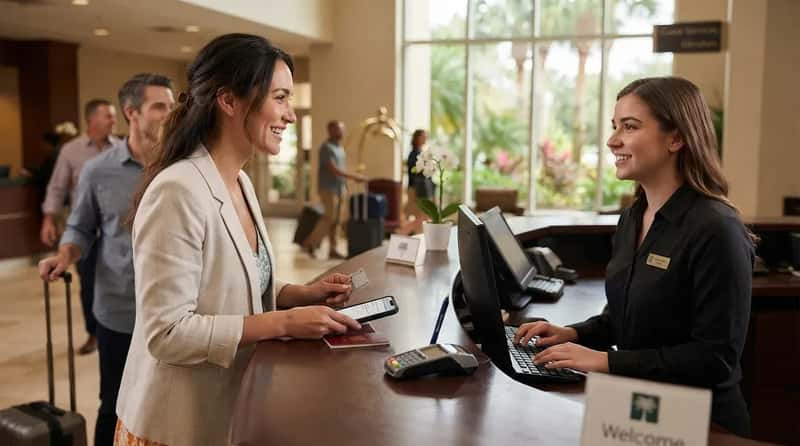
Everyone thinks there’s a secret phrase. Hotel managers say the real trigger is context. Vince Angelo, general manager of an Embassy Suites in Orlando, told AOL his team responds to guests who say they’re there for a special occasion and wonder whether upgrades are available.
Both of his favorite phrases work because they frame the upgrade as meaningful rather than opportunistic. One travel guide adds that you should mention the occasion in the reservation notes when booking and repeat it politely at check-in. The key word is genuine, because staff can tell when it isn’t.
Timing the message is its own skill, and #10 explains it.
#10 – The Pre-Arrival Message Smart Guests Send Early
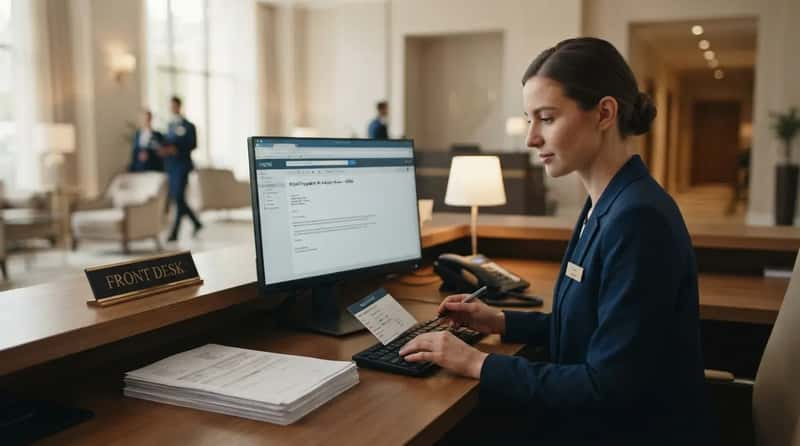
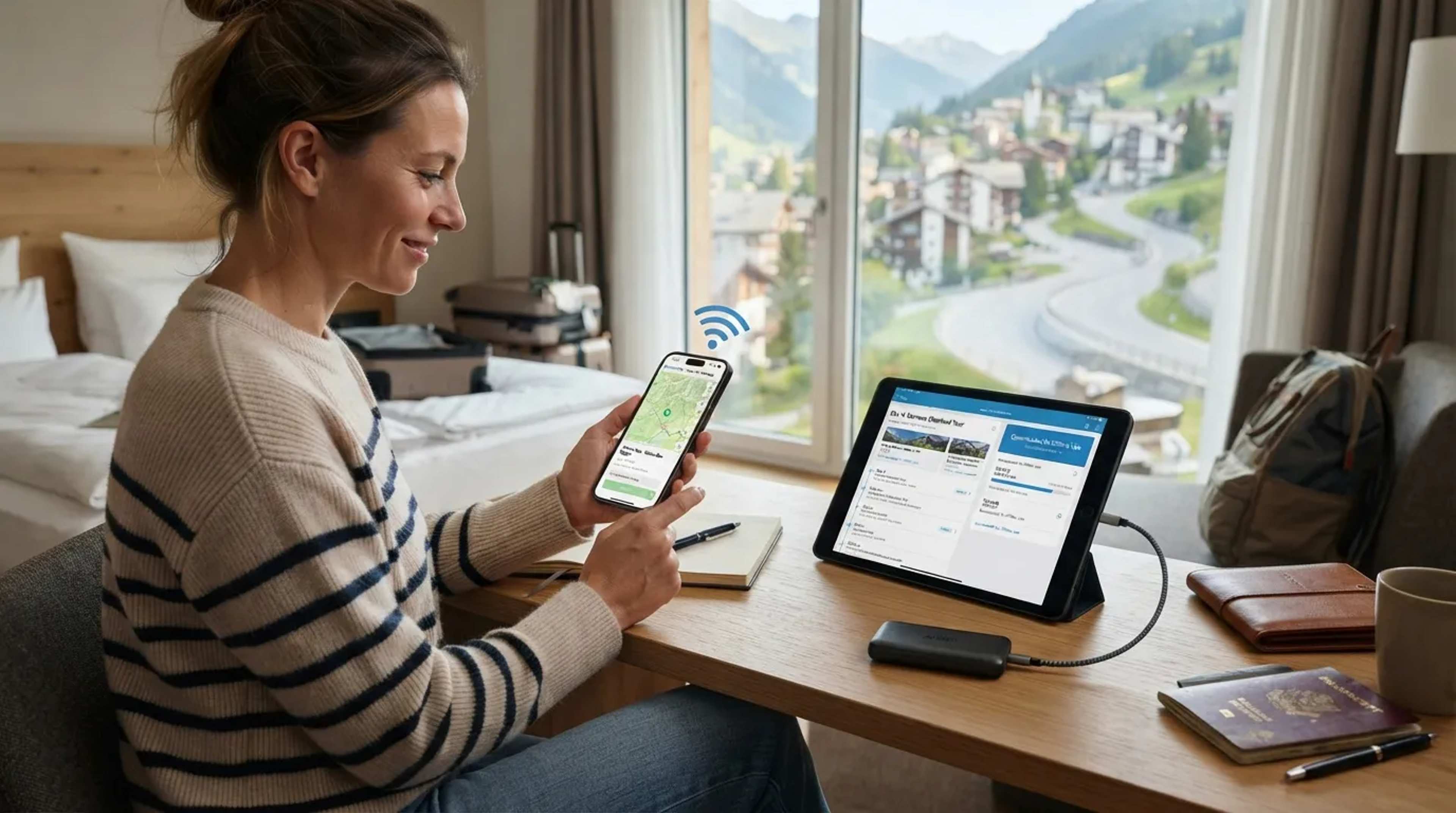
Some of the best requests are made before anyone walks in. Afar recommends telling the hotel at booking or emailing the front desk ahead of time. Another guide suggests calling the hotel directly two or three days before your stay.
Why does it work? Upgrade requests are most successful when made before arrival and during less busy moments at the front desk. At 3 p.m. with a line behind you, an agent has no time to think. A calm note days earlier gives them room to plan.
At a Glance
- When: At booking, or two to three days before arrival.
- How: A short email to the front desk or a quiet phone call.
- What to include: Your member number, a real reason, and one specific ask.
- What to skip: Making the pitch at 3 p.m. with a line behind you.
And if the free route doesn’t pan out, there’s another option many guests don’t know is on the table.
#9 – The Paid Day-of Upgrade Hiding Behind the Counter
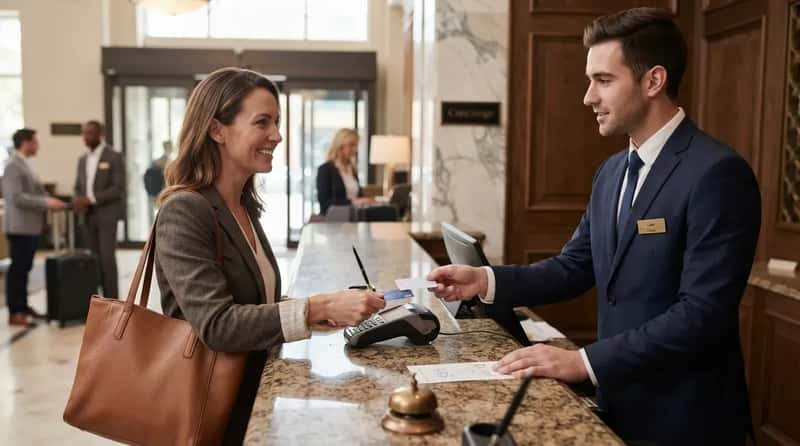
An upgrade doesn’t have to be free. Complimentary upgrades are often tied to loyalty status, but discounted on-arrival paid upgrades can still secure a better room. Hotels would rather sell an empty premium room tonight than leave it vacant.
Travel writers say it’s fair to ask about a paid option when nothing is free. Prices vary by property, and the desk may have no discount to offer at all. So treat it as a question to ask, not a bargain you’re owed.
There’s also a calendar trick that can make the free route more likely, and it’s #8.
#8 – The Midweek and Late-Arrival Edge Staff Admit Exists
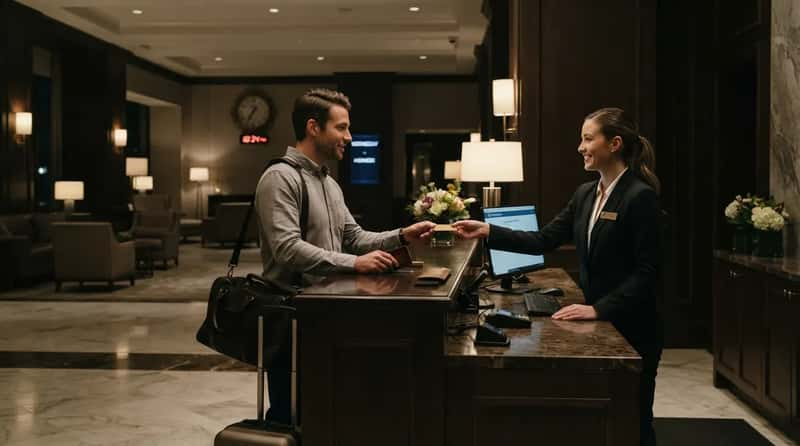
Some stays are simply easier to upgrade. Quieter periods, like midweek stays, usually give guests better odds. Fewer guests means more open rooms, and open rooms are what the desk works with.
A front desk manager at a luxury Atlanta hotel told NBC News that staying one night, arriving late, and traveling when a conference is in town make an upgrade easier to give. That’s a pattern, not a promise. Plenty of travelers book a peak weekend and then wonder why the desk can’t help.
Even the right night can fall flat if you show up at the wrong hour, so check out #7.
#7 – The Check-In Window That Staff Actually Prefer

Walk up at the wrong time, and the agent is slammed. One travel report says the best time to request an upgrade is mid-to-late afternoon, when housekeeping has turned over more rooms and the desk still has flexibility. Another suggestion is arriving just before three, when check-in opens.
These tips don’t agree exactly, and that’s fine. The common thread is avoiding the early-afternoon crush. Agents who aren’t buried in departures have more time to help.
And the next request is the one front desk workers say they dread most.
#6 – Why Early Check-In Plus an Upgrade Backfires
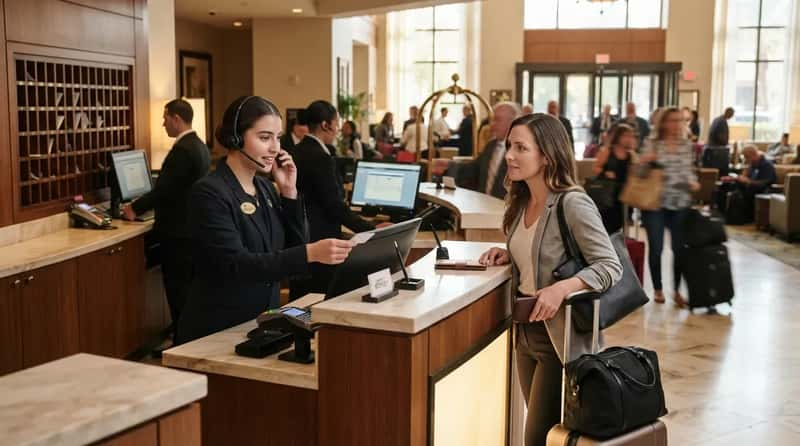
It sounds efficient to ask for both at once. It isn’t. One former front desk employee warns against asking for early check-in and an upgrade together, since the desk is busy in the early afternoon with checkouts and early arrivals.
There’s a hidden cost, too. Checking in very early often means getting whatever room is ready, which might be a less desirable one. A Marriott front office manager explained that staff can’t go around waking up guests to free up a room, even for a top-tier member. Patience tends to win here.
Worth Knowing
- Early afternoon is crowded with checkouts and early arrivals.
- A very early check-in usually means the first room that happens to be ready.
- Staff can’t wake current guests to free a room, even for top-tier members.
- A common workaround is to store your bags and return later, when more rooms are clean.
The next entry has nothing to do with rooms, but it may be the most overlooked perk of all.
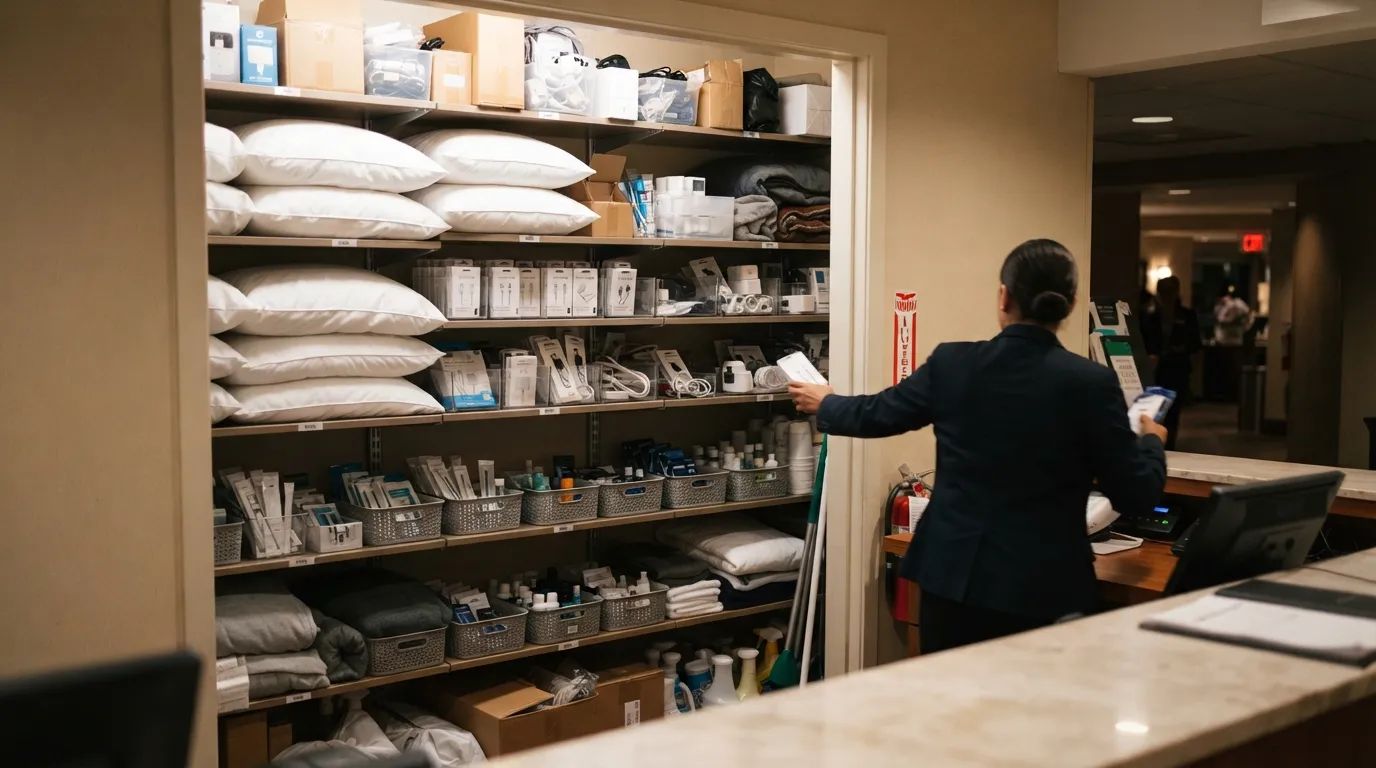
#5 – The Stocked Closet Behind the Desk
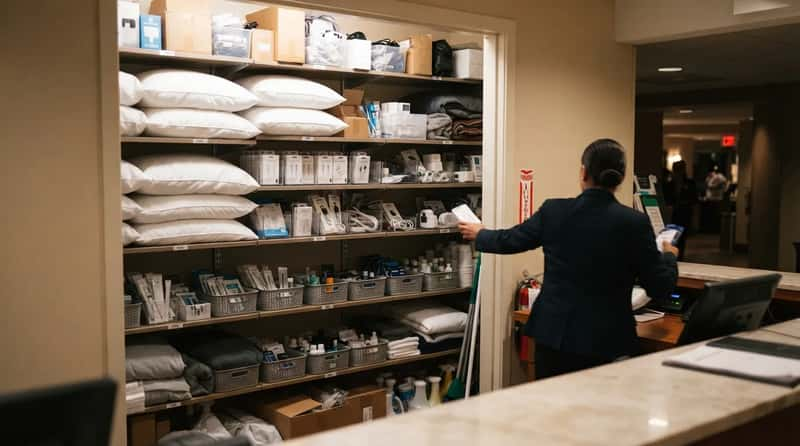
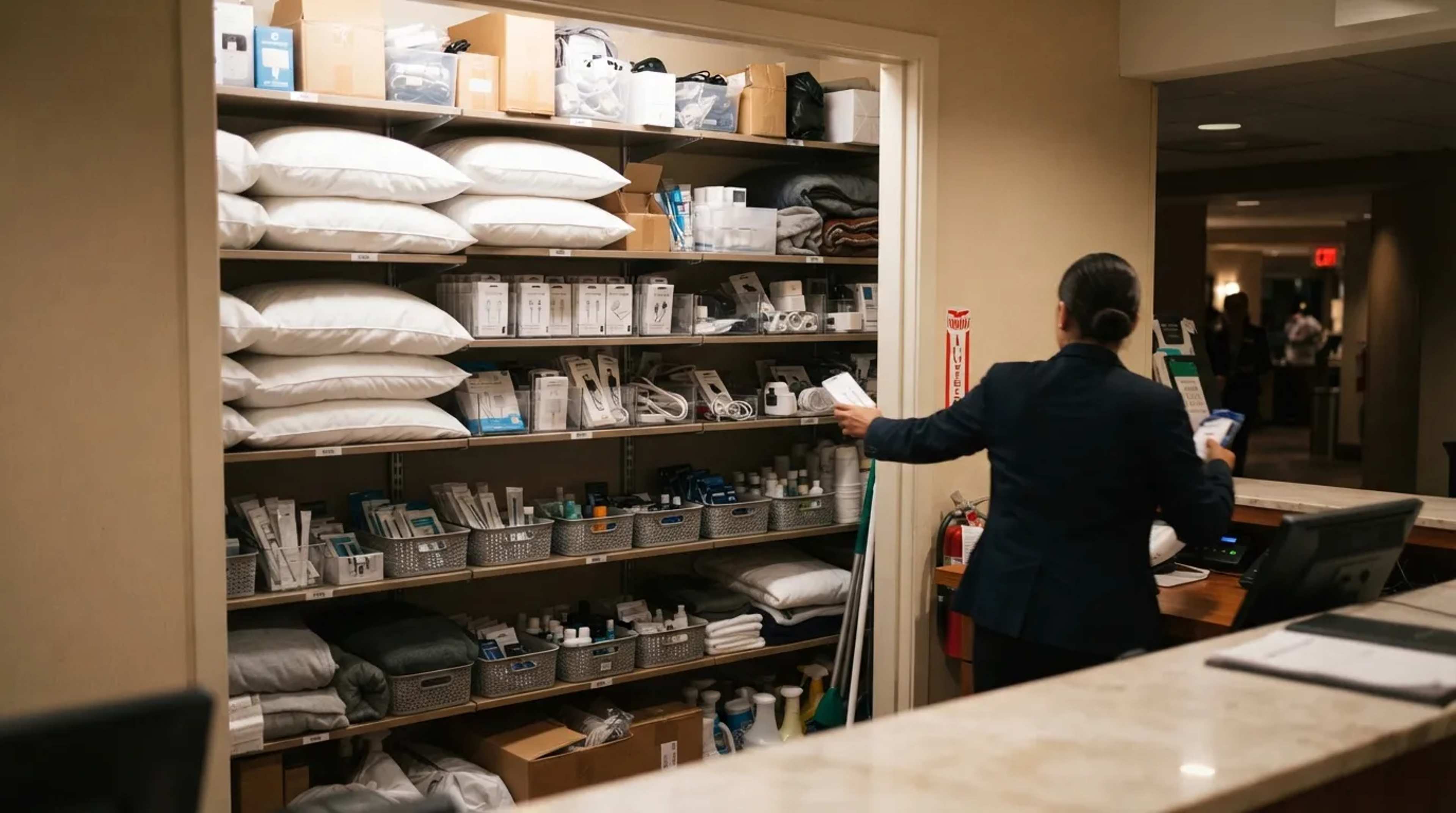
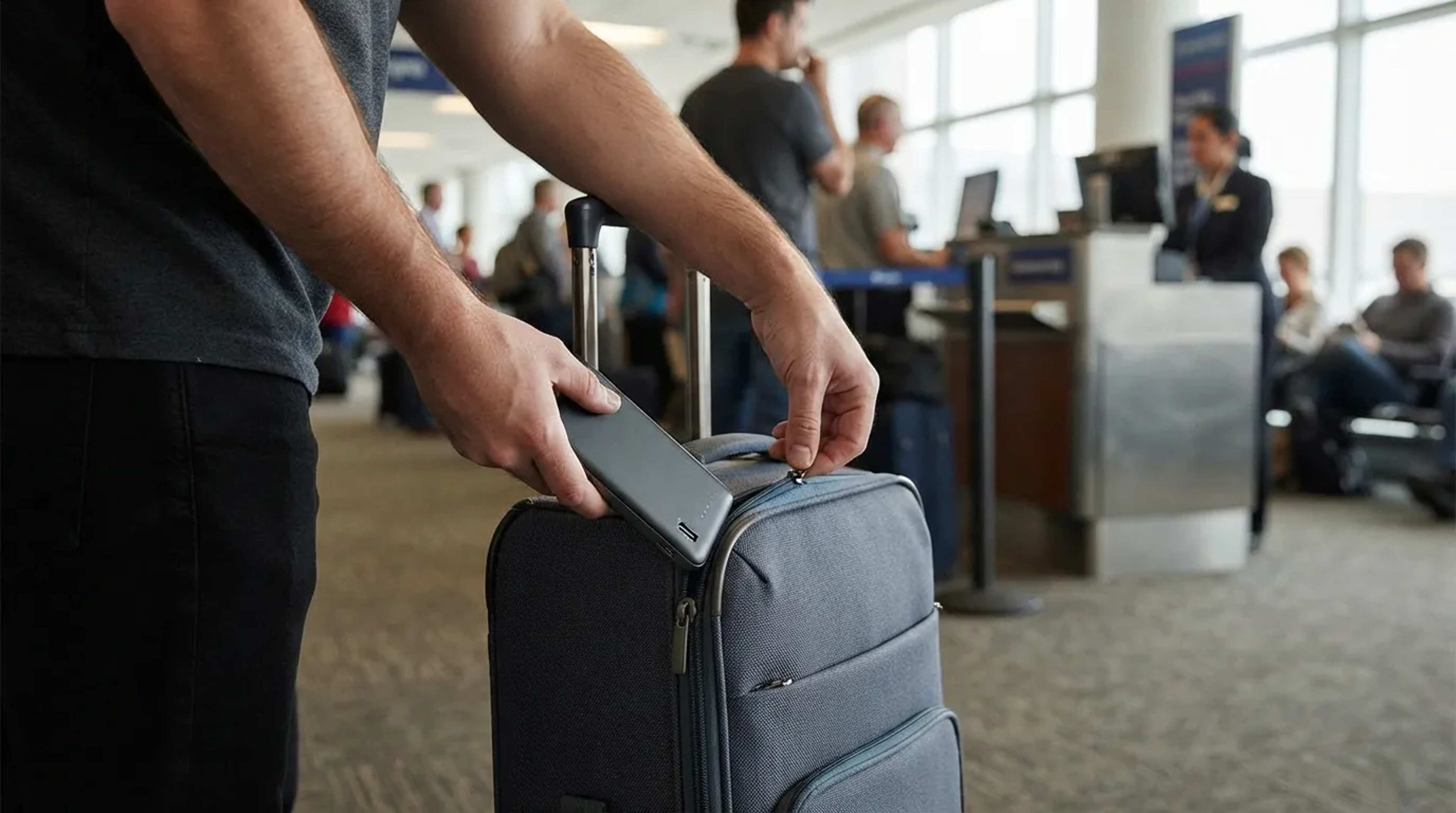
Forgot your charger? Need a firmer pillow? Many hotels keep a stocked closet behind the desk for guests who forgot something. Pillow preferences are also among the most common comfort requests, yet plenty of guests never ask beyond what’s on the bed.
One travel report sums it up: the extra pillow, the forgotten charger, and the quieter room are all sitting behind the counter, waiting for someone to ask. It costs nothing to check. Meanwhile, plenty of people end up paying for a replacement cable on the way to the airport.
The next entry is about money, and the rules around it changed recently.
#4 – The Total-Price Question the Rules Now Back Up

Surprise fees used to be the norm. The FTC rule on unfair or deceptive fees took effect on May 12, 2025, and covers short-term lodging. A hotel that advertises a room price must now show the total, including mandatory fees. Say a room looks like $149 but a mandatory resort fee pushes it to $204: the advertised price has to be the $204.
Guests who know this ask the desk to confirm the all-in nightly total at check-in. When the rule was finalized, AHLA data cited at the time said only 6 percent of hotels charge a mandatory resort, destination, or amenity fee, averaging $26 per night. Even so, it’s worth confirming before you sign.
Some of the most thoughtful upgrades never show up on a receipt, and #3 proves it.
#3 – The Room Changes Made Before Anyone Complains
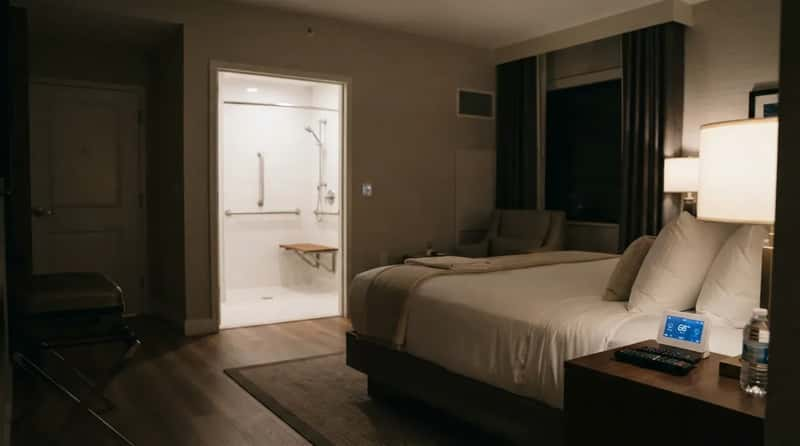
The best upgrades can be invisible. A recent roundup of front desk practices notes that for older guests, the real upgrade may be a room that is simply easier to get through at 3 a.m. Some desks ask housekeeping to adjust the thermostat before a guest walks in.
Others will move a guest to a room with a walk-in or roll-in shower once they mention a need. When a guest mentions trouble hearing, a good agent moves them to a room that has the right kit installed. The catch is that the guest usually has to say something first.
The next one doesn’t need a script at all, just a card in your wallet.
#2 – The Credit Card Perk Most Guests Forget They Own
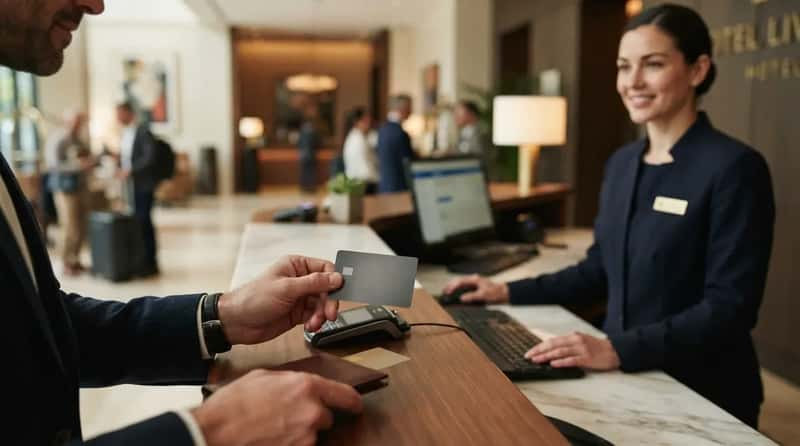
Some travelers already hold status and don’t know it. One guide notes that some premium credit cards provide automatic loyalty status or booking programs that include complimentary upgrades. Check the benefits page before you leave home.
Another source says even entry-level status can be the tie-breaker when the desk is deciding who gets the better room. Don’t treat it as a guarantee, though. Hotels set their own rules, and status that isn’t tied to your reservation does nothing at the counter.
Why It Stands Out
- It costs nothing to check, and the answer is on your card’s benefits page.
- Some premium cards grant automatic loyalty status or upgrade-friendly booking programs.
- Even entry-level status can break a tie between two similar guests.
- It only helps if the number is attached to your reservation.
But the biggest lesson of all doesn’t come from a card or a code, and it’s #1.
#1 – The “Magic Phrase” That Doesn’t Actually Exist

Here’s the twist. Terra Sampson, a front office manager at The Alexander in Indianapolis, told AOL that everyone thinks there’s a magic phrase, but the real key is genuine human connection and celebration. Carolyn Snee, a front office manager in Keystone, Colorado, agrees that asking directly for a free upgrade can feel transactional.
Another front desk manager’s advice is simple: most people ask as if they’re entitled to an upgrade, so ask politely. And the honest caveat is that nothing guarantees one. Still, the guest who treats the agent like a person tends to be the one the agent wants to help.
The pattern across all 17 is hard to miss. The desk has discretion, the grid has open rooms, and the guests who get the most are the ones who ask early, ask specifically, and ask kindly.
The loudest myth, that one perfect line unlocks a free suite, is also the least supported by the people who actually hand out the keys. Sometimes the best upgrade is just a quieter hallway, an honest total, or an extra pillow, and all of it starts with a person behind a counter who was glad you asked the right way.