Most people think a coach tour is the lazy way to travel. You sit down, stare out the window and let someone else handle the driving. Then day four arrives. The suitcase is a mess, the bathroom stop got missed and forty people are waiting on one person who is still hunting for a charger. That is when the first-timers realize that the calm travelers around them are not lucky. They are practiced.
The 13 habits below are what those veterans quietly do, and nearly all of them cost almost nothing. One takes five seconds on the first morning. One is a rule written into law that explains why your bus always seems to stop at the worst possible moment. And the last one has nothing to do with packing, gadgets or seats, yet it may do more for your trip than anything else on this list.
#13 – They Photograph the Coach Before Anyone Else Boards
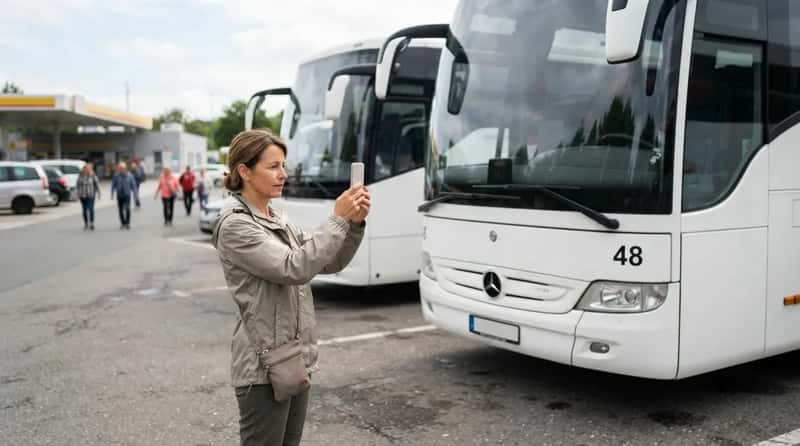
The smartest move of the whole trip takes five seconds. Seasoned travelers snap a photo of the coach’s front, its fleet number and its license plate on day one. At a crowded rest stop, a dozen white coaches can sit in a row, and they all look identical after a 20-minute break. That blur sets in faster than anyone expects.
The same habit works for the hotel. Take a picture of the hotel card or the sign above the front desk, and screenshot the guide’s phone number. If you get turned around in a strange town, you have proof of where you are headed right in your pocket. That beats digging through a bag with a dying phone and a rising sense of panic.
But the next habit is the one that keeps your suitcase from taking over your whole day…
#12 – They Pack a Separate “Coach Bag” and Never Touch the Suitcase
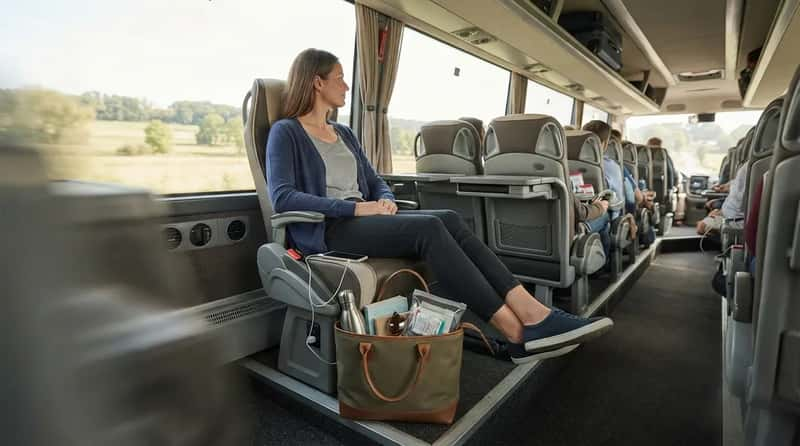
On a touring day, the suitcase goes into the hold and stays there. Experienced travelers keep a small bag at their seat with everything they need until the hotel. That usually means medication, a charger, tissues, a light layer, sunglasses and a water bottle. The luggage hold is often not reachable until the next stop, so anything left in the big bag is out of reach for hours.
The coach bag also ends the “where is it?” shuffle that holds up the aisle. Packing it the night before takes two minutes. Doing it in a rush at 7:30 a.m. is how umbrellas end up in Lisbon and chargers end up under the seat.
Wait until you see why the clothes inside that bag matter as much as the clothes on your back…
#11 – They Dress in Layers Because the Air Conditioning Has a Mind of Its Own
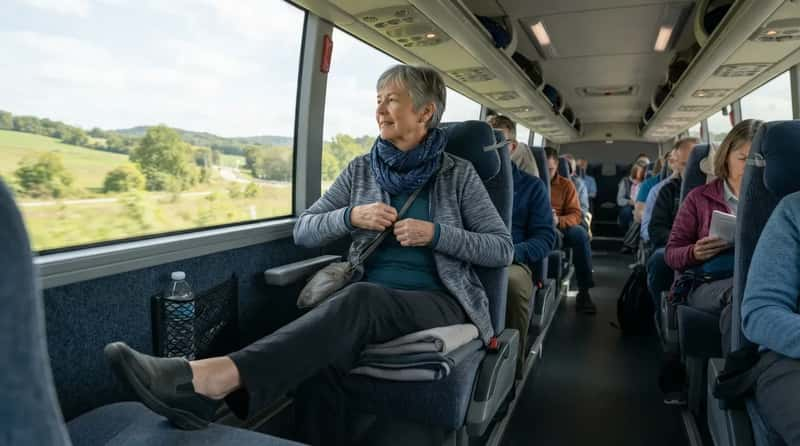
Coach temperature is the great unspoken argument of group travel. Big windows turn the sunny side into a greenhouse, while the vents can feel like a walk-in fridge. Veterans never dress for the weather outside. They dress for a cabin that swings between hot and cold, usually with a thin cardigan or zip-up that goes on and off in seconds.
A light scarf doubles as a neck pillow cover or a sun shield. Slip-on shoes help too, since many travelers loosen their footwear on long stretches. It’s not glamorous, but nobody on day six is jealous of the person shivering under a paper napkin.
And speaking of small things people overlook, the next one costs under a dollar and saves a lot of panic…
#10 – They Always Carry Small Change for Rest Stop Toilets
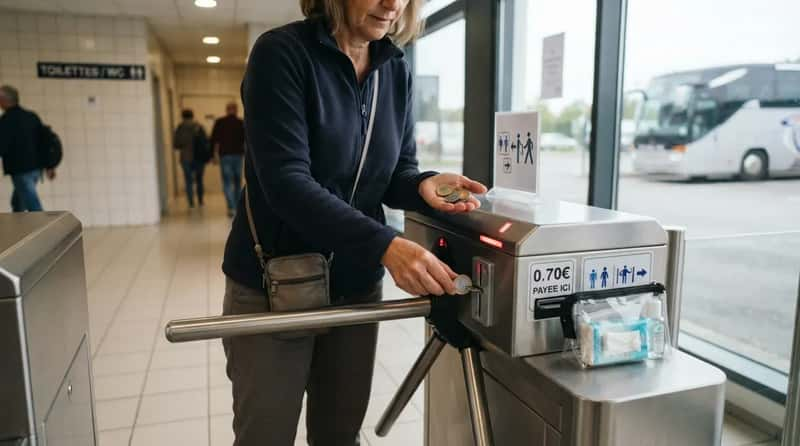
Here’s a detail first-timers discover the hard way. At many highway rest areas across Europe, the toilets charge a small fee, and the turnstile often wants coins instead of a card. A bus full of people can lose ten minutes at a single turnstile while somebody hunts for change. Travelers who have done this before keep a few coins in a zip pocket.
The habit goes further than coins. They also carry a small pack of tissues and hand sanitizer, because supplies at busy stops can run out. Fees and payment methods vary by country, so a quick question to the guide at the start of each leg tells you what to expect.
Worth Knowing
- Many paid restrooms use coin-operated turnstiles, so a card alone may not get you through.
- Some stops hand back a receipt or voucher that counts toward a shop purchase, so don’t toss it right away.
- Keep your toilet coins in a separate pocket from your souvenir money.
- Fees and rules change from country to country, so ask your guide before each leg.
Next comes a decision that sounds trivial but shapes your whole day, and the popular answer may be wrong…
#9 – They Pick Seats by Purpose, Not by Popularity
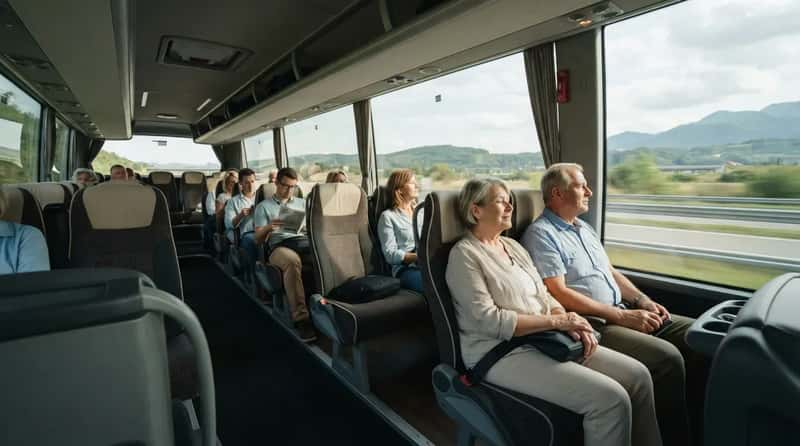
Everyone wants the back row on a school trip. On a long coach tour, plenty of regulars see it differently. The rear tends to feel bumpier and, on some coaches, sits closest to the engine or the onboard toilet. The front offers the clearest view and is the usual recommendation for travelers prone to motion sickness, since a stable horizon helps.
Other riders swear by the middle for the smoothest ride. Whatever you pick, note where the sun will be. On a long day, the side facing the sun can turn into a slow roast.
But no seat helps if you ignore the one schedule that actually controls your day…
#8 – They Learn the Driver’s Break Rules and Plan Around Them
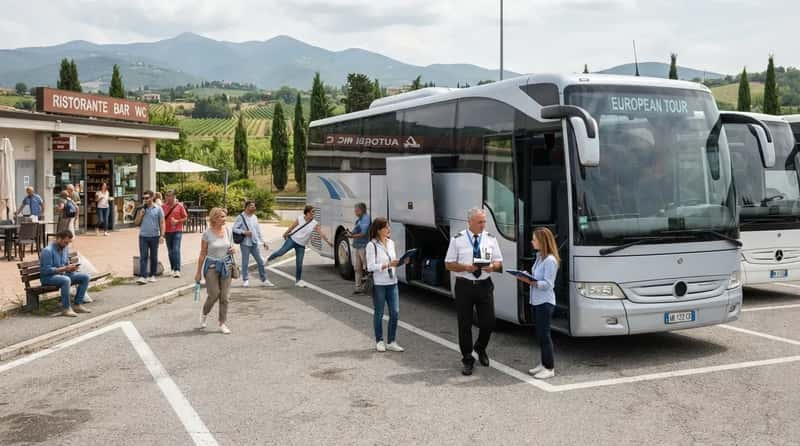
Coach drivers can’t just keep going. In the European Union, drivers must take a 45-minute break after 4.5 hours of driving, and that break can be split into shorter ones. That rule is why your bus stops when it does, even if the scenery is perfect. Experienced travelers treat it as a clock and plan bathroom visits, meals and phone charging around those breaks.
Knowing this changes the mood on board. Instead of grumbling about a delay, they understand the stop is a legal safety measure, and they make the most of it. Rules in other regions, including the U.S., differ, so ask your guide how the day’s driving time is set.
The next habit sounds boring, yet it separates the calm travelers from the frantic ones…
#7 – They Treat “Be Back by 2:15” as Meaning 2:05
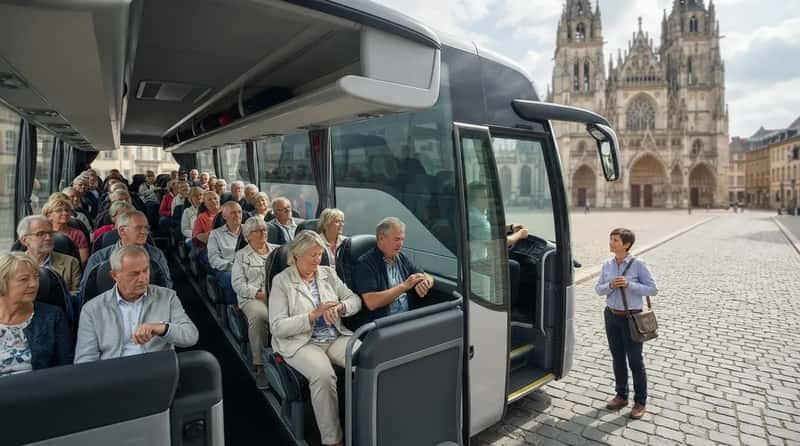
Every tour has the person who strolls up at 2:19 with an ice cream and a smile. The group waits, the schedule slips and the next stop shrinks. One late traveler can quietly cost 40 people a few minutes each, every single time. Veterans know this and set their phone alarm ten minutes early.
The early habit pays off for them too. They get a calmer walk back, a few quiet minutes in their seat and none of the glares that greet the last person aboard. Many seasoned travelers will tell you the late arriver is the biggest social hazard on any tour.
Still, being on time is the easy part. Staying hydrated without paying for it later is trickier…
#6 – They Sip Water on a Schedule, Not a Whim

Chugging a liter at 9 a.m. is a rookie move when the next toilet stop is two hours away. Regulars sip steadily and time their drinking around the stops. They also skip the extra coffee right before a long stretch, since caffeine can send you looking for a bathroom sooner than you’d like.
Dry cabin air makes it easy to feel tired without realizing you’re thirsty. A refillable bottle with a cap that seals well is the standard kit, and plenty of hotels will let you top it up at breakfast. It’s a small thing, but a headache on day three often traces back to it.
Quick Compare
- The chugger: drains the bottle early, then spends the afternoon watching the clock for the next stop.
- The sipper: drinks in small, steady amounts and tops up right after each break.
- The result: one rides in comfort, the other rides in negotiation with their bladder.
Up next is the habit that makes your legs thank you by evening…
#5 – They Get Off and Move at Every Single Stop
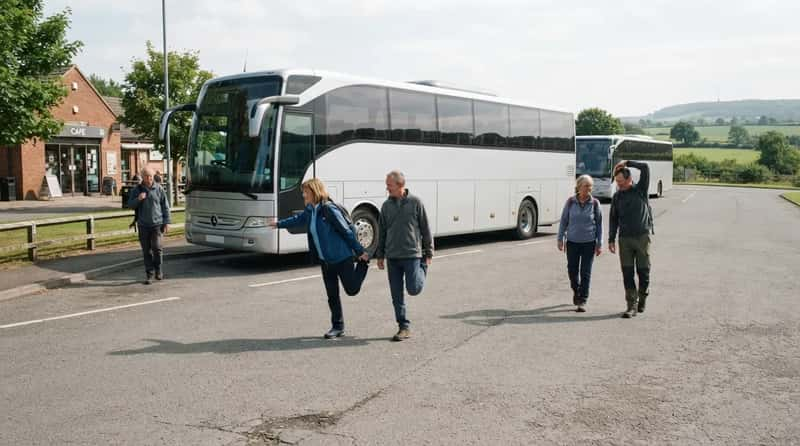
It’s tempting to stay in your seat during a short break. Experienced travelers do the opposite and walk even when they don’t need anything. Sitting for hours can leave you stiff, swollen and sluggish, and a few minutes on your feet changes that fast.
They do a quick loop of the parking area, roll their ankles and stretch their shoulders. Some also stretch in their seats between stops. The payoff is a better mood at the next sightseeing stop, because the body isn’t still folded up from the road.
But the next habit decides whether you’re relaxed or stranded when the signal vanishes…
#4 – They Download Everything Before the Wi-Fi Disappears

Mountain roads, tunnels and rural stretches don’t care about your data plan. Regulars download offline maps, the day’s itinerary, tickets and a few playlists or podcasts before leaving the hotel. Hotel Wi-Fi is often the only dependable connection of the day. Waiting until you’re on the coach to download is a classic mistake.
They also pack a power bank, since coach charging ports don’t always work. A short charging cable stays in the coach bag. Without a signal, an offline map can show you the way back to the meeting point when the guide’s instructions have faded from memory.
At a Glance
- Before breakfast: save the offline map for the day’s region.
- Before checkout: download tickets, confirmations and the daily itinerary.
- Before boarding: load playlists or podcasts for the long stretches.
- In the coach bag: a charged power bank and a short cable.
The next one is where most first-timers lose the most time and patience…
#3 – They Pack One Bag They Can Lift Alone
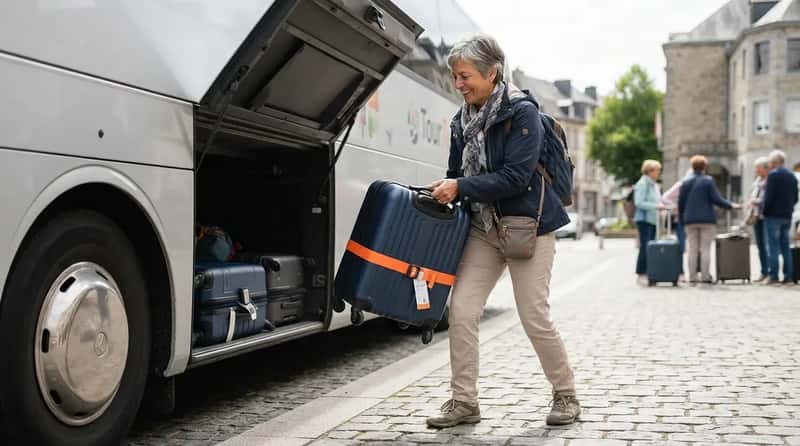
Luggage is the quiet villain of touring. Every morning it gets loaded, and every night it gets hauled to a new room. Coach companies often have limits on bag size and number, and the hold is shared by the whole group. Regulars pack light enough to lift their bag in and out of the hold by themselves.
They choose clothes that mix and match, use packing cubes and wear their bulkiest shoes on travel days. Many veterans say a second giant suitcase is the worst call a first-time touring traveler can make. Less to manage means a faster morning, every morning.
The second-to-last habit involves money and manners, and it can feel awkward if you aren’t ready…
#2 – They Keep Tip Money Ready in the Right Currency
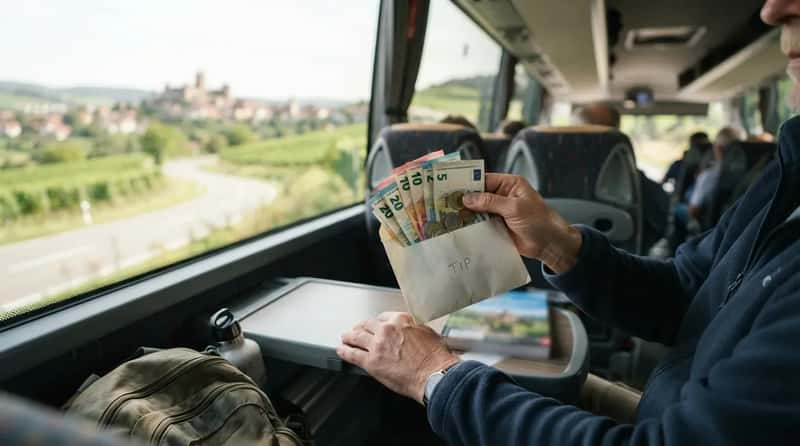
Tipping the driver and guide is common on many group tours, especially those sold to U.S. travelers. Many tour operators give suggested amounts in their paperwork, and policies differ, so it’s worth checking yours. The driver is the person most travelers forget until the final morning. Regulars keep small bills in an envelope so they aren’t scrambling at the end.
Some travelers feel tips should be optional, while others see them as part of the real cost of the trip. Either way, planning ahead spares everyone the awkward moment at the coach door. Local currency is often easiest, so ask about it early in the tour rather than late on the last night.
Fast Facts
- Check your tour paperwork first, since many operators print suggested amounts.
- Driver and guide are often tipped separately, so prepare more than one envelope.
- Small bills in the local currency make the handoff quick and easy.
- Ask on day one whether the group tips together or each person tips on their own.
And the last habit costs nothing at all, yet it changes the mood of the entire trip…
#1 – They Greet the Driver Every Morning and Learn the Guide’s Name Fast
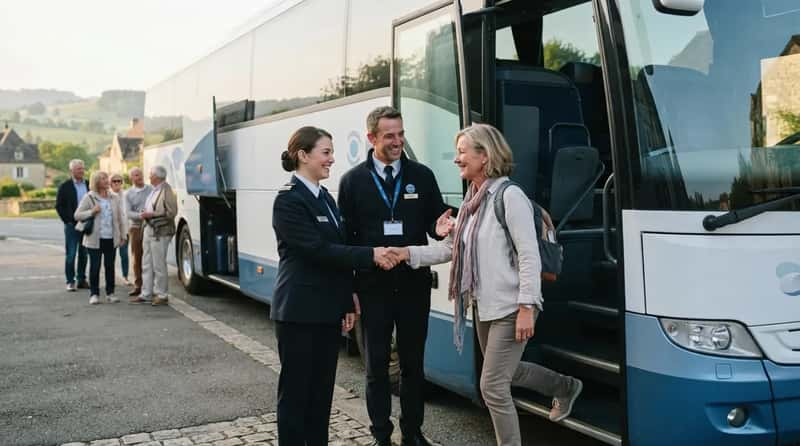
The best-traveled people on a coach start each day with a hello. They learn the driver’s name on day one and the guide’s within the first hour. It sounds trivial, yet drivers and guides are the two people who can solve most problems on the road. A friendly face gets a better answer when you need help.
A thank-you at the end of a long driving day is something drivers notice, too. Regulars say that small courtesy shapes the whole atmosphere of the bus. People who treat the crew as partners, not staff, tend to hear about the hidden viewpoint or the better lunch spot first.
On a long road, kindness really is the cheapest comfort upgrade.
Look back over the list and a pattern shows up. The most comfortable coach travelers don’t have the best gear or the best seat. They plan for cold air, dead signals, short breaks, heavy bags and the people who keep the whole trip moving.
Most of these habits take under five minutes, and together they quietly remove the small frictions that wear people down by day five. The ten-day trip that leaves some travelers drained leaves others wishing it would last another week. The difference is rarely the itinerary. It’s usually what happened before anyone boarded.