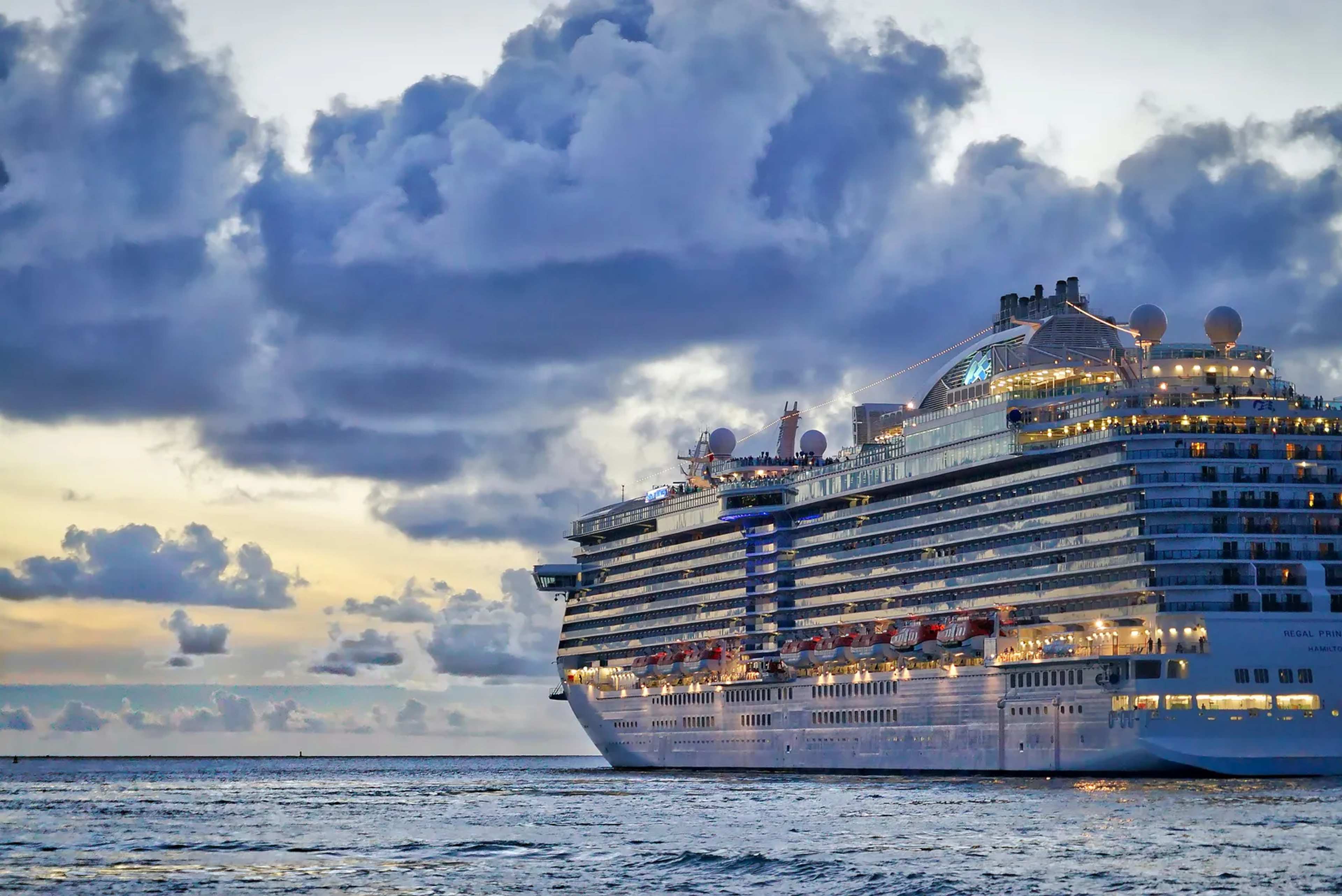
Most people assume that when a cruise ship drops anchor offshore, the tender ride to shore is the same rickety experience for every passenger who lines up.
It isn’t – not even close. Stepping down into a small boat that’s rocking against the hull is one of the trickiest moments of any cruise, and what almost nobody realizes is that tender crews are quietly running a second, invisible operation built entirely around guests over 60.
None of it gets announced over the loudspeaker. None of it appears in the daily program slipped under your cabin door.
By the time you finish reading this, you’ll never look at a tender platform the same way again – starting with the moment this whole system actually begins.
#16 – Pre-Registering Your Needs Sets the Whole Operation in Motion
Most guests over 60 who sail through a tender port without a hitch didn’t just get lucky. They did one specific thing weeks before boarding.
Cruise lines ask guests to request assistance at least 30 days prior to the cruise. That single step lets crews prioritize help from the very first port.
Fast Facts
- Most major lines want the special needs or accessibility form submitted at booking, but no later than 30 days before sailing.
- Sign language interpreting and service animal requests typically need 60 days’ notice instead of 30.
- Onboard teams like housekeeping and dining usually get the finalized accessibility details about 10 days before the ship sails.
- Requests filed inside that 30-day window can still be accepted, but only on a best-effort basis.
This usually means calling the special services line or filling out an accessibility form online, not just mentioning it at check-in. A verbal note at the pier is often too late for the manifest to be updated.
Once that notice is on file, tender crews receive a passenger manifest flagging specific guests before a single boat launches. Your name is already known, and your needs are already briefed.
The entire system starts here, before you even step aboard the ship. But that’s nothing compared to what happens once crew members actually lay eyes on you in the boarding queue.
#15 – The Informal Balance Check That Happens Before You Reach the Line
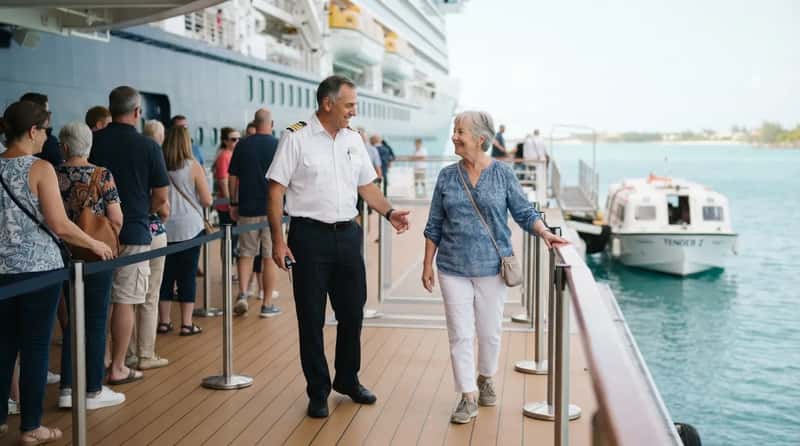
Here’s something almost no first-time tender passenger knows: the screening has already started before you collect your ticket.
Longtime cruisers over 60 describe a pattern of casual-sounding questions like “How are you feeling today?” It’s a balance check disguised as small talk, and it’s never written down in any official procedure.
Crew members are watching how you walk toward them, how you shift your weight, and whether you reach for a rail without thinking about it. None of that gets written on a clipboard either.
That quiet screening often decides who gets nudged toward an earlier, calmer boat before the midday rush starts. It’s not a medical exam – just an experienced eye reading body language in about five seconds.
Most guests never clock that it’s happening at all. But there’s another check running at the same time, and it starts at your feet.
#14 – The Footwear Inspection That Can Keep You Off – or Get You On Safely
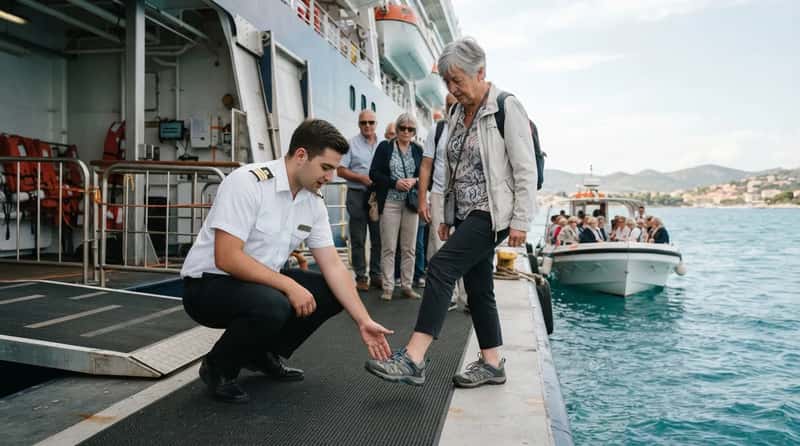
Tender crew members are trained to scan what passengers are wearing on their feet long before they scan faces or tickets.
Cruise lines explicitly require flat, securely attached footwear for tender boarding. Flip-flops, slick-bottomed sandals, or loose heels are the fastest way to get gently pulled aside for a second look.
Closed-toe walking shoes with rubber soles are the safest bet, and many veteran cruisers keep a dedicated pair packed just for tender days. It’s a small habit that saves an awkward moment at the platform.
For guests over 60, this isn’t about singling anyone out – it’s about spotting a fall risk before it becomes a problem. Crew members will often quietly ask a guest to switch shoes or grab a rail before letting them onto the platform.
It’s a small moment that prevents a serious incident. But the real structural support for older guests kicks in well before you even approach the platform – and it involves your place in the queue itself.
#13 – Quiet Priority Boarding Without Calling It “Priority”
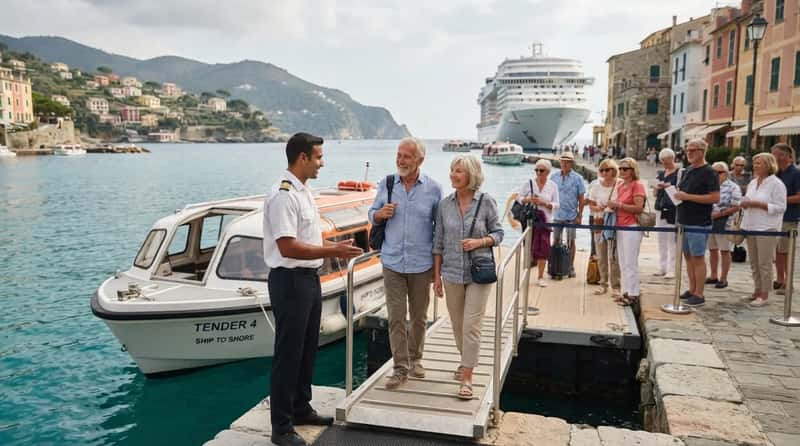
The formal tender ticket system is only part of the story. There’s an unofficial layer running alongside it.
Tender mornings are supposed to run strictly by ticket number, but that’s not always what happens in practice. Most passengers wait for their group to be called, while cruisers in their 60s often get quietly waved ahead.
This tends to happen more at smaller, less crowded ports where crew members have time to notice individual guests. On a packed morning at a major destination, the same courtesy is harder to extend to everyone who could use it.
It isn’t about status or a suite booking. It’s simply crew helping well-traveled guests who look like they need a hand, with no announcement made and no badge issued.
For guests who’ve booked shore excursions, the priority layer gets even more formal – and it applies regardless of age. But there’s a specific excursion-based upgrade that directly benefits older guests who plan ahead.
#12 – Shore Excursion Priority That Gets You to the Tender First
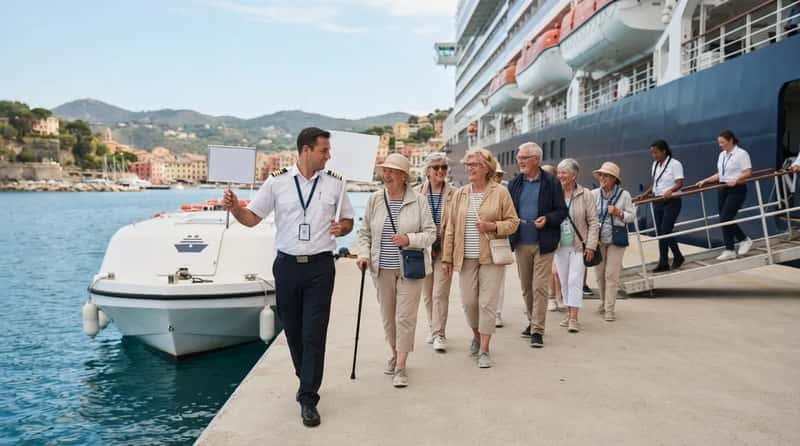
Booking a ship-organized shore excursion is one of the clearest ways to guarantee an early, organized tender departure. It matters most for guests who need more time.
Guests with a pre-booked shore excursion typically get priority for disembarkation. They gather in one of the ship’s lounges and are then led by a crew member directly to the tender embarkation area.
“I have a small six seven member team that deals exclusively with accessible shore excursions.”
Ron Pettit, Royal Caribbean Director of Disability Inclusion
Booking early in the cruise, sometimes even before boarding, tends to secure the better excursion time slots and the calmer tender windows that go with them. Waiting until the morning of often means settling for whatever spot is left.
Booked excursions often come with a reserved space on a tender to the port, though operations can vary by location. That reserved spot means boarding a less-crowded boat at a calmer time of day.
That’s more than a convenience for older guests. But there’s another advantage to the organized group assembly that most passengers overlook entirely.
#11 – The Lounge Muster Point That Gives You a Chance to Rest First
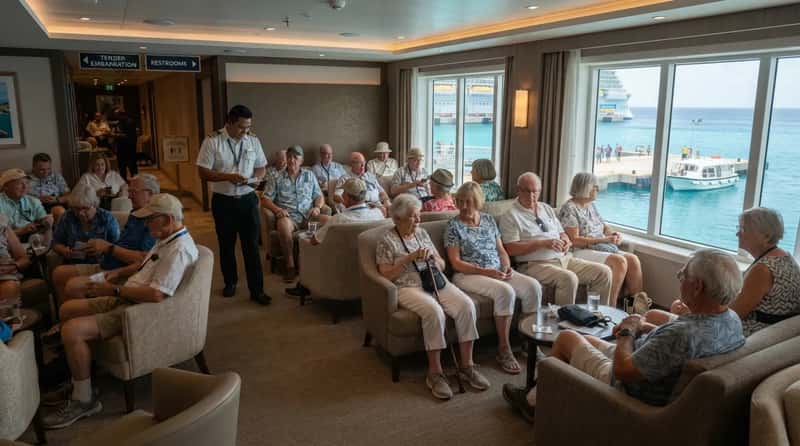
The walk from stateroom to tender platform is longer than most passengers expect – and tender crews know it.
Passengers on pre-booked excursions gather in a lounge before a crew member leads the group to the embarkation area. That gathering isn’t just logistics – it’s a built-in rest stop.
These lounges usually have seating, air conditioning, and restrooms nearby, which matters more than it sounds like on a hot port morning. It’s a chance to sit down before the real physical demands of the transfer begin.
For guests over 60, particularly those with joint pain or cardiovascular considerations, that seated waiting period before the boarding walk is genuinely valuable. It also gives crew a clear chance to spot anyone who may need extra time or a slower pace.
Tender schedule updates get communicated through announcements, apps, and crew instructions, so by the time the group stands up, everyone already knows the plan. Wait until you hear what crew members do the moment the group reaches the actual boarding platform.
#10 – The Dedicated Boarding Escort Stationed on the Platform Itself
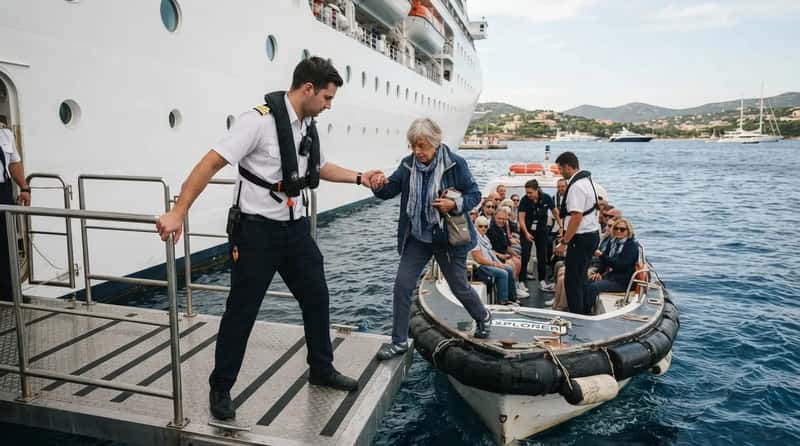
The boarding platform – that narrow step-across point between ship and tender – is statistically where most tender incidents happen.
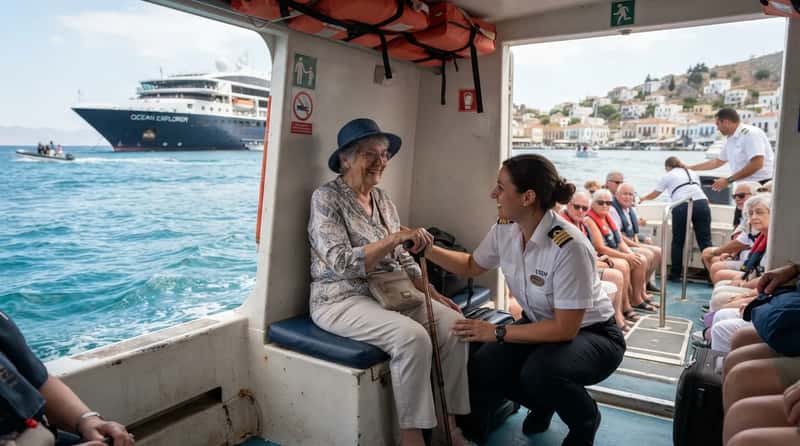
Crew members are always positioned to assist guests getting on and off, since the tender can shift or bob even while tied to the ship. Boarding can be especially challenging for passengers with mobility limitations.
These crew members train specifically for this handoff, learning to time their grip with the rise and fall of the water rather than fighting against it. It looks casual, but it’s a practiced skill.
That crew escort at the exact moment of stepping across is arguably the single most important service offered to any older guest at a tender port. Most passengers don’t even register it as a specific, trained role.
That crew member is not simply a greeter – they’re positioned to provide a physical steadying point at the most dangerous second of the whole process. But the help doesn’t stop once you’re aboard the tender.
#9 – Reserved Seating on the Tender Itself
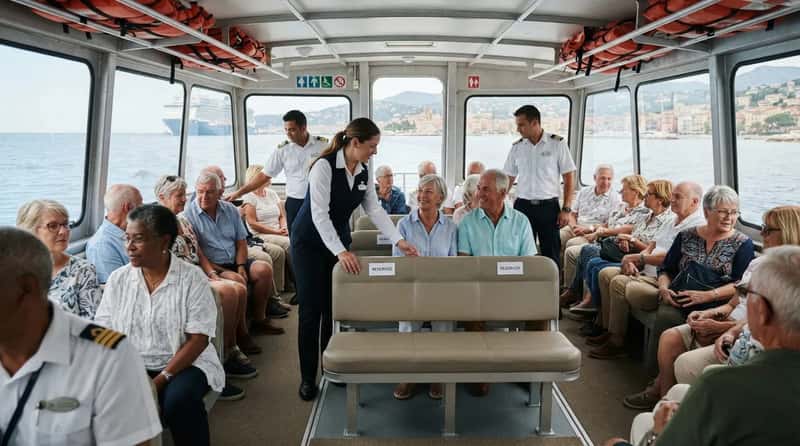
Getting on the tender is only half the equation. Where you sit once you’re aboard matters more than most guests realize.
Larger tender boats are built for stability, often covered or enclosed and flat-bottomed for maximum steadiness during boarding and off-loading. On well-run operations, crew members direct older guests toward seats near the exits and closest to the center of the boat, where motion is least pronounced.
That center seating also happens to be the best spot for guests prone to motion sickness, since it’s where the boat’s rocking is felt the least. It’s a small placement decision that prevents a rough ten minutes.
Sitting near the bow or stern in choppy water is significantly more uncomfortable. Experienced crew know exactly which seats to avoid for guests with balance or vestibular issues.
Getting the right seat is the difference between a calm seven-minute crossing and an exhausting one. But what happens in rough weather, when even the best seat isn’t enough, is where the safety calculus gets serious.
#8 – The Sea Condition Assessment That Protects You Before You Board
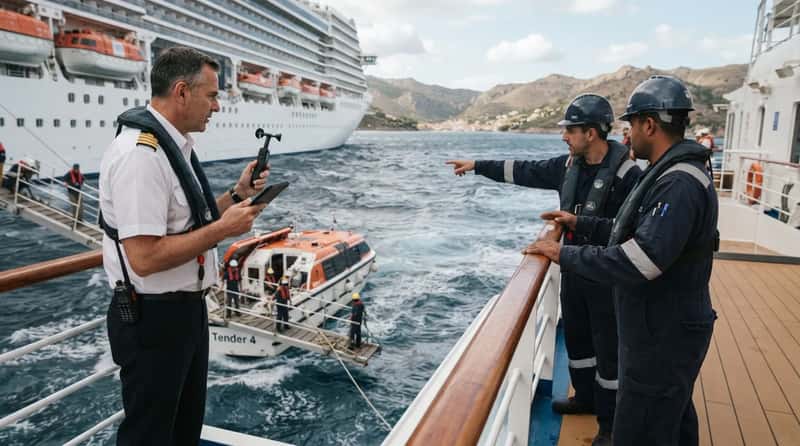
Tender crews don’t just react to bad weather. They make proactive decisions based on sea state before older guests are ever called to board.
Safety is priority number one in the tendering decision, and in rough seas, some passengers may not be allowed to board at all. That assessment runs continuously throughout the morning.
A tender port can be canceled completely if the water is too choppy for safe boarding. Wind, swells, or extreme tide levels can prohibit the transfer from platform to boat entirely.
It’s frustrating to miss a port you were looking forward to, but that call is made specifically to protect the passengers most vulnerable to a fall or a hard landing in a moving boat. No crew wants to make that decision, but they make it anyway.
For guests over 60, this protection is non-negotiable – no port visit is worth the risk. But when conditions are borderline, tender crews have another tool entirely.
#7 – Smaller, Calmer Departure Windows for Higher-Risk Guests
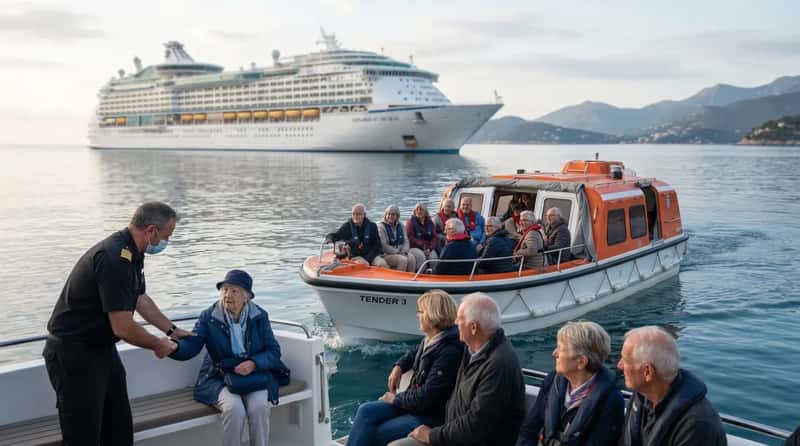
When the sea state is manageable but not ideal, experienced tender crews don’t send everyone out at once.
The first tender of the morning and the last one before the ship departs tend to be the calmest. Midday brings the most traffic, the most boat wake, and the most disruption to the water around the platform.
Some experienced cruisers over 60 deliberately request the first tender slot specifically for this reason, even if it means skipping breakfast in the main dining room. A calmer crossing is worth the trade-off.
Crew members who spot older guests needing extra time will often quietly route them toward these quieter windows. It’s one of the least visible services on the entire operation.
Frequent cruisers in their 60s and 70s are the ones who benefit most from it. What happens when mobility equipment enters the picture takes the complexity to another level entirely.
#6 – Mobility Aid Handling and Equipment Coordination
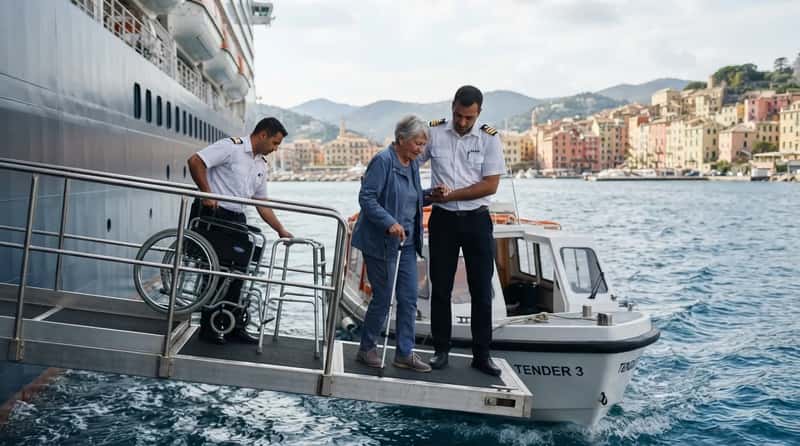
Traveling with a cane, walker, or collapsible wheelchair at a tender port requires a level of crew coordination most passengers never see coming.
Passengers using walkers, scooters, or wheelchairs can have real difficulty boarding a boat that’s bobbing in the water. In most cases these devices are still allowed on tenders, with crew offering hands-on assistance.
Letting the cruise line know about the specific type of equipment in advance helps crew prepare the right number of hands and the right approach for that particular device. A three-wheeled scooter and a standard walker require different handling.
To safely board most tenders, guests generally need to be able to take a few steps and use a collapsible manual wheelchair. Motorized wheelchairs and mobility scooters usually can’t come aboard unless roll-on capability is available.
Quick Compare
- Cane or walker: Generally fine, with crew standing by to help across the gap.
- Foldable manual wheelchair: Usually allowed if the guest can still take a few steps to board.
- Motorized wheelchair or scooter: Not permitted on most tenders unless roll-on capability is confirmed.
- Unable to take any steps: Boarding is typically not possible unless the ship offers roll-on tenders.
Staff aren’t permitted to physically lift guests or equipment for safety reasons, but they will assist with manual wheelchairs, walkers, and canes. Understanding this distinction before you arrive at the platform is the key to a smooth experience – and the next service follows directly from it.
#5 – Roll-On Capability: The Upgrade Most Guests Don’t Know to Request
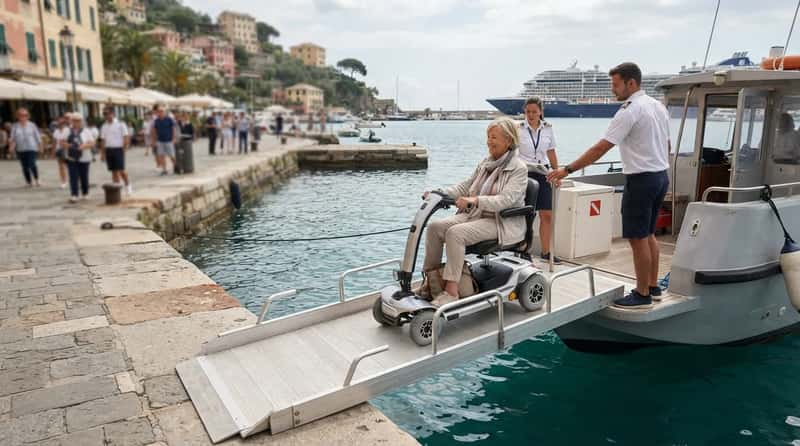
Most guests assume tender accessibility is binary – you can get on or you can’t. The reality is more nuanced, and one specific arrangement can unlock access for guests who’d otherwise be left behind.
Guests with assistive devices who can’t take a few steps typically can’t board a tender unless roll-on capability is available. That capability – essentially a flat-access boarding ramp – exists on some ships and some routes.
Newer tender fleets and calmer, more sheltered ports are more likely to have this option available than older boats working in exposed anchorages. It’s worth asking specifically about the itinerary’s ports, not just the ship in general.
You can inquire about it at the Guest Relations Desk once you’re aboard, though it isn’t guaranteed everywhere. The key detail most guests miss: you have to ask, because it won’t be offered automatically.
For guests over 60 who use a manual wheelchair and assumed they’d have to stay aboard, this one conversation can unlock the entire port visit. What happens on the other end of the tender ride carries its own set of quiet arrangements.
#4 – Shore-Side Disembarkation Assistance and Orientation
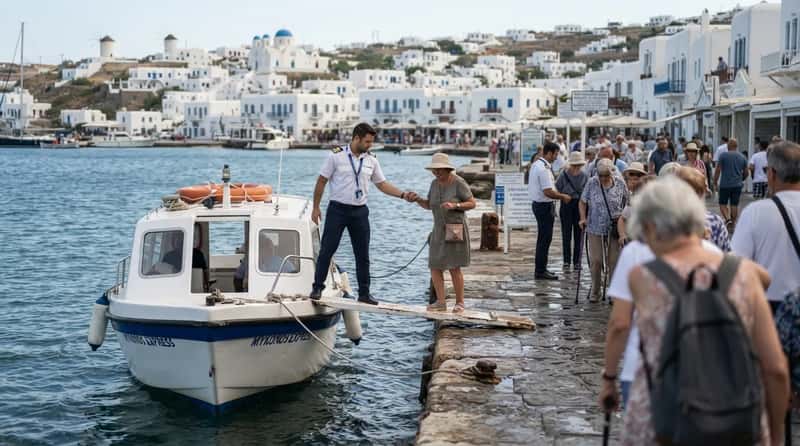
Arriving at the tender dock on shore isn’t the end of the crew’s job – it’s the continuation of it.
Once ashore, crew help passengers disembark safely and point them toward transport or excursion pickup points. For older guests with timed excursions or mobility considerations, that coordination is the difference between a smooth morning and a stressful scramble.
At many tender ports – think Santorini, Mykonos, or Cannes – the pier itself isn’t fully accessible, and the path to the street can involve steps, uneven stone, or steep ramps. Crew members familiar with the port will flag these hazards and redirect older guests toward easier routes.
Looking up a port’s terrain the night before, even with a quick search, can help set realistic expectations about what the walk ashore will actually involve. Crew guidance in the moment still matters most, but a little advance knowledge helps too.
Some shore excursion facilities aren’t fully accessible either, which can present particular challenges for guests with disabilities. A good tender crew won’t let you walk into that blind – and the real-time communication link between tender and ship makes the whole operation far more sophisticated than it looks.
#3 – Continuous Radio Contact Between Tender and Ship
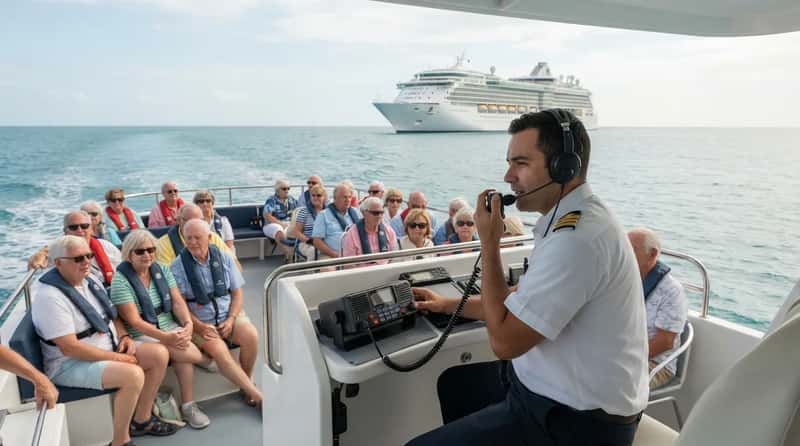
The tender and the ship are never out of communication while passengers are aboard – and for older guests, that constant link has direct practical consequences.
Radio contact runs between the tender and the ship the entire way across, coordinating timing and any contingencies. If a guest needs assistance the moment they land ashore, the ship already knows before the boat docks.
This is one of the biggest differences between a cruise tender and an ordinary sightseeing ferry – the level of monitoring never stops, even on a completely calm, uneventful crossing. Passengers rarely notice it precisely because it works so quietly.
If a guest shows signs of distress mid-crossing, crew can radio ahead for medical help or a wheelchair to be waiting at the dock. The ship is never out of the picture, even when you’re halfway to the pier.
That invisible thread turns what looks like a simple boat ride into a managed, monitored transfer with real-time contingency planning built in. What crew does when that contingency escalates is where the next two services become critical.
#2 – Medical Readiness and Emergency Protocols On Every Run
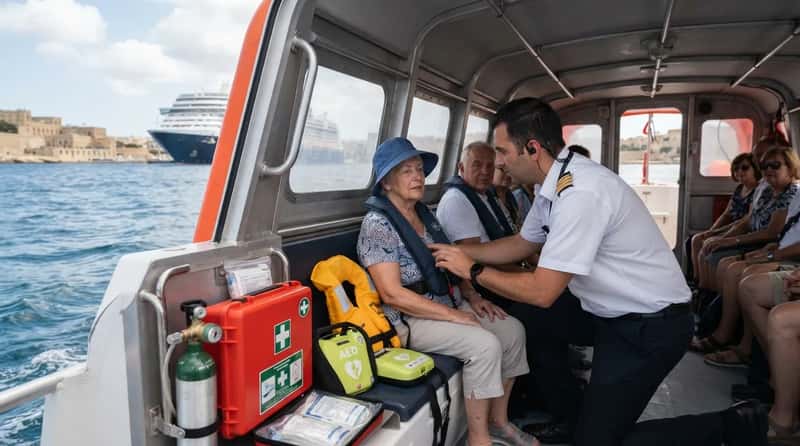
Every tender run is, by definition, a medical transport scenario waiting to happen – and experienced crews are equipped for it.
Tender vessels carry safety features like life jackets and handrails, and larger lifeboat-style tenders include first-aid provisions as standard equipment. For guests over 60 with cardiovascular or respiratory conditions, this is not a minor detail.
Heat and dehydration are quiet risk factors on tender mornings, especially in tropical or Mediterranean ports where guests wait outside before boarding. Crew keep an eye out for the guest who’s gone unusually quiet or unsteady in the sun, not just the one who says something.
Crews are trained to recognize distress signals – a guest gripping a rail too hard, unusual pallor, labored breathing – and to respond before a situation escalates. Safety stays the top factor in every tendering decision, well beyond just the weather.
Worth Knowing
- Heat and dehydration are among the quietest risk factors on any tender morning, not rough water.
- Crew are trained to watch for a hard grip on the rail, unusual paleness, or labored breathing.
- Larger tenders carry life jackets, handrails, and basic first-aid provisions as standard safety equipment.
The intersection of age, open water, heat, and physical exertion is exactly where medical events on tender boats most commonly occur. Cruise lines know this, and their crews are briefed accordingly – but the single most important service on this entire list is the one that runs longest before the tender ever touches the water.
#1 – The Pre-Departure Guest Needs Briefing That Drives Everything Else
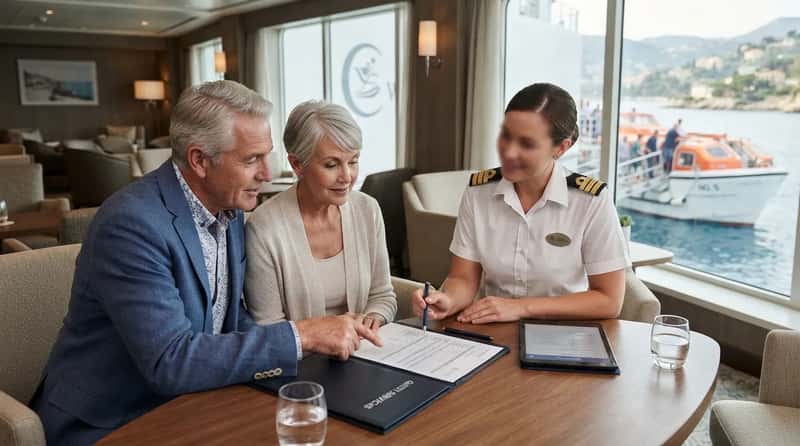
Every service on this list is ultimately downstream of one thing: what the tender crew knows about you before the operation even begins.
When advance notice is on file, crews receive a passenger manifest flagging specific guests before a single boat launches. Contacting the cruise line 30 days before sailing lets them prioritize your assistance from the very first port.
It’s the same registration mentioned at the very start of this list, and it’s worth repeating because it’s the one step almost everyone skips. A five-minute phone call weeks in advance quietly rewrites your entire tender experience for the whole cruise.
Cruise lines coordinate closely with local port authorities and service providers to keep tender boats and docking facilities ready and safe. Tendering may look simple from the outside, but it involves significant planning behind the scenes.
Most of this entire system only activates when guests know to ask, pre-register, and speak directly to the crew member in front of them. Guests who skip that step often get a perfectly average crossing – guests who complete it get something far more carefully managed than they ever expected.
The Bottom Line
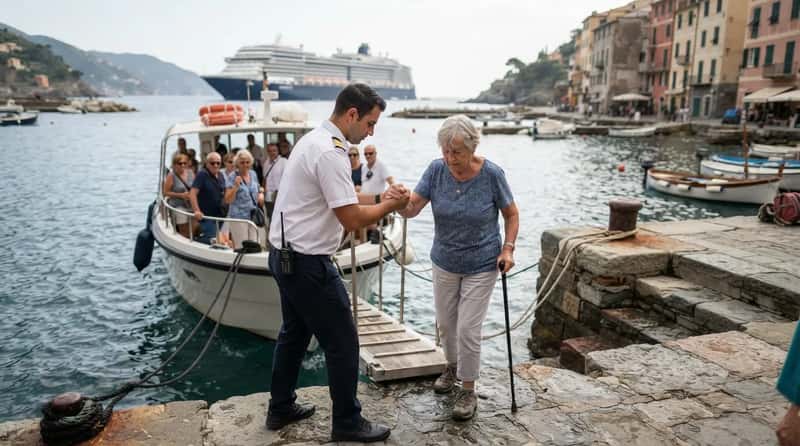
Tender crews are quietly running a second, invisible operation built entirely around guests over 60 – and none of it shows up in any brochure.
From the pre-sail needs briefing and informal balance checks all the way to radio-coordinated shore-side assistance and medical readiness on every run, the system is more sophisticated than it looks from the outside.
Passengers with mobility devices should contact the cruise line in advance, since some tender boats and ports simply aren’t accessible. That single phone call is the master key to almost every service on this list.
None of these 16 services require a badge, a special fare class, or a loud request at the front desk. They just require one quiet conversation before the ship ever leaves port.
The one thing every guest over 60 can do right now is pre-register their needs at least 30 days before sailing. Everything else – the escort, the seat, the quiet nod toward an earlier boat – follows from that one conversation.
#17 – The Bonus Step Nobody Tells You: Confirm It In Person, Port by Port
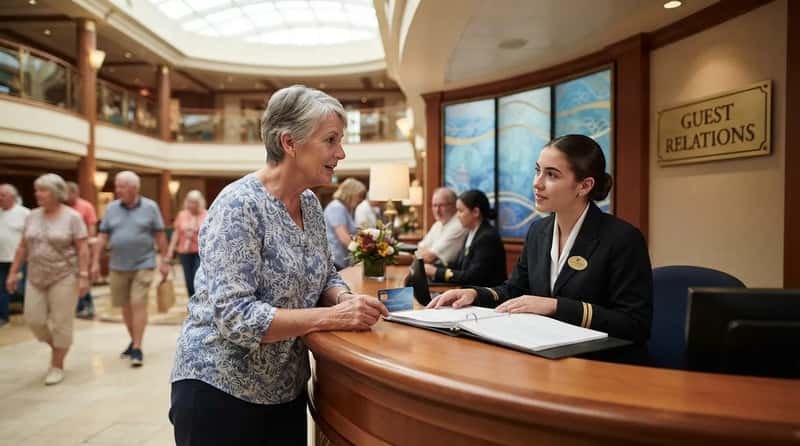
Here’s the one move that beats every online form: showing up in person at the Guest Relations or Access Desk within the first few hours of boarding, before the ship gets crowded.
A pre-cruise phone call gets you on a general list, but it doesn’t guarantee the crew running each specific tender port knows the details. An in-person visit lets you ask itinerary-specific questions face to face, port by port.
- Ask directly whether roll-on tendering is available at each individual port on your itinerary, since the answer can change from stop to stop.
- Request that your note be flagged specifically for tender priority, not just general boarding assistance, so it follows you all the way to the platform.
- Get the name of the accessibility coordinator on duty and ask them to confirm arrangements again the morning of every tender port, since sea and tide conditions can change overnight.
- If you use a mobility device, ask what happens if roll-on capability isn’t available that day, so you have a backup plan before you’re standing at the platform.
This extra conversation is what actually turns a filed form into a crew member on the platform who already knows your name and your needs before you show up. It costs nothing but a short walk to the desk on day one, and it’s the single detail that separates guests who breeze through every tender port from guests who spend the cruise wondering whether today is the day they get turned away.