Most travelers walk up to that booth thinking a passport, a boarding pass, and a polite smile are all it takes to breeze through. In reality, officers are trained to clock dozens of small behavioral cues long before a barcode ever gets scanned or a stamp ever gets checked.
Some of these habits feel completely harmless to the person doing them. But they can turn a routine thirty-second interaction into an unplanned trip to a secondary screening room, and most travelers have no idea they’re doing it until it’s already happening to them.
#16 – Assuming Duty-Free Purchases Don’t Count
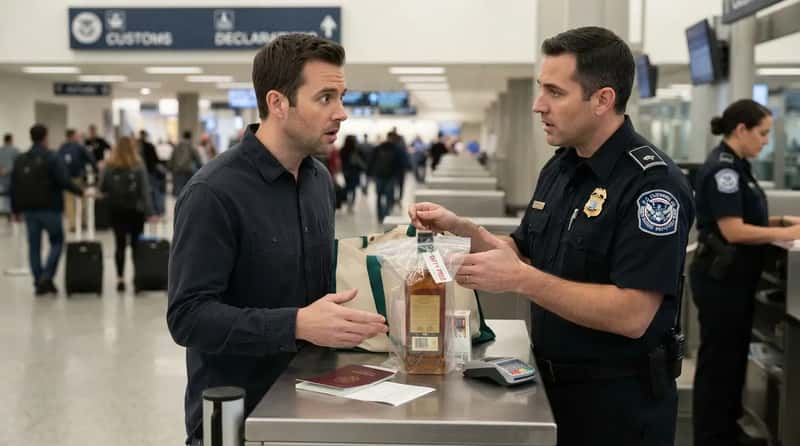
This is one of the most common and most avoidable slip-ups at any port of entry. Federal rules require declaring everything brought in from abroad, even items bought in a duty-free shop, but plenty of travelers assume those purchases don’t count because they were “in transit” or “already taxed.”
Officers see through this assumption constantly, and it rarely ends well. CBP guidance is blunt on this point: travelers must truthfully declare everything they’re bringing from abroad, duty-free items included. Skipping that step over a $40 bottle of liquor almost never feels worth the delay it causes.
#15 – Burying the Passport at the Bottom of a Bag
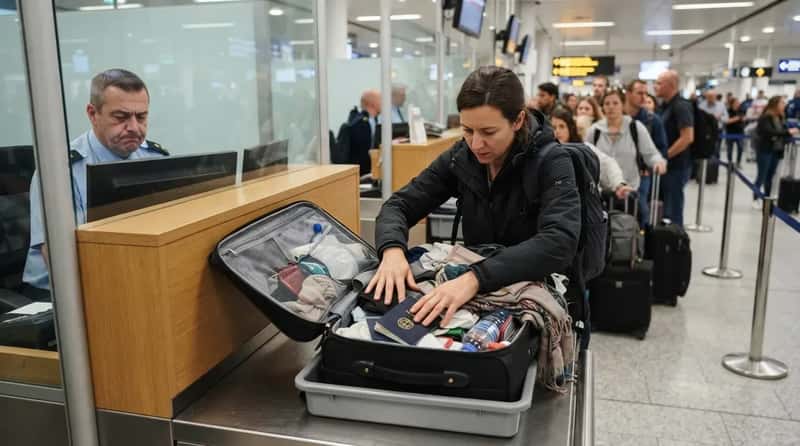
Nothing slows down a passport control line faster than one traveler frantically unzipping a suitcase mid-line. Officers watch this scramble happen constantly, and it drags down every single person waiting behind that one traveler. The standard guidance is simple: keep your passport and immigration documents on your person, never buried in checked luggage.
It sounds obvious, yet it happens at nearly every checkpoint on a busy travel day. Digging through a suitcase at the counter while a line stacks up is exactly the kind of moment that makes an officer sigh out loud. A jacket pocket or a small travel wallet solves the entire problem before it starts.
#14 – Refusing to Unlock a Phone, Then Acting Surprised
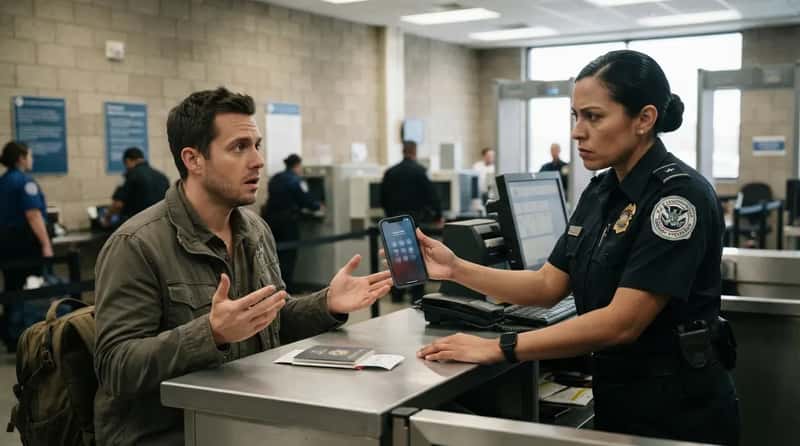
Travelers are often stunned by how much authority officers actually have over electronic devices at the border. Hesitating, arguing, or refusing outright almost always escalates the situation rather than resolving it, even when there’s nothing on the phone worth hiding.
What starts as a privacy objection can quickly turn into an extended secondary inspection. Officers aren’t necessarily hunting for anything specific in that moment – they’re watching how someone reacts to a routine request. A calm, cooperative response almost always moves faster than a standoff at the counter.
#13 – Cracking a “Bomb Joke” at the Booth
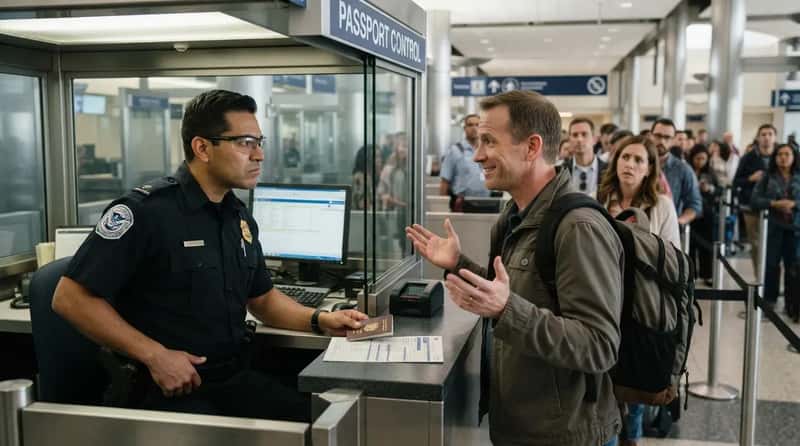
This is one of the fastest ways to turn a routine interaction into a nightmare. Nothing kills the mood at a customs booth faster than a security joke gone wrong, and officers hear some version of it constantly. It never lands the way the traveler thinks it will.
It doesn’t matter how relaxed the vacation felt five minutes earlier. Federal guidance is direct on this: stay calm and polite, and give clear, truthful answers instead of jokes or misleading statements. Officers hear the exact same punchline dozens of times a week, and it has never once earned a laugh at the booth.
#12 – Not Declaring Cash Over $10,000
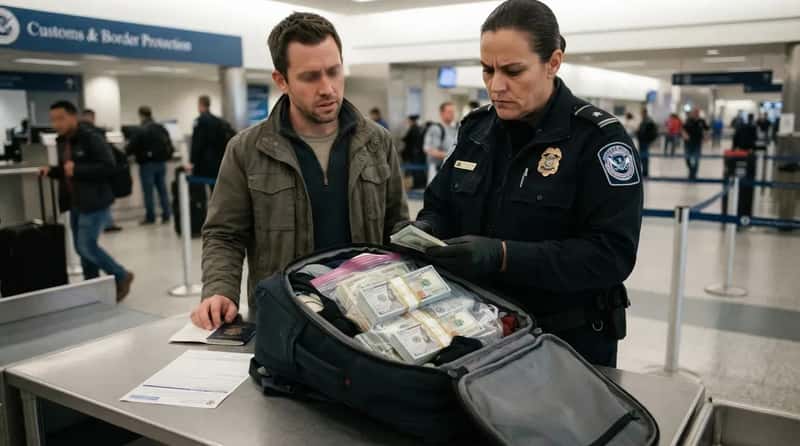
Most travelers assume this rule only applies to smugglers or business owners moving huge sums of money. In reality, it applies to anyone carrying that much cash or its equivalent. Declaring monetary instruments over $10,000 is simply a reporting requirement – carrying the money isn’t illegal, but failing to report it is.
Plenty of honest travelers get flagged simply because they didn’t realize the rule existed, not because they were hiding anything. The money itself is rarely the actual problem. The silence around it is what turns a routine crossing into a formal report, and a quick declaration on the form avoids the entire issue.
Fast Facts
- The threshold covers the whole group: if a family or traveling group is collectively carrying more than $10,000, a report is required even if no single person is over the limit.
- No cap exists on the amount: travelers can legally carry any amount of cash – there’s simply no limit to the amount of money you can travel with, only a duty to declare it.
- The paperwork has a name: the declaration is filed on FinCEN Form 105, officially the Report of International Transportation of Currency or Monetary Instruments.
- Silence is the real risk: failing to report can lead to confiscation of the entire amount, plus possible fines or criminal charges layered on top.
#11 – Forgetting About the Apple in Their Carry-On
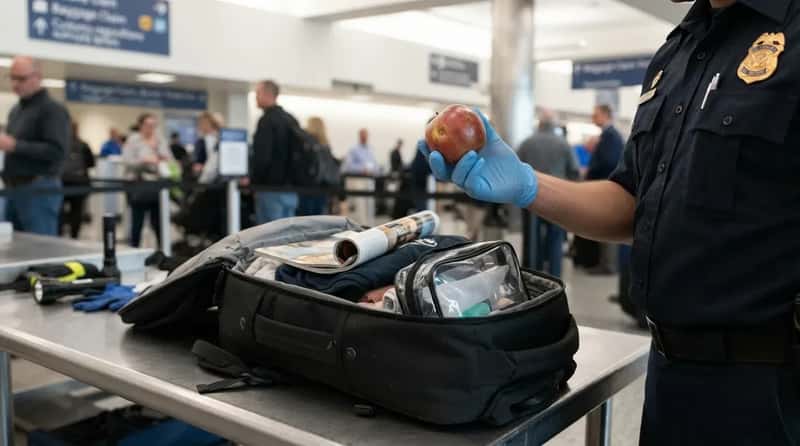
Thousands of travelers get flagged every single month for the smallest possible reason: a piece of fruit in a bag, or a food product they forgot to mention. It sounds trivial, but agriculture enforcement is one of the busiest, most active corners of border screening in the entire country.
The scale of this is bigger than most people assume. CBP issued more than 7,000 emergency action notifications for restricted or prohibited plant and animal products in a single recent month, alongside over 113,000 positive passenger inspections and 849 civil penalties for undeclared agriculture items in that same stretch. A leftover sandwich or a bag of fresh fruit is rarely worth the fine that follows it.
#10 – Wearing a Hat, Sunglasses, or Headphones at an E-Gate
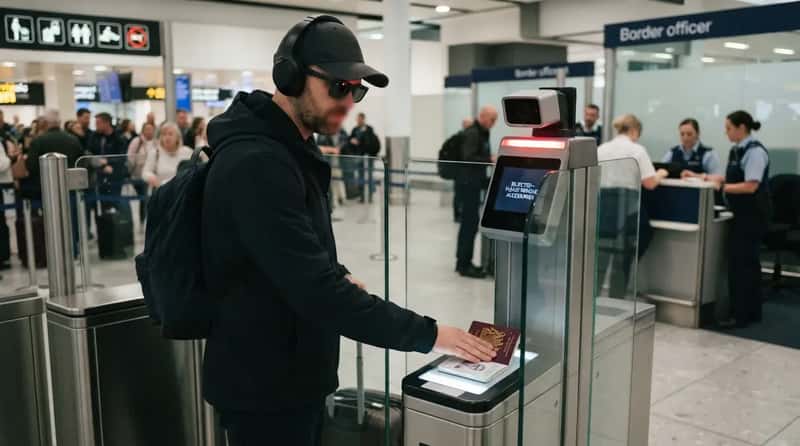
Self-service border gates look effortless right up until they fail over the smallest details. Passengers routinely get rejected for reasons that have nothing to do with a broken machine: leaving the passport in its cover, wearing a hat, sunglasses, headphones, or a face mask, or misaligning the passport on the scanner.
What feels like a minor accessory to the traveler reads as an obstruction to a facial recognition camera. A single pair of sunglasses is often the entire reason a gate rejects someone outright. When that happens, the traveler doesn’t get waved through faster – they get redirected to a staffed desk, which almost always takes longer than the gate would have in the first place.
#9 – Saying “Business” When the Visa Says “Tourist”
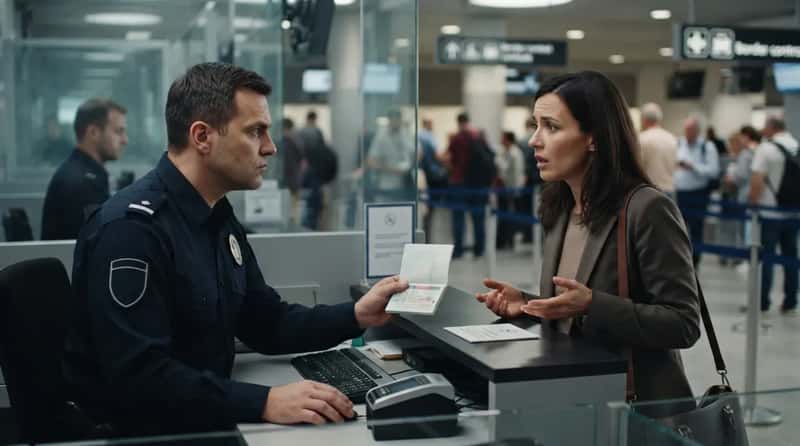
Officers are trained specifically to catch this exact contradiction. They compare visa classification, stated purpose, and travel history in seconds, and a business traveler arriving on a tourist visa or ESTA authorization needs documentation that actually matches the trip they describe out loud.
Most travelers don’t think of a quick client meeting as “business” in any official sense. Officers see it differently every time. A mismatch between visa type and stated purpose – arriving on a tourist visa while mentioning meetings – is a contradiction officers are trained to probe immediately. One offhand comment can undo an otherwise flawless trip.
#8 – Handing Over the Wrong Passport Entirely
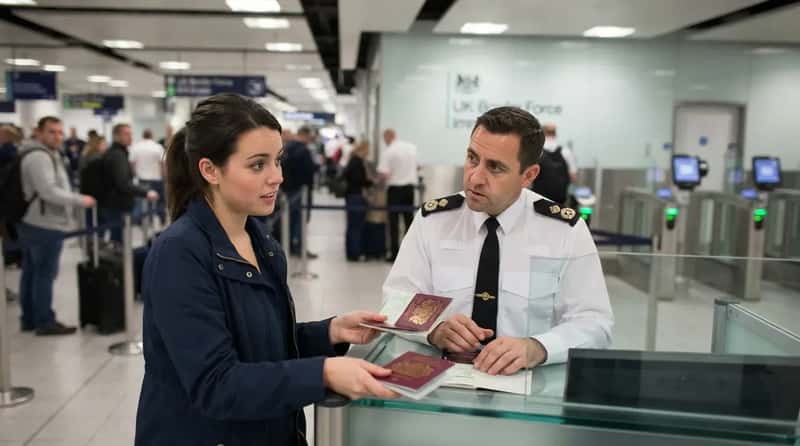
It sounds impossible until it happens, and it happens more often than most travelers would guess. Electronic gates at a major UK airport were reportedly “spoofed” when a passenger used her cousin’s passport, an error a chief inspector of borders and immigration personally witnessed at Stansted Airport.
The mix-up unraveled almost immediately. When the cousin tried using the first passenger’s document, she was rejected twice at different gates before officers noticed the pattern and redirected both women to a staffed immigration desk. Family members traveling with similar-looking documents should double-check whose passport is whose before ever stepping up to a gate.
Worth Knowing
- The lookalike passport passed the automated gate before any human officer stepped in.
- The same traveler was turned away twice at two separate e-gates before staff caught the pattern.
- A chief inspector of borders and immigration reportedly witnessed the entire mix-up in person.
- Relatives with similar features are especially prone to this exact swap, even without meaning to deceive anyone.
#7 – Wrapping Gifts Before Reaching Customs
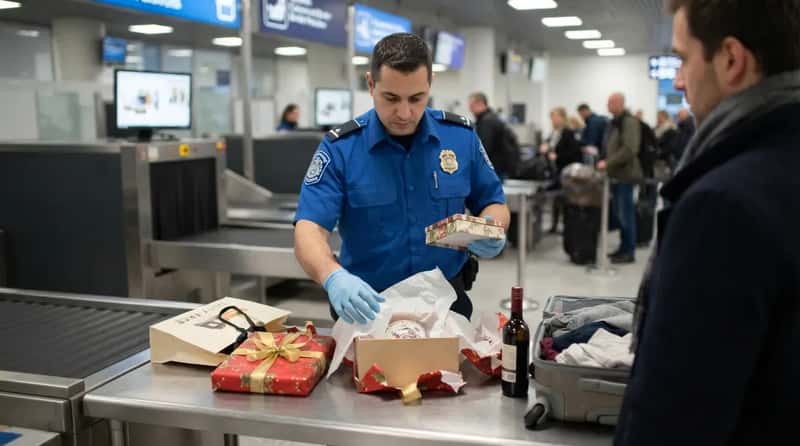
Holiday travelers make this mistake constantly without realizing it slows everyone else down too. Duty-free bags, food, and gifts brought back from a trip abroad are frequent sources of friction, mostly because travelers assume small purchases don’t need mentioning – even a bottle of wine or a box of pastries can trigger a longer conversation if it wasn’t declared upfront.
The wrapping paper itself is the real problem here. Officers may need to open a gift to see what’s inside, so a beautifully wrapped present is often the exact thing that ends up torn open in front of a line of strangers. Leaving gifts unwrapped until after customs avoids the whole ordeal.
#6 – Over-Explaining Instead of Answering the Question Asked
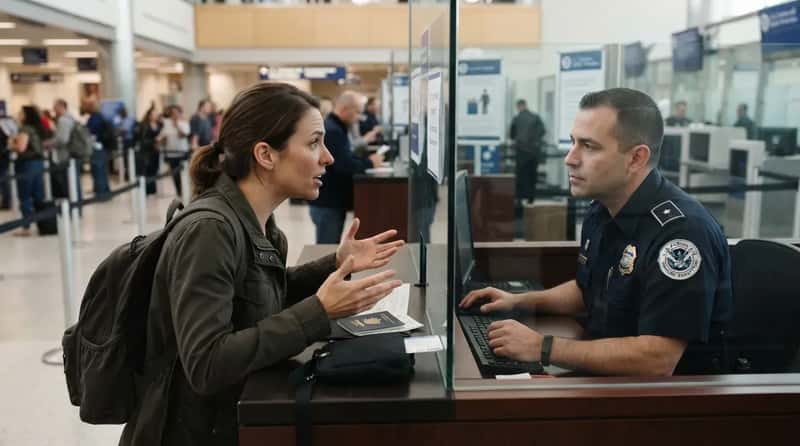
Nervous travelers tend to ramble, and rambling is exactly what raises flags. CBP officers are trained to detect inconsistencies, which means the more details someone volunteers, the more chances there are for something to not quite line up.
A rehearsed, over-detailed story often reads as more suspicious than a short, factual one. Officers aren’t looking for a performance – they’re comparing what’s said against what’s already on file. Short, consistent, polite answers beat long, anxious ones every single time.
#5 – Cutting Connection Times Too Close
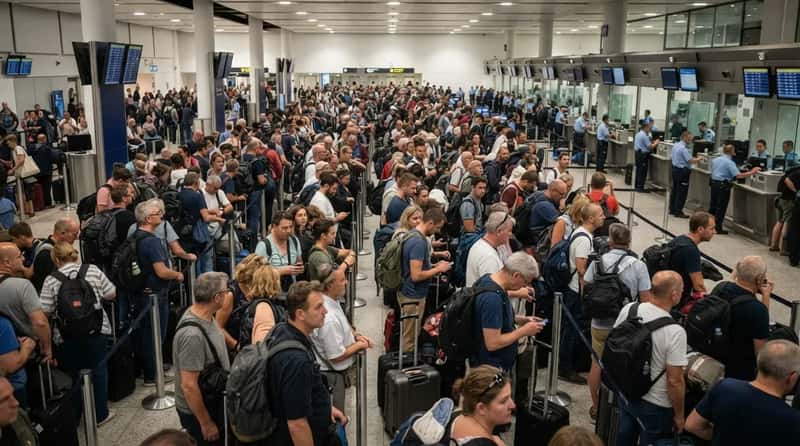
Most travelers treat passport control like a five-minute formality wedged between flights. It isn’t always. Processing times swing wildly by airport, terminal, time of day, and arrival volume, and tight connection windows built around international arrivals are one of the most common causes of missed flights.
Business travelers get burned by this constantly, especially on itineraries with a short domestic hop right after landing internationally. A crowded arrivals hall at the wrong time of day can eat an hour that a tight layover simply doesn’t have. Building a real buffer into the itinerary is the easiest fix nobody plans for.
#4 – Assuming Global Entry Makes You Immune to Extra Screening
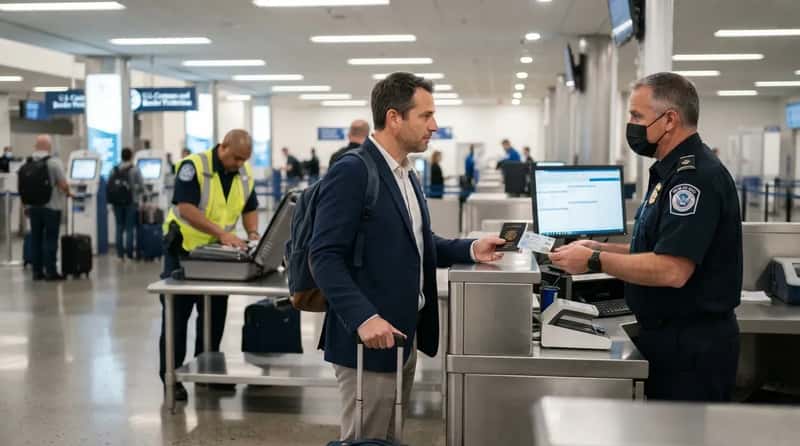
Frequent flyers love to brag about breezing through with expedited programs, and that confidence isn’t always earned. Global Entry and Mobile Passport Control speed up the overall process, but enrolled passengers still aren’t exempt from random stops made in the interest of national security.
What happens behind the scenes surprises most enrolled travelers. If a kiosk or the Mobile Passport app was used, the officer already has the traveler’s photo, declaration, and a preliminary risk assessment before the passport is even handed over. The trusted-traveler badge speeds up the line, but it never removes the possibility of a second look.
Quick Compare
- Global Entry lane: automated kiosk, average wait under 10 minutes, $120 fee covers five years and includes TSA PreCheck – though members can still be pulled for further examination.
- Standard passport line: manual review by an officer, wait times swing with arrival volume and staffing, no pre-loaded risk profile waiting at the counter.
- Membership scale: nearly 13 million travelers were enrolled in Global Entry as of May 2025, and enrollment keeps climbing.
#3 – Not Realizing a Nearly-Full Passport Raises Flags
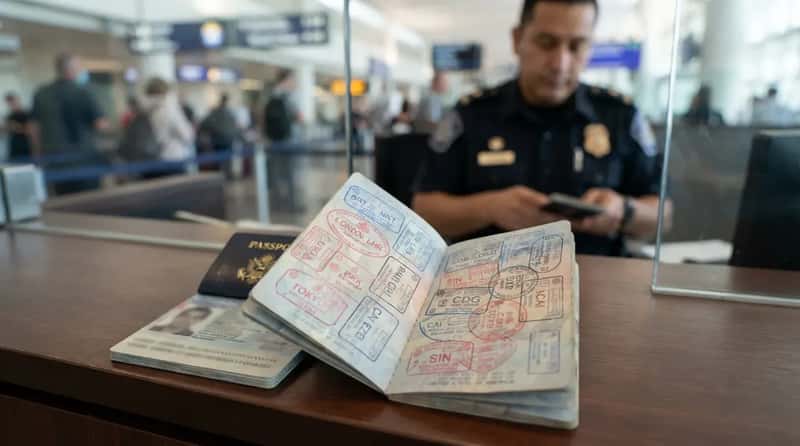
Frequent international travel feels like a point of pride, but it isn’t invisible to risk-scoring systems. A passport that’s almost full, or one recently renewed after an unusually short period, matters because travel volume itself is a factor in risk algorithms – though many frequent, legitimate travelers enroll in Global Entry specifically to offset this.
The pattern goes deeper than page count alone. Many visa stamps paired with few entry or exit stamps can suggest extended stays or overstays in countries where a traveler obtained visas. None of this means wrongdoing – it just means the system is doing exactly what it was built to do: flag patterns, not people.
#2 – Believing “Random” Screening Is Truly Random
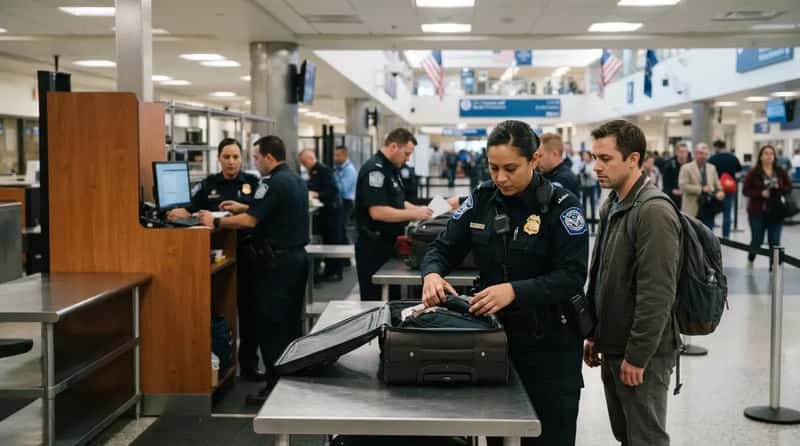
Officers rarely single someone out on a whim, no matter how arbitrary it feels in the moment. It’s a risk-weighting exercise built on behavior, travel history, documentation, and specific combinations of factors that training and algorithms have taught officers to watch for.
The scale of daily screening is almost impossible to picture. CBP officers welcome nearly a million international travelers into the U.S. every single day, an enormous volume that’s exactly why automated targeting systems have become central to the whole process. A random-feeling stop is almost never actually random.
At a Glance
- CBP officers process roughly a million international arrivals every single day, across every port of entry combined.
- Automated targeting systems flag combinations of risk factors, not individual travelers by name.
- Behavior, travel history, documentation gaps, and route patterns all feed into the same formula.
- What feels like a coin-flip pull at the counter is almost always the algorithm doing exactly what it was built to do.
#1 – Panicking During Secondary Inspection
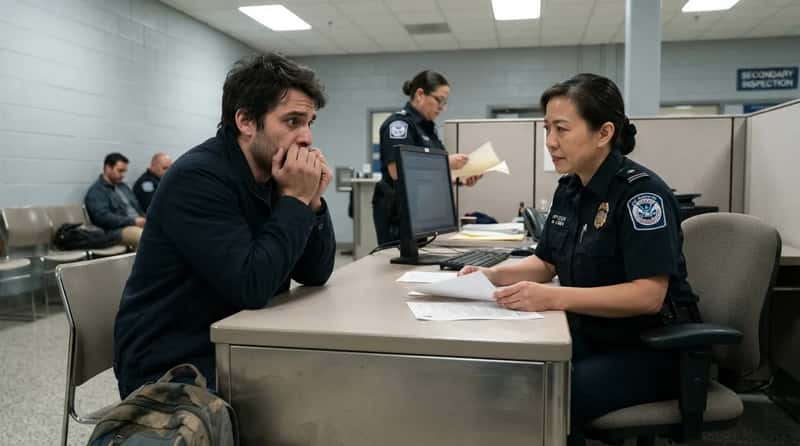
This is the mistake officers say matters more than almost anything else on this list. Getting pulled aside doesn’t mean something is wrong – it often just means a pattern needs a second look, and the overwhelming majority of travelers sent to secondary are there for entirely innocent reasons.
Travelers should stay calm and polite, and give clear, truthful answers.
U.S. Customs and Border Protection guidance
How someone behaves in that room can outlast the trip itself. If certain patterns are flagged, that behavior can shape what happens during the next crossing too. A calm, cooperative traveler almost always walks out faster than a defensive one – even when both did absolutely nothing wrong.
None of these sixteen habits involve breaking any law. They’re small, repeatable patterns that officers see hundreds of times a day and quietly file away – the fruit in a carry-on, the sunglasses at an e-gate, the joke that never lands, the answer that runs three sentences too long.
Passport control isn’t designed to catch honest travelers off guard. It’s designed to notice the same handful of patterns over and over, and nearly all of them are entirely avoidable once you know what they are. Which one of these have you actually done without realizing it?