From seat 14, a coach tour looks effortless. The bags are on board, the lunch table is waiting, and the next stop appears right on time. For travelers over 65, that ease is built from small decisions made hours earlier, and most guests never see a single one.
The odd part is that the best arrangements are the invisible ones. When they work, nobody says thank you, because nothing went wrong. Below are 16 of them, counting down from the very first phone call of the morning, and one of them involves a mop.
#16 – The Wake-Up Call You Never Had to Ask For

The first arrangement of the day is often a phone ringing in your room that you don’t remember requesting. On many escorted tours, wake-up and departure times are set with the hotel the night before. The tour director then repeats the plan at the evening briefing so nobody is left guessing.
Behind that call is a stack of confirmations to bus companies, restaurants, hotels and attractions. That checking often begins before the group has even met. For travelers over 65, a slower morning with medications and a proper breakfast needs a cushion. Good managers build one in, though practices vary by company.
But the next one happens while you’re still half asleep (#15)…
#15 – The Suitcase That Leaves Before You Do

Your luggage often keeps a schedule of its own. Many tours arrange for bags to be collected from rooms or the lobby and loaded onto the coach. The manager and driver coordinate the timing so nothing gets left behind.
It quietly removes one of the heaviest parts of travel. Dragging a suitcase across a hotel lobby is nobody’s favorite moment, and for some guests it’s a real struggle. Plenty of travelers never touch their bag between the hotel room and the next one. Policies differ, though, and some tours include only one bag per person. Check the weight and bag limits before you go.
Next comes the seating question that divides coach travelers like few others (#14)…
#14 – The Seat Rotation Nobody Agrees On

Where you sit on the coach is a bigger deal than it sounds. Many operators rotate seats daily so that no one is stuck in the back all week. The manager announces the rotation at the morning briefing, and everyone shuffles.
That’s where the arguments start. Some travelers love the fairness. Others call it the most annoying rule on the bus, especially when a front seat is easier on hips, knees or an unsettled stomach. Many tour managers quietly keep front seats free for anyone with a genuine need. A short, private word before the trip usually works far better than a standoff on day three.
The next item is the one that keeps the whole day on schedule (#13)…
#13 – Rest Stops Planned Before the Wheels Turn

The stop you’re so grateful for at 10:30 a.m. was probably chosen days ago. Tour directors study routes, satellite maps and street views to find good places for meal and rest breaks. They look for clean restrooms, easy parking and flat walking paths.
On long drives this matters even more for older passengers. Health agencies such as the CDC advise moving around regularly on long trips to help circulation. A well-placed stop is quietly part of the health plan, not just a bathroom break. Drivers also have legal limits. Federal rules cap how many hours a passenger-carrying driver can drive before a required rest, so the manager builds the day around that clock too.
But a quick count after every stop matters more than it looks (#12)…
#12 – The Headcount You Never Notice
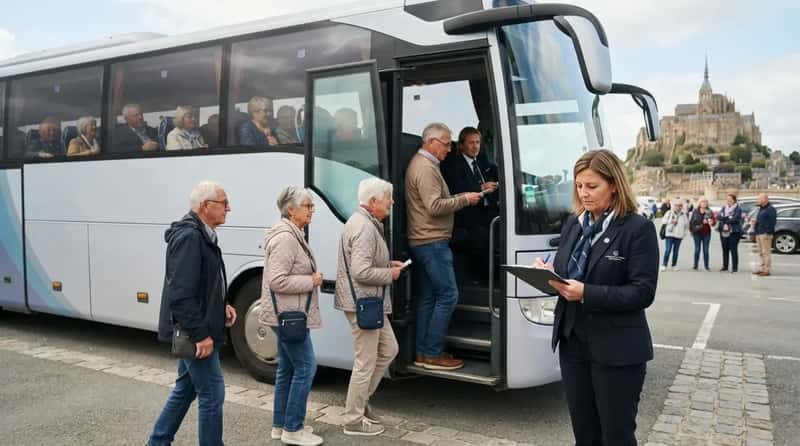
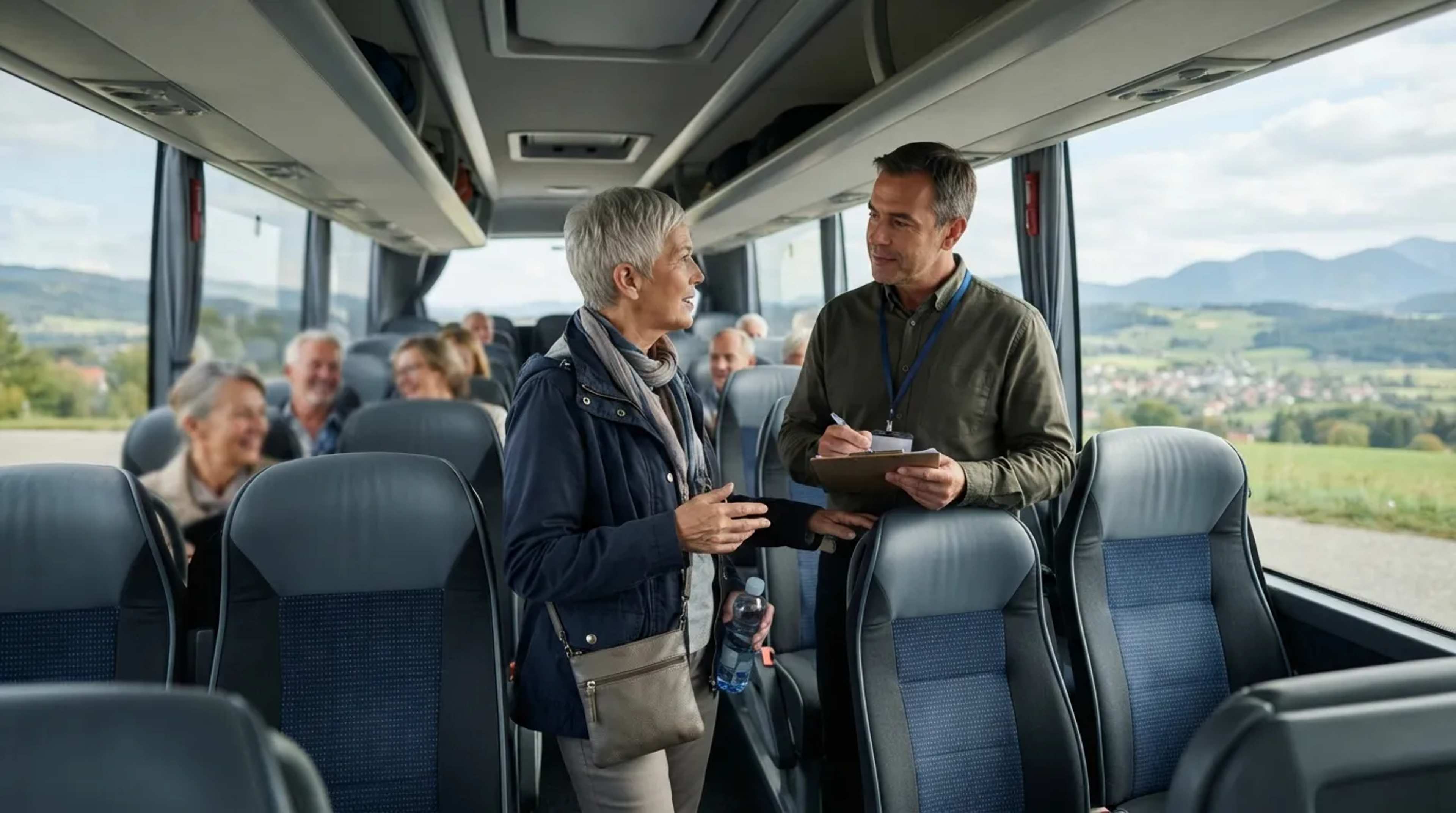
Every time the coach reloads, someone is counting. Tour directors do a headcount after each stop, usually before the driver releases the brakes. It takes seconds, and it prevents the nightmare of pulling away without someone.
It’s the manager’s most basic safety habit, and it never gets old. One missing person can hold up a whole coach for an hour. Some directors do it with a quick scan, others with a clipboard or a buddy system. Many also hand out the coach number, a landmark and a phone number to call if anyone gets separated.
Fast Facts
- The count usually happens after every reload: rest stop, lunch, and each attraction.
- Buddy systems pair travelers so each person knows exactly who they’re watching for.
- A landmark meeting point helps if your phone is dead or the signal is poor.
- Snap a photo of the coach and its number when you step off.
Next, the pace of the day, where many tours quietly win or lose their older guests (#11)…
#11 – The “Easy, Moderate or Skip It” Pace Check
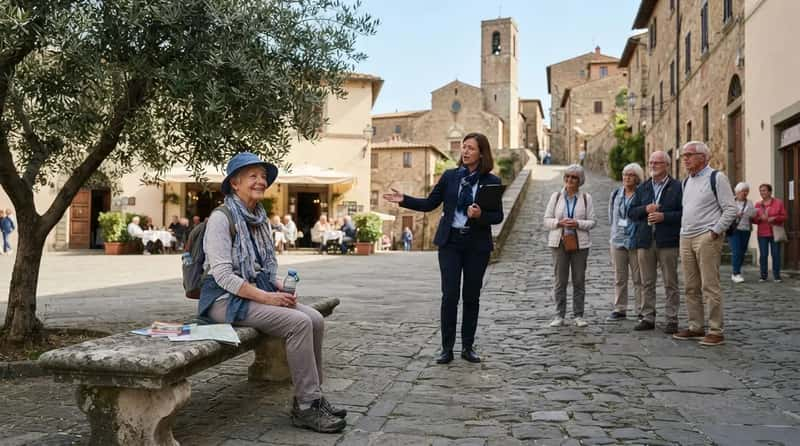
A good manager tells you what the day demands before you commit. Tour directors brief guests on the schedule, the weather and the activity level. That might mean a warning about cobblestones, long staircases or a steep hill between the coach and the entrance.
Here’s the opinion that gets people talking: the best tours let you sit out a stop without guilt. Skipping one stop to rest is often what lets you enjoy the next three. Many managers will point guests to a cafe, a bench or a quiet corner if they’d rather stay put.
Then there’s the forecast, and the reason managers repeat it (#10)…
#10 – The Weather Briefing That Saves Your Afternoon

The forecast is part of the morning script. Managers share the temperature, the chance of rain and what to wear. For older guests, that includes the unglamorous advice, like carrying water, a hat or an extra layer for the air conditioning on board.
The coach itself can be a weather trap. It can feel chilly inside and sweltering outside within a few steps. Heat and sudden temperature swings can hit many older adults harder than they expect. A manager who checks the forecast and shifts an outdoor stop to the cooler part of the day is doing real work.
Worth Knowing
- A light layer you can slip on and off beats one heavy jacket.
- Refillable water bottles are easy to top up at most stops.
- Comfortable, broken-in shoes matter more on wet pavement or uneven stone.
- Outdoor stops are often scheduled for the cooler part of the day.
The next arrangement involves a steady arm and a lot of tact (#9)…
#9 – The Quiet Hand on and off the Coach

Boarding a high coach step can be the hardest moment of the day. A good manager is there at every stop. The tour director or guide helps passengers on and off, as much or as little as they like.
Equipment varies by company. Some coaches have wheelchair lifts, but not all do. Lift-equipped coaches typically need advance notice, so a request made at booking is far safer than one made on departure day. The hard truth is that managers can only arrange what they know about, and the best ones ask early.
What happens before you reach the restaurant table is even more surprising (#8)…
#8 – The Dietary Calls Made Before You Sit Down

Your lunch was often settled before you walked in. Tour directors phone restaurants ahead of time to confirm group menus and numbers. That’s also when special diets, such as low-sodium, diabetic-friendly or gluten-free, get passed along.
It’s one place where the manager’s work lands right on your plate. A restaurant that gets a heads-up usually handles a diet far better than one surprised at the table. The catch is that managers rely on what you told the company at booking. Late changes can be harder to fix, especially in small towns.
Meanwhile, a hotel hallway holds another secret (#7)…
#7 – The Room Request That Changes Everything

Where you sleep is part of the day’s arrangements too. On arrival, the manager typically handles check-in for the whole group so people aren’t standing around in a lobby. Requests for rooms near the elevator or on lower floors get passed along to the front desk.
A long hallway feels very different at the end of a ten-hour day. A room 40 steps closer to the elevator can decide whether someone joins dinner or skips it. Managers can’t guarantee every request, but those made in advance have the best chance. If a room doesn’t work, an experienced manager will usually take it up with the hotel on your behalf.
At a Glance
- Common requests: lower floor, near the elevator, or away from street noise.
- Walk-in showers or accessible rooms are best requested at booking.
- The manager usually handles check-in so you can head straight to your room.
- If something’s wrong, tell the manager first rather than lining up at the desk.
Up next, the paperwork that keeps lines short (#6)…
#6 – Tickets Sorted So You Skip the Fumbling

Walking up to an attraction with tickets already in hand is no accident. Tour directors make sure they have the right number and type of tickets for each site. That spares older guests a long wait at the ticket window.
Many managers also arrange entry times, group entrances and restroom locations in advance. A half hour saved in line is a half hour you can spend sitting down inside. It’s one of the big reasons fully escorted tours appeal to retirees who want the planning done for them.
What reaches your ears might surprise you even more (#5)…
#5 – The Headset Trick for Hard-of-Hearing Guests

Narration only works if people can actually hear it. Many tours use small wireless receivers and earpieces at busy sites, so guests don’t have to crowd around the guide. On the coach, the manager uses the microphone and times commentary around the scenery.
It matters more for older travelers than operators usually admit. Missing the story is one of the quickest ways for a guest to drift away from the group. Managers also repeat key details, like meeting times and places, more than once. That’s not nagging. It’s the cheapest safety tool on the trip.
Why It Stands Out
- Guests can hear the guide from the back of a crowd, with no shouting required.
- You can drift toward a bench or a window and still catch the story.
- Repeated meeting times mean fewer missed departures.
- Nobody has to announce that they struggle to hear.
Still, the thing you’d least expect a tour team to handle is far less glamorous (#4)…
#4 – A Clean Coach, Checked All Day
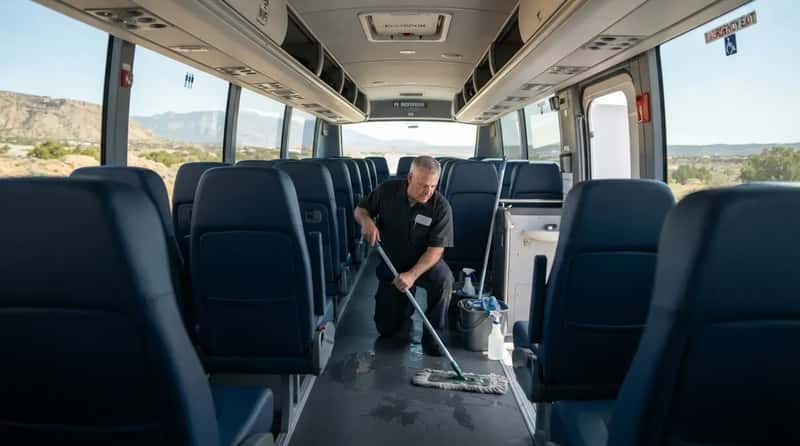
A clean vehicle is part of the daily arrangement. One veteran driver for a New Mexico operator said that he sweeps and mops the floor and services the lavatory daily. He added that he also wet-mops the floors when passengers leave the bus during the day.
That upkeep is mostly the driver’s job, and managers work alongside it. The restroom on a coach is usually serviced daily, not just when something goes wrong. Managers deal with the small stuff too: lost items, spills and coordinating cleaning at stops.
Now for the arrangement some travelers secretly roll their eyes at, then end up loving (#3)…
#3 – Trivia, Games and the Art of Keeping a Coach Awake

Long driving stretches need a plan. Some tour directors arrange onboard entertainment as part of the job. Their duties can include creating and running trivia and games.
Here’s the friction. Some travelers think onboard games are corny and would rather watch the scenery. Others say the trivia is what turned strangers into friends. The managers who get it right read the room, and many switch to quiet commentary when the group is tired. The goal isn’t to fill every minute. It’s to make a four-hour drive feel shorter.
The next arrangement is quieter, and it may matter most of all (#2)…
#2 – A Seat at the Table for Solo Travelers

Not everyone arrives with a partner. Coach travel is popular with retirees, empty-nesters and solo travelers who want a built-in social circle. Managers notice who’s sitting alone and who’s quietly slipping off after dinner.
The fix is gentle. Managers mix up dinner seating, introduce people with shared interests and invite guests to join a table. For many solo travelers over 65, a friendly seat at dinner is the real reason they booked. It never shows on the itinerary, but guests often talk about it more than the sights.
And the last arrangement is the one every manager hopes never to use (#1)…
#1 – The Emergency Plan Running in the Background

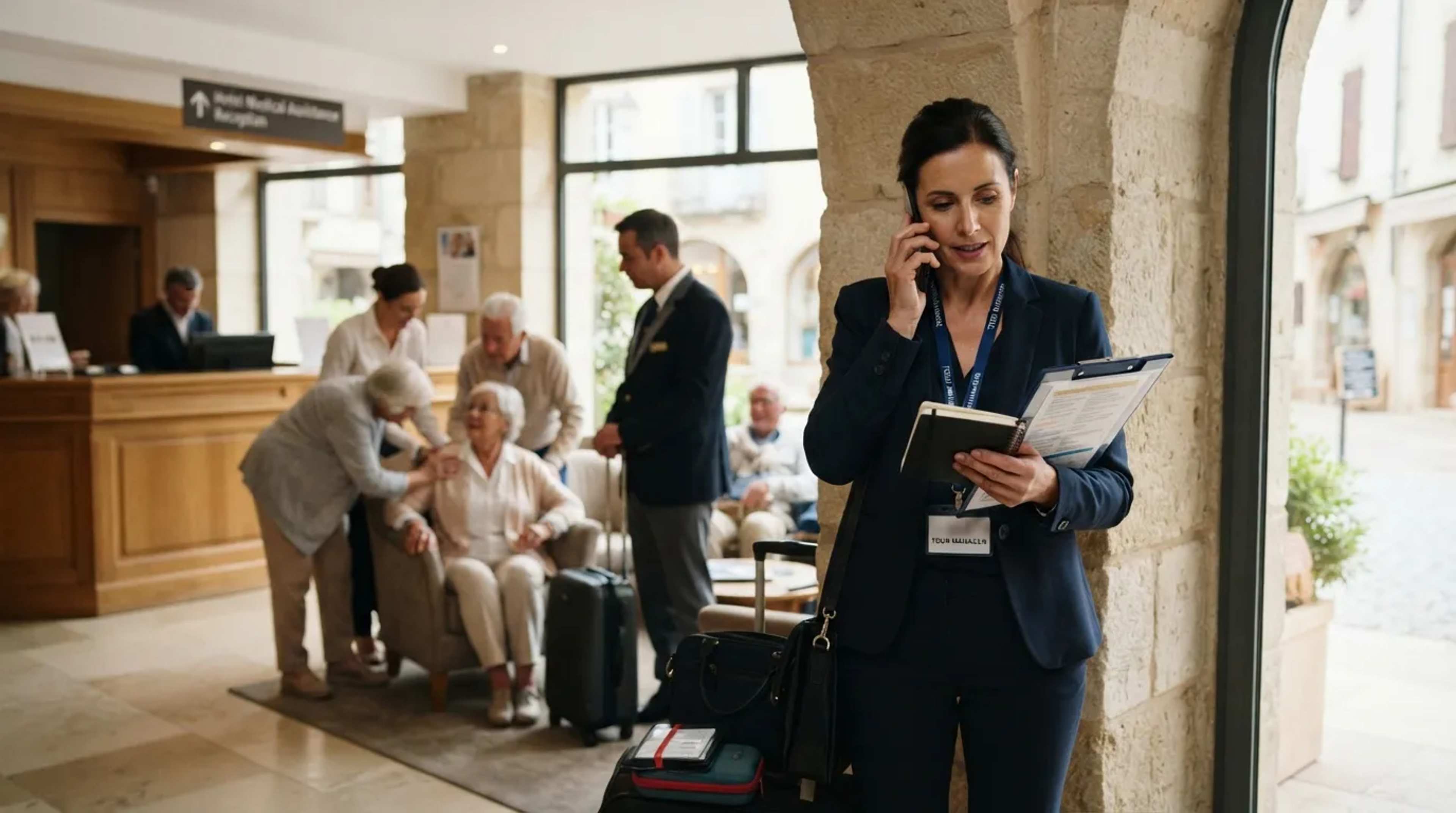
Every single day, a prepared manager is quietly ready for the worst. Tour directors are on hand to answer questions, solve problems and handle emergencies. That means knowing the nearest hospital, keeping the operator’s office number close and being able to reach local help fast.
A manager isn’t a medical professional. They can’t diagnose or prescribe, but they can call for help, stay by your side and coordinate with the driver and the hotel. Their most valuable skill is staying calm when the schedule falls apart. The plan also depends on honesty at booking, since managers can only help with what they know about.
The best coach days are the ones where nothing dramatic happens: the bags arrive, the lunch fits, the seat is easy to reach, and the afternoon feels unhurried. Behind each of those small comforts is someone who thought about it first.
Practices differ by company, so ask what’s included before you go. The next time you step off a coach into a perfectly timed afternoon, remember that somebody planned it for you.