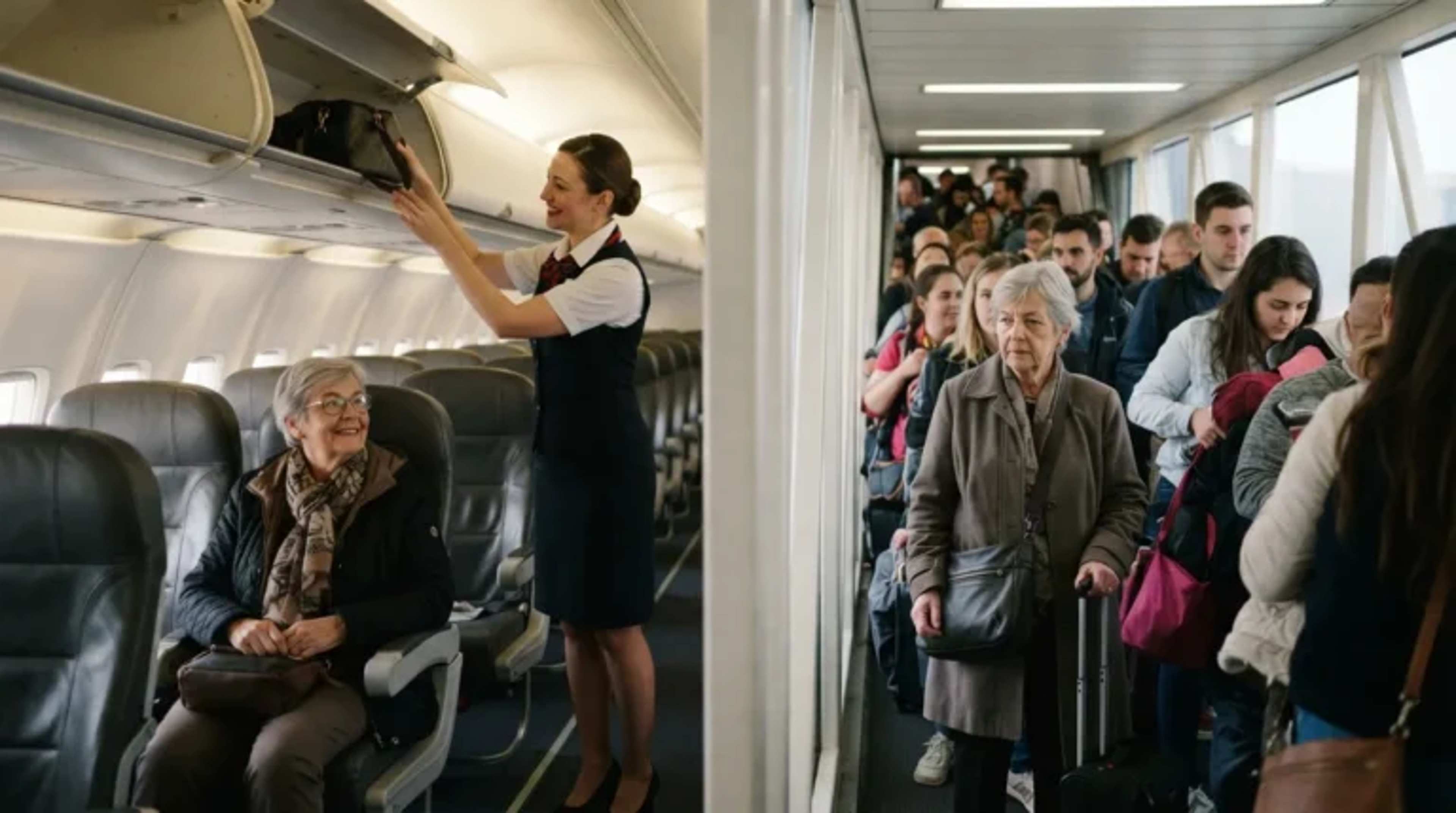
Most travelers treat the gate desk like a wall – somewhere to hand over a boarding pass and hope for the best. But gate agents actually have far more authority than airlines ever advertise, and most of it only switches on when a passenger asks the right question at the right moment.
The catch? Almost nobody asks. So the same handful of quiet accommodations get handed out, trip after trip, to the small percentage of flyers who happen to know they exist. Here’s what actually happens at that little podium once you finally speak up.
#16 – They’ll Reprint a Mangled Boarding Pass in Seconds
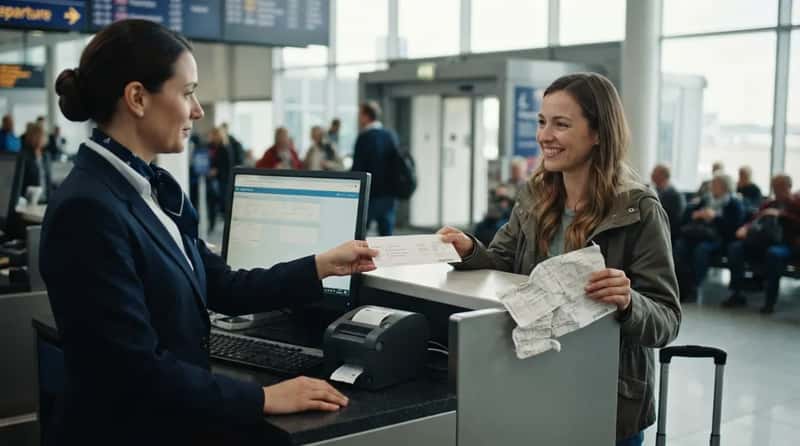
A misspelled name or a printing glitch feels like a full-blown crisis at security, but it’s really a two-minute fix at the gate. Name errors, wrong seat assignments, and print malfunctions let agents override the system and reissue a corrected pass on the spot, no trip back through security required.
Most passengers panic and assume they have to start over at the ticket counter. That panic wastes precious time during a tight connection. The fix takes less time than standing in line to ask about it. Calmly explaining the error usually gets it sorted before you’ve even set your bag down.
#15 – They’ll Slip You Onto Free Same-Day Standby
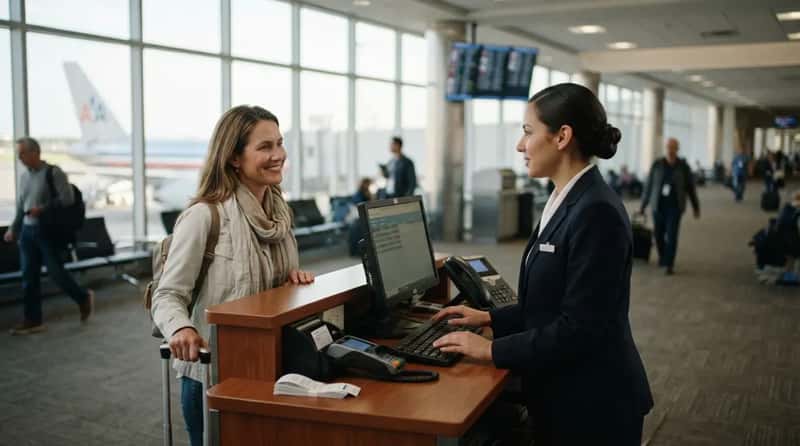
Standby isn’t just a backup plan for stranded travelers scrambling after a cancellation. Agents can add you to an earlier flight’s list without charging the usual fee, depending on the airline and how full that flight is running. On some carriers this courtesy extends to everyone, not just elite members.
American Airlines lets every customer stand by for a same-day flight at no charge, regardless of AAdvantage status, and you can list with an agent up to 45 minutes before departure on domestic routes. Most flyers never realize this option exists outside of irregular operations. Ask early, before the standby list fills with everyone else’s last-minute changes.
Quick Compare
- American: free same-day standby for every passenger, any fare class
- Southwest: has never charged change or standby fees on any ticket type
- Delta and United: typically waive the fee for elite frequent-flyer members, though other travelers may still pay a same-day change charge
- Timing matters everywhere – lists fill fastest in the hour before departure
#14 – They’ll Wave You Onto the Plane Early to Protect a Fragile Item
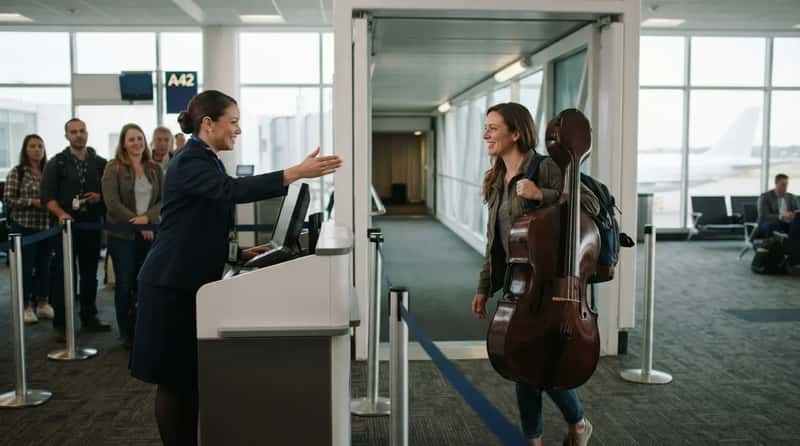
Musical instruments, medical devices, and odd-shaped carry-ons quietly jump the boarding line more often than people realize. Agents would rather board someone early and find safe stowage space than deal with a gate-check argument later, once the jet bridge is jammed and tempers are short.
Agents genuinely would rather solve this before boarding starts than referee it at the door. A calm heads-up at the podium – “I have a cello, can I board first to find space?” – works far better than waiting until the overhead bins are already full.
#13 – They’ll Tag Your Stroller or Car Seat for Gate-Check, No Fee
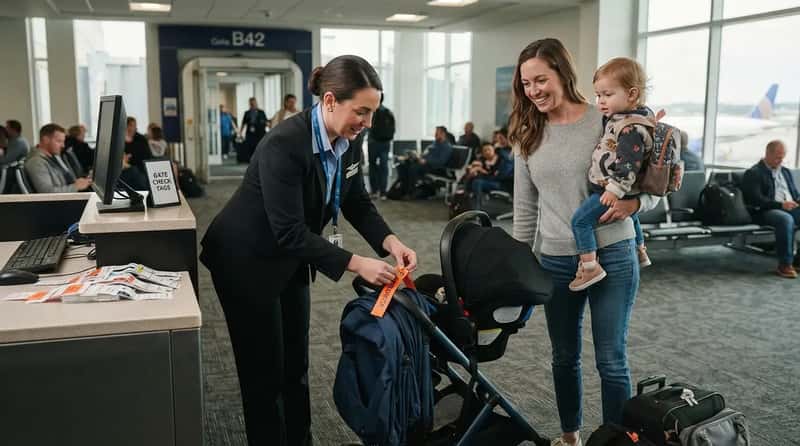
Parents traveling with young kids often don’t realize this is a built-in courtesy, not some special favor they have to earn. Whether it’s a seat swap, extra help boarding, or free gate-check tags for a stroller or car seat, agents handle these requests constantly.
Strollers and car seats gate-check free on nearly every U.S. carrier, and no advance request is required. The trick is timing. According to gate agents, the best window is well before boarding begins, not once the line is already moving and everyone’s stressed.
#12 – They Can See Seat Inventory Your App Will Never Show
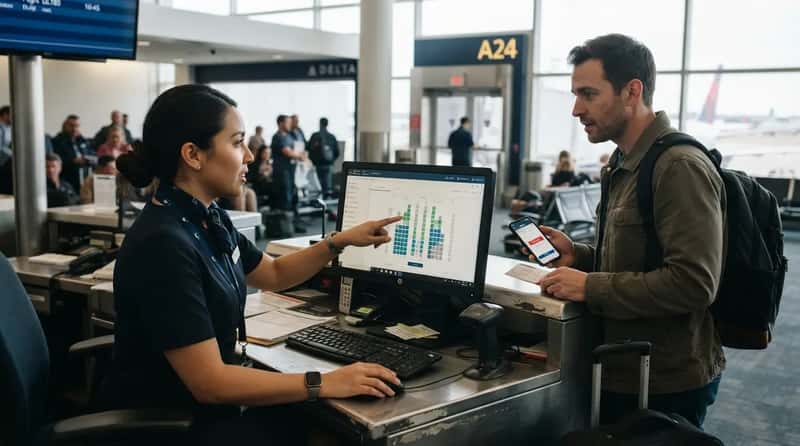
Your phone screen and the agent’s screen are not looking at the same information, even though they appear identical. The app on your phone often runs on outdated data compared to what’s live on the agent’s terminal. That gap means “sold out” on your app doesn’t always mean sold out at the desk.
Seats blocked for elite members or families can quietly open up minutes before departure. Politely asking whether anything better has freed up costs nothing, and occasionally lands you an aisle, an exit row, or extra legroom you never paid a dime for.
#11 – They’ll Quietly Reseat Your Family Together
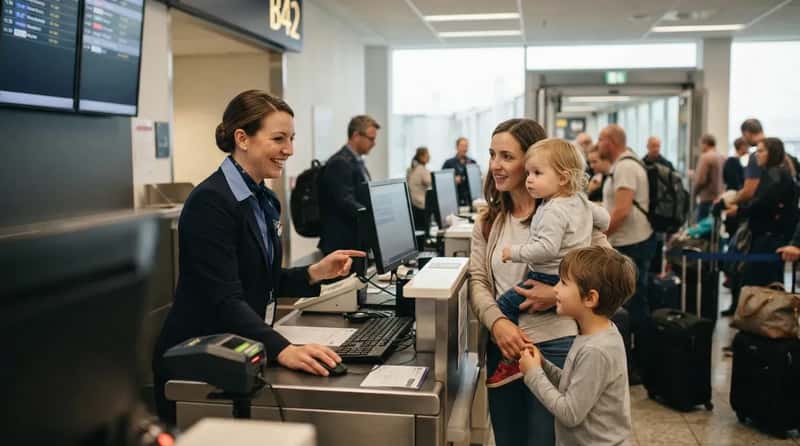
Splitting a family across a plane is one of the most common boarding-day headaches, and gate agents have more power to fix it than most people assume. The Department of Transportation now publishes a dashboard showing which airlines guarantee fee-free family seating, and on carriers without that guarantee, agents still have full discretion to reseat families manually.
That discretion means it’s not policy – it’s a judgment call agents make case by case. Some staff will move mountains for a young family scattered across three rows; others won’t lift a finger unless someone actually asks. Either way, asking costs nothing and often works.
#10 – They’ll Waive the Same-Day Change Fee Completely
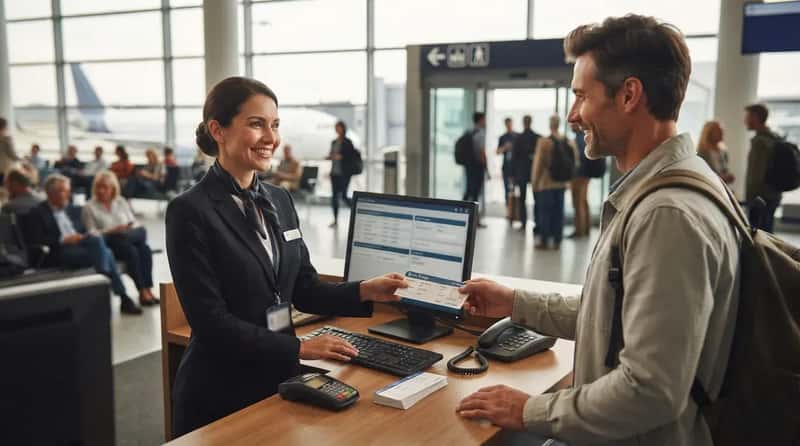
Swapping to an earlier or later flight doesn’t have to feel like a punishment. Alaska, JetBlue, and Virgin America are known for a lenient approach to free same-day changes at the airport, while several other major carriers technically charge for the switch.
Even on airlines that officially charge, that fee sometimes just disappears when you ask calmly. Switching to an earlier flight actually helps the airline too, since it frees up seats later in the day for passengers dealing with other delays. Framing your request around that logic tends to work in your favor.
#9 – They’ll Save Overhead Bin Space for a Mobility Device
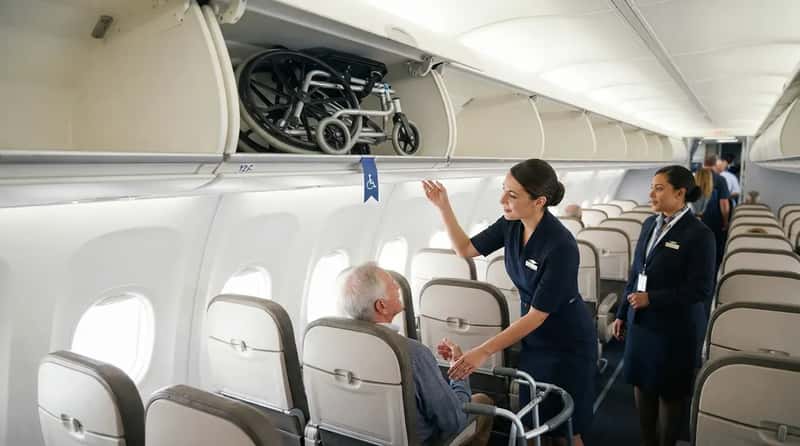
Passengers who pre-board with a wheelchair or walker get a protection most flyers never even notice. Collapsible wheelchairs and other assistive devices get priority for in-cabin storage over regular carry-ons, a detail gate agents enforce quietly rather than announce over the speaker.
That reserved space matters most on full flights, where overhead bins vanish within minutes. By the time boarding calls “Group 4,” that protected spot is already spoken for, which is exactly the point of setting it aside early.
#8 – They’ll Treat Your CPAP or Oxygen Machine as Protected, Not a Carry-On
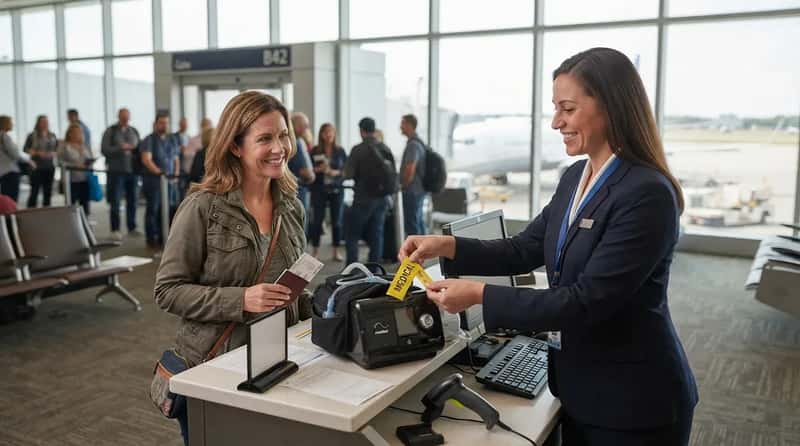
This one surprises even frequent flyers. CPAP and BiPAP machines are federally classified as medical devices, not carry-on bags, and they travel fee-free on every major U.S. carrier. FAA-approved portable oxygen concentrators are exempt too, though it’s worth confirming your specific model appears on the current FAA approved list before you fly.
A basic economy ticket does not override this protection, no matter what the fare rules seem to imply. These exemptions apply regardless of fare class or elite status, and updated FAA medical equipment regulations effective January 15, 2025 reinforced these carry-on exemptions across U.S. airlines.
#7 – They’ll Roll Out a Wheelchair Escort Even If You Don’t Own One
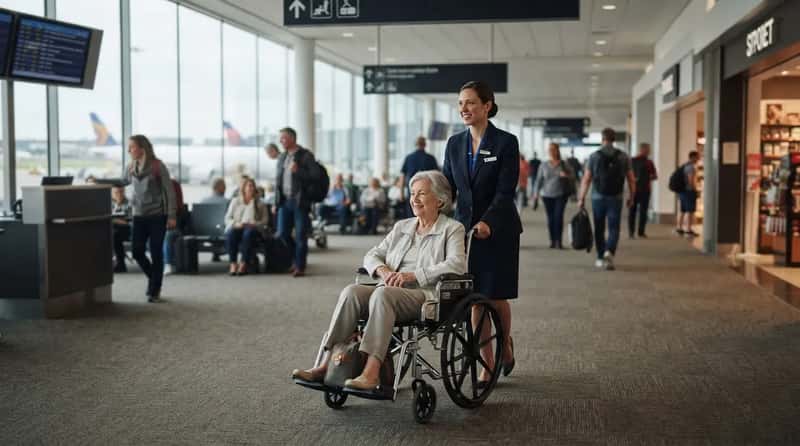
You don’t need a permanent disability or a device sitting at home to request this help at the airport. Anyone can ask, no documentation required, which is exactly what most people over 60 never realize until someone tells them.
This is one of the most under-requested services in the entire airport. It’s built for anyone nervous about a long concourse, recovering from surgery, or simply exhausted after a brutal travel day – and agents arrange it without a second thought.
Fast Facts
- No proof of disability or medical paperwork is required to ask for a wheelchair escort
- Requests can be made at booking, curbside, check-in, or right at the gate
- The Air Carrier Access Act requires airlines to provide this help free of charge
- The service typically covers security, the full concourse walk, and priority boarding
#6 – They’ll Call a Supervisor to Fight for a Lounge Pass or Voucher
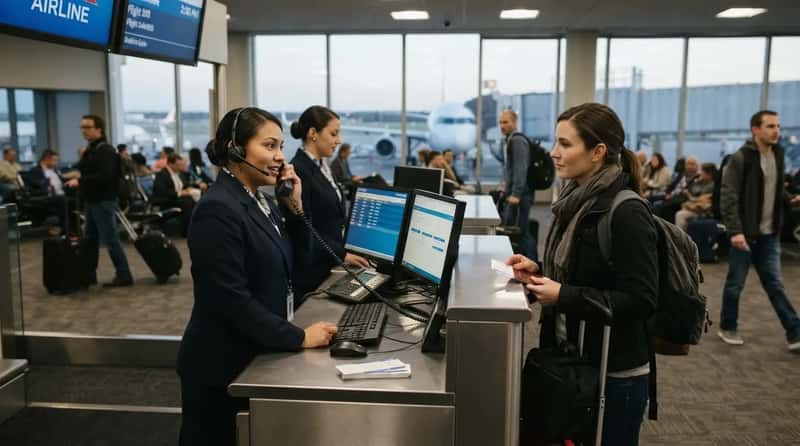
Gate agents themselves usually can’t hand out lounge access or drink coupons on the spot, no matter how nicely you ask. Most don’t have that authority loaded into their system at all, so pushing hard for freebies usually goes nowhere.
But that’s not the end of the conversation – it’s the start of a different one. Politely asking the agent to check with a supervisor sometimes opens a door, especially when the request is tied to a real inconvenience like a long delay or a missed connection rather than just a hopeful shot in the dark.
#5 – They’ll Rebook You on the Spot Instead of the Customer Service Line
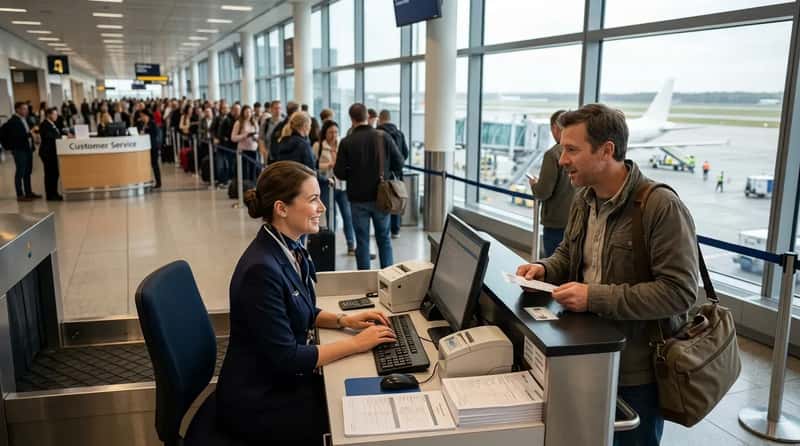
When a flight gets canceled or delayed, most passengers assume they have to trek to a separate desk and stand in a miserable line for an hour. But gate agents handle rebooking directly, often just as fast as anyone at customer service, sometimes faster.
That means the person standing right in front of you can often solve the problem immediately. Asking at the gate before the crowd realizes what’s happening frequently saves an hour or more compared to waiting behind everyone else who didn’t think to ask.
#4 – They Can Bend a Fare-Class Rule During a Genuine Medical Emergency
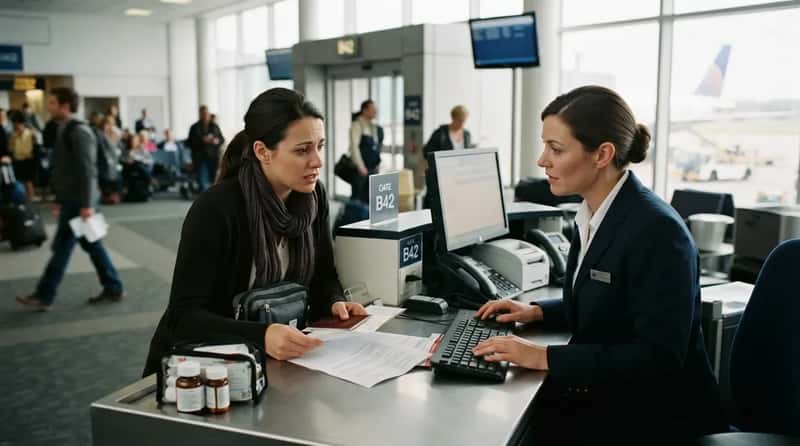
Fare rules look ironclad – until a real medical situation lands on the counter. Passengers with compelling, verifiable reasons, like a medical need or a family seating issue, can get much further by presenting documentation when it’s appropriate to do so.
Agents can tell the difference between a genuine emergency and a convenient excuse, and they treat each very differently. This isn’t a loophole to exploit casually. When the need is real, a calm, documented request opens doors most fare rules claim don’t exist.
#3 – They’ll Hand You Written Proof of a Delay for Compensation Claims
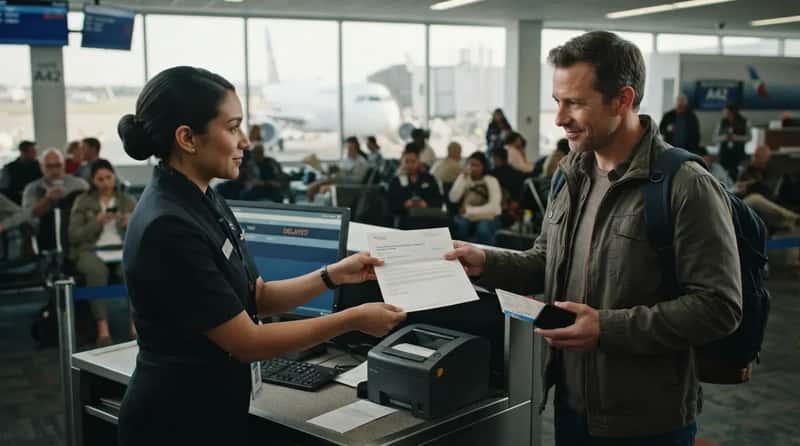
When a flight runs late, smart travelers skip the complaining and go straight to the desk for paperwork instead. Gate agents can print delay confirmations, provide official time-stamps, or write a brief note on airline letterhead that becomes invaluable evidence when you file for compensation later.
Most passengers never ask for any of it, which makes claiming anything afterward far harder. A 2024 federal rule streamlined refund requirements for certain delays, but additional compensation still depends on each airline’s own policy, and agents will help if you simply ask, especially during longer waits.
#2 – They’ll Hold Your Seat Those Extra Few Minutes If You Call Ahead
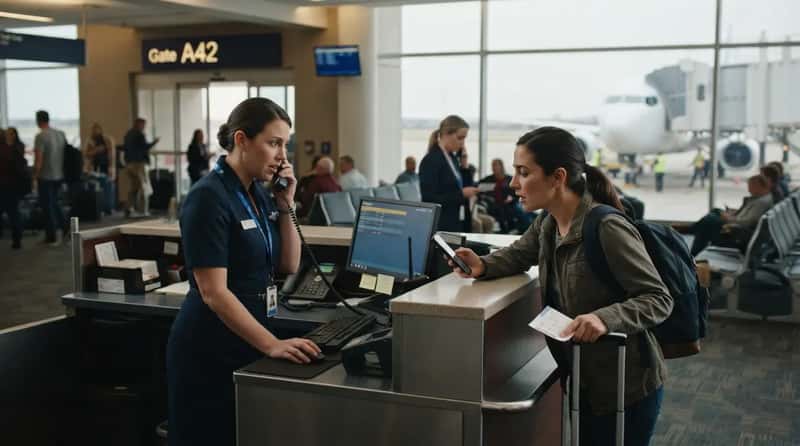
Running late doesn’t always mean you’re out of luck – but timing and communication matter enormously here. Agents monitor the records of connecting passengers who might be en route, deciding whether to give a seat away only once it’s clear someone truly won’t make it.
A quick heads-up changes everything about how that decision goes. If a large group is delayed by a connecting flight, or it’s the last flight of the day, agents might even hold the plane a few extra minutes. Silence, on the other hand, almost guarantees your seat gets reassigned the moment boarding closes.
#1 – They’ll Get You a One-Time Gate Pass So Family Can Walk You to the Door
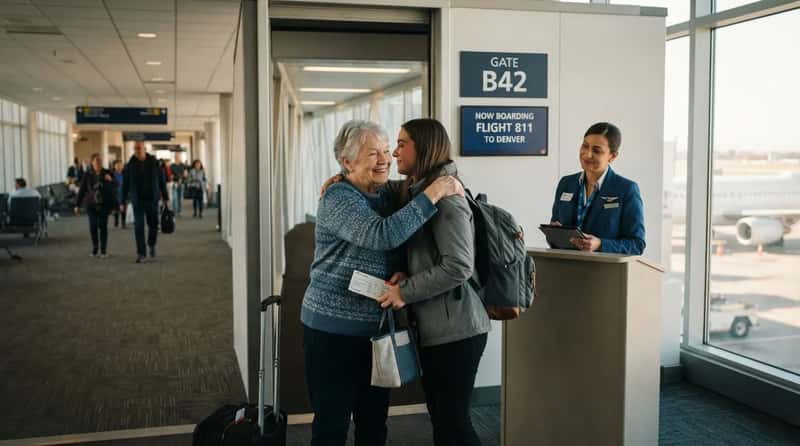
This is the one most people don’t even know to ask for. Travelers hoping a loved one can walk them all the way to the jet bridge for a proper goodbye can request it directly at the gate, and letting agents know ahead of time means they’ll do their best to make it happen.
It’s not automatic, and it’s never guaranteed, but it happens more often than most flyers assume. If your family isn’t at the gate within about 15 minutes of pushback, agents technically have the right to cancel the pass, though they’ll usually try to hold it. For military homecomings, elderly parents, or emotional send-offs, this quiet accommodation turns an ordinary departure into something people remember for years.
Worth Knowing
- Requesting the pass early, at check-in or curbside, gives agents the most time to arrange it
- Escorting family members must clear the same TSA screening as ticketed passengers, including valid photo ID
- Passes are most commonly granted for military send-offs and homecomings, unaccompanied minors, and elderly or disabled travelers
- Not every airport or airline participates, so it never hurts to ask well before your travel date
None of these sixteen things are secrets exactly – they’re just accommodations that only switch on when someone actually asks, calmly and early, before the chaos of boarding sets in. The pattern across every one of them is the same: gate agents have more discretion than the fine print suggests, and courtesy paired with good timing beats entitlement every single time.
Most flyers walk right past every one of these options simply because they never say a word. Next time you’re standing at that podium, remember that the person behind it usually wants to help – they’re just waiting for someone to ask.