You’d think the loudest thing in a hotel breakfast room would be the waffle machine. Ask the people who work there, and they’ll tell you the real show is happening at the tables. Servers and breakfast attendants see hundreds of guests a week, and they pick up on patterns fast. Guests over 60 stand out the most.
This isn’t a list of stereotypes. It’s a look at the routines, rituals and quiet little moments that hotel staff often describe about their older guests. Some are funny, some are surprisingly moving, and one of them might change how you see the person at the next table.
#16 – The Line Forms Before the Doors Open
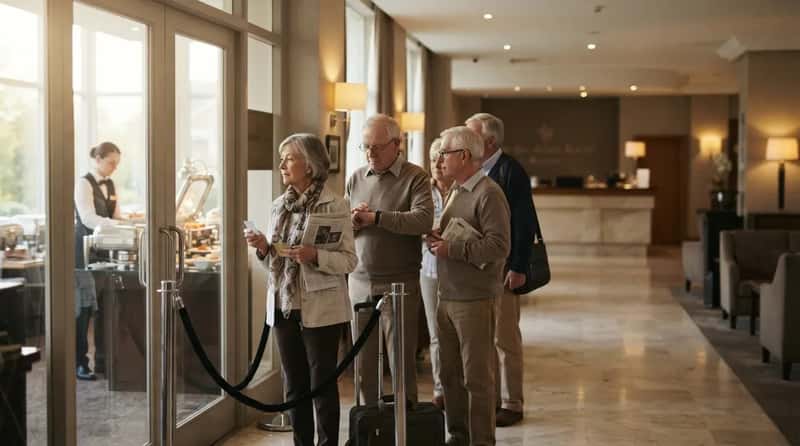
Ask almost any breakfast attendant who shows up first, and the answer is the same. Guests over 60 are often waiting at the entrance while the staff is still setting out the last tray of eggs. Some stand there with a newspaper or a room key in hand, politely pretending they aren’t early.
Biology plays a real part. Sleep researchers have found that the body’s internal clock tends to shift earlier with age, so older people often go to bed sooner and wake up earlier than they did in their thirties. The early arrival isn’t impatience. It’s the body clock doing exactly what it was built to do.
#15 – The Slow “Inspection Lap” Before a Single Plate Is Touched
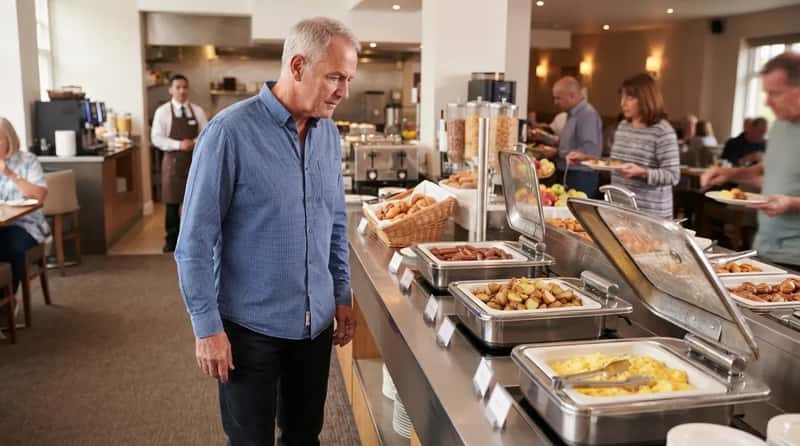
Younger guests tend to grab a plate and go. Staff often say guests over 60 do the opposite. They take a slow first pass with empty hands, lifting lids, checking trays and reading every little label.
It’s basically scouting. Many of them have eaten at hundreds of hotel buffets and know which items disappear first. They can also tell a freshly refilled tray from one that’s been sitting under the heat lamp for an hour. Servers admit they’ve learned to refill the eggs a little earlier because someone is clearly watching.
At a Glance
- The first pass: slow, empty-handed, no plate yet
- What gets checked: labels, lids and how full each tray looks
- The giveaway: a tray that’s been under the lamp too long gets skipped
- The result: popular items get refilled sooner
#14 – The Table Is Never Random, and by Day Two It’s “Theirs”
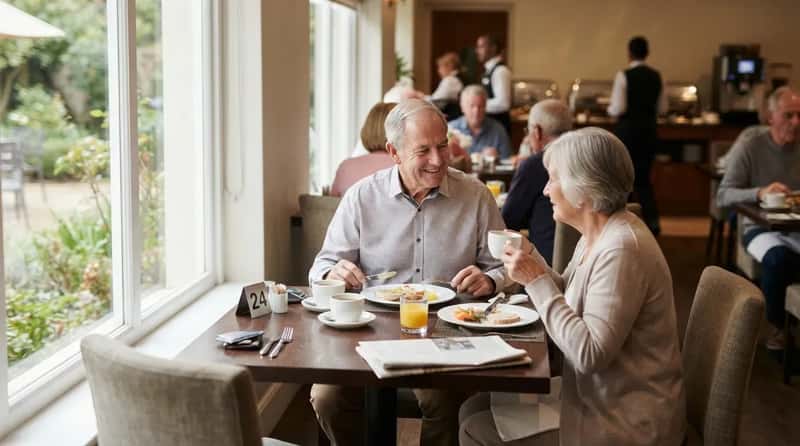
Seat a guest over 60 in the wrong spot, and staff say you’ll hear about it politely, but you’ll hear about it. Window tables, quiet corners, and seats away from the door and the loud espresso machine get claimed fast. Plenty of guests ask to move after they’ve already sat down.
The reasons are practical. Drafts, glare, hard-to-hear conversations and long walks to the buffet matter more than people expect. By the second morning, many guests walk straight to the same table and treat it as their own. Smart staff leave it open when they can.
#13 – They Use the Server’s Name, and It Changes the Whole Shift
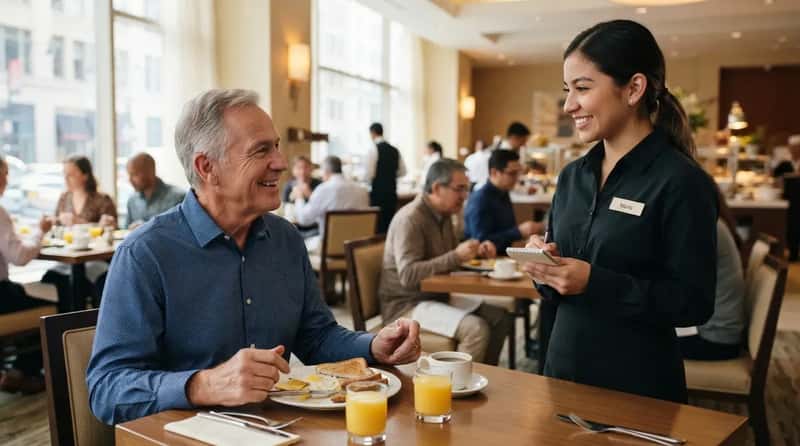
Here’s a detail staff mention again and again. Guests over 60 often glance at the name tag and use it. “Thank you, Maria” lands very differently than a wave across the room.
It reflects a style of hospitality that many older guests grew up with: eye contact, a real greeting, and a genuine “how are you” before the order. Some staff say a single “good morning, Daniel” can carry them through a rough, understaffed rush. It costs nothing, and it gets remembered.
#12 – The Coffee Order Is Not a Suggestion
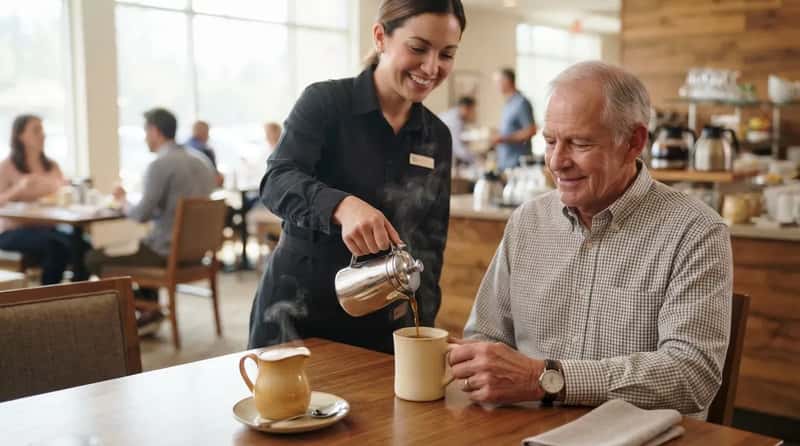
Ask any attendant about coffee, and they’ll describe their regulars like old friends. Guests over 60 often know exactly what they want: decaf, piping hot, in a real ceramic mug, with warm milk on the side. A flimsy paper cup at the self-serve station can feel like a downgrade.
They also notice the second a pot has been sitting too long. Staff say stale, lukewarm coffee is one of the fastest ways to earn a polite comment at the front desk. It’s rarely rude. It’s just very, very specific.
#11 – The Phone Comes Out, but It’s Grandkids on the Screen

Staff often expect the stereotype of older guests who ignore their phones. What they describe is different. Plenty of guests over 60 are on video calls with grandkids over their scrambled eggs. They tilt the screen to show off the buffet, the view, or the giant waffle machine.
Others read the news on a tablet or check weather and flight updates. Some still ask for a printed paper, and servers say they’ve had to hunt for one more than once. Hotels that stopped stocking newspapers tend to get asked about it more than you’d guess.
Worth Knowing
- Video calls happen right at the table, often with a quick buffet tour for the grandkids.
- Tablets and phones double as the morning paper, weather channel and flight tracker.
- Printed newspapers still get requested at the front desk.
- A steady Wi-Fi signal in the breakfast room is a quiet make-or-break detail.
#10 – They Ask What’s Really in the Dish
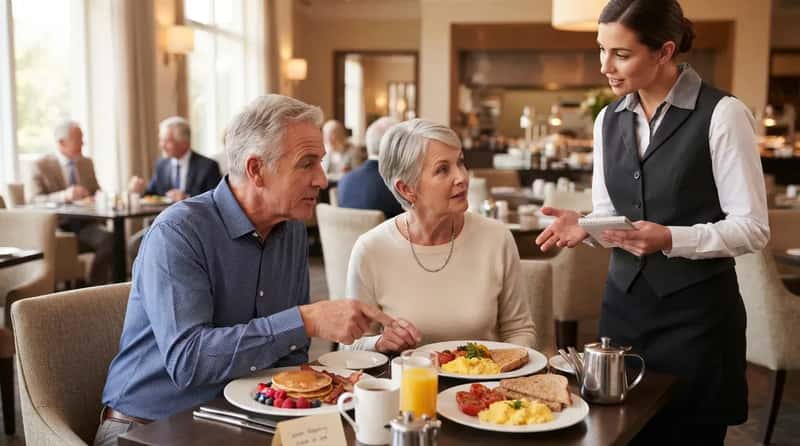
Questions about ingredients come up constantly. Is the sausage pork? Is there dairy in the pancakes? Does the soup have a lot of salt? Staff say guests over 60 tend to ask more specific questions than most.
There’s a good reason. Health agencies like the National Institute on Aging note that conditions such as high blood pressure and type 2 diabetes become more common with age, and what’s on the plate can matter a lot. For these guests, a mislabeled tray can be a real health problem, not just an annoyance. Good servers learn the breakfast menu cold for exactly that reason.
#9 – The Cash Tip Left on a “Free” Breakfast
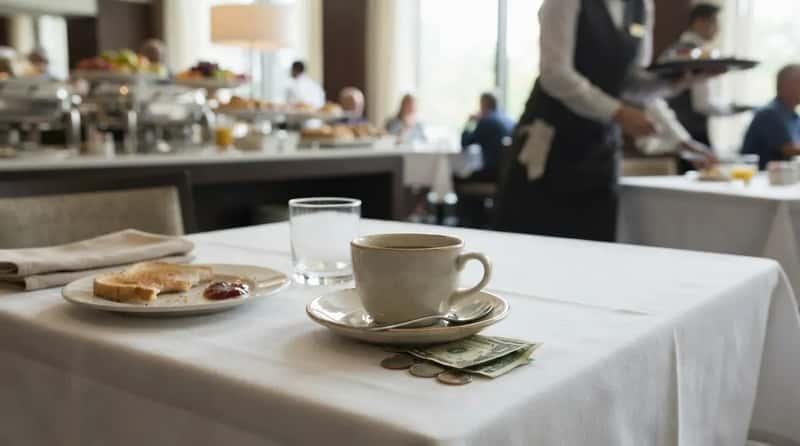
When breakfast is included with the room rate, many guests assume no tip is expected. Staff say guests over 60 are often the ones who leave a few dollars on the table anyway. Sometimes there’s even a handwritten thank-you tucked under the cup.
Here’s where opinions split. Some travel writers say tipping at a buffet is optional, while others argue that anyone clearing plates and refilling coffee deserves something. Servers say a small cash tip at a free breakfast is rare enough that they remember who left it.
#8 – The Little Bag Comes Out at the Table
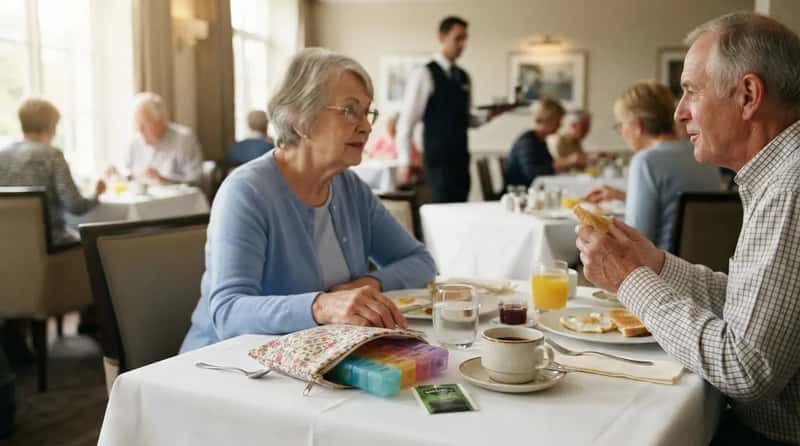
Watch closely, and you’ll see it. A small pouch appears with a pill organizer, a favorite tea bag, or a packet of sweetener. Staff recognize the ritual right away.
Many medications are taken with food, so breakfast is a natural time for them. Some guests also carry their own tea or jam because hotel versions never taste quite like what they have at home. Servers say they quickly learn to bring hot water without being asked.
#7 – The Banana That Quietly Disappears Into a Purse
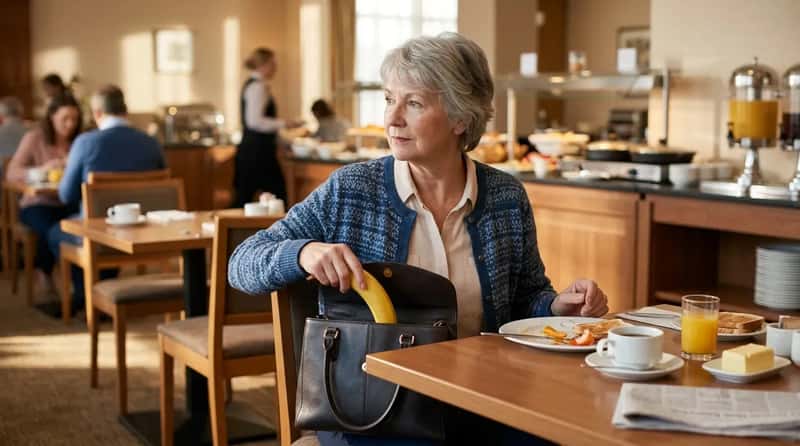
It’s one of the most talked-about habits among breakfast staff. A banana, a muffin or a boiled egg slips into a bag for later. Guests are planning for a long morning of sightseeing or a drive with no easy lunch stop.
Policies vary by hotel, and some discourage taking food out. Others look the other way for fruit and wrapped items. Several servers say they’d rather see a guest take a banana than skip a meal on a long travel day. Anything that’s been sitting out on the buffet, like scrambled eggs, is a different story, since food safety rules apply.
#6 – They Spot the Tiny Mistakes Before the Staff Does
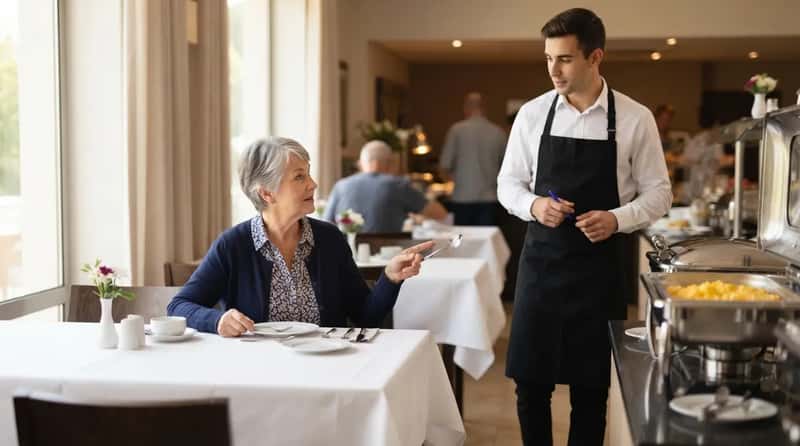
A sticky table, a missing serving spoon, a tray running low at 9:30. Guests over 60 often catch these before the staff does. Many grew up in an era when the details defined good service.
They also tend to say something face to face. Instead of posting an angry review later, they quietly flag the problem on the spot. Staff say that kind of direct feedback is far more useful than an anonymous one-star rating. It gives them a chance to fix things while the guest is still in the room.
#5 – Nobody Rushes the Second Cup (and Staff Don’t Mind)
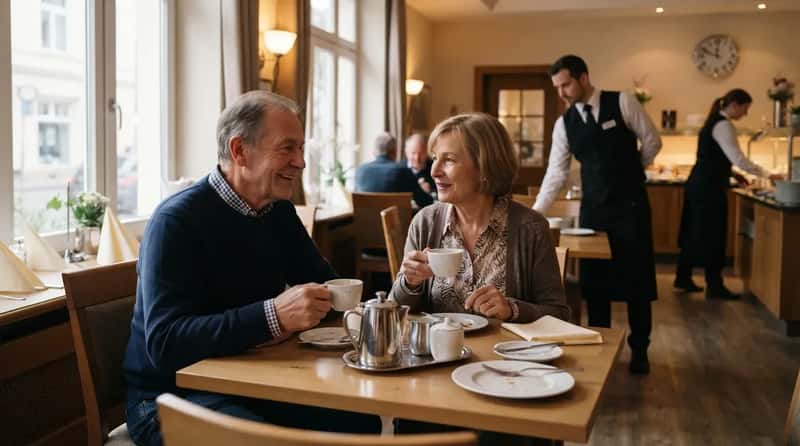
The breakfast room closes at 10:00, and some guests are still on their second pot of coffee at 9:55. For staff trying to reset the room, that can be a challenge. Yet many say they don’t mind at all.
For a lot of travelers over 60, breakfast isn’t a pit stop. It’s the main event of the morning, with no alarm and no meeting waiting. Servers often say the guests who linger longest are the ones who tell them about the trip, the grandkids and the anniversary they’re celebrating. Those conversations can be the highlight of a shift.
Why It Stands Out
- Breakfast is the main event of the morning, not a quick stop.
- The stories arrive with the refill: trips, grandkids, anniversaries.
- Staff often remember the lingerers long after the quick-bite crowd is forgotten.
- A full table at 9:55 usually means the room is doing its job.
#4 – The Table Next Door Turns Into Friends

Younger guests often keep to themselves, headphones in. Staff say guests over 60 are more likely to start a conversation with the next table. It begins with a comment about the weather and ends with a swapped restaurant tip.
Staff often describe strangers who walk in as solo travelers and walk out as breakfast companions for the rest of the stay. A simple “Where are you headed today?” can turn into a standing morning date. It’s a reminder of how much a small social moment can matter.
#3 – By Day Two, Staff Already Know “the Usual”
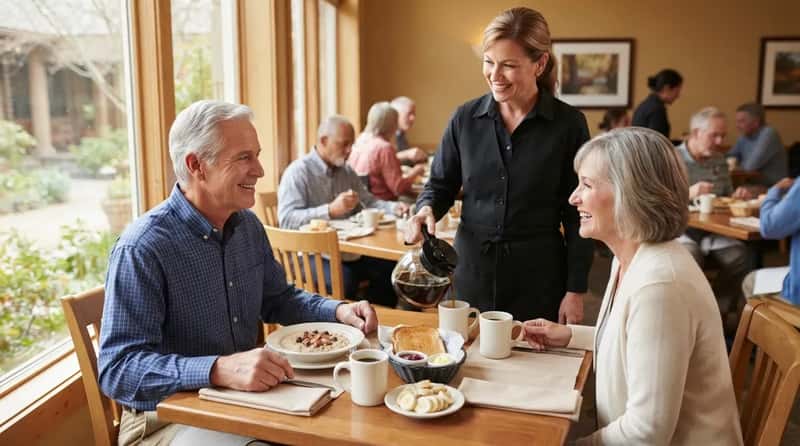
Routine runs deep. A guest over 60 who orders oatmeal with raisins on Monday will probably order it again on Tuesday. Staff say they learn these orders faster than any other group’s.
That makes service smoother for everyone. Some attendants have the coffee poured before the guest even sits down. It’s a small thing, but it makes a hotel dining room feel like a neighborhood diner.
Quick Compare
- Day one: a slow buffet scout, a few questions, a table chosen with care.
- Day two: the same table, the same order, and a server who already knows both.
- Day three: coffee waiting, small talk flowing, and a room that feels like a regular spot.
#2 – They Stack the Plates, and Staff Remember Who Does
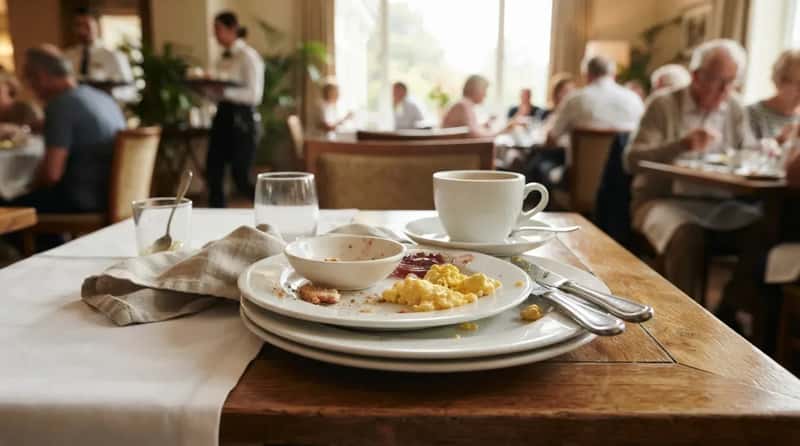
It’s a quiet habit that gets mentioned a lot. Guests over 60 often stack their plates, gather the silverware and push the cups to the edge of the table. Many say it’s simply how they were raised.
Staff treat it as a sign of respect. Servers say they’d never ask a guest to do it, but they remember who does. It shows how many older travelers think about the people working around them, especially during a busy breakfast rush.
#1 – The Long-Married Couple, and the Guest at the Table for One
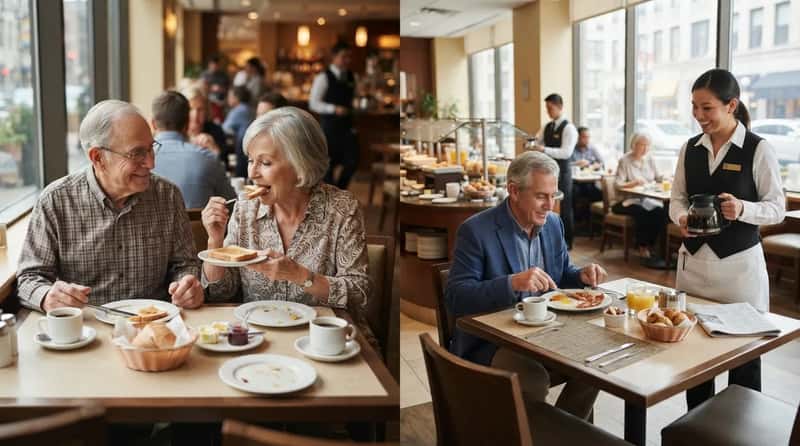
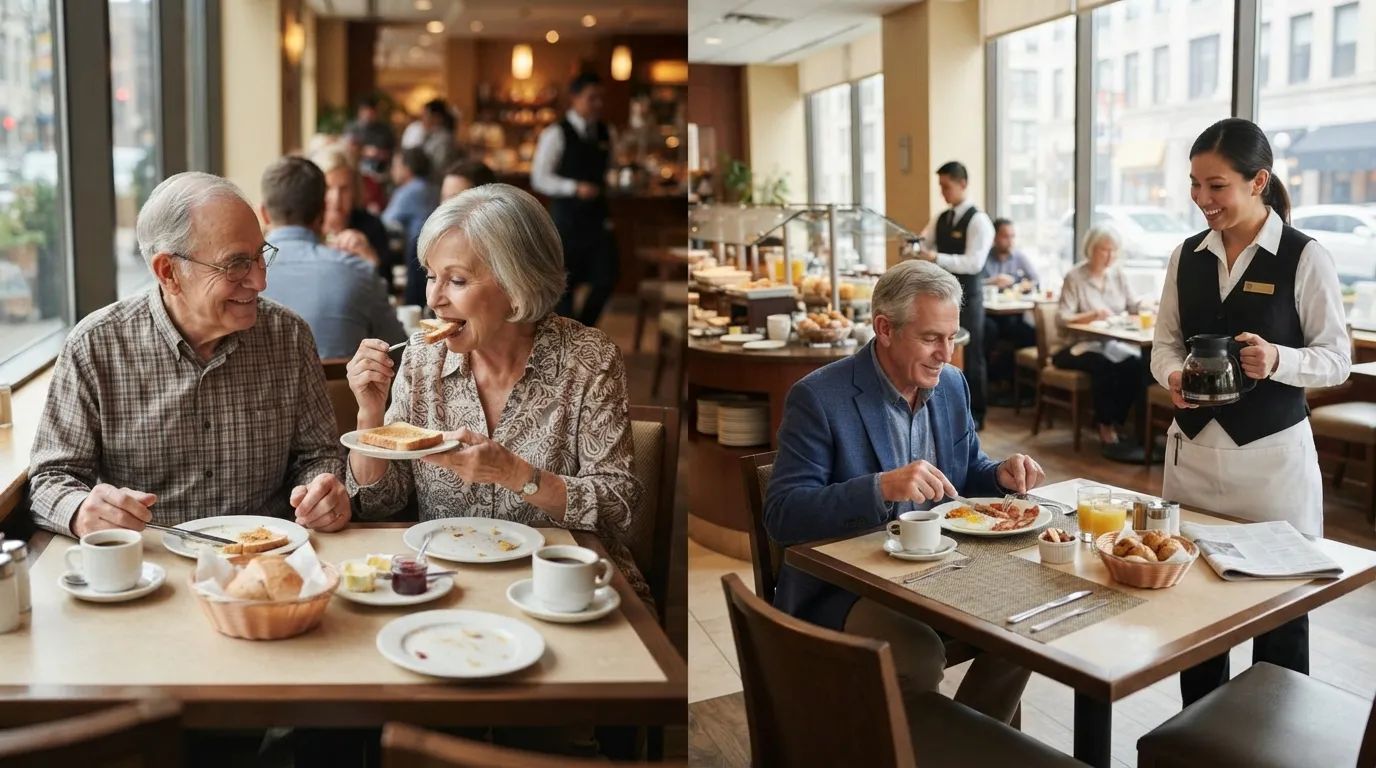
Staff can spot the long-married couples instantly. One heads to the buffet and returns with two plates. They split the toast, trade bites, and barely speak because they don’t need to. It’s a quiet language built over decades.
Then there’s the guest at the table for one, sometimes widowed, with the second chair left empty. Many servers say they go out of their way to offer a warm greeting to solo travelers, because they know how much a morning hello can mean. It’s often the most memorable moment of their shift.
The breakfast room is where routines, habits and small kindnesses show up in plain sight. Guests over 60 arrive early, ask careful questions and notice details most people miss. But the thing staff talk about most isn’t the coffee order or the favorite table.
It’s the human moments: a name used, a mug filled before anyone asks, a solo traveler greeted like they matter. Long after the eggs are cleared, that’s what the room remembers.