The brochure says “all-inclusive,” but the fine print tells a messier story that changes from resort to resort. These sixteen surprises tend to turn up at the pool bar, the spa desk and the checkout counter, in small amounts that add up over a week.
The cheapest fix in this whole piece is a free document, and it settles more of these questions than anything else here. But first, the place the gaps show up soonest: room service.
#16 – Room Service Comes With Exceptions

Room service is one of the places where an all-inclusive stay actually pays off. A morning coffee on the balcony costs nothing extra, which is not how most hotels work.
Even so, special meals, off-hours delivery and alcohol may carry a fee, and what’s included varies by resort. Those exceptions sit right around the late-night orders you are most likely to want.
I would treat room service as a perk to confirm, not one to assume. Tipping isn’t required, but a few dollars for a middle-of-the-night delivery is a courtesy.
The beach draws its own line between paddles and engines.
#15 – Jet Skis and Golf Sit Outside the Package

Most beachfront all-inclusive packages include only nonmotorized water sports. Kayaks and paddleboards are usually free, while you might pay extra to rent motorized equipment like jet skis.1
Golf follows a similar pattern. It is excluded from the base all-inclusive package at most properties.2
If a round of golf is the reason you are going, price it before you compare resorts. It can change which one is actually cheaper.
Activities are the visible extras, and a few others arrive as line items on the bill.
#14 – Wi-Fi, Taxes and Small Fees at Checkout
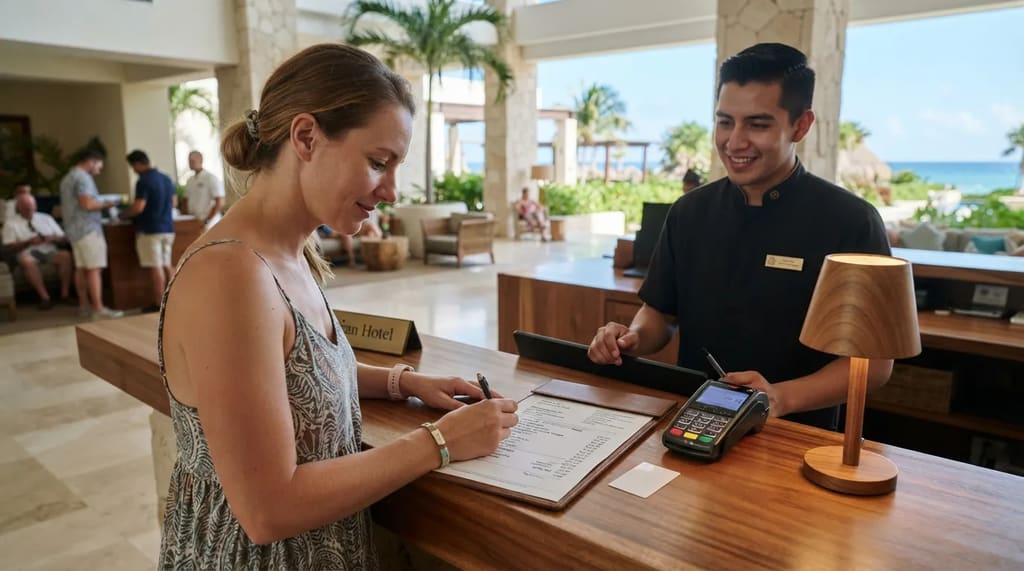
All-inclusive resorts typically don’t add a resort fee, the nightly charge that covers things like parking, shuttles and internet. That is good news, but some items usually bundled into a resort fee, such as Wi-Fi, may not be included in your all-inclusive cost.
Smaller charges can also appear, such as a modest daily environmental fee at some Mexican resorts. Parking is another possible charge at resorts you can drive to.
Worth Knowing
- A separate resort fee is typically not added at all-inclusives
- Wi-Fi may still sit outside your rate
- Some Mexican resorts add a modest daily environmental fee
- Parking can be extra at drive-to properties
None of these is large alone, so don’t let them decide where you stay. Before you pay, ask whether the quoted price includes taxes, mandatory service charges and in-room Wi-Fi.
#13 – Specialty Restaurants Can Be Capped or Gated

Most all-inclusives include several à la carte restaurants beyond the buffet. The limits tend to sit at the top, where a resort’s one or two flagship restaurants are the most likely to carry a surcharge or a per-stay visit limit.
Some properties also charge per person for chef’s tasting menus or wine pairings. A buffet may be included while anything with table service could cost extra.
If a signature restaurant is part of why you chose the resort, confirm that it is covered, not just that “dining” is.
Food is the part resorts show off, and the drink list has tiers of its own.
#12 – The House Pour Is Not the Top Shelf

The house pour is included, but the top-shelf bottle gleaming behind the bar often isn’t. Premium drinks, like premium food, may sit outside the rate.
If you have a favorite brand, ask which brands are on the included list before you book. If you don’t, the included pour is simply what the resort chose to stock, and it is perfectly reasonable to drink it.
Paying extra for a name-brand bottle makes sense only when that brand is the point.
#11 – Spa Treatments Are Billed Like a Spa

The spa is almost universally extra at all-inclusives, and it is usually priced at US-resort rates, not local ones.1 If you only want a basic massage, compare the resort menu with what you would pay at home.
Tipping gets confusing here, because a treatment outside the package means the tip isn’t covered either. Many resort spas add a service charge of around 15 to 20 percent, so read the slip before you add anything.
A spa is a short walk from your room, while the ride from the airport is billed separately.
#10 – The Airport Ride May Not Be Included

Transportation between the airport and the resort is not included in the all-inclusive rate unless your booking explicitly confirms it.2 Unless you live down the street from the resort, you need to factor in the cost of getting there.
If transfers are offered, ask whether the ride is shared or private, and how long the shared route typically takes. A shared van can stop at several hotels, which matters after a long flight.
Quick Compare
- Shared van: usually the budget option, but it may make several hotel stops
- Private transfer: a direct ride that costs more, and often worth it after a long travel day
If the shared ride is long, a private one can be worth the extra money. That is a judgment about your energy, not a rule.
Trips beyond the gate, to ruins, reefs and cenotes, are priced separately too.
#9 – Day Trips Are Extra, and So Are Their Tips

Anything off the property, such as ruins, catamarans and cenotes, costs extra, the same as a cruise port day.2 The resort desk and the tour operator may quote different prices, so compare before you commit.
There is a possible upside. It’s worth asking at booking whether any optional excursions are included in the rate, because you may be surprised at what comes at no extra cost.
The tips on these trips are separate as well. Excursion guides and boat crews are not covered by the resort’s included gratuity, so plan to tip them yourself.
Tipping off the property is the clearer case, while on the property the rules shift with the brand.
#8 – Tipping Rules Change From Brand to Brand

The word “included” means different things depending on the chain. Here is how a few well-known brands handle it.
At a Glance
- Sandals: all tips are included, and staff don’t accept them3
- Beaches and Club Med: gratuities are included, though butlers and spa staff may accept tips at Beaches
- Hyatt Ziva and Zilara: a service charge is built into the nightly rate3
- Iberostar: gratuities are not included, and tipping is expected
At many resorts in Mexico and the Caribbean, tips aren’t in the rate and staff rely on them.
So don’t go by the label; go by the policy of the specific brand. Where tipping is welcome, small bills are easier than large ones, and where it is banned, tipping can actually get staff in trouble.
#7 – A Sales Presentation Costs Hours, Not Money

Some resorts that sell vacation ownership invite guests to a sales presentation, often with a perk attached, such as a discount or a credit. You are free to decline, and the price of saying yes is a block of your vacation, not a fee.
If you go, treat it as a purchase meeting. A vacation-ownership contract is a long-term commitment, so take the paperwork home, read it there and don’t sign on the spot.
Unless you are already thinking of buying, I would skip it. Hours at a resort you have already paid for are what you came for.
Lost hours can be made up; a beach covered in seaweed follows a calendar you can check.
#6 – Seaweed Follows a Calendar You Can Check
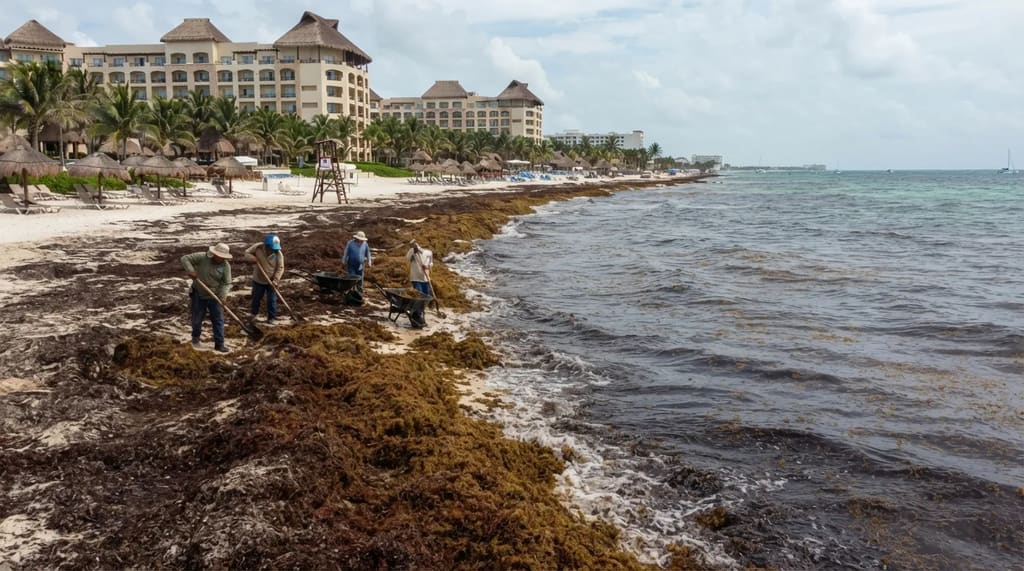
On Mexico’s Caribbean coast, sargassum season typically begins in March and ends in October. Recent years have been unusually heavy, and the University of South Florida’s College of Marine Science, which tracks blooms by satellite, has reported record-setting bloom levels.
If you are booking ahead, timing and geography both matter. November through February is the lower-risk period for Mexico and the Caribbean.
Pacific and Baja beaches such as Puerto Vallarta and Los Cabos do not get Caribbean sargassum.
Fast Facts
- Typical sargassum season on Mexico’s Caribbean coast: March to October
- Lower-risk window: November through February
- Puerto Vallarta and Los Cabos don’t get Caribbean sargassum
- Check live maps the week before you fly
Conditions change with wind, current and beach angle, so a resort on a protected stretch can look very different from one a few miles away.
Seaweed affects the view, but what comes through the buffet line affects the week.
#5 – Stomach Trouble Can Happen Anywhere

The CDC calls travelers’ diarrhea the most predictable travel-related illness. A pricey resort doesn’t remove the risk, since even in high-income countries, restaurant food handling has been linked to diarrhea.4
There is modest reassurance for older travelers: it is more common in young adults than in older ones.4 Buffets are where the risk concentrates, and the Merck Manual notes that buffets and fast-food restaurants pose an increased risk of infection.
Cooked foods that are still hot when served are generally safe. The CDC also advises that you avoid ice, since it may have been made with tap water.
Precautions help but don’t guarantee anything, because some food-safety factors, such as restaurant hygiene, are out of the traveler’s control. Ask your doctor before you leave about what to pack, especially if you take daily medications.
Even a careful traveler can get sick, which is where the next item earns its keep.
#4 – Travel Insurance Is Rarely in the Package
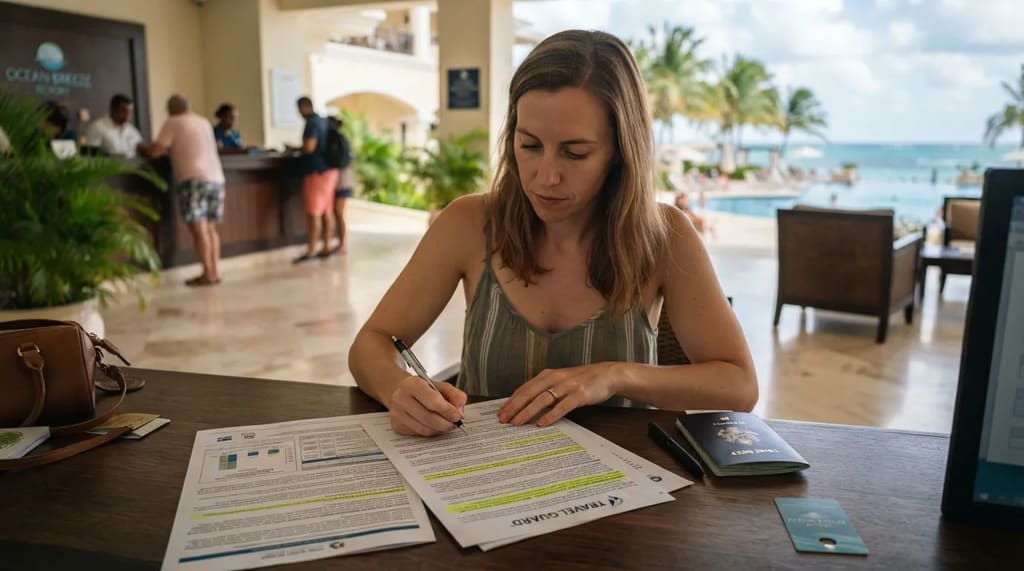
AAA notes that most all-inclusive packages don’t include travel insurance, but it’s often worth the extra cost. The case is strongest when you have paid in full months ahead and the trip falls in Atlantic hurricane season, which runs from June through November.
Read the policy for two things: when coverage begins and how it treats storms. Many policies exclude storms that already have a name when you buy, so buying early matters more than buying the biggest plan.
Ask the insurer to explain anything unclear before you pay.
If your trip is a short, refundable stay in a calm month, you can reasonably skip the extra cost. Cancellation cover pays for a lost trip, while the clinic on site bills for care, and that is the part that matters when someone is ill.
#3 – The On-Site Clinic Bills Separately

Among the things an all-inclusive rate does not cover, on-site medical services such as clinic consultation fees are the ones that can turn a small problem into a real expense. The rate covers meals and drinks, not care.
Many older travelers are surprised to learn that Original Medicare generally does not pay for care outside the United States.5 Check your own plan or your travel insurer before you leave.
A stomach bug from earlier in this list can end up at the clinic’s front desk. Know in advance whom you would call and what documents you would need.
The clinic bill is the one expense here that you can’t predict.
Illness from the buffet follows general rules; illness from the bar has drawn its own official advisory.
Related Stories From Travelbinger



#2 – In Mexico, Bar Drinks Once Drew an Official U.S. Warning
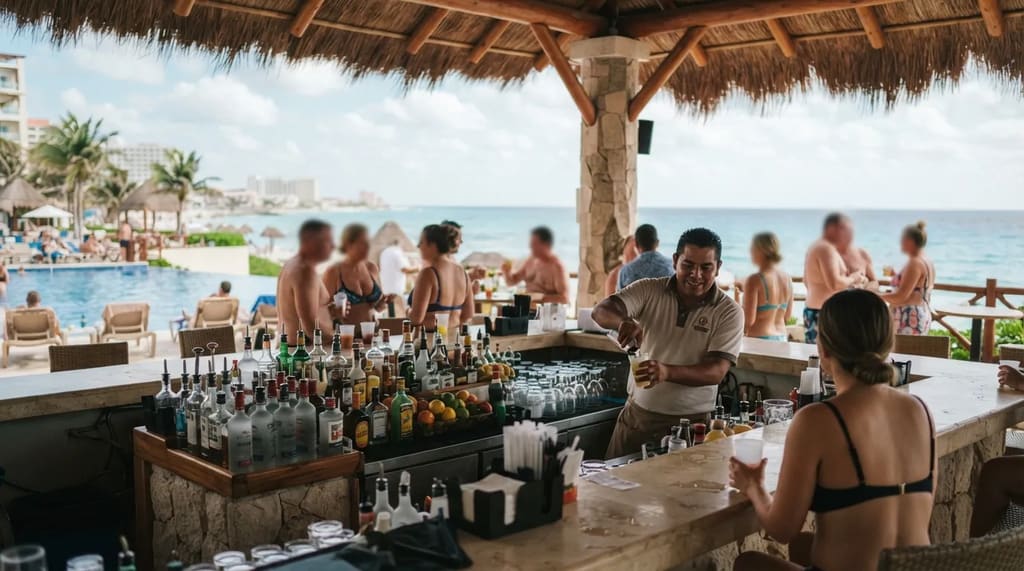
In July 2017, the State Department updated its Mexico page after allegations that tainted or substandard alcohol had caused illness or blackouts. It advised Americans to drink in moderation and to get medical help if they feel sick.6
The warning followed reports from guests at Mexican resorts, including in the Cancún and Playa del Carmen area. The picture has two sides, though.
Mexico’s health authority had seized more than 1.4 million gallons of adulterated alcohol since 2010. Resort operators said they buy only sealed bottles that meet the required standards, and Mexico’s tourism secretary said millions of visitors travel there safely.7
This is a Mexico-specific advisory based on allegations, so it says nothing about every resort or every country. “Unlimited” is a menu, not a target.
If you feel far worse than your drinks would explain, stop, tell your companion and find a medical professional.
Which drinks are poured, which tips are allowed and which rides are covered are set resort by resort, and written down in one place.
#1 – Your Resort’s Own Inclusions List, Read Before Paying
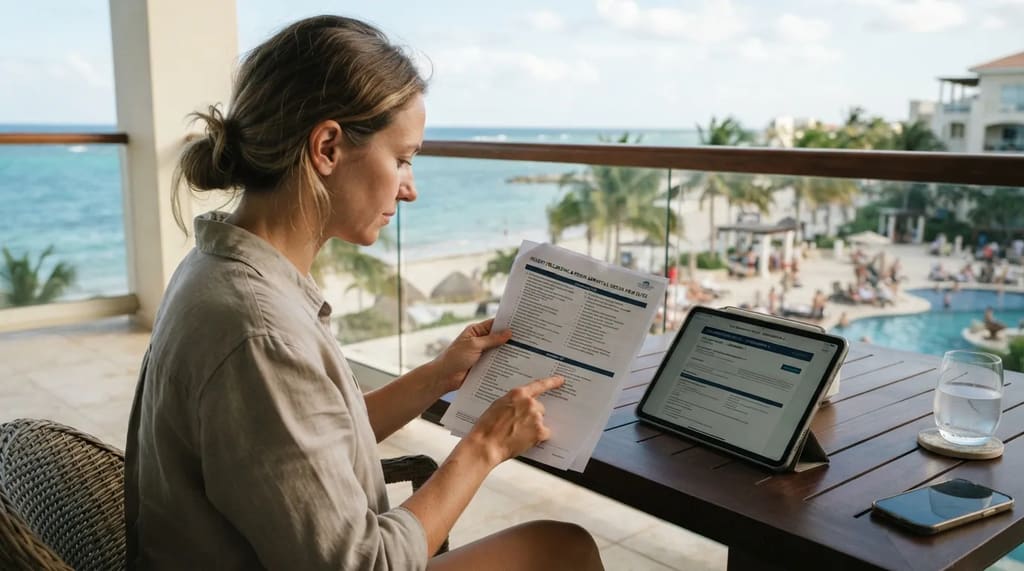
Nearly every item above comes down to one page: the list of what your specific resort and room category include. The same word, “all-inclusive,” sits on top of different rules about tips, premium drinks, transfers and restaurants.
Some properties even restrict their best restaurants to higher room categories. Get the list before you pay, and read it for the room you are actually booking:
- Whether gratuities are included, allowed or prohibited
- Which restaurants carry limits or surcharges
- Whether airport transfers are in the rate
- Which drinks count as premium
The list can work in your favor too, since resorts sometimes include extras you wouldn’t expect, such as tours, as AAA notes. Take a screenshot or save a PDF on the day you book, so you have the wording if a charge appears later.
Think of the all-inclusive rate as the first line of the bill, not the total. The resort has written down what is on that line, and reading it costs nothing.
Plan a small cushion for the things that were always going to be extra, and decide in advance which ones you will skip. Passing on the jet ski, the signature dinner or the sales presentation takes no effort once you have decided.
The best vacation of this kind is the one with no surprises at checkout, and the surprises mostly come from questions nobody asked.
What was the first thing you were charged for at an all-inclusive that you had assumed was covered?
Bonus: The Insider Move That Protects You at Checkout

Don’t just read the inclusions list. Get the resort to confirm it in writing, for your exact room category and travel dates, before you pay.
Send the resort (or your travel agent) one short email with these questions:
- Dining: Which restaurants are included for my room category, and are there visit limits or surcharges?
- Drinks: Which brands count as premium, and what is poured at no charge?
- Money items: Are gratuities, transfers, Wi-Fi, taxes and any daily fees in the quoted price?
Save the reply next to your booking confirmation, and bring a copy on your phone. At check-in, ask the front desk to confirm it matches what they have on file.
If a charge still appears that contradicts the written answer, raise it at the desk before you leave. If it ends up on your card, U.S. credit card billing-error protections generally require you to dispute within 60 days of the statement date, so keep that email handy.
- AAA All-Inclusive Budget Guide: https://cluballiance.aaa.com/the-extra-mile/destinations/travel-inspirational/pick-an-all-inclusive-vacation-based-on-budget
- All-Inclusive Resorts Inclusions Guide: https://www.allinclusiveresorts.com/blog/what-is-included-at-all-inclusive-resorts
- Newsweek All-Inclusive Costs: https://www.newsweek.com/what-an-all-inclusive-resort-really-costs-and-whether-it-beats-a-cruise-12713486
- CDC Travelers’ Diarrhea: https://www.cdc.gov/yellow-book/hcp/preparing-international-travelers/travelers-diarrhea.html
- AARP Medicare Abroad: https://www.aarp.org/medicare/does-medicare-cover-me-outside-the-us/
- US News State Department Alcohol Warning: https://www.usnews.com/news/best-countries/articles/2017-07-26/us-state-department-warns-travelers-of-tainted-alcohol-at-mexico-resorts
- CBS Mexico Alcohol Warning: https://cbsnews.com/newyork/news/mexico-alcohol