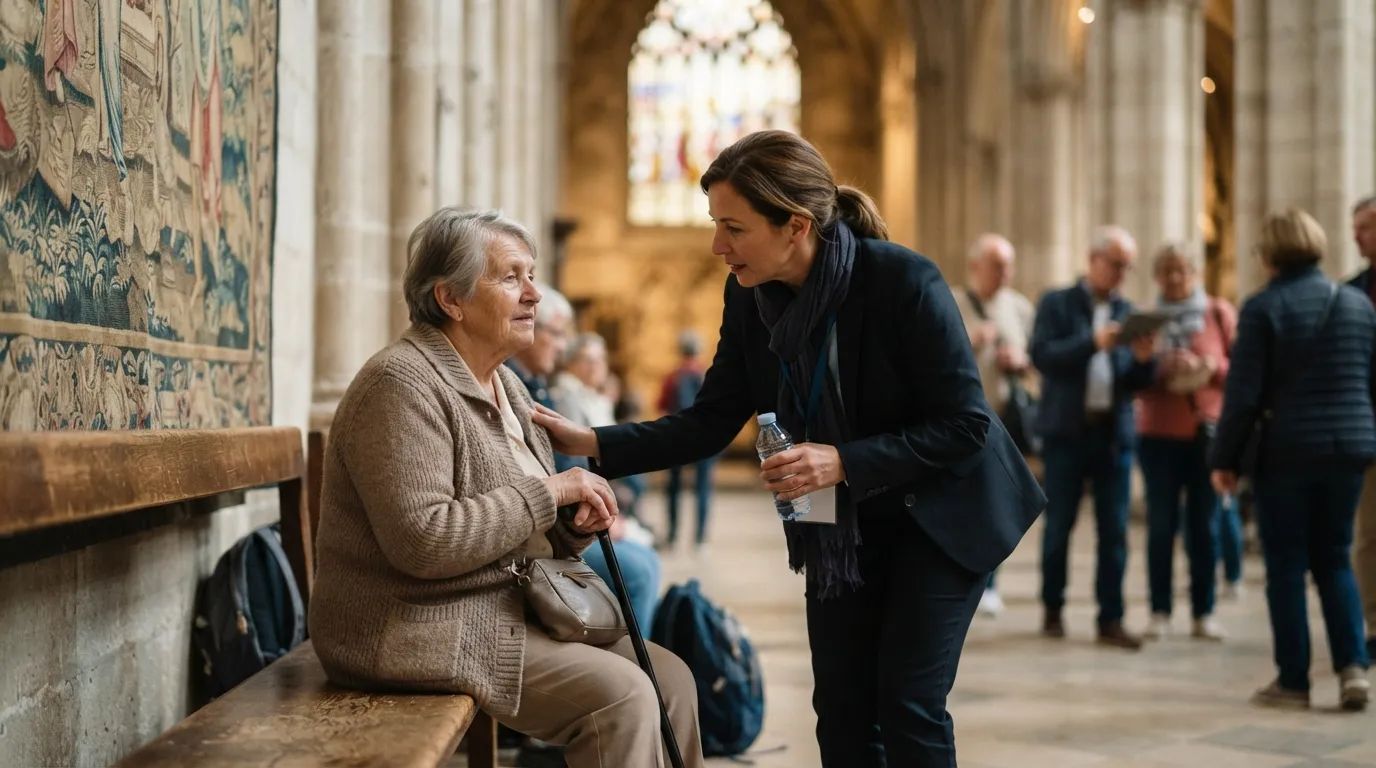
You know the picture: bright jacket, raised flag, big smile, a quick headcount at the coach door. That’s the part you’re meant to see. The part that decides whether a group of travelers over 70 has a glorious week or a draining one happens earlier, and almost always out of view.
By the time you step onto the coach, dozens of small decisions have already been made for you. Where you’ll sit, how far you’ll walk, which restroom you’ll reach first. Some of it is clever, some of it is a little startling, and one item near the end involves a coverage gap that catches a lot of travelers off guard.
#16 – The Luggage Nobody Ever Sees Them Lift
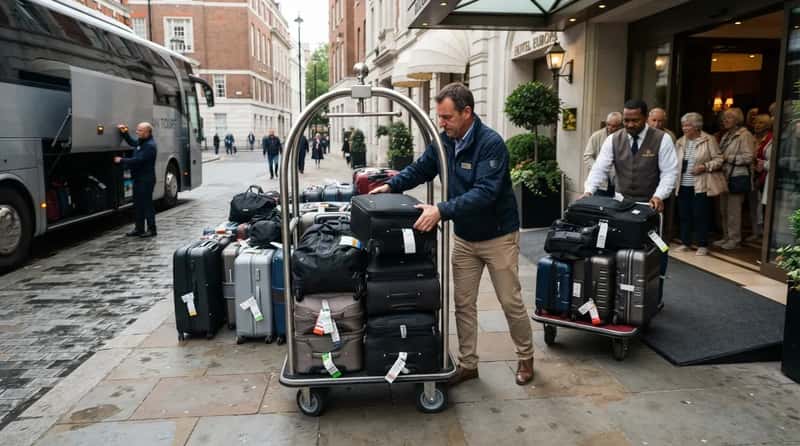
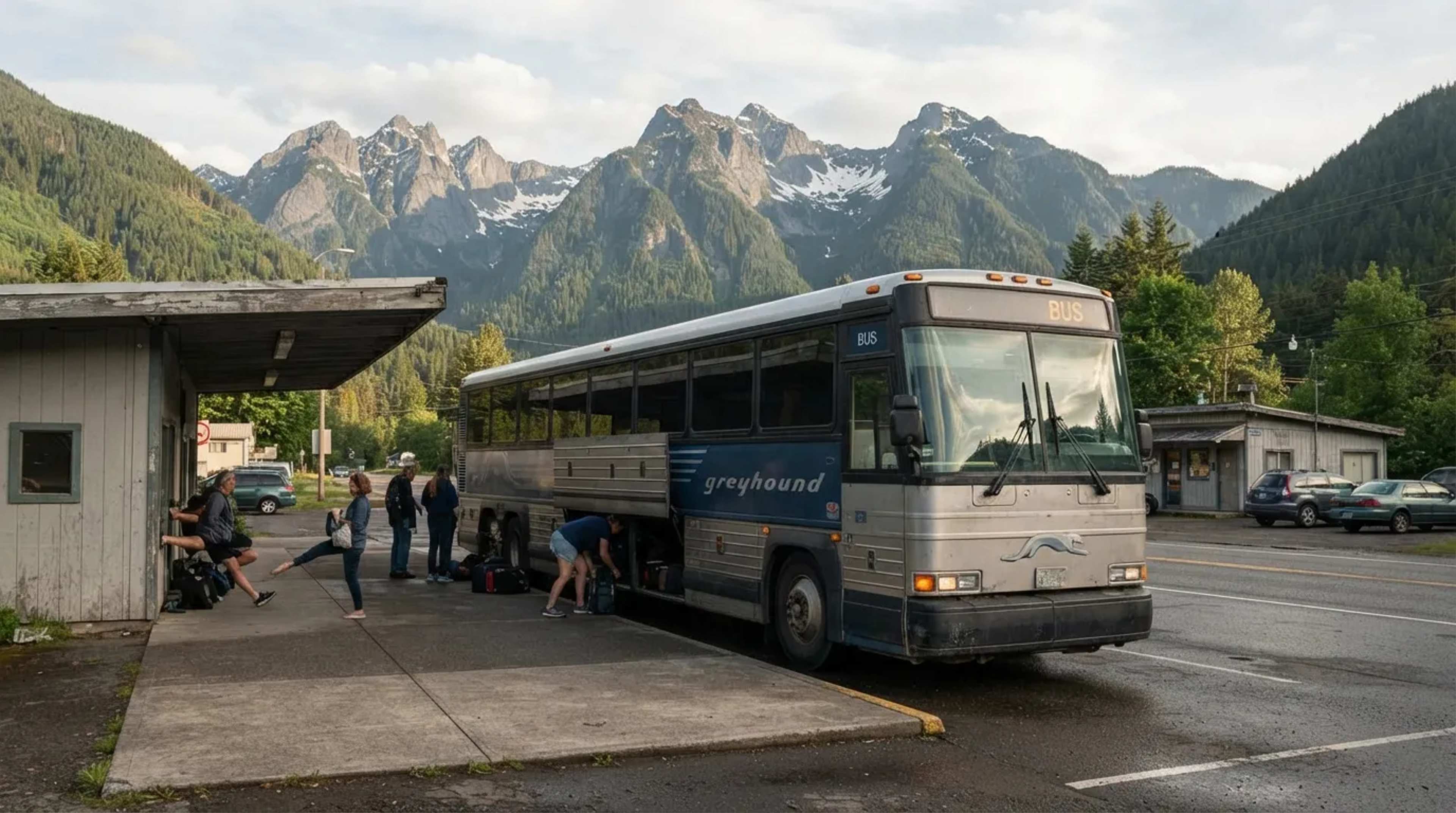
Your bag vanishes from the lobby and turns up in your room, and few travelers ask how. Behind the scenes, someone is counting every suitcase at every stop. Tour managers and porters tag and tally bags on and off the coach so nobody drags a heavy case over a curb or up a flight of stairs.
Heavy lifting is where strains and falls happen, so skipping it is a quiet safety measure disguised as a perk. That’s also why many tours enforce a firm “one bag per person” culture. One overpacked case can hold up thirty people.
The next item shapes your entire day on the road, and almost nobody notices it happening…
#15 – The Seat Rotation That Looks Random but Isn’t

On a coach, the seat you get is rarely an accident. Many guides rotate seats daily so the same people don’t always end up in the back. The front rows often go to travelers who get carsick, need quick aisle access, or struggle with the steps. Everyone else cycles through.
It’s a quiet fix for a loud problem. Left alone, groups tend to claim “their” seats by day two, and the grumbling starts soon after. A simple rotation keeps things fair without anyone having to confront anyone.
That tidy system pales next to what they do about walking, at #14…
#14 – The Walking Pace Is Built Around the Slowest Person
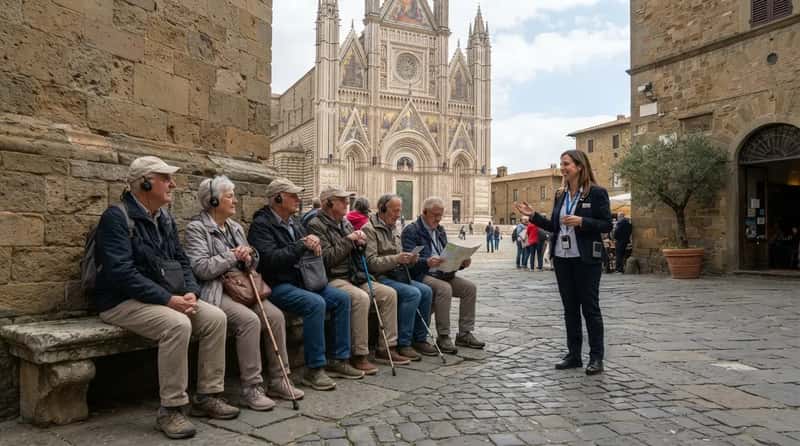
The itinerary says “ten-minute walk.” The tour manager has already asked what that really means for a group with canes, knee replacements, and cobblestones. Good guides scout the route in advance, including where the benches are. Then they plan stops where people can sit while the story is told.
Many also use personal audio headsets, so guests can hear from the back without crowding the guide. Here’s the controversial part. Some experienced guides argue that a “see everything” itinerary is the biggest mistake in senior travel. Fewer stops with more time, they say, make better memories than a packed schedule that leaves half the group exhausted.
Next up is something tour managers handle at the dinner table, and it matters more than it sounds…
#13 – Dinner at the Right Hour, Not the Trendy One

Dinner in Madrid can start after 9 p.m. A group of 75-year-olds, many on medications that come with meals, usually doesn’t want that. Tour managers often negotiate earlier seatings with restaurants that wouldn’t normally offer them. It sounds minor until you think about blood sugar and sleep.
They also collect dietary needs early, since many travelers manage diabetes, heart conditions, or food allergies. The kitchen hears about it before the group arrives, not while everyone is seated and hungry. That advance work is why group meals often run more smoothly than a couple’s improvised night out.
Quick Compare
- Local rhythm: late dinners, often after 9 p.m. in Spain.
- Group rhythm: earlier seatings, arranged ahead of time.
- Dietary needs: passed to the kitchen before arrival, not at the table.
If you think meals are complicated, wait until you hear what happens with hotel rooms at #12…
#12 – Rooms Get Checked Before Anyone Walks In

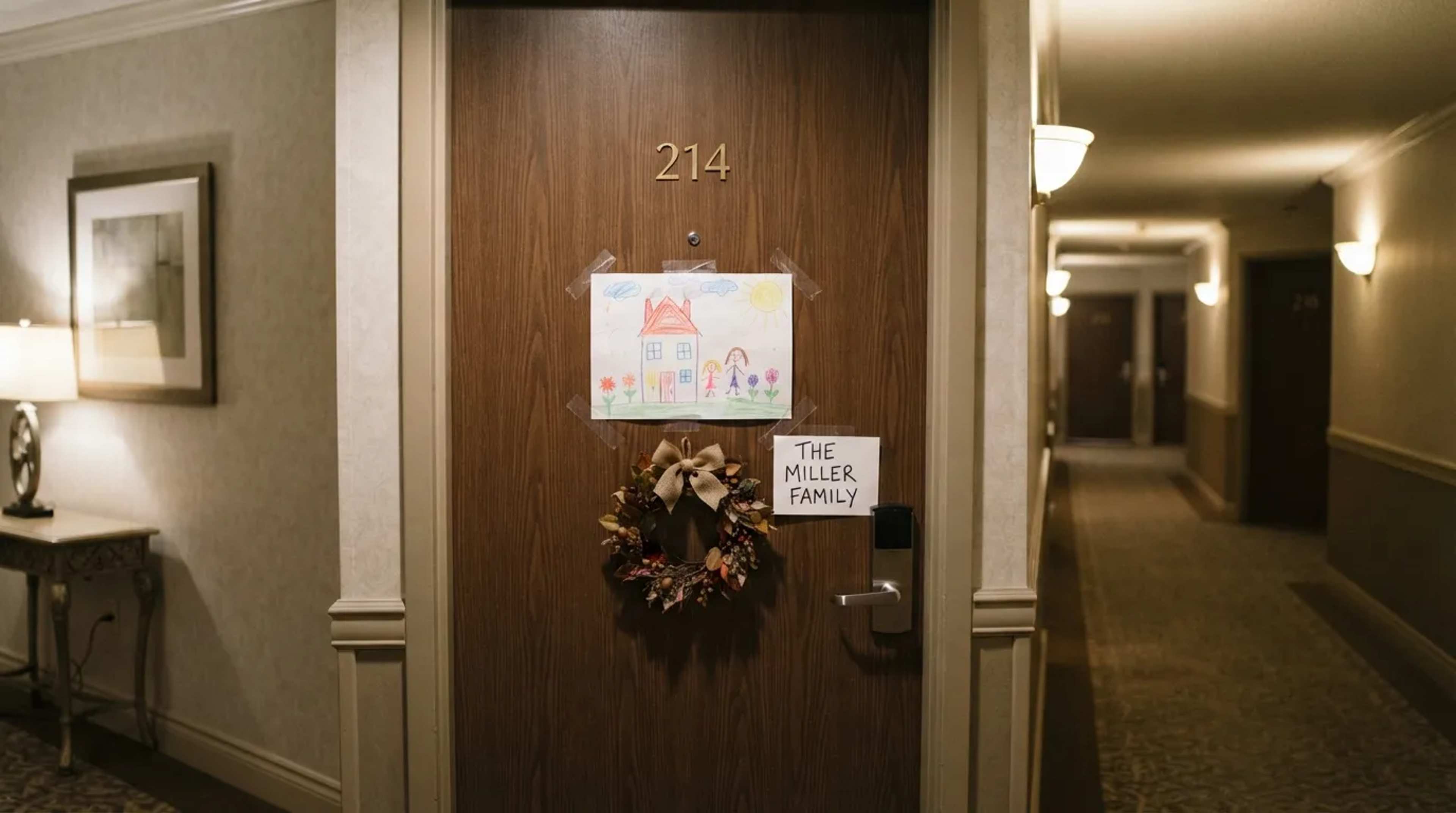
Not every hotel room works for every traveler. Tour managers often request rooms near the elevator and on lower floors. Some check ahead for walk-in showers, because a high tub edge is a real hazard. Older European hotels, in particular, don’t make this easy.
The hard truth is that “accessible” on a booking page can mean very different things. A room might have a ramp but a bathroom door too narrow for a walker. Experienced guides ask specific questions, and they ask in writing, so there’s a record if the room doesn’t match.
But one of the biggest travel nightmares lives in your carry-on, at #11…
#11 – The Medication Check Nobody Wants to Do

Ask a seasoned guide about the worst-case scenario, and many name the same one: the bag with the essential pills goes missing. The standard advice is to keep prescriptions in your carry-on, in original labeled containers. Checked bags get delayed. Pills can’t wait.
Good tour managers also remind travelers to pack extra days’ worth of medication, plus a printed list with generic names, since brand names can differ abroad. It’s a dull reminder. It also prevents some of the most stressful moments of a trip, the kind that end with a pharmacy hunt in a language you don’t speak.
At a Glance
- Where: carry-on, never the checked bag.
- How: original labeled containers.
- Extra: a few spare days’ worth, just in case.
- Backup: a printed list using generic drug names.
Next, the airport, where the rules have a quirk most seniors have never heard of, at #10…
#10 – The Airport Perk Most Travelers 75 and Older Never Use
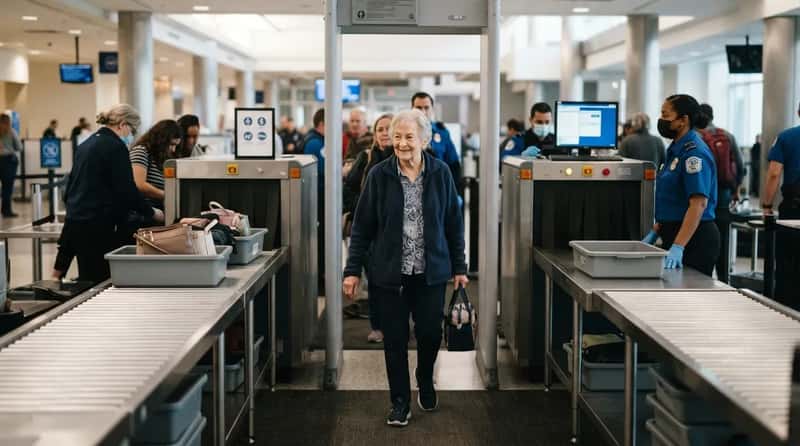
Airports are where group trips often start badly. Tour managers arrange wheelchair or mobility assistance in advance for anyone facing long terminal distances. Airlines provide that help at no charge, but it usually has to be requested ahead of time. Showing up and hoping rarely works.
There’s also a security trick. TSA has let travelers 75 and older keep their shoes and light jackets on at many checkpoints. Not every lane applies it, and not everyone knows about it. A guide who does can save a nervous traveler from hopping on one foot while untying laces.
What tour managers do with your passport explains why they ask for it so early, at #9…
#9 – Why Your Passport Gets Checked Months Before You Leave
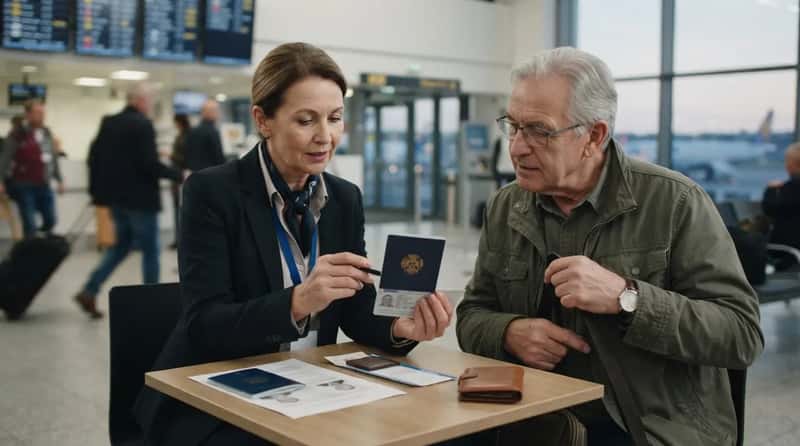
The most avoidable disaster in group travel is a document problem. Tour managers check passport dates early. Some countries require a passport valid for six months beyond your arrival date. A trip that looks fine on paper can still fall apart at the airline counter.
Since May 7, 2025, the U.S. has also required a REAL ID-compliant license or another accepted document for domestic flights. Plenty of travelers renewed their licenses years ago and never upgraded. Guides now ask, because one person stuck at security can hold up the whole itinerary.
But no document matters if your body clock is working against you, which brings us to #8…
#8 – The Empty Day-One Schedule That Looks Like Wasted Time

Some travelers grumble that day one of a tour is “free.” Experienced guides know better. After a long flight, forcing a full sightseeing day is one of the most common mistakes in group travel. Rest first. See later.
Jet lag generally hits harder when flying east, because the body clock finds it easier to stretch a day than shorten one. Tour managers lean on daylight, water, and gentle walks. A lazy first afternoon often buys a sharper, happier group for the rest of the week.
And then there’s the unglamorous topic every guide plans around, at #7…
#7 – The Bathroom Map in Every Guide’s Head
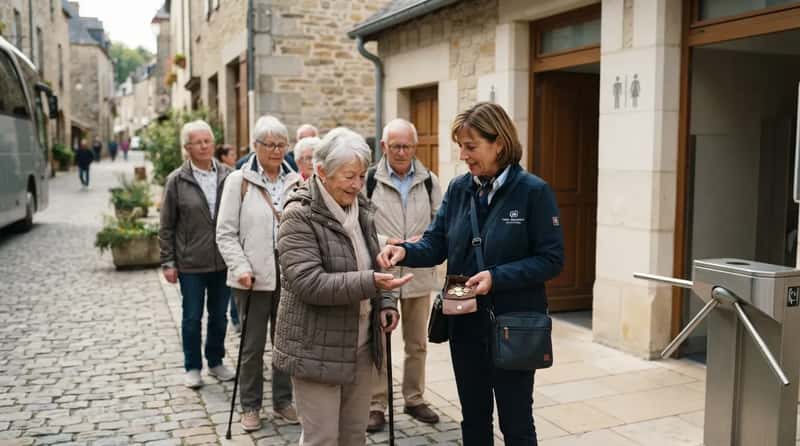
Nobody puts it in the brochure, but it drives the whole schedule. Experienced guides know where the clean, accessible restrooms are in every city on the route. They plan coach stops around them, not around scenery.
A long stretch without a break creates anxiety, and anxious travelers stop enjoying the view. So many guides build in a stop before any long visit, even when nobody asks. In some countries public restrooms charge a small fee, so they carry coins for the group. Small detail, big difference.
Fast Facts
- Restroom stops are placed before long visits, not after.
- Coach stops are chosen for facilities first, views second.
- Pay-to-enter restrooms are covered with coins from the guide.
- Accessible stalls are noted city by city.
The next item is about weather, and the clock matters more than you’d think at #6…
#6 – The Heat Plan That Quietly Rewrites Your Entire Day
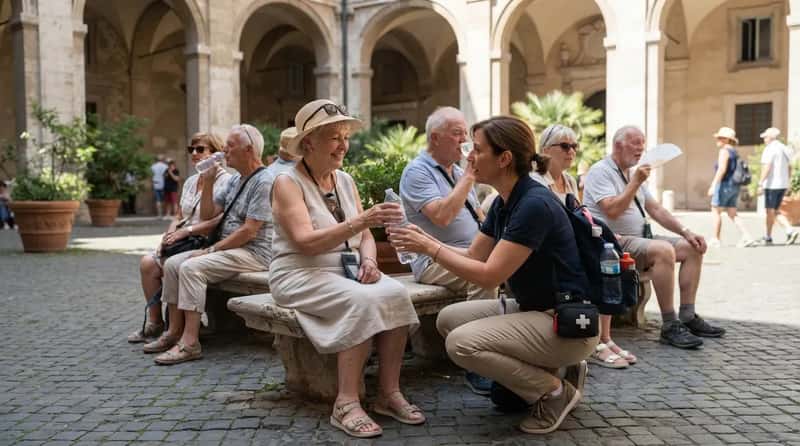
A forecast of 95 degrees can reshuffle a whole itinerary. Outdoor sights move to the morning. Museums and shaded lunches fill the afternoon. The CDC notes that older adults face a higher risk of heat-related illness. Tour managers treat that as a scheduling issue, not a suggestion.
They also watch for early signs like confusion, headaches, and unusual tiredness. Guides carry water and push fluids even when no one feels thirsty, since thirst can register less sharply with age. A good one doesn’t wait for someone to complain.
What guides do about the group itself might be the most underrated skill of all, at #5…
#5 – The Quiet Matchmaking Behind Every Table and Room Share

Solo travelers are common on senior tours, and pairing them is an art. Some tour managers say a bad room-share can sour a whole week. So they ask about snoring, bedtimes, and thermostat wars before assigning anyone.
Dinner tables get quiet engineering too. A shy traveler lands beside a natural conversationalist, and a dominant talker gets nudged elsewhere. Some guides even argue that a well-matched roommate beats paying a single supplement for privacy.
Why It Stands Out
- Snoring, bedtimes, and thermostat habits get sorted before anyone shares a room.
- Shy travelers get seated beside natural conversationalists.
- Dominant talkers get gently redistributed.
- None of it is announced, so nobody feels managed.
One planning trick protects people from the very thing they’re most excited about, at #4…
#4 – The “Optional” Excursion With a Gentler Plan B

Every tour has that one tempting side trip: the steep tower, the long boat ride, the hillside village. Good guides quietly line up an alternative so nobody ends up alone at the hotel. It might be a café visit, a shorter garden walk, or a scenic drive.
The goal isn’t to keep anyone from adventure. It’s to make skipping feel normal. When the second option is a real experience and not a consolation prize, people choose honestly, and many guides say that one choice prevents both the injuries and the regrets.
Next comes the hazard that doesn’t look like one, the thing behind most close calls at #3…
#3 – The Slippery Floors They Spot Before You Do

Polished marble lobbies. Wet ship decks. Uneven medieval steps. The CDC lists falls as a leading cause of injury among adults 65 and older. Guides see every one of those surfaces as a risk.
That’s why they stand at the bottom of stairs, offer an arm at boat gangways, and sometimes reroute a walk after rain. Guests rarely notice, because the best prevention looks like hospitality. A fall abroad can mean a hospital stay, rebooked flights, and a ruined trip.
The next item decides whether a medical scare becomes a financial nightmare, at #2…
#2 – The Medicare Gap Most Travelers Don’t Know About

Here’s the one that surprises almost everyone. Original Medicare generally doesn’t cover care outside the United States, and it generally doesn’t cover medical evacuation either. Plenty of travelers assume their Medicare card works everywhere. It doesn’t.
That’s why good tour managers push travel medical insurance early. Waivers for pre-existing conditions often depend on buying a policy soon after booking, so timing matters. Check your own plan’s rules, since Medicare Advantage carriers can tell you what, if anything, applies abroad. Guides also note the nearest hospital at every stop, so help is minutes away and not an afterthought.
And the number-one thing tour managers sort out doesn’t appear in any brochure at all…
#1 – The Private Word That Protects Someone’s Dignity
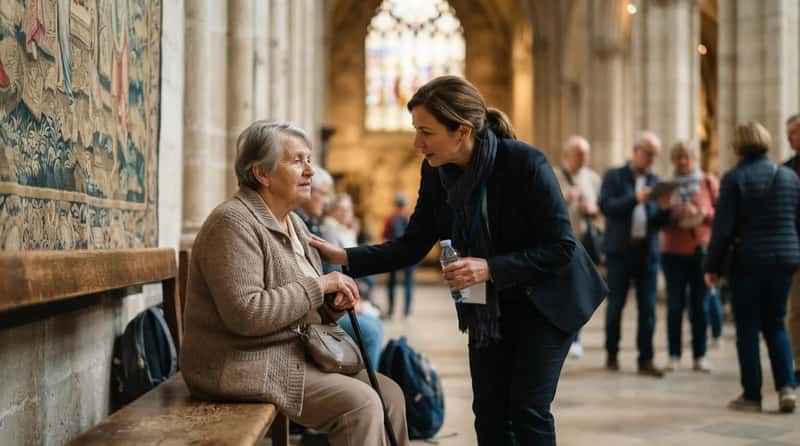
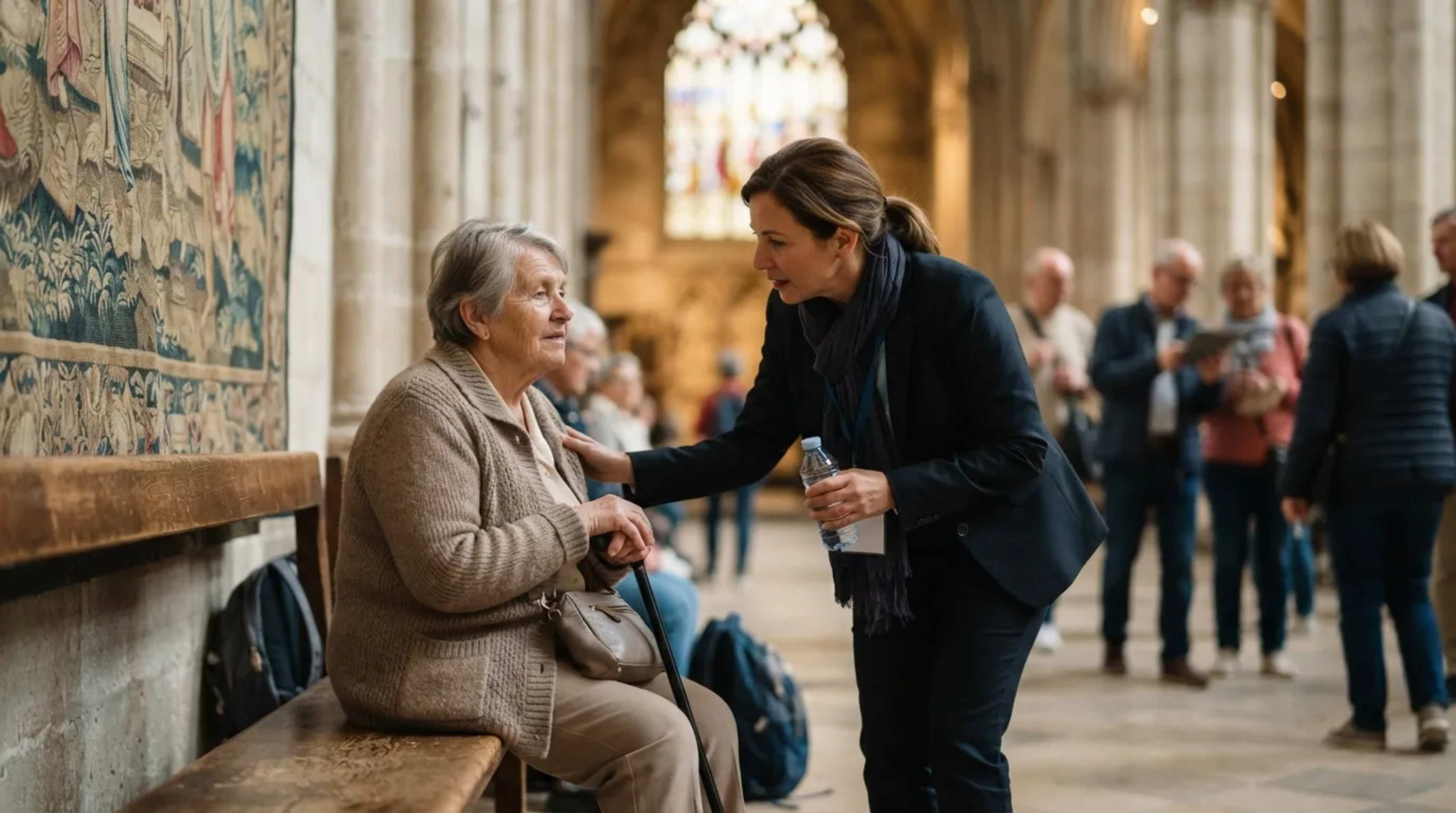
Sometimes a traveler is struggling. Maybe they’re exhausted, maybe confused, maybe too proud to say so. The best tour managers notice, and they handle it privately. No announcement, no scene.
It might be a quiet offer of a seat, a changed table, or a gentle call to a family member. The rest of the group never knows. Many veteran guides say this unseen judgment call matters more than any itinerary, because it lets people keep traveling, and keep their pride, long after the trip ends.
The best group trips for travelers over 70 rarely feel managed, and that’s exactly the point. The bags move, the seats rotate, the pills get checked, and the coverage gap gets flagged while everyone else is looking at the view.
The flag and the headset are just the visible part. The real craft is foresight, and the grace to fix a problem before anyone has to admit it was one.