The farewell dinner looks like a simple last supper, but it comes with fine print. On Go Ahead Tours itineraries it’s an included meal, served with beer or wine, while Collette says its tour price doesn’t include the customary end-of-trip gratuities for the tour manager, driver and local guides.1
So one evening can hold a paid-for dinner, an unpaid tip and a luggage deadline. A slip with any of them costs you money or a missed flight.
The travelers who’ve done this many times tend to run a quiet routine through those hours, and it’s easy to borrow. Stay for #1, because it’s the one item on this list that costs nothing and decides whether you keep any of the people you’ve met.
#16 – The Question About What the Dinner Includes
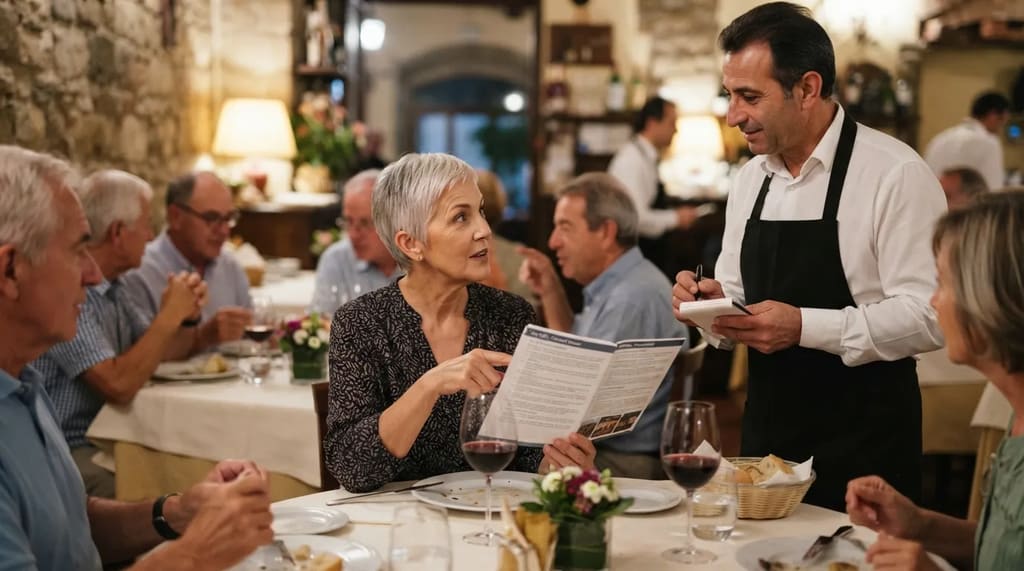
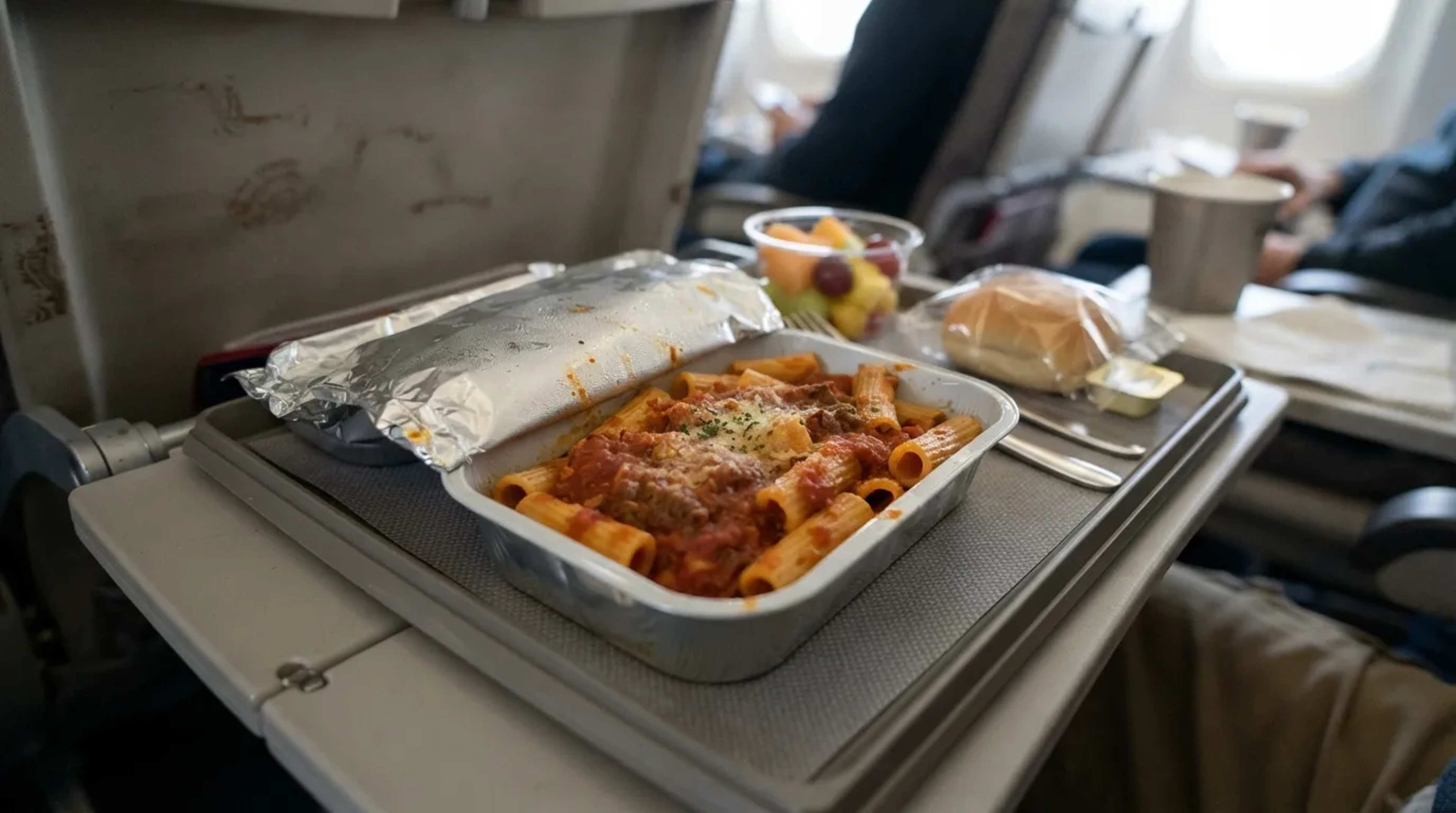
Read the itinerary line for your final evening before you order anything. On Go Ahead Tours’ Florence, Tuscany and Italian Riviera trip, day eight lists the farewell dinner among the included meals, served with beer or wine.2
Beer or wine is what the listing promises. It says nothing about a third glass or a cocktail.
Ask before you order which drinks are included and which aren’t. It takes ten seconds at the start of the meal.
That one question spares you from sorting out a receipt in front of a group you’ve just spent the whole trip getting along with. Nobody enjoys a surprise charge on the last night.
Once the bill is settled in your mind, the next decision is where to sit, and the usual choice is the weakest one.
#15 – A Seat Away From Your Usual Neighbors
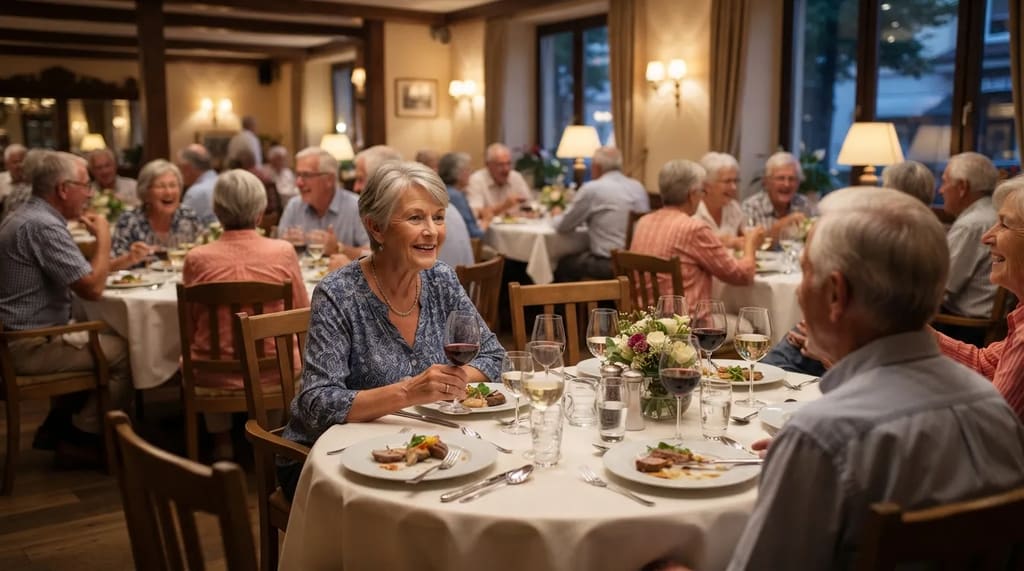
The farewell dinner is the last meal the whole group shares, so seating deserves one deliberate choice. A seat near the middle of a long table, or at a round one, lets you see most of the group.
Skip the chairs you’ve occupied all week beside the same two or three people. Take the seat beside someone whose story you haven’t heard yet.
You already know what your usual neighbors will say over dessert. The other end of the table is where the new conversations are, and a simple question about which stop they’ll remember longest gets one going faster than a comment on the food.
The task that spoils the evening for late packers can be finished before you’re even dressed for dinner.
#14 – Suitcase Closed Before You Dress for Dinner
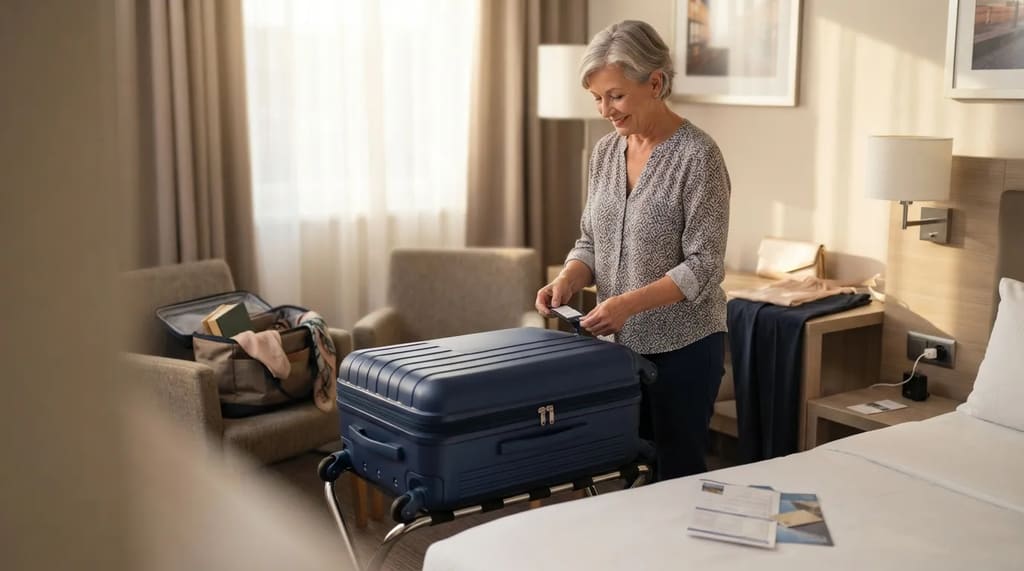
Many tours ask guests to leave luggage outside the room by a set time so porters can load the coach. That deadline can land before the breakfast room opens.
That’s why packing belongs to the afternoon, not the hour after dinner. The workable routine is to pack in the evening, keep a day bag separate, and let the morning be about setting one case outside the door.
A suitcase packed after a long meal is a suitcase with a charger still in the wall and a damp swimsuit on top. Packing while you’re fresh also leaves time to discover the zipper won’t close, which is easier to fix at five in the afternoon than at eleven at night.
Close the suitcase before you dress for dinner, leaving out only tomorrow’s clothes. Anything else that has to stay within reach goes into a separate bag.
At a Glance
- Afternoon: pack everything you won’t wear before the coach leaves
- Before dinner: close and tag the suitcase
- Set aside: tomorrow’s outfit, toiletries and the day bag
- Last in: the phone charger, packed after your final bedtime charge
What stays out of that suitcase matters more than what goes in, because some items can’t be replaced if a bag goes astray.
#13 – The Day Bag That Never Goes Under the Bus
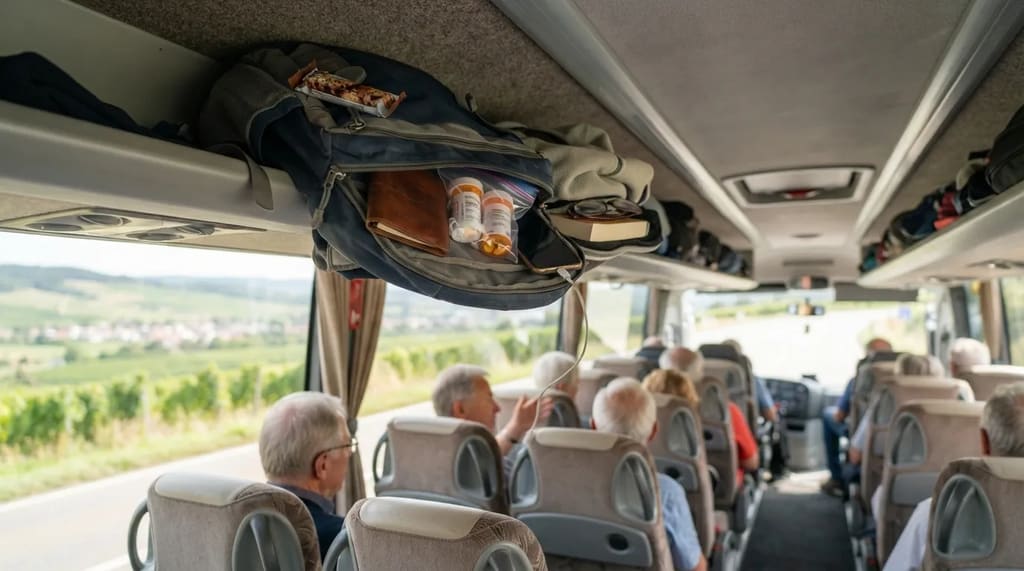
On a travel day, a suitcase that has been loaded is usually out of reach until evening. On the last day, add the airport check-in line, and the bag you can’t open becomes a bigger problem.
Checked bags can be delayed or lost, so keep every medication in the bag that stays with you.3 Pills and tablets aren’t covered by the TSA’s 3-1-1 liquids rule at all.4
- Medications, including any liquids you’ll declare at the checkpoint
- Passport, flight papers and the hotel’s name and address
- Glasses, phone and charger
- A light layer and a snack for the road
All your medications ride in the bag that stays with you. Liquid medications need to be declared to the TSA officer at the checkpoint.5
The day bag stays in your hand, while the suitcase has to find its way through a pile of look-alikes.
#12 – A Bright Ribbon and a Photo of the Tag
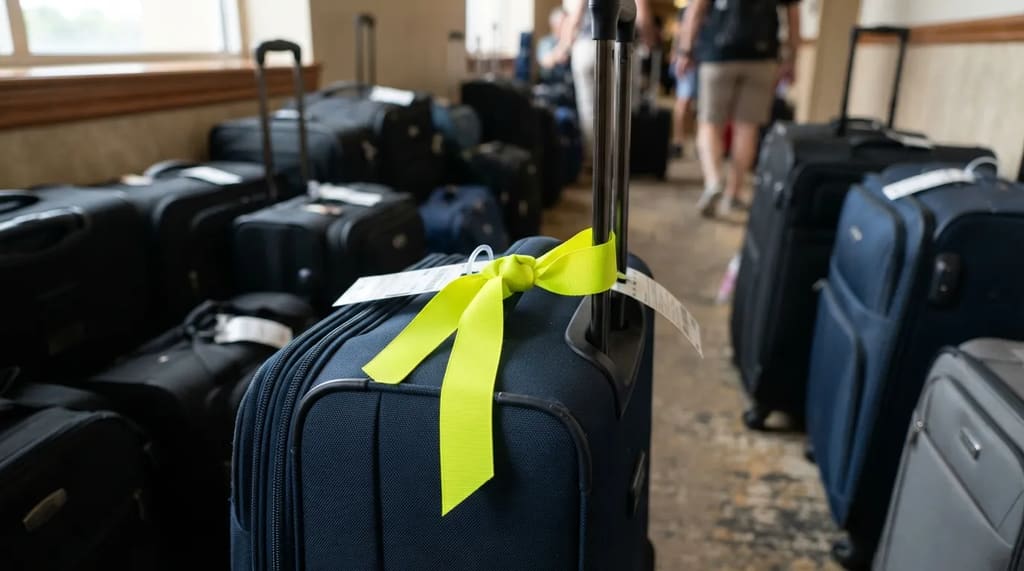
In a hallway or luggage bay full of dark suitcases, yours needs one feature the others don’t. A bright ribbon or strap on the handle is the quickest way for you, a porter or the tour manager to spot it.
Tour managers often count the group’s bags and check the tags the night before, then match the count again in the morning. A bag that’s easy to see makes that count faster, and a faster count means fewer minutes standing at the curb.
Tie on a bright ribbon, then photograph the bag with its tag attached. If the bag turns up late, the photo shows staff exactly what to look for, and it gives them the tag details without you digging through paperwork.
The bag is now easy to find, but it only makes the coach if you’re up in time, and that rests on a call you shouldn’t leave to chance.
#11 – The Wake-Up Call and the Breakfast Doors
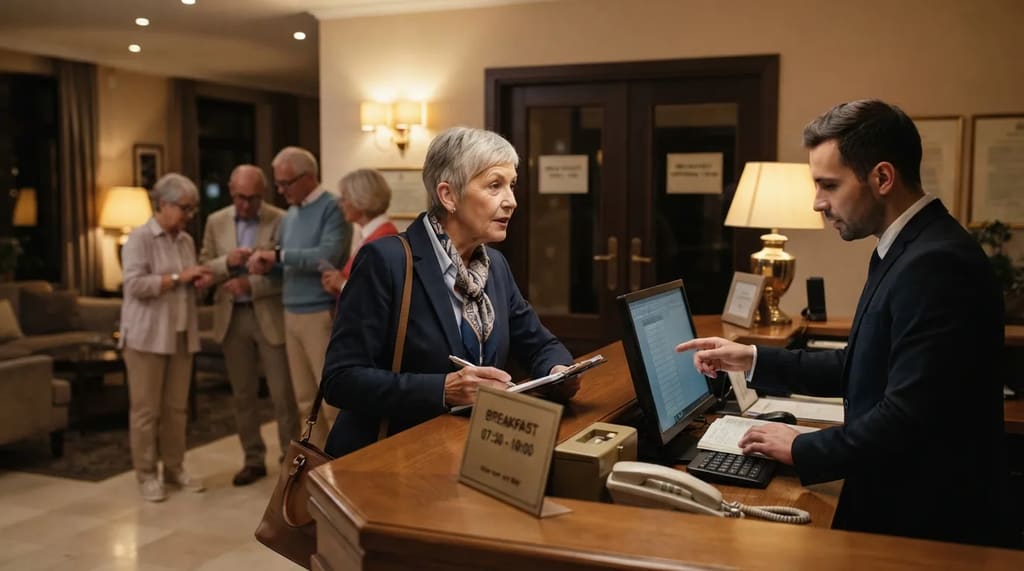
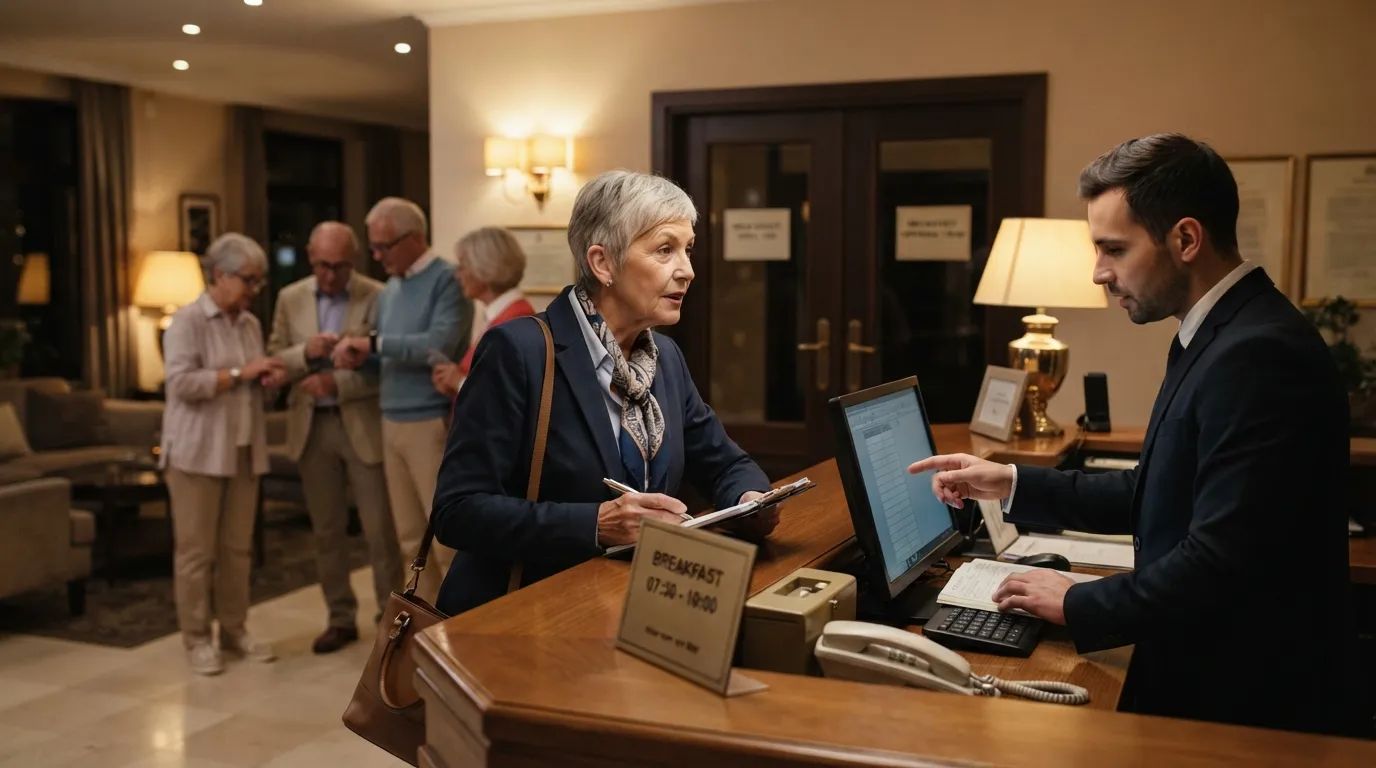
A wake-up call does nothing if the breakfast room opens after the coach is due to leave. Before bed, many tour managers confirm the group’s wake-up calls with the front desk and double-check the luggage-out time.
They also check that breakfast opens early enough for everyone to eat. You can do the same in under a minute at the desk.
Picture a breakfast room that opens at 7:30 for a 7:45 departure. That’s a morning spent gulping coffee, watching the clock and leaving hungry.
Confirm your wake-up call and the breakfast opening time on your way to dinner. If the hours don’t fit the departure, ask whether a packed breakfast is possible.
Your morning is now timed, which brings up the part of the evening that involves actual money, and it’s the part many people handle badly.
#10 – The Tip Envelope, Sealed Before Dinner
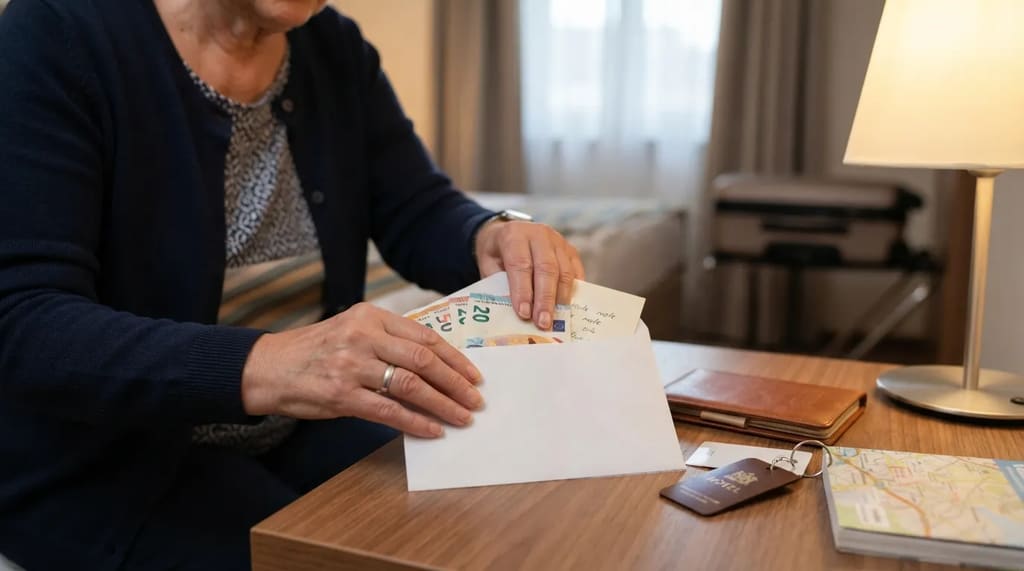
Collette says its tour price doesn’t include the customary end-of-trip gratuities for the tour manager, driver and local guides.1 That makes the tip a decision you make yourself, and the last evening is usually when it happens.
Ask the tour director how the group normally handles it. Some groups pool tips into one envelope, while others hand them over individually, and you’d rather learn which at lunch than at the dinner table.
Put the cash in an envelope in your room, with a short handwritten thank-you inside. Fumbling for bills in a restaurant is how people end up thanking someone less warmly than they meant to.
Decide the amount and seal the envelope before you leave your room. Ask what the company suggests, then adjust for the service you actually received.
The people who looked after you are covered, and the next stop on the checklist is the one the hotel runs without asking: your room bill.
#9 – The Room Statement, Checked Tonight
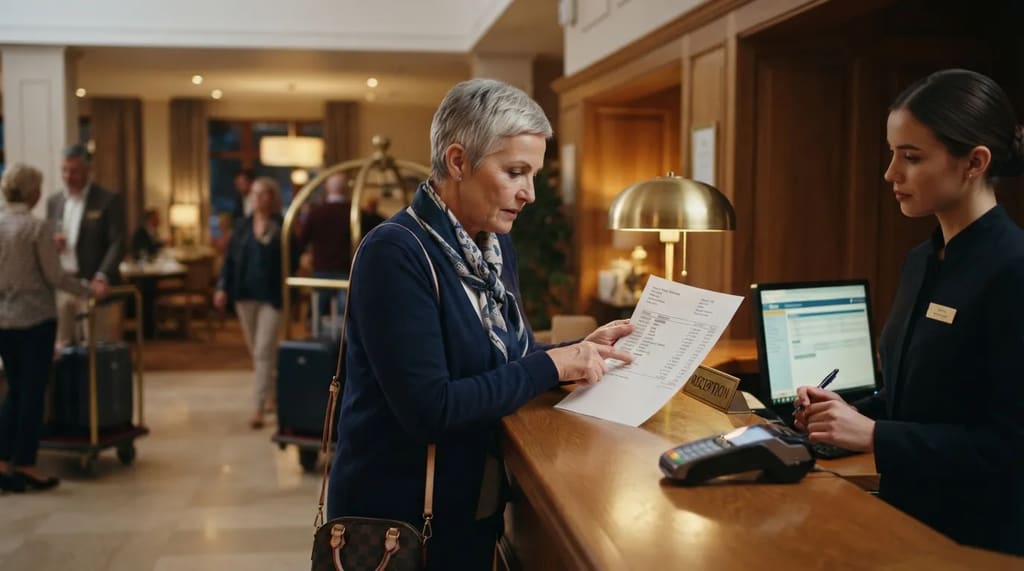
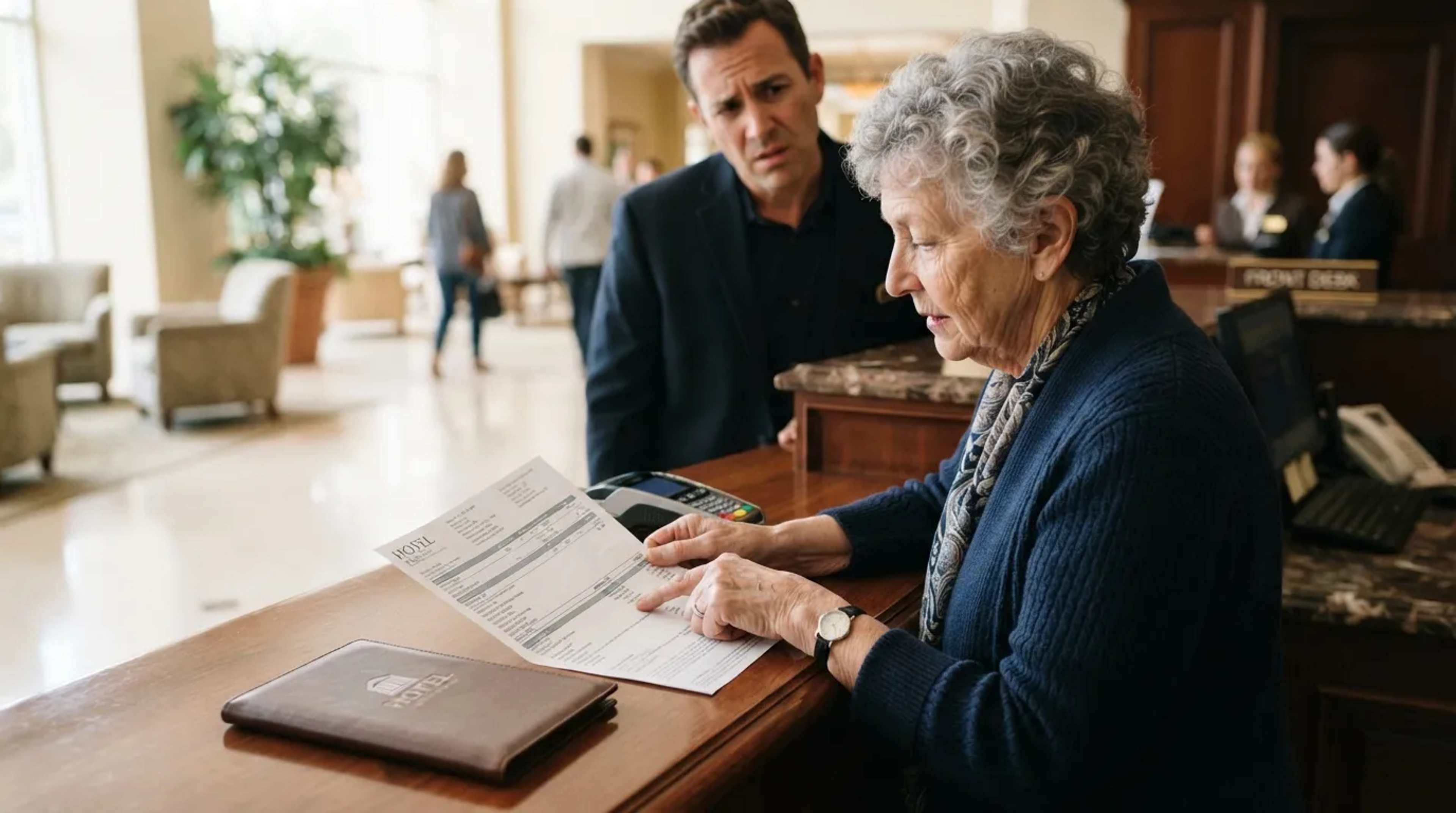
The tour covers your room, but anything charged to it on the side usually lands on you at checkout. A minibar snack, a laundry bag or a drink at the hotel bar all count.
A line at the front desk at six in the morning, with a coach waiting outside, is a bad time to question a charge. So the regulars settle it the evening before.
Stop at the desk on the way to dinner and ask for a printout of anything on your room. If something looks wrong, you’ll be talking to a rested clerk, not one facing thirty impatient guests.
Quick Compare
- Tonight: a calm clerk, time to dispute a charge, a printout in your hand
- At 6 a.m.: a crowded desk, a waiting coach, pressure to just pay and go
Ask for your room statement tonight and pay any extras before bed. The last morning then shrinks to handing in a key.
Money sorted, you can turn to paper that can’t be replaced at an airport counter.
#8 – Passport and Papers Laid Out Like a Flight Plan
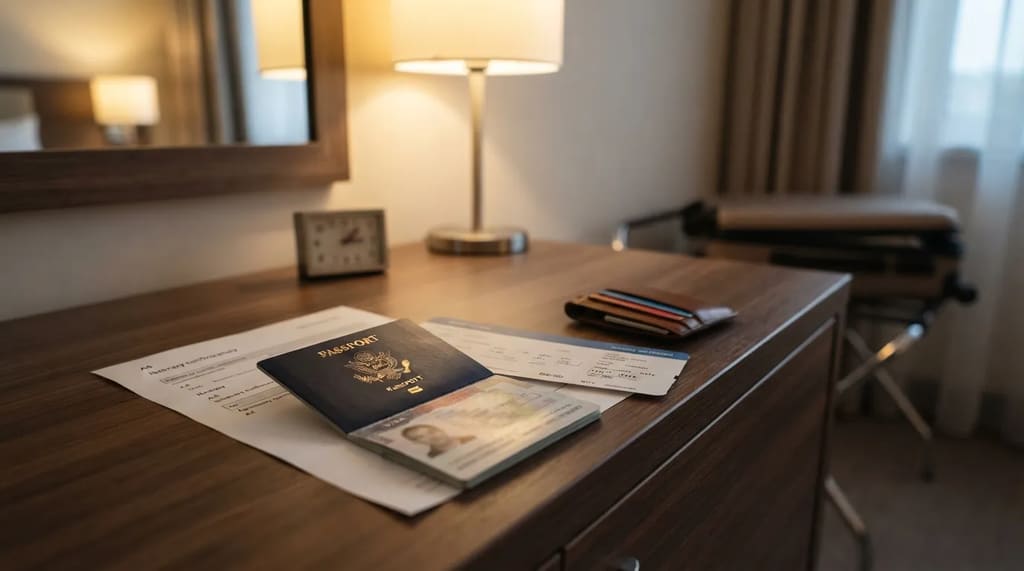
Passport, boarding pass and return documents go in one spot the night before. Regulars lay them on the dresser, not in the depths of a suitcase that’s already sitting in the hallway.
Many airlines open online check-in about a day before departure. If yours does, checking in tonight means you reach the airport with a boarding pass already on your phone or in your hand.
Compare the name on the boarding pass with the name on the passport. A mismatch is a small headache tonight and a big one at the gate.
Put every document in one place, then look at it once more before you sleep. It costs two minutes and removes a whole category of morning panic.
Everything you can’t afford to lose is now in one place, which makes the next job easier: sweeping the room.
#7 – Three Sweeps of the Hotel Room
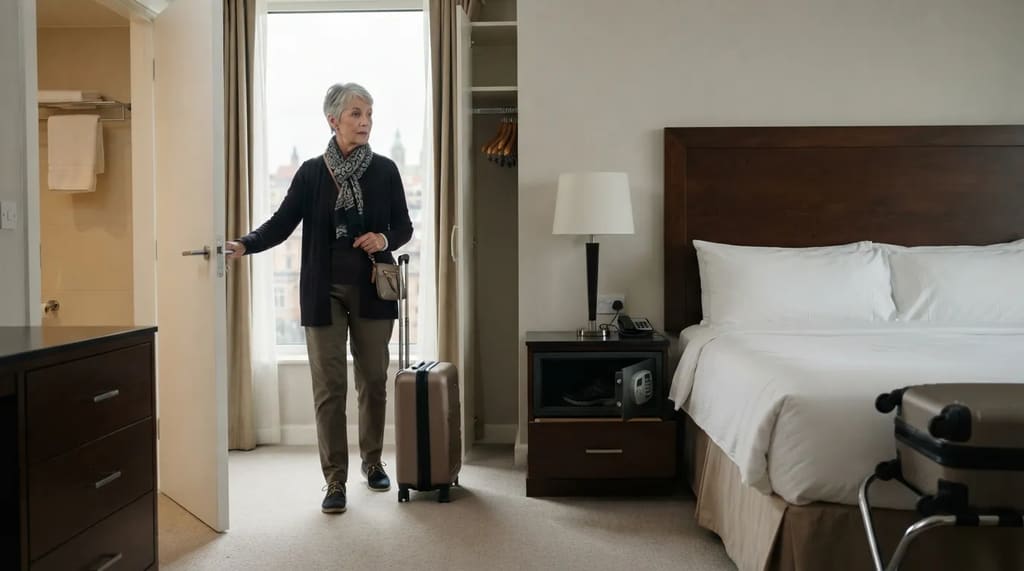
The usual suspects are the hotel safe, the bathroom hook and the charger in the outlet behind the bed. Regulars know these are the spots where things get left behind.
So they sweep three times: once at night, once before leaving, and a last look from the doorway. The doorway view catches what the first two missed.
Open the safe and check it even if you think it’s empty. Some travelers drop one shoe inside while it’s in use, so they can’t walk out without opening it.
Do one sweep tonight, one in the morning, and one last look from the doorway. Check the outlets, the drawers, the safe and under the bed.
The room is empty, but you’re about to face a long travel day, and what’s in your hands matters.
#6 – An Empty Water Bottle and a Snack in the Day Bag
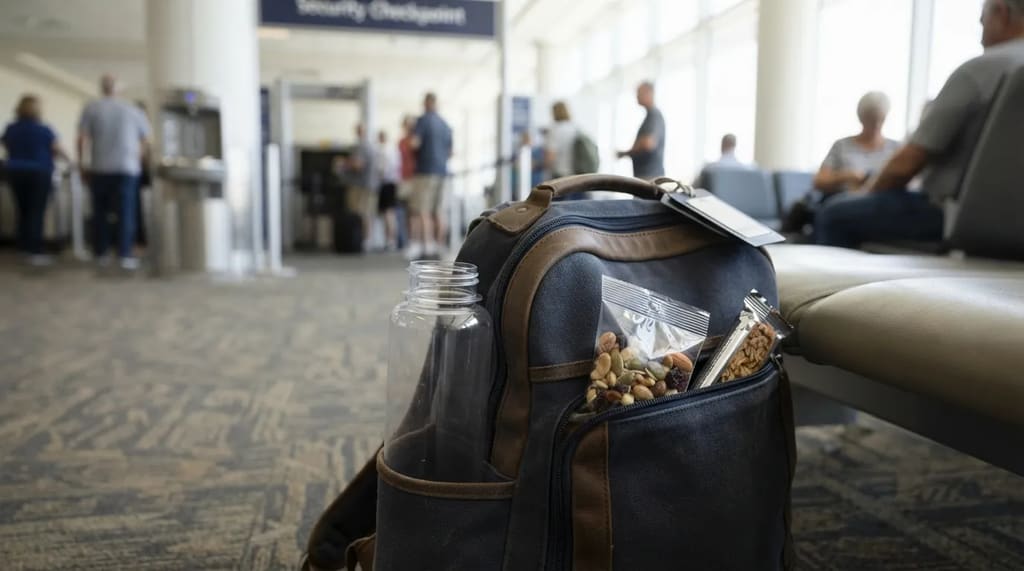
A long travel day can stretch past meal times, and airport food is rarely the best or cheapest. Regulars carry something to eat and something to drink from the start.
The TSA’s 3-1-1 rule limits liquids, gels and pastes in carry-ons, so a full water bottle won’t get through the checkpoint. Many travelers carry an empty one and fill it after security.
Solid snacks like crackers, nuts or a sandwich are generally fine in a carry-on. Tuck them in the day bag beside the medications.
Fast Facts
- 3: each liquid container in a carry-on is limited to 3.4 ounces (100 ml)6
- 1: all of those containers fit in one quart-size clear bag
- 1: each traveler is allowed one such bag6
- Empty bottles can go through the checkpoint, and you can fill them afterward
Pack an empty bottle and one snack in the day bag before bed. Then a delayed lunch is an inconvenience, not a crisis.
You’re fed, watered and packed, and now comes the moment that decides how the coach crew remembers your group: the goodbye to the driver.
#5 – A Thank-You to the Driver, by Name

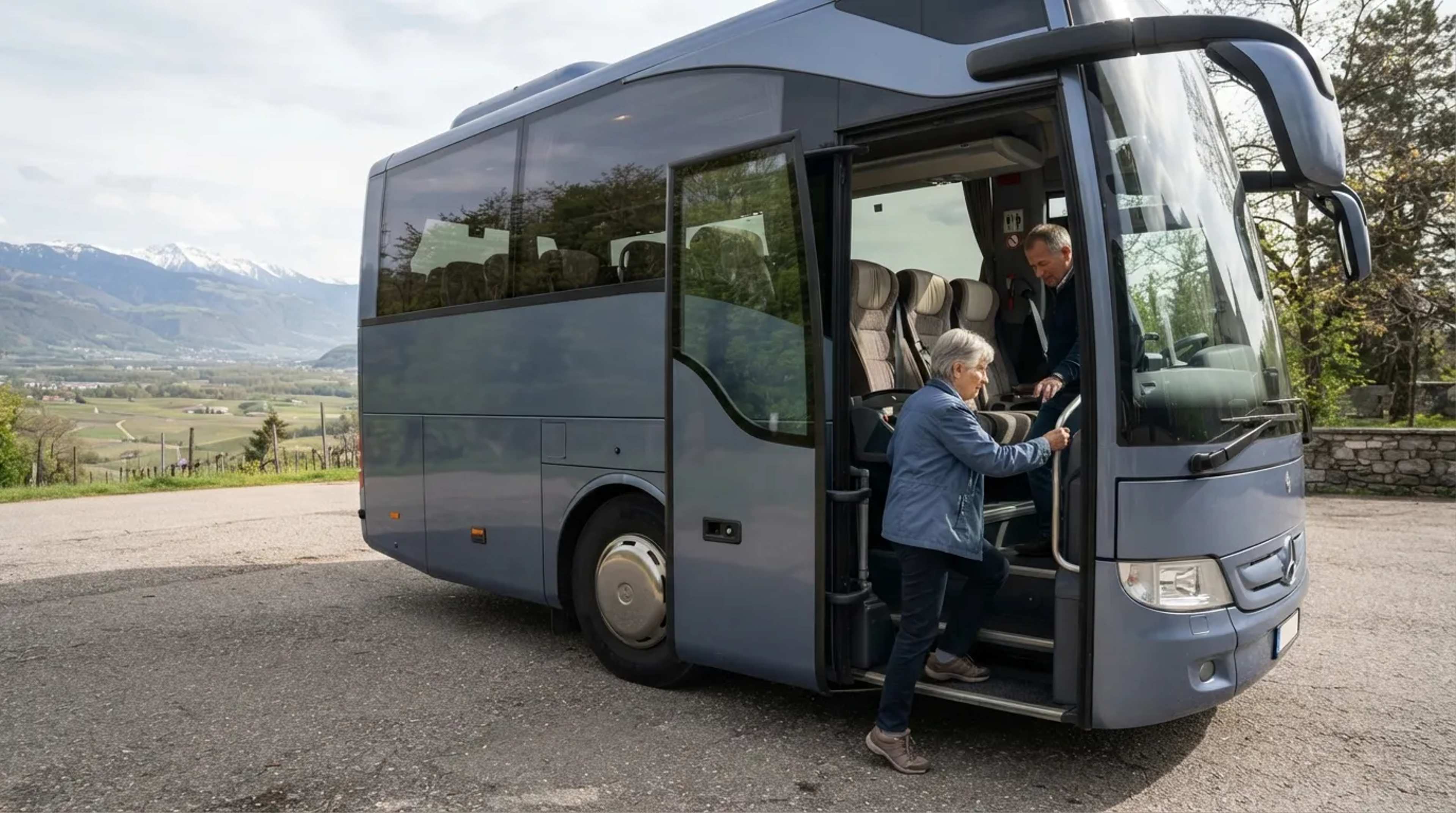
The driver is often the one person who’s been with the group from the first pickup to the last drop-off. Regulars make sure the thanks goes to that person by name, not just to the tour manager.
Collette lists the driver alongside the tour manager and local guides among those customary gratuities are meant for.1 That tells you the role is considered part of the service, not a footnote.
Catch them before boarding on the last morning. Mention something specific, like a tight village street or a smooth hill descent, because specific thanks lands better than a polite wave.
Learn the driver’s name early and use it in your goodbye. Thanks that names the person and the moment is the kind they remember.
Thanking staff is one habit, and the next is about the people who rode beside you.
#4 – One Moment Each, Around the Table

At some farewell dinners, someone suggests that everyone name one moment from the trip. If nobody starts it, a regular often will.
The answers are rarely what the brochure would predict. A favorite moment can be a market stall, a missed turn or a joke on the coach, not the famous landmark.
Quiet travelers who barely spoke all week often have the best answers. A go-round gives them a turn without making them compete for airtime.
Related Stories From Travelbinger


Worth Knowing
- Start with a small prompt, such as the best meal, the funniest wrong turn or the stop that surprised you
- Keep each answer to about 30 seconds so the whole table gets a turn
- Let anyone pass without comment
- Go first if the table is shy, and keep your own story short
Come to dinner with one specific moment ready to share. A small, honest detail beats a general “it was all wonderful.”
The stories are told, and before the group disperses, you’ll want something to remember them by.
#3 – The Group Photo Before the Dessert Plates Land

The best time for a group photo is early in the evening, before people get tired and start slipping out. Regulars suggest it before the main course arrives.
Ask restaurant staff or the driver to take it, so the tour director isn’t stuck behind the lens. Take a few frames on one phone, then repeat on another so everyone has a copy.
The picture you’ll treasure is rarely the posed one. The second or third shot, when the group is laughing at someone’s joke, is usually the keeper.
Ask for the group photo early, and take it on more than one phone. Then collect everyone’s email so the pictures can be shared.
The photo captures the group, but the last night also holds a quieter job that’s easy to miss.
#2 – The Quiet Offer to the Person Traveling Alone
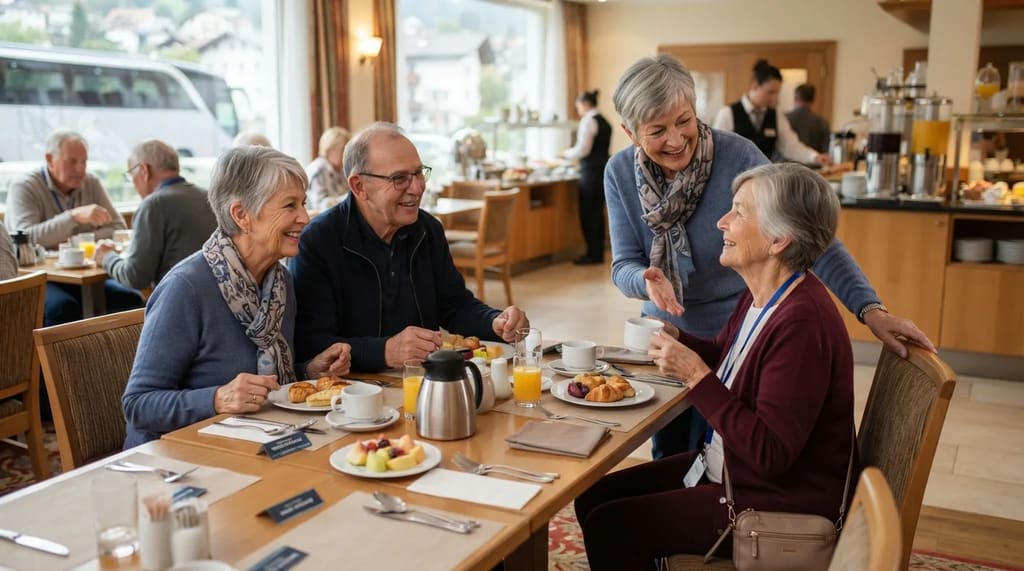
For a solo traveler, the last evening can feel like a cliff edge. After days of constant company, the next stop is a flight home and an empty seat beside them.
Regulars notice this and make a small offer. It might be “Come sit with us at breakfast” or “Want to walk to the coach together?”
If your flights leave around the same time, ask the tour director whether you can share the airport transfer. It’s a practical favor that also keeps someone from facing the departure hall alone.
Invite one person who’s traveling alone to join you for the last breakfast. It costs a few minutes and can be the warmest moment of their trip’s end.
That kindness is memorable, but the last item on the list is the one that makes every other moment last past the airport.
#1 – The Contact Swap Before the Group Scatters
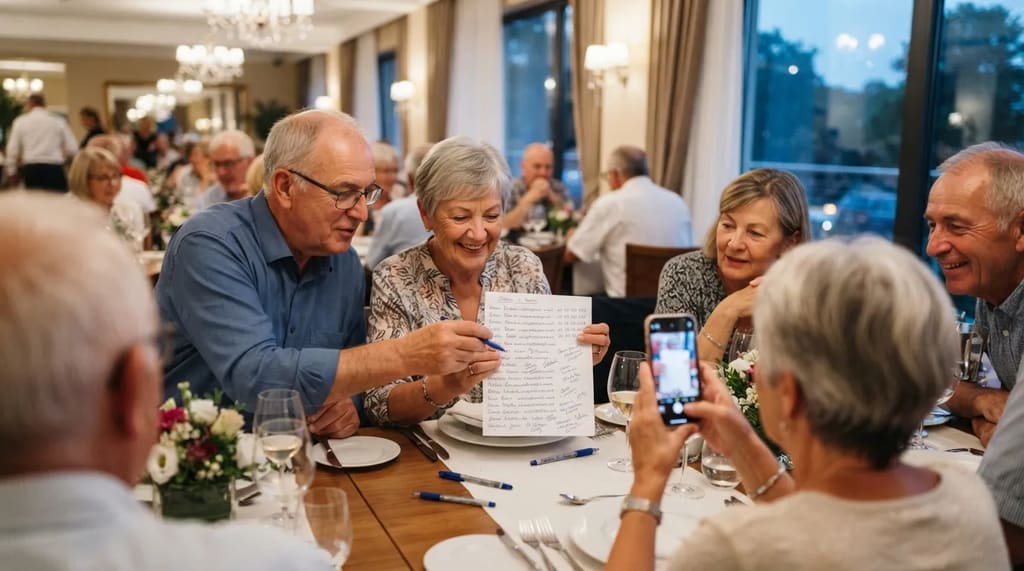
Don’t count on the tour company to hand out a guest list, since companies often protect guests’ contact details. If you want to stay in touch, the exchange has to happen before the coach pulls away.
The regulars handle it simply. They pass around a sheet of paper at dinner, or they offer index cards, and everyone writes a name and an email or phone number.
One person photographs the sheet and sends it to the group that night. That way no one has to chase numbers across three time zones.
Pass around a sheet at dinner, and send the group photo to everyone within a week. A picture and a short note are enough to keep the thread alive.
It’s the one habit here that costs nothing, and it decides whether the friendships end at the airport or carry on. The trip is over when the coach leaves, but the people don’t have to be.
None of these habits is dramatic. Each one takes a few minutes, and together they turn a frantic last night into a calm one.
The dinner ends, the coach pulls away and the flight home begins. What you carry out of it is a bag that arrived, a driver who knew he was appreciated, and a few phone numbers that make the next hello possible.
- Collette Terms & Conditions: https://www.gocollette.com/en/about-collette/terms-and-conditions?__hstc=52142454.82af9c9a98fa600b1bb630f9cde2cb5f.1511136000056.1511136000057.1511136000058&__hssc=52142454.1.1511136000059&__hsfp=528229161
- Go Ahead Florence Tuscany Itinerary: https://www.goaheadtours.com/guided-tours/florence-tuscany-the-italian-riviera
- Travelers Guard Medication Packing: https://www.travelguard.com/travel-resources/travel-tips/how-to-pack-medication-for-airport-security
- CarrySizer Medication Carry-On Rules: https://carrysizer.com/guides/medication-carry-on-rules/
- TSA Liquid Medications: https://www.tsa.gov/travel/security-screening/whatcanibring/items/medications-liquid
- Away TSA Liquid Rules: https://www.awaytravel.com/blogs/the-away-pages/tsa-liquid-rules