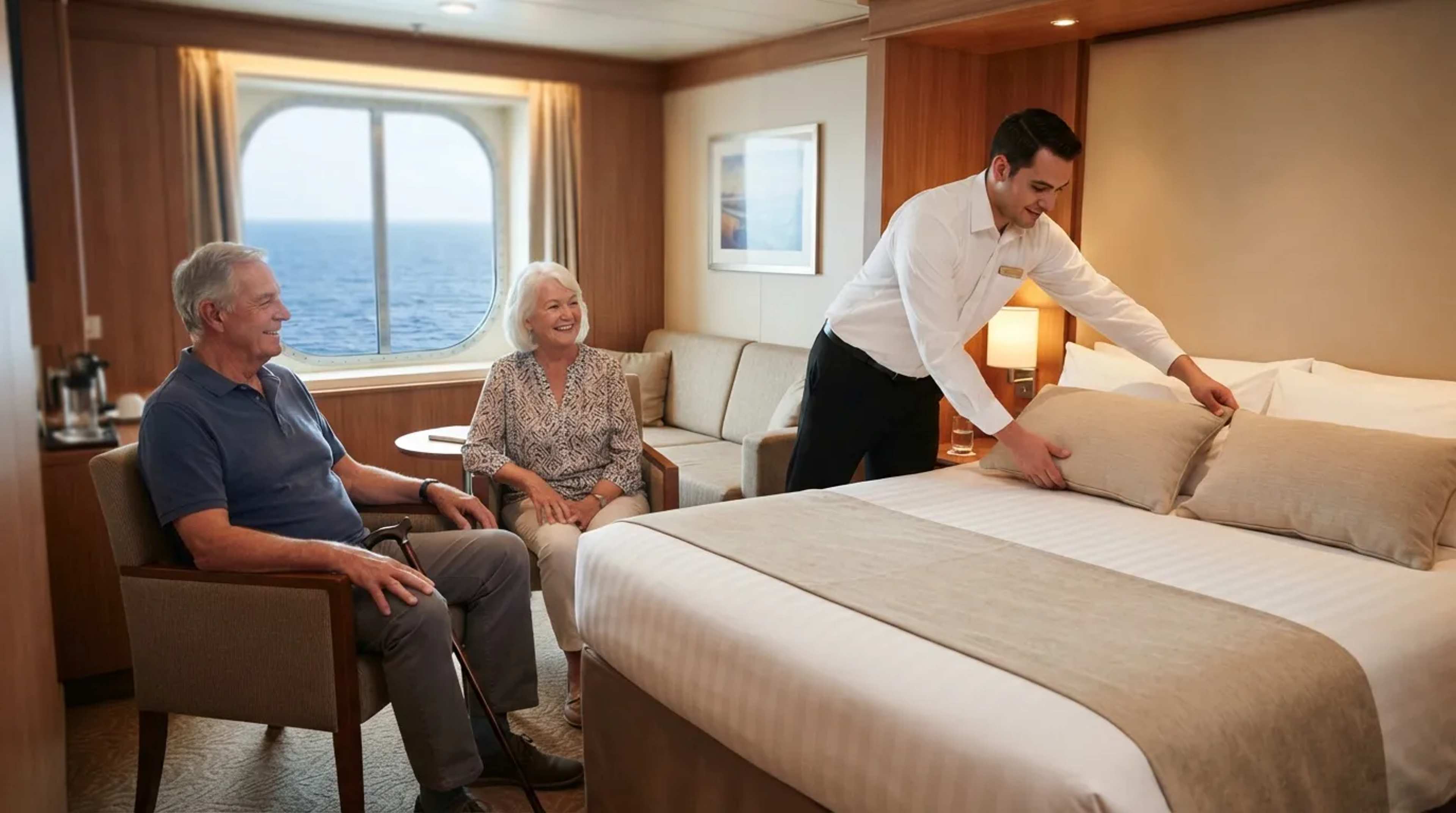
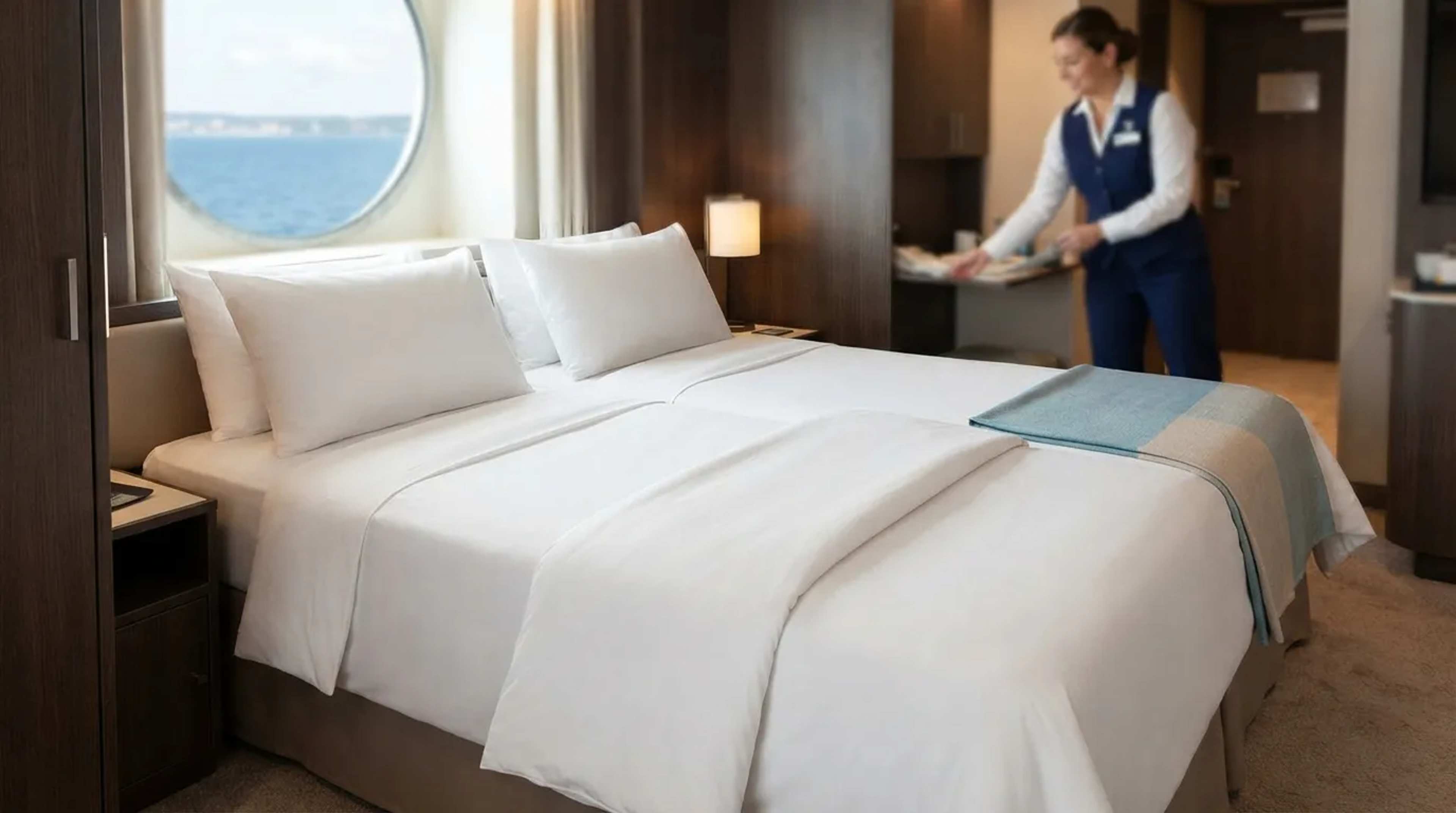
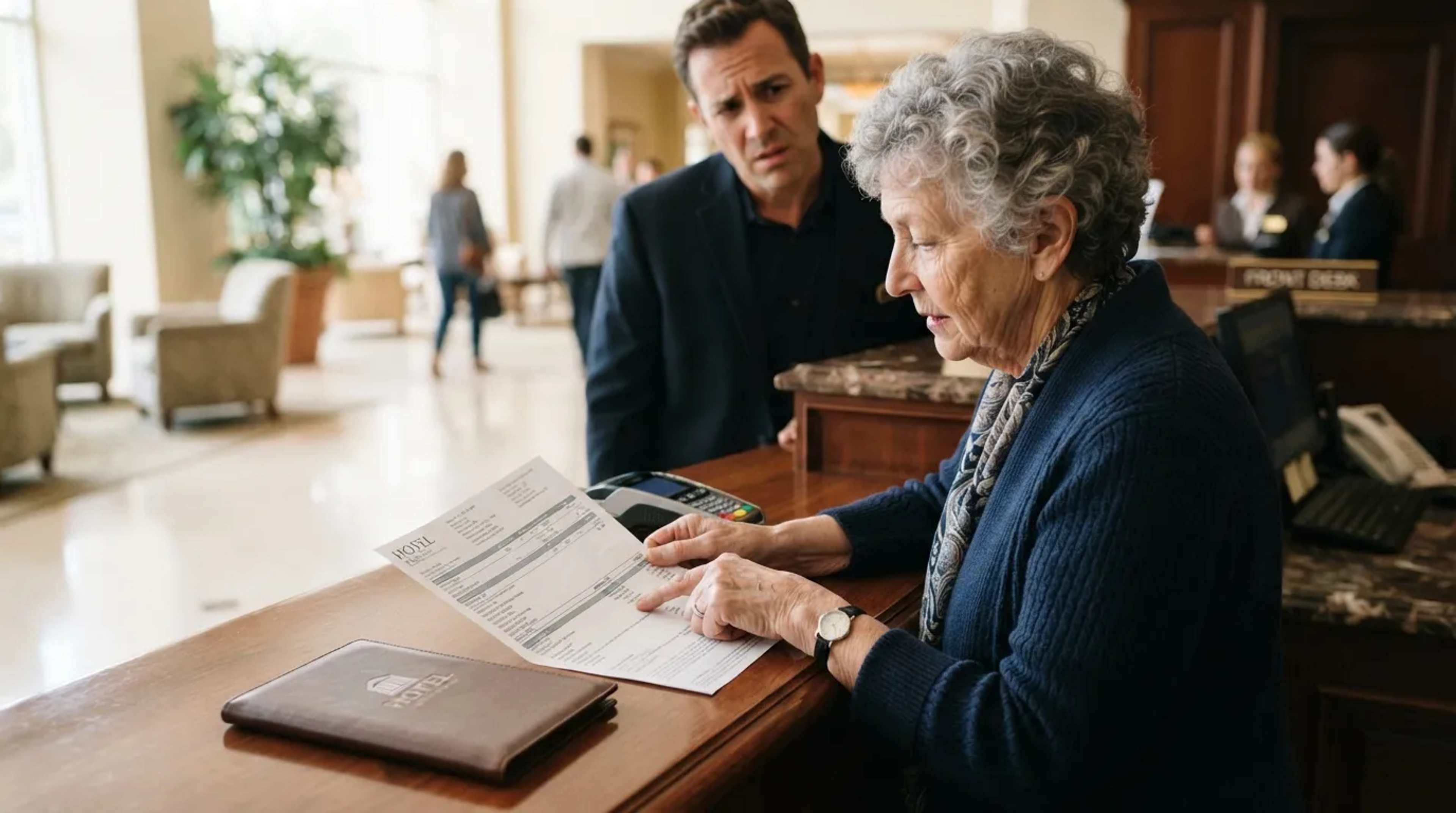
A note left on a pillow once is a courtesy. The same note left every morning for a week is a message, and a cabin steward reads it that way by about day three.
In many hotels and on some ships, a message that never changes gets treated as information. For guests over 65, that information is often a request nobody has filled.
Royal Caribbean, for one, asks guests to send its Guest Special Needs Form at the time of booking but no later than 30 days prior to sailing.1 That is long before anyone writes a first note to a cabin steward.
A note repeated all week is either a standing instruction the steward can follow or a request that never got answered. The difference costs sleep, comfort and sometimes safety.
The cheapest item in this piece, a line on a notepad, is tied to the one with the longest lead time. The simplest note of all, a thank-you, comes first.
#15 – The Thank-You Line Left on the Pillow
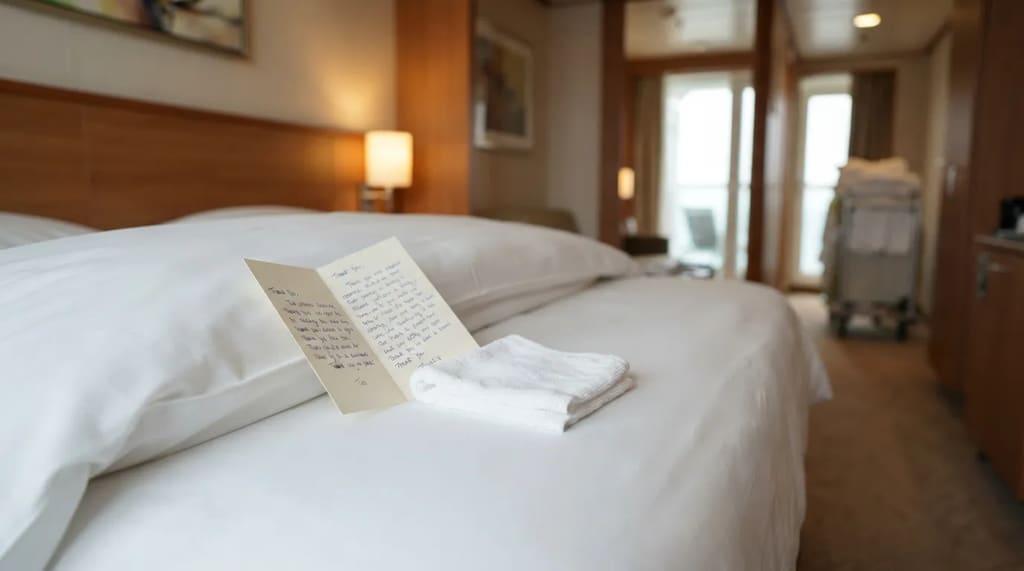
A handwritten card gives a steward something an online score does not, because the card can be kept long after the cruise ends. Left once, it is a small kindness.
Left every morning, the same friendly line still works as a courtesy, and for most of a week that is all it will do. Nothing in a thank-you tells the steward what to change tomorrow.
A specific request is easier to act on than general goodwill. A steward can bring a towel, swap a pillow or come at a different hour, but a vague line about wanting things nicer gives them nothing to do.
Add one concrete sentence to the thank-you and the note starts to earn its place. The easiest concrete sentence to add is the hour you want the cabin serviced.
#14 – The Hour You Want the Cabin Serviced
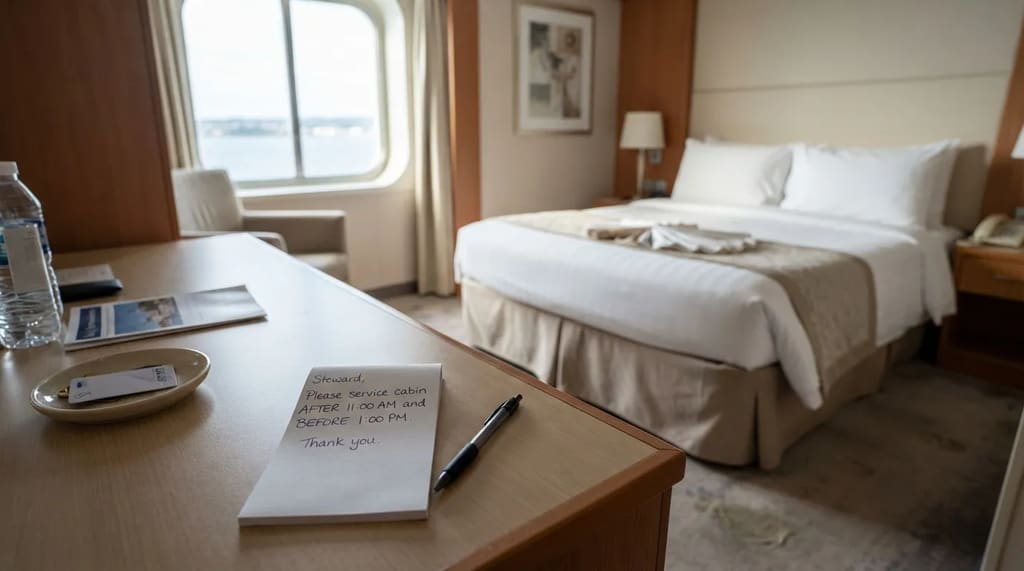
Your cabin does not have to be cleaned on the ship’s default timing, and you can tell your steward when you want it serviced. That makes the service hour the cheapest request in this article, since it asks the line to buy nothing and move nothing.
One practical version is to tell your steward your nap window on day one and ask them to service the cabin around it. Then nobody has to guess whether a quiet cabin means rest or an empty room.
Write the time as a range, such as after 11 and before 1, instead of the word “later.” A range gives whoever covers your section on a given morning the same instruction.
If you want service skipped on certain days, name those days in the same note. A note that spells out its own hours is one a steward can follow without knocking to ask.
A well-timed visit still leaves the bed itself, and the pillows on it.
#13 – Pillows Firmer, Softer or Extra
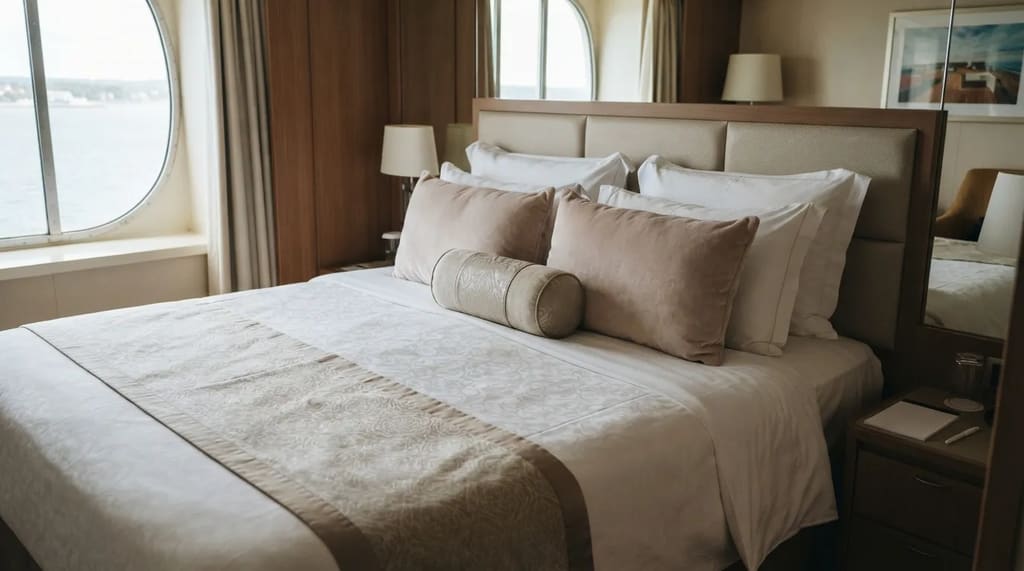
Cruise Critic advises that if your pillow is too flat, firm or soft, it is always worth asking your steward about alternatives. Timing matters more than wording, because a request on the first afternoon comes before the first night in the bed rather than after three bad ones.
A note saying the pillow is too flat, repeated on day two, day three and day four, tells the steward a problem exists but not which fix you want. The steward is left guessing at your neck, your back and your side of the bed.
Name the fix: firmer, softer or one more. What you get depends on the ship and the line, and nothing is guaranteed, so treat the first request as a question rather than a demand.
#12 – Extra Blankets for the Cold Cabin
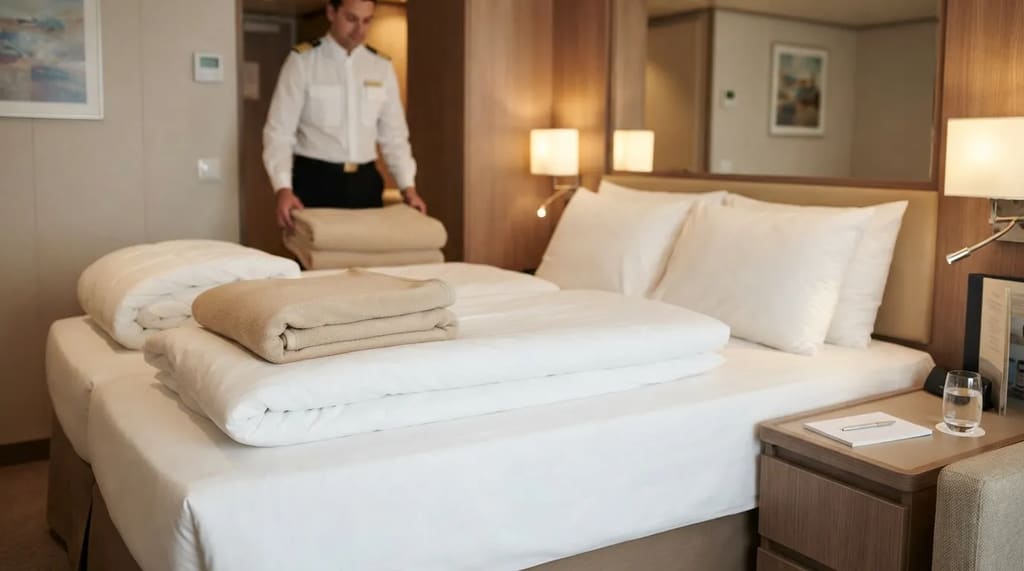
Air conditioning runs around the clock on a ship, and you may have little say over it. What you can control is what is on the bed.
A steward can simply bring more bedding, and extra blankets are among the easiest things to add. If the ship has a warmer comforter, ask for that.
At a Glance
- Extra blankets: among the easiest items for a steward to add
- Warmer comforter: worth asking for if the ship has one
- Pillow swap: fits into the same visit
- Towels: the natural moment to bundle every small ask
Make the requests on one visit so your steward handles it all at once. That spares you a second note.
Because these items cost the line almost nothing, they are a good first test of how your steward responds. If the answer is quick and friendly, you can be more confident about the heavier requests further down this list.
#11 – A Mattress Topper Requested in Writing
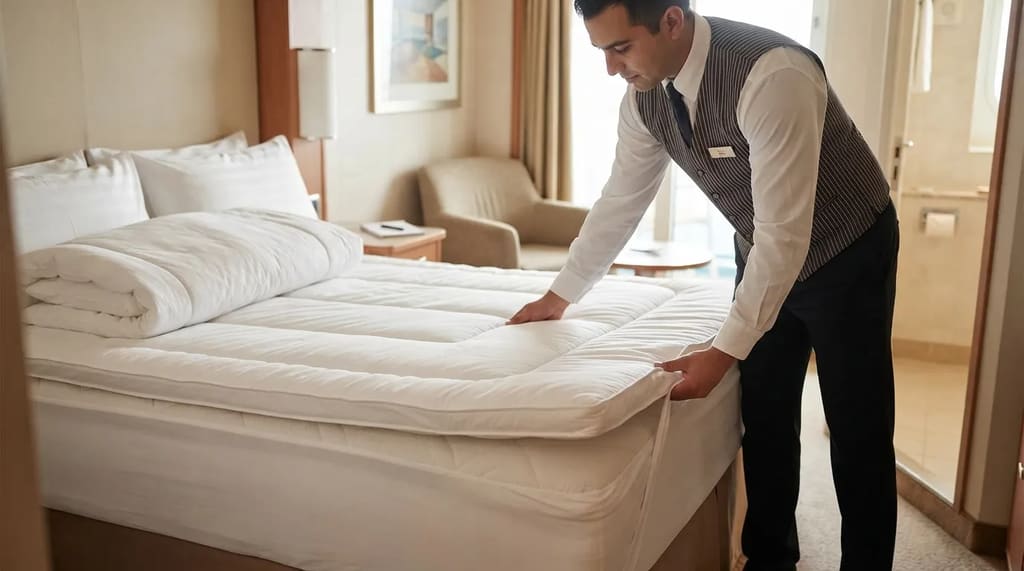
A reply from Royal Caribbean‘s Access Department, posted on a cruise blog, offered a two-inch microfiber pillow top at no additional cost for back conditions, placed in the stateroom on sailing day. That was one guest’s reply, and what a line offers varies by ship and cabin.
It still shows what a written request can produce. The advice that goes with it is to request a topper in writing before you sail.
A topper takes more arranging than a pillow, so a note slipped under the door after the first bad night is the slowest route to one. If back trouble is the reason you want it, send the request ahead.
A steward who finds the same complaint on day four may sympathize, but cannot always produce something that was never arranged. Do not count on a morning note alone.
Sleep is settled by a topper, while falls are the bathroom’s problem, and that list is different.
#10 – Shower Stool and Raised Toilet Seat
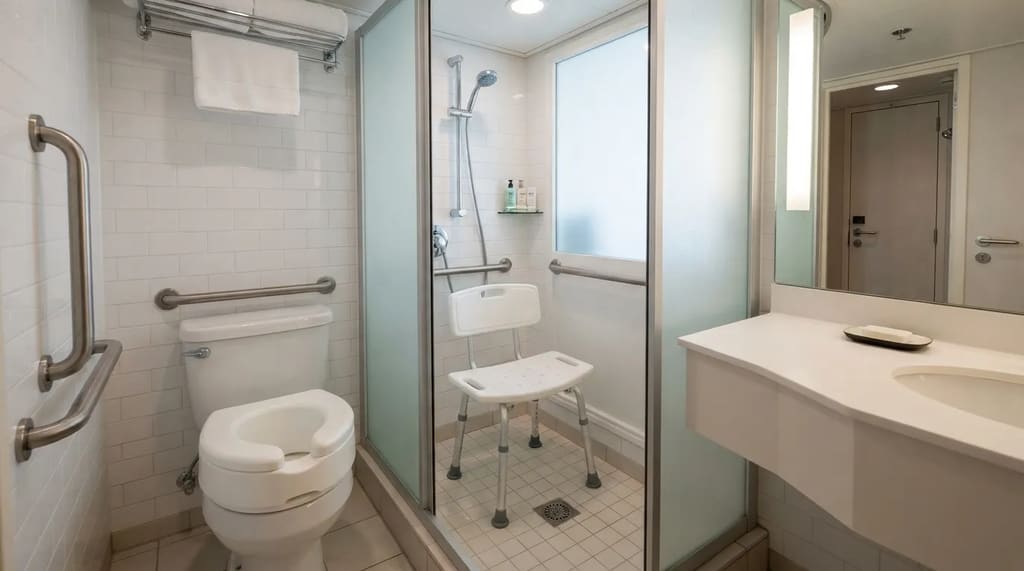
You can request a raised toilet seat or a shower stool for your cabin bathroom. Both are available on most cruise lines, but typically on a first-come, first-served basis.2
That detail matters for anyone planning to write a note after settling in. If you know you will need either one, request it before your cruise, not when you arrive.
Fast Facts
- Items: a shower stool and a raised toilet seat
- Availability: most cruise lines, typically first-come, first-served
- Easier on some lines: Princess lets you request these items in its app for any stateroom
- Best timing: before the cruise, not at the cabin door
Put this request ahead of every comfort item above. Falls are a real risk on wet decks, in bathrooms and on gangways, and a poor night’s sleep can be made up while a fall in the shower cannot.
Stools and seats do not put a bar within reach, which depends on the cabin you book.
#9 – Grab Bars and the Accessible Cabin
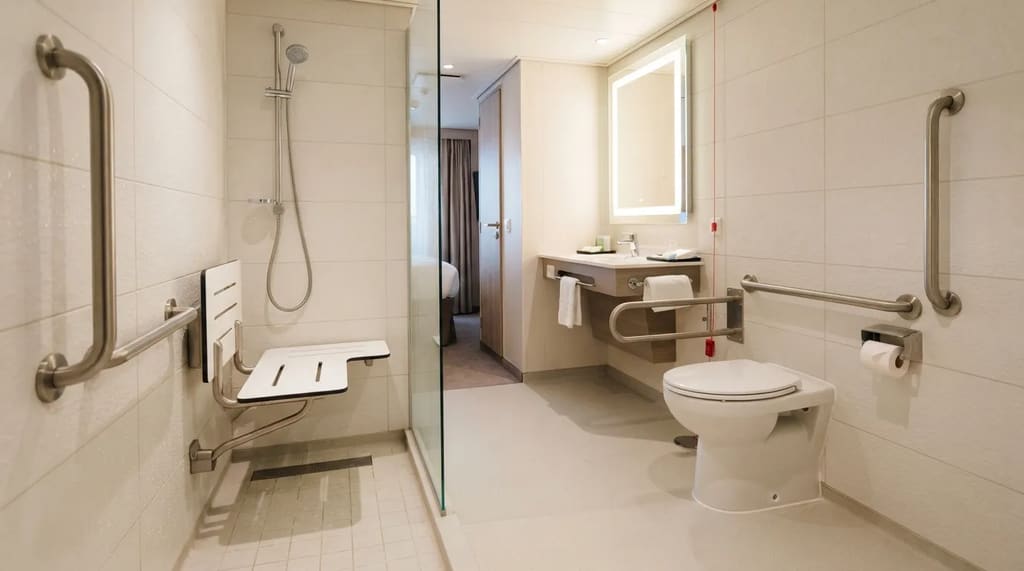
If you use a cane or walker, ask for an ambulatory accessible cabin. It is another box on the same request form as the shower chair.
Make the request at booking, not afterward. Wider doorways, more open floor space, bathroom bars and roll-in showers can all be requested, but they differ from one cabin type to another, so ask for the door width before you pay.
Not everyone needs the wide door. If you can walk but slowly, a standard cabin near the elevators with a shower stool serves you well, and it leaves the wide door for someone who needs it.
That beats booking an accessible cabin as a precaution, because accessible staterooms are only a small share of a ship’s cabins (2 to 4 percent on most ships, by one guide’s estimate).
Booking the cabin settles the bathroom, though the walker still has to spend the night somewhere.
#8 – Where the Walker Spends the Night
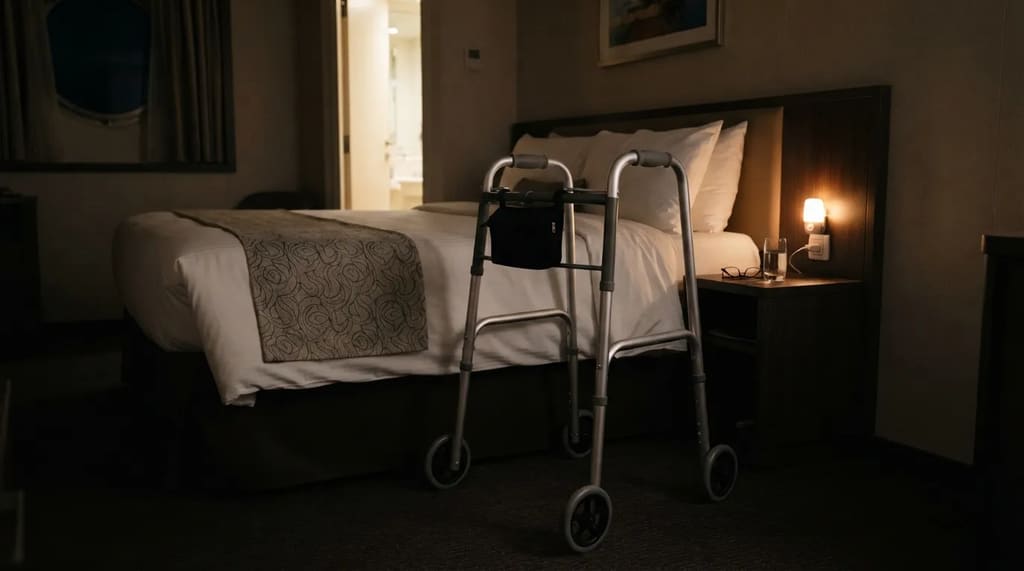
Mobility devices must stay inside your cabin overnight, never in the hall. A cabin is small, so tell your steward where the walker should stand when the bed is turned down.
Placed where you can reach it from the bed, it saves you steps in the dark. Cabins, especially on older ships, get extremely dark, which is a good reason to bring a small night-light for the path from bed to bathroom.
Worth Knowing
- Overnight rule: the device stays inside the cabin, not in the corridor
- Manual chairs, power chairs and scooters may each get a different answer
- Power chair: confirm its dimensions with the line before you sail, not at the gangway
Tell the steward once and the spot can become routine. A note rewritten every morning about the same walker only suggests the first one did not stick.
#7 – A Sharps Container for Insulin Needles
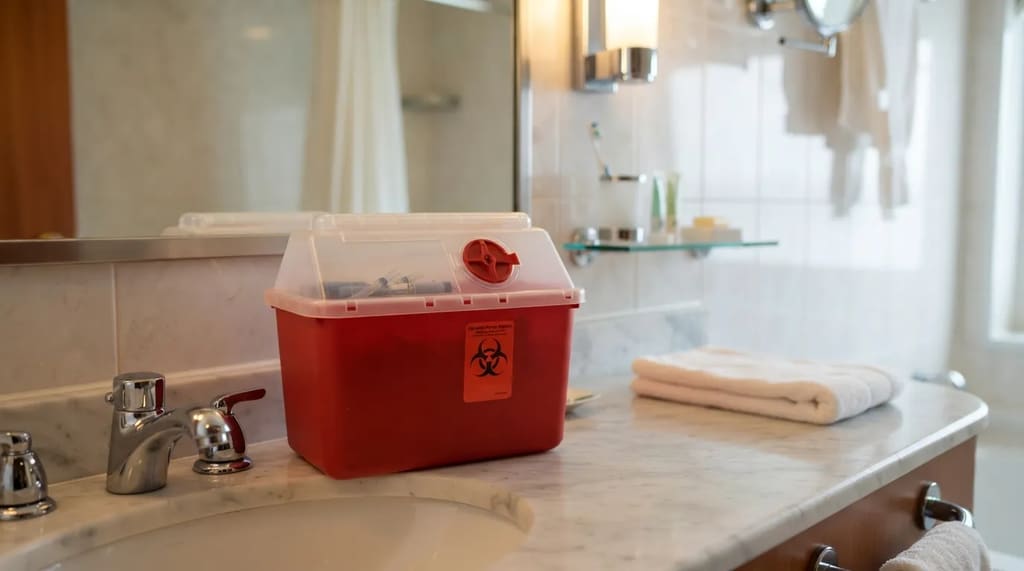
Used needles do not belong in a cabin wastebasket, because the staff who empty it should never have to handle them. Request a sharps container before you sail.
If you forget, you can request one from your housekeeping steward once on board. Staff cannot guess a medical need from the state of a cabin, so say it plainly.
When you ask, name the item and say how many days of injections it needs to cover. Put your cabin number on any written request so it reaches the right door.
A container that is already in the bathroom on the first night is better than a note left on day three, once a week of used needles has begun to pile up.
#6 – CPAP Cord and Distilled Water
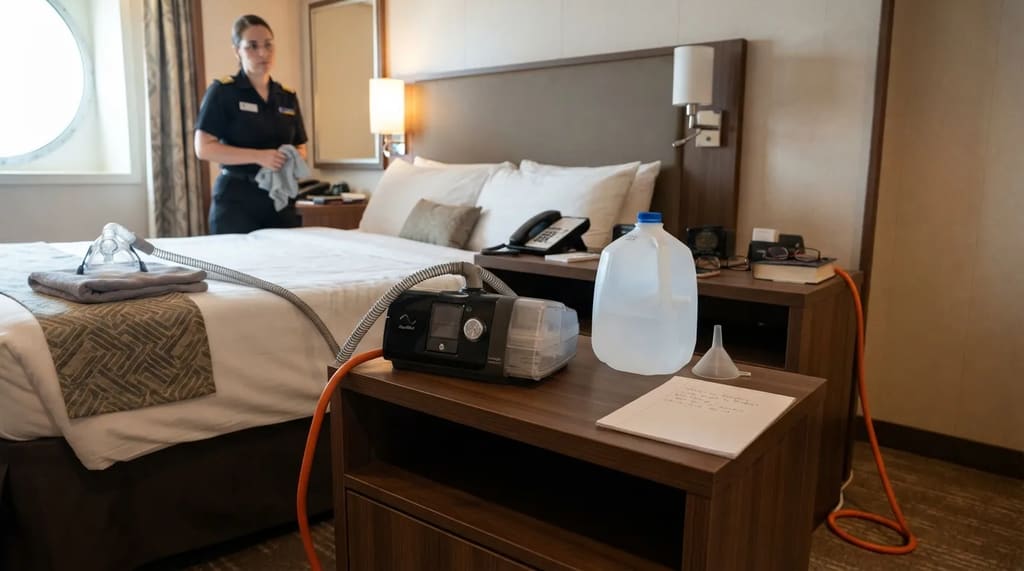
If you use a CPAP machine, you can request an extension cord and distilled water to be brought to your cabin. Instead of bringing a cord of your own, arrange a medical-use extension cord through your cruise line, since Royal Caribbean has approved cords available on request.2
- Cord: ask the line for an approved medical-use cord.
- Water: notify the line through its special-needs form, ideally 30 days before sailing, which also gets distilled water ready in your cabin.
- Fallback: distilled water is sold pre-cruise or from Room Service on board.
If you are writing the same line about water every morning, the arrangement was never made, and the form is the fix. To a steward, a nightly note about water reads as a gap, not a preference.
Power is only one of the cabin’s limits, and the refrigerator is another.
#5 – The Cabin Fridge That Works Like a Cooler
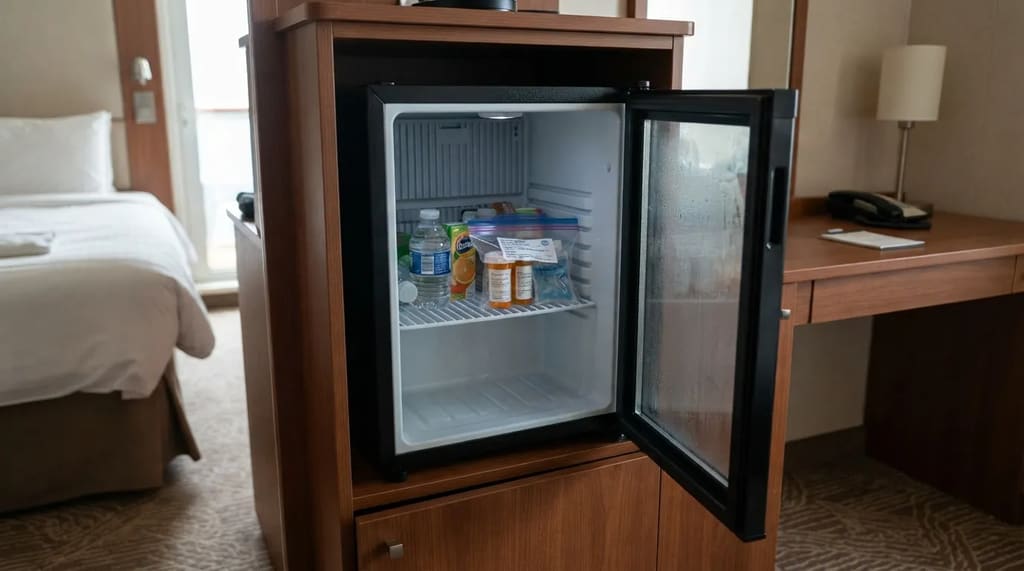
The standard mini fridge in a cabin functions more like a cooler and typically is not suitable for temperature-sensitive medication. Typically only balcony, mini suite or suite cabins have one in the room, so an inside cabin may have none at all.
There are two workable routes. A refrigerator for medication can be requested, or the medical team can store your medications for you, and the ship’s Medical Center can store temperature-sensitive medications if cabin arrangements fall through.
Whichever you choose, state the medication type and the temperature range it needs. Put it on the special-needs form, not at the cabin door.
That is the same form that covers the CPAP cord. Of everything a morning note might carry, this is the item least suited to one.
A steward can fix a flat pillow in an afternoon, but cannot fix medicine that has been kept warm.
Even a correct fridge arrangement fails if the medicine itself is in a suitcase that has not reached the cabin.
#4 – Pill Bottles Packed in the Wrong Bag
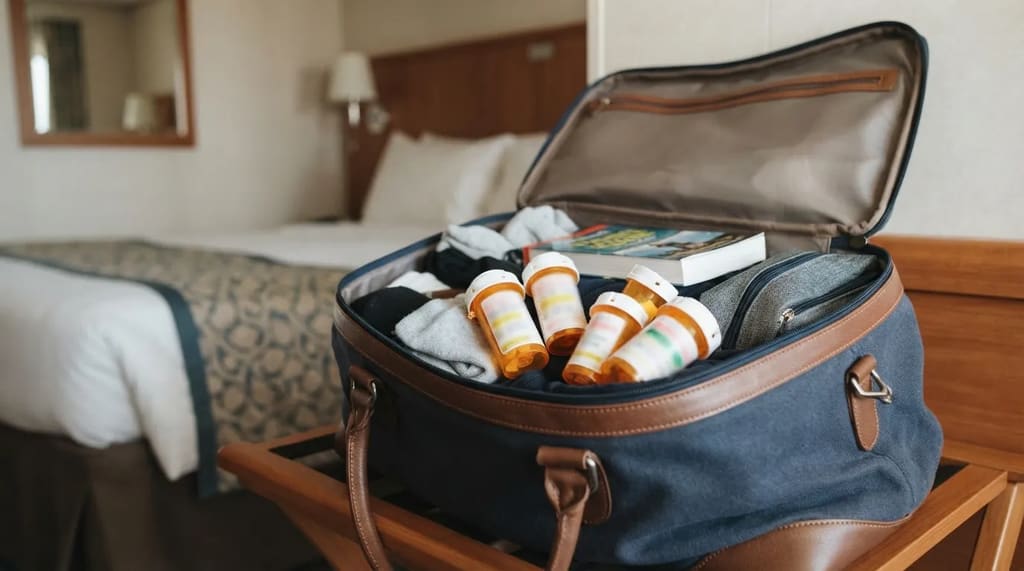
A suitcase that reaches the cabin hours after you board is a poor place for a morning dose to be waiting. Luggage is delivered after boarding, so the safe place for daily medication is the bag you carry yourself.
The cost of getting this wrong is practical.
Fast Facts
- Where: the bag you carry yourself, not the checked suitcase
- How: labeled original bottles, with a few extra days’ supply in case a return is delayed
- Coverage: Medicare drug plans do not pay for drugs bought outside the U.S.3
- Check: your own plan’s terms if you rely on a supplemental policy
A bottle that goes missing on a foreign port day is a replacement bill you cover yourself. No note to a steward brings it back, but a written card can gather all your other requests into one visit.
#3 – The One-Page Card for Day One
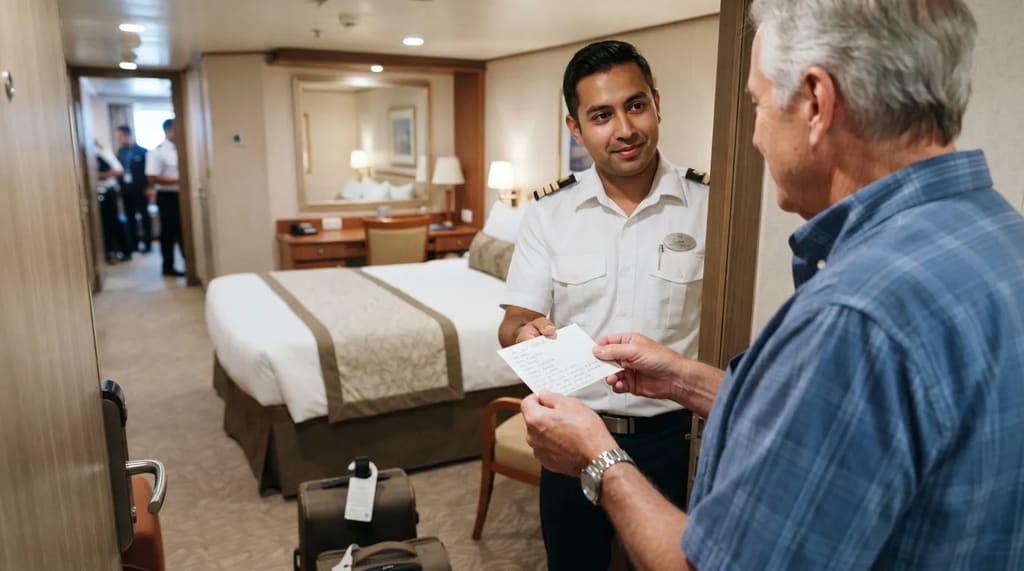
Hand your steward a short list on day one: your cabin number, each item and anything that must be in the room by bedtime. Note the steward’s name so you can go straight back to them if something is missing.
This card does the job that seven identical morning notes cannot, because it is complete on the first day. It hands the steward the whole task at once.
It also fits the timing of everything above. Make your requests twice, once before you sail and once in person, because a request made only at the door can get lost while one on file gives the ship time to prepare.
Send the early items first and keep your steward for the small ones, since those are the ones they can settle in a single visit.
Related Stories From Travelbinger



- Cabin number and the steward’s name
- Each item, one per line
- Anything that must be there by bedtime
- The hours you want service
Someone has to open the cabin door for the card to do its work, and hotels have a procedure for the door that stays shut.
#2 – A Door Sign Left Up for Two Days
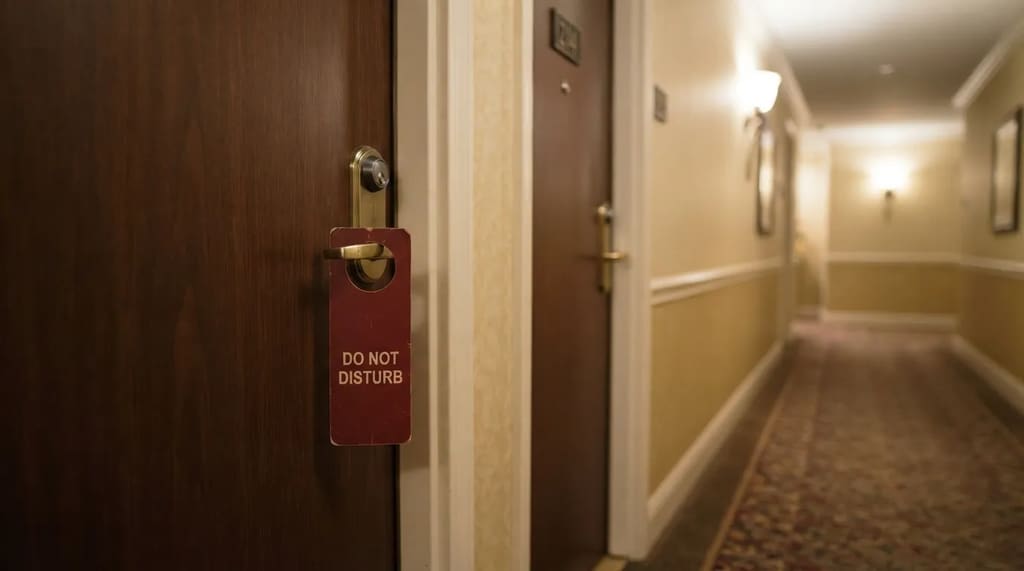
Hotels treat a message that never changes as information. Hilton, Caesars and Disney have updated their policies, with check thresholds ranging from 24 to 48 hours depending on the property.
Hilton’s policy, as reported in 2017, was that if service is refused for 24 hours, a member of hotel management will check on the room.4 MGM Resorts requires a check after two consecutive days of a Do Not Disturb sign with no interaction with housekeeping or other staff.5
Many hotels tightened their rules after the 2017 Las Vegas shooting, in which a guest prevented staff from seeing weapons by displaying a “do not disturb” sign.6 That does not make a welfare check likely at any given hotel, since such checks are real but probably less common and less mysterious than travelers believe.
If you want privacy for a week, tell the front desk at check-in that you prefer privacy and ask about the property’s policy. You can also schedule housekeeping every few days.
A door message that never changes is a poor way to say you are fine, and a short call to the front desk says it better.
Hotels set that clock themselves, while the cruise lines set theirs weeks before you pack.
#1 – The Deadline Before the First Note
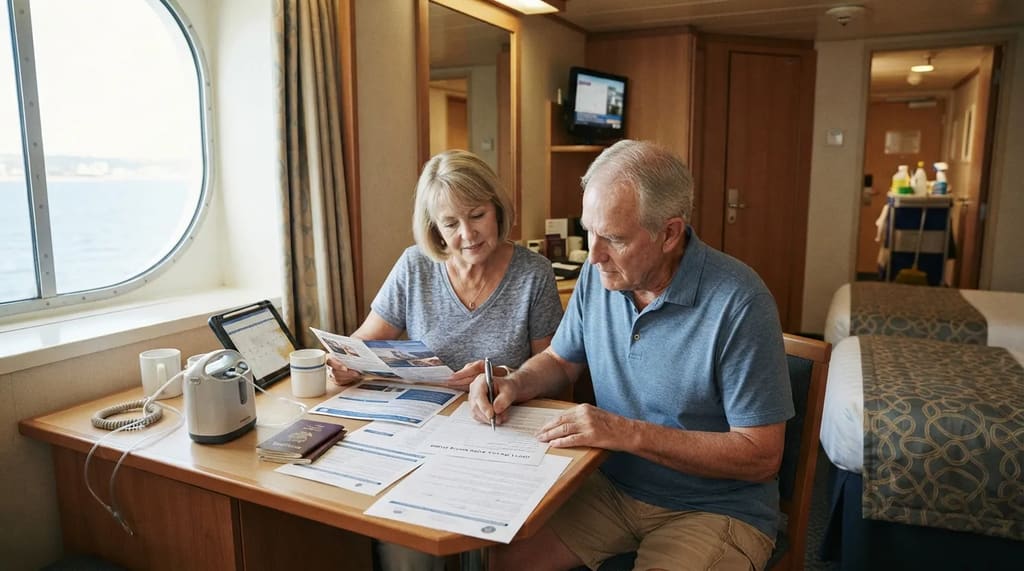
Royal Caribbean asks for its Guest Special Needs Form at booking and no later than 30 days before sailing. If the request is received, you should get an automated confirmation within 24 hours and a personal response within 48.1
If you do not, the same page gives an email address and a phone number to confirm your needs.1 Every item above that involved equipment, a cord, water, a fridge, a stool or a topper belongs on that form.
The morning note is the last link in the chain, not the first. By the time a steward finds it, most of the week has already been decided.
Oxygen shows why the lead time matters. Portable oxygen concentrators are allowed, but you must inform the cruise line in advance.
Late requests may limit the line’s ability to provide accommodations, and with accessible cabins in short supply, the best choices go to guests who asked first. Deadlines differ from line to line, so check the number on your own line’s page before relying on any figure here, and know that a travel agent can submit special-needs requests on your behalf if you booked through one.
The pillow note and the thank-you line are the easy part, and the form you sent a month earlier decides how the week goes.
What to Put in Writing Before You Leave Home
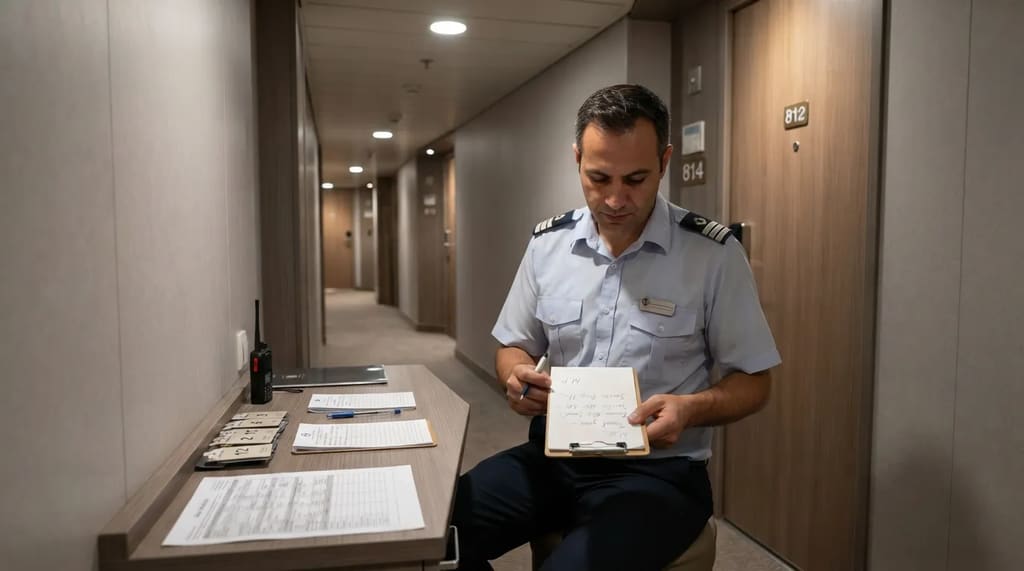
A morning note works best as the last step in an arrangement, not the first. Anything that needs equipment, a power source, cold storage or a bed already made up your way is best settled in writing before you board.
The daily note can then carry what changes: the hour you want service, a thank-you, an extra towel. Those are the small things a steward can settle in a single visit.
A note that repeats unchanged for a week is worth reading as a sign that a request is still open. That holds whether it hangs on a hotel door or lies on a ship’s pillow.
What is the one thing you ask for on every trip, and have you ever put it in writing ahead of time?
- Royal Caribbean Guest Special Needs: https://www.royalcaribbean.com/resources/guest-special-needs
- Royal Caribbean Equipment List: https://www.royalcaribbean.com/experience/accessible-cruising/equipment
- Medicare Travel Outside U.S.: https://www.medicare.gov/coverage/travel-outside-the-u.s.
- Hilton Do Not Disturb Policy: https://www.postandcourier.com/business/do-not-disturb-don-t-be-so-sure-as-hotels/article_5bb61618-27c2-11e8-bc79-73ac851bd0a3.html
- Do Not Disturb Policies: https://www.costar.com/article/714408636/do-not-disturb-current-shifting-guestroom-policies
- CBS Hotels Revise Security: https://www.cbsnews.com/news/las-vegas-shooting-hotels-revise-room-security-measures/