Most people picture the senior discount at a national park as a slightly cheaper ticket and nothing more. The reality is bigger. One small card can wave your whole car through the gate, cut campsite bills in half, and work at more than 2,000 federal recreation sites well beyond the famous parks. There’s one catch before you get your hopes up: the magic number is 62, not 60 or 65.
Almost none of these perks get announced at the fee booth. Some save money the minute you pull up, and a couple don’t show their value until night five at a campground. A few come with fine print that trips up even seasoned travelers, and one involves a card that may already be sitting in your glove box.
#16 – You Qualify at 62, Not 65: Ask Anyway
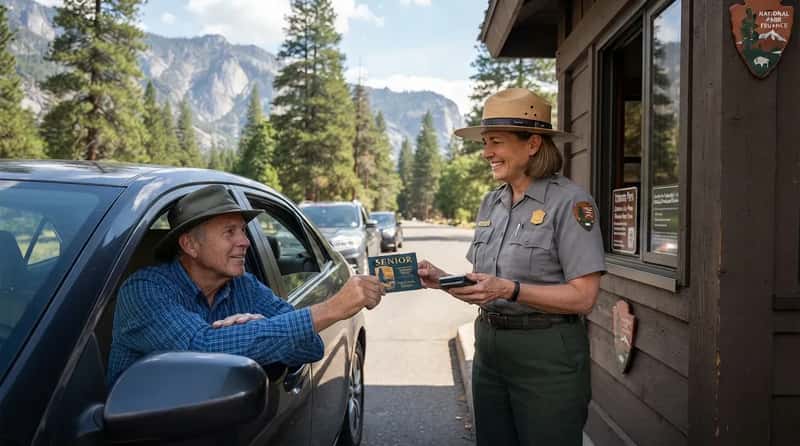
Plenty of travelers wait three years longer than they have to. The age-65 assumption comes from Medicare and Social Security, but the Senior Pass runs on its own federal standard of 62. No “real” senior birthday required.
There’s no income test and no health requirement, either. You only need to be 62 and a U.S. citizen or permanent resident, and a valid Green Card counts. If you’re 60 or 61, you’re not eligible yet, and no ranger can bend that rule. But getting the pass is easier than most people expect, as #15 shows.
#15 – Ask to Buy It Right at the Window
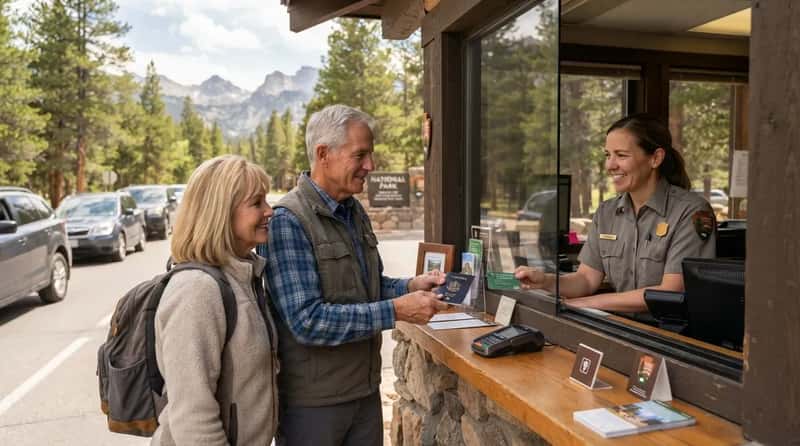
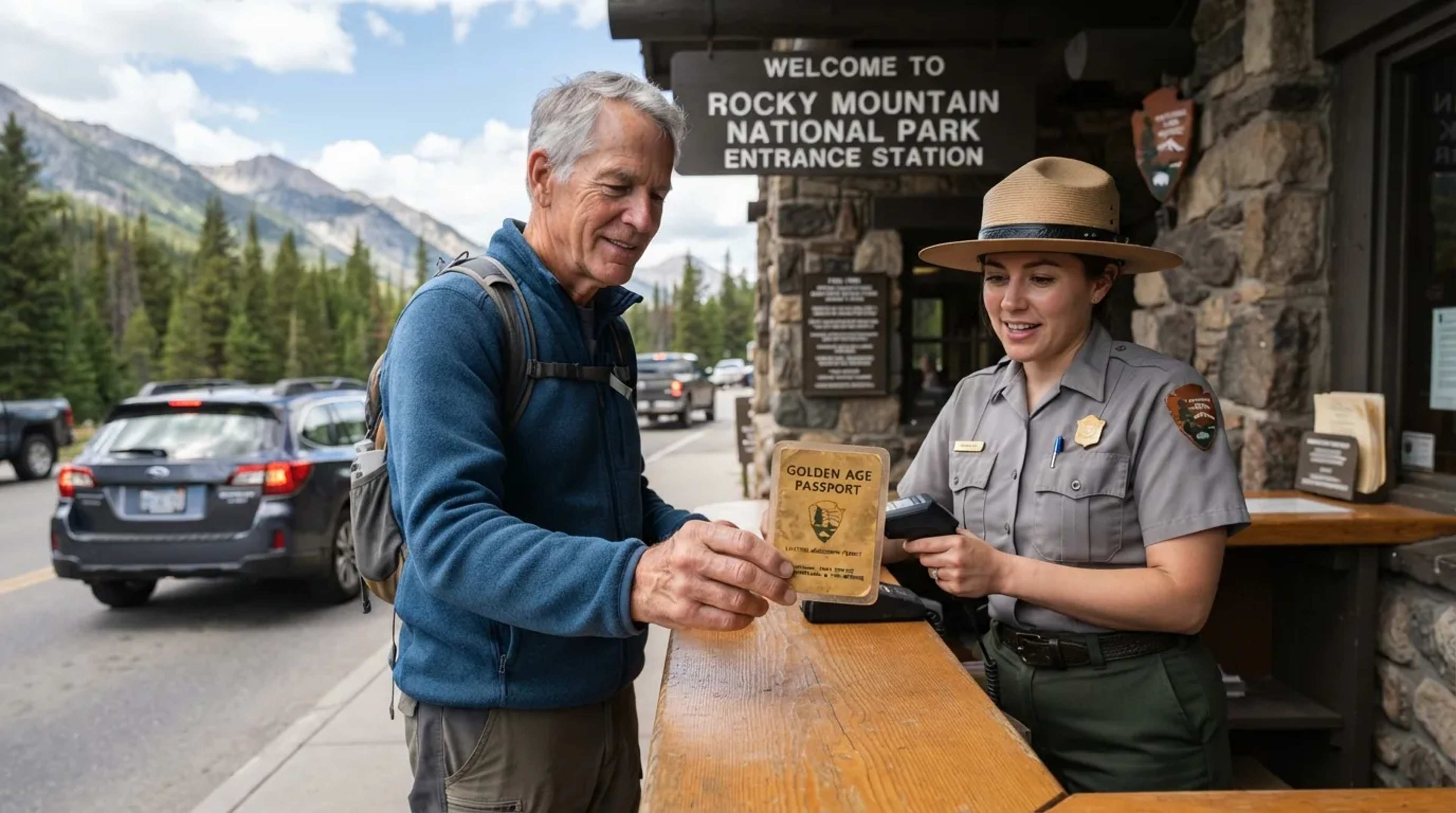
You can skip the paperwork. There’s no application form if you buy in person, because a staff member at the entry station checks your age and ID on the spot. The whole thing can take just a few minutes.
Bring proof. You’ll need documentation of your age and your citizenship or residency, and a U.S. passport, a state-issued driver’s license or ID card, or a Green Card all work. Buying online or by mail adds a $10 processing fee, so walking up is the cheapest route.
At a Glance
- Who qualifies: U.S. citizens and permanent residents age 62 or older
- Accepted proof: passport, state driver’s license or ID, or Green Card
- Window prices: $20 for the annual pass, $80 for the lifetime pass
- Every visit: the pass holder must be present with a valid photo ID
And the cheapest pass of all isn’t even the $80 one, as #14 shows.
#14 – Ask for the $20 Annual Pass If You’re Not Sure Yet
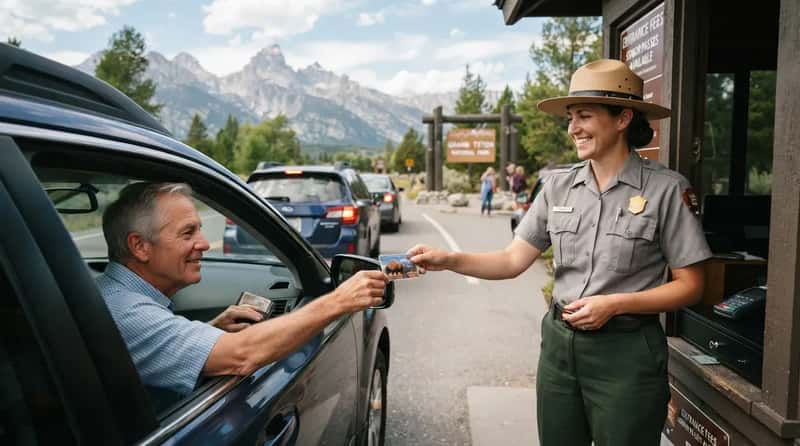
You don’t have to commit to the lifetime version on day one. U.S. citizens and permanent residents 62 and older can buy an annual Senior Pass for $20, or a lifetime pass for $80. The annual card is valid for one full year from the date you buy it.
Here’s the catch: four years of $20 renewals add up to exactly the $80 lifetime price. If you know you’ll keep hitting the road, lifetime is the smarter buy. But the annual card has a hidden trick, which is next at #13.
#13 – Ask About Trading In Your Old Annual Passes
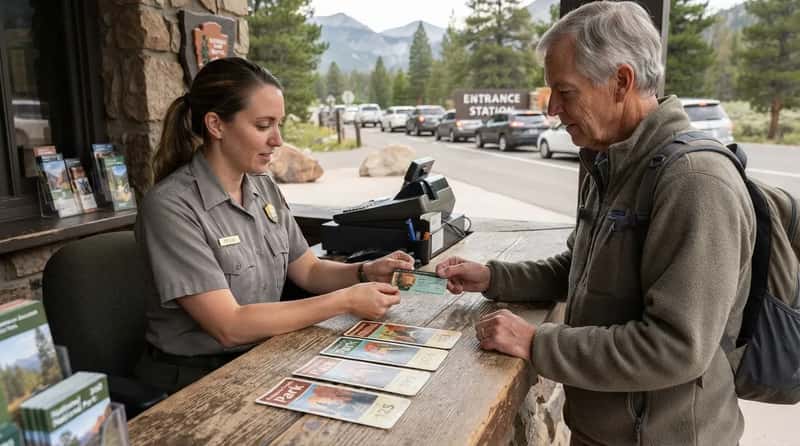
Those past $20 purchases may not be wasted money after all. Four annual senior passes can be traded in for a lifetime pass at no extra cost. That effectively spreads the $80 over four years.
This works in person at staffed fee stations, not online. Policies can shift, so confirm the exact count with a ranger before you let an old card expire or throw it away. Keep every annual card until the swap is done. Of course, the card in your wallet may not even be plastic anymore, as #12 explains.
#12 – Ask Whether You Can Get a Digital Version
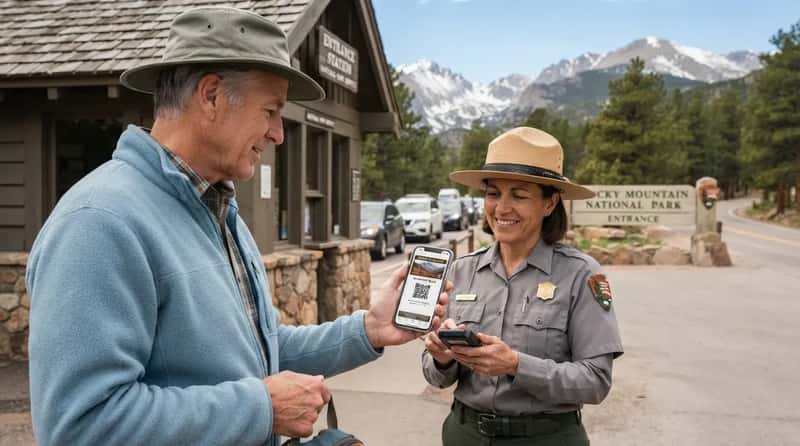
The plastic card isn’t your only option anymore. As of 2026, all America the Beautiful passes, the Senior Pass included, are available digitally through Recreation.gov. You can pay online and get access right away. That’s a lifesaver if your card is sitting on the kitchen counter two states behind you.
Worth Knowing
- Digital passes became available on Recreation.gov on November 20, 2025.
- The pass can be stored on your phone and used right after purchase.
- The digital Senior Annual Pass costs $20, the same as the plastic card.
- A physical copy is still offered for a small shipping fee, to U.S. addresses only.
If you bought your pass years ago, ask the staff how digital and plastic versions work together at that entrance. Policies can differ from site to site, so a quick question can save a long drive back. What the pass does for your passengers is the real surprise, and that’s #11.
#11 – Ask Whether the Whole Car Gets In Free
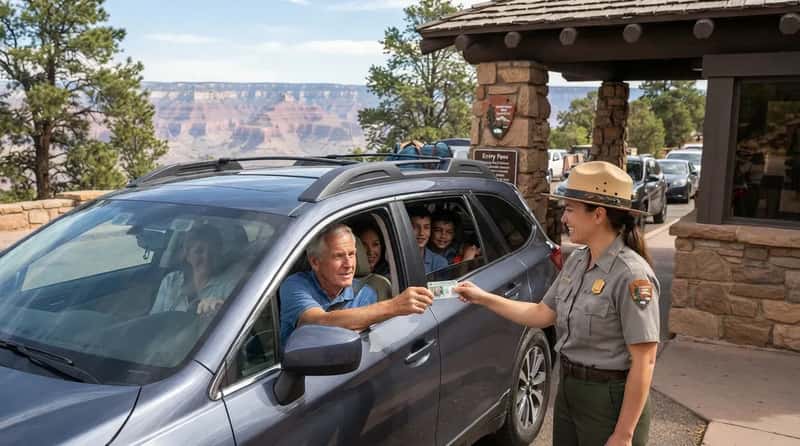
Your spouse, your adult kids, and even the in-laws may all ride in free. The pass admits the holder and passengers in a non-commercial vehicle at per-vehicle fee areas. That’s the single most misunderstood perk on the list.
At most big-name parks, including Yellowstone, Grand Canyon, Yosemite, and Zion, entry is charged per vehicle. One pass can cover an entire carload. Just remember it applies to private vehicles, not commercial tours. But a few places don’t charge by the car, and that changes the math at #10.
#10 – Ask How Per-Person Fee Sites Handle Your Group
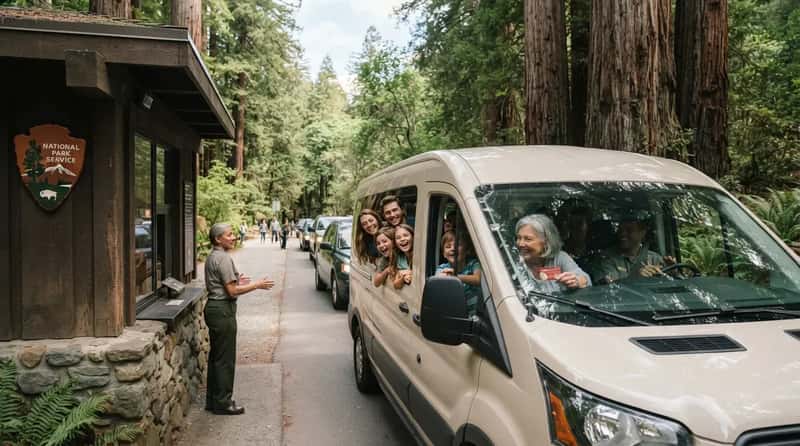
A few sites charge by the head instead of by the car. At those places, the pass covers the holder plus three adults, for four adults total. Your fifth adult pays full price.
This is where big family reunions get caught off guard. The per-person rule is the exception, but if you’re pulling up in a van full of cousins, ask before you reach the booth. Children under 16 get in free either way. That brings us to a perk made for grandparents at #9.
#9 – Ask About Bringing the Grandkids Along Free
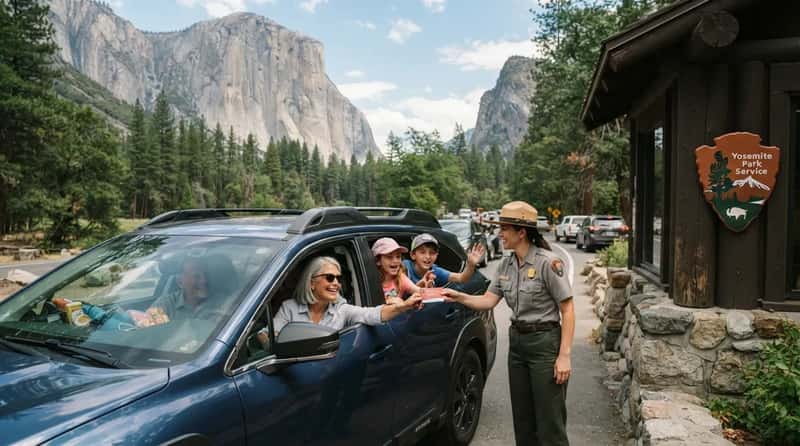
A multigenerational road trip suddenly gets a lot cheaper. Children 15 and under are free at national parks no matter what pass anyone holds. That’s welcome news for grandparents hauling a back seat full of kids and snacks.
Pair that with the carload rule from #11 and the savings stack up fast. Pull up with your spouse, two adult children, and a grandchild, and everyone gets in on one pass. That’s the example one popular guide gives for a single $80 lifetime pass. The entrance fee is only half the story, and #8 is where the other half starts.
#8 – Ask About Half Off Boat Launches, Swim Areas, and Tours
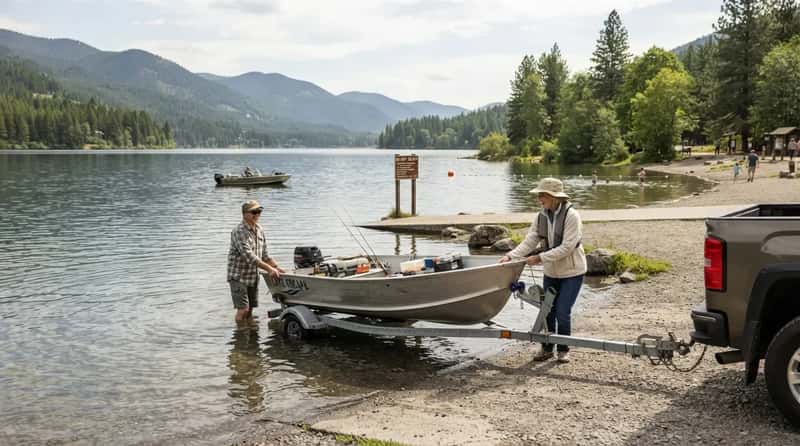
The discount doesn’t stop at the gate. The Senior Pass may give you 50 percent off some amenity fees, such as camping, swimming, boat launches, and specialized interpretive services. At some sites, that includes guided programs.
Fast Facts
- Usually covered: entrance fees and standard day-use fees
- Often half off: expanded fees such as camping, swimming, and boat launches
- Varies by site: the discount isn’t applied the same way everywhere
- Generally not covered: special recreation permits and concessioner fees
Pay attention to the word “may.” The discount isn’t uniform, and “some sites” is doing heavy lifting in the fine print. Ask which fees at that particular place are covered before you assume anything. Even when they are, there’s a wrinkle about who gets the savings, and it’s waiting at #7.
#7 – Ask Whether Your Travel Partner Gets the Discount Too
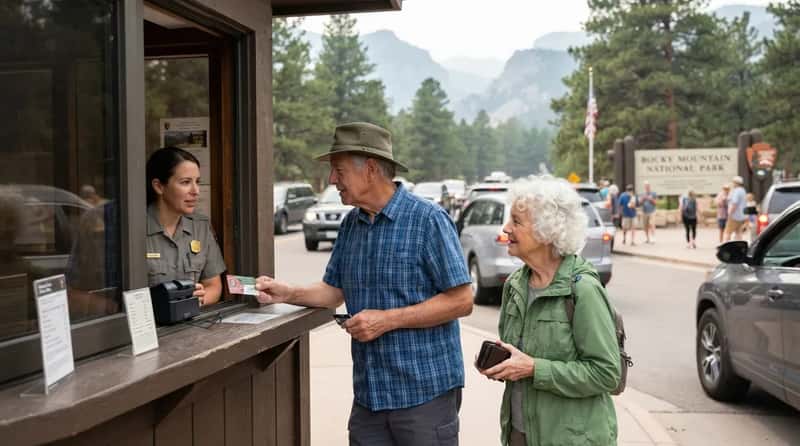
Here’s the fine print most visitors miss. At some places that charge amenity fees, only the pass holder gets the 50 percent reduction. Your companion could end up paying full price for the exact same activity.
The entrance waiver covers the car, but the amenity discount may cover only you. That’s why asking before you buy two tour tickets matters. The pass is non-transferable, so you can’t hand it over to a friend for a better rate. The biggest savings of all, though, happen at the campground at #6.
#6 – Ask for Half Off Your Campsite
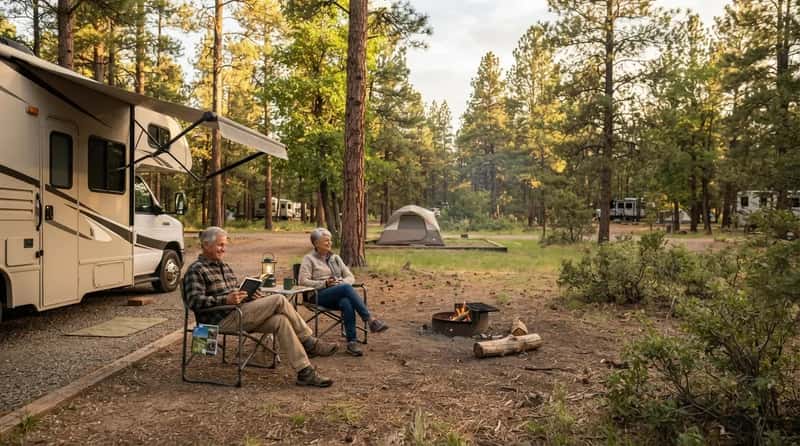
Most travelers treat free entry as the headline perk, but many RVers argue the camping discount is the real prize. A single entrance fee can’t compete with savings that repeat every single night.
Many federal campgrounds charge roughly $20 to $35 a night, so half off brings that down to about $10 to $18. One camping guide puts the break-even point for the $80 pass at around seven nights at federal campgrounds. That’s an estimate, not a guarantee, but the math gets friendly quickly. And the discount isn’t limited to national parks, as #5 reveals.
#5 – Ask If Forest Service and Army Corps Campgrounds Honor It Too
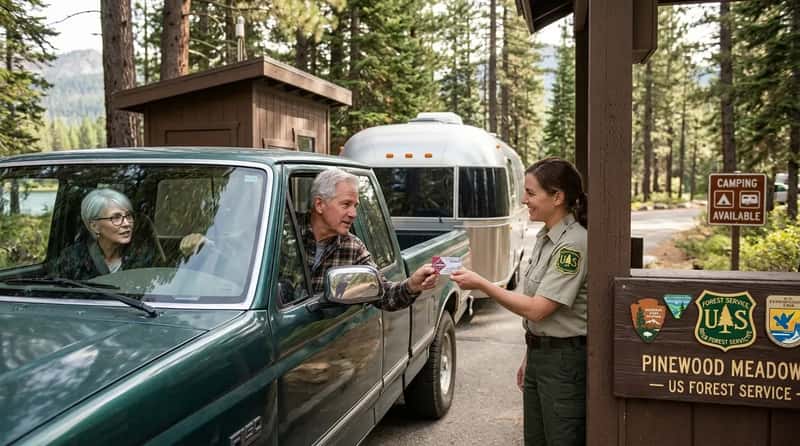
The card works well beyond the Park Service. Six federal agencies take part in the program: the National Park Service, Forest Service, Bureau of Land Management, Army Corps of Engineers, Bureau of Reclamation, and Fish and Wildlife Service. That opens up lakes, reservoirs, and forests that most tourists drive right past.
Campers regularly report 50 percent discounts at Army Corps of Engineers lakes, which are some of the quietest, cheapest campgrounds around. Policies still vary by site, so confirm the discount when you book. And one type of campground may refuse the card entirely, which brings us to #4.
#4 – Ask Who Actually Runs the Campground
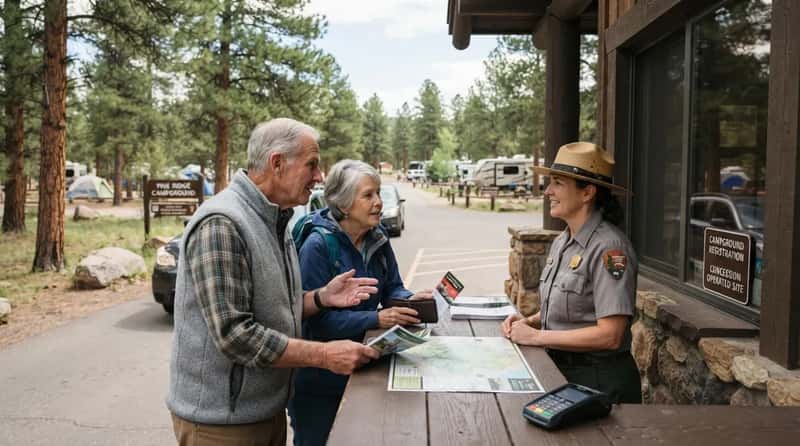
The pass doesn’t work everywhere. It generally doesn’t cover or reduce special recreation permit fees, or fees charged by concessioners. Those are private companies running services on public land.
Concessioners aren’t required to accept the pass for a 50 percent discount. A campground inside a famous park can be run by a contractor, so ask who operates it before you drive up with your heart set on half price. Some discounts have been around much longer than you’d think, and that’s #3.
#3 – Ask If Your Old Golden Age Passport Still Counts
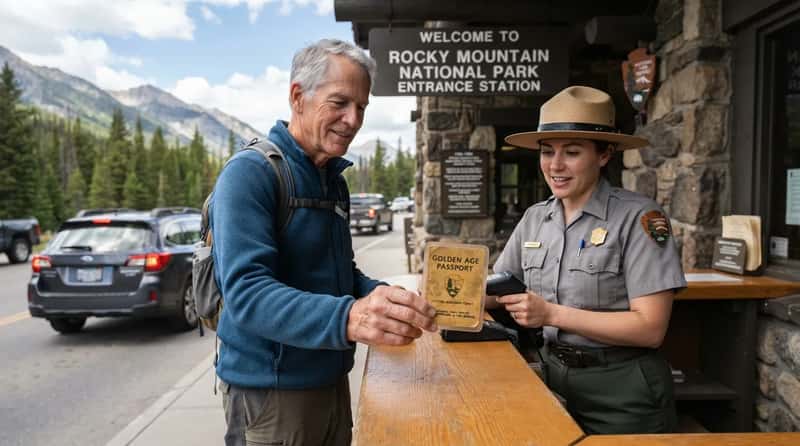
That dusty card in the glove box may still be valid. Golden Age Passports are no longer sold, but they’re still honored under the terms of the current pass. Plenty of owners have no idea.
Some lifetime holders have been carrying a working pass for decades. The Golden Age Passport was the predecessor to the Senior Pass, issued before 2007, and federal recreation sites still accept it. Ask staff how it applies to amenity discounts at that site. And another pass has no age limit at all, as #2 shows.
#2 – Ask About the Free Lifetime Access Pass
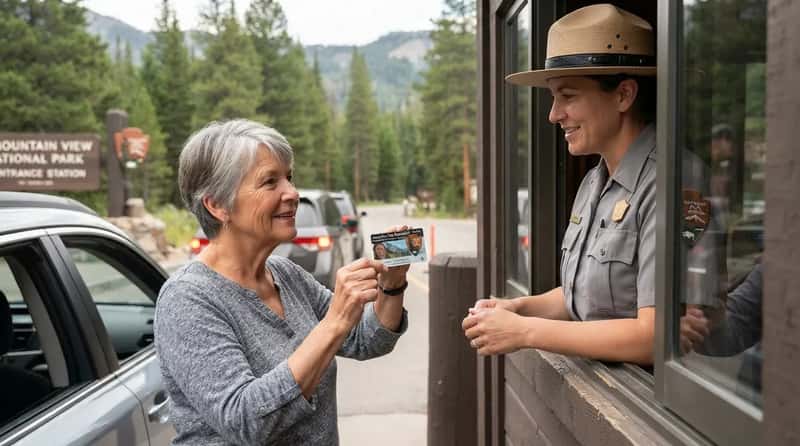
Some travelers over 60 may qualify for something even cheaper than $80. The Access Pass is a free, lifetime pass for U.S. citizens or permanent residents of any age who have a permanent disability. The disability doesn’t have to be total.
Applying in person is free, while online or mail-in applications carry a $10 processing fee. Documentation is required. Like the Senior Pass, it also gives a 50 percent discount on some amenity fees.
Quick Compare
- Senior Pass: age 62 and up, $20 annual or $80 lifetime
- Access Pass: any age with a permanent disability, free and good for life
- Shared perk: a discount on some expanded amenity fees, such as camping
Now for the fact that stuns people most, at #1.
#1 – Ask for a Lifetime Pass at the Price Everyone Else Pays for One Year
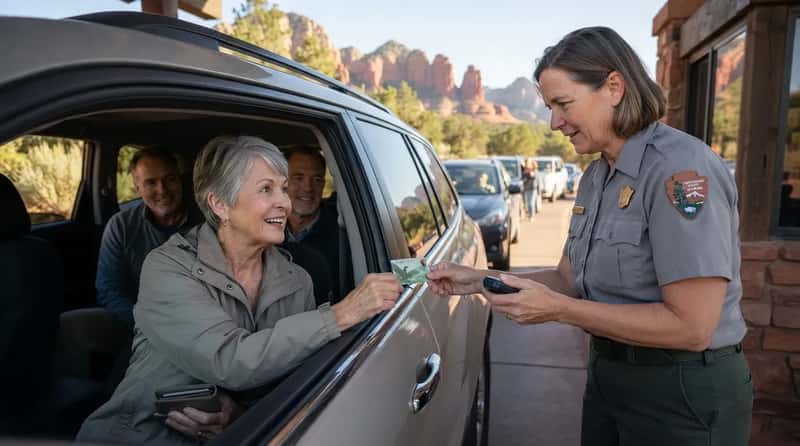
This is the shocker. The standard annual pass for U.S. residents costs $80, and the Senior Lifetime Pass costs the same $80. One is good for 12 months, the other for the rest of your life.
Seniors get a pass valid for life at exactly what everyone else pays for one year. It wasn’t always even that steep. The lifetime senior pass cost just $10 until 2017. Today, with many popular parks charging $35 or more per vehicle, a couple of visits can make it pay for itself.
The biggest surprise isn’t the $80 price tag. It’s how much that little card quietly covers once you know what to ask for: the whole carload, the grandkids, half-price campsites, and thousands of sites beyond the national parks. The fine print matters, too. Discounts vary by site, concessioners can opt out, and sometimes only the pass holder gets the reduction.
Nobody at the window is hiding anything. Most of these perks simply never come up unless somebody asks. So bring your ID, say the words “Senior Pass,” and let a few decades of living finally pay you back.