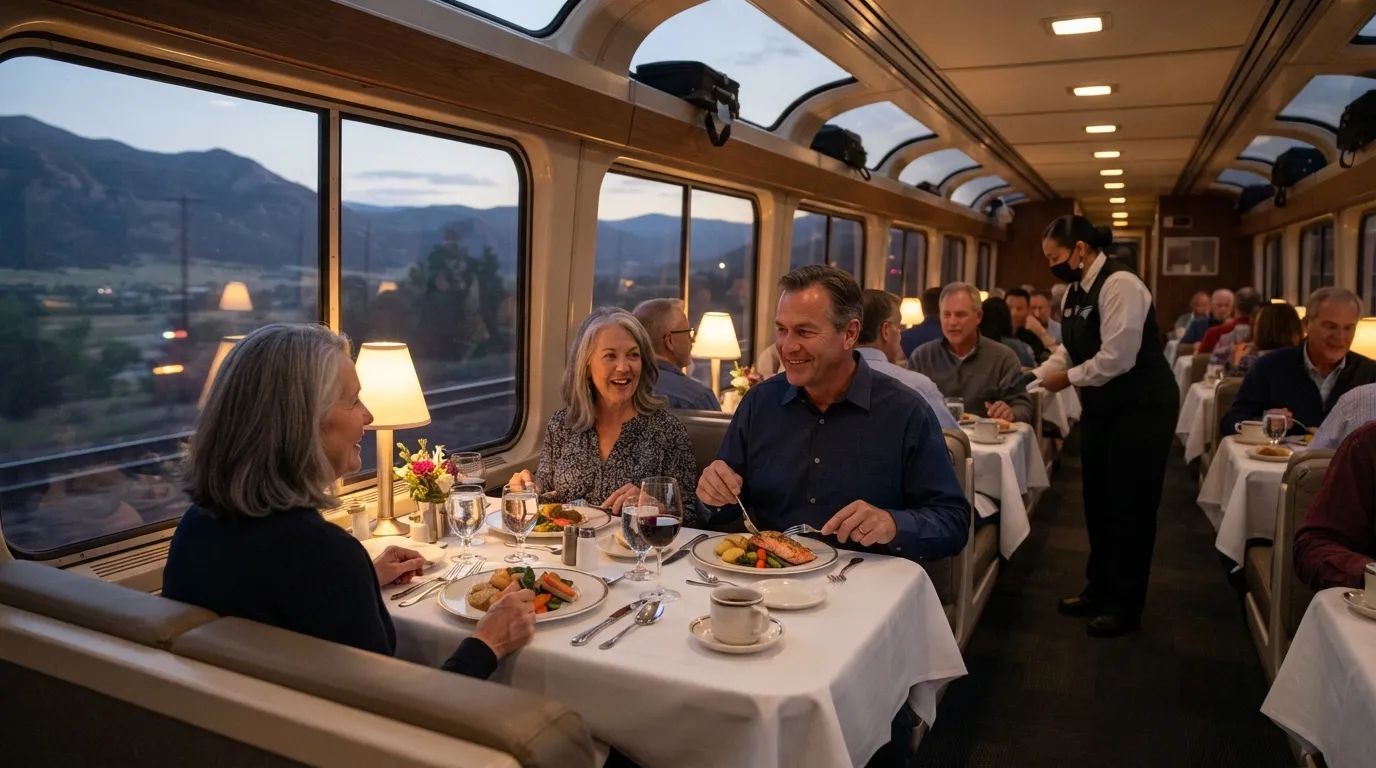
Most people picture a sleeper train as a fancy hotel that happens to move. But stand on the platform next to a veteran overnight rider and something looks off: they barely seem to be doing anything. No scramble, no sweating over suitcases, no wandering down the wrong car.
That calm isn’t personality. It’s a set of small habits, almost all of them finished before the wheels turn, and first-timers skip nearly every one. They usually feel the difference by midnight. Here’s what the regulars do, starting with the one that makes the crowd look lost.
#17 – They Walk Straight Past the Platform Crowd
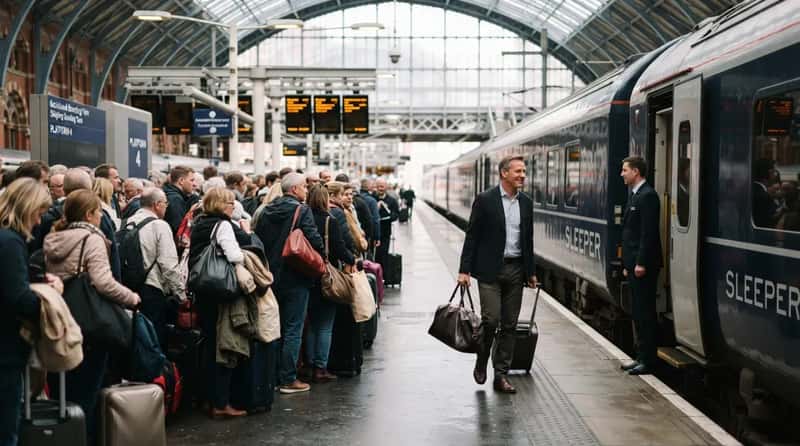
Sleeper regulars never join the shuffle at the gate. Sleeping car passengers typically get priority boarding, so veterans wait for the call and walk on.
Occasional riders often don’t know the perk exists. They hover by the door, clutch their bags, and board in the crush. The regular is already in the room with the door closed. That head start was part of the ticket price, and most people never use it.
But the next habit starts long before the platform…
#16 – They Treat the Station Lounge as Part of the Trip
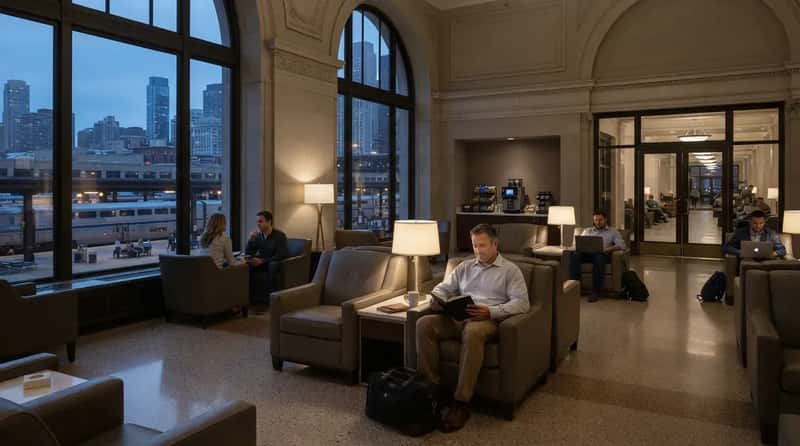
Regulars show up early and actually use the lounge. Sleeper bookers get access to Amtrak’s first-class lounges where they exist, with quiet seating, free non-alcoholic drinks, snacks and Wi-Fi. The occasional rider sits in the main waiting room next to a cold vending machine.
There’s a bonus, too. At some lounges you can leave your luggage behind and explore before departure. That turns a dead hour into a free city walk with empty hands. The trap is assuming every station has one.
Next is a habit that spares regulars a long, awkward trek…
#15 – They Ask for a Ride to the Sleeper Car
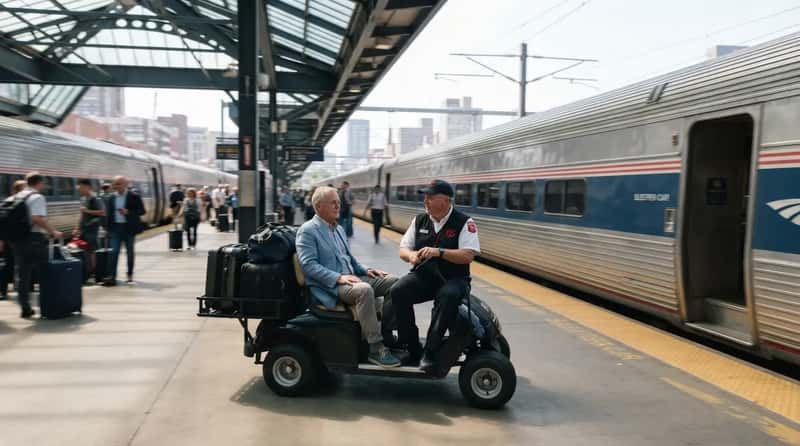
Sleeper cars are not always near the door. Some trains are very long, and the walk from the lounge or waiting room can feel endless with luggage.
The fix is a station Red Cap. They can carry your bags and get you to your sleeping car, sometimes on a golf cart or tram. Occasional passengers drag two bags down the platform in the heat and board sweaty and annoyed. Some riders call the ride pampering. Regulars call it energy management, and they have a point when the train stretches a quarter mile.
Then comes a habit that starts at the kitchen table…
#14 – They Pack a Small Overnight Case Before They Even Leave Home
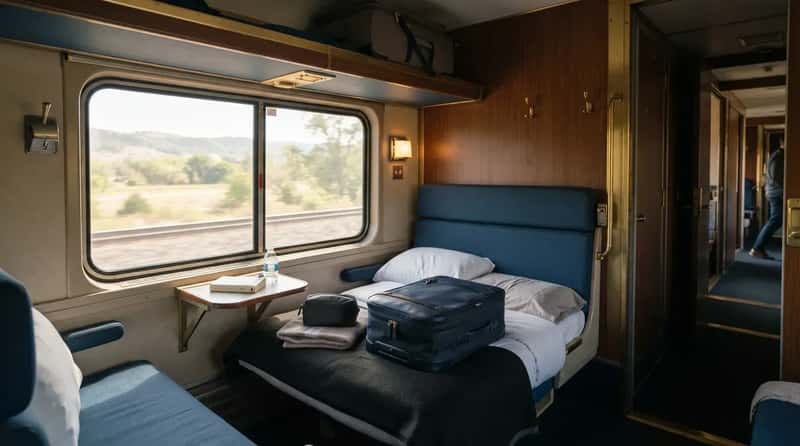
The smartest sleeper habit has nothing to do with the train. Regulars pack one small overnight case with everything they’ll need for the trip, and they never plan to open the big suitcase on board.
Occasional passengers do the opposite. They haul everything into a room built for a couple of people and a few bags, then dig through it at 10 p.m. Trains Magazine advises a smaller rolling case, since sleeping car rooms are tight. The result is a pile of clothes where your bed should go.
And the next trick is about how that bag actually moves around the train…
#13 – They Carry a Small Backpack Back and Forth
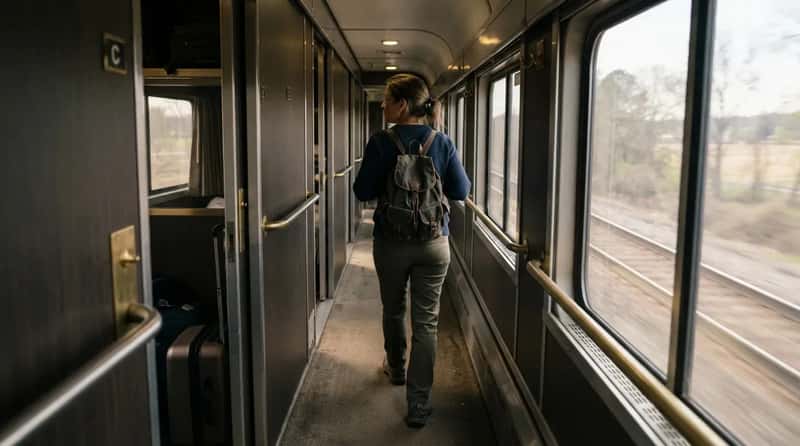
Here’s what first-timers get wrong. With bigger luggage, you end up tearing your bags apart in the vestibule or the hallway. It’s awkward, it’s public, and it blocks everyone else.
Regulars use a small backpack instead. Valuables, toiletries, a change of clothes, a book, headphones and slippers all go in it. That one bag follows you to the shower, the lounge car and the dining car. Nothing gets left behind, and nobody fishes through a suitcase in a swaying corridor.
Now for a move that splits riders right down the middle…
#12 – They Check the Big Bag and Don’t Look Back
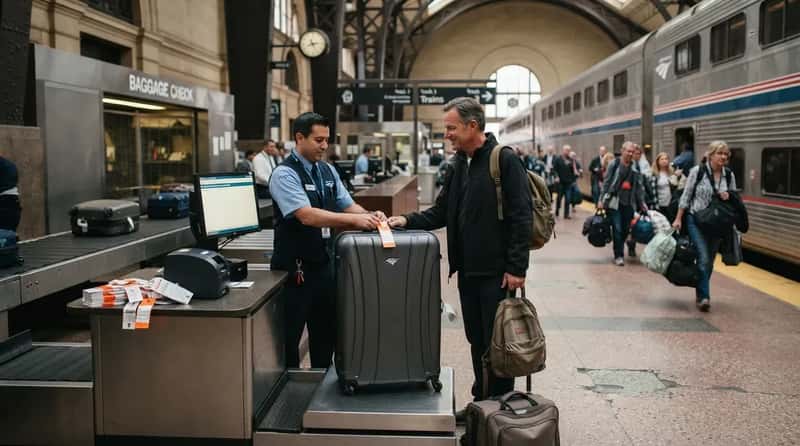
Here’s a take that divides people: hauling every bag into the room is the real mistake. Plenty of experienced riders check the big one. On routes and stations that offer it, sleeping car passengers with more than one or two bags can check extras at no charge.
A station attendant tags your luggage and it rides in the baggage car. The catch is obvious. Only check what you won’t need overnight. Occasional passengers either overpack the room or check the wrong bag and regret it at bedtime.
The next habit hinges on a detail most riders never think to ask about…
#11 – They Know Which Type of Sleeper Car They’re Boarding
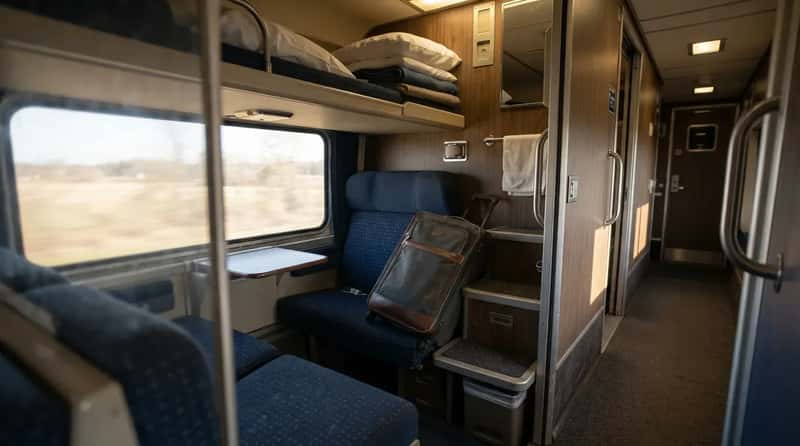
Not all sleepers handle bags the same way. The double-decker Superliner has a small luggage area on the lower level, while on the Viewliner there’s really no space except your own compartment. Regulars check the equipment type before they pack.
Inside a Superliner roomette, they have a system. They set the bag against the wall on the step, where the seat’s headrest keeps it from tipping. They also know the trap: storage under the seats can’t be reached once the seats are pushed together into a bed. Anything you need overnight has to stay out.
Quick Compare
- Superliner: Double-decker, with a small luggage area on the lower level.
- Viewliner: Almost no space beyond your own compartment.
- Either way: Keep overnight items out, because under-seat storage is blocked once the bed is made.
Next, a habit that makes the first ten minutes feel like a hotel check-in…
#10 – They Take the Room Tour Instead of Waving It Off
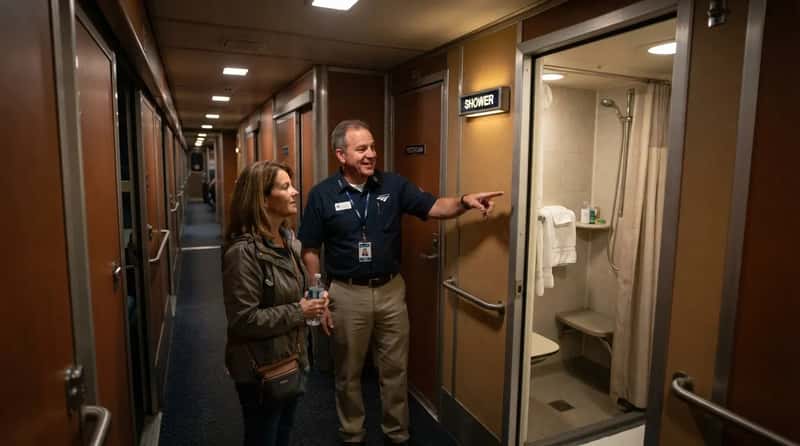
Occasional riders often say “I’m fine” when the attendant offers a walkthrough. Regulars say yes. One rider described an attendant who introduced himself early and pointed out the shower, toilets and dining car.
That matters because roomettes rely on shared restrooms and showers. On one Empire Builder trip, a reviewer noted a shower on the lower level of the sleeping car. Finding it at 6 a.m. with a towel is easy if you already know where it is. Skip the tour and you’ll wander the car half asleep.
The next habit decides how good your evening turns out…
#9 – They Lock In Dinner Before the Train Leaves the Station
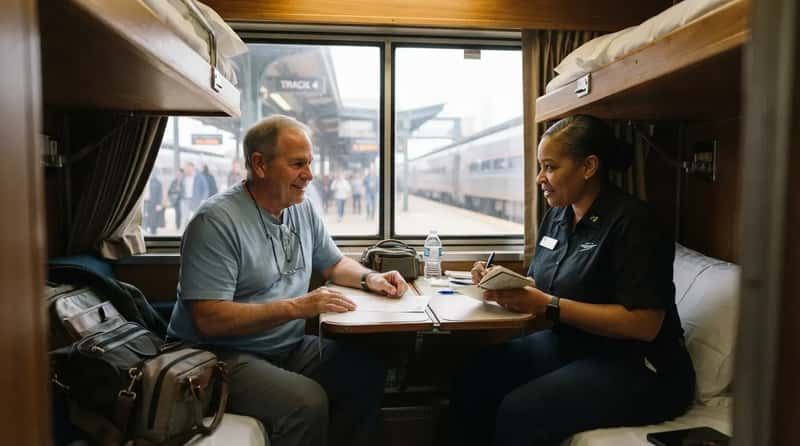
Regulars settle dinner early. On one trip, the attendant stopped by shortly after boarding to welcome passengers and take dinner orders. The whole system is designed to be handled in that first hour.
It’s also a perk many people overlook. Customers in private sleeping rooms get meals included with their fare. On traditional-dining routes, sleeping car passengers get first priority at meals. Occasional riders wait until they’re hungry and end up with a late slot or an awkward scramble.
But the morning habit might be the most underrated of all…
#8 – They Tell the Attendant Exactly When They’re Going to Breakfast
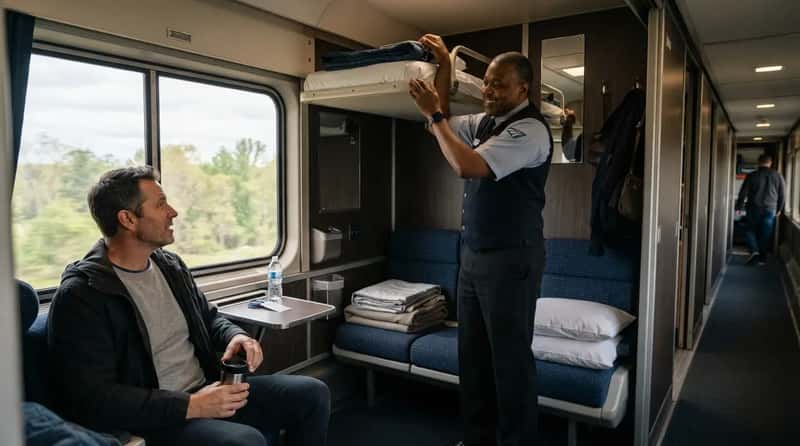
The bed does not fold itself. A roomette has two seats by day that become upper and lower beds by night, and someone has to reverse that every morning.
That’s why regulars name a time. Telling the attendant when you’ll leave for breakfast gives them a clear window to reset your room without disturbing you. Occasional riders linger in bed and then wonder why the attendant keeps knocking. That job is physical work repeated across a whole car, room after room. A small heads-up goes a long way.
Fast Facts
- By day, a roomette is two facing seats.
- By night, those seats become an upper and a lower bed.
- Your attendant reverses the setup each morning.
- A stated breakfast time gives them a clean window to work.
Then there’s what regulars do with their valuables…
#7 – They Never Leave Anything Tempting in Plain Sight
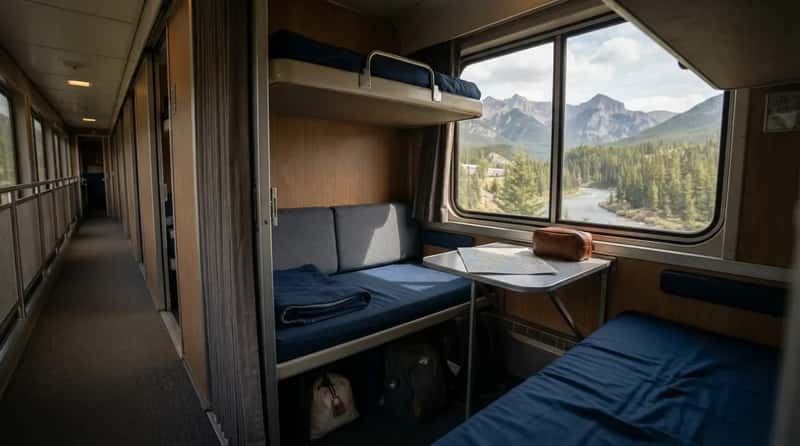
Theft in sleeper cars is rare, and regulars don’t test that. They tuck valuables out of sight before stepping away. It takes ten seconds.
You don’t hear much about theft in sleeper cars, but it’s still smart not to leave temptation lying around. Amtrak Vacations’ packing list also recommends carrying a small bag for valuables to the restroom or dining car. The occasional passenger leaves a phone on the seat and a wallet on the table. The regular carries them.
The next habit is about food, and it’s weirder than you’d expect…
#6 – They Bring Their Own Snacks, Even Though Meals Are Free
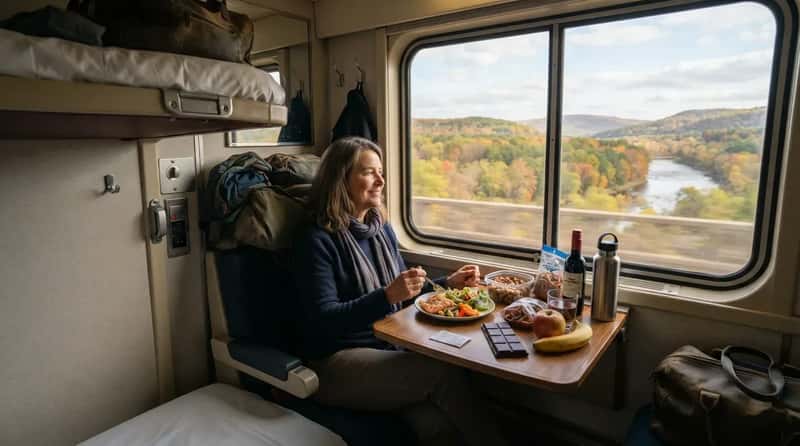
Yes, meals are included. Regulars bring snacks anyway, because meals are complimentary for sleeping car passengers but you may still want more, or something different.
The rules are friendlier than people think. You can bring your own food and drinks to eat in your private room. The catch is that food bought in the dining and lounge cars has to be eaten in those cars. Amtrak Vacations’ packing list even notes that alcohol is allowed in private rooms like roomettes and bedrooms. Occasional riders assume everything is on the menu. Regulars have a stash.
Worth Knowing
- Meals are complimentary for sleeping car passengers.
- Your own food and drinks are fine in your private room.
- Anything bought in the dining or lounge car stays in those cars.
- Private rooms like roomettes and bedrooms allow alcohol, per Amtrak Vacations’ packing list.
Next, one most travelers dismiss as a luxury…
#5 – They Bring Their Own Pillow Anyway
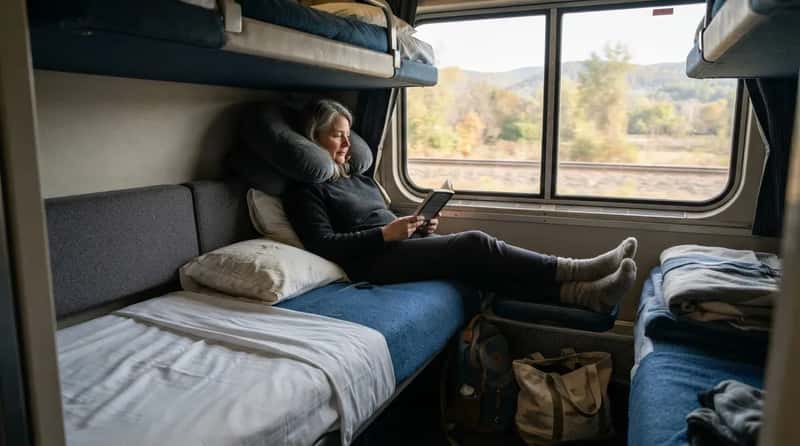
Amtrak provides blankets and pillows, but regulars still pack their own comfort. It’s a small detail with a big payoff.
The perk is control. Having your own gives you freedom and peace of mind without relying on the attendant for an extra blanket or pillow. Some riders think that’s overkill on a train that supplies linens. Regulars disagree, because sleep is the whole point of paying for a room.
Next comes the habit that sparks the loudest arguments…
#4 – They Carry Cash for the Attendant
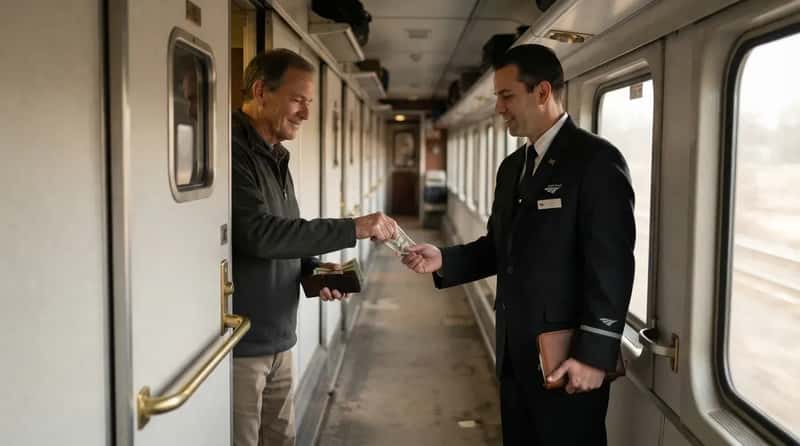
This one gets heated. Trains Magazine says to bring cash for tipping, since it’s customary to show appreciation when an attendant goes out of their way. Regulars have bills ready.
Not everyone agrees on the etiquette. Tipping isn’t required, but it’s the norm. Some riders feel a high fare should cover it. Some veterans hand over part of the tip on the first visit and the rest when they get off, while occasional passengers skip the cash and find out too late they have none.
But the planning habit at #3 can save an entire dinner…
#3 – They Check How Their Train Actually Serves Dinner
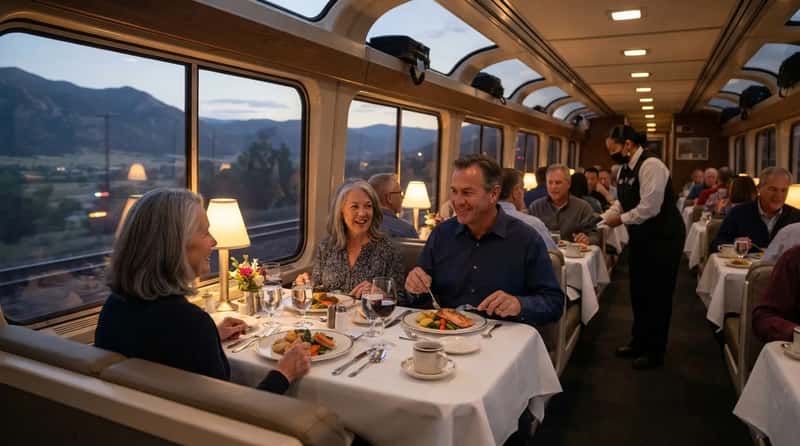
Here’s what most people don’t realize: not every sleeper train has the same dining car. Traditional dining is offered on the Auto Train, California Zephyr, Coast Starlight, Empire Builder, Southwest Chief, Sunset Limited and the Texas Eagle between San Antonio and Los Angeles.
Other routes run something different. That something is “flex” dining, offered on the Cardinal, City of New Orleans, Crescent, Lake Shore Limited and the Texas Eagle between Chicago and San Antonio. Rail purists still argue flex meals are a downgrade, and many sleeper riders have headed to the café car to escape the same menu.
The last two habits are the ones that truly separate regulars from everyone else…
#2 – They Set the Bedtime Routine in the First Hour
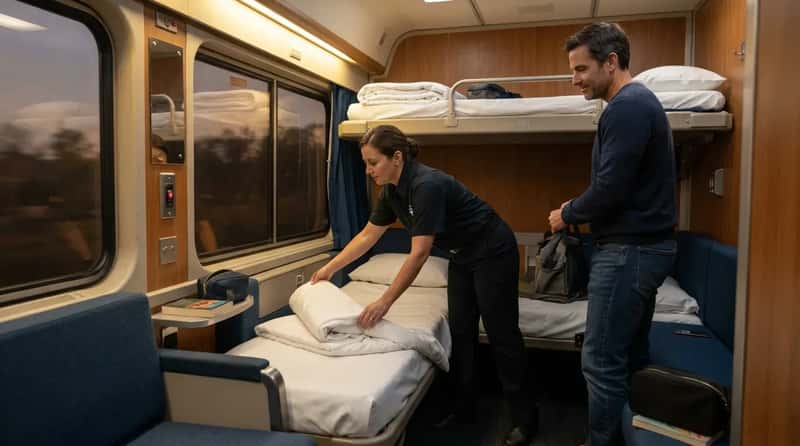
Regulars never wonder how bedtime works. When it’s time for bed, you press the call button to let your attendant know. They learn this on the first visit, not at 11 p.m.
The setup is quick. The attendant turns the two seats into a lower bed and makes it up, and if there’s a companion, a second bed folds down above. Occasional riders stay planted in the room and slow the whole process. Regulars decide the timing early and clear the seats before anyone has to ask.
At a Glance
- Signal: Press the call button when you’re ready.
- Lower bed: The attendant converts the seats and makes it up.
- Upper bed: It folds down if you’re traveling with a companion.
- Your part: Clear the seats early.
And the final habit changes the entire trip…
#1 – They Treat the Attendant Like a Partner, Not a Porter
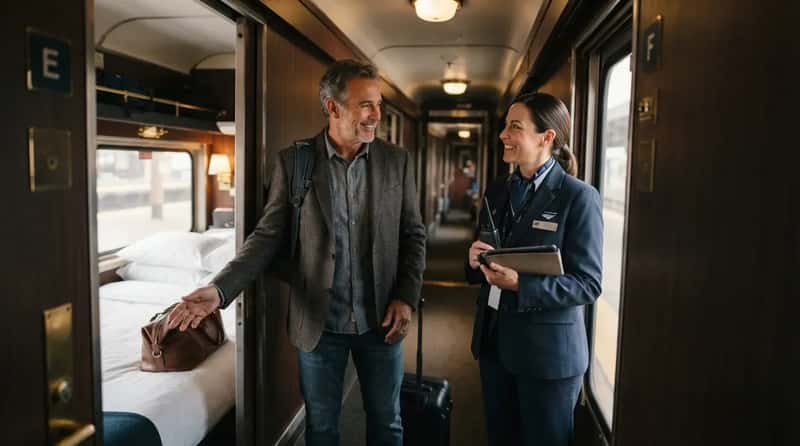
The best regulars start with a simple hello. The dedicated sleeping car attendant greets you at boarding and can help with luggage, meals and turndown service. The regular treats that first minute like a handshake.
The payoff is practical and human. Your attendant can handle meal reservations, make and take down your bed, tell you when your stop is coming up, and share stories of life on the rails. Occasional passengers see a service worker. Regulars see the person who actually knows the train, and they share their plans, their stop and their schedule.
None of these habits is complicated. Priority boarding, a lounge visit, one small bag, a dinner time, a heads-up for breakfast and a friendly hello all happen before the train hits its stride.
Regulars don’t have secret money or special status. They just know what the ticket already includes. That’s why they look so unhurried on the platform: the hard part of the night was handled before anyone else had found their car.