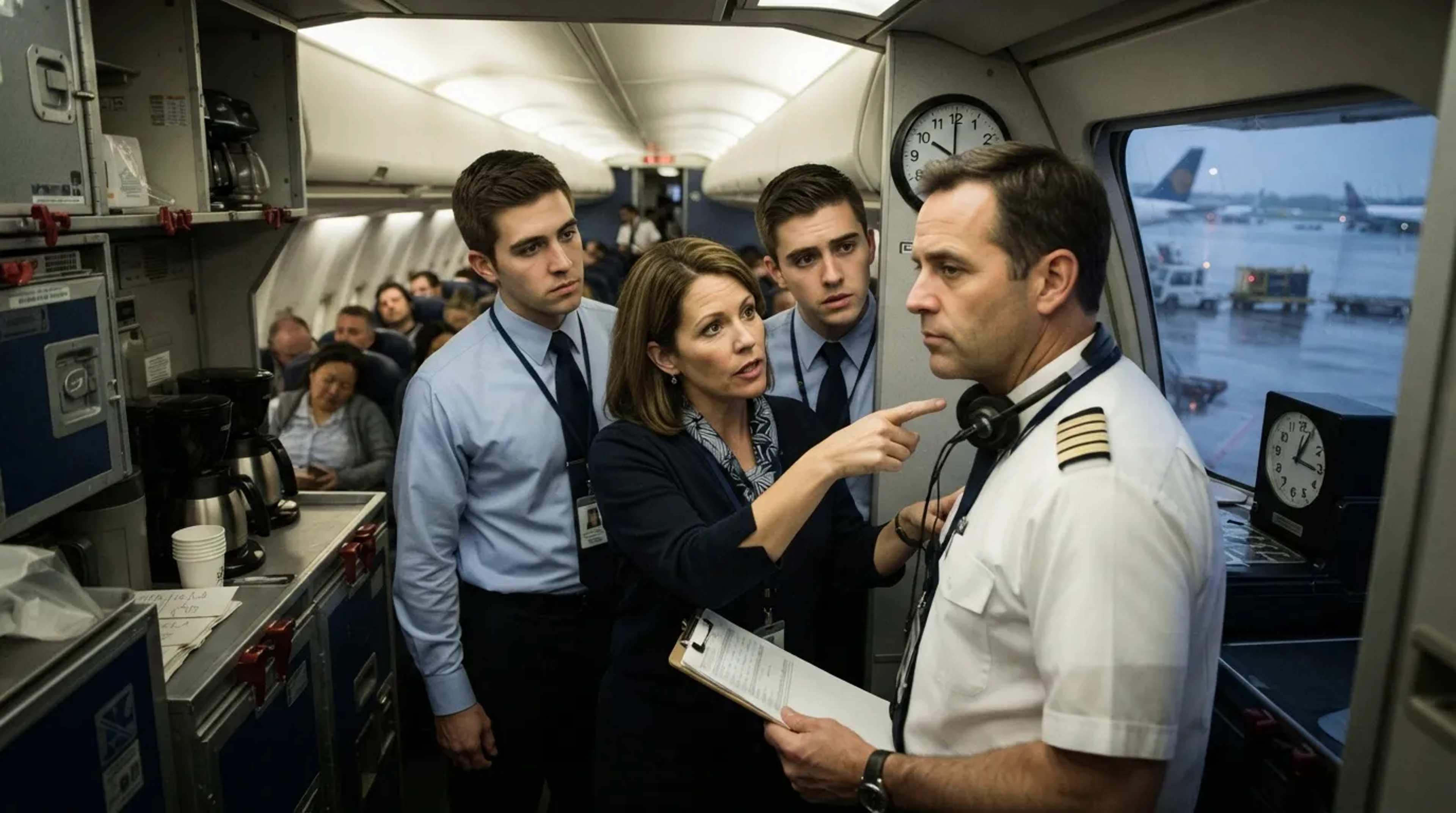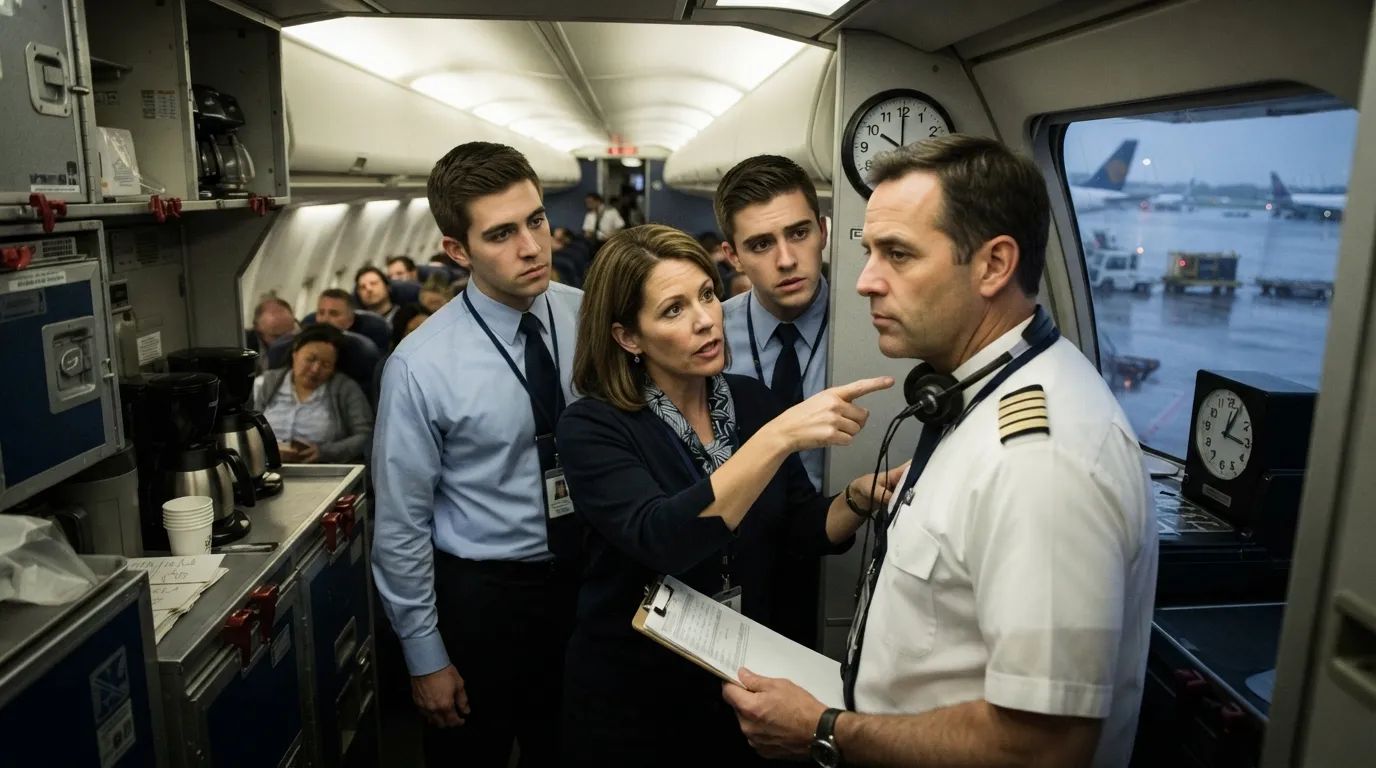
You’re stuck in seat 23C, the cabin is getting stuffy, and it looks like the crew is just waiting it out with everyone else. They aren’t. Behind that galley curtain, flight attendants are watching timers, checking bathrooms, reading faces and doing math on their own legal work hours.
Some of these calls are written into federal rules. Others are quiet judgment calls that decide whether your delay feels tolerable or miserable. And one of them might explain why your flight was really stuck in the first place.
#17 – The Quiet Call to Hand Out Water Before Anyone Asks
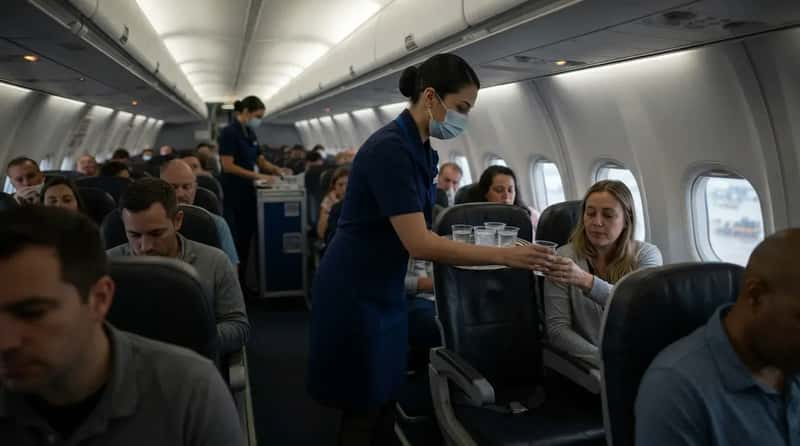
Nobody announces this one. Depending on the cause and length of a delay, flight attendants may set up an extra ground service, hand out water and snacks, and start answering questions. That’s a judgment call made with the cockpit, and all passengers see is a cart suddenly rolling down the aisle.
The legal backstop is firm. U.S. carriers must provide adequate food and drinking water no later than 2 hours into a tarmac delay, plus working lavatories and medical attention if needed. Two hours is the deadline, not the starting gun. Crews who read the cabin early can calm things down long before anyone gets angry.
But the snack itself hides a decision most people never think about, and it’s #16.
#16 – Checking That the “Delay Snacks” Are Actually There
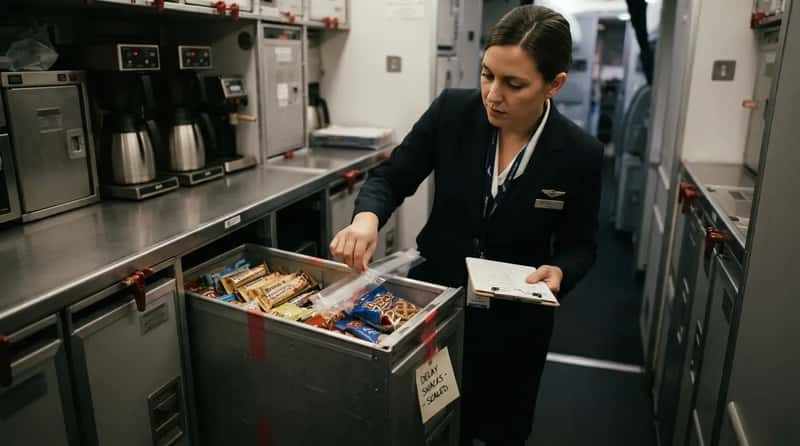
Some planes carry snacks meant only for this moment. One regional carrier’s plan has them loaded in an identified galley cart, and the flight attendant in charge of the galley must confirm that cart is on board. It gets checked before you ever see it.
The details are surprisingly specific. Crew check the expiration dates, reseal both sides of the cart, and keep it sealed unless a tarmac delay calls for it. That’s one airline’s procedure, and others may differ. Some jets are carrying a reserved snack cart you’ve never noticed. The idea is simple: a long sit should never leave a full cabin with nothing to eat.
Fast Facts
- The delay cart is loaded in a clearly identified galley spot.
- The flight attendant in charge of the galley confirms it’s on board.
- Expiration dates get checked before departure.
- Both sides are resealed and stay closed unless a tarmac delay calls for them.
Whether a granola bar counts as a real meal is a fight for the comments. What matters first is who has to talk to you, and that’s #15.
#15 – Deciding Who Makes the Dreaded 30-Minute Announcement
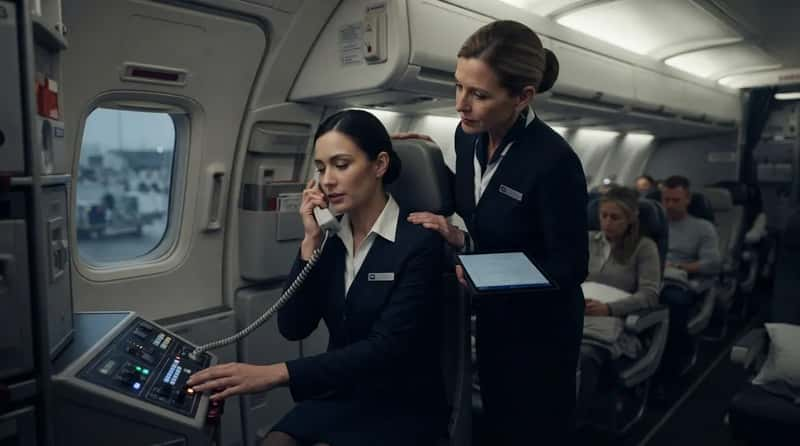
Those “still waiting on a gate” updates aren’t random. Once a delay passes 30 minutes, the airline is supposed to keep passengers informed. One airline’s plan says to repeat the update every 30 minutes, including the reason for the delay if it’s known.
Usually the cockpit speaks. But at least one carrier’s plan says that if a flight deck member doesn’t give the update, the purser has to relay it. The senior flight attendant is the backup voice. That’s why you sometimes hear a calm, unfamiliar voice on the speaker instead of the captain’s.
The next decision is the least glamorous one, and it matters more with every hour that drags on.
#14 – The Lavatory Watch Nobody Thanks Them For
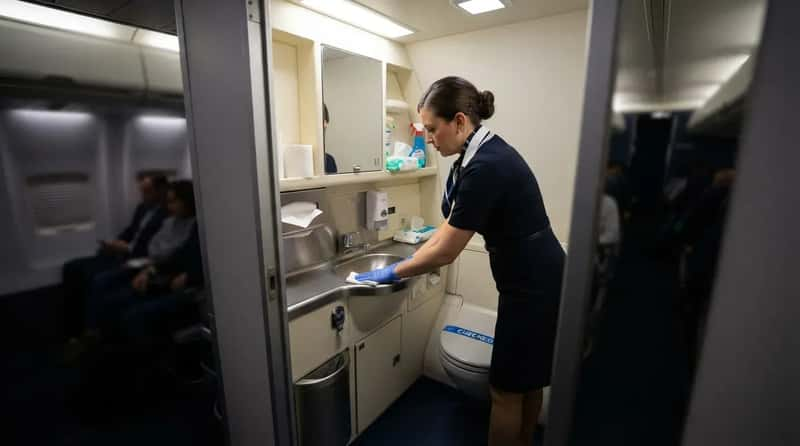
The most important job in a long delay might be the bathroom. The tarmac rule requires carriers to keep lavatories operable. That’s why you’ll see a flight attendant slipping in and out between passengers with supplies.
At least one airline’s plan spells it out: the flight attendant must keep the aircraft lavatory operable and clean. A bathroom that fails at hour two becomes a crisis by hour three. Crews make small calls all the time about restocking, cleaning and when to steer people to a different lavatory.
And it’s not only the lavatory that crews have to manage, as #13 shows.
#13 – Managing a Cabin That Slowly Turns Into an Oven (or a Freezer)
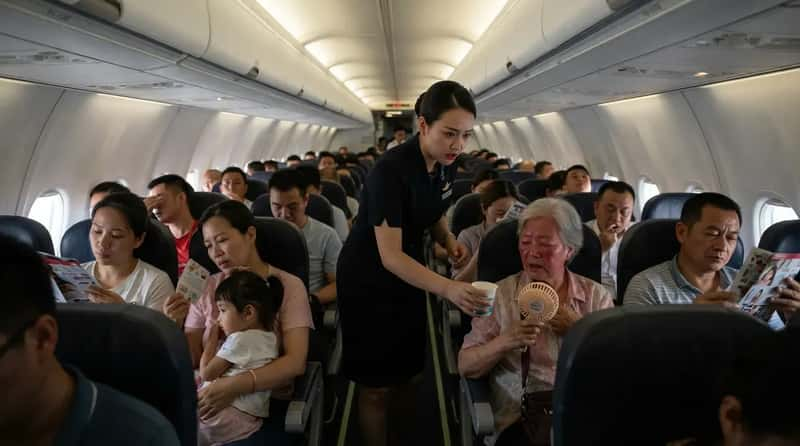
Temperature isn’t just a courtesy. At least one airline’s plan says crew will monitor and maintain a comfortable cabin temperature during a ground delay. Lavatories and a livable cabin are treated as part of the same basic duty of care.
Comfort changes by the minute, so crews watch for early signs: flushed faces, fanning, restless kids. A warm, packed cabin is where small medical problems start. If it’s getting uncomfortable, crews can flag it to the cockpit, which can adjust power settings or ask ground staff for help.
The next decision is the one crews hope they never have to make, and it’s #12.
#12 – Knowing When a Sick Passenger Needs More Than a Band-Aid
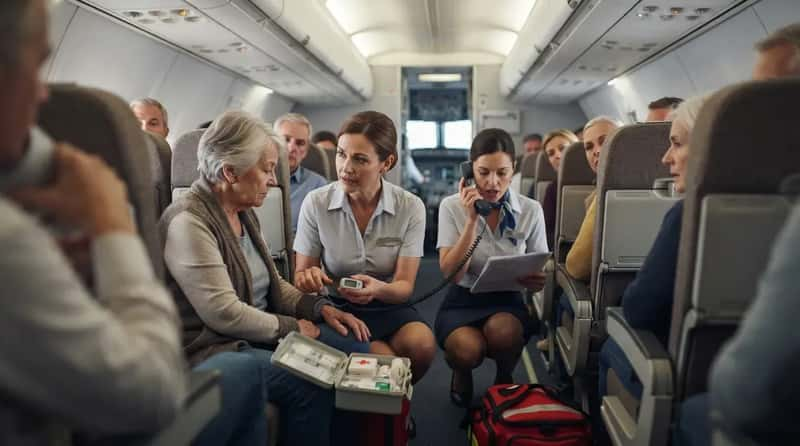
When someone looks unwell, the clock matters. Medical emergencies can be life-threatening, so they get dealt with straight away. The tarmac rule also requires medical attention to be available if it’s needed.
Crews aren’t doing it alone. One carrier says its planes have telemedical support, two enhanced emergency medical kits and at least two first aid kits. Another airline trains its flight attendants to coordinate with third-party medical providers during a lengthy tarmac delay. The crew may be talking to a remote doctor while all you see is someone kneeling by an aisle seat.
But the crew’s sharpest skill isn’t medical. It’s something else entirely, in #11.
#11 – Spotting the Passenger Who Is About to Snap
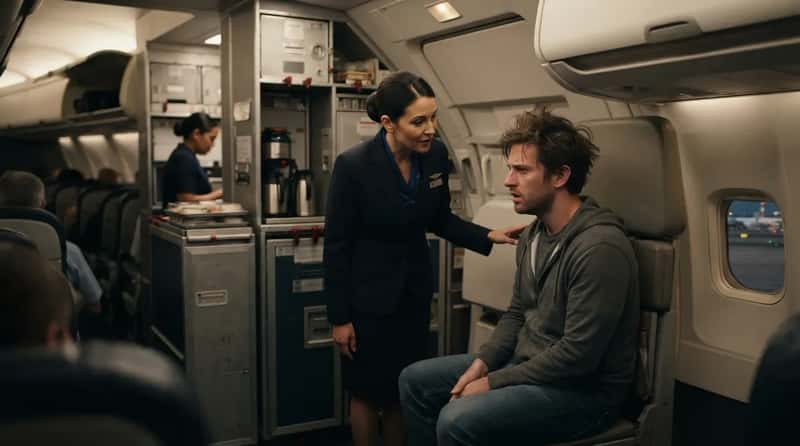
Crews are watching faces, not just seat belts. Flight attendants scan the cabin for signs of illness, distress or a potentially disruptive passenger. In a long delay, that scan gets a lot sharper.
Then comes the quiet intervention. Distressed or disruptive passengers are often steered to a quiet area, and the situation is de-escalated before it can set off panic in the cabin. The goal is to stop one bad moment from spreading to 150 other people. You may never notice it happening, because it usually plays out near the galley.
Worth Knowing
- The scan covers illness, distress and potential disruption, all at once.
- Early, quiet contact is the preferred first move.
- Steering someone to a calmer spot keeps the rest of the cabin out of it.
- Most of it happens in galley corners, out of sight.
Next up is a decision about movement, and it’s more contested than you’d think.
#10 – Deciding Whether People Can Stand Up and Walk Around
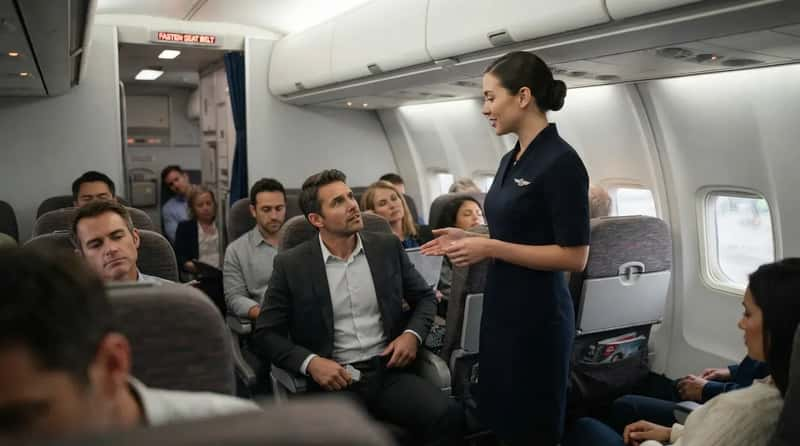
You want to stretch. The crew has to decide if it’s safe. One airline’s plan says customers can use electronic devices and move about the cabin, in accordance with safety and federal guidelines. That second part carries a lot of weight.
Even lavatory trips can hinge on the cockpit. At another carrier, passengers get lavatory access as long as the pilot-in-command says it’s safe to move around the aircraft. The seat belt sign isn’t just a suggestion. It can change quickly, and crews have to enforce it even when everyone is tired and irritated.
But the question of when the delay “officially” began might surprise you, and it’s #9.
#9 – Tracking When the Clock Actually Started
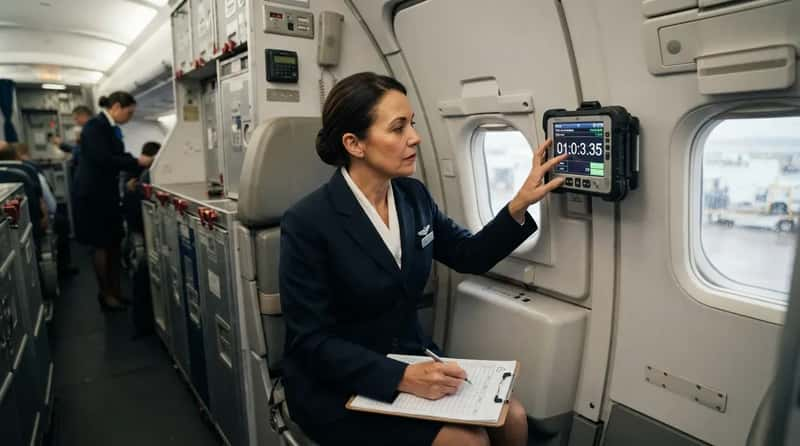
The delay you feel and the delay on paper aren’t always the same. At one airline, a tarmac delay begins when passengers no longer have the opportunity to deplane, which can happen before the plane even pushes back. So the clock may already be running while you think you’re still boarding.
U.S. rules set the limit at 3 hours for domestic flights and 4 for international flights, with exceptions for safety, security and air traffic control. That means the crew is tracking a number you’ve probably never been told. Once the cabin door closes, someone is always counting.
Still, even when the clock is running, the crew doesn’t always do what you expect, as #8 shows.
#8 – Holding Back the Snack Cart When Safety Says No
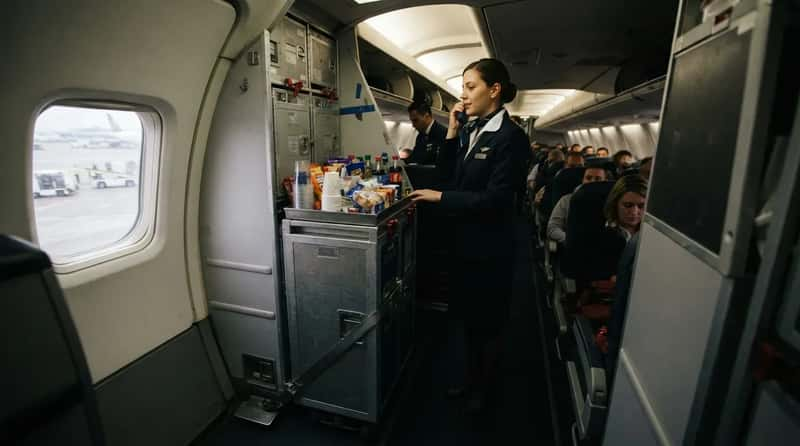
Sometimes the answer to your hunger is “not right now.” Carrier plans promise food and water within two hours unless the pilot-in-command decides safety or security considerations rule it out. It’s an exception, but it’s a real one.
The same logic applies to the clock itself. Exceptions include a pilot determining that returning to the gate would endanger the aircraft, or air traffic control advising that it would significantly disrupt airport operations. The captain can overrule the plan, and the crew has to follow. If the cart stays parked, that’s usually the reason.
Meanwhile, another conversation is happening that you can’t hear, and it’s #7.
#7 – The Whispered Conversation With the Ground
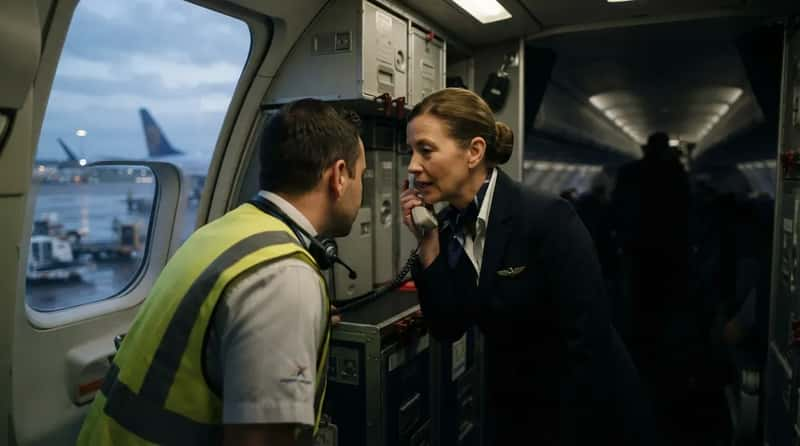
Crews are the link between the cabin and everyone else. During a ground delay, flight attendants stay in contact with the senior crew member, the flight crew and ground staff as appropriate. That’s how a rumor in row 12 becomes a real update.
The information flows both ways. A crew member who knows a part is on its way handles the cabin very differently from one who knows nothing. The flight attendant often knows only a little more than you do. What they decide to share, and when, shapes how the whole cabin reacts.
If the news gets worse, the next decision is the one passengers actually cheer for, and it’s #6.
#6 – Choosing to Move Everyone Back to the Gate
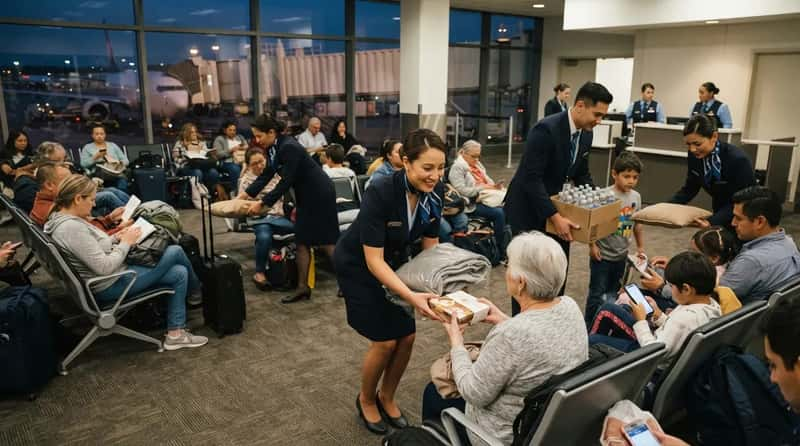
Sometimes the plane just isn’t going anywhere. If a long delay is expected, such as a technical issue that needs a part or engineers flown in, passengers may be moved back to the gate. That decision involves the cockpit and the airline’s operations team.
Then the crew’s job changes. Flight attendants may look after passengers at the gate, handing out blankets, cushions, meals and water depending on how long the wait will be. Your flight attendant can turn into a gate-side caregiver overnight. It’s a role most passengers never expect them to play.
But the crew’s own hours may decide the whole thing, which brings us to #5.
#5 – Quietly Counting Their Own Duty Hours
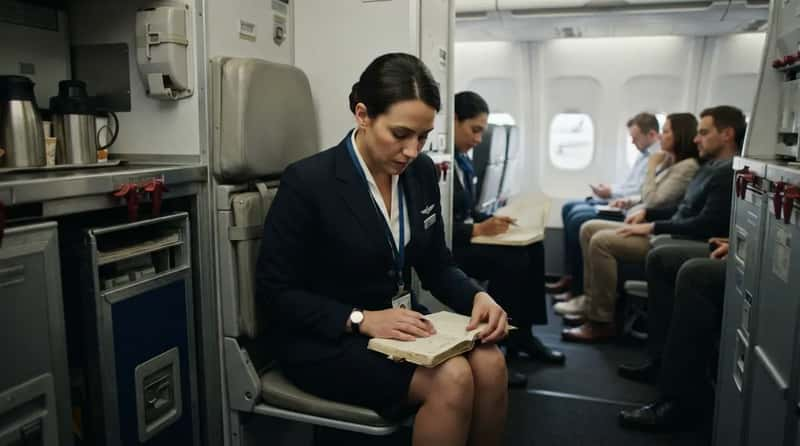
Here’s what most people don’t realize. A delay burns through the crew’s legal workday too. Every minute on the tarmac counts toward their duty time, and that’s a conversation that often happens off-mic.
Sometimes the answer is to replace everyone. With a long delay, the entire crew may be stood down and a standby crew brought in. Your flight may be late because the crew ran out of legal hours, not because the plane was broken. It’s a frustrating truth, but the limits exist to keep exhausted people from working a safety-critical job.
Quick Compare
- What you see: A plane that’s late. What the crew sees: A legal workday shrinking minute by minute.
- What you see: The same friendly faces. What the crew sees: A possible swap to a standby crew.
- What you see: A delay that ends at the gate. What the crew sees: Required rest that follows them home.
The rest requirements behind this are tougher than they used to be, and #4 explains why.
#4 – Weighing a Rest Rule That Can’t Be Bent Anymore
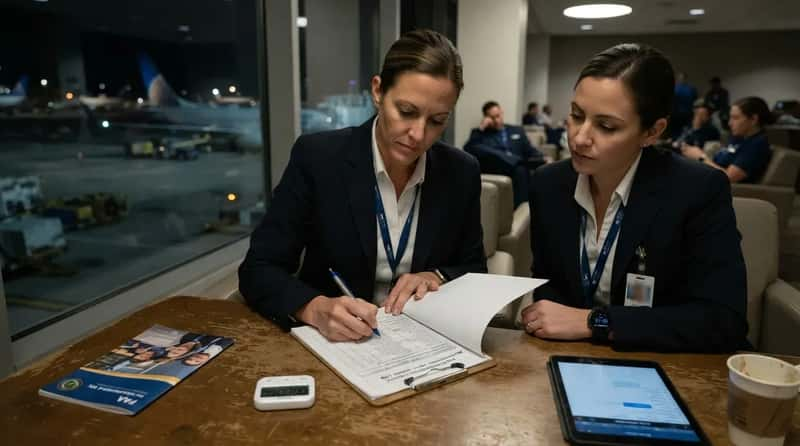
Crews aren’t just being picky about hours. The FAA requires U.S.-based flight attendants to get at least 10 consecutive hours of rest between scheduled duty periods of 14 hours or less, and that rest can’t be reduced. So a late landing can ripple into the next day’s flights.
The rule is fairly new. The FAA finalized it in November 2022, and airlines had to comply by January 10, 2023. Longer scheduled duty periods require 12 hours of rest, and crew must get 24 consecutive hours free from duty in any seven-day stretch. A long delay can quietly wipe out tomorrow’s flight for the same crew.
While the clock ticks, crews also have to look after themselves, and that’s #3.
#3 – Staying Sharp When Their Own Day Is Falling Apart
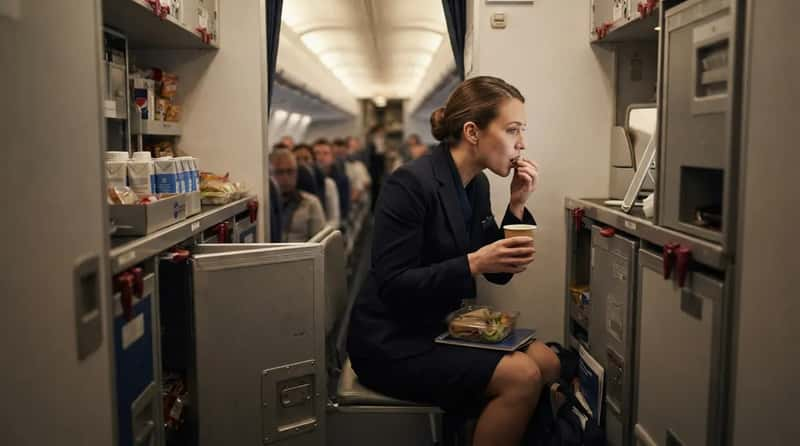
Crew members get tired and hungry too. Yet they have to stay alert in case of an emergency, and coffee and water become essential for staying awake. A long delay makes that much harder.
They fit in meals when they can. Crew eat when time allows, answer call bells and handle galley requests on top of their usual duties. Your calm flight attendant may not have eaten in hours. They keep going because the safety job doesn’t pause, even when the plane isn’t moving.
The next decision is one passengers can actually influence, and it’s #2.
#2 – Judging Which Complaints Deserve an Immediate Fix
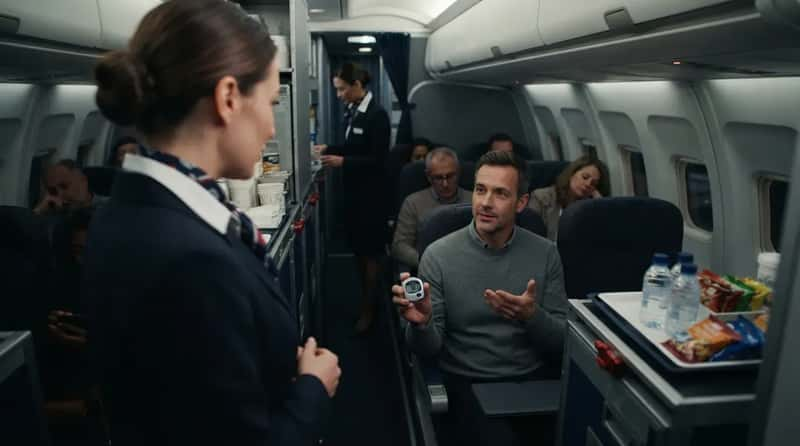
Every crew member hears the same questions again and again. Some requests are quick fixes, and some can’t be changed no matter how nicely you ask. Passenger-rights advocates commonly advise a calm, factual request: note the time the delay began, and if you haven’t been offered water or a snack within two hours, ask a flight attendant directly and mention that time.
Crews are bound by the same two-hour rule, so a specific request gives them something concrete to act on. The most useful passenger on a delayed flight is the one with a stopwatch and a polite tone. Those requests tend to move to the top of the pile because they’re clear and easy to solve.
But the single biggest decision of all comes down to one number, and it’s #1.
#1 – The Three-Hour Call That Can Turn the Plane Around
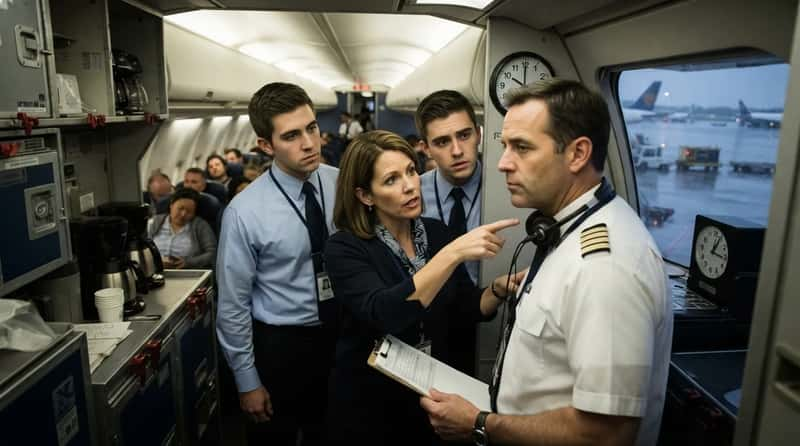
This is the decision that changes everything. Under the U.S. tarmac rule, airlines must give passengers the chance to get off the plane before a delay passes 3 hours on domestic flights or 4 on international ones, barring safety, security or air traffic control exceptions. Behind the scenes, the crew and cockpit are watching that clock.
The rule exists because of public outrage. Scenes from stranded planes, including a famous 2007 JetBlue meltdown, pushed regulators to act. When the rule was announced, the Transportation Secretary said airlines could face fines of up to $27,500 per passenger. On a plane with 150 people, that math tops $4 million. And if a delay runs long or the flight is cancelled, passengers can end up walking off the aircraft.
Why It Stands Out
- It was born from a real meltdown: the JetBlue stranding of February 14, 2007.
- It carries a hard number, 3 hours at home and 4 abroad.
- The penalty is counted per passenger, so the total grows fast.
- The crew is the group that actually has to live inside the countdown.
A long delay looks like nothing is happening, but it’s often the busiest stretch of a crew’s day. They’re watching clocks, bathrooms, temperatures, tired faces and their own legal hours. Federal rules set the floor for water, snacks, lavatories, medical help and a way off the plane.
Everything between those lines is human judgment. Next time you’re stuck on the ground, look for the flight attendant who seems calm. They’re probably making five decisions you’ll never see.