Picture a 72-year-old stepping off a train in a city where she can’t read a single sign. She doesn’t panic or check her phone every ten seconds. She just starts the same small routine she has run in dozens of towns before. Most people assume veteran travelers simply wing it with confidence, but the opposite is true.
The real edge is boring, and it’s repeated at every hotel, airport and platform until nobody has to think about it. A few of these habits cost nothing. One covers a money gap that catches a lot of people over 65 off guard, and another is a habit that even the experts say is widely misunderstood. Start at #17, because the first few are the ones you’ll want to copy tonight.
#17 – The Passport Copy Nobody Thinks They Need Until They Do
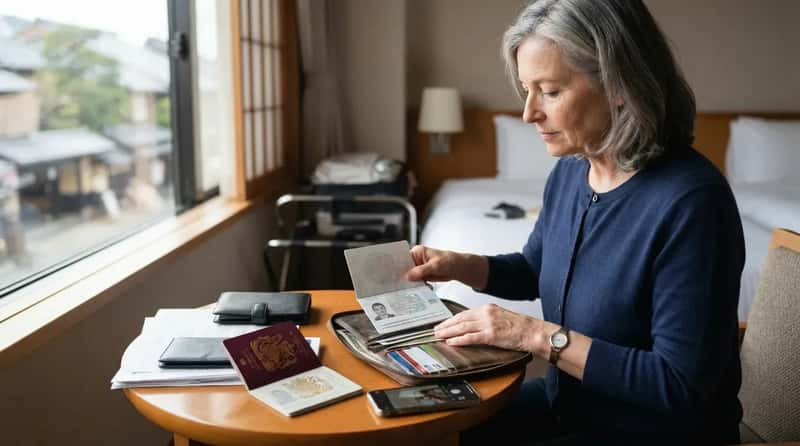
Before the first bag is unpacked, seasoned travelers make sure their documents exist in more than one place. They photograph the passport photo page and email it to themselves. They also keep a paper copy, stored apart from the original. Many of them can’t remember the last time they skipped this.
The logic is simple. A lost passport is a bad day. A lost passport with no backup is a bad week of embassy lines and phone calls. Veterans treat the copy as a ten-second insurance policy, and they repeat it for every new country.
But that’s nothing compared to what they do in the first hour after arriving at #16…
#16 – The “First Hour Loop” That Replaces Every Map App
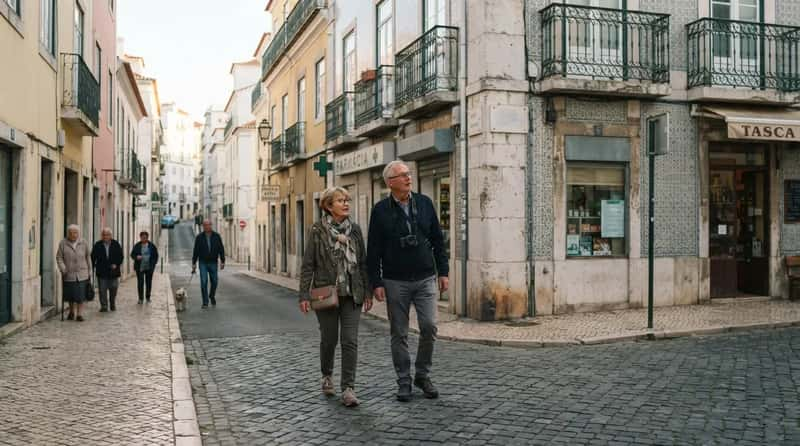
Within an hour of checking in, experienced travelers walk a small loop around the block. They aren’t sightseeing. They’re looking for a pharmacy, a place to eat, and the way back. By the time they unpack, they already know where the nearest help is.
Most first-timers skip this and rely on a phone battery. Seasoned travelers know a dead phone turns a minor wrong turn into a real problem. The loop also makes an unfamiliar street feel like a neighborhood, and that calm lasts for the rest of the stay.
But the next routine happens behind a closed hotel door, and almost nobody talks about it at #15…
#15 – The Thirty-Second Room Check Before the Bags Come Off

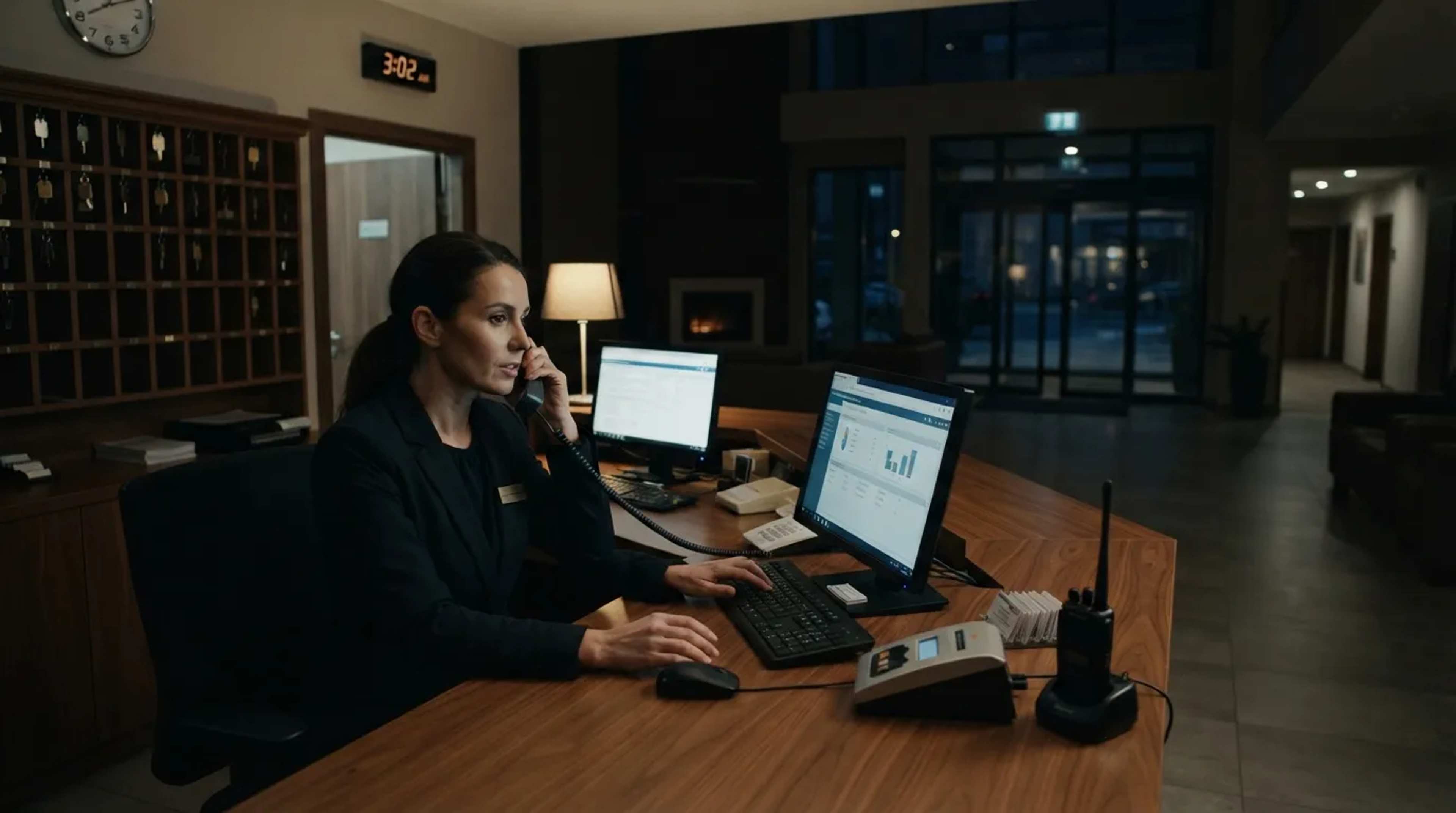
The door closes, and the bags stay by the entrance. First comes a quick scan. Does the lock work properly? Where is the exit route posted? Is the in-room safe working? Veterans find the problem now, not at 11 p.m.
If something is off, they ask for a different room right away. The front desk is far more flexible before the luggage is spread across the bed. They also glance at the bathroom floor and the path from bed to bathroom, which matters a lot on a dark first night.
At a Glance
- Lock: Make sure the door latch and deadbolt both work.
- Exit: Find the posted route and note where the stairwell is.
- Safe: Test it before you put anything inside.
- Path: Check the way from bed to bathroom for rugs, steps or clutter.
But one blunt question, asked before they even book, saves even more trouble at #14…
#14 – The Stairs Question That Saves a Whole Trip

Many travelers over 65 have learned to ask: “How many steps are there between the street and my bed?” Photos can hide a lot. Older buildings, especially in historic city centers, often have no elevator at all. A hotel can look perfect online and still mean three flights of stairs with luggage.
Seasoned travelers also ask whether the elevator is actually working. They request a lower floor and a room near the lift. It’s a two-minute email that spares them a miserable first evening.
But what they do with their money at #13 surprises even frequent flyers…
#13 – The Cash-and-Cards Split Nobody Skips
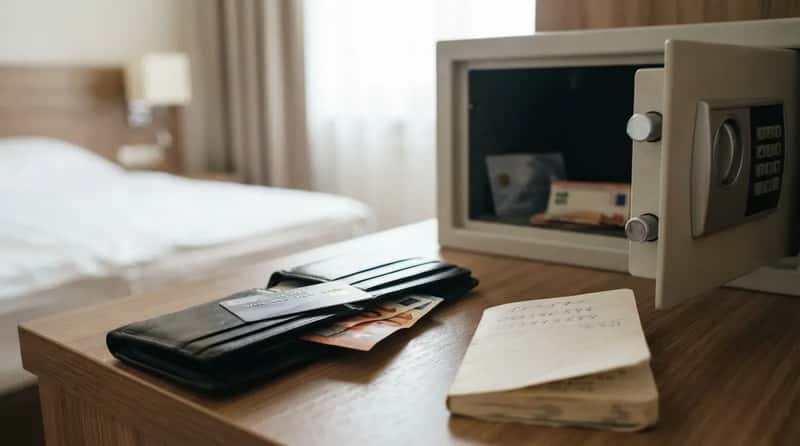
Veterans never keep everything in one place. One card and some cash ride in the wallet. A backup card and emergency cash stay in the room safe or a separate bag. One lost wallet should never mean zero access to money.
It’s a mistake first-timers repeat. They carry every card in one pocket, and one pickpocket or one forgotten restaurant table ends the trip’s budget. Seasoned travelers also write their card issuer’s phone number somewhere that isn’t their phone.
But the habit at #12 looks small and gets argued about constantly…
#12 – The Water Bottle That Comes Out Before the Plane Does
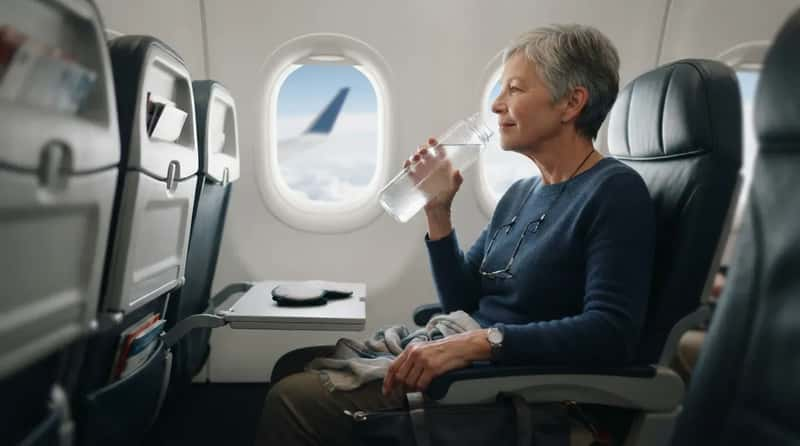
Seasoned travelers are rarely seen without water. They carry an empty bottle through security and fill it on the other side. They sip steadily on flights and trains. Many veterans swear it’s the difference between arriving fine and arriving wrecked.
Here’s the honest footnote. The CDC Yellow Book finds no evidence that dehydration is linked to travel-related blood clots. So the sensible reason to keep sipping is that a long flight dries you out, not that water is a clot plan.
But the next routine decides whether a lost suitcase turns into a health scare, at #11…
#11 – The Medication Rule That Never Goes in the Checked Bag
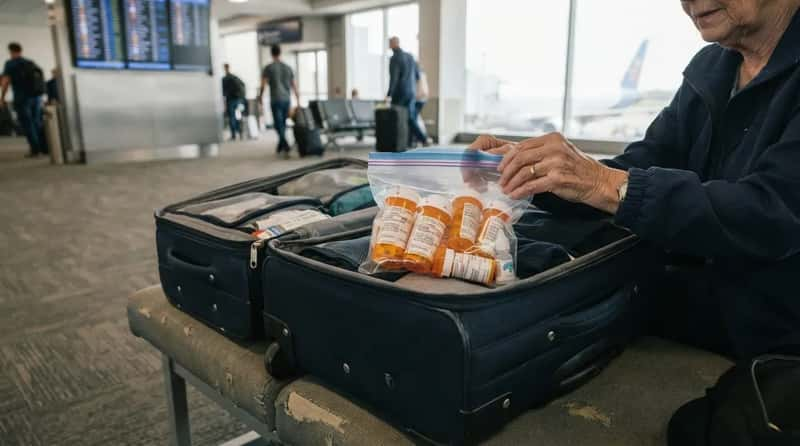
Every prescription goes in the carry-on. Always. The TSA strongly recommends keeping medication in your carry-on in case you need immediate access. Seasoned travelers also keep pills in their original, labeled containers, since rules on prescription labeling can vary by state and country.
Medically necessary liquids get special handling, but you must tell the officer at the start of screening. Even a common medication can be restricted abroad. Some countries limit or ban drugs that are routine in the U.S., so veterans check destination rules before they fly, not at the border.
Worth Knowing
- Medications belong in the carry-on, where you can reach them right away.
- Medically necessary liquids can exceed the usual 3.4-ounce limit, but you need to declare them at the start of screening.
- Original labeled containers make questions at security or customs easier to answer.
- Destination rules matter, so check them before you fly.
But the habit at #10 may be the most underrated one on this list…
#10 – The Ankle Flex Every Time the Seatbelt Light Goes Off
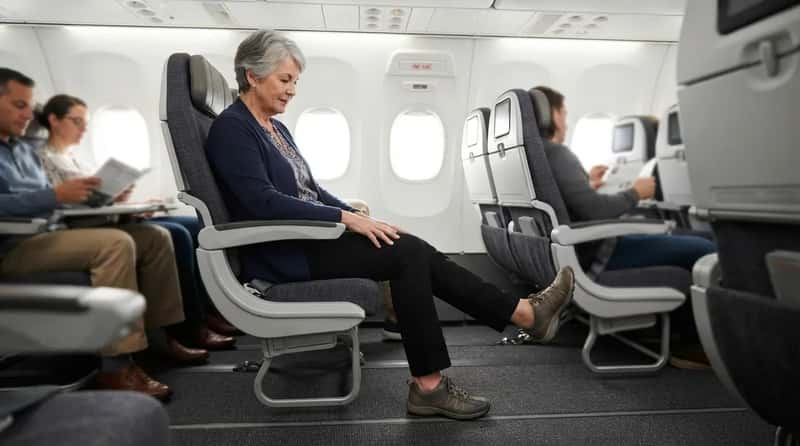
Long trips are hard on the legs. The CDC says anyone traveling more than four hours by air, car, bus or train can be at risk for blood clots. Seasoned travelers move on a schedule. They stretch their legs straight out and flex their ankles, pulling toes toward them.
They also walk when the aisle is clear and pick an aisle seat when possible. The hidden danger is how quiet it can be. About half of people with deep vein thrombosis have no symptoms at all. The CDC notes the risk is highest in the first couple of weeks after a trip and can linger for weeks beyond that.
But one popular fix for this is far more controversial than people admit, at #9…
#9 – The Compression Sock Debate Nobody Wants to Have
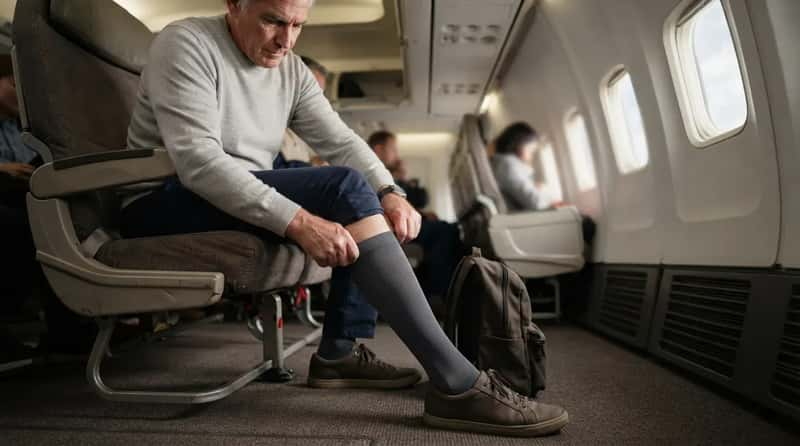
Many travelers over 65 wear compression socks on every flight. Here’s the part that surprises them. For long-distance travelers at increased risk, the American College of Chest Physicians recommends fitted below-knee stockings. For travelers without risk factors, the American Society of Hematology suggests not using them.
So the stockings aren’t automatically right for everyone. Guidelines draw a line between higher-risk and average-risk travelers. The sensible routine is to ask a doctor before the trip. The CDC says to talk with your doctor if you think you may be at risk.
But the next routine isn’t about the body at all, and it’s easily overlooked at #8…
#8 – The Wallet Card That Speaks When You Can’t
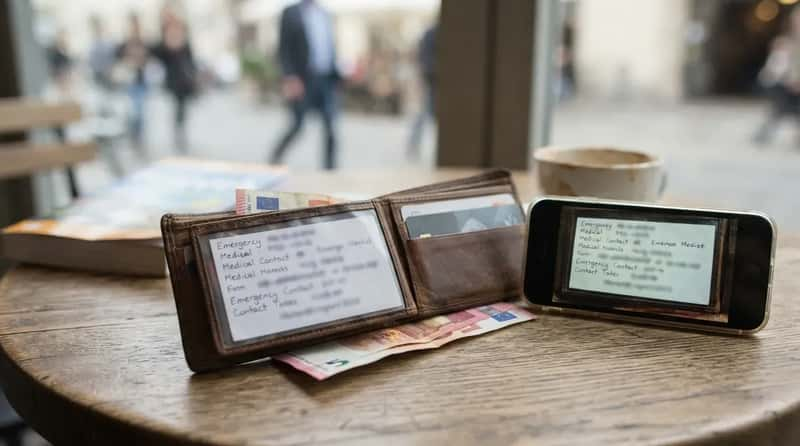
Seasoned travelers carry a small card with their essentials. It lists medications, allergies, conditions and an emergency contact. They keep a copy in the wallet and a photo on the phone. If something happens, a stranger can read it in seconds.
They write it in plain language, and some add a line in the local language of their destination. A translated card means a paramedic or hotel clerk doesn’t have to guess. It’s the cheapest safety tool on this list, and it takes about ten minutes to make.
Fast Facts
- Medications: Names and doses, in plain language.
- Allergies and conditions: The things a paramedic would need to know first.
- Emergency contact: A name and a number that isn’t only stored in your phone.
- Backup: Paper in the wallet, plus a photo on your phone.
But the money question at #7 is where the real surprises begin…
#7 – The Medicare Check Before Any Passport Stamp

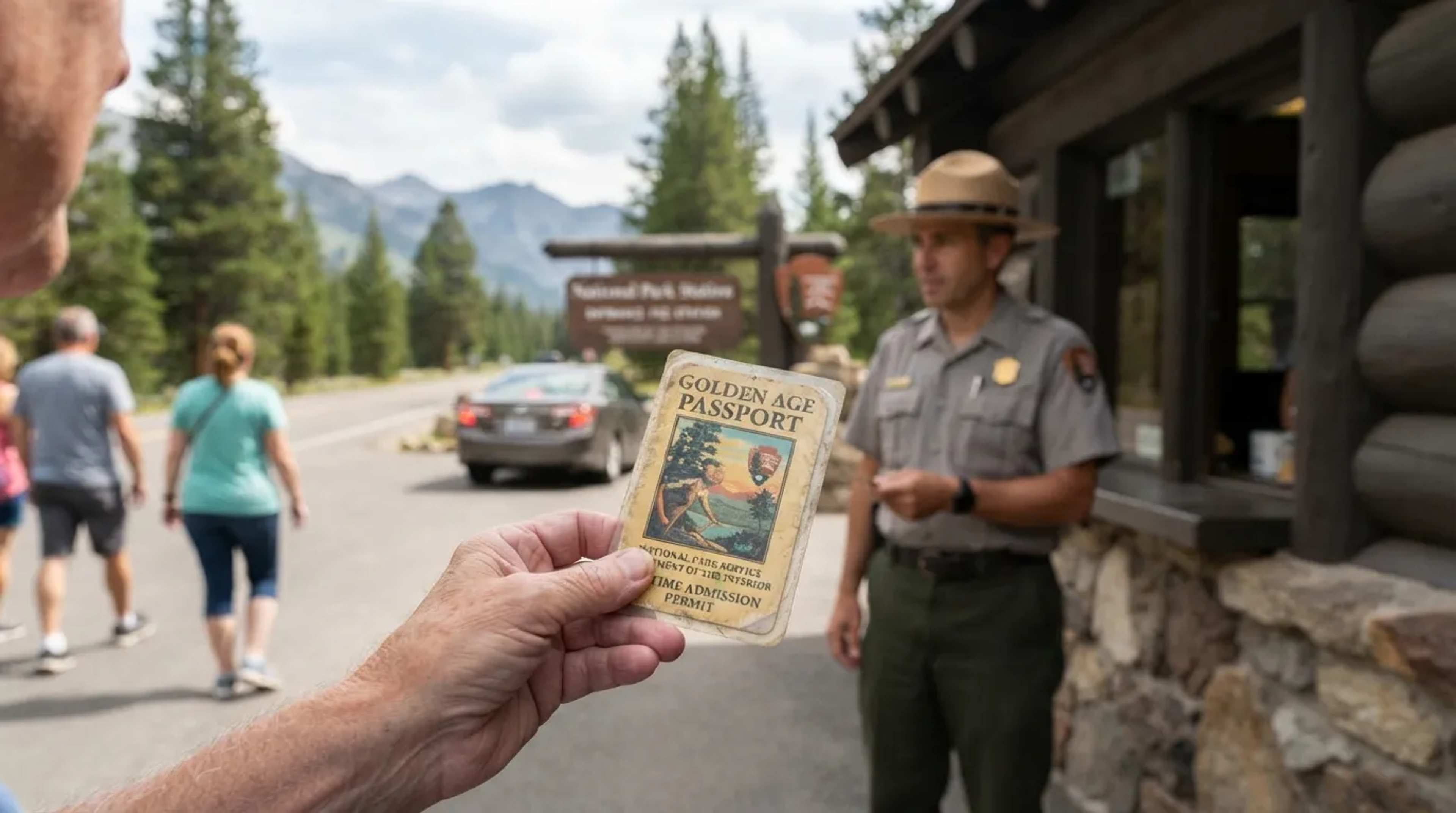
Veterans over 65 know a hard fact. Medicare generally does not offer healthcare coverage outside the United States, with a few specific exceptions. Original Medicare does cover care in the U.S. and territories like Puerto Rico and Guam. Plenty of people assume the card works everywhere.
That means a hospital visit abroad can become a huge out-of-pocket bill. Medicare Part D also doesn’t cover drugs bought outside the U.S. Seasoned travelers confirm their plan’s rules before they book flights, not after a diagnosis.
But the cost of one bad scenario at #6 will make you rethink everything…
#6 – The Travel Insurance Line Item They Never Cut
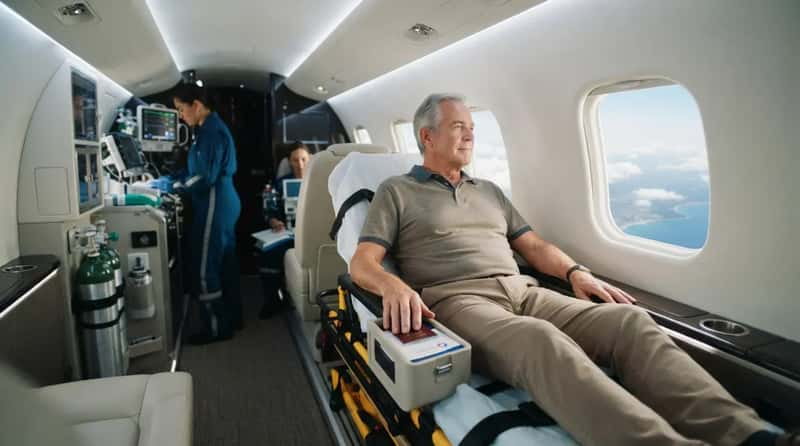
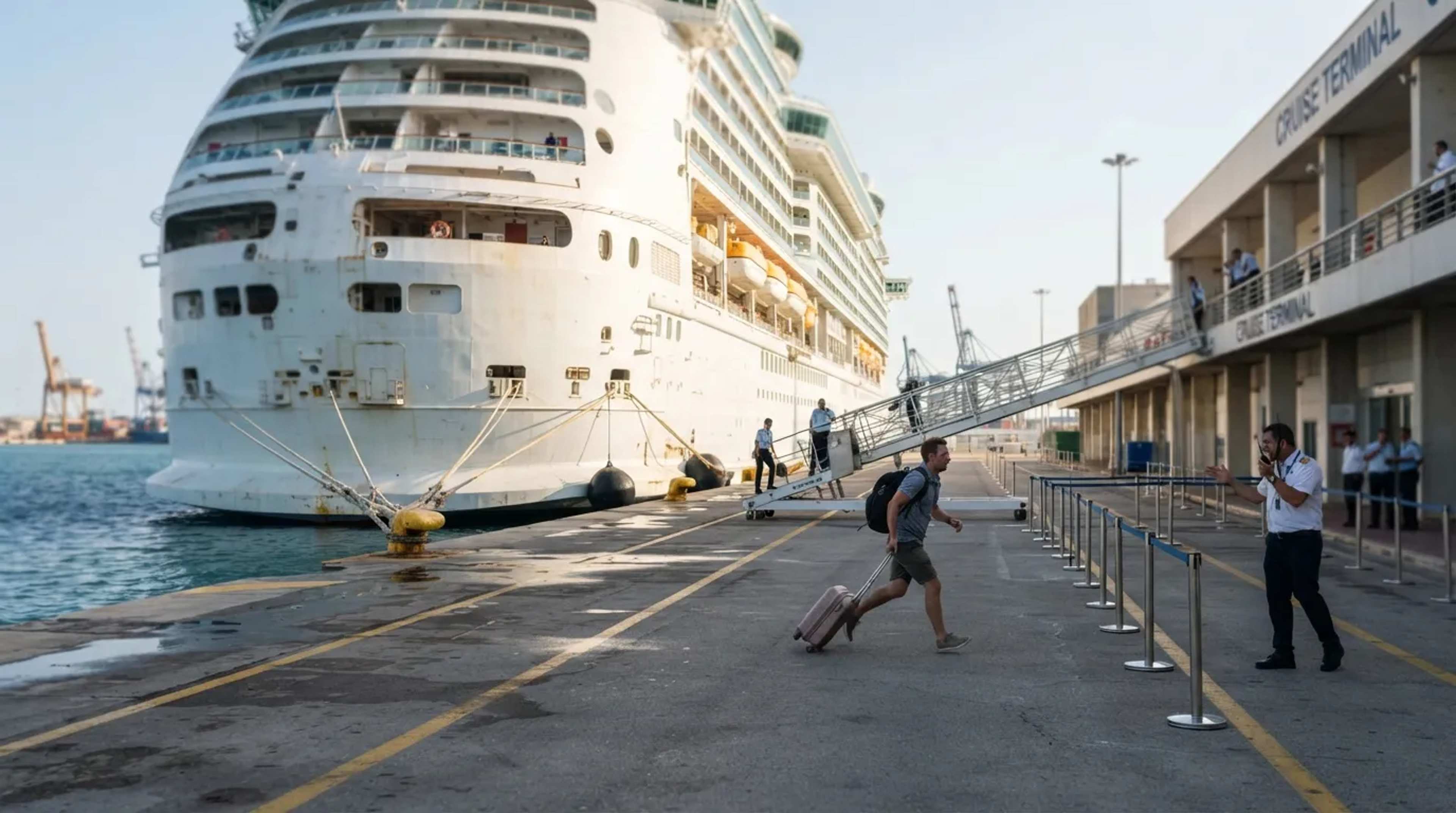
Seasoned travelers treat travel medical insurance as non-negotiable. Medical evacuation by air ambulance can cost over $100,000 internationally. Cruise ships can create a gap too. Medicare generally won’t cover medical costs on a cruise ship more than 6 hours from a U.S. port.
Some people have a Medigap plan with foreign travel benefits. Those plans can pay 80% of medically necessary emergency care abroad, but details vary, so veterans read the policy. Many argue that skipping insurance to save a few hundred dollars is the biggest false economy in travel.
But the last few routines have nothing to do with paperwork. The next one flips the whole idea of a packed trip at #5…
#5 – The “One Big Thing” Rule That Rewrites the Day

Seasoned travelers pick one main event per day. It might be a museum, a hike or a market. Everything else is a bonus. They’d rather see one thing well than five things badly.
First-timers often cram a checklist into every morning. Veterans have learned that crowded days produce blurred memories and sore feet. They leave gaps on purpose, and some of the best moments of the trip happen in those gaps.
Quick Compare
- The cram-it-all day: A long checklist, rushed stops and sore feet by mid-afternoon.
- The one-big-thing day: One main event, with everything else treated as a bonus.
- What lasts: Fewer blurred memories, plus room for surprises.
But the next routine looks lazy, and it’s secretly one of the smartest on the list at #4…
#4 – The Afternoon Reset That Everyone Else Mocks

Around midday, many veterans head back to the room. They rest, put their feet up and sometimes nap. Then they go out again for the evening, when cities often feel livelier and cooler. Younger travelers often call it wasted time.
It’s actually a pacing strategy. Travel is tiring, and fatigue makes people careless and cranky. A short reset means the evening meal is something they enjoy, not something they endure.
But the habit at #3 is the one family members are most grateful for…
#3 – The Itinerary That Always Lives With Someone Back Home

Seasoned travelers leave a full itinerary with a trusted person. It includes hotel names, flight numbers and the phone numbers they’ll use. They also set a check-in rhythm, even if it’s just a short message each evening.
It’s not about being watched. It’s about making sure that if plans fall apart, someone knows where to start looking. Veterans also share any changes, because an outdated itinerary can be worse than none.
But the next habit turns total strangers into the best guides at #2…
#2 – The One Question They Ask Every Front Desk

On the first day, veterans ask a local one simple thing: “Where would you eat tonight if it were your day off?” The answer is often far better than any online list. They ask the front desk, the barista or the shopkeeper.
Tourist-heavy spots can be overhyped and overpriced. Locals tend to point toward the places they actually go. Seasoned travelers also write the answer down on the spot, which makes people even more willing to help.
But the final routine is the one many seasoned travelers say matters most, at #1…
#1 – The Nightly Note That Turns a Trip Into a Memory

Before bed, veterans write a few lines. It might be in a paper journal, a notebook or a phone note. They record the best meal, a stranger’s kindness or one small moment. Most do it in under five minutes, every single night.
Days blur quickly when you move between cities. A short note keeps names, tastes and small details from vanishing by the next stop. Years later, those pages are often what they reread, and it’s rarely the famous landmarks they linger on.
Seasoned travelers aren’t fearless. They’re prepared. Their routines cover the unglamorous basics: copies of documents, medication in the carry-on, and a hard look at what Medicare does and doesn’t cover abroad. Then they protect the good stuff, like rest, one big plan per day and a nightly note.
The real mistake isn’t traveling after 65. It’s assuming someone else has covered the gaps. The people who look effortless at every stop are simply the ones who did the boring part first, so the wonderful part can be all that’s left.