For years, you’ve probably grabbed the window. It feels like the reward for a long trip: a view, a wall to lean on, and nobody bumping your shoulder. But for travelers over 60, that favorite habit can quietly cost comfort, circulation and a lot of patience.
Seasoned flyers and travel pros choose their seats very differently, and a few of their picks are not the ones you’d guess. One crowd favorite turns out to be a trap, and the seat at the very top of this list has the CDC behind it. Start at the bottom and see how many you’ve been getting wrong.
#17 – The “Few Rows Away” Rule for Restrooms
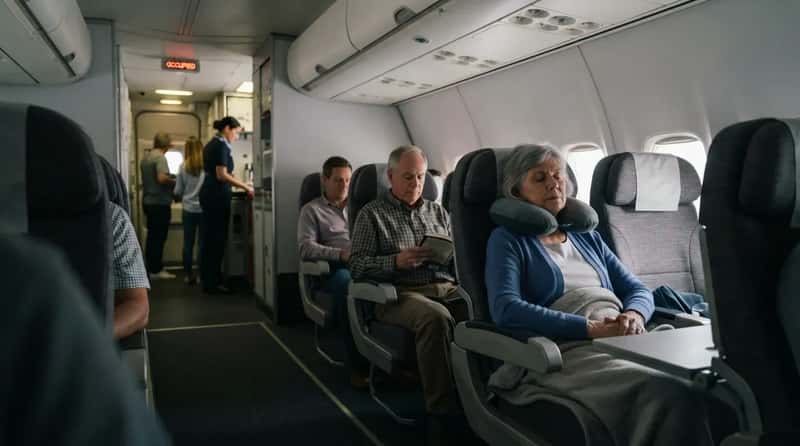
Sitting right beside the lavatory sounds smart if you make frequent trips. Some senior-travel guides even list seats near the bathrooms as convenient for people who need them often. The catch is what happens around those rows.
Lines form, the door slams, and crew gather nearby during service. Many seasoned flyers give themselves a buffer of a few rows instead. Close enough to walk there easily, far enough to doze undisturbed. Ask for a seat three to five rows from the restroom, not next to it.
But that’s nothing compared to what comes next at #16…
#16 – The Last Row Trap (Skip the “Free” Seat Against the Wall)
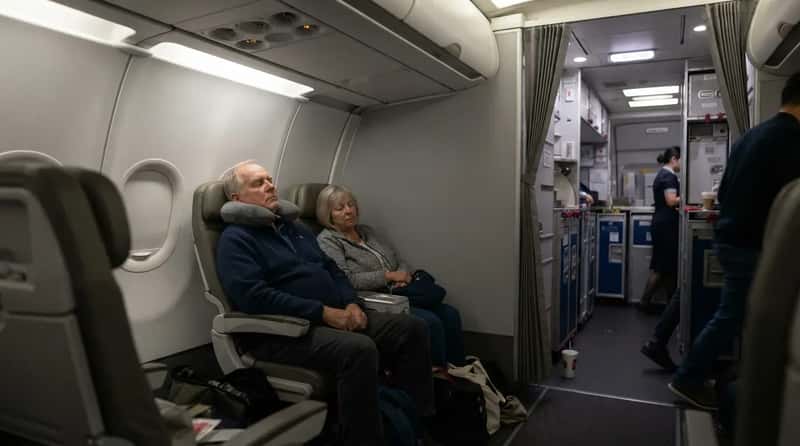
The back row looks like a bargain when the seat map is mostly empty. What most people don’t realize is that it often costs you the one thing you need on a long trip: a seat that leans back. On many aircraft, the last row has little or no recline because a wall sits right behind it.
It also tends to sit close to the rear galley and lavatories, so you get noise, foot traffic and cart rattle. Sliding forward a row or two can change the whole experience. Check the seat map before you accept that “free” last-row seat, and skip it if you plan to rest.
Fast Facts
- Many last rows have limited or no recline because of the wall behind them.
- The rear galley and lavatories are usually steps away.
- Moving forward just a row or two can sidestep most of the noise.
- A “free” seat assignment is only a bargain if you don’t plan to rest.
Still, one popular pick is more divisive than any of these. Keep going to #15…
#15 – The Window Over the Wing: Great for Sleep, Risky for Legs
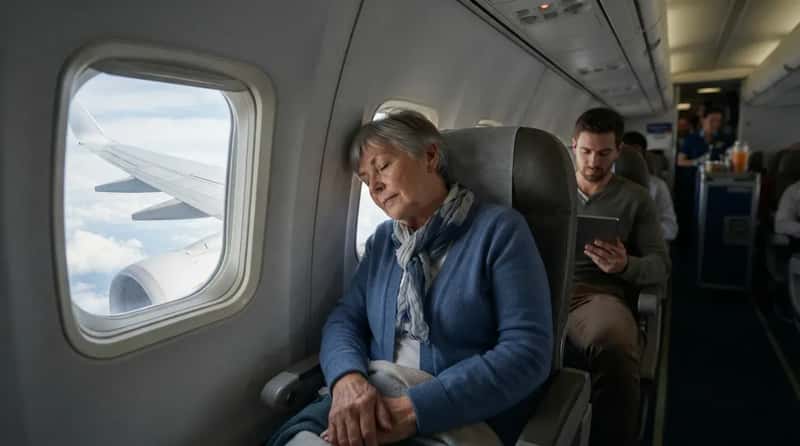
Here’s the first pick that starts arguments. For an overnight crossing, a window seat over the wing is often recommended for sleep. You get a wall to lean on, and nobody climbs over you.
But that same wall traps you. Every restroom trip means asking two strangers to move, and many travelers over 60 quietly stop getting up. That’s the real mistake: choosing sleep over circulation on a long flight. Some research has linked window seats to higher clot risk, likely because those passengers move less. For short or sleep-focused trips, the window works. For anything long and daytime, it’s overrated.
Next up is a trick that married couples swear by in #14…
#14 – The Across-the-Aisle Pair That Keeps Couples Moving

Two seats side by side sounds ideal, yet it often leaves one person stuck at the window or squeezed in the middle. Many experienced couples book two aisle seats across from each other instead. Each person gets easy exit access, and you can still pass a snack or squeeze a hand.
The trade-off is that you can’t lean on each other to nap. Still, couples who fly often say freedom of movement beats closeness for the length of a flight. Nobody has to ask permission, and nobody has to wake the other one to stand up.
But the next seat, #13, has a legroom promise that comes with a hidden catch…
#13 – The Second Exit Row (With a Catch Nobody Mentions)
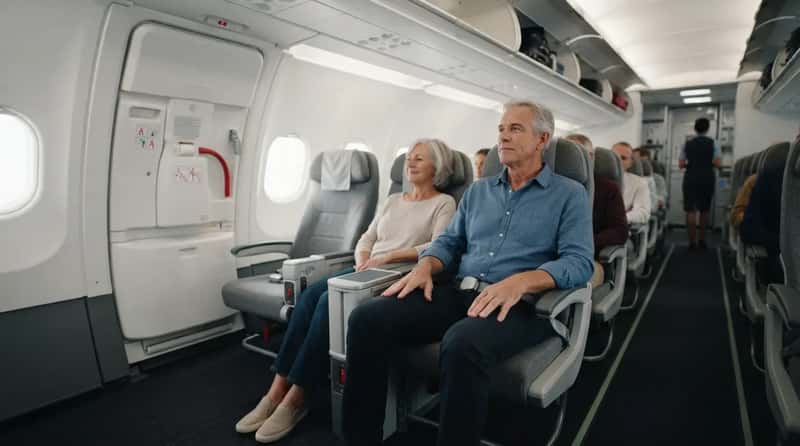
Everyone wants the exit row for the legroom. One long-haul guide recommends the second exit row in particular, because it may still recline. That’s a real insider detail, since the first exit row often doesn’t.
Here’s the truth most listings skip. Exit-row passengers must be willing and able to help in an emergency, and crew can move you if they decide you can’t. Be honest about your strength and mobility before you book it. Paying an upgrade fee for a seat you might lose at the gate is a costly surprise.
The seat in #12 offers legroom too, but not the kind you’d expect…
#12 – The Bulkhead Row: More Space, Less Stretch
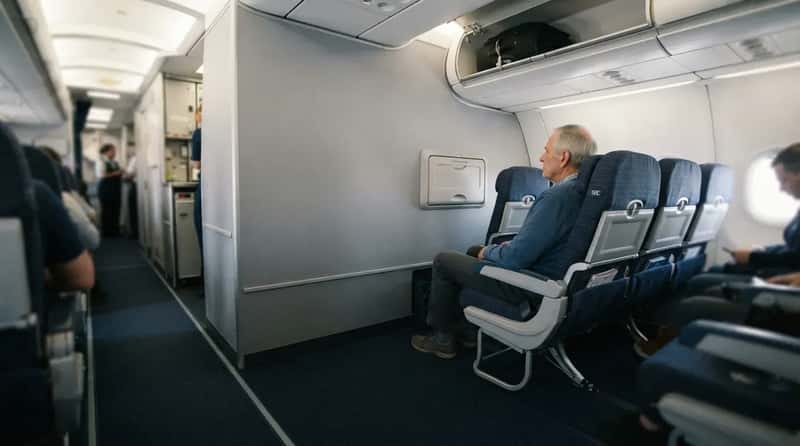
The bulkhead seems like the perfect answer to cramped knees. But travel writers point out that exit rows let you stretch your feet out under the seat ahead, while bulkheads often don’t. You get open space in front of you, yet nowhere to extend your feet. Those two things aren’t the same.
There’s a practical downside too. Bulkhead rows have no under-seat storage during takeoff and landing, so anything you need must go overhead. That means lifting a bag you may want to keep close. Lavatories or a galley often sit right in front of the bulkhead, so lines and crew can gather beside your seat.
Smooth air matters more than most people think, and #11 shows why…
#11 – The Over-the-Wing Aisle for a Gentler Ride
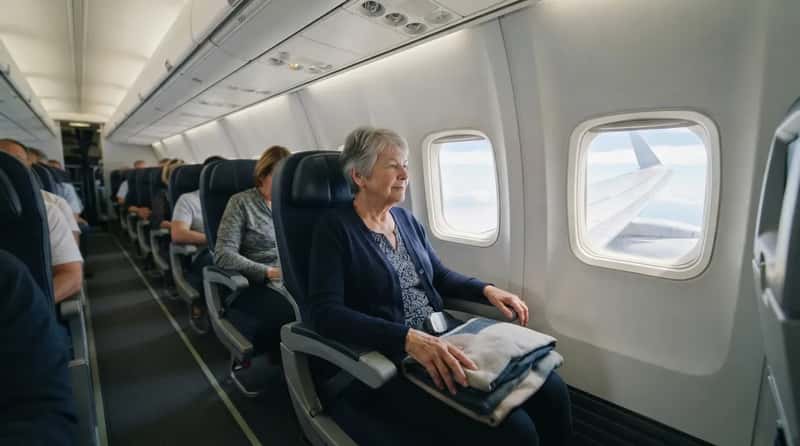
Turbulence rattles older travelers more than they admit. One guide lists any seat directly over the wing as the best choice for a bumpy flight. That’s because you sit near the plane’s balance point, where jolts tend to feel smaller than they do in the tail.
Pair that with an aisle and you get a steadier ride plus easy movement. The trade-off is a little engine noise and a limited view of the horizon. For nervous flyers, many say the calmer feel is worth it. Request this zone when the forecast looks rough.
The next position looks like a middle-of-the-plane gamble, but it isn’t. See #10…
#10 – The Center-Block Aisle on a Widebody
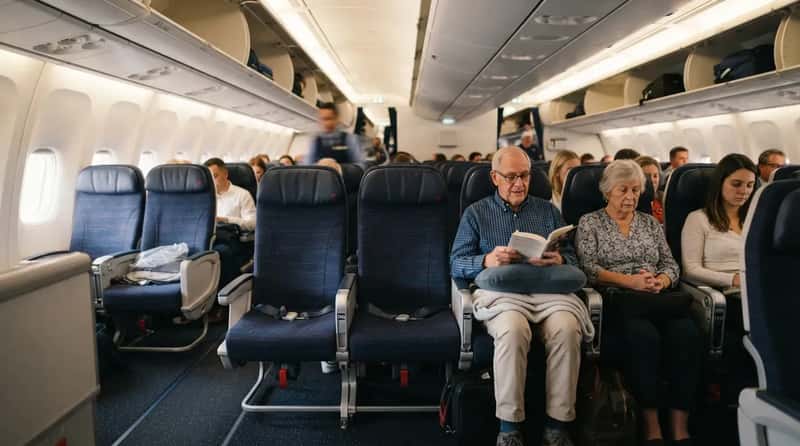
On big jets with four seats across the middle, one aisle seat hides a quiet perk. In a 3-4-3 layout, an aisle seat in the center block has just one seat beside it, while a window seat in a three-seat block has two.
That means fewer people to disturb and fewer people disturbing you. Many travelers book only the window or the far-edge aisle and overlook this layout entirely. It’s a quietly smart pick on transatlantic flights.
Not every great seat is on a plane, as #9 proves…
#9 – Train and Bus: The Forward Seat Near the Door

Coach travel isn’t only about flying. On buses and trains, the best spot is usually near the front or close to the vestibule, where the walk is shorter and the step down is easier. Many older riders end up deep in the car and regret the long trek down a moving floor.
Movement matters here too. Health guidance for long trips by bus or train says standing, stretching and walking the aisle can help. Choose a seat that makes standing up easy, not one you have to fight your way out of.
The next seat saves you a surprising amount of effort, and it’s all about the first few steps in #8…
#8 – The Seat Closest to the Boarding Door
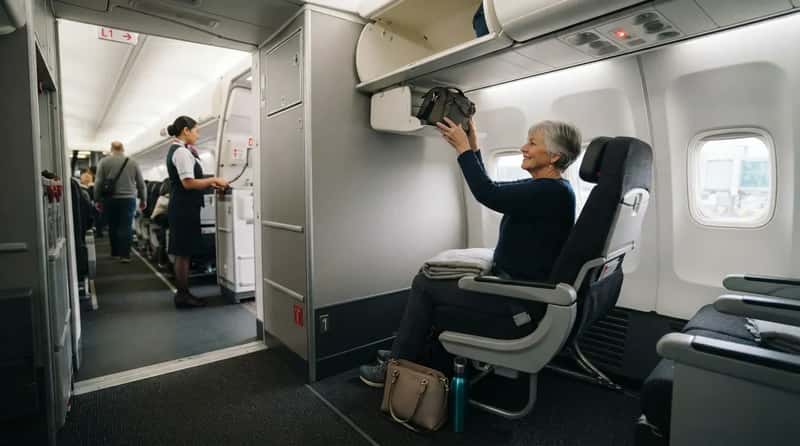
Your journey doesn’t start when you sit down. It starts with the walk down the aisle, and that can feel endless when you’re carrying a bag. A seat near the front door shortens that walk and cuts how long you stand in a slow-moving line.
Boarding also affects the end of the trip. Some flyers swear by Row 1 for faster deplaning, though others prefer comfort during the flight. If you have sore knees or a long walk through the terminal ahead, getting off early can be worth more than a few inches of legroom.
The next upgrade costs money, and experts say it can be worth it. Here’s #7…
#7 – The Premium Economy Seat (When Your Body Needs It)
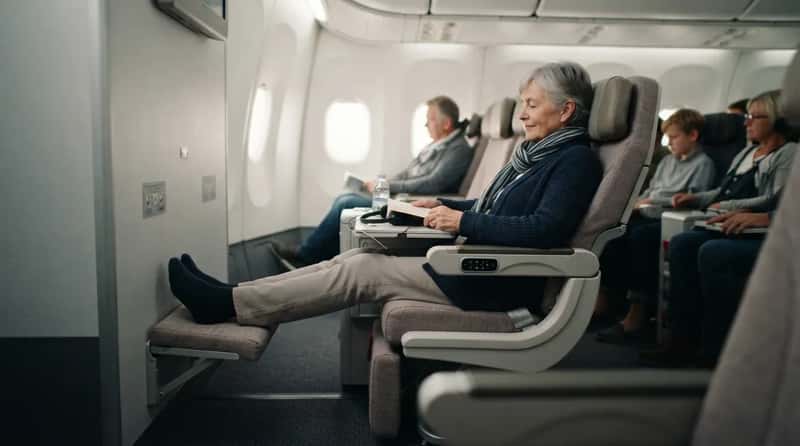
Most people treat premium economy as a luxury. Travel pros see it differently for certain travelers. An AAA travel agent says extra legroom in a bulkhead, exit row or premium economy seat is worth the cost on a long flight if you have circulation issues or a condition that makes sitting uncomfortable.
The key phrase is “if you have.” For a healthy traveler on a short flight, it’s money wasted. For someone with swelling or stiff joints on an overnight crossing, it can change how you arrive. Price it against what a miserable night would cost you.
Quick Compare
- Short flight, no health issues: Skip the upgrade and save the money.
- Long flight, swelling or stiff joints: Extra legroom is worth pricing out.
- Overnight crossing: Weigh the fee against how you’ll feel on arrival.
If you’re wondering what travelers do when they truly splurge, #6 explains…
#6 – The Business Class Seat With Direct Aisle Access
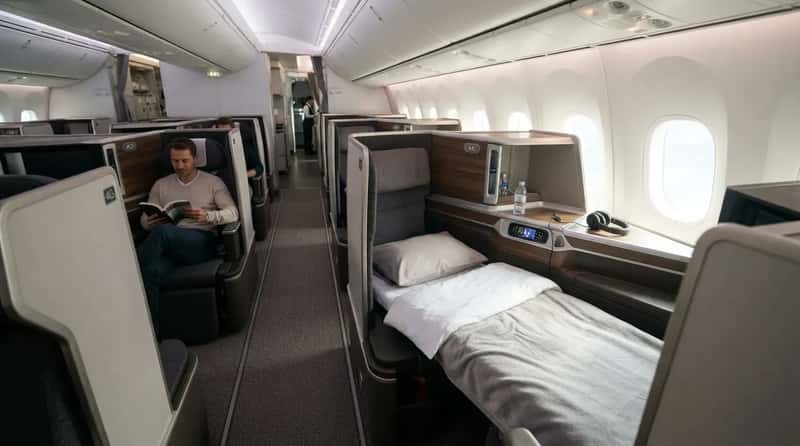
Not all business seats are equal, even on the same airline. One travel blog recommends aisle seats with direct access, near the front of the cabin, on aircraft with fully flat beds and 1-2-1 layouts. In that layout, every seat touches an aisle.
That matters because older cabins can still make you climb over a neighbor to get out. Some airlines still operate business cabins without easy aisle access. Before you pay for the upgrade, check the exact aircraft’s seat map, not just the cabin name.
Now for a situation almost nobody plans for, which takes us to #5…
#5 – The First Five Rows When You Have a Tight Connection

Long layovers are the dream, but real itineraries often leave you sprinting. One seat guide recommends an aisle seat in the first five rows of your cabin when a connection is tight. That gets you off the plane sooner.
A few extra minutes at the gate can decide whether you make the next flight or spend the night in an airport. Travelers over 60 often learn this the hard way. A seat closer to the front is a cheap fix compared to a missed connection and a long rebooking line.
The next seat is the one experts keep naming for long flights. Meet #4…
#4 – The Mid-Cabin Aisle, Away From the Galleys
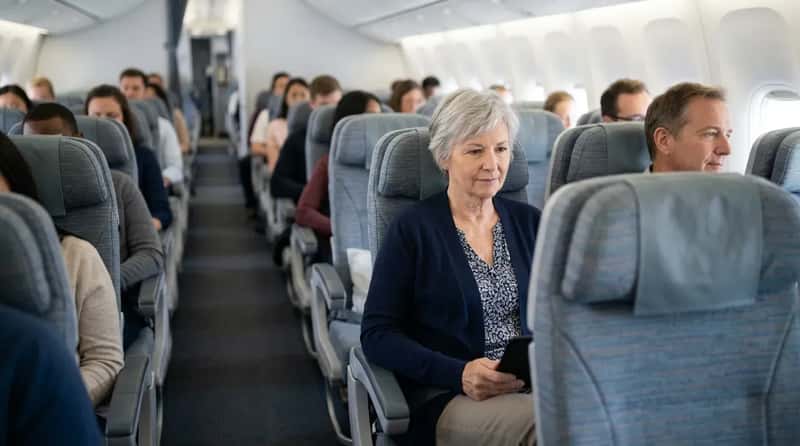
This is where the pros land when comfort and calm both matter. One travel expert’s advice for long-haul flights after age 50 is a mid-cabin aisle seat away from the galleys and restrooms. You get access without the traffic.
It’s a tidy compromise. You skip the clatter near the service areas and still reach the aisle in seconds. It’s not the cheapest or flashiest pick, but it’s what many experienced travelers book first. Aisle sitters do risk bumps from passengers, drink carts and falling bags, but away from the galleys that happens less.
Why It Stands Out
- You can stand up and stretch without asking anyone to move.
- You’re away from the galley clatter and restroom lines.
- Fewer carts and passing crowds means fewer bumps.
- It costs less than most upgrades, and it’s often free to choose.
Up next is a request many people never knew they could make. See #3…
#3 – The Accessible Seat You Can Actually Ask For
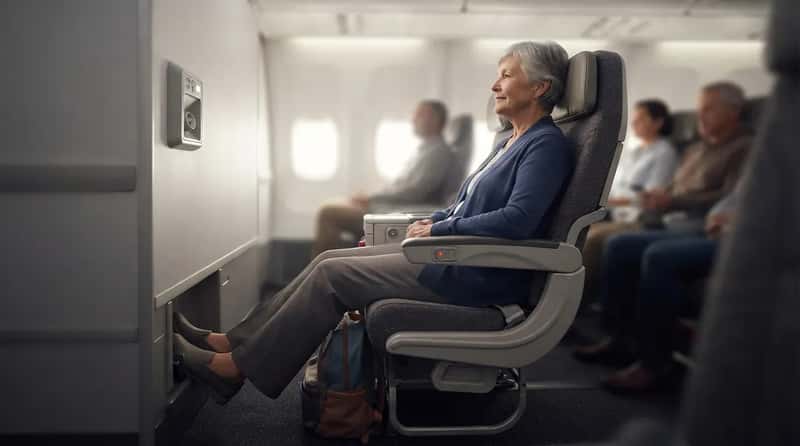
Most people don’t realize you can ask the airline for a seat that fits a physical need. Federal disability-access rules for air travel require airlines to provide certain seating accommodations when a passenger asks, such as extra legroom for someone whose leg won’t bend. The details depend on the airline and the aircraft.
The best time to ask is at booking, not at the gate. Call the airline or use its accessibility line, and explain your need plainly. Waiting until boarding often means the best seats are already gone. A short phone call can solve a problem that cash sometimes can’t.
Two seats remain, and the last one is backed by the CDC. First, #2…
#2 – The Front-Third Aisle on Flights Over 10 Hours
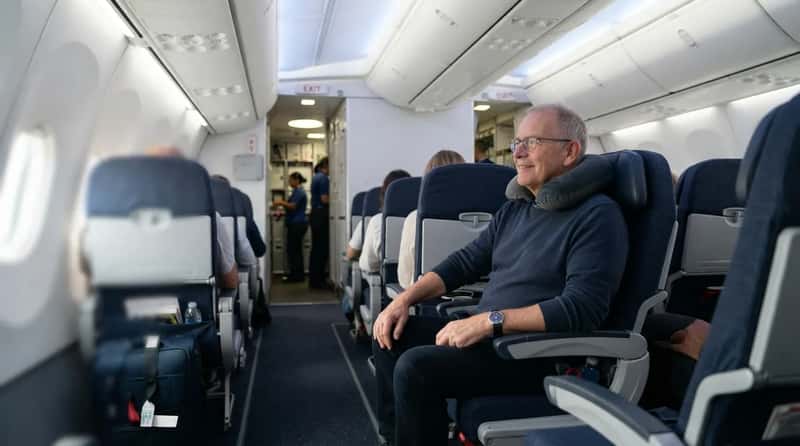
For the longest hauls, location within the cabin matters as much as the aisle itself. One guide recommends an aisle seat in the front third of economy for health and mobility on flights of 10 hours or more. You’ll find shorter walks, shorter lines and easier exits.
Front-third seats can also mean earlier meal service and quicker deplaning. Booking early is the catch, since these rows go first on popular routes. It’s one of the few cases where paying a small seat-selection fee can be worth it. Landing in the back of the cabin after a 12-hour flight is a common regret.
And the number one pick is the one doctors keep repeating. Here’s #1…
#1 – The Aisle Seat on Any Flight Over Four Hours
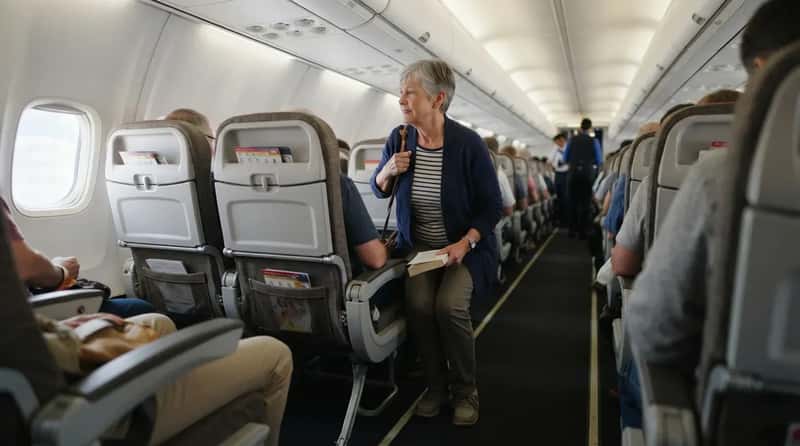
This is the one position that health authorities agree on. The CDC advises travelers on long flights to choose an aisle seat when possible, which makes it easier to stand and walk. It also says to get up and walk every two to three hours on trips of four hours or more.
The stakes aren’t small. Healthline notes that the risk of a blood clot during or shortly after long-distance travel is higher than normal, by some estimates as much as three times. Studies have also linked window seats to more clot cases, likely because those passengers move less. If you have clotting risk factors, talk to your doctor before you fly. Then sit on the aisle and use it.
Worth Knowing
- The CDC’s threshold is trips of four hours or more.
- The walking advice is every two to three hours.
- The aisle makes that routine far easier than a window seat does.
- Anyone with clotting risk factors should check with a doctor before flying.
The best coach seat isn’t about the view or the lowest fare. It’s about being able to stand, stretch and leave your seat without a fight. The aisle, the mid-cabin zone and the front third came out ahead, while the window, the last row and the exit row proved to be riskier bets than most people think.
Seat choice won’t fix a bad flight, but it can make a long one far easier to survive. Which seat do you never give up, and which one did you finally stop booking?