Most people assume a harbour tender run is little more than a water taxi ride. It isn’t – behind the polished uniforms and choreographed arrivals lies a world of split-second risk management, unwritten rules, and institutional knowledge harbour teams guard closely.
The gap between what guests see and what actually happens at the waterline is enormous. The professionals running those boats were never going to explain it to you unprompted – until now.
#17 – The Weather Assessment Started Hours Before You Asked
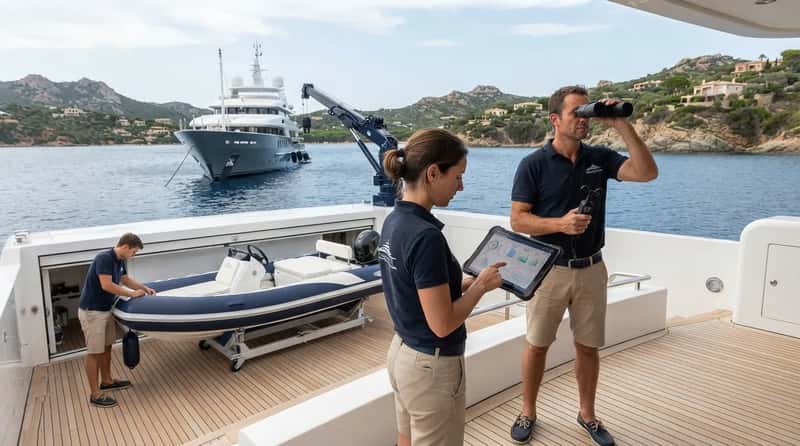
Most guests assume the tender goes out the moment they’re ready. Experienced crews know the weather calculation began long before that.
It starts with an intimate read of the weather: wind, swell, sea state. Launching might happen under sunny skies and glassy water – but how long will the tender actually stay out there?
Retrieving can only happen in equally calm conditions. Teams also track tide, current, and how hard the mothership is swinging on her anchor, because a calm departure can flip into a chaotic return.
What looks like a routine transfer is actually a rolling risk assessment that never stops.
Harbour teams read wind forecasts, swell intervals, and tidal tables before the first guest even picks up a radio. By the time you call for the boat, the decision to launch was already half-made.
But #16 goes deeper into how much prep hides behind a single launch.
#16 – Every Launch Sequence Is Unique – And Crews Train Fresh Every Time
Guests expect the launch to be automatic, pure muscle memory. It never fully is.
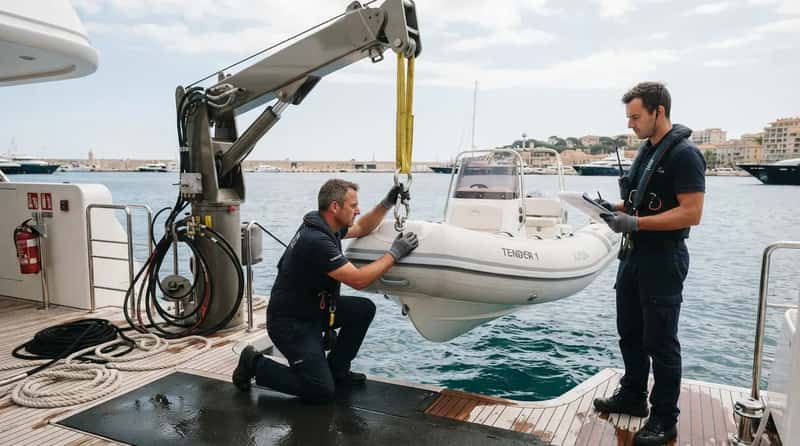
Every launch and retrieval sequence is unique – whether it’s from three decks high or a waterline garage. Crew must train fresh every time, no matter how many tenders they’ve launched before.
The reason is engineering: deck heights vary, crane geometry differs, swell angles shift constantly. Crews check the lifting points, inspect the harness and crane for wear, and treat any hydraulic fluid on deck as an immediate red flag.
A harbour team that skips the pre-launch inspection is the team that ends up in an incident report.
The choreography guests admire is really just the output of a checklist they never see.
#15 reveals a number crews quietly change without telling anyone.
#15 – The Printed Passenger Limit Is Not the Real Limit
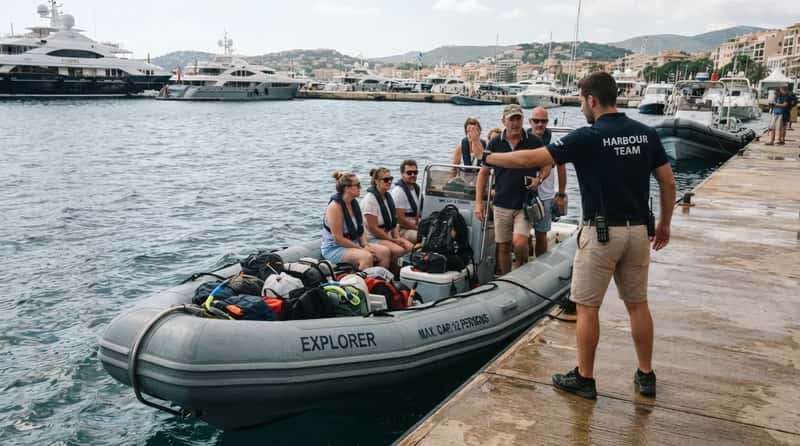
Here’s one guests almost never realize: the number painted on the tender’s hull is not the number the crew actually works to.
The working capacity is always lower than the printed maximum, and harbour teams enforce that gap strictly. A polite but firm refusal at the boarding point is actually a sign of a well-run operation.
Guests pushing for “just one more person” are fighting a stability calculation that already accounts for sea state, fuel load, and gear. That calculation shifts every single run.
A tender loaded with luggage, snorkel gear, and six adults in a 1.5-metre chop is a completely different vessel than the same boat in flat water. Elite teams would rather disappoint someone for thirty seconds than risk a capsize.
Fast Facts
- Printed hull capacity is never the number the crew actually works to
- Six adults in a 1.5-metre chop can turn a rated tender into a different vessel entirely
- The stability math factors in fuel load, gear, and luggage – not just headcount
- The safe number can change from one run to the next, even on the same boat
#14 shows how a decision made years before you ever boarded can decide your safety today.
#14 – Lifting Points Dictate Which Tenders You Can Even Own
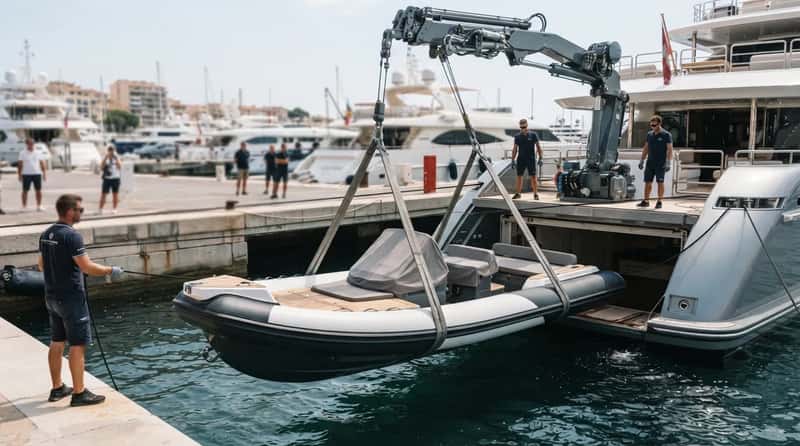
Owners fall in love with a tender at a boat show. Harbour teams quietly know it may never actually fit the yacht.
Cranes and lifting points are often the single most important factor in a yacht’s garage design – and they dictate which tenders an owner can even buy. Yet captains and owners are rarely involved, because it’s decided at the earliest stages of the build.
The lifting setup shapes far more than launch stability. It also affects engine choice, drive type, roof length, and seating layout.
The crane specification made years ago in a shipyard limits every tender decision that follows.
Experienced harbour teams now push to be consulted during design – not after the tender has already been ordered and delivered.
#13 is about a decision that looks purely cosmetic – until the sea state changes.
#13 – Garage Location Quietly Determines Your Risk Level
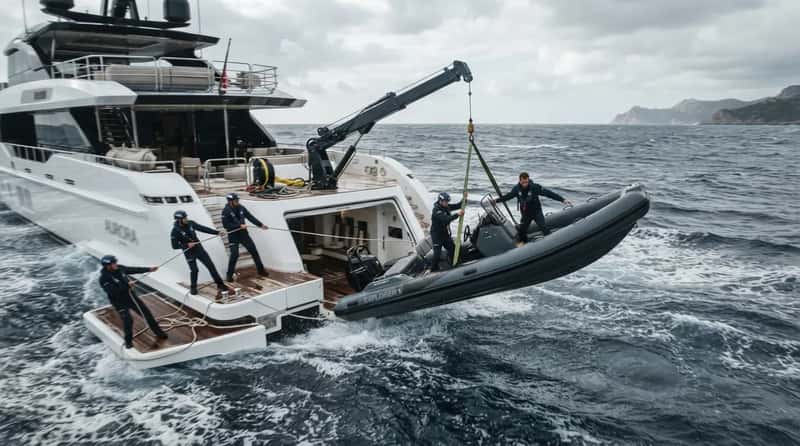
Where the tender garage sits on a yacht isn’t just a storage choice. It’s a safety decision that plays out on every single run.
Moving the garage forward frees up maximum beach space on the aft deck. But launching and retrieving from certain garage locations gets significantly harder – and more dangerous – once conditions turn.
If a boat can be attached to a crane or driven onto rollers while the vessel is still moving, that’s the safest option for the crew. Long stretches of manhandling and shackling lifting slings only raise the risk.
An aesthetically clean stern deck can mean a dangerously awkward launch the moment the sea state lifts.
Harbour teams know this. The guests on board almost never do.
#12 flips everything you think you know about tender driving once the sun goes down.
#12 – Night Operations Are an Entirely Different Skill Set
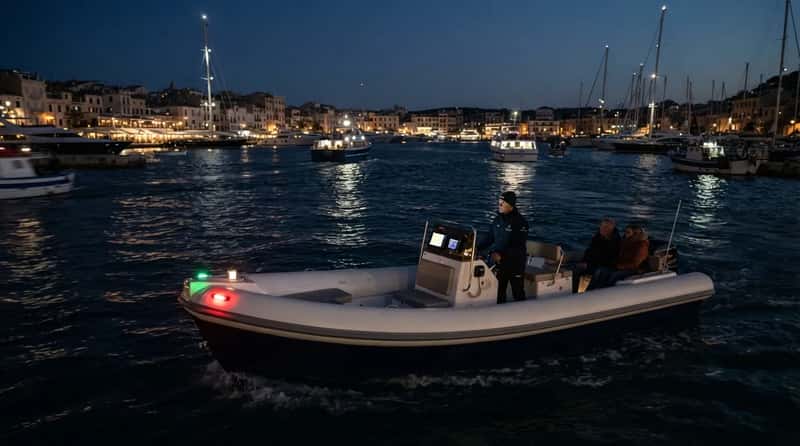
Most people assume tender driving is tender driving. After dark, experienced crews know it’s a fundamentally different job.
Advanced tender qualification exists specifically to train drivers to carry passengers by day and by night. That distinction matters more than most guests realize.
Pre-launch checks include a brief engine test, a safety gear check, battery voltage, and confirming every night nav light is visible. You never know when guests will want a late-night trip ashore.
A crew that hasn’t specifically trained for night pilotage in a harbour is a crew that’s improvising in the dark.
And harbours are shared with ferries, fishing boats, and other yacht tenders – all moving at speed with limited visibility.
#11 exposes a gap the industry didn’t even admit existed until recently.
#11 – The Industry’s Base Training Standard Was Never Built for Tenders
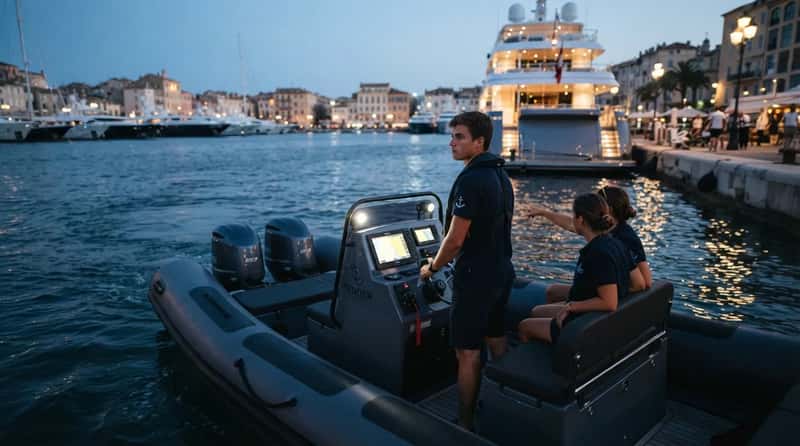
Here’s something even experienced yachties don’t always know: the standard certification most tender operators hold was never designed for the job they’re doing.
The industry adopted Powerboat Level 2 (PB2) as its base standard. But PB2 is just a two-day, entry-level course focused on basic boat handling and safety – taught to groups of three students at a time.
Captains and crew agents often assumed night operations and other advanced skills were baked into PB2. They were not.
This gap between assumed competence and actual training is one the industry only formally acknowledged in 2014.
#10 introduces the fix almost nobody in the industry has actually heard of.
#10 – A Dedicated Tender Qualification Exists – and Most People Haven’t Heard of It
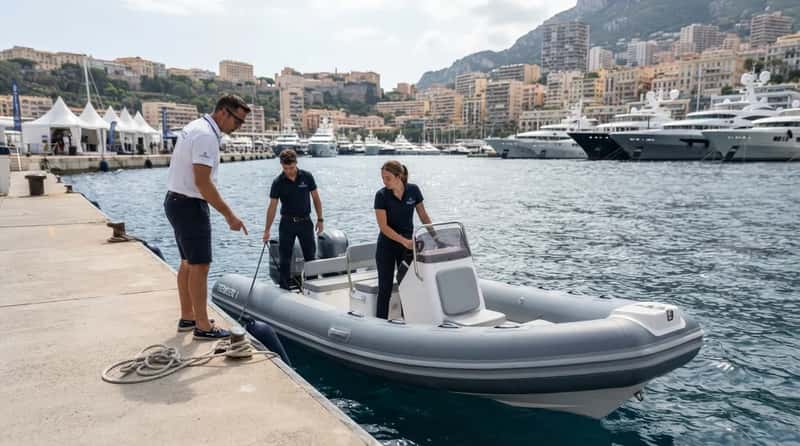
At the 2014 Monaco Yacht Show, the RYA and PYA launched the Superyacht Tender Operators course. Six months in development, it was built specifically to close the knowledge gap facing crew tasked with running tenders.
The Tender Operator Course (TOC) has existed for years, and feedback has been consistently positive. It still hasn’t been fully adopted across the industry – relatively little known outside of a small circle of specialists.
The qualification that should be the industry default is still largely invisible to the crews who need it most.
The RYA and PYA hope TOC becomes the de facto standard – with the industry growing organically through self-regulation rather than a government mandate.
#9 is the one that actually stops captains mid-sentence.
#9 – New Crew Can Be Handed the Keys With Almost No Tender-Specific Training
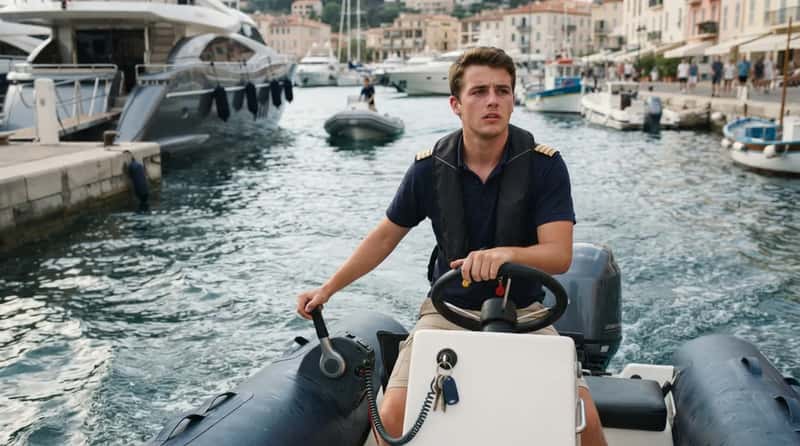
This is the one that stops experienced captains cold when they say it out loud.
New crew can literally step onto a yacht, get handed the tender keys, and be told to go pick up a guest. No tender-specific assessment, no harbour familiarization – just a PB2 certificate and a wave goodbye.
“Once we started to peel back the layers of the onion, it was definitely identified that there was a lot missing. The industry identified on-board training wasn’t happening consistently across all vessels.”
Richard Falk, Chief Examiner, RYA
The polish of a harbour transfer hides how variable the standard of preparation actually is behind it.
Some crews are rigorously trained. Others are genuinely improvising with guests already on board.
#8 is a decision that trips up owners more than any other.
#8 – Jet Drive and Propeller Are Not Interchangeable – and Choosing Wrong Is Common
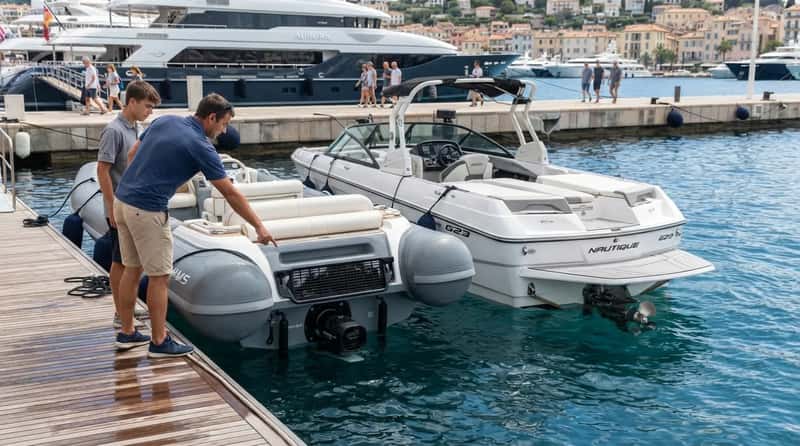
Most guests have no idea there are fundamentally different drive systems on tenders. Harbour teams know the difference changes every single manoeuvre.
Jet drive or propeller? It’s the most common tender decision yacht owners get wrong. Jet drives eliminate the external propeller – critical around swimmers – but they behave completely differently in reverse and shallow water.
Usually, an experienced deckhand takes a newer one under their wing to teach them the boat. But many deckhands have never actually driven a jet-drive tender before.
Quick Compare
- Propeller drive: familiar handling, but exposed blades are a real hazard around swimmers
- Jet drive: no exposed prop, safer near swimmers – but behaves very differently in reverse and shallow water
- Training reality: plenty of deckhands are fluent on one system and have never touched the other
A driver trained on a propeller RIB who suddenly operates a jet tender in a tight marina approach is in genuinely unfamiliar territory.
So they get put through their paces – docking and undocking in open and tight spaces, ideally with some current thrown in.
#7 is the boundary harbour teams brief each other on quietly, before you ever notice a delay.
#7 – Harbour Masters Have Hard Stop-Rules – and Tender Teams Brief Them Privately
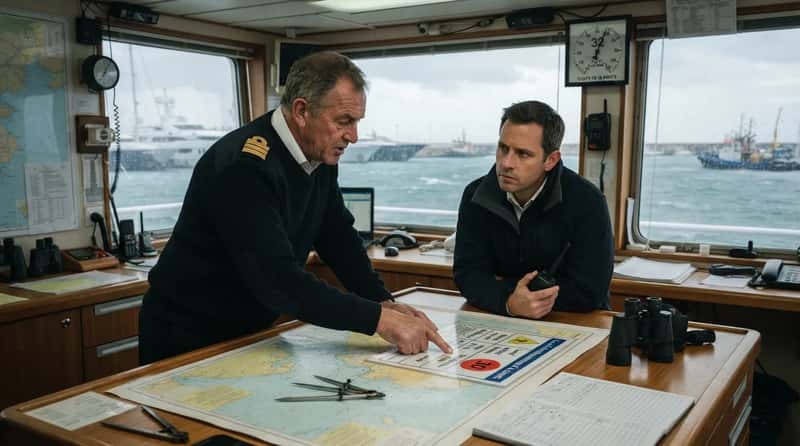
What guests read as a vague “conditions aren’t great” delay is actually a hard regulatory line.
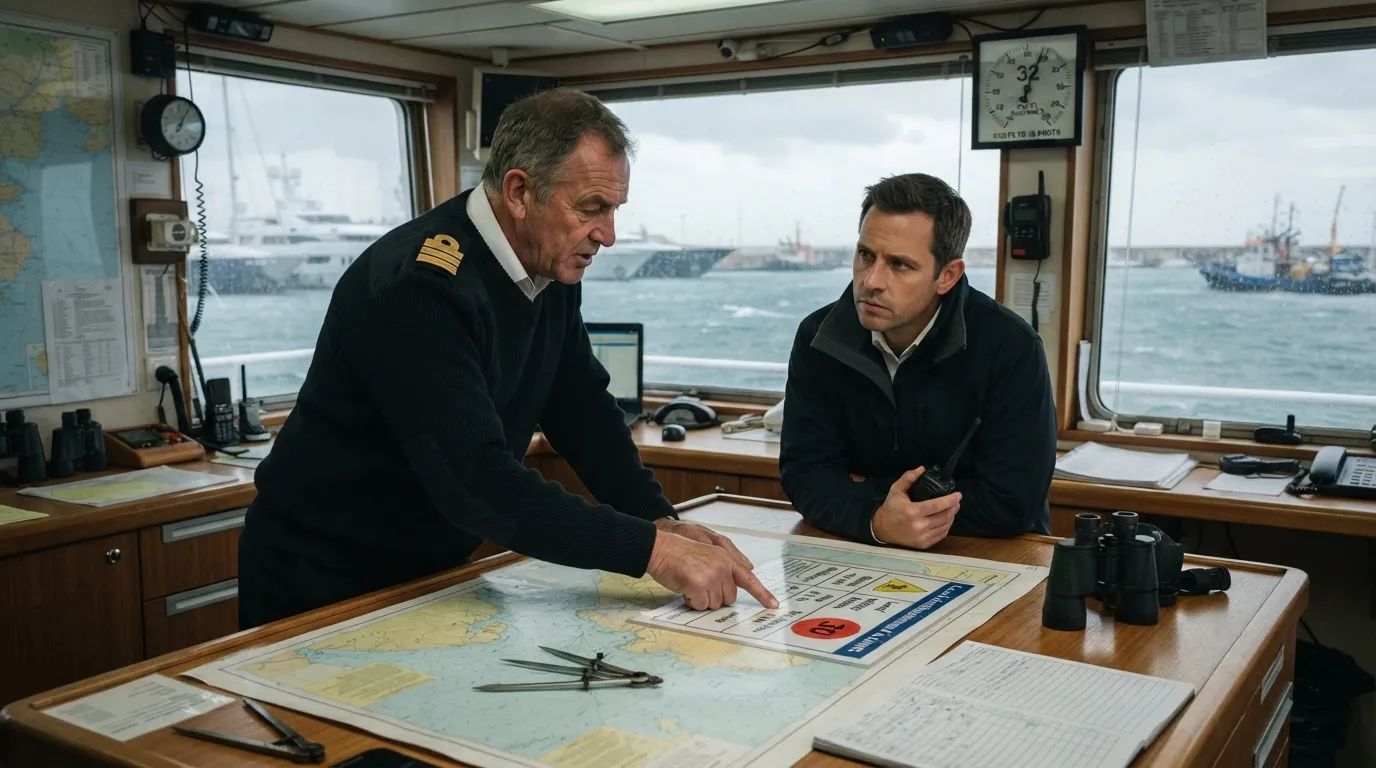
When wind sustains at 30 knots or gusts above it, harbour authorities close operations to all passenger tenders and zodiacs. Operations also stop the moment visibility drops below 0.1 nautical miles.
On a properly run ISM vessel, captains brief crew on the local rules of every port before arrival. Those rules vary dramatically from port to port – an experienced team knows them in advance; an underprepared one finds out the hard way.
#6 covers a decision that looks casual from the deck of a bigger yacht – but isn’t.
#6 – Towing a Tender Is a High-Stakes Decision Most People Underestimate
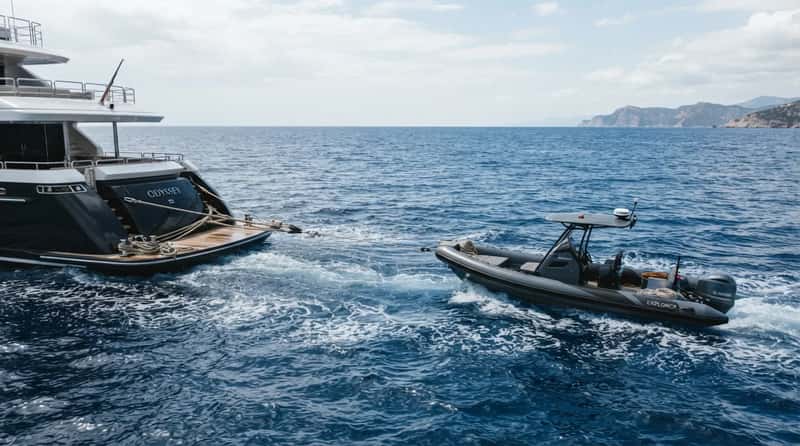
Some yachts tow their tenders instead of storing them. It looks casual. It’s anything but.
Owners who tow are trading deck space for risk – the risk of losing the towed vessel entirely. Towing does allow for larger, more elaborate tenders than storage below decks would.
Rigging a tow properly takes real expertise, and insurers require a tracking system in case the rig fails. A towed tender that breaks free in open water becomes an unmarked obstruction to every vessel behind you.
Harbour teams managing a tow run a quiet mental checklist on bridle condition, cleating angles, and swell period every few hours underway – without ever announcing it.
#5 explains why using the wrong tender for the wrong job isn’t a minor mix-up.
#5 – Multiple Tenders Are Assigned Roles – and Mixing Them Up Has Consequences
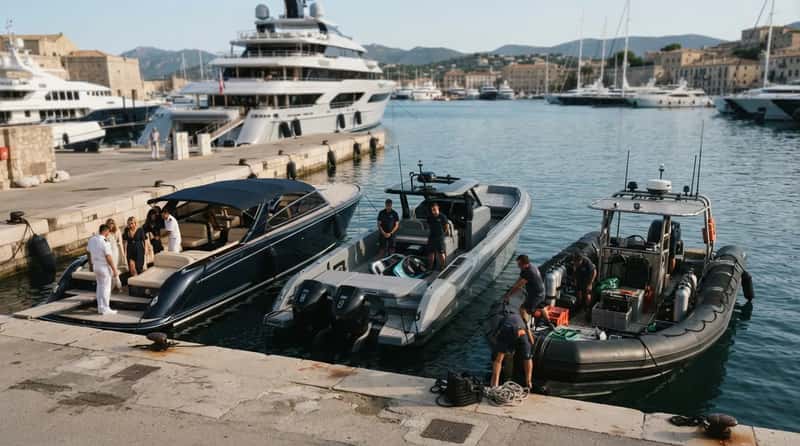
Larger yachts don’t carry multiple tenders for show. Each one has a specific job – and using the wrong one is a genuine operational mistake.
Owners often run a limousine tender for guest transfers, a sports tender for high-speed fun, and a utility tender for crew work. That setup builds in flexibility and redundancy, which matters most during remote cruising or charter.
Sending crew ashore on the guest limousine tender – or running guests in the crew utility RIB – breaks the operational logic the whole schedule is built around.
Experienced harbour teams protect those role assignments fiercely, even when guests push hard to swap.
#4 is the session guests never see – and the one that matters most.
#4 – Pre-Charter Rehearsals Are Non-Negotiable for Serious Teams
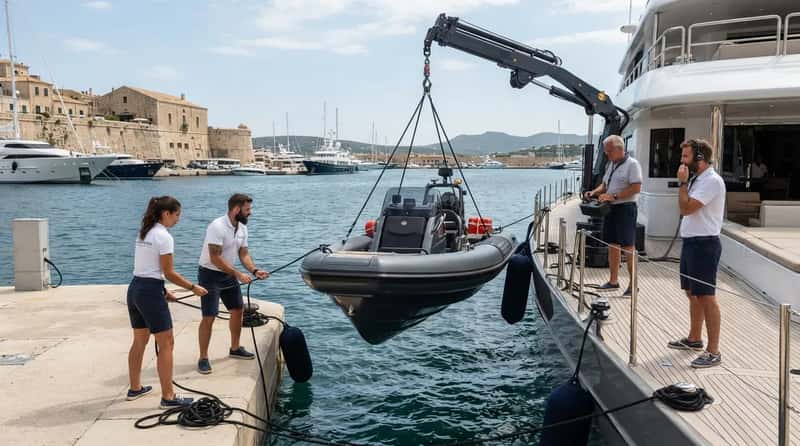
Amateur operations turn up and figure it out as they go. Professional harbour teams run the entire sequence before a single charter guest sets foot on deck.
That means testing the crane under load, confirming painter line positions, and walking through boarding at the actual pontoon if possible. On an ISM-compliant vessel, briefings and training are a structured system – never an afterthought.
The teams that look effortless in front of guests are the ones who already made their mistakes in rehearsal, not in front of passengers.
The rehearsal is the thing guests never see – and it’s the most important session of the entire trip.
#3 is about something guests judge instantly, without even realizing they’re doing it.
#3 – The Tender Itself Is Judged as Part of the Guest Experience – Not Just the Crew
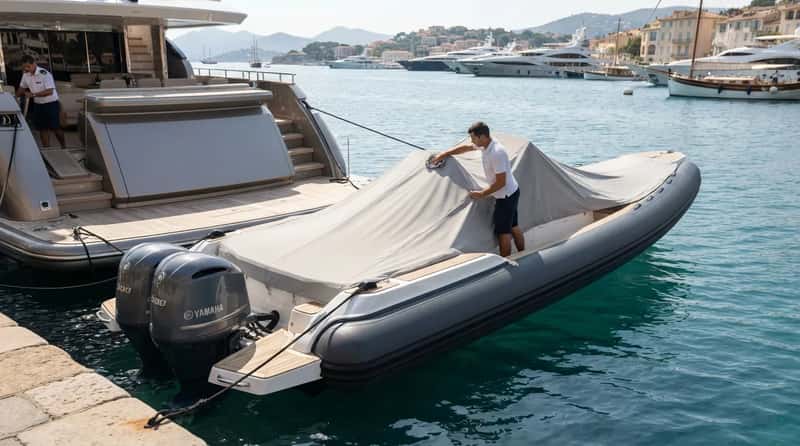
The hardware isn’t invisible to guests, even if nobody says so out loud. Tenders should stay dry, covered, and well-ventilated when not in use, and on chartered yachts, their appearance is part of the guest experience itself.
A scuffed tube, a salt-stained console, or an engine that takes three pulls to start says something before a single word is spoken. Harbour teams know the tender is the first and last thing guests physically touch on every shore excursion.
Worth Knowing
- Well-run tenders stay dry, covered, and ventilated between every run
- A scuffed tube or salt-stained console reads as neglect before a guest says a word
- An engine that needs several pulls to start undercuts the whole outing instantly
- The tender is the first and last thing guests physically touch on every shore trip
Beyond practicality, the tender shapes the whole outing – a private dinner ashore, a hidden lagoon, towing inflatables for the kids. A poorly presented tender undercuts all of that instantly.
#2 is the safety layer almost no guest ever finds out exists.
#2 – Crew Engineering Knowledge Is a Hidden Safety Layer That Almost Never Gets Credit
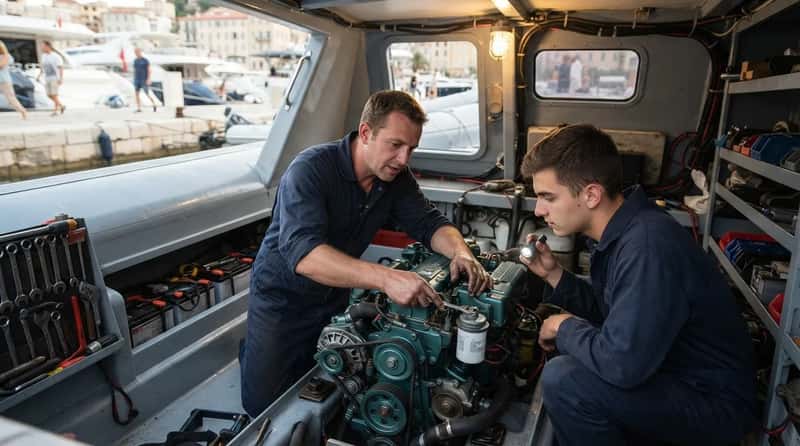
When guests picture tender safety, they picture life jackets. Experienced operators know the real risk is mechanical failure mid-transfer.
Good captains train deckhands on basic engineering principles for the moment a dinghy breaks down. The last thing a guest needs is to hear the driver panicking over the radio about smoke coming from the engine.
A tender operator who cannot diagnose a basic engine fault is a liability the moment the motor stops.
That mechanical briefing happens below decks before the season even starts – a secret safety layer almost no guest ever knows exists. The best teams treat it as standard, not exceptional.
Nothing compares to what’s waiting at #1.
#1 – The Real Dividing Line Is Logged Seat Time, Not Certificates
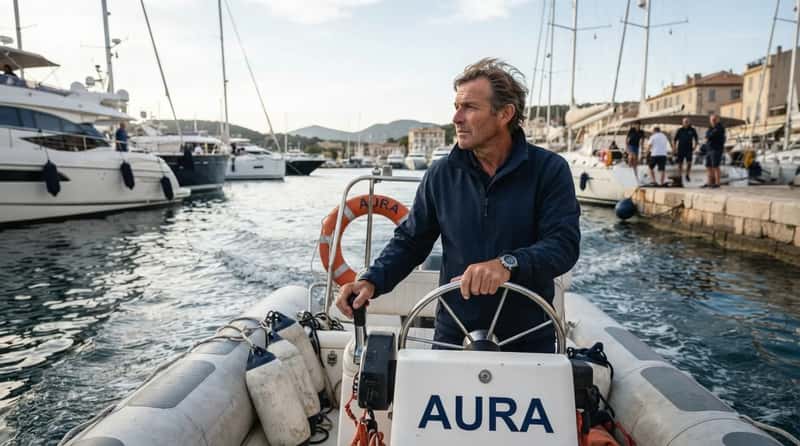
Here’s the secret that separates truly elite harbour teams from everyone else: the piece of paper is almost beside the point.
The RYA Tender Operator Course builds advanced boat handling, close-quarters manoeuvring, and decision-making under pressure. But insiders across the industry agree the certificate is only a starting point.
The real standard is simple: crew must be completely familiar with the specific tender before they’re allowed to carry guests. That means hours on that exact boat, in that exact harbour, in varied conditions – not a course finished six months ago on a different vessel in different water.
The certificate proves minimum knowledge; the logged hours prove actual competence.
At a Glance
- Certificate: proves baseline knowledge, earned once
- Logged hours: proof of real competence, earned continuously
- The actual standard: total familiarity with that exact tender, in that exact harbour
- The result: elite crews built over seasons, never over weekends
The crews who understand that distinction are the ones you never have to worry about. The best tender operators are built over seasons, not weekends.
The Bottom Line
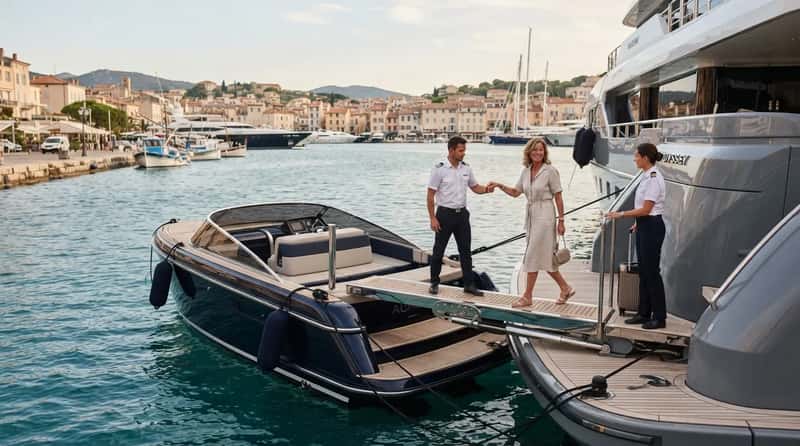
Tender operations are the most publicly visible – and most underestimated – part of any superyacht programme. The smooth transfer you step into took weather monitoring, engineering checks, lifting calculations, and hours of logged practice to produce.
The teams doing it well work from a framework of unwritten standards and hard-won experience that most guests never see – and that the industry is still working to formalize. The certificate is the floor, not the ceiling.
Next time a tender ride feels effortless, remember: the effort is simply being hidden from you by professionals. Did any of these surprise you – or do you know a secret we missed? Drop it in the comments.