Most people picture the Senior Pass as a card you flash at the Yellowstone gate and toss back in the glove box. That’s the smallest thing it does. For a one-time $80, it opens the door to more than 2,000 federal recreation sites, and it carries discounts that plenty of holders never think to ask for.
Some of those perks are tucked away at lakeshores and desert trailheads nobody calls “parks.” One catch has tripped up holders at lodge counters and tour desks. And one detail about that $80 price tag might make you look at the card differently. Here’s what the National Park Service’s own wording says, starting with the perk that fits your whole back seat.
#17 – Your Whole Back Seat Rides Free on One Card
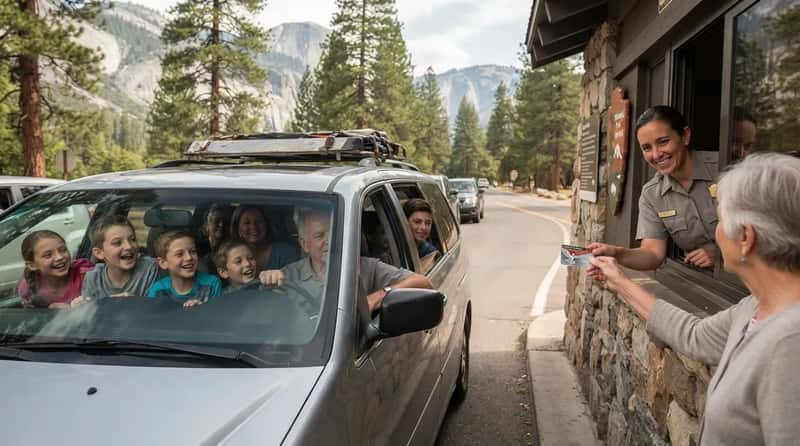
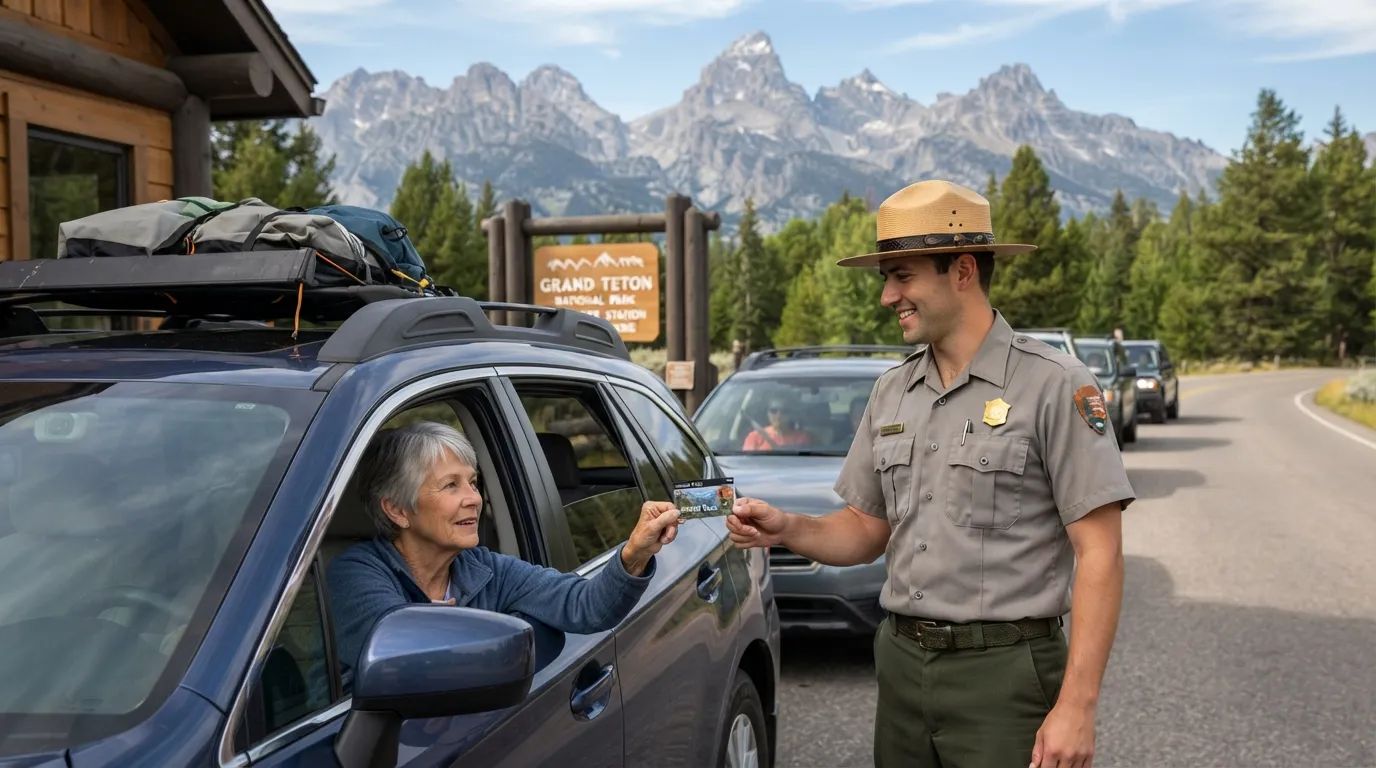
The pass has one name on it, but the gate doesn’t charge for one person. At per-vehicle fee areas, it admits the holder and everyone riding along in a private, non-commercial vehicle. Grandkids, neighbors, and half the bridge club can roll in on a single card.
Worth Knowing
- Sign the back of your pass. An unsigned card can slow you down at the booth.
- Keep a photo ID handy, since staff may ask to match it to the name on the card.
- The pass isn’t transferable, so the holder needs to be in the vehicle.
- Tour buses and other commercial vehicles don’t count as private cars.
Many major national parks charge $30 to $35 per vehicle, so a full car is where the savings get loud. Fill every seat and one card quietly covers the entire carload. It’s a good reason to be the one who always drives. But the rule flips the moment a site starts counting heads instead of cars.
#16 – The “Plus Three” Rule at Walk-In Sites
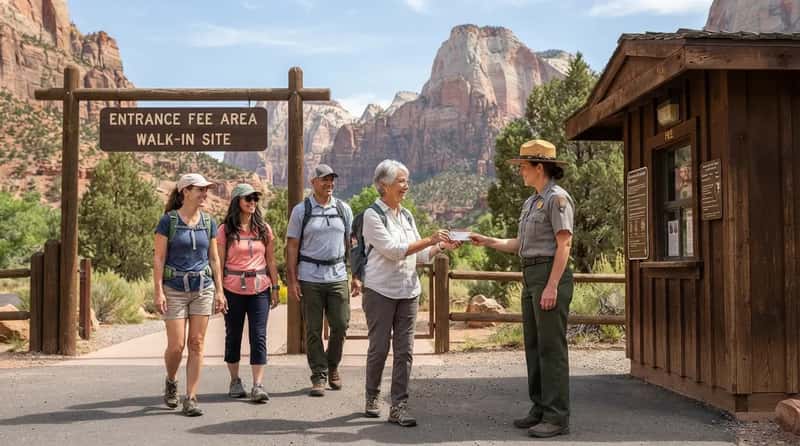
Some sites ignore your car and count people instead. At per-person fee areas, the pass covers the holder plus three adults, not to exceed four adults total. That’s a small group’s worth of admission from one card.
Plenty of holders assume they’re only covering themselves at these gates and quietly pay for friends out of habit. Three extra adults can walk in at no cost, as long as the holder is standing right there with them. Everybody needs to arrive together. And if you travel on two wheels, there’s a rule written just for you.
But that’s nothing compared to what motorcyclists get at the entrance station…
#15 – Two Motorcycles Can Ride In on One Pass
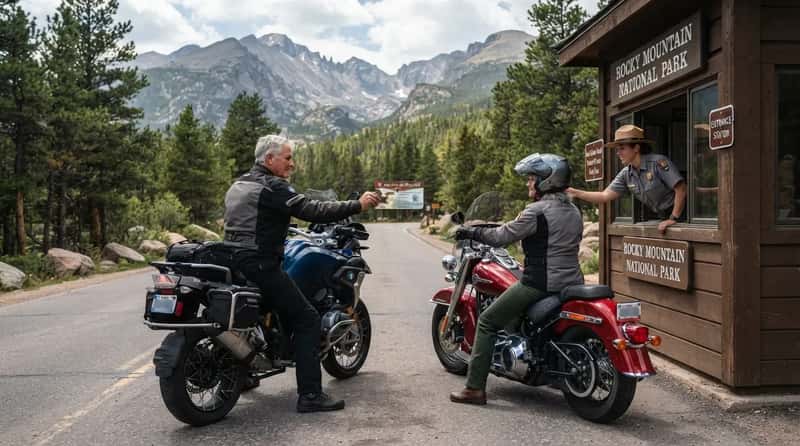
Riders have been paying double for years without realizing there was a workaround. NerdWallet reports that America the Beautiful passes now cover two motorcycles per pass. For couples who each ride their own bike, that’s a real change.
Motorcycle fees add up fast on a long ride. At Rocky Mountain National Park, a seven-day motorcycle pass runs $30, so two bikes means $60 for a single visit. One senior card can erase both fees. Not every site has updated its signs yet, so it’s worth asking the ranger at the booth. Next up is a kind of land most holders don’t even think of as a “park.”
#14 – Bureau of Land Management Country Is Secretly Included
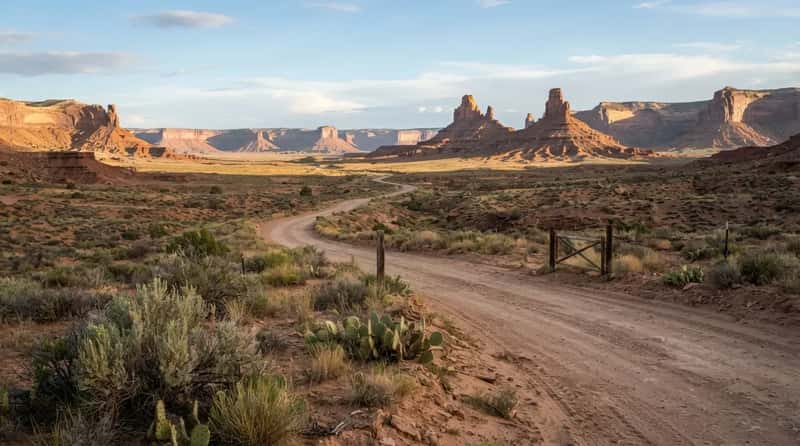
Wide-open public land is part of the deal, and almost nobody mentions it. The pass covers fees on lands run by six federal agencies, and the Bureau of Land Management is one of them. Think desert canyons, dusty trailheads, and day-use areas a long way from the postcards.
Most holders only reach for the card at famous gates. Yet the pass works at federal sites that charge an Entrance or Standard Amenity Fee, including places with no visitor center, no gift shop, and barely a sign. If a BLM site charges, the card is your way in. The big-name parks get the crowds, but the quieter BLM spots can be just as memorable.
The next agency on the list is the one wildlife lovers tend to overlook.
#13 – Wildlife Refuges Take the Card Too
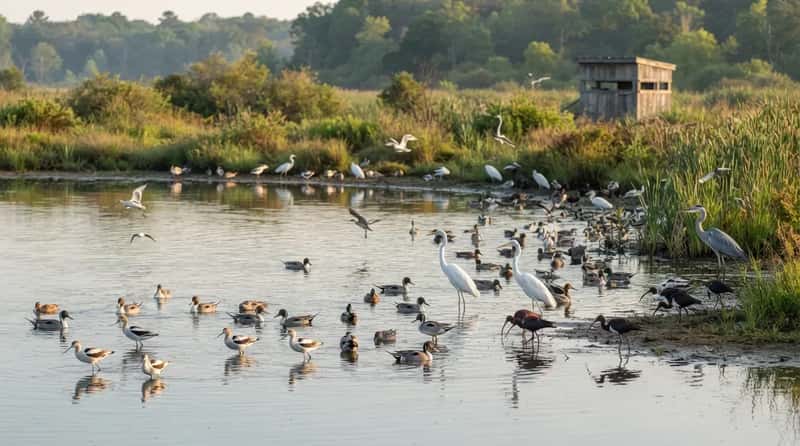
Birders have known this for years, but plenty of other seniors haven’t heard it. The U.S. Fish & Wildlife Service is one of the six agencies whose fees the pass covers. Where a refuge charges for entry, the card works there too.
Not every refuge charges a fee, so the benefit varies. Still, a lifetime pass turns a refuge drive into a free afternoon wherever a fee applies. Some travelers write refuges off as a dull substitute for a Grand Canyon sunset. Early-morning photographers and birdwatchers would argue the opposite, and the pass makes it easy to test that yourself. There’s another surprise waiting at the water’s edge.
#12 – Bureau of Reclamation Lakes Are on the List
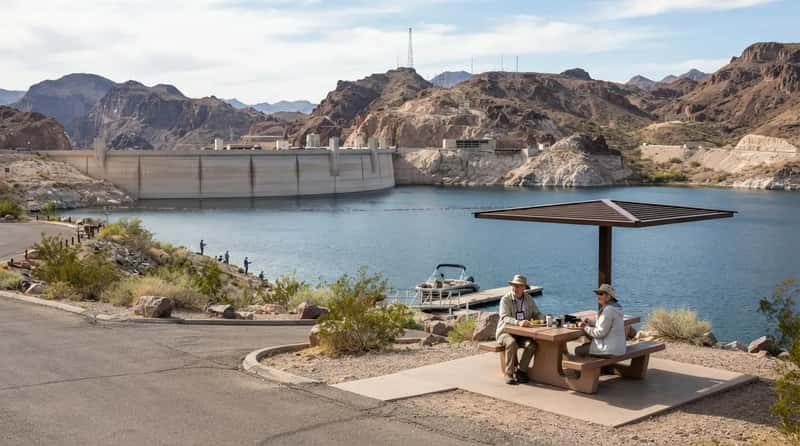
The big dams and reservoirs out West are federal recreation sites too. The Bureau of Reclamation is one of the agencies covered by the pass. Most people hear “national park pass” and never connect it to a lake day.
That matters if you fish, picnic, or just like a good shoreline view. The pass applies at sites that charge entrance or standard amenity fees, and reservoir recreation areas run by a covered agency can qualify. Always confirm at the specific lake, since fee setups differ from place to place.
But one of those six agencies might be the most underrated of all.
#11 – Army Corps of Engineers Lakes and Campgrounds
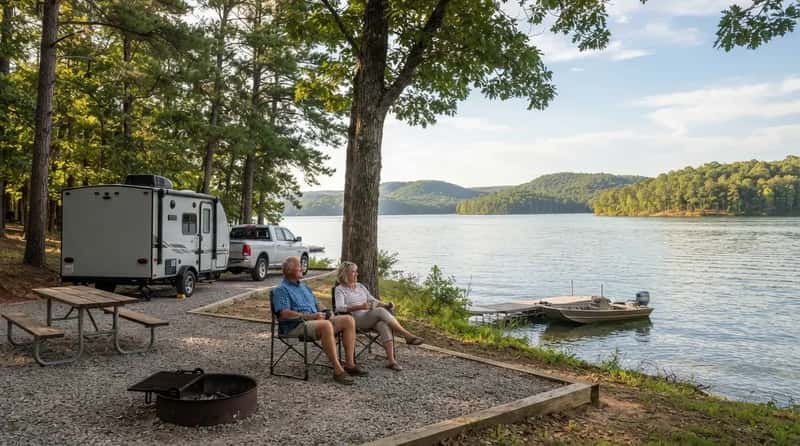
A military engineering agency runs some of the country’s best-kept lake destinations. The U.S. Army Corps of Engineers operates hundreds of lake and river projects, and it’s one of the six agencies covered by the pass. Few holders ever think to check a Corps lake.
The camping discount reaches here as well. Sources list the Corps among the agencies where the Senior Pass can take 50% off camping at participating sites. A lakeside campsite at half price is a real find for road-trippers. Availability and fees vary by lake, so check before you book. And not every campground inside a national forest plays by the same rules.
#10 – Forest Service Day-Use Fees, With One Catch
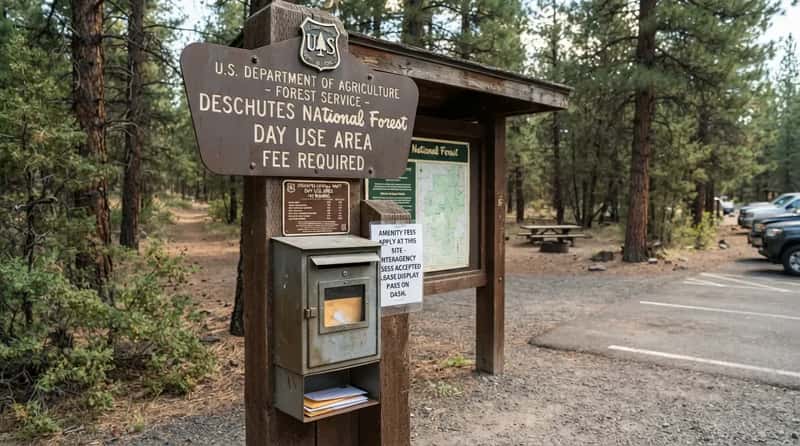
National forests are full of picnic areas, trailheads, and swim spots that charge small fees. The pass covers standard amenity (day-use) fees on lands managed by the U.S. Forest Service. That’s cash you’d otherwise stuff into an envelope at an honor box.
Here’s the catch. Some forest campgrounds are run by private concessionaires under a Forest Service permit, and the pass generally doesn’t cover or reduce fees charged by concessioners. The same forest can have two different rules at two different gates. Ask who runs the site before you count on the discount. Next is a trick that costs you nothing and pays off big.
That brings us to a card some seniors already own without knowing it still counts.
#9 – That Old Card in the Drawer May Still Be Good
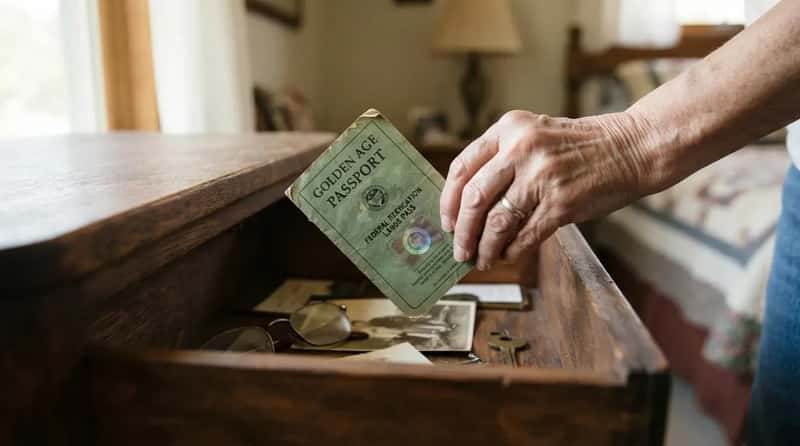
If a parent or spouse kept an old pass tucked in a drawer, it might still be worth something. The Senior Pass replaced the Golden Age Passport, which worked in a similar way and is still valid for anyone who holds one.
Quick Compare
- Golden Age Passport: the older senior card, still honored for life.
- Senior Pass: the current version, $80 once for a lifetime pass.
- Golden Access Passport: the older card for people with permanent disabilities, also still valid.
- Access Pass: its modern replacement, with the same basic purpose.
Many longtime holders worry their older card expired when the new design came out. It didn’t. The Access side works the same way: the Golden Access Passport is also still valid. Before you pay $80 for a replacement, check whether you already hold something that’s good for life. And if you don’t, there’s a clever way to pay for the new one.
#8 – Four $20 Passes Turn Into a Lifetime Pass
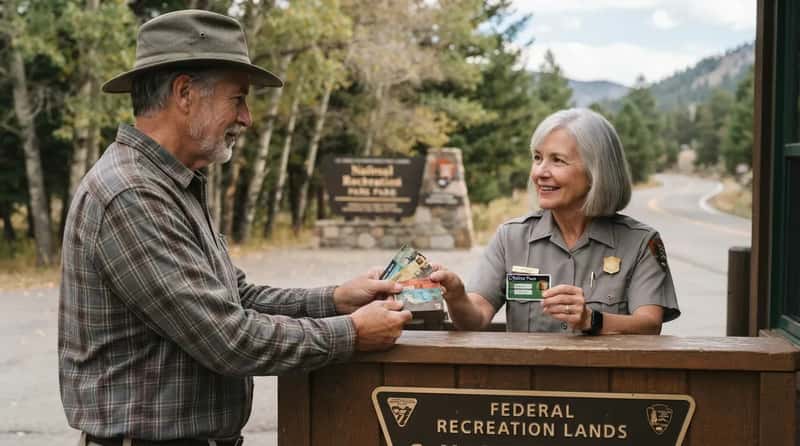
Not everyone wants to hand over $80 on day one. Four annual Senior Passes can be traded in for a lifetime pass, which spreads the $80 over four years. You pay $20 a year and end up in exactly the same place.
The annual pass is a stepping stone, not a dead end, and most people never realize it. Four years of $20 payments equals the lifetime price. That’s handy if you’re not sure how much you’ll travel. Just keep every annual card, because you’ll need them for the swap.
Now for the free-day shuffle, which makes the pass look smarter than ever.
#7 – You Never Have to Chase a Fee-Free Day
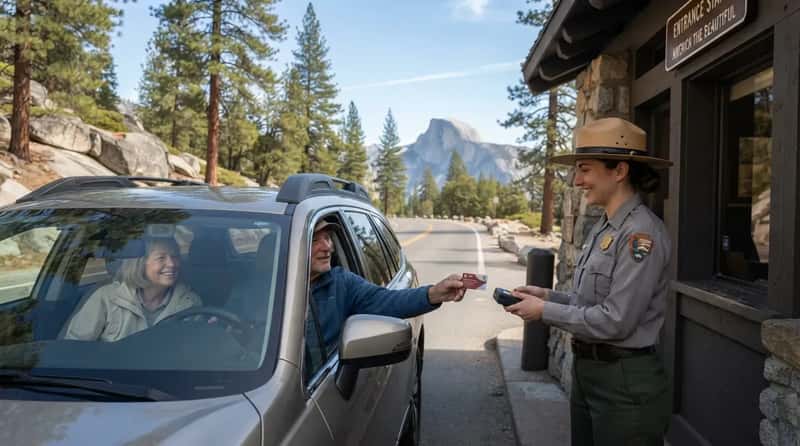
Every year, the park service publishes a short list of free-entry days, and millions of people plan trips around them. The list gets reshuffled from year to year, and for 2026 the free days apply to U.S. residents. Keeping up with the calendar can feel like homework.
A lifetime Senior Pass holder skips the whole guessing game. Every day is a fee-free day for you, at sites where the pass applies. Free days are also a magnet for crowds, which is a fair argument for avoiding them anyway. Your card lets you pick a quiet Tuesday morning instead. Next, a benefit that works even after you’re past the gate.
#6 – Half Off at Federal Swimming Areas
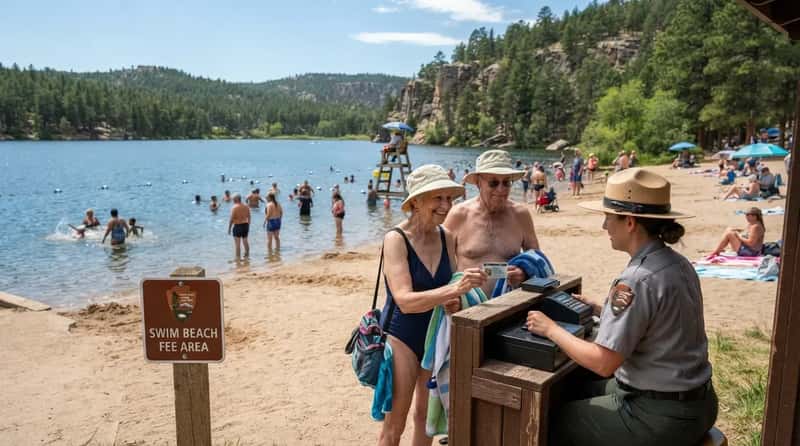
A swim spot at a federal lake or beach can have its own fee, separate from the entrance fee. The Senior Pass may provide a 50 percent discount on some amenity fees, and swimming sites are on the list. It’s an easy one to miss when you’re already splashing around.
Most holders never think to ask at the swim gate. The word “may” matters here, because the discount isn’t automatic everywhere. It depends on the site and the type of fee. So bring the card out of the car, not just to the front entrance.
The same fine print applies to anyone who owns a boat.
#5 – Boat Ramps Can Cost Half as Much
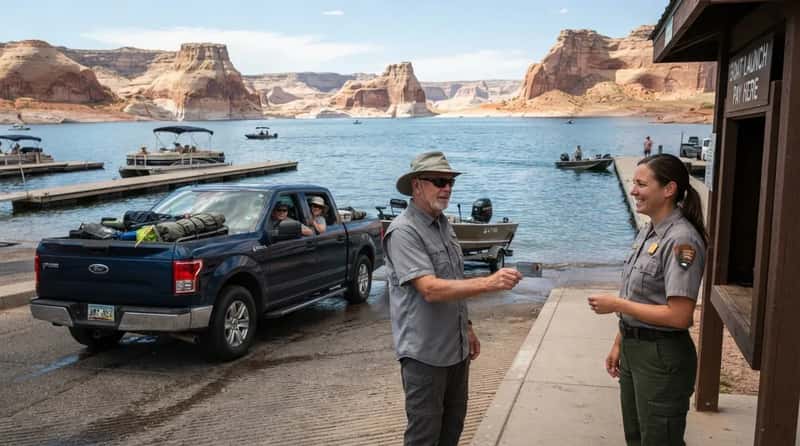
Launch fees are one of the sneakiest costs of a lake trip. The park service lists boat launching among the amenity fees the pass may cut by 50 percent. Over a summer of weekend launches, those savings add up.
At a Glance
- Amenity fees the pass may cut by 50 percent include swimming, boat launching, and camping.
- Specialized interpretive services, such as some guided tours, can be on that list too.
- The discount is for the holder’s fee at sites that offer it, so it varies by location.
- The easiest test is to show the card at the window and ask.
Plenty of boaters pay full price without ever showing the card. The discount sits right in the NPS pass description, yet few holders bring it up at the ramp. Keep in mind that it applies to some fees at some sites, not every ramp in America. A friendly question to the attendant costs nothing. After that comes a benefit people constantly misjudge.
#4 – Specialized Tours and Interpretive Services, Plus the Catch
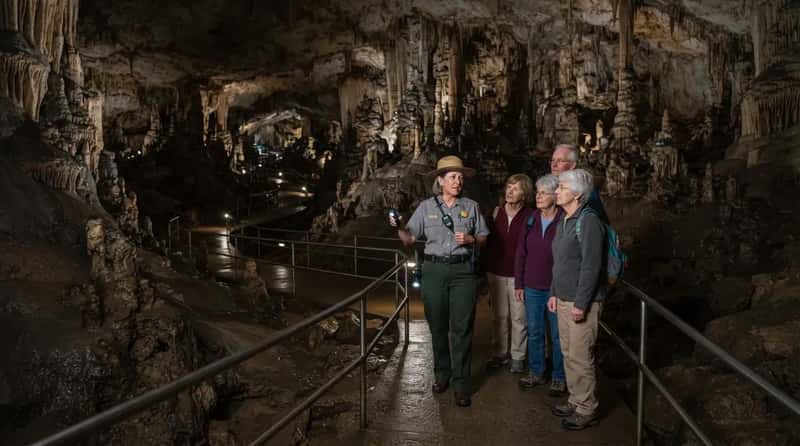
Some of the best experiences in a park carry their own price tag. The pass may provide 50 percent off amenity fees for specialized interpretive services, and one guide to the pass says this can include cave tours. It’s a perk that feels like finding money in an old coat.
Here’s the part holders learn the hard way. The pass generally does NOT cover or reduce special recreation permit fees or fees charged by concessioners. A ranger-led tour and a private-company tour can look identical and be treated very differently. Ask who operates the tour before you assume a discount.
The next benefit is where the real money hides.
#3 – Camping Fees Cut in Half, Night After Night
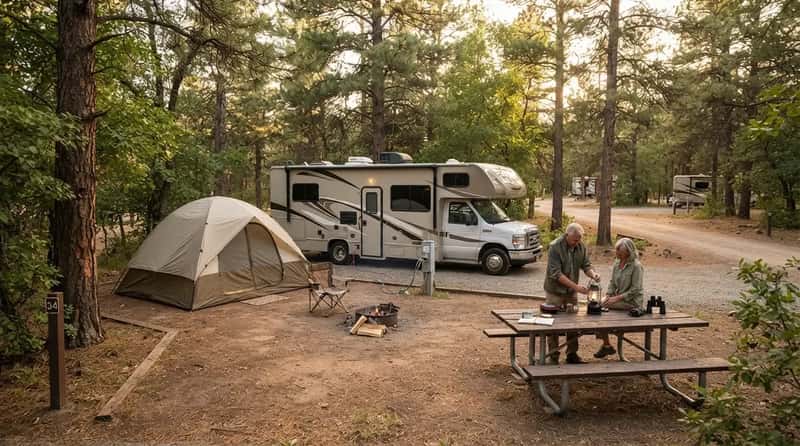
This is the benefit that can quietly outweigh everything else on the card. The camping discount belongs to the Senior Pass and the Access Pass, not to the free Military or Veterans passes. It’s one of the biggest reasons the pass is worth having.
The math is hard to ignore. A 50% cut on a $30 site saves $15 every night, so roughly five or six nights cover the whole $80 price. An entrance fee is paid once, but a campsite is paid nightly. For RV travelers and tent campers who stay for a week, the discount can dwarf the entrance waiver.
And it gets better once you add up what the pass saves overall.
#2 – The Pass Can Pay for Itself in Two or Three Visits
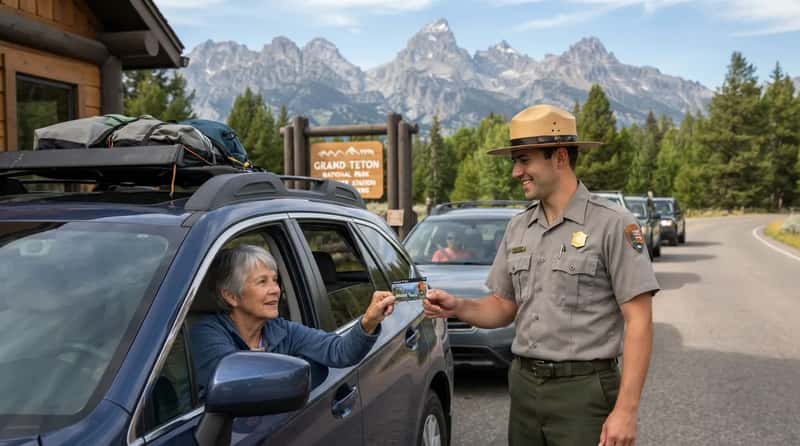
Most people expect a lifetime pass to take years to break even. At major parks charging $30 to $35 per vehicle, it pays for itself after two or three visits. After that, every trip is pure savings.
Picture a single summer road trip with stops at two or three big parks. The pass can be paid off before you head home. Add a few camping nights at half price and the savings stack up quickly. Entrance fees vary by park, and fewer than a third of park units charge one at all, so your own travel plans decide how fast it pays off. But the best part is how little the lifetime price actually is.
And the final item changes how you think about that $80.
#1 – A Lifetime of Access for the Price of One Year
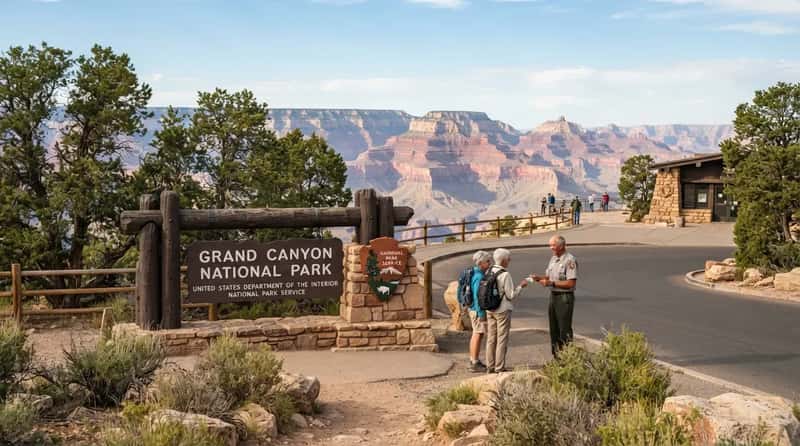
Here’s the detail almost nobody talks about. The standard annual pass for the general public costs $80, and that’s exactly what the Senior Lifetime Pass costs. A senior pays that amount once, not every year.
That makes the lifetime version a rare bargain in the federal fee system. Everyone else pays $80 for twelve months, while you pay $80 for life. The pass is meant for the eligible holder, who has to show proof of age (62 or older) and U.S. citizenship or residency. The only way to get this deal is to claim it yourself.
So the Senior Pass turns out to be far more than a gate card. It covers a whole carload, extra adults at walk-in sites, and two motorcycles. It works across six federal agencies, from BLM land to wildlife refuges to Army Corps lakes, and it can cut swimming, boat launch, tour, and camping fees in half where those discounts apply. The biggest catch is that concessioner fees usually aren’t covered.
Most holders will use the card a handful of times and never learn what else it could have done. The next time you hand it over at a gate, a swim beach, or a boat ramp, ask what else it covers. The answer might surprise the person behind the window as much as it surprises you.