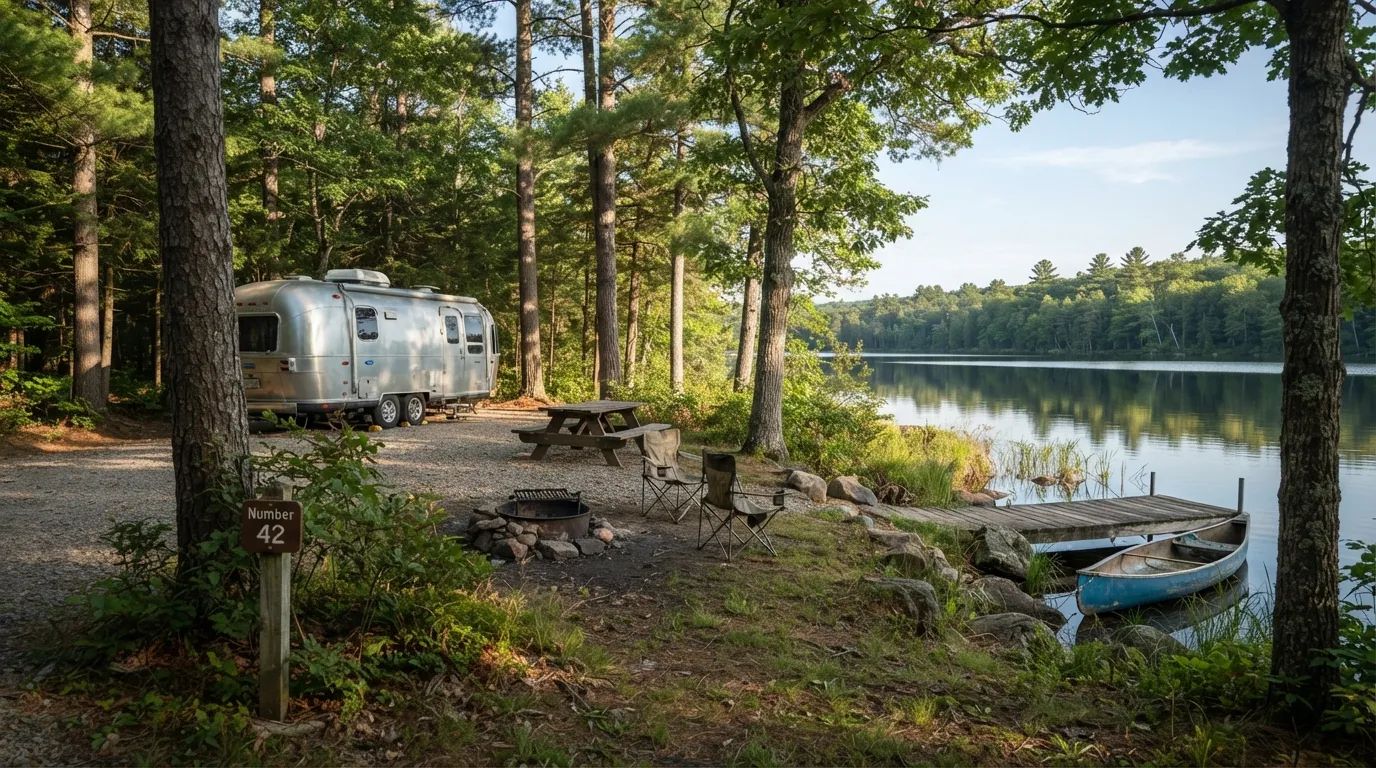
No campground rulebook has a page titled “guests over 70.” Yet ask hosts who have worked a few seasons and many will tell you the same thing: older campers often end up with a smoother stay, and none of it appears on a sign. Hosts are usually volunteers who work set hours in exchange for a site, so what they offer comes from experience and judgment, not policy.
That’s why these gestures are so easy to miss. They look like luck: the flat site, the quiet corner, the knock at exactly the right moment. Some are small and practical. A few are quietly moving, and the last one is the one hosts bring up with the most feeling.
#17 – The Pull-Through Site Nobody Mentions at Booking
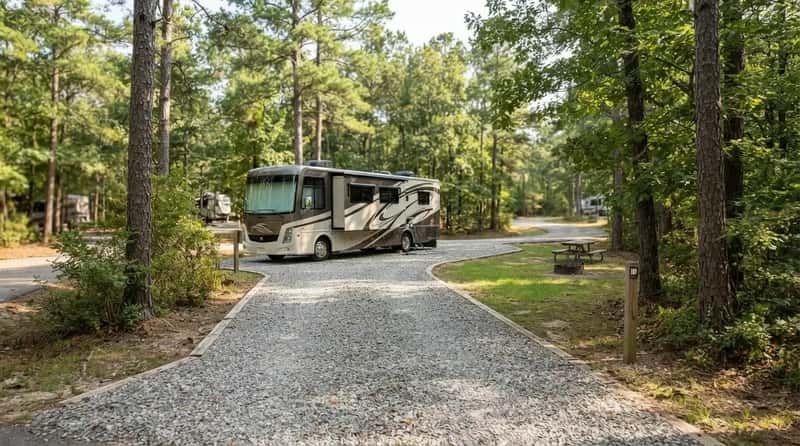
Backing a long trailer into a tight spot is where plenty of trips go sideways. Hosts know which sites are true pull-throughs, which have nasty angles, and which have a tree that’s been waiting years to scrape a mirror. One bad backing-in attempt can leave a driver rattled for the whole trip.
Where a host has a say in site assignment, older drivers often get steered toward the simplest entry, like a long straight pad instead of a sharp-angle spur. Many sites are locked in by online reservations, so this works best at first-come loops or when a visitor asks at the gate. Hosts say the easiest sites rarely look special in photos, which is exactly why they get overlooked.
Worth Knowing
- A true pull-through lets you drive in and drive out without ever reversing.
- Photos rarely show the approach angle, low branches or a slight slope.
- Asking at the gate or on a call ahead works best at first-come loops.
- Try asking: “Which site is easiest to get into with a big rig?”
But the next arrangement is about distance, and it matters more than you’d think…
#16 – The Site Close Enough to Walk to the Restroom at 2 a.m.
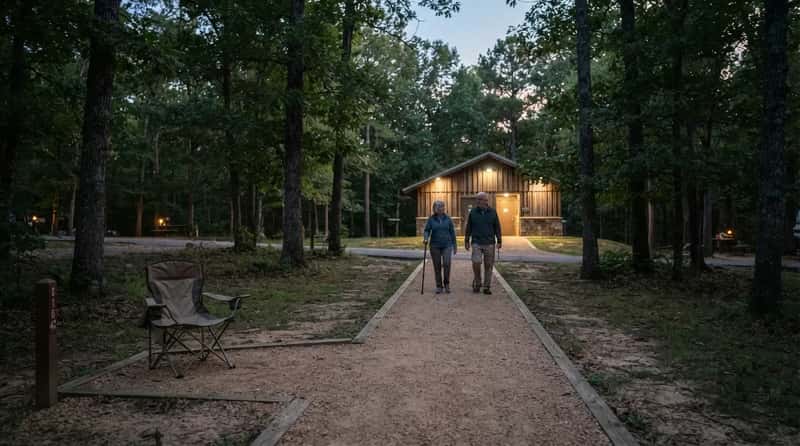
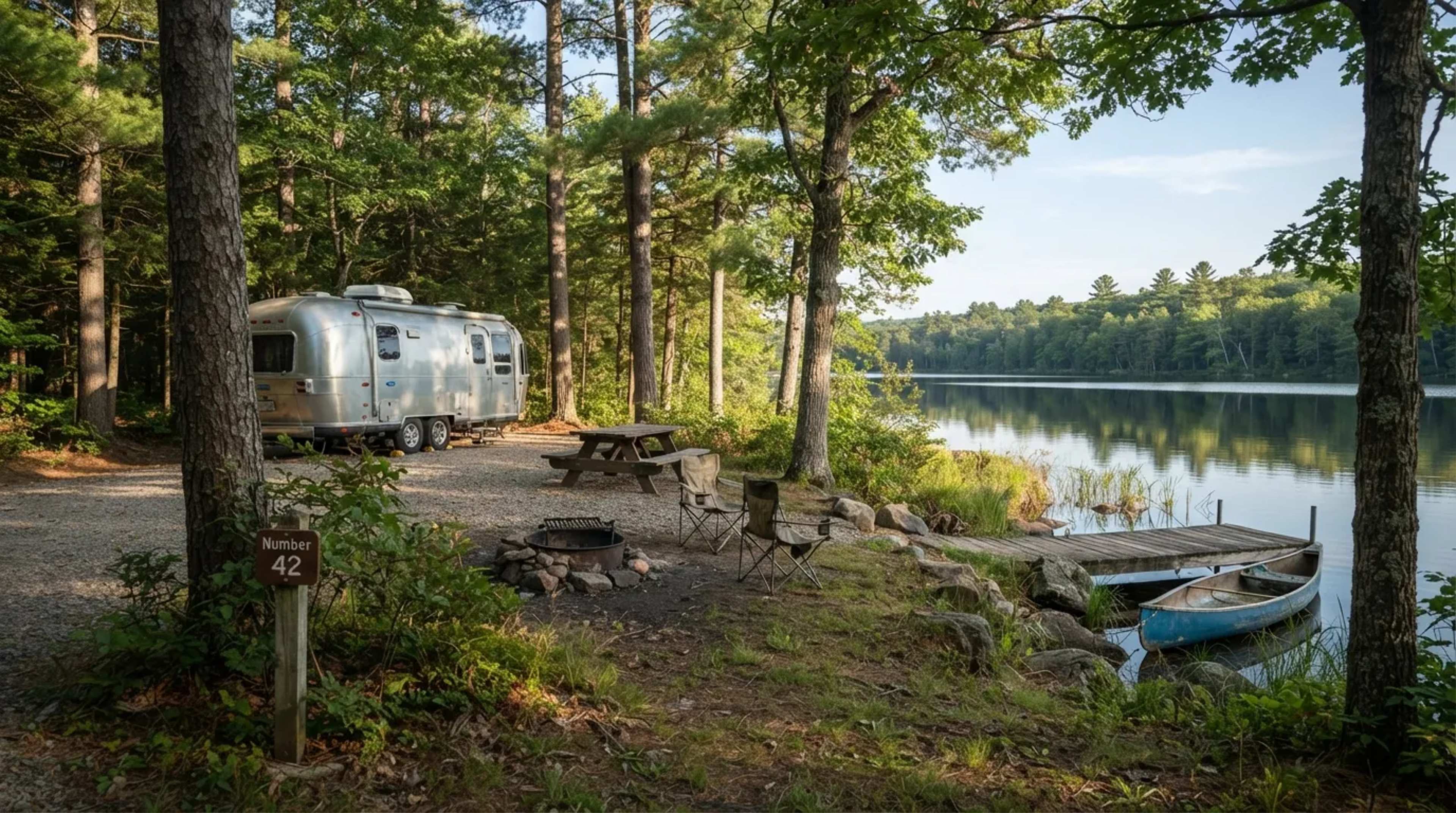
Ask a host about the best site in the loop and the answer often has nothing to do with the view. It’s the one with a short, flat path to the bathhouse. The “worst” scenic site and the “best” practical site can be the same spot.
Gravel, roots and steps feel very different after a long day, and even more so in the dark. Hosts who know their loop by heart can tell you which sites need a hike and which paths have ankle-grabbing tree roots. That’s local knowledge no map will ever show you.
But there’s one placement trick that has nothing to do with distance, and it’s all about sound…
#15 – The Quiet Corner Away From the Generator Row
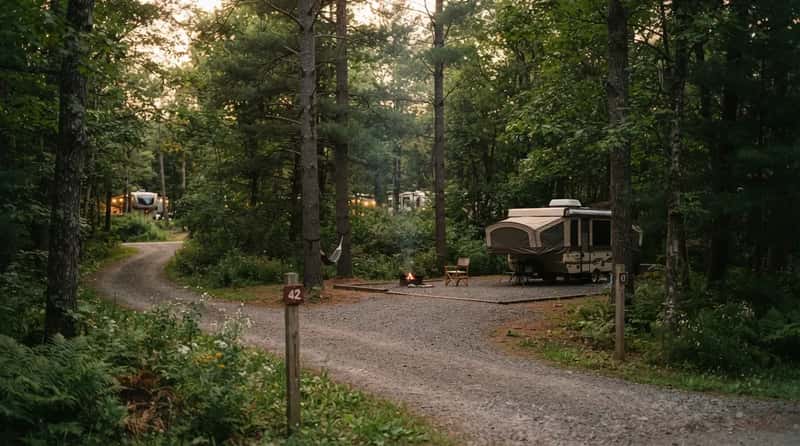
It’s easy to assume every campsite in a loop is equal. Hosts know better. Some spots sit beside the generator-friendly RV row, the playground, or the dog-walking path where every passerby stops to chat.
Where hosts have discretion, many say they try to keep light sleepers and early-to-bed campers away from those hot spots. A site 100 feet farther along can feel like a different campground at 10 p.m. It’s not a rule, just a quiet courtesy that usually shows up when someone asks for a peaceful spot.
Next comes a favor that’s often delivered in silence, with nothing but hand signals…
#14 – The Spotter Who Appears Out of Nowhere
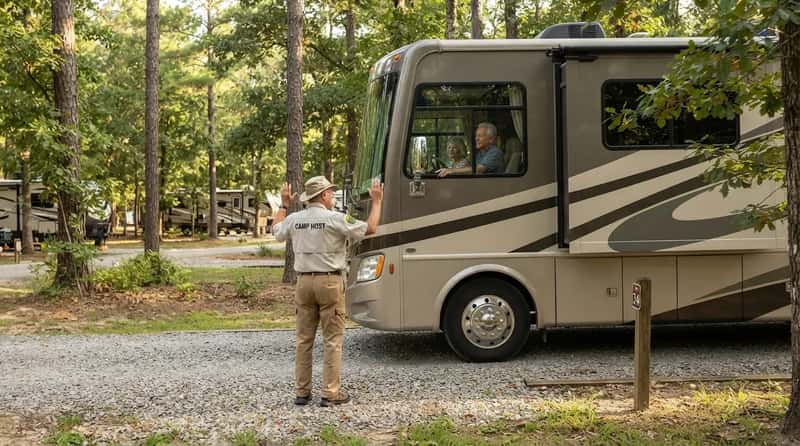
You roll in with a big rig and suddenly someone is standing behind it, waving. That’s often a host, and it isn’t an accident. Many of them keep an eye on the gate for arriving trailers and motorhomes.
Backing up by mirrors alone is hard at any age. A spotter can prevent a scraped bumper, a crushed water spigot, or a tire stuck in soft ground. Hosts say the most common problem isn’t bad driving. It’s that nobody is standing where the driver can see them. The best spotters ask the driver which signals they prefer before they start waving.
But the friendliest thing a host does might look like nothing more than a hello…
#13 – The Friendly Knock That Doubles as a Wellness Check
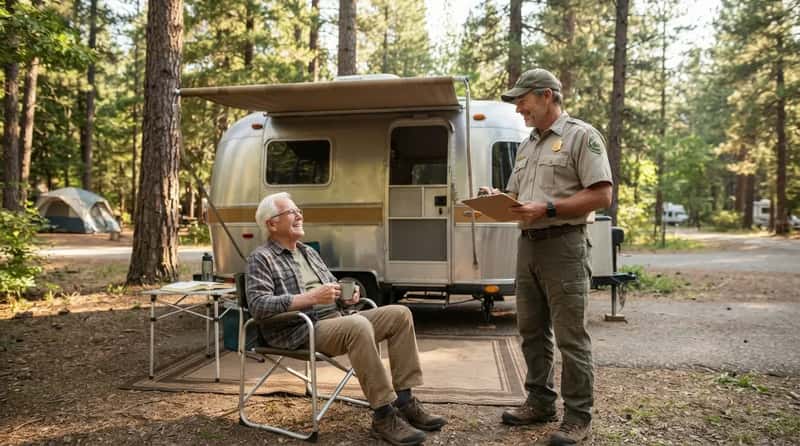
A host stopping by “just to say hi” sounds like pure hospitality. It often is. It also gives them a quiet way to see how a solo camper is really doing.
Hosts are volunteers, not medical staff, and they’re clear about that. But they notice things. A camper who seems unsteady on their feet or shares some worrying news may get a second visit that same afternoon. From there, a host can point you to the nearest ranger or help get assistance if it’s needed.
Then there’s the perk almost no one brings up on their own, and it involves money…
#12 – The Gentle Reminder About the 50% Discount
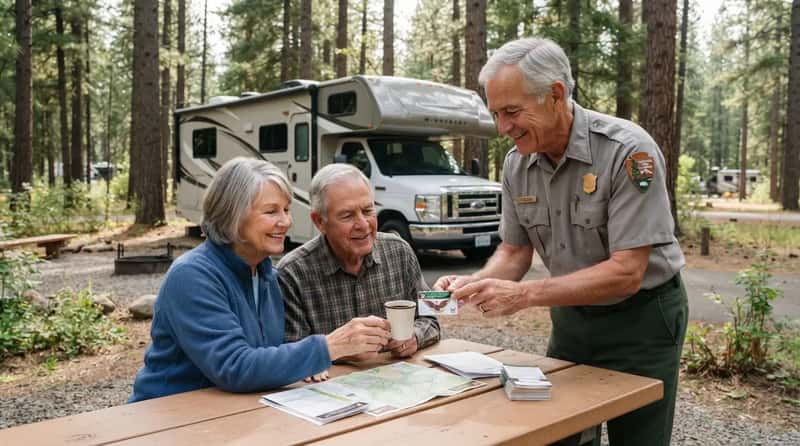
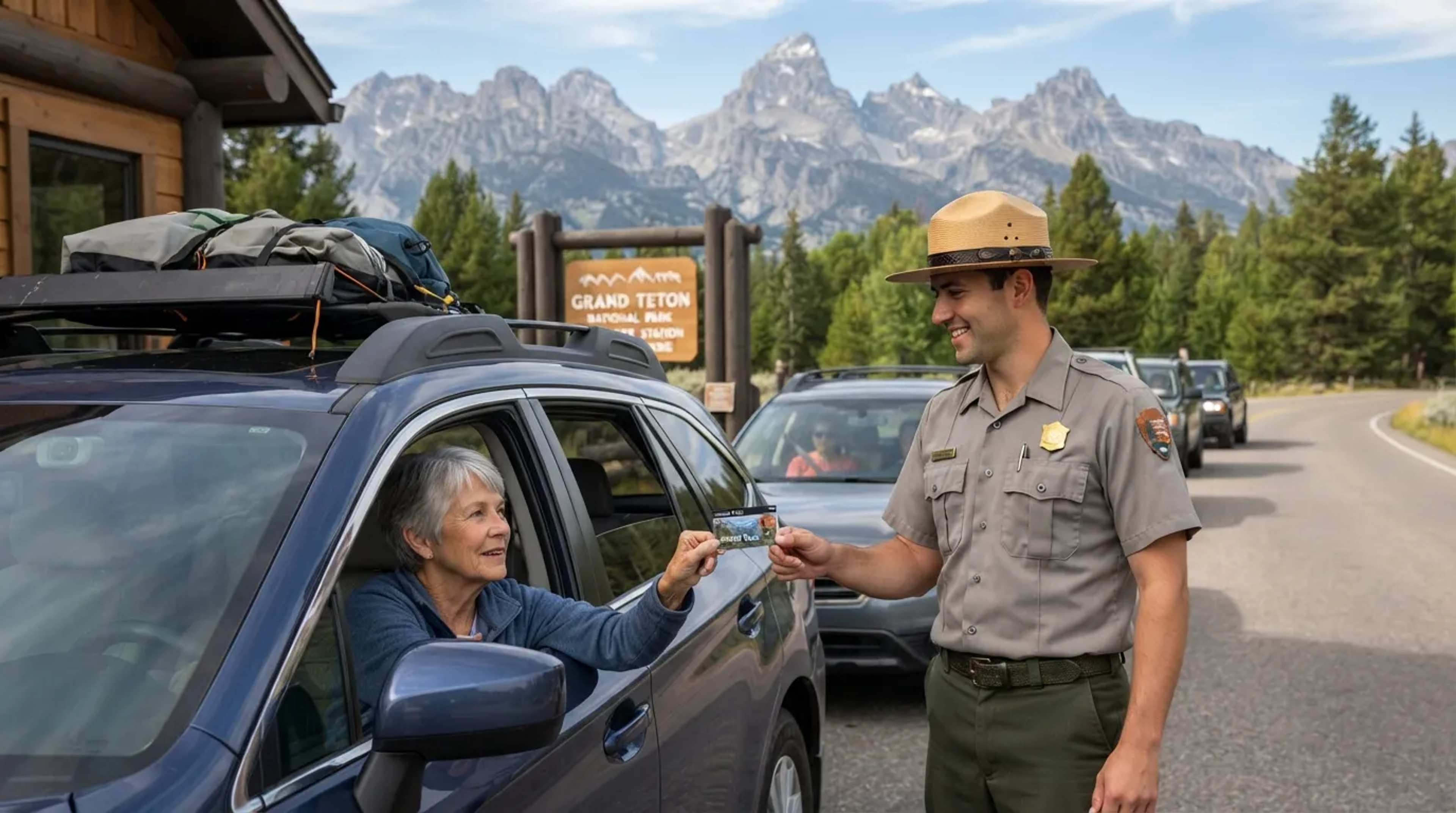
Ask around and you’ll find campers who paid full price for years without knowing a half-off option existed. The America the Beautiful Senior Pass is available to U.S. citizens and permanent residents age 62 and older, at $80 for lifetime or $20 for an annual version. Notice the age: 62, not 70. Anyone over 70 has probably been eligible for at least eight years.
The pass covers entrance fees at most federal recreation sites and typically takes 50% off camping fees at sites run by participating federal agencies. Hosts at federal campgrounds often mention it at check-in. There are limits, though, and extras like utility hookups or group sites aren’t always included. State parks run their own senior programs, and those vary widely, so ask the host what applies where you are.
Fast Facts
- Lifetime Senior Pass: $80 one time. Annual version: $20.
- Eligibility: U.S. citizens and permanent residents age 62 and older.
- Four annual passes can be traded in person for a lifetime pass.
- Military and Veterans passes cover entrance fees, not camping discounts.
- Bring photo ID, since some sites ask you to prove your age.
Then there’s a favor that has nothing to do with money, and it could save a trip…
#11 – The Cell Signal Map Hosts Carry in Their Heads
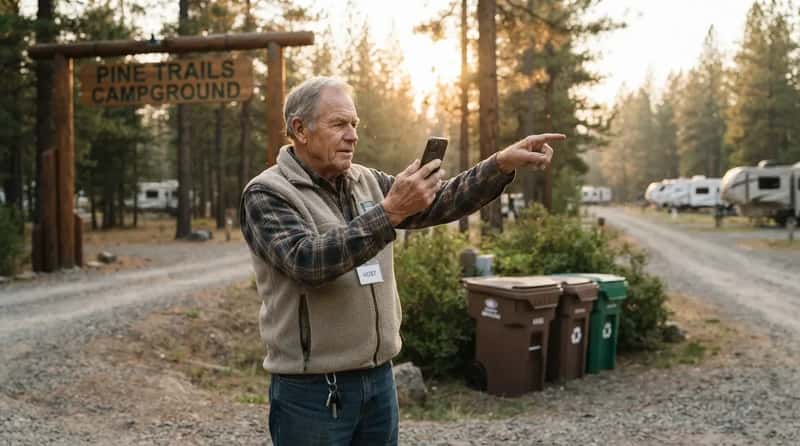
Campgrounds are famous for dead zones. Hosts live in them for months, so they learn exactly where a single bar of service appears. It’s usually near the entrance sign or on a hill by the dumpsters.
That matters when a visitor needs to call a doctor, a family member, or a tow truck. Sometimes the only reliable signal in the whole campground is next to the trash bins. Hosts also know where the nearest clinic, pharmacy and hardware store are, and which of them close early.
And the next one is about the sky, not the ground…
#10 – The Weather Warning Before the App Catches Up
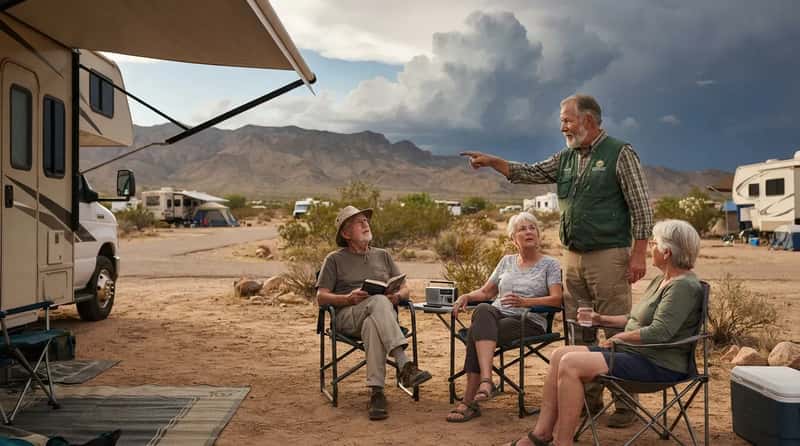
Storms in the mountains and heat in the desert can change within an hour. Hosts watch the sky and the forecast closely, and they know which campsites flood or drop branches first. Many will actually walk a loop to warn campers before bad weather hits.
Older campers can get extra attention in extreme heat. The CDC lists adults 65 and older among those at higher risk from heat. A host might suggest a shadier site, a cooler place to rest, or an earlier start for the day’s walk.
The next one is far more physical, and hosts do it without being asked…
#9 – The Firewood Delivered Right to Your Fire Ring
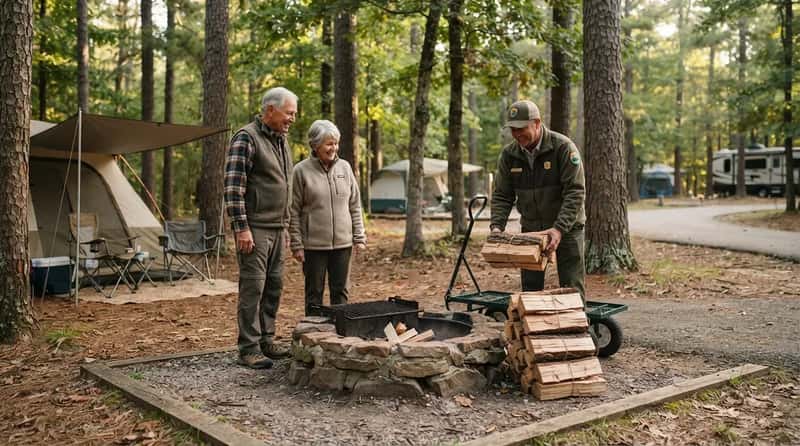
Firewood is heavier than it looks. A bundle seems small until you’re hauling several from the camp store to a site across the loop. Some hosts, particularly at campgrounds that sell wood, will drop it off by cart or truck.
It isn’t a posted service, so it depends on the host and the park. Hosts say the offer often comes out only after they’ve watched someone make the walk twice. Buy local wood when you can. Many campgrounds restrict outside firewood to keep invasive insects from spreading, so ask before you bring your own.
That small kindness leads to a bigger one, and it’s about who gets which site…
#8 – The Accessible Site Held Back on Purpose
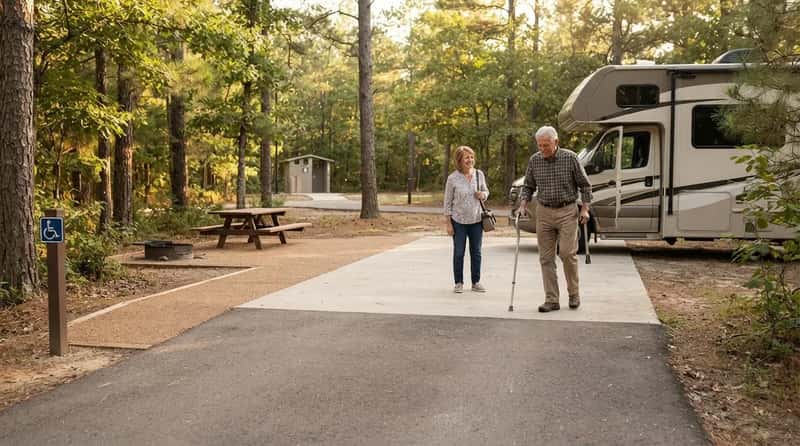
Many campgrounds have accessible sites with firmer surfaces, wider pads and easier routes to tables and restrooms. Hosts often know which ones those are and keep an eye on who ends up in them. An accessible site taken by someone who doesn’t need it can leave a camper with limited mobility with no good option.
Hosts generally don’t ask about medical conditions, but many will quietly offer the better site when it’s open and clearly a good fit. Not every older camper needs one, and plenty hike all day. But when someone is arriving with a walker or cane, a host’s quiet tip may be the difference between a good trip and a hard one.
The next arrangement has nothing to do with sites at all. It’s about people…
#7 – The Campfire Introduction That Seems Like Luck
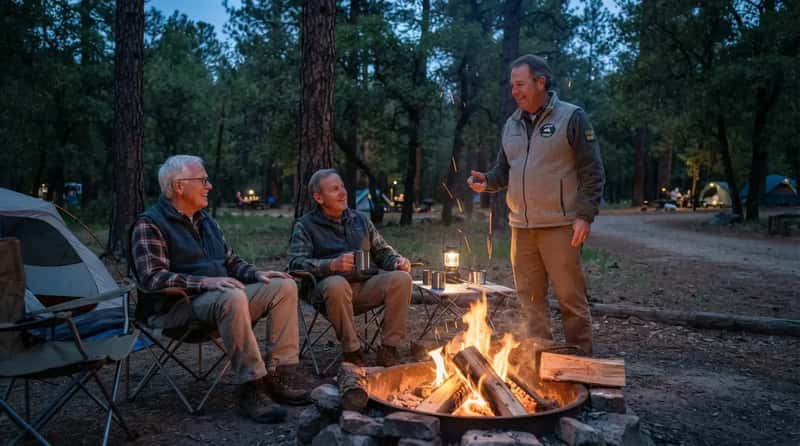
Solo travelers sometimes go entire weeks with barely a real conversation. Hosts see it every season. So many of them nudge two neighbors together with a casual “you two should meet.”
It’s rarely heavy-handed. A single shared evening around a fire ring can turn into a friendship that lasts through years of return visits. Some campgrounds also run potlucks or campfire talks, and hosts tend to make sure everyone knows about them.
Why It Stands Out
- It costs nothing and takes about ten seconds to set up.
- It looks like coincidence, so nobody feels singled out.
- Potlucks and campfire talks give shy campers an easy way in.
- The payoff often shows up the following season, when old neighbors return.
The next favor is about getting around, and it surprises first-timers…
#6 – The Golf Cart Ride Nobody Advertises
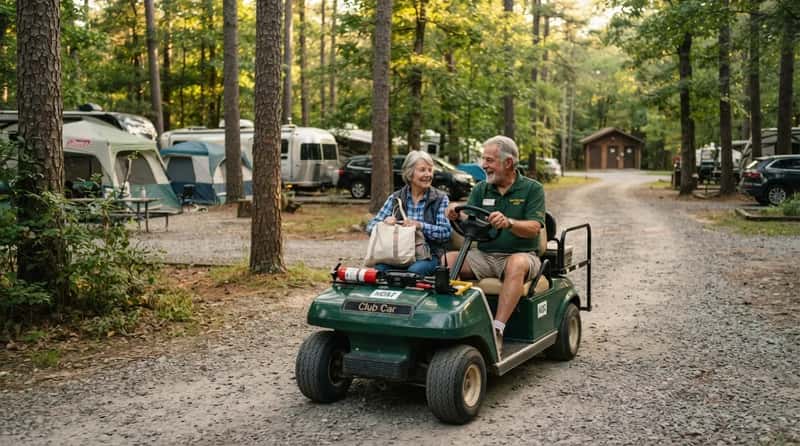
Some large campgrounds are the size of small towns. Hosts often get around in utility carts or trucks, and a few will offer a lift to visitors who are tired or carrying heavy gear. It isn’t a service and it isn’t guaranteed. It depends on the park, the rules and the host.
A host’s offer of a ride back from the bathhouse has spared many campers a long, tiring walk in the dark. Rules differ by agency and by campground, so don’t count on it. If you need help, ask politely and be ready for a gentle “no” if the rules don’t allow it.
The next one is honest advice you won’t find in any brochure…
#5 – The Honest Trail Beta Instead of the Brochure Version
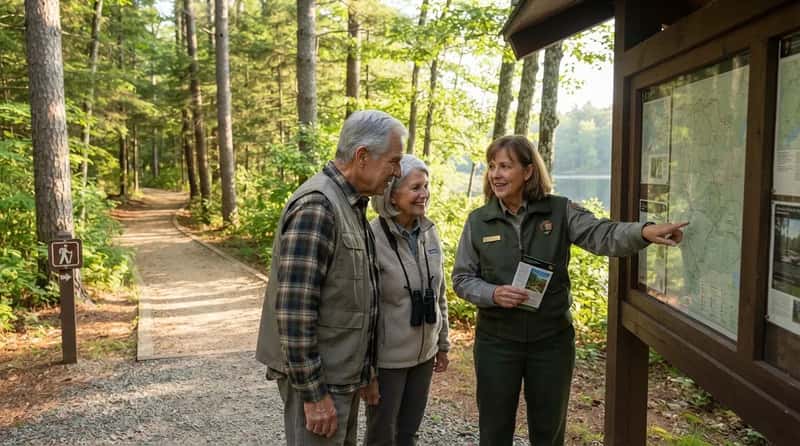
A trail listed as “easy” can still hide steep drops and loose rock. Hosts walk those paths. They also hear back from campers who tried them and came home wheezing. The brochure rarely mentions that the “short loop” has a hill most people remember for days.
When an older visitor asks for something gentle, hosts often point to a flat lakeside path, a paved route, or a short walk with benches. They’ll also say when to start, since early morning is usually cooler and less crowded. That honest, practical advice can matter more than any trail rating.
Flexibility on timing is next, and it can rescue a rough travel day…
#4 – The Early Arrival or Late Checkout That “Just Works Out”
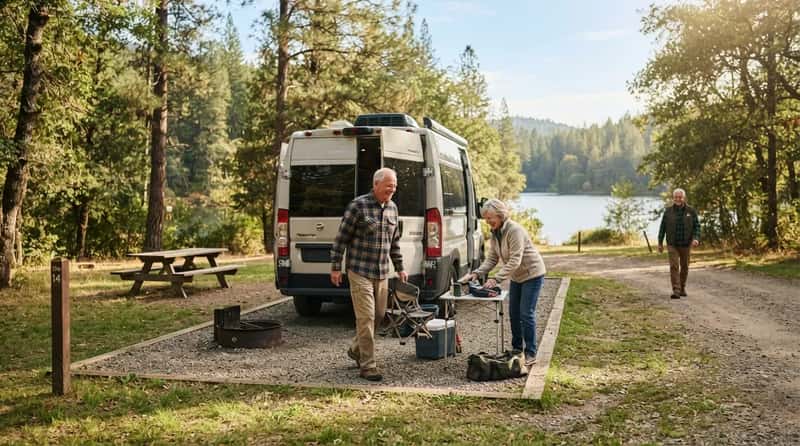
Check-in times look rigid on paper. In practice, hosts sometimes know whether a site is empty and clean. If it is, they may let a worn-out driver settle in early or stay a little later.
This is discretionary, and many campgrounds, especially those on online systems, can’t bend at all. When it works, it usually comes down to a polite call ahead and a host who has a free hour. After a long day on the road, that small flexibility can mean everything.
Quick Compare
- More likely to bend: small campgrounds, first-come loops, and a site that’s already empty and cleaned.
- Less likely to bend: online-system parks, packed weekends, and sites with a booking right behind yours.
- Best move: call ahead and ask, rather than showing up and hoping.
Next is the part of the job that no camper ever sees…
#3 – The Quiet Word With the Noisy Neighbor
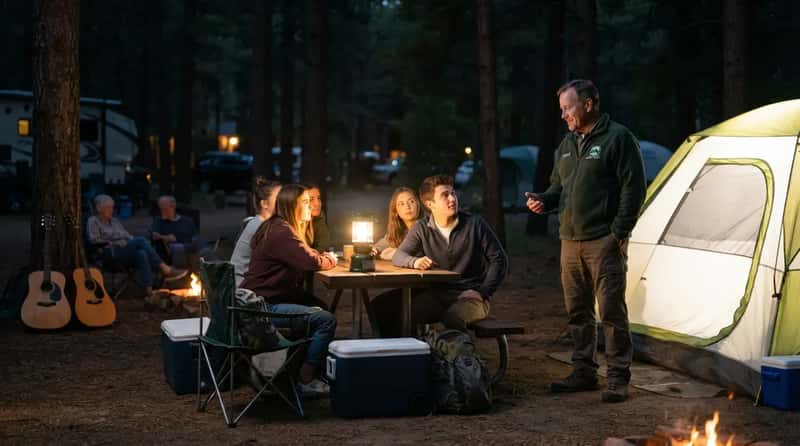
Everyone has been kept awake by a loud group. Hosts are often the first to deal with it. They walk over, introduce themselves, and ask the group to keep it down.
Most noise problems get solved by a calm chat, not by calling a ranger. That’s a particular relief for older campers who’d rather not confront strangers in the dark. Hosts often step in so the neighbors never know who complained.
The next one is about loyalty, and it might explain why some campers return for decades…
#2 – The Favorite Site Remembered Year After Year
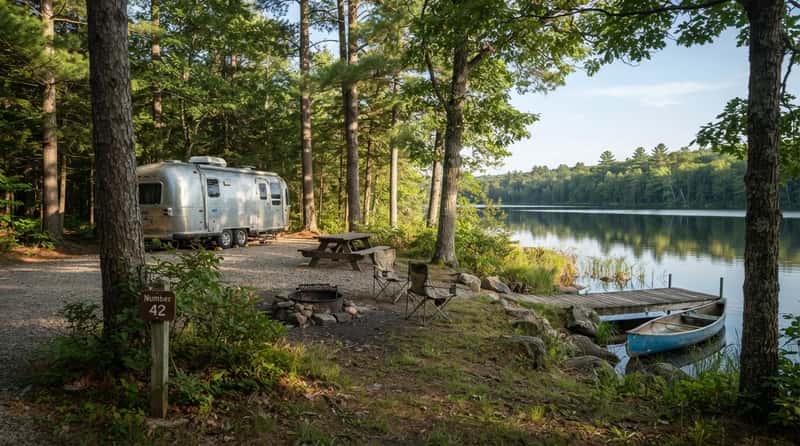
Return visitors matter to hosts. Some remember which campers love the lakeside spot or the shady corner, and many hosts come back season after season, so those memories carry on.
Some campers book the same site year after year, and hosts come to know the family by site number. Online systems still control the bookings. But a host can tell you when a spot tends to open up, when cancellations happen, and when to call.
But the one hosts talk about most is also the quietest of all…
#1 – The Morning Glance That Notices When Something Changes
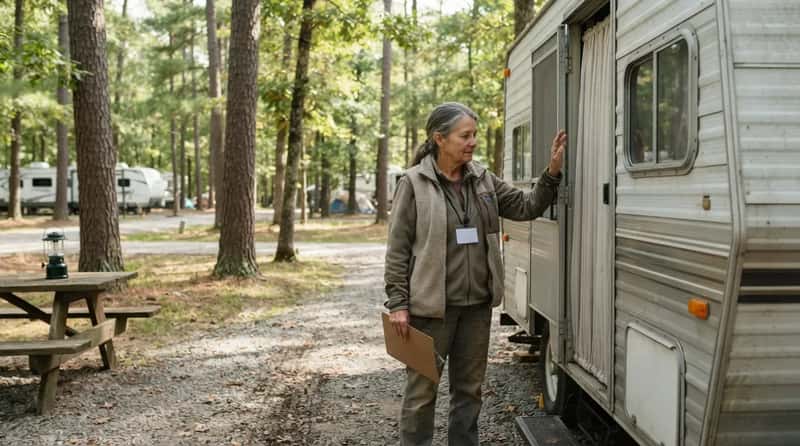
This is the arrangement hosts mention with the most feeling. Nobody assigns it and nobody schedules it. Hosts simply notice patterns, like the lantern that’s always lit by dusk or the camper who’s up with the sun every morning.
When a routine breaks, such as a curtain still closed at noon or a door that stays shut all day, a good host knocks. Hosts are not medical staff, but a single knock has led to a call for help that mattered. It’s no guarantee of safety, and campers should always have their own plan. But it’s the unspoken part of the job that many hosts say they’re proudest of.
None of these favors are official policy for anyone over 70, and none are guaranteed. The only formal perk on this list is the Senior Pass, which starts at 62. Everything else depends on hosts who pay attention: an easier site, a quiet corner, a signal map, a knock at the right moment.
Most of it is free to anyone who asks politely. And the next time a stranger in a camp vest waves you into your site, remember that they may already have been thinking about you for a while.