You know the scene. The agent glances at the screen, names a number, and the line behind you gets very quiet. Most travelers pay it, because airline fees feel as unarguable as the weather.
But some of the charges below were never as final as that shrug made them sound, and a few are refunds the law already says you’re owed. The difference often comes down to one calm sentence at the right moment. Some of these are favors that depend on timing and status. Others are federal rules almost nobody reads aloud, and the last one on the list is the one airlines are least likely to bring up.
#18 – The $50 Same-Day Change Fee That Elite Flyers Never See
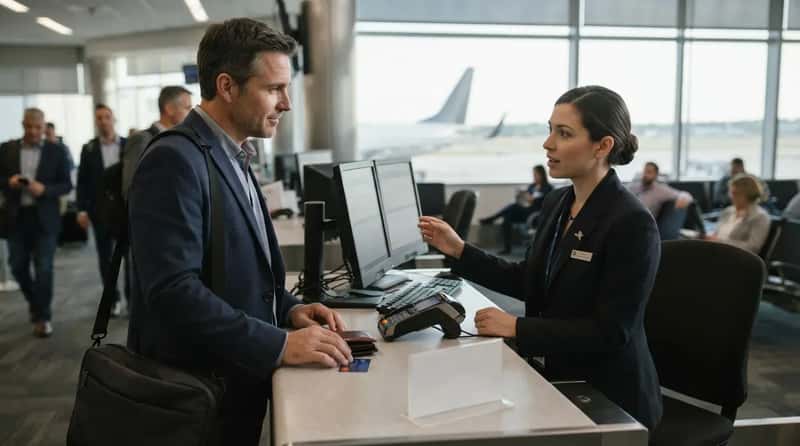
Everyone in the gate-area line pays the same fee, except the people who don’t. Alaska’s same-day change fee runs fifty dollars, but it is waived for certain fare types and top-tier members. American waives it for ConciergeKey, Executive Platinum and Platinum Pro members, plus companions on the same reservation. The regular traveler asking for the exact same seat swap gets the bill.
One travel-site roundup says agents can sometimes extend a one-time courtesy waiver to non-elite passengers, especially if the original flight is delayed or oversold. That isn’t a promise. The same roundup notes that status is the biggest lever, not politeness, but a calm and specific request still beats a vague one.
But the next fee shows up before you ever touch an airline desk.
#17 – The “Free” Gate-Check Offer That Turns Out to Be a Bag Fee Dodge
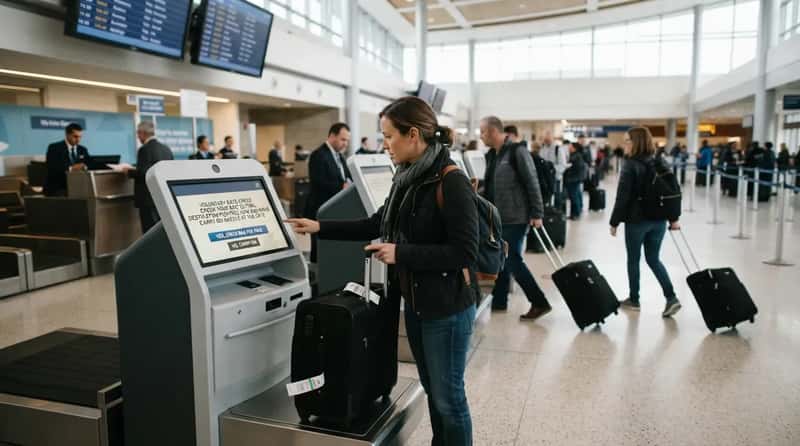
Sometimes the airline practically begs you to check a bag for nothing. When the overhead bins can’t hold everything, airlines ask for volunteers to check their bags for free. Most people don’t realize the offer often comes much earlier than the gate.
One family-travel guide says these offers can appear at the ticket counter or even several days in advance by email. That same guide calls the gate version a bit of a hollow offer if you’ve already hauled the bag through security. The smart move is to watch for it at the kiosk, before you’ve dragged that roll-aboard through the whole terminal.
And one budget-airline fee vanishes only if you show up in person.
#16 – The Budget-Airline Booking Fee That Disappears at the Counter
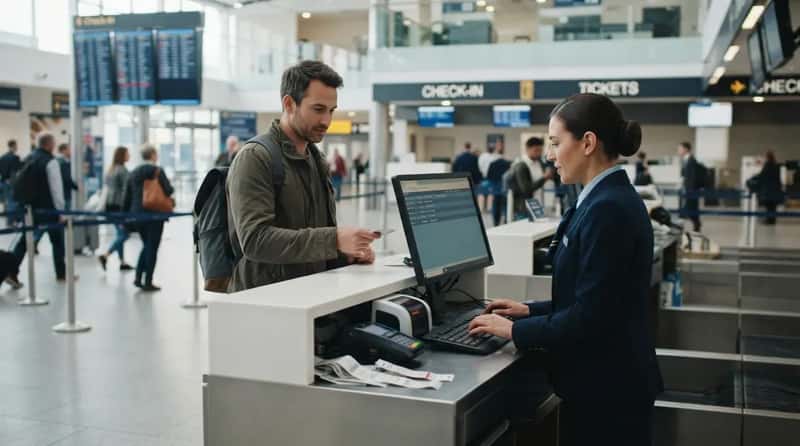
Ultra-low-cost carriers tack on a charge for booking online, and the ticket counter often skips it. Spirit, Frontier, Allegiant and Avelo charge online booking fees of roughly $18 to $40 per segment, and buying in person waives them. One 2026 guide lists Spirit and Frontier near $23 per segment.
Here’s the catch the deal-hunting crowd skips. Parking and gas can erase the savings, and not every agent will play along. Some counters rarely sell tickets at all.
Next up: a fee that actually costs more when you walk up to the desk.
#15 – The Agent Fee Nobody Mentions Until You Ask for Help
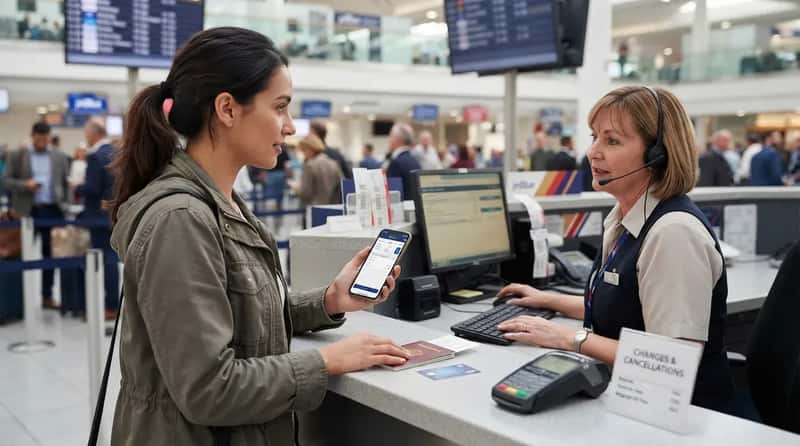
Asking a human to change your ticket can cost extra. JetBlue charges $25 to change or cancel with a support agent, but nothing online. British Airways lists $0 to $35 at an airport ticket office, versus free online.
Some carriers stack it. Etihad adds a nonrefundable $30 on top of the change or cancel fee when you use an agent. The quiet workaround is to ask whether the change can be done on the app while you stand there. Fee schedules shift often, so confirm the amount before saying yes.
Quick Compare
- JetBlue: $25 with a support agent, nothing online
- British Airways: $0 to $35 at an airport ticket office, free online
- Etihad: an extra nonrefundable $30 on top of the change or cancel fee
But when a storm is coming, the fee rules flip entirely.
#14 – The Storm Waiver That Opens Before Anyone Announces It
Bad weather can unlock free rebooking before the news catches up. When a storm is forecast, airlines often open a fee-free rebooking window ahead of the official headlines. That means a change you’d normally pay for may cost nothing.
It’s real money. U.S. carriers waived fare differences and change fees for more than a dozen airports ahead of an incoming coastal storm in October 2025. You still have to be flying through an affected airport on the covered dates. Asking an agent whether a waiver exists for your route is a very different question than asking for a favor.
The next charge can top $200, and one excuse reportedly erases it.
#13 – The No-Show Penalty That Sometimes Gets Erased
Missing a flight can hurt. No-show fees are among the harshest penalties in air travel, sometimes topping $200 per passenger. Most people pay without a fight.
One travel-site roundup claims a documented excuse can get the penalty dropped. A hospital note or a verified cancellation of another leg is the kind of proof an agent can attach to a file. Still, none of these waivers are guaranteed, and policies change. Treat it as a long shot worth a polite try, not a rule.
But one refund window works every time, if you catch it.
#12 – The 24-Hour Window That Makes Cancellation Fees Vanish
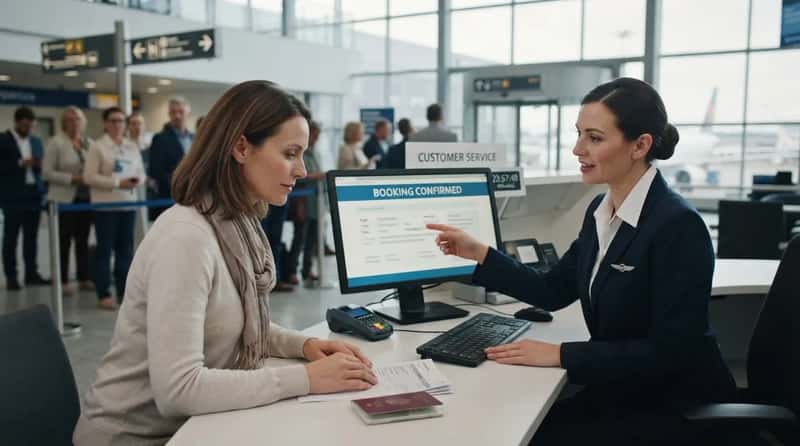
You’ve got a free do-over you probably forgot about. If you reserve a flight at least 7 days before departure, you can cancel within 24 hours of booking for a full refund, with no change or cancellation fee.
This is the rule that turns “I booked the wrong date” into a non-event. It exists separately from any disruption, so you don’t need a reason. Most people never use it because they think the fare is locked the second they pay. In fact, the clock starts at booking, and an agent can see exactly when it runs out.
Now for the charges that get refunded when the airline moves you.
#11 – The Seat Fee You Paid for and Never Got
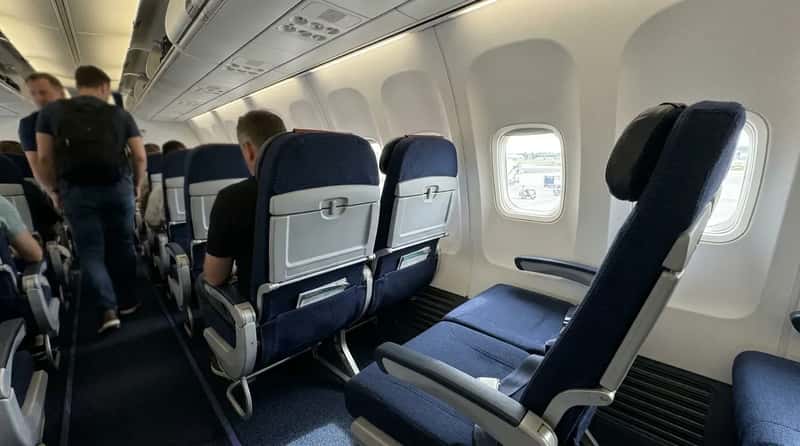
You paid extra for a window or extra legroom, and the airline gave your seat to someone else. If you paid for a specific seat and the airline moves you, you’re entitled to a refund of that seat fee. That covers extra legroom, a window seat, or a bulkhead position.
There’s a limit. DOT says refunds apply when the paid service itself is unavailable, not merely because the traveler disliked the service. Also, ticket agents aren’t responsible for refunding optional service fees, so those requests go to the airline. If you booked through a third party, you still take this one to the carrier.
The same logic covers something you can’t see from your seat.
#10 – The Wi-Fi Charge for a Connection That Never Worked
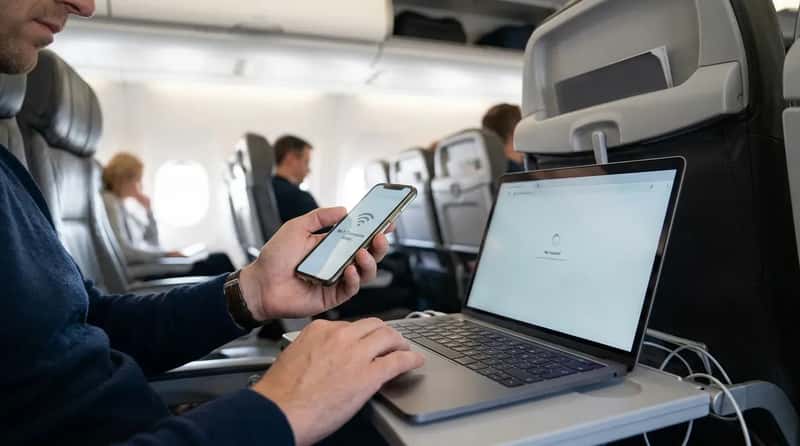
Paid Wi-Fi that doesn’t work is a refund waiting to happen. Think of a connection that stayed down for the entire flight. The same goes for broken in-flight entertainment you paid to use.
The rule behind it is simple. DOT says travelers are entitled to refunds of ancillary service fees when the paid service is unavailable through no fault of the traveler. Most people shrug and let it go because it’s only a few dollars. Airlines count on that. A spotty signal isn’t the same as a dead one, so be clear about which you had.
At a Glance
- Paid seat, then moved: the seat fee comes back
- Wi-Fi or entertainment that never worked: a refund of that fee
- Cancelled trip: lounge access and meals you couldn’t use are named examples
- Test for all of them: the paid service was unavailable, not just disappointing
The strangest paid extra on the list comes next.
#9 – The Lounge Pass and Meal You Paid For but Couldn’t Use
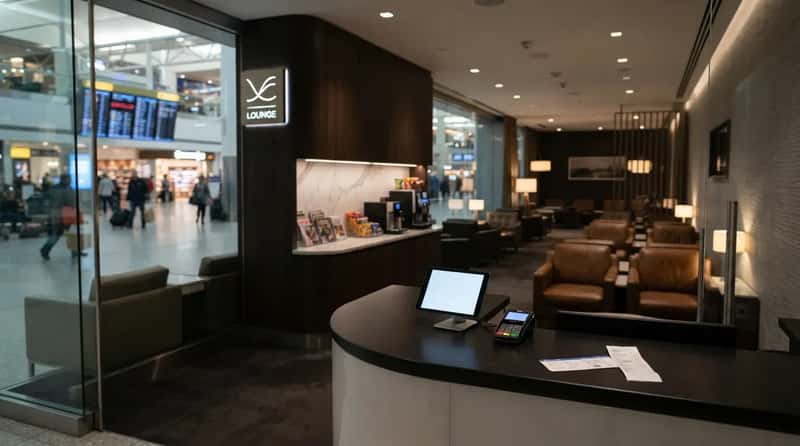
When a cancellation wipes out your trip, the add-ons you bought don’t automatically vanish from your card. DOT’s examples of refundable extras include seat upgrades, lounge access, meals, baggage transport and other optional services. Lounge access you couldn’t use because of a cancellation is one named case.
The quiet mistake is only looking at the ticket total. Add-ons often sit on separate line items, and a refund of the base fare doesn’t always sweep them in. Check each receipt line after a disruption.
And when the seat itself gets worse, the money owed gets bigger.
#8 – The Downgrade Where You’re Owed the Price Gap
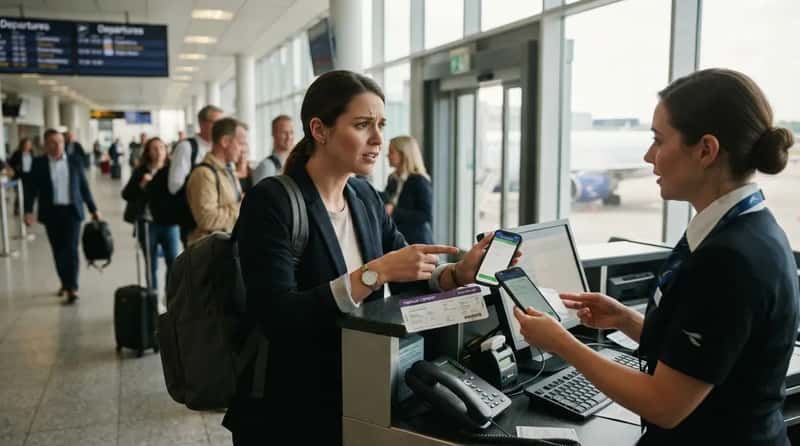
Paid for a better cabin and landed in a worse one? The airline must refund the difference between what you paid and the fare for the lower class of service. If you take the flight anyway, you don’t eat the cost.
The rule goes further. If you decline the downgraded flight entirely, you get a full refund. A downgrade also counts among the changes DOT treats as significant, along with major schedule shifts. Gate agents rarely bring this up on their own, so say the word “downgrade” and ask what the fare difference is.
Worth Knowing
- Take the downgraded flight, and the fare difference comes back to you
- Decline it, and the refund covers the whole ticket
- A downgrade sits in the same “significant change” bucket as big schedule shifts
- The magic word at the desk is “downgrade,” followed by “what’s the fare difference?”
But the bigger refund involves your whole ticket.
#7 – The “Nonrefundable” Fare That Becomes Refundable After a Big Schedule Change
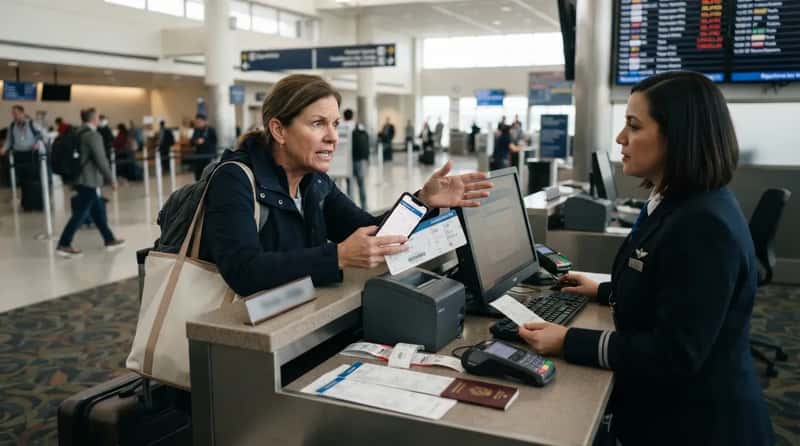
Nonrefundable doesn’t mean forever when the airline changes the plan. The rule requires automatic refunds when an airline cancels or significantly changes a flight and the passenger rejects the alternatives offered. A significant change means a departure or arrival shifting more than 3 hours domestic or 6 hours international.
Airlines have argued the rule is unnecessary and that weather and air traffic staffing delays are often outside their control. Even so, the rule stands. Say out loud that you want cash, because you should explicitly request a cash refund if that’s what you prefer over a travel credit.
The next refund hits your luggage fee.
#6 – The Checked-Bag Fee You Get Back When Your Suitcase Goes Missing
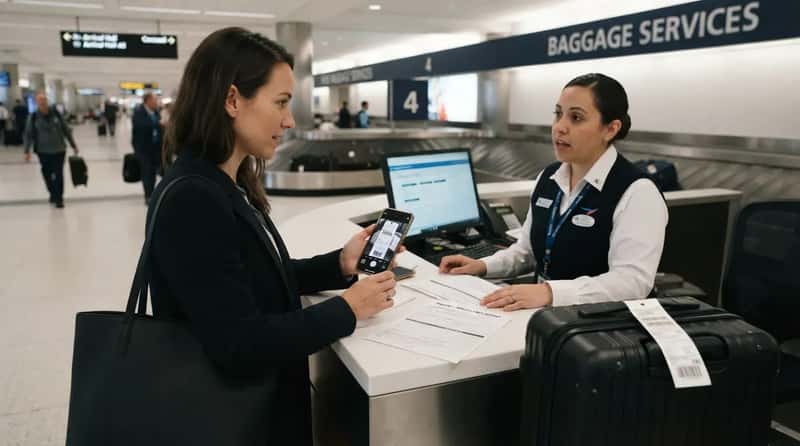
If your bag shows up late, you may not owe the fee that put it in the hold. For a domestic flight, DOT treats a bag as significantly delayed when it isn’t delivered within 12 hours after arrival. That’s when the checked-bag fee becomes refundable.
International trips run on a longer clock. The threshold is 15 hours when the flight is 12 hours or less, and 30 hours when it’s longer. The kicker: you need to file a mishandled baggage report with the airline at the airport. Skip the report and the refund gets harder to chase.
The next one is about kids, and it’s more confusing than airlines let on.
#5 – The Family Seating Fee Some Airlines Say They Don’t Charge
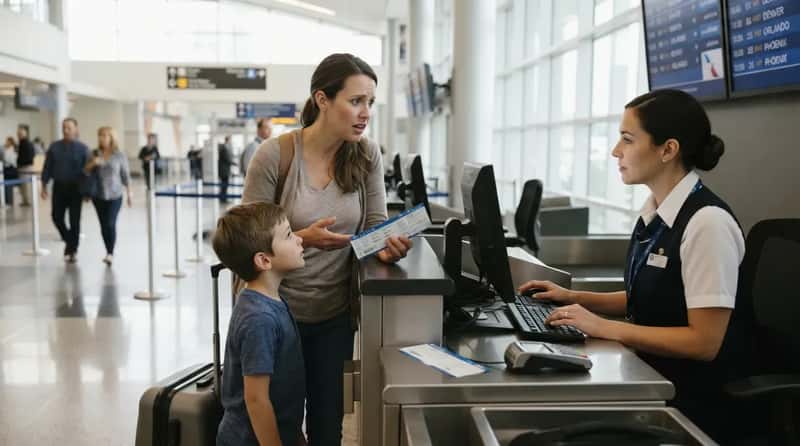
Sitting next to your child can cost extra on some airlines and nothing on others. Per recent reports, nine carriers split into two camps on fee-free family seating, and the age cutoff is generally 13 and under, though it varies by carrier and policies shift.
Fast Facts
- Committed to fee-free family seating: Alaska, American, Frontier, Hawaiian and JetBlue
- Not committed: Delta, Southwest, United and Allegiant
- Typical age cutoff: 13 and under, varying by carrier
- Federal rule: proposed in August 2024, never finalized
Here’s the truth most parents miss. There’s no legal requirement for airlines to seat children next to their parents for free. Book everyone on the same reservation and raise it at the desk, not the gate.
But the strongest rights on this list belong to passengers with disabilities.
#4 – The Bag Fee That Can’t Be Charged for a Wheelchair or Scooter
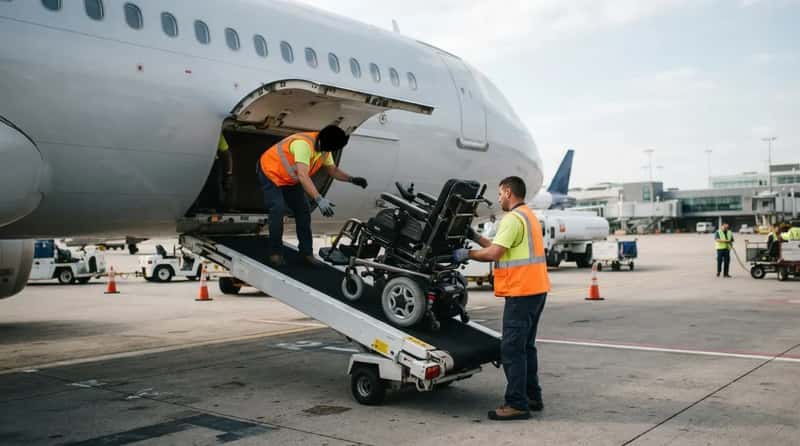
If an assistive device can’t go in the cabin, it rides below at no cost. Airlines must stow assistive devices as cargo at no extra cost, and you don’t have to pay a checked-bag fee. That includes the big ones. Large and heavy powered wheelchairs are typically stowed in the cargo portion of the aircraft.
The airline also owes you proper handling. The device must be returned promptly and as close as possible to the door of the aircraft, unless you ask to pick it up in baggage claim. If an agent tries to treat it as an ordinary checked bag, that’s the moment to say so.
The cabin carries its own fee trap, and it’s easy to miss.
#3 – The Carry-On Limit That Doesn’t Count Your Medical Gear
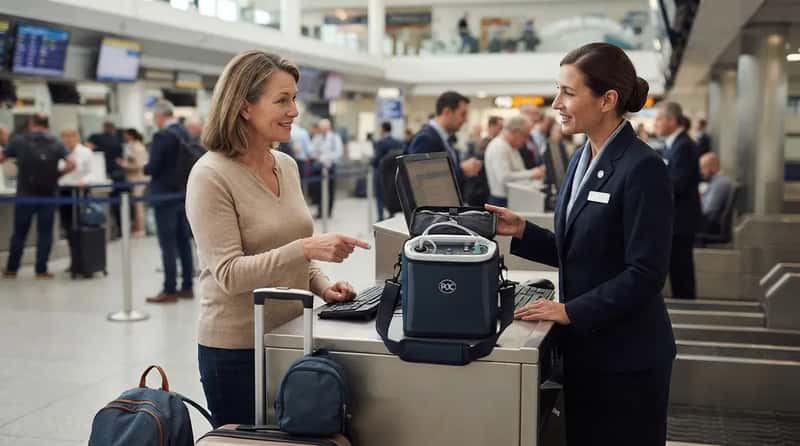
Your cane, walker, or medical device shouldn’t eat into your bag allowance. Airlines must allow assistive devices as carry-ons in the cabin free of charge, including medical devices and a personal amount of medication. Assistive devices must not count against the passenger’s carry-on limit.
There’s one catch. DOT’s brochure warns that if the bag also contains personal items, the airline can count it toward a baggage limit, and it may be subject to a fee. Some airlines also require advance notice for certain devices. Up to 48 hours’ notice can be required for items such as portable oxygen concentrators.
And two more free services are the ones most travelers don’t realize exist.
#2 – The Free Assistance and Safety Assistant Fee That Isn’t Allowed
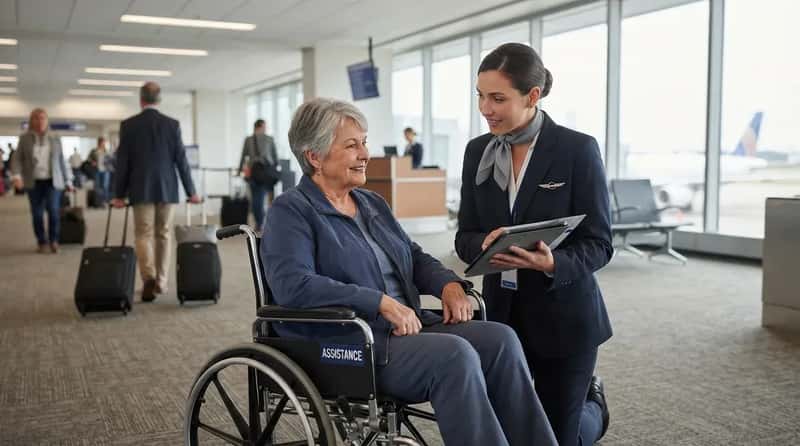
Help getting through the airport shouldn’t come with a price tag. One 2026 guide says wheelchair assistance must be free of charge, regardless of ticket class. When the airline and passenger disagree about a safety assistant, the airline can require the assistant but cannot charge for the transportation of the assistant.
Seats follow the same logic. Airlines may not keep anyone out of a specific seat on the basis of disability, or require anyone to sit in a particular seat on that basis, except to comply with safety requirements. A travel-site roundup adds that free seat selection applies when a specific seat is needed for a disability-related reason.
But the last one is the cost almost no one knows is owed to them.
#1 – The Ride Home Airlines Must Reimburse When Your Wheelchair Doesn’t Show Up
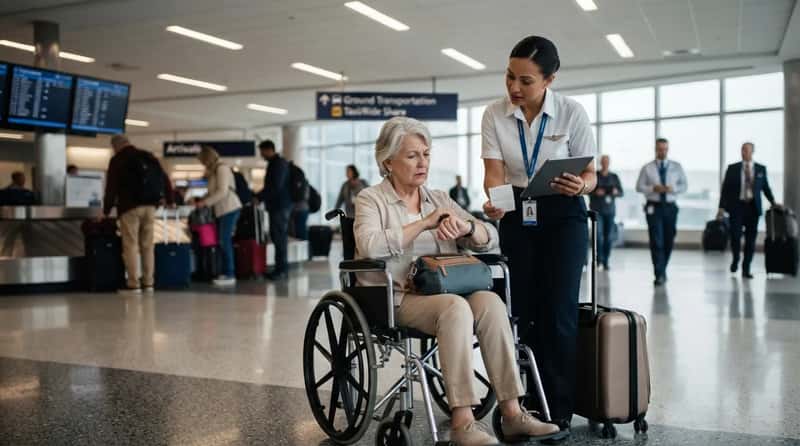
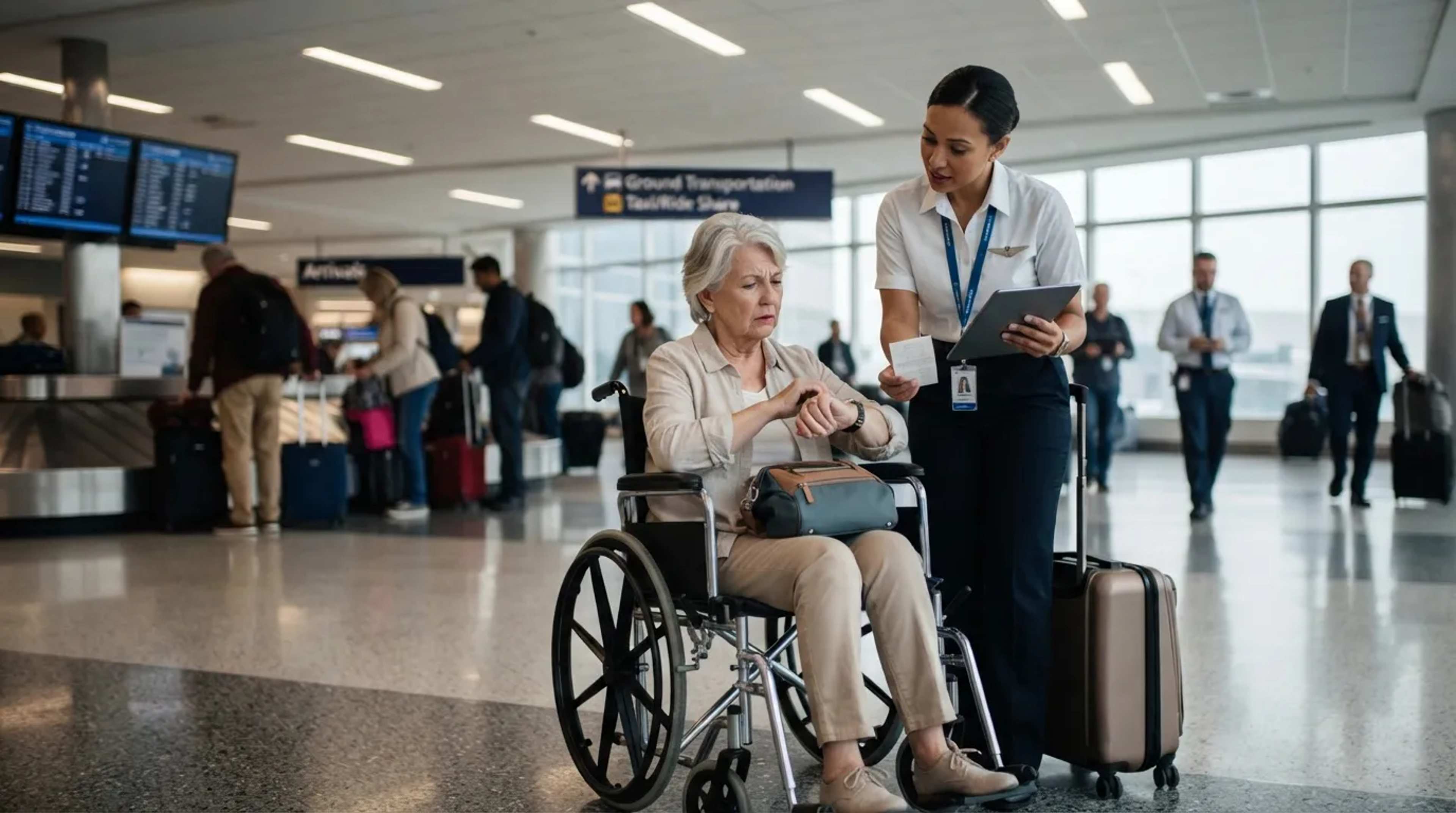
When an airline loses or delays a wheelchair, the problem isn’t just inconvenience. DOT’s rule says the airline must reimburse passengers for the cost of transportation to or from the airport if the wheelchair or scooter is delayed by the airline. Few passengers ever hear that at the desk.
The same rule set a clock on staff readiness. Employees and contractors who physically assist passengers with mobility disabilities, or handle wheelchair and scooter transport, were required to be trained by June 17, 2026. Keep every transport receipt. If the airline is responsible, those receipts become your claim.
Some of these waivers are courtesies, and none of them are guaranteed. But the pattern is hard to miss: the charge is rarely as fixed as the checkout page makes it look. The strongest cases are written into federal rules, from refunds for unused seats and Wi-Fi to bag fees after long delays and reimbursement when a wheelchair is late.
The rest come down to timing, status, and a specific question asked at the right moment. The next time an agent names a number, it’s worth pausing before you pay it.