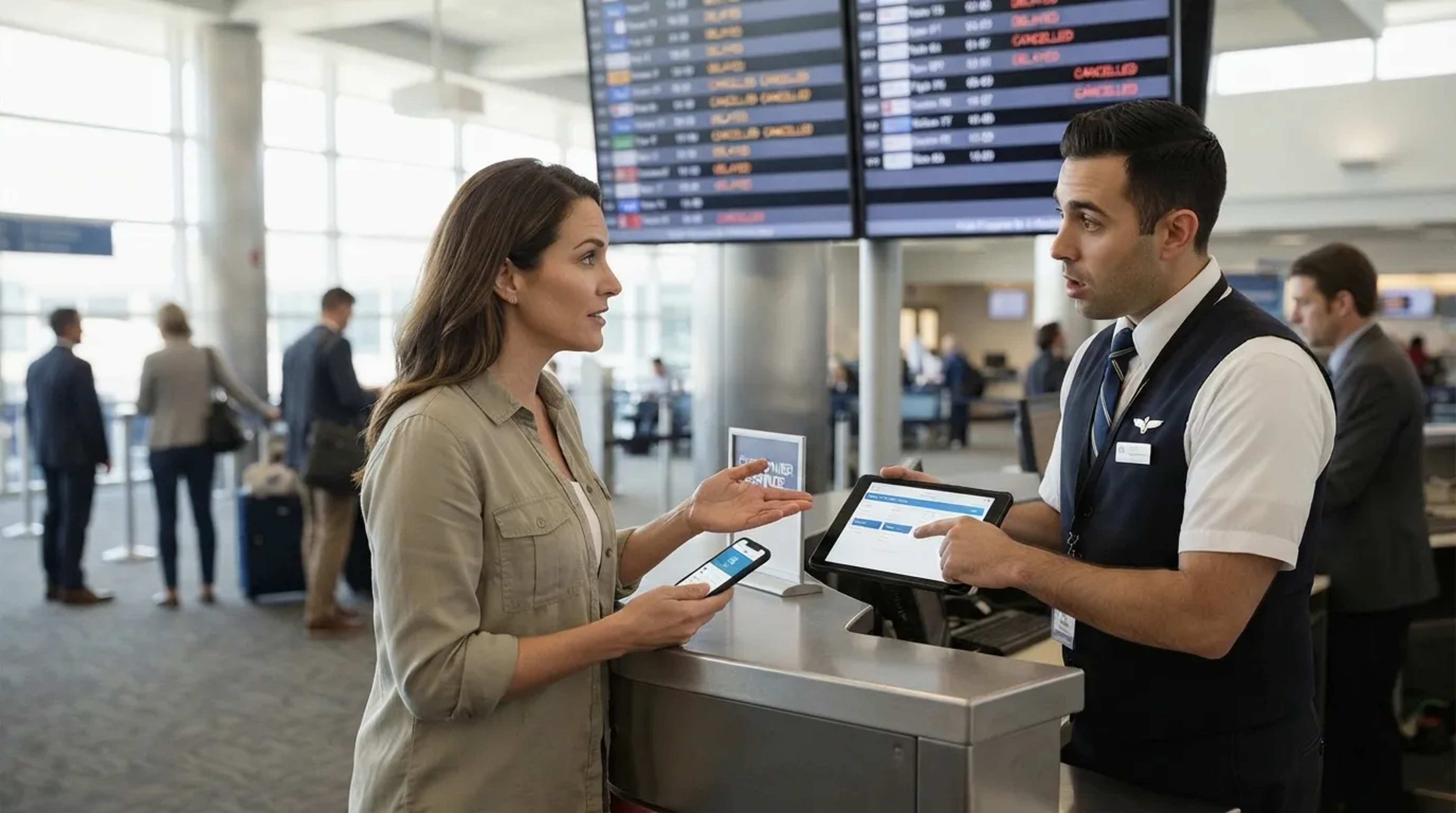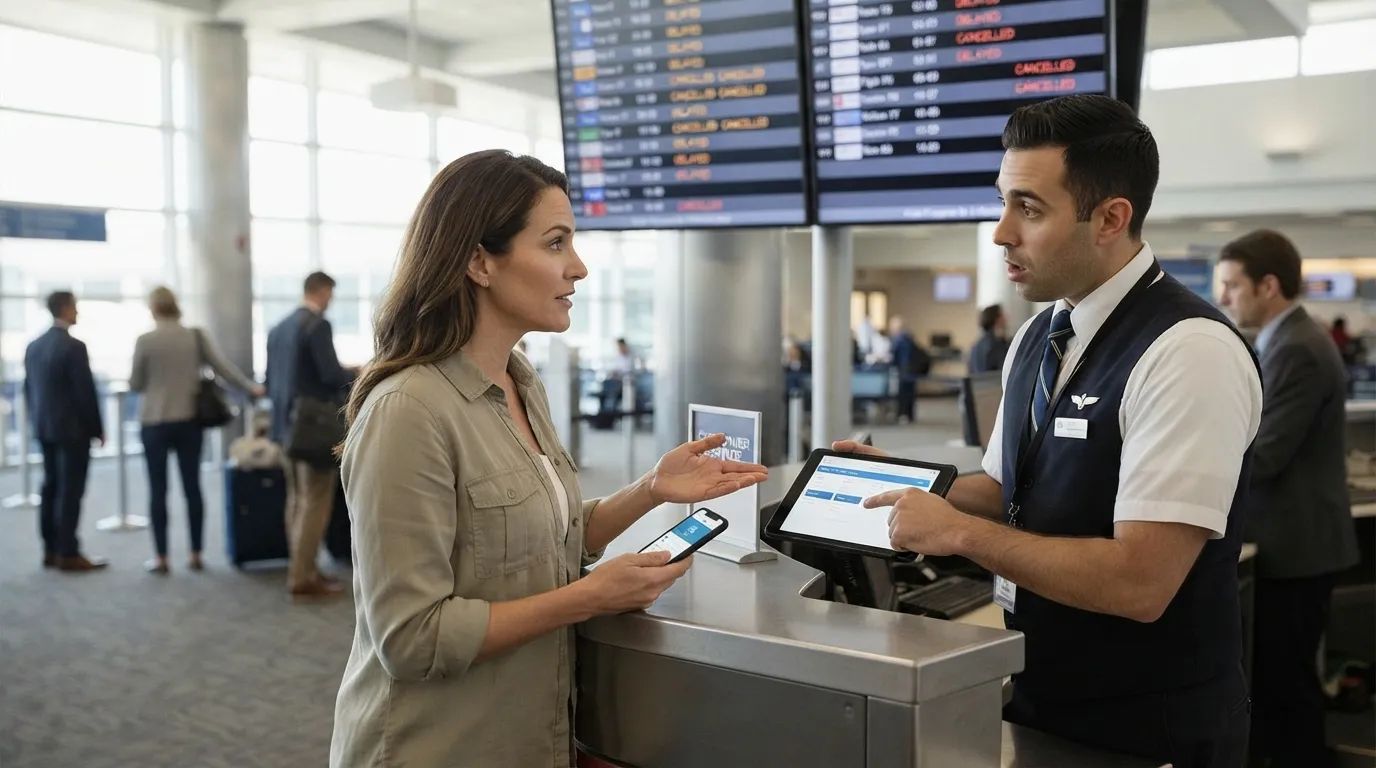
You land, glance at the board, and watch your connecting flight flip from “boarding” to “departed” while you’re still shuffling off the jet bridge. The agent at the desk types fast and says, “Let me see what I can do.” It feels like your whole night is now in that one person’s hands.
Mostly, it isn’t. Behind that screen sit ticket structures, cause codes and quiet policies that decide whether you get a hotel, a meal or a shrug, and most of it was settled long before you reached the desk. Here’s what rarely gets said out loud, starting with the detail that changes how every missed connection plays out.
#18 – Your Connection Was “Legal” Long Before Anyone Asked If You Could Run
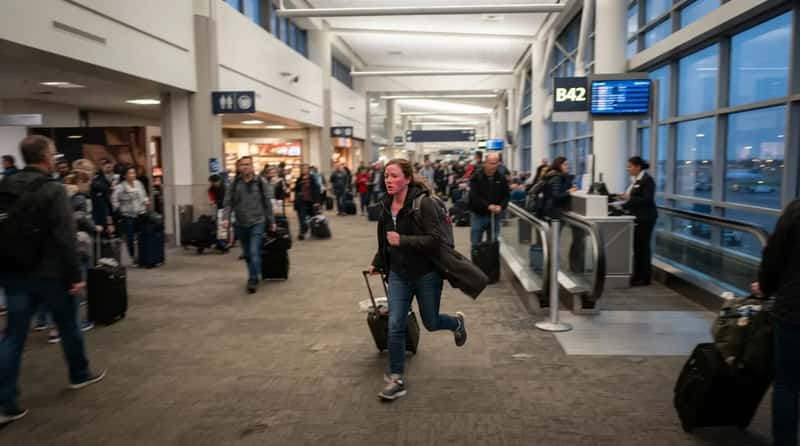
Every airport-airline pair has a published Minimum Connection Time, the shortest time the airline will guarantee a connection through that airport. Booking systems won’t sell you anything shorter. If the airline approved a connection at or above that minimum and you still missed it, the rebooking duty is theirs.
But the minimum is a scheduling standard, not a promise that you can actually make the transfer. It typically assumes no delay, no immigration queue and no terminal change.
A 45-minute connection can be valid on paper and still fail once a remote stand or a long hike between gates eats the clock. And your real deadline falls even earlier than the one on your ticket.
#17 – The Gate Shuts Before the Plane Actually Leaves
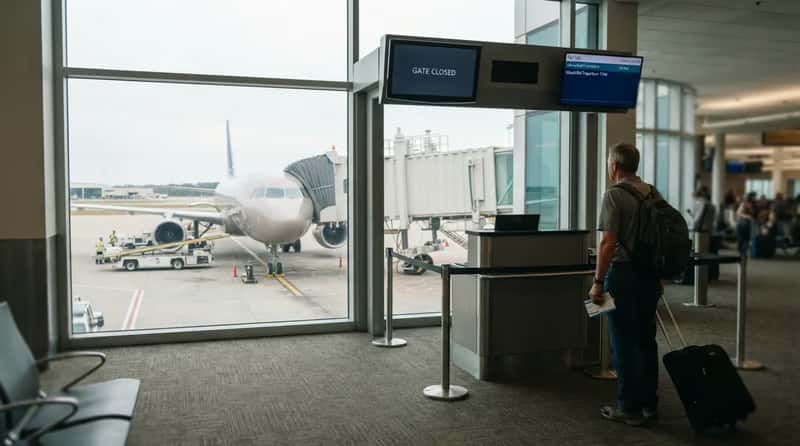
You can see the aircraft through the window, and the agent still won’t let you board. That feels cruel, but it’s procedural. Gate closure is often 10-15 minutes before departure, and that published cutoff controls.
Boarding starts much earlier than most people assume. Gate closure can occur 10-15 minutes before scheduled departure, while boarding may begin 30-50 minutes earlier. So your real deadline can be a quarter of an hour before the time printed on your boarding pass. The plane is still there, but your window is already gone.
Fast Facts
- Gate closure often comes 10-15 minutes before scheduled departure.
- Boarding may begin 30-50 minutes before that departure time.
- Seeing the plane at the gate doesn’t mean the door is still open.
- The time on your boarding pass isn’t the time that matters most.
#16 – Same Airline Logo, Two Tickets: How You Quietly Become a “No-Show”

Two flights in one app don’t always mean one booking. Airlines generally won’t assume responsibility for missed connections on two separate tickets. If you book one leg on JetBlue and the next on United, United won’t take responsibility if JetBlue’s flight runs late.
The second airline may treat a late traveler as a no-show, and there’s no universal free-rescue entitlement. That can void the rest of your trip. One travel site advises never booking separate-ticket connections with less than three hours between flights.
Saving a little on two tickets can cost you the entire second fare. The reverse setup is where the real protection lives.
#15 – The One-Booking Shield That Gets Some Passengers Rescued and Others Ignored

When everything is sold as one booking, the airline usually owns the problem. Airlines usually rebook to the final ticketed destination when a delay or cancellation causes a missed connection and all flights were sold together. That’s the quiet reason one traveler gets a new boarding pass in two minutes while another gets a lecture.
The decisive facts are the ticket structure, the recorded cause, the airport’s connection rules, and what happened during your transfer. Notice that the ticket structure comes first on that list. You decided that weeks ago, usually while comparing prices on a laptop.
#14 – Two Words Quietly Decide Your Night: “Controllable” and “Not”
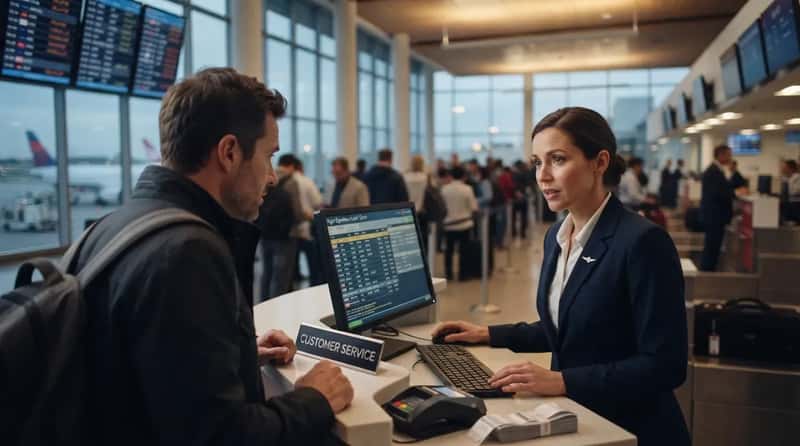
Agents rarely say it out loud, but your options depend on why the plane was late. The DOT dashboard lays out airline commitments for “controllable” cancellations and delays, meaning those within the airline’s control. Think staffing, maintenance or mechanical problems.
If the delay is outside the airline’s control, the airline generally doesn’t owe you anything extra. Two identical missed connections can lead to completely different outcomes depending on how the cause is recorded. That’s why it’s worth politely asking what cause is on file. And then there’s the weather.
Quick Compare
- Controllable: staffing, maintenance or mechanical trouble, where airline commitments for rebooking, meals and hotels can apply.
- Not controllable: weather and air traffic restrictions, where rebooking is common but cash or a free hotel generally isn’t.
#13 – Storm Delays Get You a New Flight, Not a Free Hotel
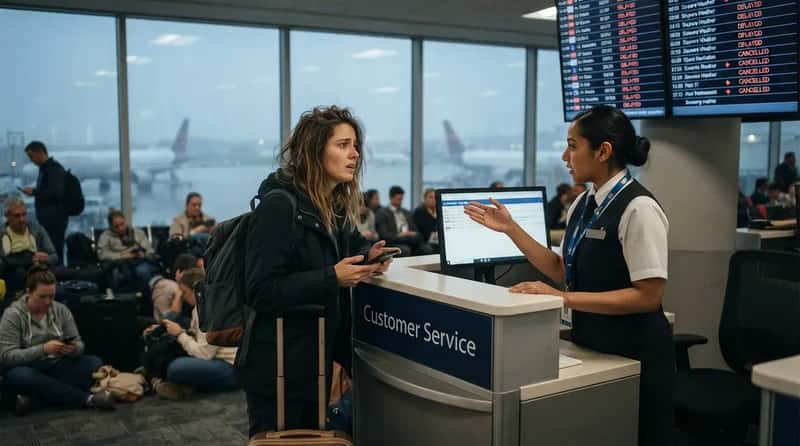
This is the one that makes people furious. Weather and air traffic restrictions commonly trigger rebooking without cash compensation or a free hotel. You’re stranded either way, but the airline’s promises may stop at the rebooking.
There’s one exception to the “nothing owed” story. Under the DOT’s refund rule, a canceled or significantly changed flight can qualify you for a refund regardless of the cause, including weather. Hotels may depend on the cause, but the right to a refund generally doesn’t. Plenty of travelers argue that’s still too little when they’re sleeping on a terminal floor.
#12 – The Meal Voucher Comes With a Hidden Stopwatch
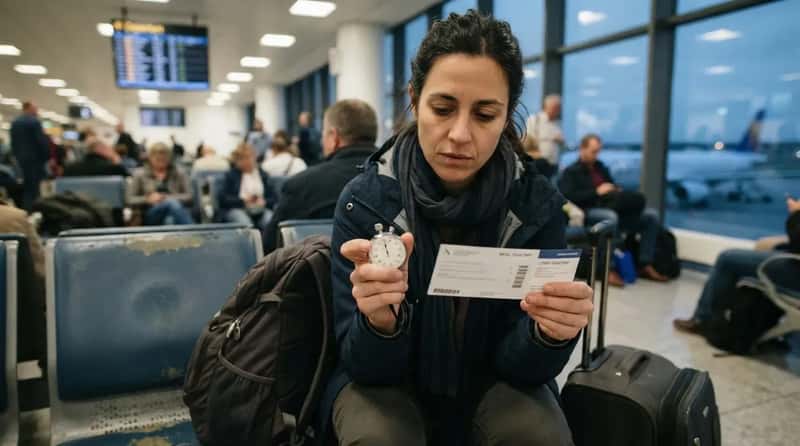
Free food during a long wait is real, but it’s conditional. When DOT launched its dashboard, all 10 major U.S. airlines guaranteed free rebooking and meals when an airline issue caused a significant delay or cancellation. The key phrase is “airline issue.”
Major airlines will offer a meal or a credit toward one if you have to wait more than three hours for the next flight. If your rebooked flight leaves in two hours, you may get nothing. Agents don’t always volunteer it, so ask. And if the night stretches longer, hotels enter the picture.
#11 – Overnight Hotels Exist, but Only When the Airline Caused the Mess
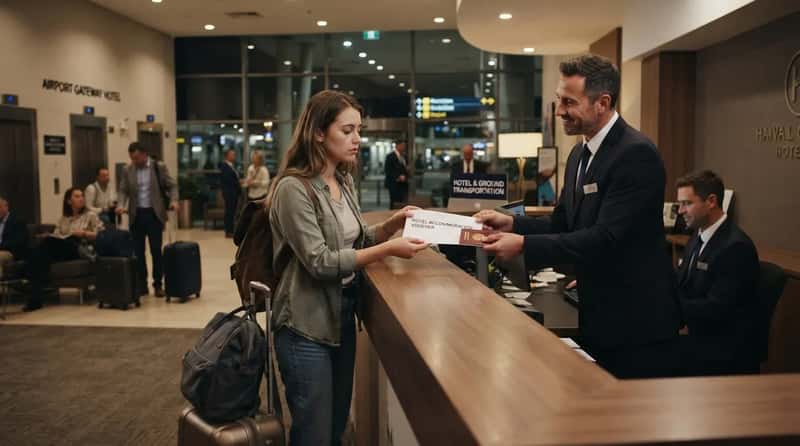
On the DOT dashboard, the 10 largest airlines guarantee meals and free same-airline rebooking, and nine guarantee hotel accommodations. That sounds generous, and it can be. The catch is the condition attached.
Nearly all major airlines will offer a complimentary hotel stay and ground transportation for overnight cancellations. But those commitments apply only when the cause is within the airline’s control, and they’re carrier promises rather than legal rights. The same overnight stay can be free or fully on you depending on one recorded reason.
#10 – The Government Scoreboard Most Travelers Never Open

There’s a public cheat sheet, and few people use it. Airline commitments are laid out on the DOT’s Airline Customer Service Dashboard at FlightRights.gov. It uses a green checkmark and a red “X” for each service, so you can compare carriers in about a minute.
These pledges were added to airlines’ customer service plans, and DOT can legally hold airlines to them. Still, critics say the rules don’t go far enough, especially during major schedule meltdowns. The scoreboard exists, but it’s a list of promises, not a bill of rights.
#9 – Only Some Airlines Will Put You on a Rival’s Plane

Everyone assumes the answer is “rebook me on whoever has a seat.” That’s not how it works. For controllable cancellations, some airlines (Alaska, American, Delta, JetBlue, United) can rebook you on a partner airline at no cost.
Others may keep you on their own flights. Free rebooking on the same airline is guaranteed by the 10 largest carriers. If your airline is full tomorrow, your “free rebooking” could be a day away. That’s why the airline’s name matters when you buy, though speed matters just as much as policy.
At a Glance
- Partner-airline rebooking on controllable cancellations: Alaska, American, Delta, JetBlue and United.
- Free same-airline rebooking: guaranteed by the 10 largest carriers.
- Other airlines may keep you on their own metal.
- A full flight tomorrow can mean a wait of a day.
#8 – The Fastest Agent May Be the One in Your Pocket
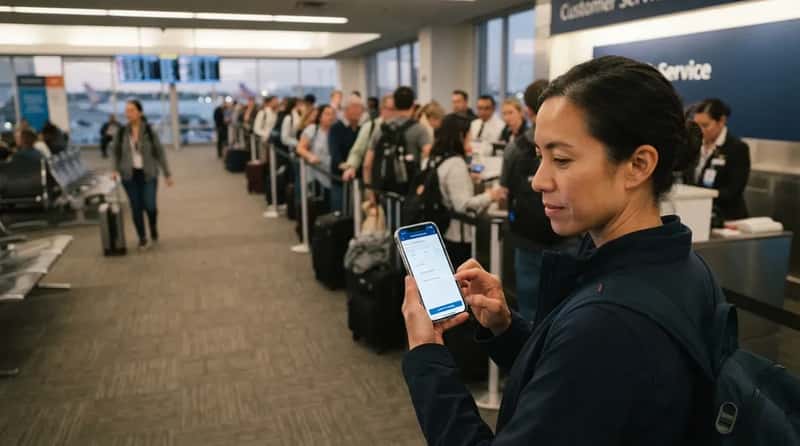
While 60 people queue at one desk, a quiet few are already rebooked. Many airlines let you view or change options in their app or on their website. Policies differ, so check yours before you need it.
A missed connection often ends one of three ways: automatic rebooking, same-day standby, or buying a new ticket. Which one you get may depend on who asks first and what they ask for. And sometimes who you are changes the answer too.
#7 – Loyalty Quietly Moves You Up the List

Nobody posts a sign about it, but status can matter. One travel writer notes that airline help can be easier if you have elite status or a long history with the airline. Agents often have discretion, and discretion tends to flow toward familiar names.
That’s the uncomfortable part. Two passengers can stand in the same line with the same missed flight and leave with different outcomes. Many travelers see it as an unspoken two-tier system. Others call it a fair reward for loyalty. Either way, one famous “rule” often gets mistaken for law.
#6 – The “Flat-Tire Rule” Is a Favor, Not a Law

Veteran flyers swear by it: if you show up a little late, the airline will put you on the next flight. But the “flat-tire rule” is not a universal law. It’s an old custom that survives in patches.
Some airlines informally help passengers who arrive within roughly two hours of a missed departure, but the time window, fee waiver and standby treatment vary by carrier and fare. “Roughly two hours” is a courtesy, not a contract. Treat it as a bonus, not a plan. The next surprise happens at the border.
#5 – Customs Lines Can Wreck a Connection That Looked Fine
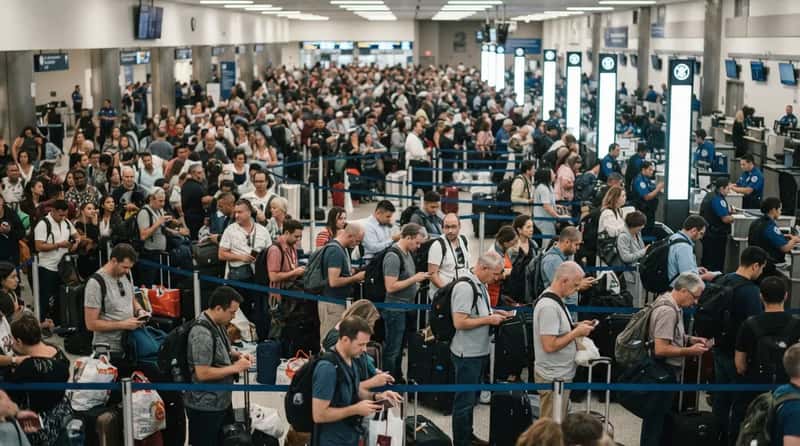
International arrivals are where “legal” connections go to die. For a flight into the U.S. that isn’t pre-cleared, one guide cites a 90-minute minimum but suggests 3 hours is more sensible. The reason is simple: immigration and customs queues are unpredictable.
Agents see this daily and rarely mention it at booking. A tight international connection can work perfectly on a quiet Tuesday and fall apart on a packed Friday. The minimum is built for an ordinary day, not your day. Longer layovers feel boring, but they can save the trip. And your luggage has its own story.
#4 – Your Bag May Be on a Different Mission Than You
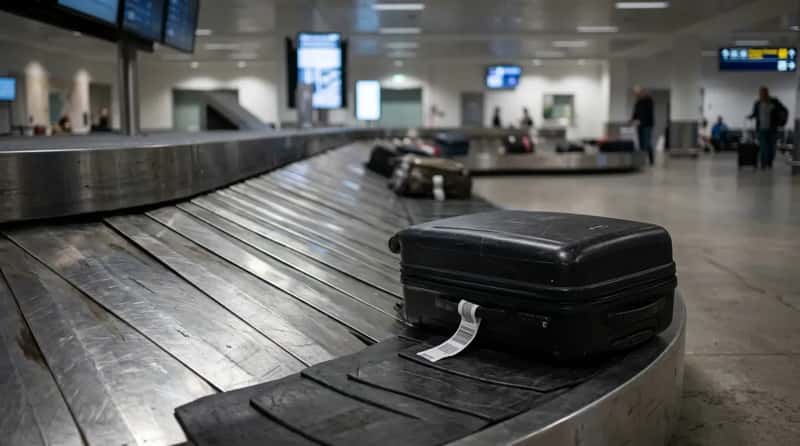
On one ticket, bags are usually checked through to your final destination. On separate tickets, you may have to reclaim and recheck your baggage yourself. That’s one more reason cheaper bookings carry hidden time costs.
If your bag is late, there’s a fee refund route. Checked baggage counts as significantly delayed at 12 hours for domestic flights and 15 to 30 hours for international ones. That concerns the bag fee, not an automatic refund of the whole ticket. Your suitcase can qualify for a refund before you do.
#3 – Travel Insurance Often Skips the Exact Scenario You’re Paying For
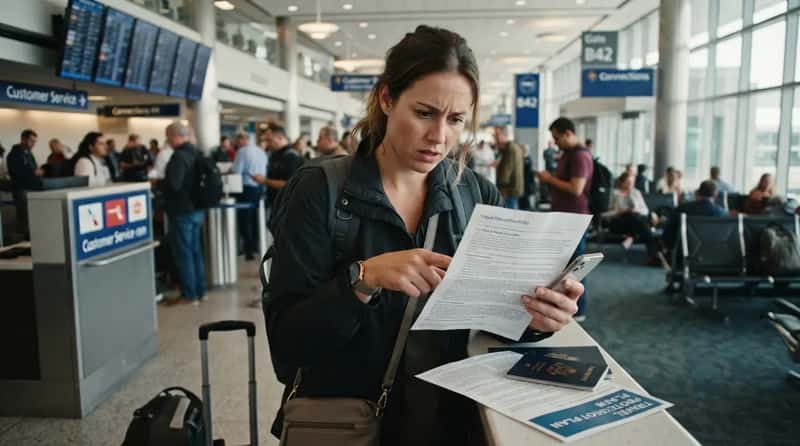
“Missed connection” sounds like the thing a policy would cover. Often it’s more complicated. SmarterTravel’s analysis found that bundled “missed connection” benefits are, at best, problematic for two-airline connections. Many of those policies limit the benefit to missed cruise departures.
The dollar figures can be small, too. Dollar limits can be as low as $250. The policy name and the policy coverage may not match. Read the definition before you rely on it. Then there’s a gap between the U.S. and Europe.
#2 – In the U.S., Hours of Delay Don’t Automatically Mean Cash
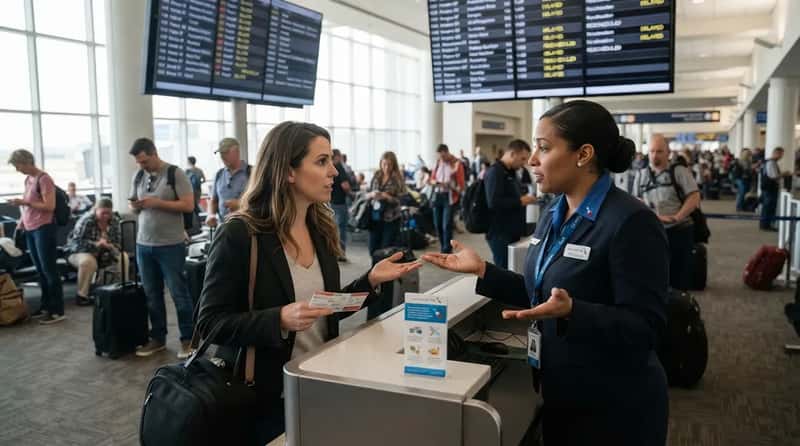
Many travelers assume a long delay means a payout. Not here. U.S. airlines still don’t have to pay cash compensation for flight delays. You may get rebooking, meals or a hotel under airline promises, but not a check.
Europe works differently. EU 261/2004 can apply for a delay of three hours or more at final arrival in a qualifying case. Federal proposals in the U.S. have floated fixed payments for disruptions within an airline’s control, but they haven’t become a rule you can cite at the desk. Ground staff in the U.S. can’t hand over compensation the rules don’t require. That leaves one option most people overlook.
Worth Knowing
- U.S. airlines aren’t required to pay cash compensation for delays.
- What you may get instead: rebooking, meals or a hotel, depending on airline promises.
- EU 261/2004 can apply to a delay of three hours or more at final arrival.
- U.S. fixed-payment ideas have been proposed, but they aren’t a rule an agent can apply.
#1 – You’re Allowed to Say No: The Refund Option Behind the Rebooking Offer

Here’s the one that surprises people most. If a flight is canceled or significantly changed and you decline the alternatives, you can get your money back. The trigger is a domestic delay of at least three hours or an international one of at least six, or an outright cancellation.
If you meet the criteria, you don’t have to accept a flight voucher or frequent flyer miles. Airlines must clearly disclose that a refund is available and cannot make it harder to get than other options. Credit card refunds must be processed within seven business days.
A refund isn’t a replacement flight, though. It doesn’t guarantee a free reroute, and a delayed flight you still take doesn’t automatically earn a full refund.
A missed connection is rarely decided at the desk. It’s decided earlier, by the ticket you bought, the cause on the record and the promises sitting on a government dashboard. A single ticket can protect you, two can leave you on your own, and a refund can be a stronger move than a voucher.
The agent isn’t hiding the rulebook so much as working inside it. Next time the board flips to “departed,” you’ll know which questions can change the night.