Most first-time cruisers assume the dining room runs exactly the same way for everyone – same menu, same seating chart, same scripted “Good evening, how many in your party?” But spend a week watching a head waiter work a room full of repeat guests, and a completely different cruise unfolds right in front of you. Tables shift before anyone asks. Portions grow. Desserts show up at cabin doors nobody ordered from.
None of this is printed in a brochure, announced over the intercom, or mentioned at embarkation. It happens quietly, table by table, built entirely on memory and a few extra minutes of conversation early in the week. Here’s what actually goes on behind that dining room podium – the small, unspoken system that quietly decides who gets treated like a stranger and who gets treated like family.
#19 – The Same Table, Same Time, Same Corner – Every Single Night
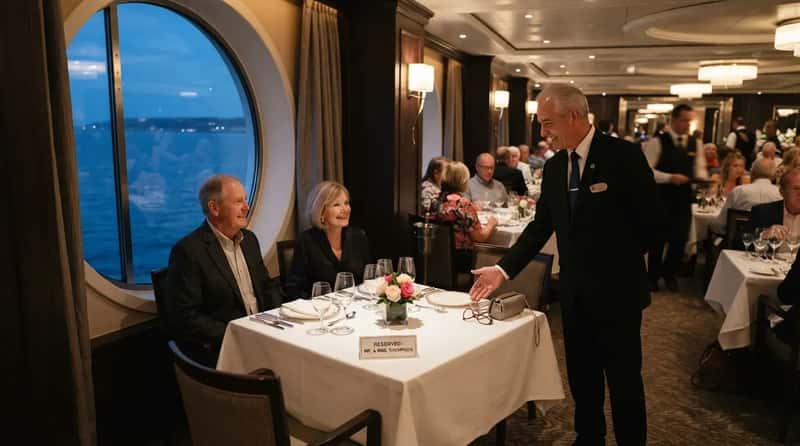
Traditional dining assigns passengers a specific dining room, time, and table, and they eat with the same people every night – a setup that quietly rewards consistency over the course of a week. Head waiters know exactly which returning guests want that same quiet corner table again, and they’ll hold it without being asked.
It seems like a small thing until you’re the one getting seated instantly while everyone else waits at the podium. One upside of assigned seating is that your server gets to know your tastes and preferences as the days go on. That familiarity is the entire engine behind everything else on this list.
#18 – Your Allergy Note Travels Ship-Wide So You Never Repeat Yourself
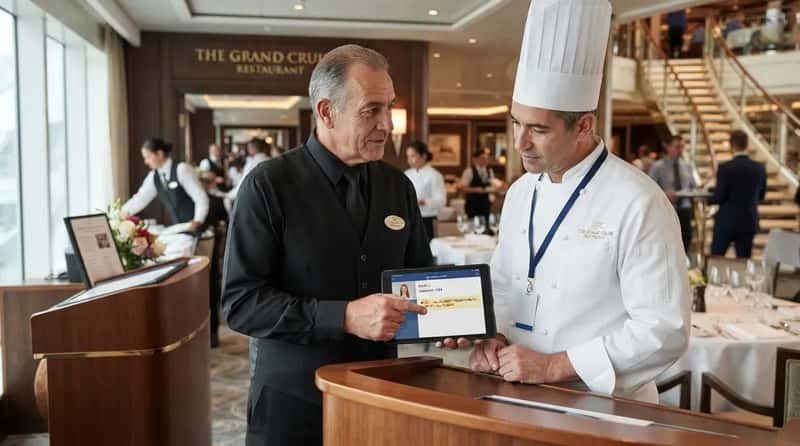
Most passengers repeat their allergy explanation at every single meal in every single restaurant for the entire cruise – but guests who get the VIP treatment somehow skip that entirely. That’s not luck. It’s a system the head waiter sets in motion on day one.
The trick is a two-step process: logging the allergy in the reservation system before sailing, then confirming it face-to-face with the restaurant manager or executive chef on day one, so the notation travels from the main dining room to the buffet to specialty restaurants without a fresh explanation each time. Putting a face to the file is what makes the whole thing stick.
Fast Facts
- Dietary requests can be logged online before sailing through the cruise line’s guest profile or special requests form.
- Confirming allergies in person with the maître d’ or executive chef on embarkation day locks the notation into every dining venue.
- Once flagged, the same alert follows guests from the main dining room to the buffet, specialty restaurants, and room service.
- Guests who skip the in-person confirmation often find themselves re-explaining the same allergy at every meal.
#17 – A Second Entrée Shows Up Without You Asking Twice
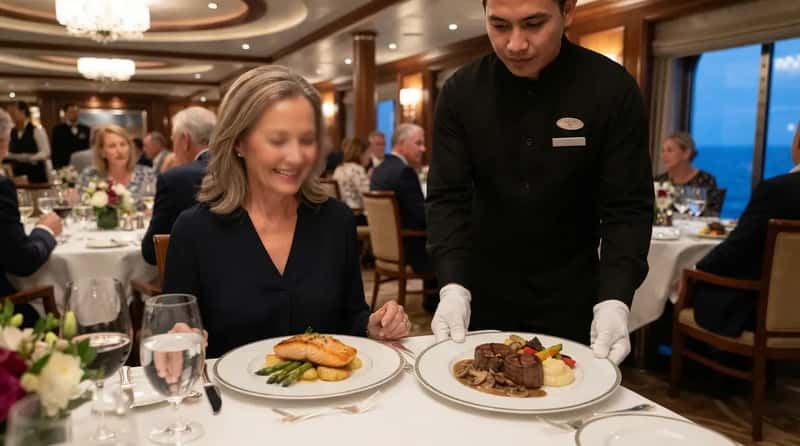
Cruise dining is one of the few places left where ordering two entrées isn’t considered odd – but most first-timers never realize it’s even an option. They treat the main dining room like a regular restaurant: one appetizer, one entrée, one dessert, quietly missing one of the best perks the ship has to offer.
Repeat guests figure this out fast, and head waiters remember it. You can ask for seconds, or even order two different entrées if you can’t decide, and most dining rooms won’t blink. By the third or fourth night, the second plate just arrives.
#16 – Your Coffee Gets Poured Exactly How You Like It, Automatically
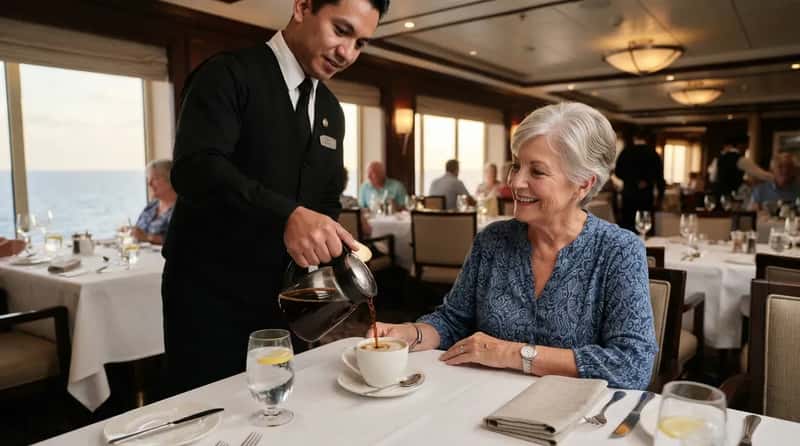
It sounds minor until it happens to you. For diners who greet their waiter by name early in the cruise, that familiarity compounds fast – orders start arriving before they’re even placed, coffee gets poured the way you like it, and small preferences get remembered without a reminder.
Cruise dining room wait staff are often exceptional at this, remembering something as small as extra lemon in your water without needing to ask again after the first night. That’s the payoff of one polite conversation, repeated over years, not one cruise.
#15 – A Preview of Tomorrow’s Best Dish, Whispered Tonight
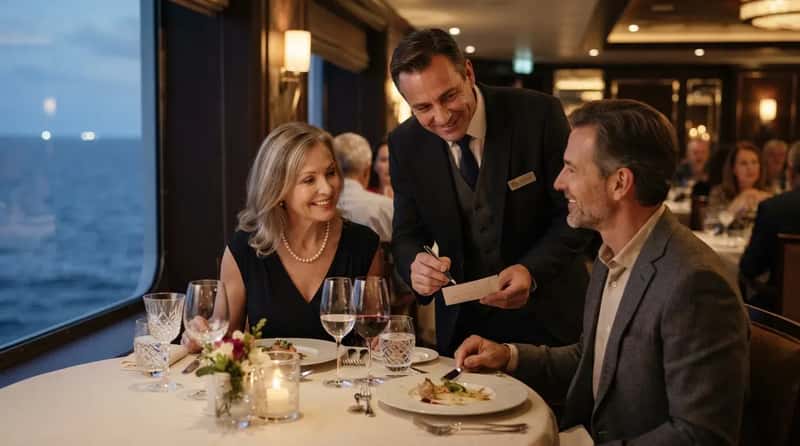
Head waiters know the entire week’s menu before passengers do, and for the right table, that knowledge turns into a personal heads-up. It’s a small kindness, and it’s usually reserved for guests who’ve been warm and engaged all week long.
This isn’t official policy anywhere. These aren’t printed perks, but they happen regularly for passengers who treat their server like a person rather than a stranger. Most passengers never get the tip – because most passengers never ask a question that invites it.
#14 – Quiet Priority Access to the Best Specialty Dining Slots
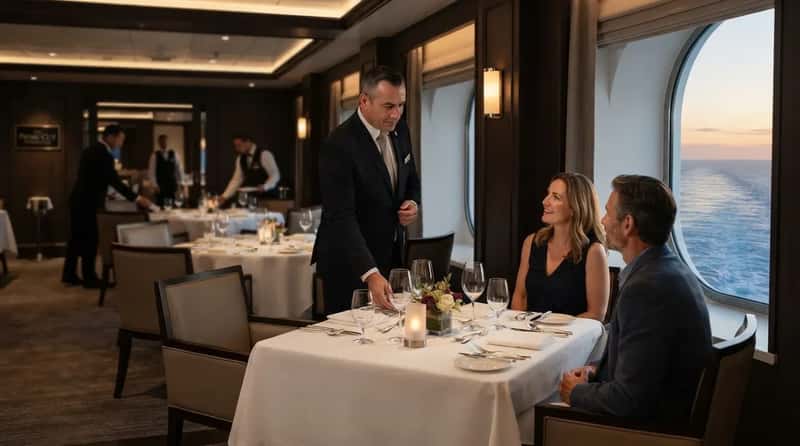
Specialty restaurants book up fast, and the best tables go to guests who know how the system actually works. Booking specialty dining early in your cruise locks in preferred times, and mentioning dietary needs in the same conversation matters more than most people realize.
Passengers who handle this detail enjoy every venue on the ship without compromise, while those who assume specialty kitchens can’t accommodate them often skip those restaurants entirely – missing what might have been the best meal of the sailing. Head waiters won’t chase you down to fix this. You have to ask.
Quick Compare
- Traditional dining: Fixed table, fixed time, same waiter and tablemates all week.
- My Time or flexible dining: Choose a different time nightly, but you lose the built-in familiarity.
- Specialty restaurants: Best slots and dietary accommodations go to guests who book early and mention needs upfront.
#13 – Extra Lobster Tails (or Steak) on Formal Night, No Charge
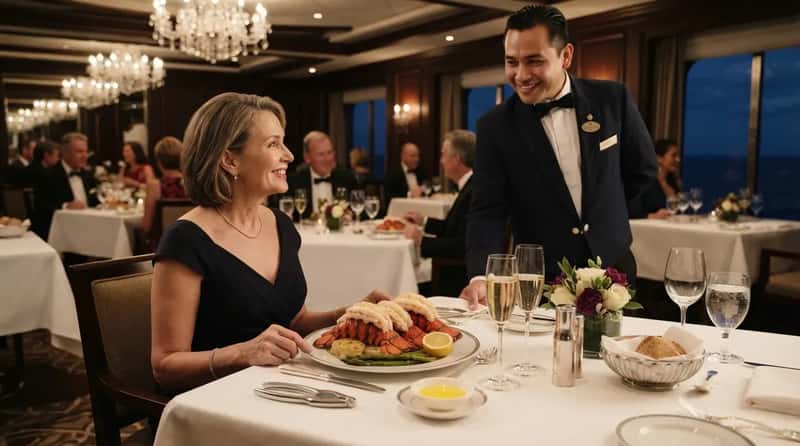
Formal night has its own quiet hierarchy, and repeat guests who’ve built rapport get the version everyone else doesn’t. Extra lobster tails on formal night are basically an open secret among guests who’ve spent the week being warm to their server.
A small gesture on the first night – introducing yourself, learning your server’s name, asking where they’re from – sets the tone for the entire voyage. A two-minute conversation on night one can quietly upgrade every dinner after it.
#12 – A Low-Sodium or Heart-Healthy Plate That Never Needs Explaining

Guests managing blood pressure or heart conditions usually brace for the same tired conversation at every meal. Major cruise lines can accommodate low-sodium requirements with real, well-prepared options in the main dining room daily, not just a plain chicken breast pushed to the side of the plate.
Once a kitchen team locks in on a returning guest’s needs, the request often stops requiring a reminder altogether, and Holland America is frequently cited by passengers and travel specialists as one of the stronger lines for handling these accommodations well. When the correct meal shows up unasked, that’s the tell.
#11 – The High Chair That’s Just There, Every Night, No Reminder
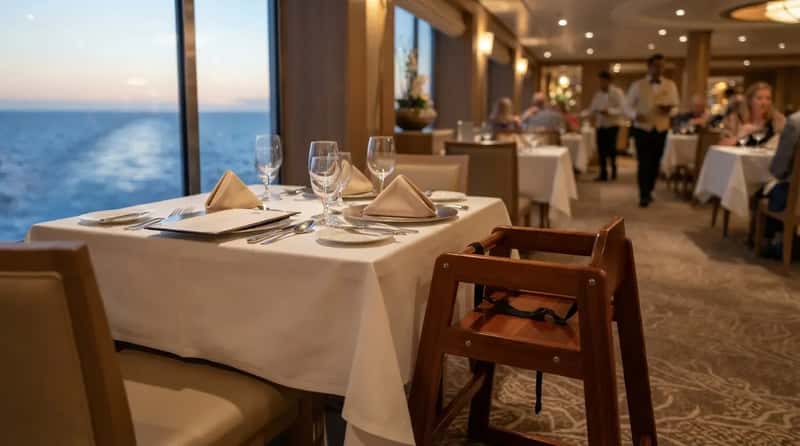
Parents traveling with infants know the drill on land: ask, wait, hope someone remembers. Cruise dining rooms quietly flip that script for repeat families. Once your waitstaff knows you need a high chair, there’s one waiting for you every single night.
It’s a small logistical fix, but it changes the whole rhythm of dinner. No scrambling, no searching, no explaining twice. The head waiter simply builds it into the setup before your family even walks in.
#10 – A Dessert Delivered Straight to Your Cabin Door
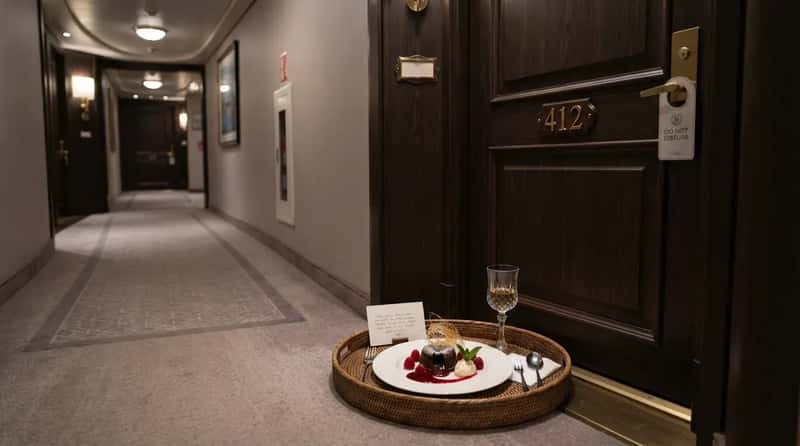
This one surprises even seasoned cruisers the first time it happens. A dessert delivered to your cabin door is another one of those quiet rewards – the kind you only get once the staff already like you. It’s rarely announced in advance. It just shows up.
Cruise ship servers typically work six to nine month contracts without a day off, serving hundreds of guests each sailing and often remembering individual preferences by the second dinner. That memory, stretched across a whole cruise, is exactly why the cabin dessert keeps showing up unannounced.
#9 – Wine Poured Before You Even Glance at the List
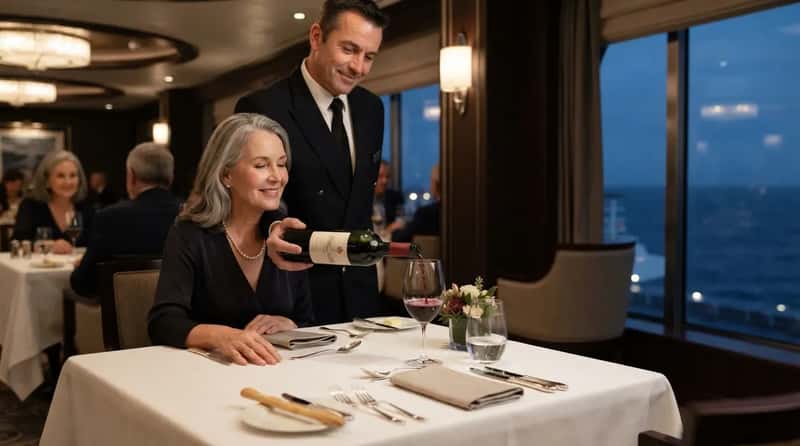
By mid-cruise, some tables stop needing the wine list entirely. The head waiter already knows the order, the vintage preference, even how full the glass should be poured. This isn’t guesswork – it’s pattern recognition built over several nights at the same table.
Head waiters maintain deep knowledge of menu descriptions and wine lists specifically so they can discuss items in a way that enhances the guest’s dining experience. For repeat guests, that expertise gets applied automatically instead of explained fresh every night.
#8 – The Same Server, Requested and Reassigned, Cruise After Cruise
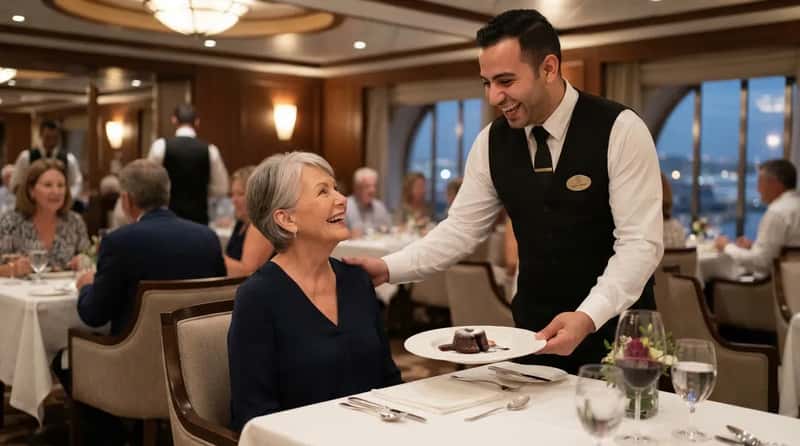
Some loyal cruisers don’t just remember the ship – they remember the person who served them, and ask for that server by name on future sailings. Crew rotations make this tricky, but head waiters will quietly try to make it happen when possible.
Seeing the same server each night creates an opportunity to build genuine rapport, and that rapport often leads to perks you wouldn’t get otherwise. Multiply that rapport across several cruises, and the relationship starts to feel less like service and more like a friendship with a paycheck attached.
#7 – A Handwritten Note or Small Gift on the Last Night
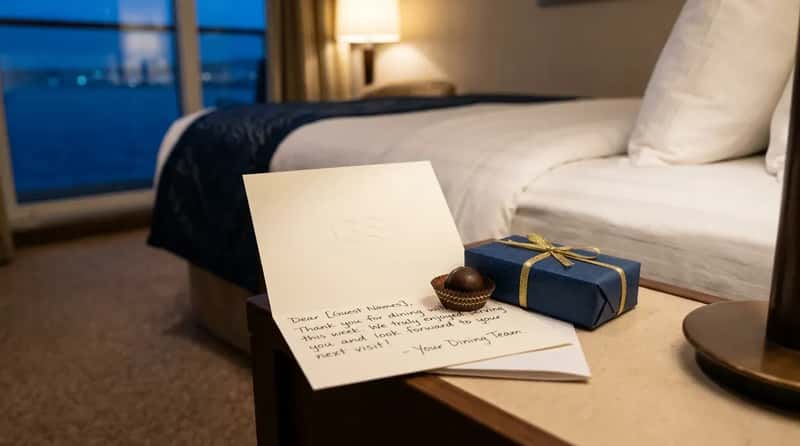
The final formal night often carries a quiet surprise for guests who’ve built real rapport with their dining team all week. It’s rarely dramatic – a short note, a small treat, a genuine thank-you – but it lands harder than almost anything else on the ship.
Head waiters take ownership of guest issues and concerns and follow up to make sure they’re resolved, almost always avoiding the word “no” wherever possible. That same instinct to close the loop shows up on the last night, in a much warmer form.
#6 – Solo Travelers Quietly Seated With Compatible Tablemates
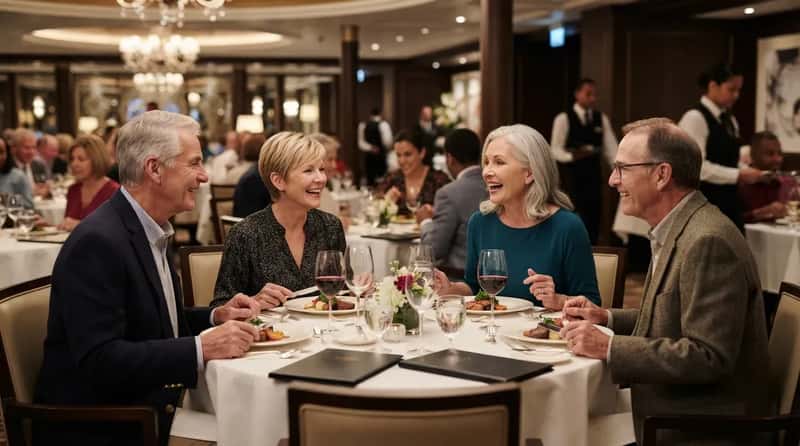
Solo cruisers over 60 often worry about eating alone for a week straight, and head waiters know it. Table assignments for repeat solo guests aren’t random – they’re quietly matched based on personality, pace, and feedback from past sailings.
On a ship carrying thousands of guests, it would be easy to disappear into the crowd for one night – yet regulars report the opposite experience entirely. A well-placed seating decision is often the reason why.
#5 – The VIP Cocktail Party Tied Directly to Your Loyalty Tier

Loyalty status on a cruise line isn’t just a discount code – it’s a direct line to a different dining experience. Repeat cruisers receive special Gold and Platinum cards that give entrée into an exclusive reception on board.
Once passengers cruise with a line and join its loyalty club, members become entitled to preferred dining assignments, cocktail parties with the captain, and welcome-back gifts. Most first-time cruisers have no idea this tier even exists until they’ve already earned it.
At a Glance
- Most major cruise lines run a tiered loyalty program based on nights sailed, not money spent.
- Higher tiers typically unlock priority dining reservations, exclusive cocktail hours, and small welcome-back gifts.
- A guest’s card color or tier name, like Gold or Platinum, is often visible to dining staff, quietly signaling how they should be treated.
- None of these perks require paying more for a cabin – they’re earned purely through repeat cruising.
#4 – A Birthday or Anniversary Cake That Arrives Like Magic
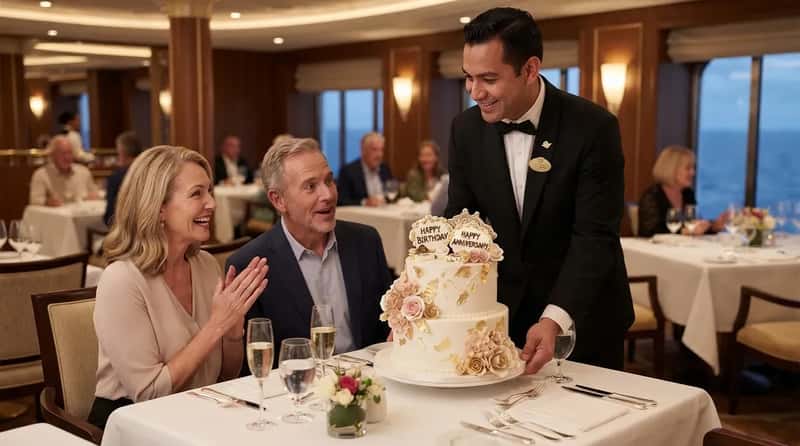
Special occasions get flagged long before guests board, and head waiters quietly coordinate the timing so the cake arrives exactly when it matters most. This isn’t reserved only for repeat guests, but returning cruisers who’ve celebrated before tend to get an even more personal version.
Preference for these special touches often goes to frequent repeaters of the cruise line, occupants of pricier suites, and couples celebrating events like a honeymoon or anniversary. The cake is memorable. The fact that no one had to ask for it is the real surprise.
#3 – An Invitation to Dine at the Captain’s Table
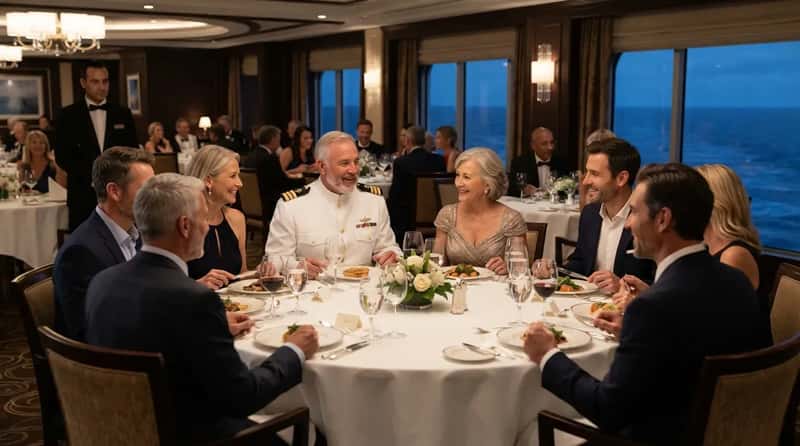
This is the one every cruiser secretly hopes for, and it’s far less random than most people assume. Guests know they’ve been included in an exclusive coterie when an invitation to share a formal dinner with the captain arrives in their stateroom, with preference going to frequent repeaters, suite occupants, and couples celebrating a special event.
Head waiters and the maître d’ quietly compile that guest list days in advance. It’s one of the few dining perks that’s earned through loyalty alone, not through spending more money on board.
Why It Stands Out
- The captain’s table guest list is compiled by the maître d’ days before the dinner happens.
- Invitations lean toward loyalty-tier regulars, suite guests, and couples celebrating a special occasion.
- Unlike most onboard perks, it can’t be purchased outright – it’s earned through history with the cruise line.
- Many guests don’t know they’re being considered until the invitation shows up in their stateroom.
#2 – The Full Buffet Walk-Through, Just for You
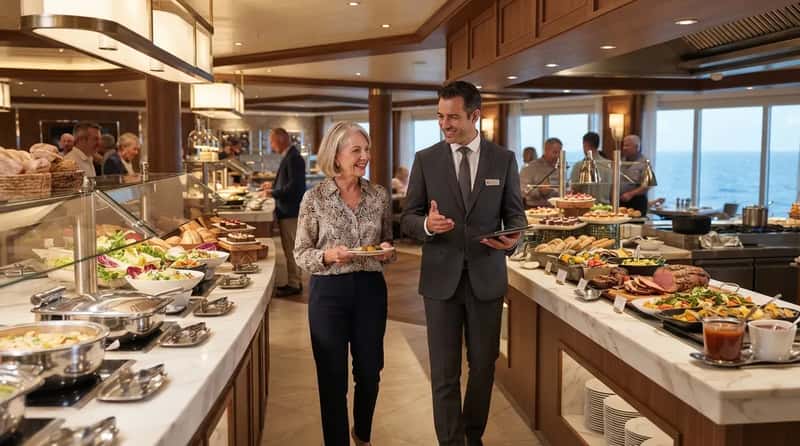
It sounds like a small courtesy until you’re the one receiving it. The clearest sign staff have taken a shine to a guest is when someone stops what they’re doing to walk the whole buffet spread with them, station by station.
This rarely happens to first-timers. Putting a face to a food preference or allergy is what closes the gap a database alone sometimes misses, and when staff make a point of remembering that face without being reminded twice, that’s the tell. For repeat guests, that face was already remembered from last time.
#1 – A Quiet Check-In the Moment You Miss Dinner
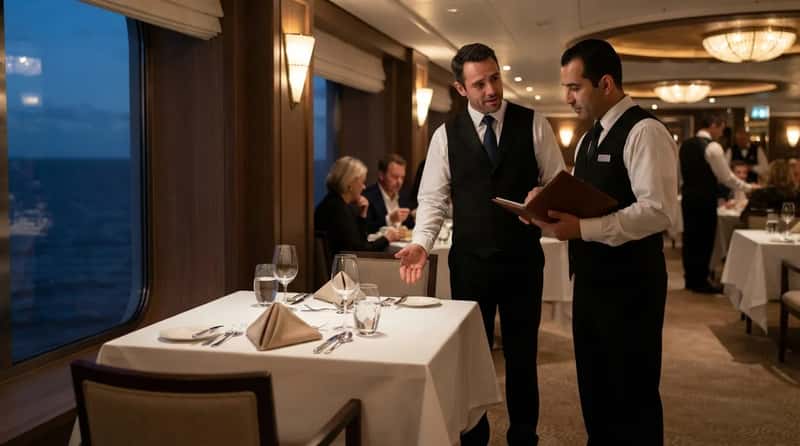
This is the one that surprises repeat cruisers most, and the one they talk about long after the trip ends. Serving staff learn your name and preferences, and they check in with the maître d’ if you don’t show up for dinner – and that check-in is not a scripted courtesy, it’s a byproduct of genuine familiarity.
Waiters who’ve served the same table for several nights start noticing patterns, and an empty chair stands out. For diners over 60 traveling solo or as couples, that small gesture of concern often ranks among the most meaningful moments of the whole cruise. No app, loyalty tier, or suite upgrade replicates that feeling. It only comes from someone actually noticing you’re gone.
None of these 19 things show up on a cruise line’s website, and none of them are guaranteed. They’re built, night after night, out of small conversations, remembered names, and a head waiter’s quiet decision that a repeat guest deserves a little more attention than the brochure promises. The gap between a forgettable cruise dinner and an unforgettable one usually comes down to exactly that – noticing, and being noticed back.
Have you experienced one of these on a cruise, or does your dining team have a habit that didn’t make this list? Drop it in the comments – the best ones always come from people who’ve actually lived it.