Most first-time train travelers think a phone charger and a snack bag will cover a two-day trip across the country. Then the WiFi drops somewhere in Montana, the dining car runs out of coffee, and the temperature in their sleeper swings from sauna to meat locker in the same night.
Veteran Amtrak riders – the ones logging dozens of long-haul trips a year – have quietly built packing lists that look nothing like what a travel blog tells you to bring. Here’s what those regulars actually load into their bags before boarding, and why the strangest item on the list might matter more than any of it.
#20 – The Roll of Duct Tape Nobody Expects
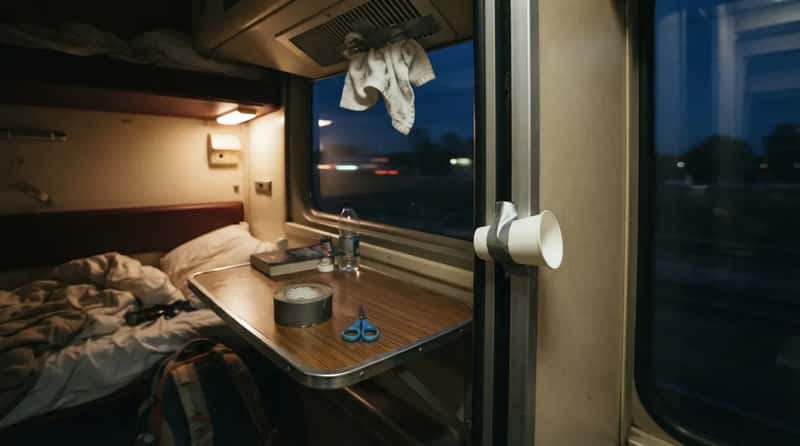
Seasoned overnight travelers rarely board without a small roll of duct tape and a pair of kid scissors tucked into their bag. Even the newer cars rattle and clank enough to drive a light sleeper insane by hour four.
Some riders use a wash cloth to muffle a broken ceiling vent, taped in place, or stuff folded paper cups into the cracks of sliding doors between rooms. It’s the single weirdest item on this list, and also one of the most effective.
#19 – A Portable Charger That Never Leaves Their Bag
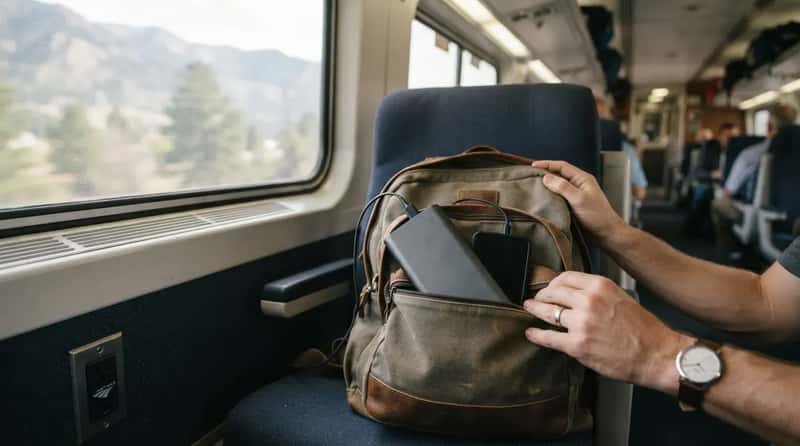
Outlets exist at most seats, but regulars don’t trust them completely. A shared outlet on a full train, or one seat with a dead port, can leave you stranded fast – and a train can run 40-plus hours without a station stop long enough to plug in anywhere else.
That’s why frequent riders always pack a fully charged battery bank as backup. It’s not paranoia, it’s math. Regulars treat backup power like a seatbelt: boring until you desperately need it.
Fast Facts
- At 2,438 miles, the California Zephyr is Amtrak’s longest daily route, with travel time between the termini taking approximately 52 1/2 hours.
- The Coast Starlight covers 1,377 miles between Seattle and Los Angeles with an average journey time of about 35 hours southbound.
- The Empire Builder runs up to 46 hours on its trek from Chicago to Seattle and Portland.
- That’s a full workweek’s worth of hours without a guaranteed charging stop, which is exactly why the battery bank stays packed.
#18 – A Refillable Water Bottle They Fill Before Boarding
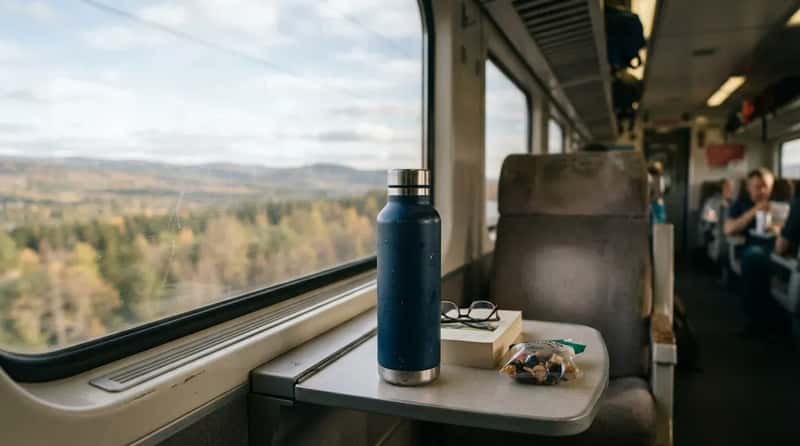
Long-distance riders never assume they’ll be able to top off water whenever they want. Most bring their own, since you can’t casually refill a bottle from a tap while the train is moving.
Sleeper passengers get a bit of a cushion – a bottle from the dining car is technically complimentary – but that supply can run dry by day two of a long route. The lesson regulars learned the hard way: hydration is on you, not the train.
#17 – A Stocked Snack Bag or Small Cooler
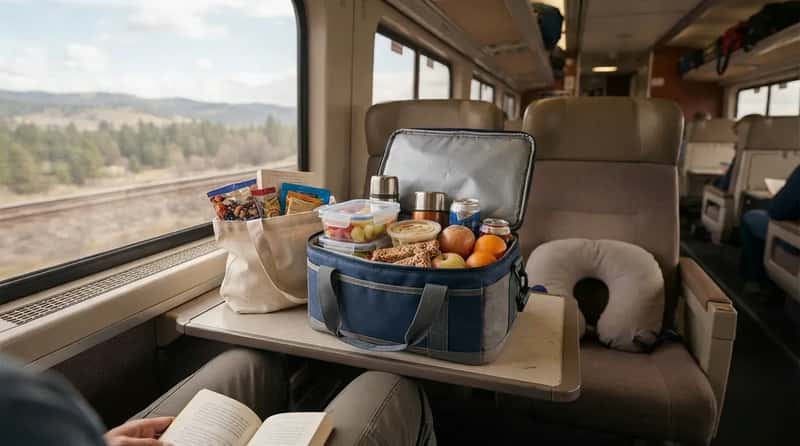
Café car prices add up fast on a two-day route, so regulars come prepared. Many bring a small cooler or insulated lunch bag for anything that needs to stay cold, or grab fresh food near the departure station before boarding.
One frequent rider who’s logged 25-plus long-haul trips put it simply: she packs a pillow so she can get comfortable and a cooler of food so she never has to rely on the café car. The café car is a backup plan, never the plan.
#16 – Their Own Pillow, Not the Airline Kind
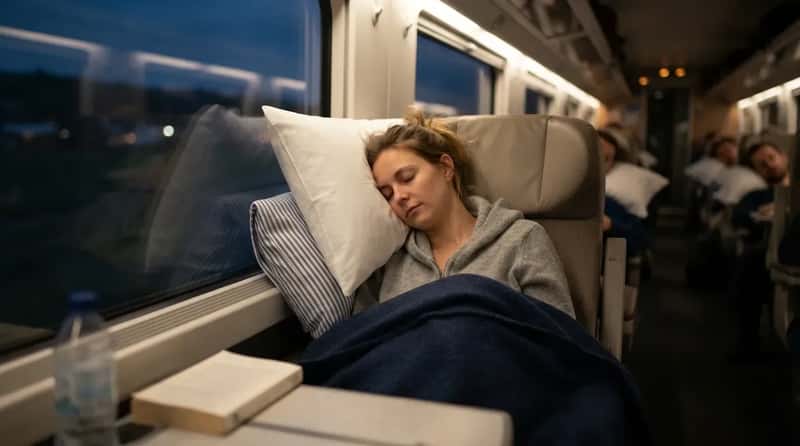
Neck pillows work on planes. On trains, regulars bring something bigger. One frequent rider admitted her early mistake bluntly: she packed way more luggage than she needed, yet forgot the basics – a real blanket and a real pillow.
Coach seats recline but never fully flatten, so a proper pillow is the difference between arriving rested and arriving wrecked. Most first-timers skip this and regret it by hour six.
#15 – Noise-Cancelling Headphones, Always Charged
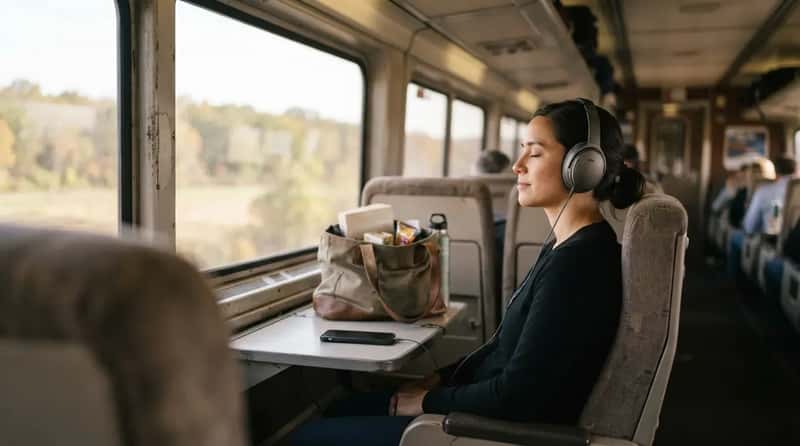
One rider who logged 53 Amtrak trips in a single year, covering over 8,000 miles, called this non-negotiable. Her go-to bag always holds snacks, noise-cancelling headphones, toiletries, and stationery, in that order of importance.
Train cars are shared, loud, and unpredictable – announcements, crying kids, and conversations bleed through the thin walls between sleeper compartments. Headphones aren’t for music alone here; they’re a privacy tool. Regulars rank this above almost everything else in their bag.
#14 – Entertainment Downloaded Before Departure, Not Streamed
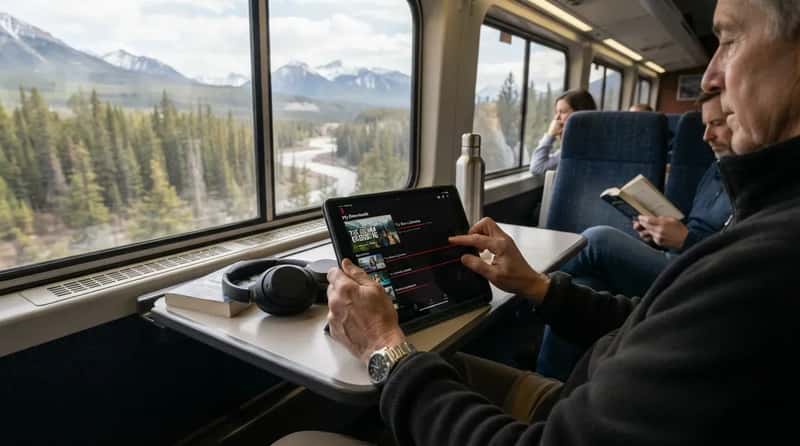
Nobody trusts onboard WiFi to hold for a full route, so smart travelers plan ahead. If you’re bringing a device for entertainment, download everything before you ever step on the platform.
Amtrak WiFi shouldn’t be relied on, especially on long-distance routes, and while a phone hotspot sometimes works, it often dies completely in remote mountain stretches. Regulars treat “no signal for six hours” as the default, not the exception.
#13 – Small Bills for the Café Car

Card readers occasionally glitch mid-route, especially on older equipment. Long-distance regulars keep a stash of cash in small denominations in case the café car’s system freezes at the worst possible moment.
It’s a small habit, but it saves an argument over a six-dollar coffee when exact change is the only thing that works. It’s the kind of quiet backup plan only someone who’s been burned once actually remembers.
#12 – Layers, Because the Train Has Its Own Weather System
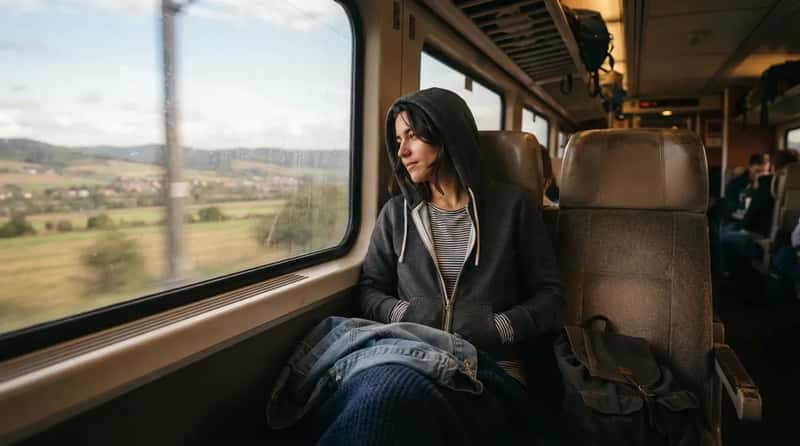
Temperature control on a train car is nothing like a hotel room. Regulars always pack layers, because train temperatures fluctuate in ways that make no logical sense.
One car might run warm while the next runs freezing, and it can flip completely overnight. A hooded sweatshirt is the MVP here – the hood adds warmth, privacy, and cushioning all at once. This is the single most common rookie mistake regulars mention.
#11 – Motion-Sickness Remedies, Even for People Who Never Get Sick
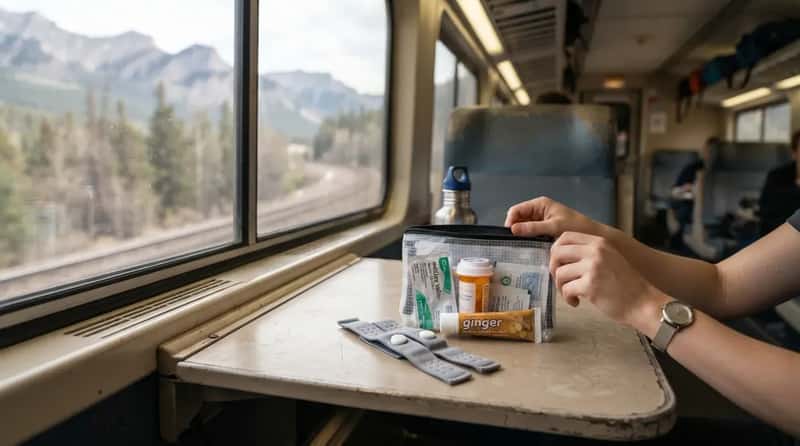
Trains sway constantly, and it catches people who’ve never had a problem with cars or planes. Regulars pack their usual prescriptions plus any over-the-counter motion sickness remedy, just in case.
It’s rarely an issue on short regional hops. Over 30-plus hours through mountain curves, it becomes a real problem for people who swore they never get queasy. Regulars pack it “just in case” and are relieved when they never need it.
#10 – A Deck of Cards or Compact Travel Game
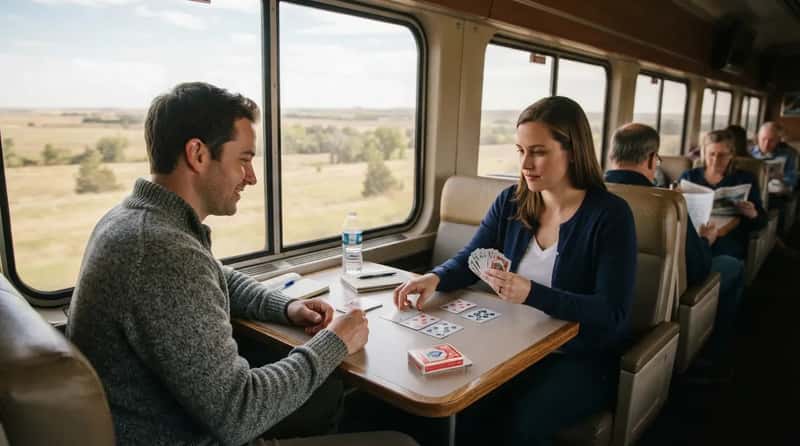
Long stretches without cell service turn strangers into card partners fast. A relaxing train setting is ideal for a board game, a deck of cards, or catching up on a backlog of shows once the trip winds down.
Regulars know a deck of cards weighs nothing and doubles as an icebreaker with a seatmate on hour 20 of a shared table. It’s one of the few items that turns a boring stretch of Nebraska into a memory.
Train travel is a great excuse to unplug – look out the window, write a postcard, take a nap, and let the journey be part of the trip.
Amtrak long-distance travel guidance
#9 – One Paperback Book, Not a Stack
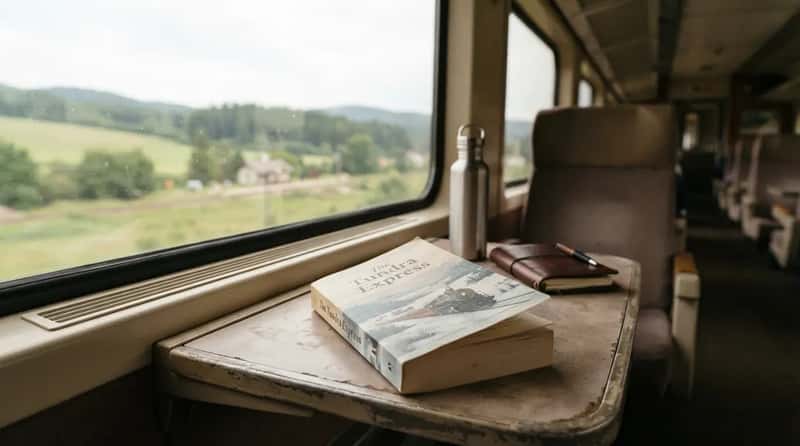
Screens die. Batteries drain. A physical book never needs power, and a train ride is one of the most relaxing settings imaginable for finally cracking one open.
Regulars learn to pack exactly one book, not five – weight matters when you’re hauling bags through narrow train aisles for two days straight. It’s the lowest-tech item on this list and somehow the most reliable.
#8 – A “Bags Within Bags” System
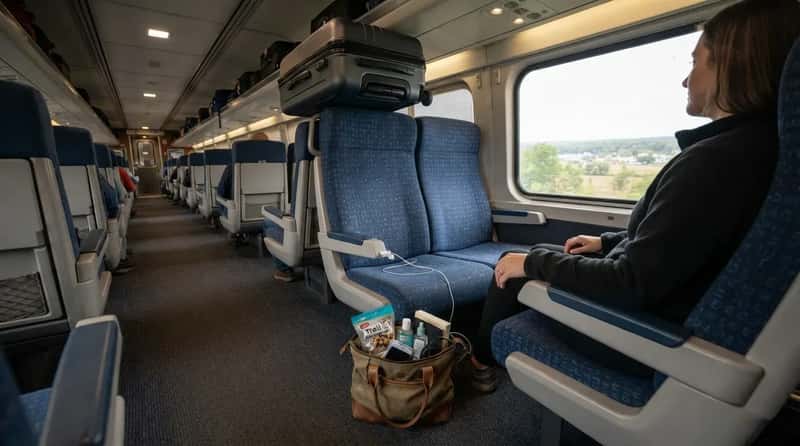
Ask any regular how they pack, and most describe some version of the same trick. Snacks, comfort items, toiletries, and valuables go in a smaller bag near the seat, while the larger suitcase stays overhead.
One traveler working toward visiting all 46 states Amtrak serves swears by it: the small bag stays with her at the seat while everything else goes overhead or into the luggage tower. Digging through one giant suitcase for a phone charger is the fastest way to annoy an entire train car.
Quick Compare
- Small seat bag: phone charger, snacks, medication, headphones, wipes – anything touched more than once an hour.
- Overhead suitcase: spare clothes, shoes, toiletry backups, anything only needed at the destination.
- Rule of thumb: if you’d have to stand up and dig for it, it belongs in the small bag, not the big one.
#7 – Wet Wipes and Travel-Size Toiletries
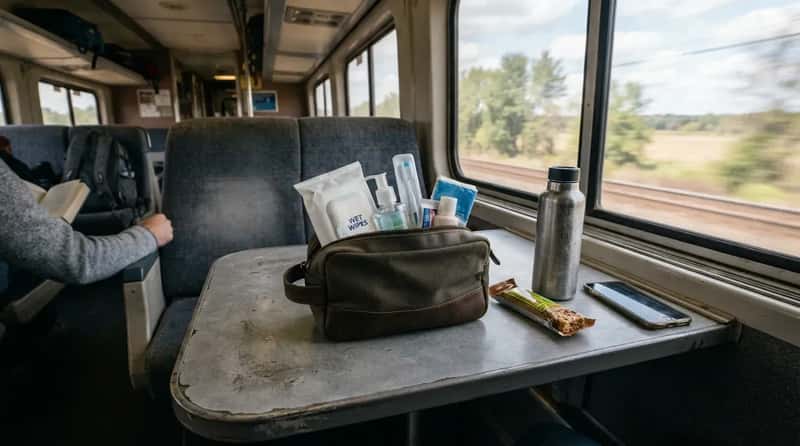
Sinks in shared restrooms get rough by hour 15 of a long route. That same 53-trip-a-year rider who swore by noise-cancelling headphones also never travels without a toiletry pouch riding shotgun next to her snacks.
Regulars keep wipes, hand sanitizer, and travel-size essentials within arm’s reach rather than buried in checked luggage. It’s a small comfort that makes a two-day trip feel survivable instead of grimy.
#6 – An Eye Mask and Earplugs
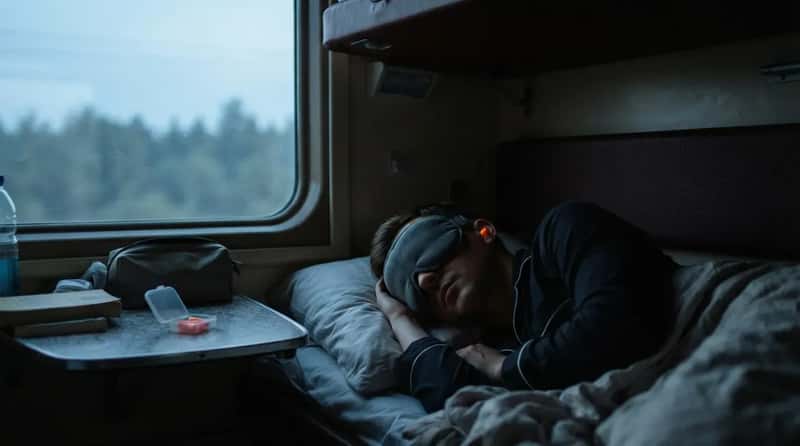
Sleeper compartments come with picture windows, and picture windows come with sunrise light at 5 a.m. whether you want it or not. Coach seats are worse, since overhead reading lights stay on for other passengers all night long.
Regulars pack an eye mask and earplugs as a pair, treating them as essential as a toothbrush. It’s a five-dollar fix for a problem that ruins an entire night’s sleep otherwise. The people who skip this are the ones you see wandering the dining car at 3 a.m., wide awake and miserable.
#5 – Double the Regular Medication, Not Just Enough
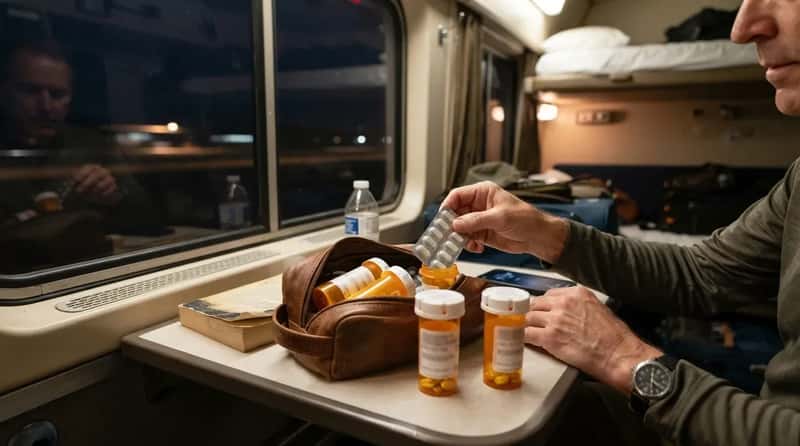
Delays on long-distance routes aren’t rare. Freight traffic, weather, and mechanical issues routinely add hours onto a schedule, so regulars build in a buffer with their prescriptions instead of packing the exact dose for the exact trip length.
This habit goes a step beyond the usual advice to bring your regular medications along. Frequent riders always overpack by at least a full day, because a 28-hour trip can quietly turn into 34 hours, and nobody wants to discover that at 11 p.m. with an empty pill bottle.
#4 – Shower Shoes for the Sleeper Car Bathroom
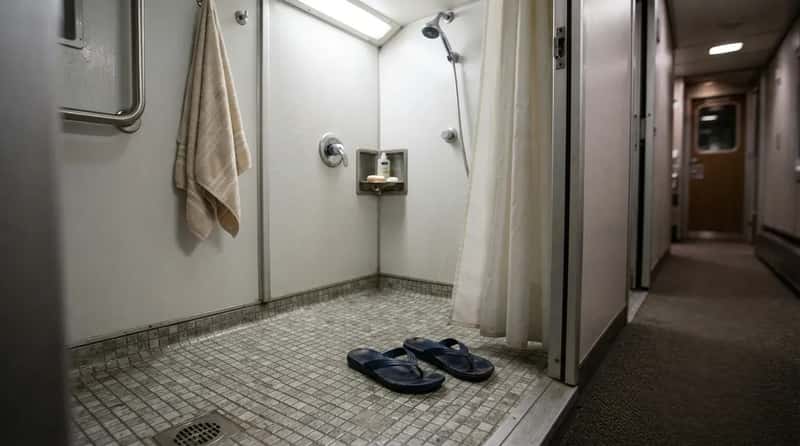
Private rooms sound luxurious until you learn the shower is shared down the hall. Roomettes include access to shared restroom and shower facilities, complete with upgraded bedding and towels – but shared is still shared.
Regulars who’ve done multiple overnight legs never step into that shower barefoot. It’s a tiny, unglamorous detail nobody warns first-timers about until they’re standing there wishing they’d packed flip-flops. The nicest rooms on the train still have a gym-locker-room shower situation nobody talks about online.
At a Glance
- Roomettes are less than four feet wide and about 6.5 feet long, the smallest and most affordable private sleeping option on the train.
- Roomette passengers share a shower with an attached dressing area in the car rather than getting a private one.
- Bedrooms feature a private en-suite shower shared only with your travel companion.
- The takeaway: unless you booked a bedroom, that shower is a communal one – pack accordingly.
#3 – A Small Flashlight or Headlamp
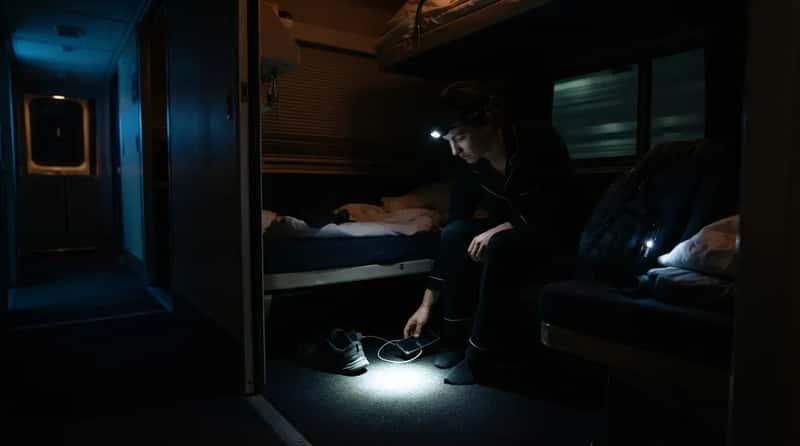
Overnight trains dim the lights car-wide after a certain hour, and finding anything in a dark roomette or coach seat turns into a fumbling mess. Regulars keep a compact flashlight or headlamp clipped to their bag for exactly this reason.
It sounds minor until you’re trying to locate a dropped phone under a seat at 4 a.m. without waking the person next to you. Nobody thinks to pack this until their first blackout moment on board. It’s the cheapest fix for the most universally annoying nighttime problem on a long-haul train.
#2 – A Journal or a Few Postcards
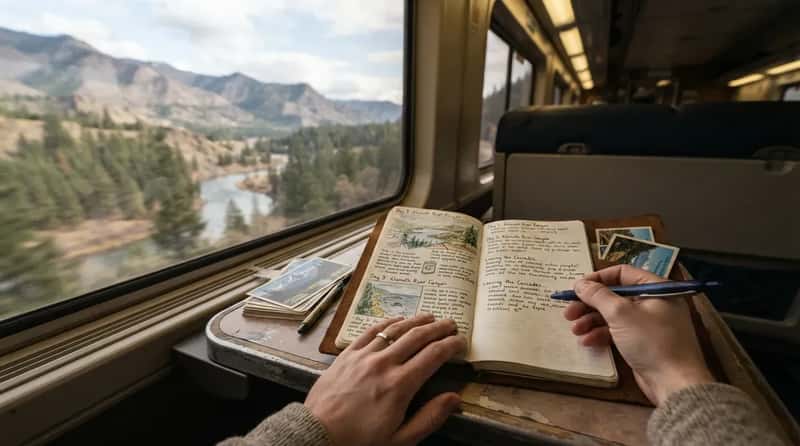
The slowest part of train travel is also the part regulars protect most fiercely. They don’t fill every hour with a screen – some keep a journal just for the trip, jotting down towns, landscapes, and strangers met along routes like the Empire Builder or Coast Starlight.
It’s low effort and it costs almost nothing. But it’s also the item that turns a transportation trip into something people actually remember years later, long after the destination itself has faded.
#1 – Their Own Blanket, Not the One Provided
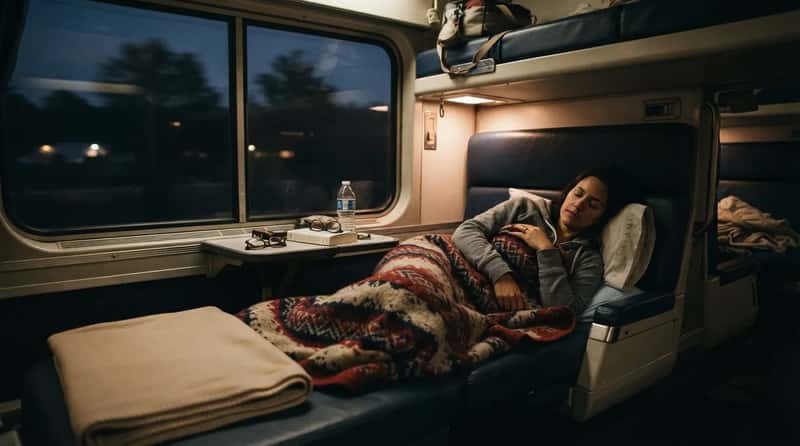
Ask any long-distance regular what they’d never board without, and this is the answer that comes up more than any other. A familiar blanket from home beats anything the train hands out, hands down.
It’s not that the provided blankets are bad – it’s about control. On a 40-plus hour trip through shifting climates and unpredictable car temperatures, a blanket from home is the one constant a rider can count on every single night. After hundreds of collective hours logged by veteran riders, this single item comes up again and again as the true difference between a rough trip and a good one.
None of these twenty items are glamorous. No gadget solves everything, and no packing list guarantees a perfect ride. But the riders who’ve logged the most miles all converge on the same short list of unsexy essentials, because comfort on a 40-hour train trip isn’t found on the dining car menu. It’s found in the small bag sitting at your feet.