Most people walk into a hotel room, drop the suitcase on the bed, and start pulling out clothes. Frequent travelers do almost the opposite. They treat the first five minutes like a quiet investigation, checking things most guests never think twice about until something goes wrong.
It’s not paranoia. It’s pattern recognition built from hundreds of nights in hundreds of rooms, and once you see the full list, you’ll wonder why nobody ever taught you this before your last trip.
#21 – They Screenshot the Room Number Before They Do Anything Else
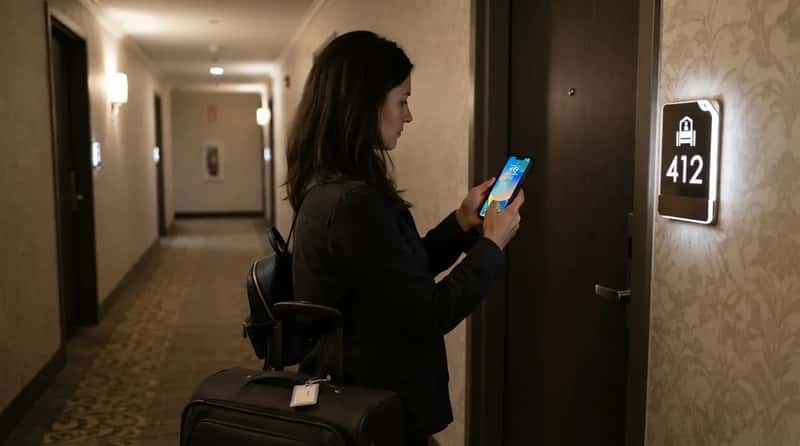
It sounds almost too simple to matter, but seasoned travelers save the room number and hotel address to their phone lock screen the second they get their key. Long hallways, identical doors, and jet-lag brain make it shockingly easy to forget which room is yours after a late dinner.
This habit also protects you if you get separated from a travel companion or need to give directions to a delivery driver. Frequent guests treat their phone, not their memory, as the backup system in unfamiliar buildings.
#20 – They Test the Iron Before They Ever Need It
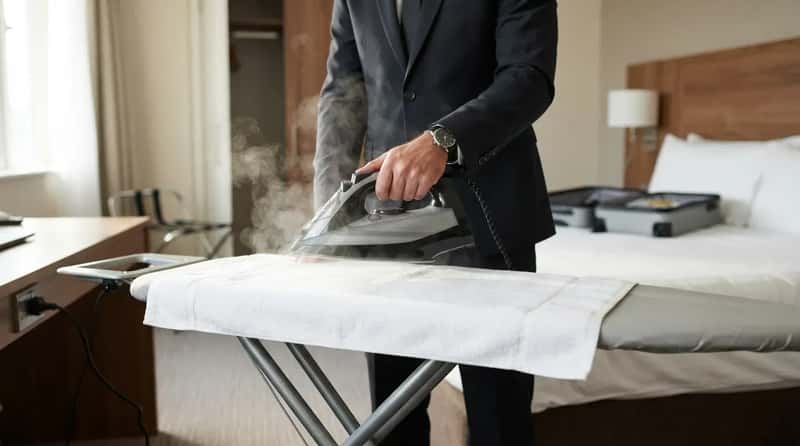
Nobody wants to discover a broken iron thirty minutes before a meeting or a wedding. Experienced guests plug it in immediately, run it over a towel, and confirm it actually heats, not just that it’s sitting in the closet.
Hotels rotate irons constantly, and a surprising number are missing parts, leaking, or simply dead. Catching this on arrival means housekeeping still has time to swap it out. Waiting until the morning you need it is the biggest mistake business travelers make.
#19 – They Ask About Extra Pillows and Blankets Right Away

Most hotels don’t advertise their full pillow and blanket stash, you have to ask. Veteran travelers call housekeeping or the front desk within the first ten minutes to request extras before the nightly rush hits.
Wait until 10 p.m. and you’re often out of luck, especially at busy properties. Rooms are almost never stocked with everything available on request. It’s a small ask that prevents a cold, restless night later.
Worth Knowing
- Ask for extras within the first ten minutes of check-in, before the evening rush
- Many properties keep a limited pillow and blanket stock reserved for early requests
- Foam, firm, and allergy-friendly pillow options are rarely offered unless asked
- Some hotels charge a small fee for extra bedding requested after a certain hour
#18 – They Listen for Noise Before They Settle In
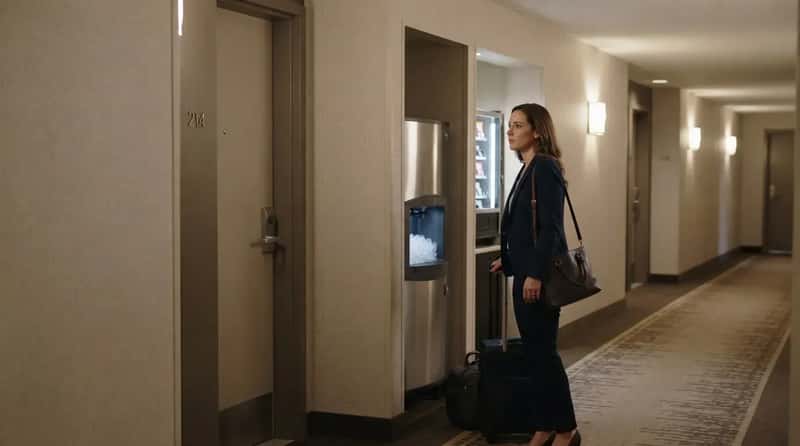
Ice machines, elevators, and vending nooks are notoriously loud, and rooms near them get booked out just as fast as any other. Experienced guests stand still for thirty seconds after entering to listen for mechanical hums, hallway traffic, or thin walls.
If something sounds off, they call the front desk immediately, while a room switch is still easy to get. Requesting a change after you’ve already settled in is far harder to get approved.
#17 – They Locate the Ice Machine and Vending Nook Immediately
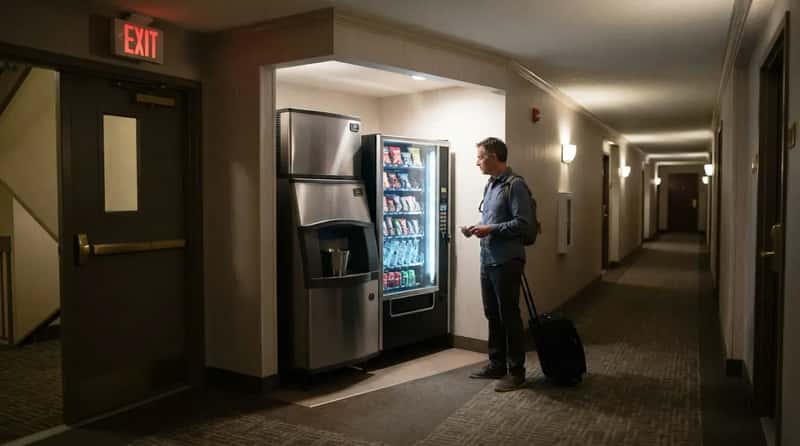
This isn’t about convenience snacking, it’s about orientation. Knowing exactly where the ice machine, vending area, and stairwell sit on your floor means you’re not wandering hallways at 1 a.m. in pajamas.
Frequent travelers scope this out on the walk to their room, memorizing turns the same way they’d memorize an airport gate. It’s a two-minute habit that eliminates almost all late-night confusion.
#16 – They Confirm the Room Type Actually Matches What They Booked

Room mix-ups happen more than hotels admit, especially during self-service check-in. Experienced guests glance around and confirm the bed type, view, and square footage actually match the reservation before they unpack a single item.
Front-desk technology has changed how this plays out. Roughly 70% of American travelers now check themselves in using an app or kiosk instead of a front desk, a preference that jumps to 82% among Gen Z, which means fewer humans double-checking assignments in real time. Catching an error in the first sixty seconds is far easier than fighting for a refund later.
#15 – They Check the View Before They Unpack a Thing
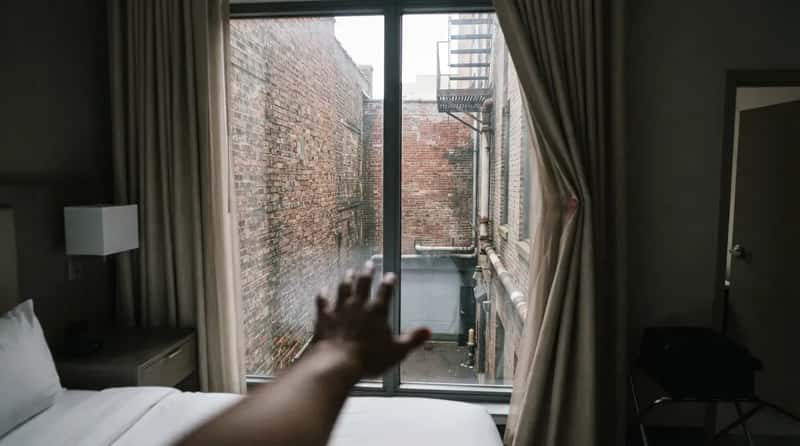
A “city view” can mean anything from a skyline to a brick wall eighteen inches away. Veteran travelers open the curtains immediately, not after settling in, because views are one of the easiest things to dispute while you’re still standing in the doorway.
If the view doesn’t match what was promised or shown online, this is the moment to raise it. Most hotels will only adjust a room assignment within the first few minutes of check-in.
#14 – They Peek Inside Every Drawer and Closet First
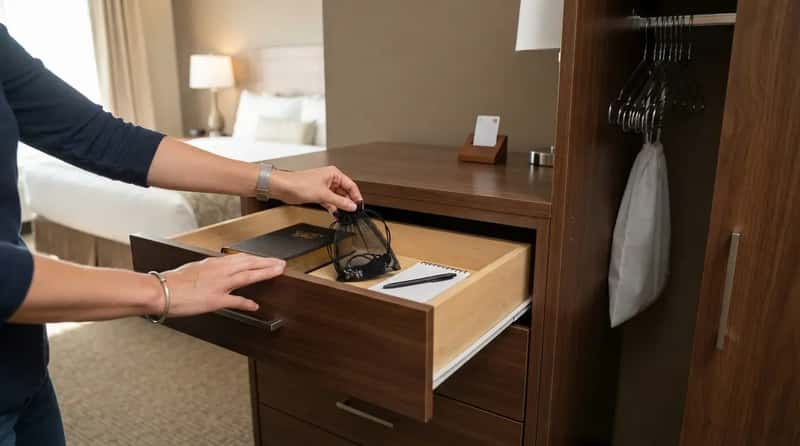
It sounds excessive, but forgotten items from previous guests, chargers, jewelry, even cash, turn up in drawers more often than hotels like to admit. Experienced travelers open every drawer and closet before unpacking, partly out of curiosity and partly out of caution.
This habit also reveals whether the room was properly cleaned between guests. A closet full of someone else’s hangers or a forgotten sock is a red flag worth reporting immediately.
#13 – They Check WiFi Speed Before Settling In
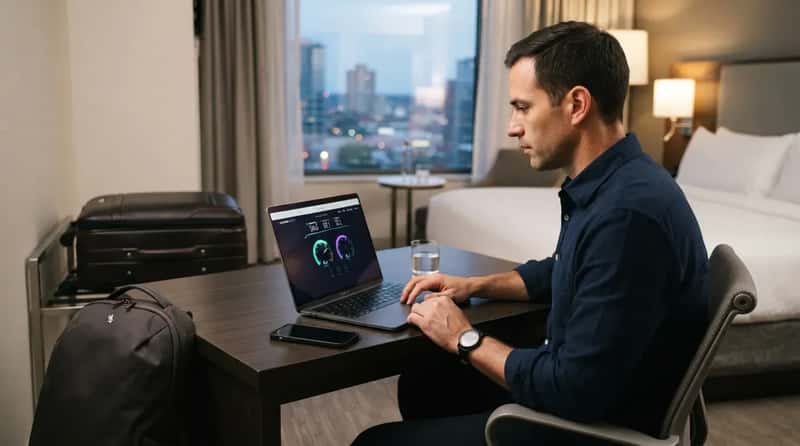
For remote workers and business travelers, slow WiFi isn’t a minor annoyance, it’s a dealbreaker. Frequent guests run a quick speed test the moment they connect, before unpacking laptops or settling into a workflow.
Guest expectations around connectivity have shifted hard toward instant, seamless access. Nearly three-quarters of global travelers say digital check-in and check-out options matter to them, and that same expectation now carries over to in-room internet. If the connection lags, experienced guests request a router reset or room change immediately.
#12 – They Test the Thermostat Before They Trust It
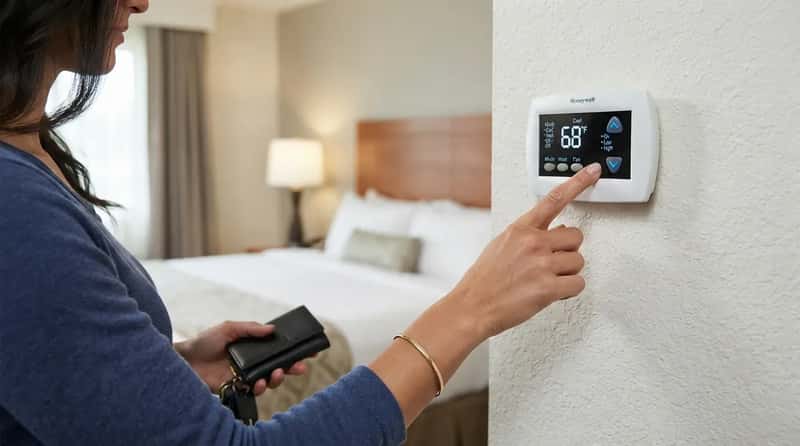
Hotel thermostats are notorious liars, some take twenty minutes to respond, others are locked to a preset range. Experienced travelers adjust the temperature immediately and wait to see if it actually changes before assuming the room will be comfortable later.
This single check prevents the miserable experience of climbing into bed only to discover the room won’t cool below 74 degrees. A stuck thermostat is one of the top reasons guests request a room swap.
#11 – They Inspect the Bathroom for Red Flags
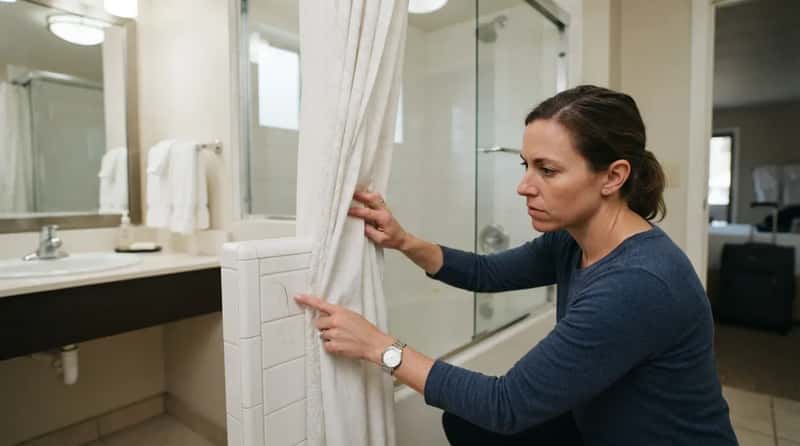
Bathrooms get the fastest turnaround of any space in a hotel, which means corners occasionally get cut. Experienced guests check behind the shower curtain, under the sink, and along grout lines before touching a single towel.
Hair, water stains, or a lingering smell are all signs housekeeping rushed the room. This is one of the most common complaints in guest reviews across major hotel brands. Catching it early means a fix, not a ruined stay.
#10 – They Check the Minibar for Stealth Charges
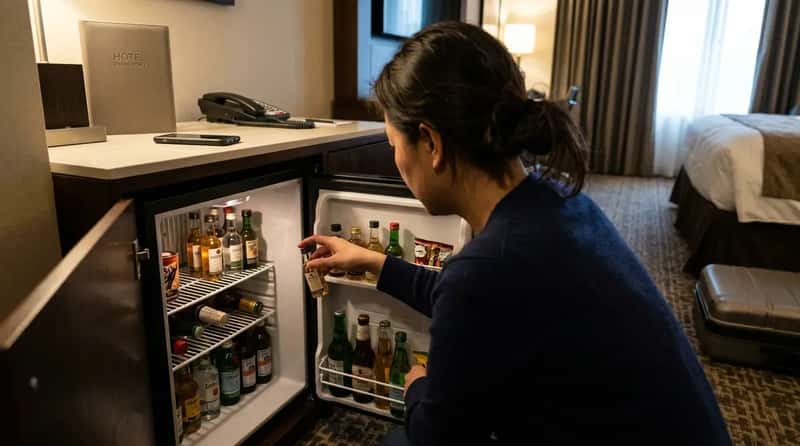
Some minibars use weight-sensor shelves that charge you the second an item is lifted, even if you put it right back. Frequent travelers know this trick and avoid touching anything inside until they’ve confirmed how the system actually works.
A quick call to the front desk clarifies whether the minibar is sensor-based, locked, or simply stocked and honor-system. Guests who skip this step are the ones who get hit with surprise charges at checkout.
Quick Compare
- Sensor-based: Charges the instant an item lifts off its shelf, even briefly
- Manual/honor system: Staff checks the minibar visually before billing
- Locked or inactive: Common in budget properties, nothing to worry about
#9 – They Run the Water Before Getting Comfortable
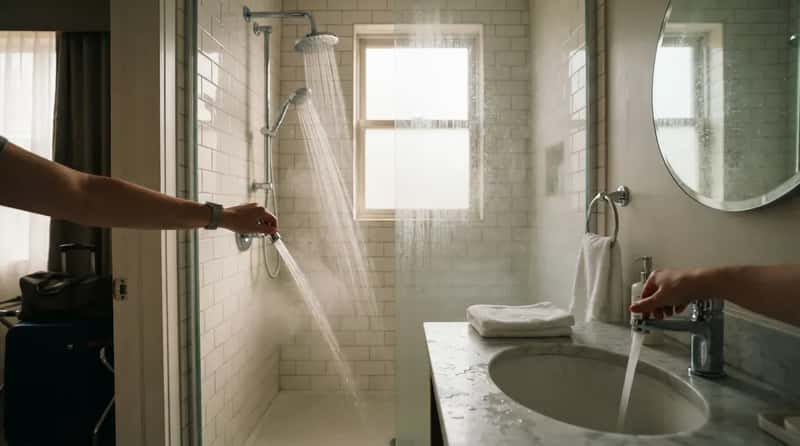
Cold showers and weak pressure ruin more mornings than travelers realize. Experienced guests turn on the shower and sink faucets immediately, timing how long it takes for hot water to arrive and checking whether the pressure is even usable.
Older buildings and top-floor rooms are notorious for water pressure issues that never get mentioned at check-in. This is a two-minute test that saves an entire morning of frustration.
#8 – They Locate the Nearest Exit and Stairwell
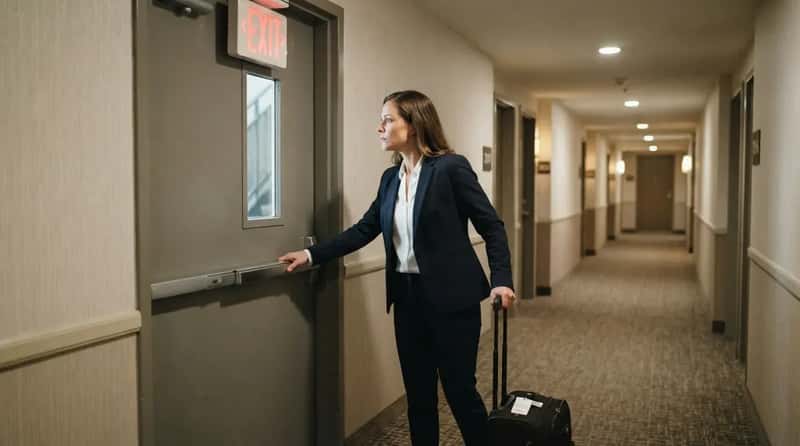
This one sounds dramatic until you remember hotel fires and outages happen more often than people assume. Frequent travelers make it a habit to locate the nearest stairwell and count the doors between their room and the exit, every single stay, no exceptions.
It takes less than sixty seconds and requires no special training, just attention. Most guests never learn their exit route until an alarm is already going off.
#7 – They Check the Peephole and Deadbolt Immediately
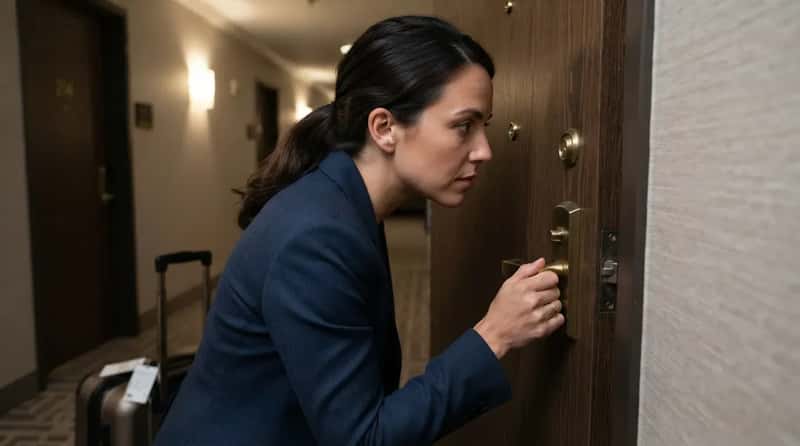
A working peephole and deadbolt are non-negotiable for experienced travelers, especially those flying solo. Before unpacking, they test both, looking through the peephole from outside if possible, and confirming the deadbolt actually engages and holds.
Hotels rarely mention when a lock is glitchy, and a loose deadbolt is far more common in older properties than most guests expect. This is treated as a hard dealbreaker, not a minor inconvenience.
#6 – They Wipe Down the Remote and Light Switches First
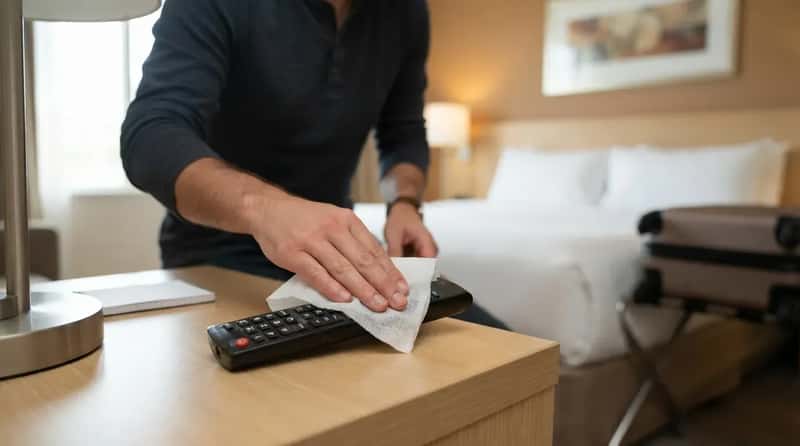
Housekeeping cleans sheets and bathrooms thoroughly, but the TV remote and light switches are frequently skipped entirely. Frequent travelers carry sanitizing wipes and clean these high-touch surfaces before doing anything else in the room.
Studies on hotel room hygiene have repeatedly flagged remotes as some of the dirtiest objects in any room, often outranking bathroom surfaces. Most guests never think to question the one item everyone touches within minutes of arrival.
#5 – They Photograph the Room Before Touching Anything
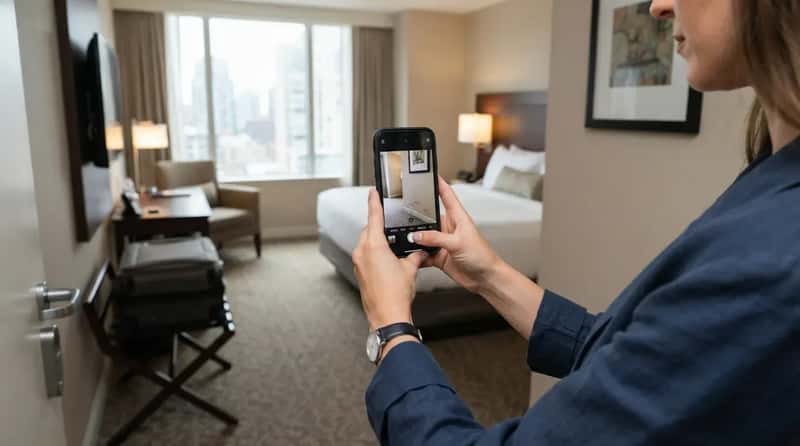
Existing scuffs, stains, or damage can quietly become your problem if you don’t document them immediately. Experienced travelers take a quick photo or video sweep of the entire room, walls, furniture, carpet, within the first few minutes of arrival.
This habit has saved countless guests from disputed damage charges at checkout, especially at properties that require a card on file. It takes thirty seconds and can prevent a fight that lasts weeks.
#4 – They Test the In-Room Safe Before Trusting It
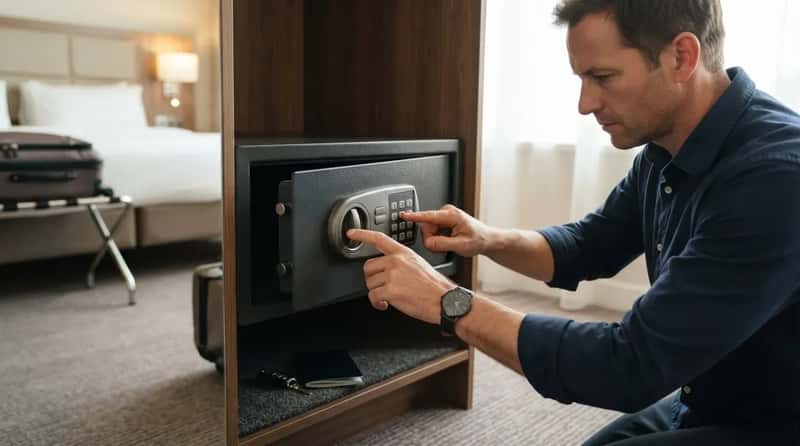
Not every hotel safe actually works, and some retain a previous guest’s code if reset incorrectly. Frequent travelers open and close the safe with a test item before locking away a passport or laptop, confirming the mechanism releases properly every time.
Digital key and self-service technology has expanded fast, more than 12 million Hilton Honors Digital Keys were downloaded in just the first half of 2025 alone, but in-room hardware like safes hasn’t kept pace with that same reliability. A safe that won’t reopen is a nightmare experienced travelers refuse to risk.
#3 – They Test the Smoke Detector on Sight
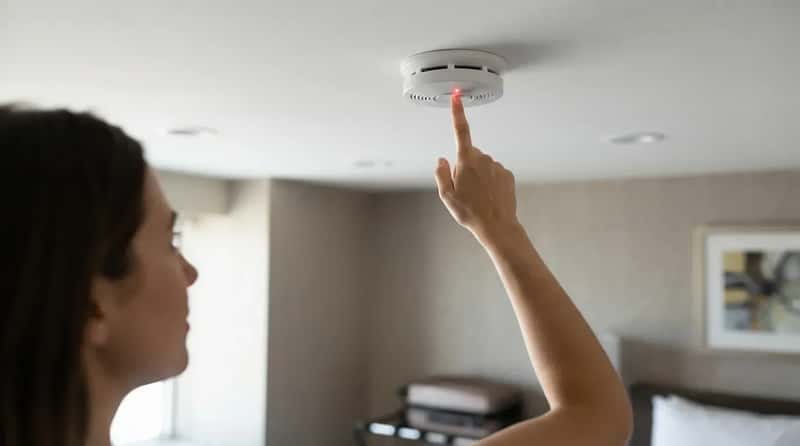
It sounds excessive until you remember how many hotel fire incidents trace back to disabled or dead detectors. Experienced guests glance up, confirm the detector’s light is blinking, and occasionally give it a light tap or press-test if reachable.
Some travelers even bring a small portable smoke alarm for extra assurance in older properties. This is one habit safety experts consistently recommend but almost no casual traveler ever performs.
#2 – They Inspect the Mattress Seams and Headboard
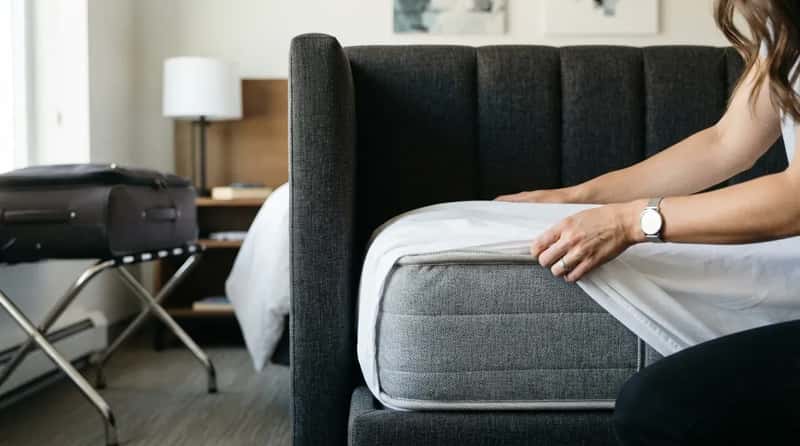
Before a single bag touches the bed, frequent travelers pull back the sheets and check the mattress seams, headboard, and baseboards for small dark spots or tiny shed skins. This is the single most effective way to catch a bed bug problem before it ever spreads into your luggage.
Bags left on the floor or bed during this check are considered a rookie mistake, experienced guests keep luggage on the rack or in the bathroom until the inspection is done. A five-minute check now can prevent a weeks-long infestation at home.
Fast Facts
- Tiny reddish-brown stains on sheets or seams can signal bed bug activity
- Small dark specks near the headboard are often shed skins or droppings
- Bed bugs hide in seams, box springs, and baseboards, not just the mattress top
- Keeping luggage off the bed and floor during inspection limits exposure
#1 – They Sweep the Room for Hidden Cameras
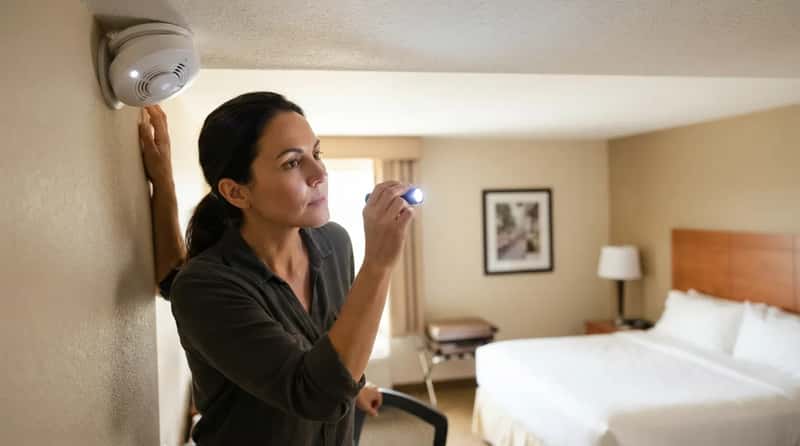
This is the habit that surprises new travelers most, but it’s now standard practice among frequent guests, especially those booking short-term rentals and budget hotels. Before unpacking, they scan smoke detectors, alarm clocks, outlets, and decorative items for pinhole lenses or unusual wiring.
Many also do a quick phone flashlight sweep in a darkened room, since camera lenses often reflect light back distinctly. It’s the one check that turns a routine arrival into genuine peace of mind for the rest of the stay, and experienced travelers treat it as non-negotiable, no matter how nice or reputable the property looks.
At a Glance
- Smoke detectors, alarm clocks, and wall outlets are the most common hiding spots
- USB chargers and power strips left in the room deserve a second look
- A darkened room plus a phone flashlight can reveal a reflective lens
- Decorative items facing the bed, like tissue boxes or picture frames, are worth checking
None of these habits take more than a few minutes, but together they separate guests who glide through a stay from guests who spend it fighting avoidable problems. The pattern is simple: check first, settle in second, and never assume a room is exactly what it appears to be at first glance.
What would you add to this list? Drop your own pre-unpacking habit in the comments, the weirder, the better.