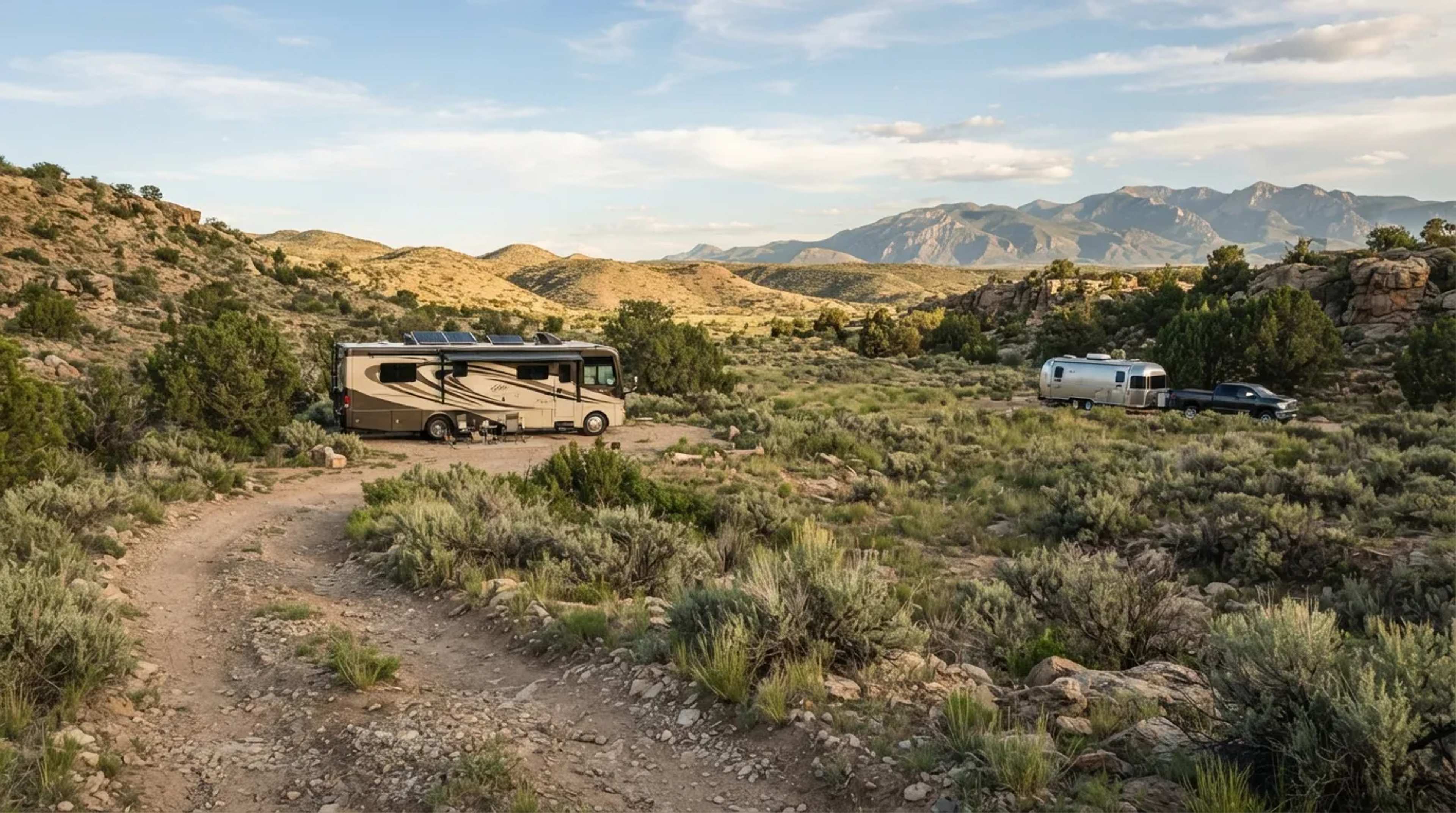
Boondocking looks like the easiest trip in the RV world: find a pretty patch of public land, park, and soak up the quiet for free. The people who camp this way for years will tell you it’s not that simple. Behind every calm, coffee-in-hand sunrise is a set of small, unglamorous routines that rarely make it into the brochures.
Skip them and a free night can turn into a dry tank, a dead battery, or a tow bill. A few of these habits are obvious, but others are only learned after someone gets stuck. One of them, waiting near the very end, says more about this lifestyle than any gear list ever could.
#22 – They Walk the Spot Before the Rig Ever Rolls In
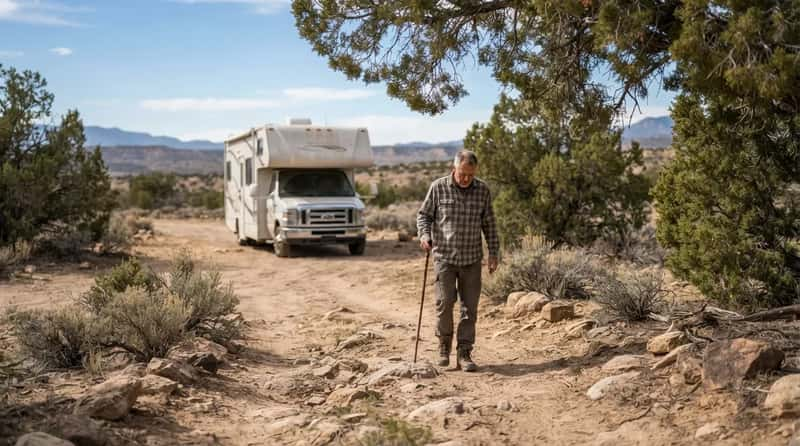
Seasoned boondockers rarely drive straight into a site. They park at the entrance and walk it first, because soft sand, hidden stumps, and sharp rocks look harmless from the driver’s seat.
A five-minute walk can save a tire, or an afternoon with a shovel.
They look up, too. Low branches scrape roofs and tear off vents, and dead limbs are a real risk in wind. They also note where the ground slopes and where water would run if it rained, since a site feels very different once a 30-foot rig is sitting on it.
#21 – They Arrive With Hours of Daylight to Spare
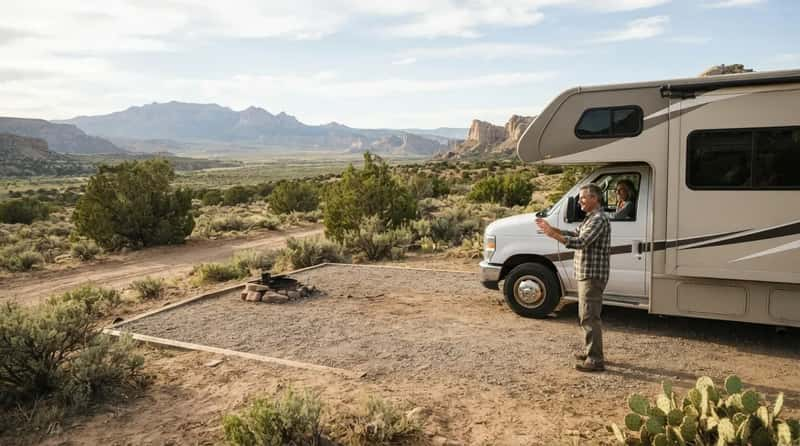
Pulling into a dispersed site after dark is the classic rookie move. Veterans aim to arrive mid-afternoon at the latest, which gives them time to scout, level, and set up without a flashlight clamped in their teeth.
Backing a trailer into an unfamiliar spot at night is where many dented fenders are born.
Daylight also tells the truth about a place. You can spot trash, old fire rings, and signs posted by land managers. You can see whether the “quiet” spot is right beside a busy road or an informal shooting area, and a backup spot beats a bad gamble every time.
#20 – They Check Fire Restrictions Every Single Trip
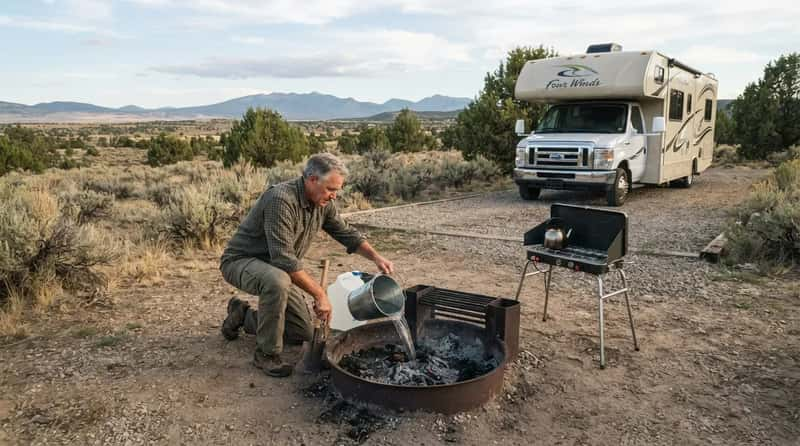
Fire rules change by area and by season. A fire ring that was fine in April can be off-limits by July, and the rules can differ between a BLM field office and the national forest next door.
Restrictions can change with very little warning during dry spells.
So experienced campers check the local land office’s website or call before they go. They carry a camp stove, since stoves are often allowed when open flames aren’t, though even that varies. If they do build a fire, they keep a shovel and water within arm’s reach. The campfire is the part of boondocking everyone pictures, and it’s also the part that can cost the most.
Worth Knowing
- Check the office that manages the exact patch of land you’ll be on, whether that’s BLM, a national forest, or a state agency.
- Look for the current restriction level, not just whether fires were allowed last year.
- Ask whether stoves with a shut-off valve are still permitted if campfires are banned.
- Before you leave a fire, drown it, stir the ashes, and feel for heat with the back of your hand.
#19 – They Download Offline Maps Before Losing Signal
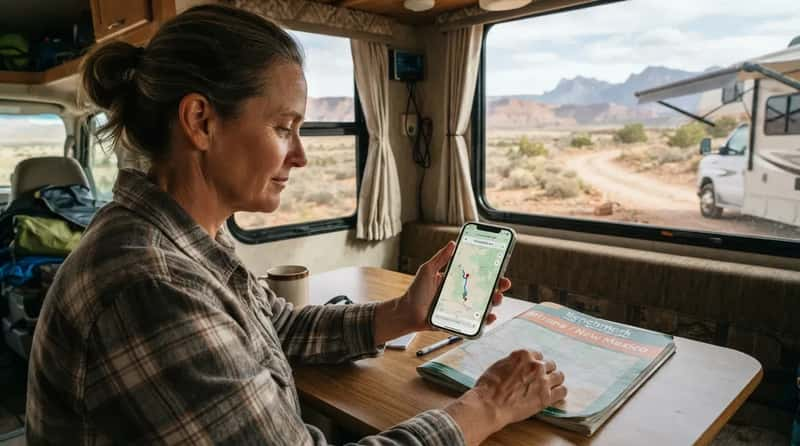
Cell service is the first thing to vanish when you leave the highway. Pros never count on it to find a turn or reroute, so they download offline maps for the whole region ahead of time.
Some of the best sites sit in places where the blue dot works but the data doesn’t.
Many also keep a paper atlas or forest map as backup. Land-management agencies publish maps showing which roads are open to motor vehicles, and those are worth more than a pin on a camping app. But even a perfect map won’t tell you what the road is really like.
#18 – They Scout Rough Roads on Foot Before Committing
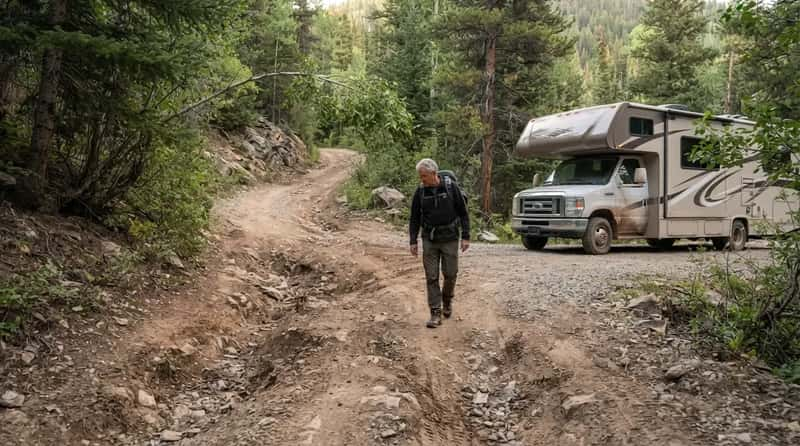
Here’s the mistake that fills tow-truck calendars: following a pin down a road the rig can’t handle. Veterans stop at the first questionable stretch and walk it, looking for washouts, tight turns, deep ruts, and overhead clearance.
Turning around a long rig on a narrow dirt road is often harder than getting in.
They also know their own numbers: length, height, and ground clearance. Some say big motorhomes have no business on many “easy” forest roads, however nice the photos look online. That opinion starts arguments in every RV forum, yet nobody who’s been stuck argues with the walk-first rule.
#17 – They Fill Up and Dump Before Heading Out
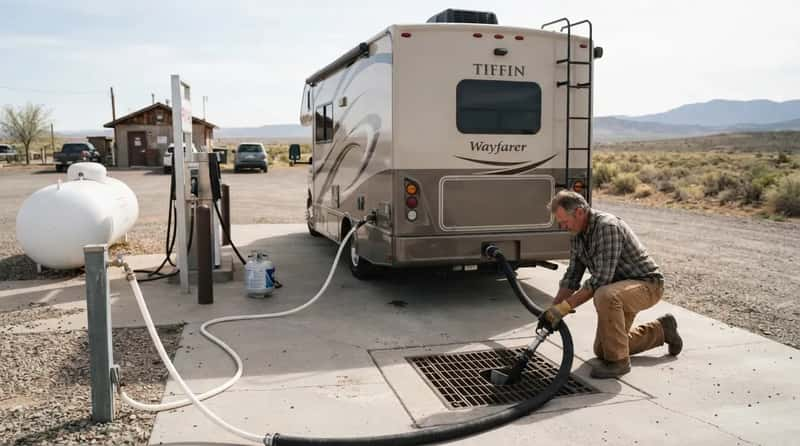
Experienced boondockers treat the last town as a service station. They fill fresh water, empty holding tanks, and top off propane before they leave pavement, and a dump station on the way home is part of the plan, not an afterthought.
Fresh water weighs roughly 8.3 pounds per gallon, so a full tank adds serious weight.
That weight is why they plan carefully. Some travel with partly filled tanks and refill near camp, while others carry extra water in portable containers. Either way, they know their daily usage down to the gallon.
#16 – They Track the 14-Day Clock Like a Deadline
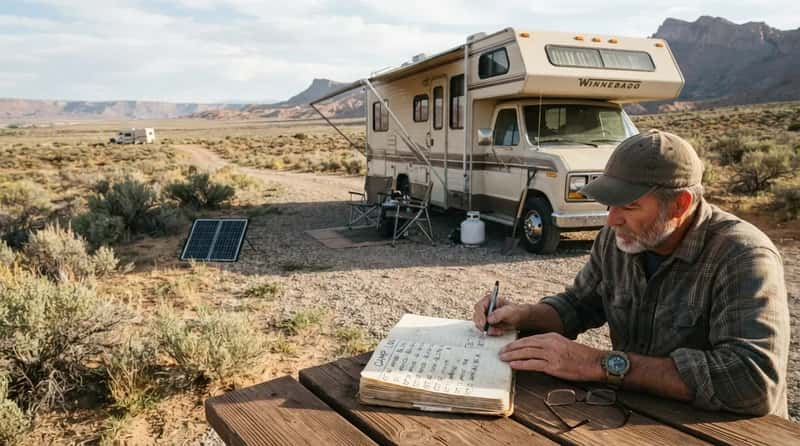
On most BLM land, dispersed camping is generally limited to 14 days within any 28-day period, though local rules vary. Veterans write down their arrival date, because once the limit is reached, visitors must move to a new location, often at least 25 to 30 miles away.
Here’s the part people miss: the limit applies to the area, not the pullout. Moving 200 feet down the road does not reset the clock. Experts also look into Long-Term Visitor Areas, which follow separate paid rules, since overstaying is a quick way to meet a ranger on bad terms.
#15 – They Level the Rig Before Unhitching a Thing
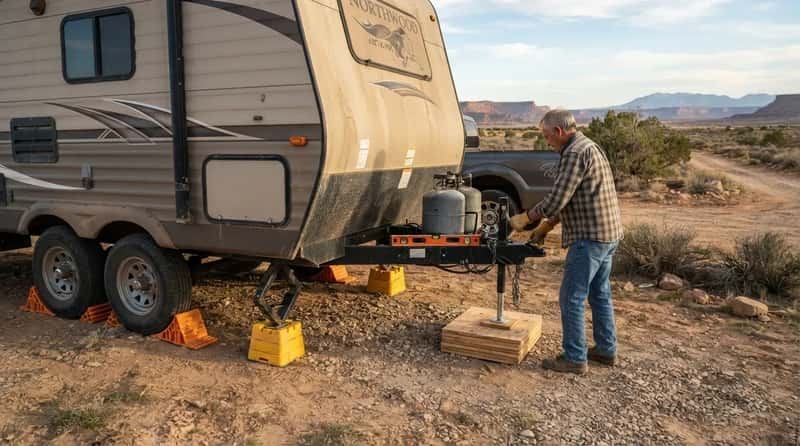
Level isn’t about comfort alone. Absorption refrigerators can run poorly when badly tilted, and a sloped bed makes for a rough night. So veterans check levelness before they unhitch, using blocks or leveling ramps.
Many carry a simple bubble level, not a phone app, because it never needs a signal.
They also chock the wheels every time, because a trailer that rolls mid-unhitch is a story nobody wants to tell. Some keep a few sturdy boards for soft ground. It’s small stuff, but it keeps the whole stay stress-free.
#14 – They Park for the Sun, Not Just the View
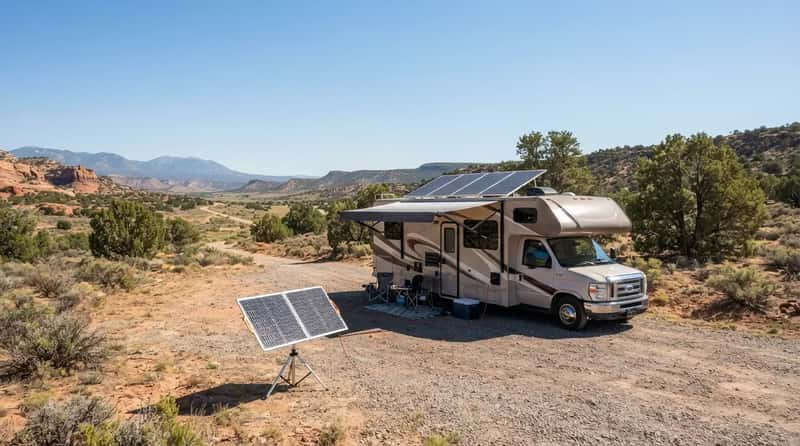
Solar-powered RVers pay attention to where the sun will be at 10 a.m. and 3 p.m. A panel shaded by one tree can lose a large share of its output, so pros angle the rig or use portable panels they can move around.
Even partial shade on one section of a panel can cut output far more than you’d expect.
That’s the quiet secret behind long stays off-grid. In summer, though, the same sun can bake the interior. Plenty of campers park in shade for comfort and set portable panels out in the light, a trade-off every boondocker eventually solves.
#13 – They Treat Dry Washes Like Hidden Rivers
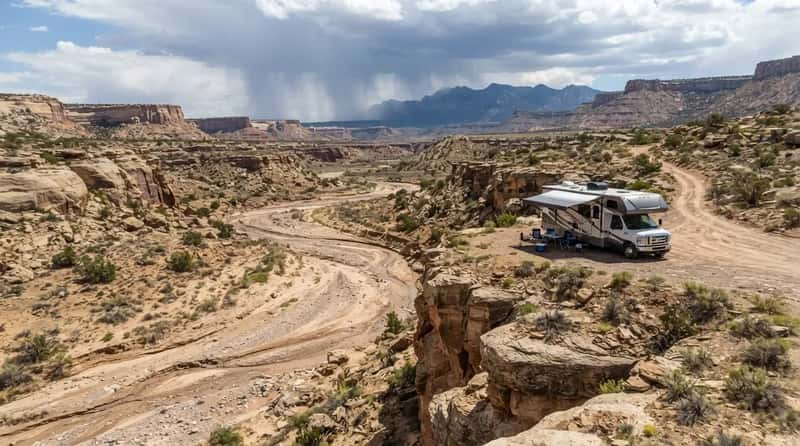
A dry desert wash looks like a perfect flat parking spot. Experienced campers know it’s actually a drainage channel.
Rain falling miles away can send water down a wash even under clear skies.
That’s why many avoid camping in low spots in canyon country. They check the forecast for the whole region, not just the campsite, and they know muddy clay roads can go from fine to impassable fast. If rain is coming, many simply leave early, because waiting out a storm is harder when the roads close behind you.
#12 – They Carry a Shovel and Traction Boards, Always
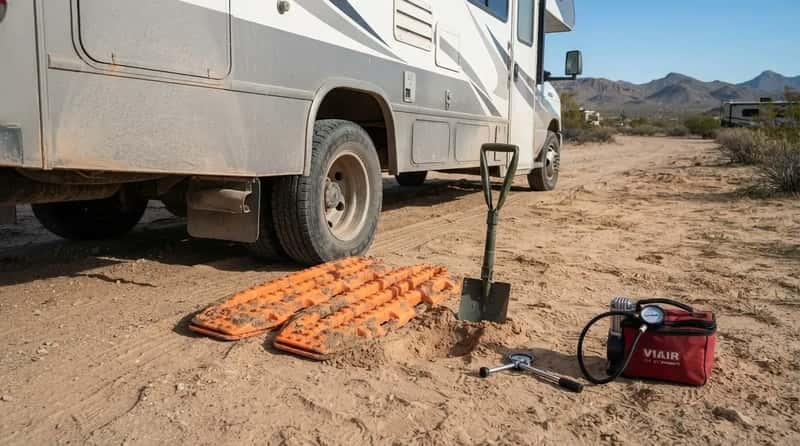
Recovery gear looks excessive until the day it isn’t. Veterans carry a folding shovel, traction boards, and a tire gauge.
A common cause of getting stuck is simply tires that are too hard for soft ground.
Many experienced drivers air down a bit for sand, then re-inflate on pavement, and some carry a portable compressor because pumping tires by hand is no joke. They also know their limits. A rig that’s stuck deep needs a tow, not heroics, and the best habit of all is stopping before the road gets scary.
Quick Compare
- Folding shovel: clears sand, mud, or snow from around the tires so they can move again.
- Traction boards: give stuck tires something solid to grip once the path is dug out.
- Tire gauge and compressor: let you air down for soft ground and air back up before pavement.
#11 – They Tell Someone Exactly Where They’ll Be
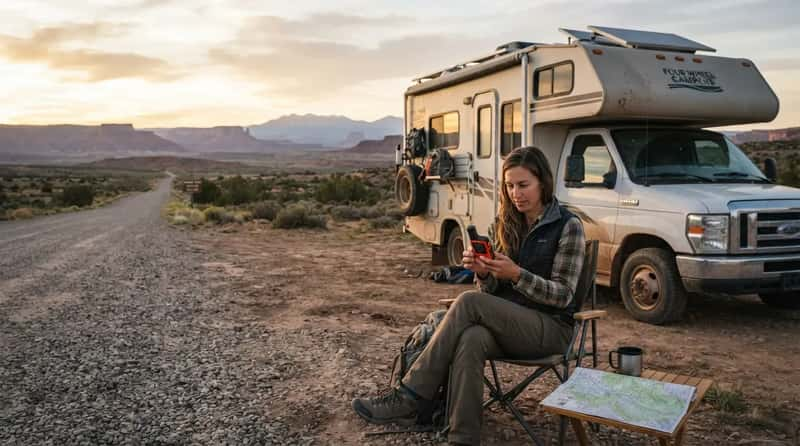
Before they lose signal, veterans text a friend or family member. They share the area, the road name, and when they plan to check in, so if that check-in is missed, someone knows where to start looking.
Remote public land can go days without a single passerby.
Many also carry a satellite messenger, which works where cell phones don’t. Those devices usually need a subscription, and some campers think they’re overkill for popular areas. Others call them the best purchase they ever made.
#10 – They Watch Battery Voltage Like a Fuel Gauge
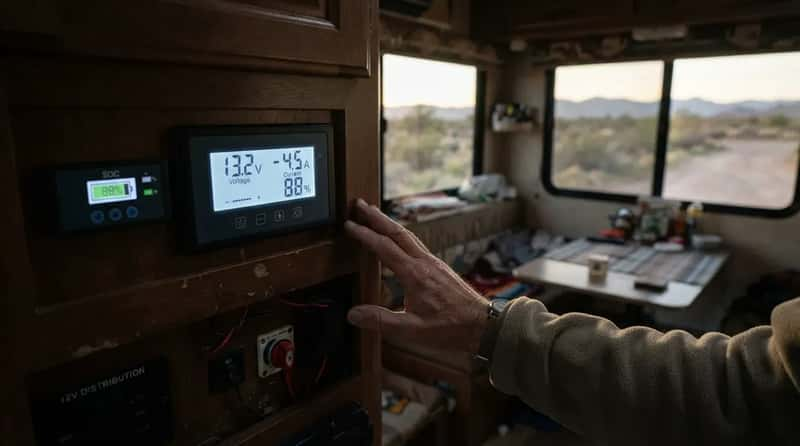
Experienced boondockers install a battery monitor and actually look at it. A simple voltage reading on a panel can mislead you, especially under load.
Draining some battery types too far can shorten their lifespan.
That’s an expensive mistake to repeat. They also learn what each appliance costs in power, since microwaves, hair dryers, and air conditioners drain batteries fast. Cold matters too, because many lithium batteries can’t be safely charged below freezing without built-in protection, so veterans check their battery’s specs before winter trips.
#9 – They Test Their CO and Propane Alarms Before Leaving

Carbon monoxide is odorless, and tight little rigs can trap it. Experienced RVers test their CO and propane detectors before every trip and check the expiration dates, because these devices don’t last forever.
A dead alarm gives you the same false comfort as no alarm at all.
They never run a generator where fumes can drift toward a vent or window, and they keep a fire extinguisher where they can reach it fast. Most won’t use a stove or oven as a heater, either. It’s the boring routine that stops tragedies.
At a Glance
- Carbon monoxide has no smell or color, so an alarm is the only warning you get.
- Early symptoms like headache, dizziness, and nausea are easy to mistake for a long travel day.
- Propane is heavier than air and tends to settle low, which is why those detectors sit near the floor.
- Press the test button and check the replacement date printed on each unit before every trip.
#8 – They Wash Dishes Like Water Is Gold
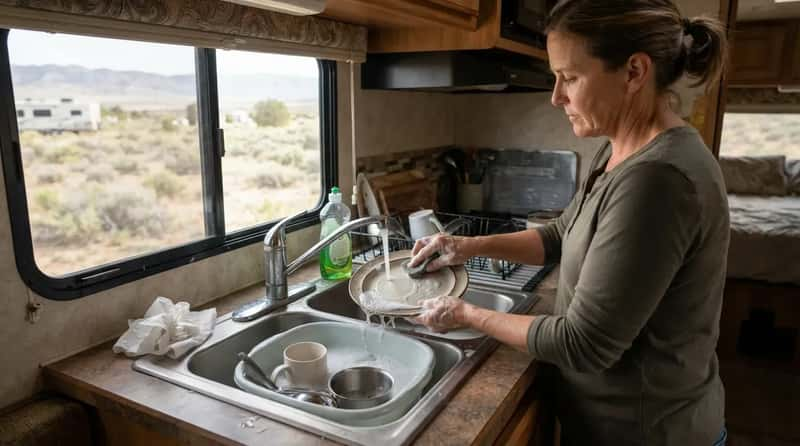
Ask any veteran what ends a boondocking stay first, and the answer is usually water. So they conserve: wet, turn off, soap up, then rinse, whether at the sink or in the shower.
Many say the biggest water saver is just never leaving the tap running.
They scrape plates first and wipe pans with a paper towel before washing. Some use a basin so the rinse water can be reused, and others take showers in town to give the tanks a break. It’s less glamorous than it sounds, but it’s how people stay for weeks.
#7 – They Camp Well Away From Water
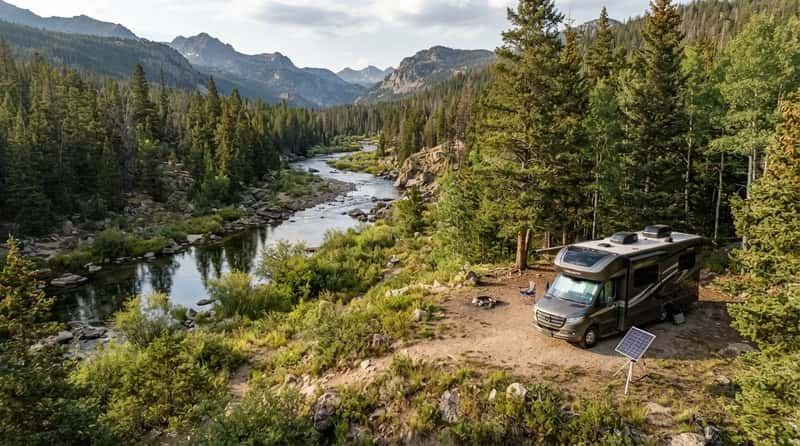
A creek or lakeside spot is tempting. But Leave No Trace guidance recommends camping at least 200 feet from water, about 70 adult steps.
Wildlife often depends on those banks for drinking, and campers can push animals away.
The distance also protects the water from soap and waste. Seasoned campers keep it even when the site seems made for a rig, and some areas have their own closures near streams and wetlands. Flood zones sit right there too, so the best spots are often a little further back.
#6 – They Stick to Existing Sites and Designated Roads
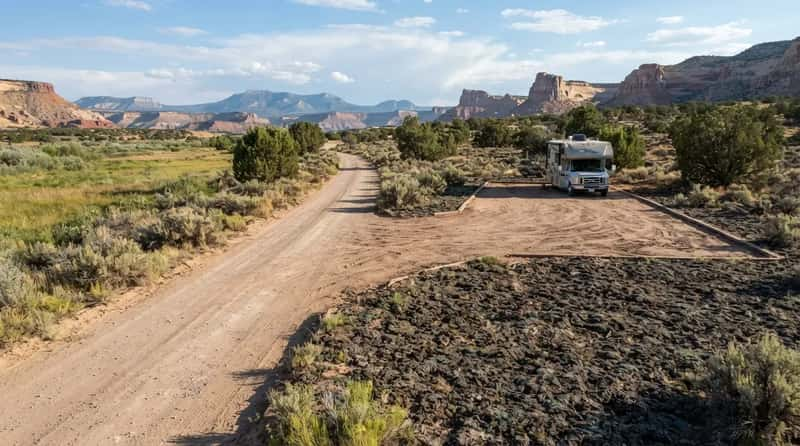
Veterans use spots that already have bare ground, even when a pristine meadow beckons. Vehicles must stay on designated roads and trails unless the area is specifically designated for off-road use, and driving off-route leaves scars that last.
In parts of the Southwest, the soil itself is alive. Cryptobiotic soil crusts, common in Utah’s canyon country, are fragile and can take years to recover from a single tire track. Most people never even notice the crust is there.
One careless turn can erase growth that took years to form.
Why It Stands Out
- The dark, bumpy crust is a living mix of cyanobacteria, lichens, and mosses.
- It helps hold desert soil in place and slows erosion from wind and water.
- A single tire track can crush it in seconds, while regrowth can take years or longer.
- Staying on bare, already-used ground is the simplest way to protect it.
#5 – They Pick Up Trash That Isn’t Theirs
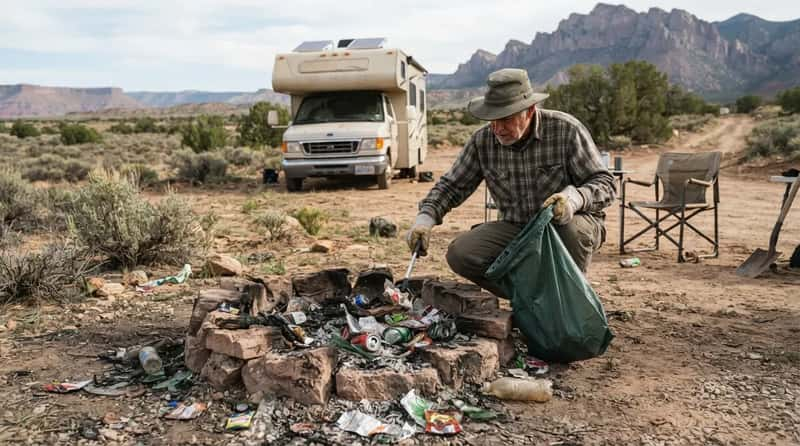
Pack-in, pack-out is the baseline. Veterans go further and carry a bag just for what they find, because bottle caps, wrappers, and bits of twist-tie count as litter even when they seem tiny.
Micro-trash is what many experienced campers say they spot most often.
They bag their pet waste and never burn trash in a fire ring. Rings full of melted cans and glass are a common sight in popular areas. The habit can feel unfair at first, since it’s someone else’s mess, but they do it anyway.
#4 – They Leave Real Distance Between Rigs
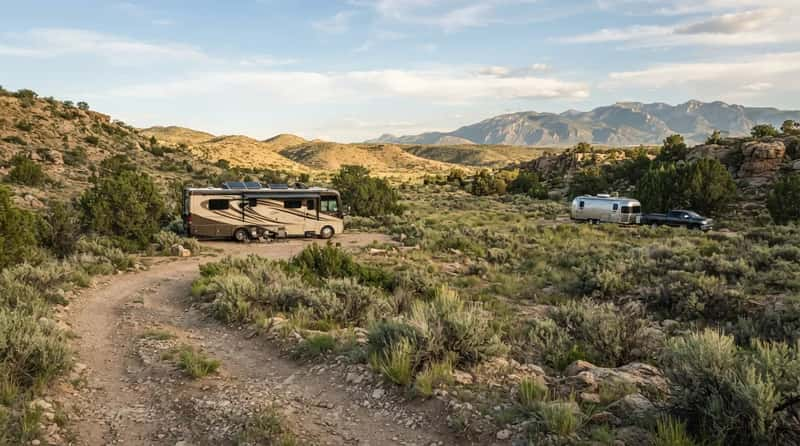
Dispersed camping is about space. Veterans choose spots with a good gap from the next camper and don’t park beside a lone rig when there’s open ground.
Many say a generator running in a quiet camp is the fastest way to lose friends.
Here’s a take that splits the community. Some argue generators have no place in a boondocking camp at all, while others call them essential in a heat wave. Either way, experienced folks keep run times short, lights low, and music lower.
#3 – They Treat Every Snack as a Wildlife Invitation
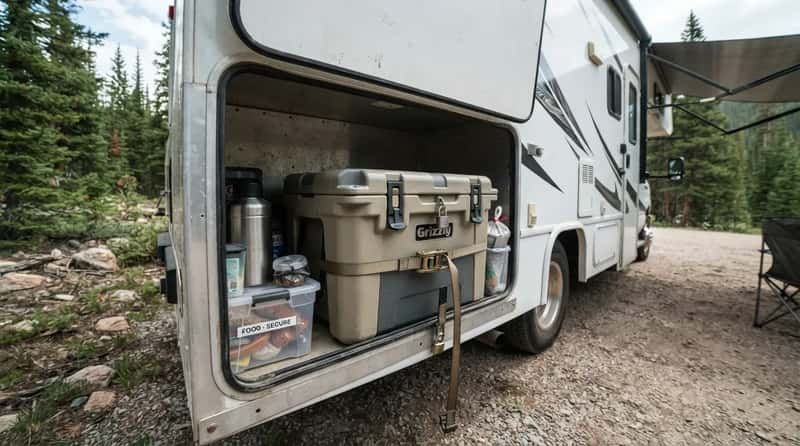
Food attracts animals, and animals that get used to people often end up in trouble. In bear country, veterans store food and scented items according to local rules, in hard-sided vehicles or bear-resistant containers.
A fed animal is often a doomed animal.
That’s why wildlife officials stress this so hard. Even outside bear country, mice, raccoons, and ravens will raid an open cooler. Experienced campers clean the grill and pick up crumbs before bed, and they check local rules for any area-specific requirements.
#2 – They Always Keep an Exit Plan and a Fuel Cushion
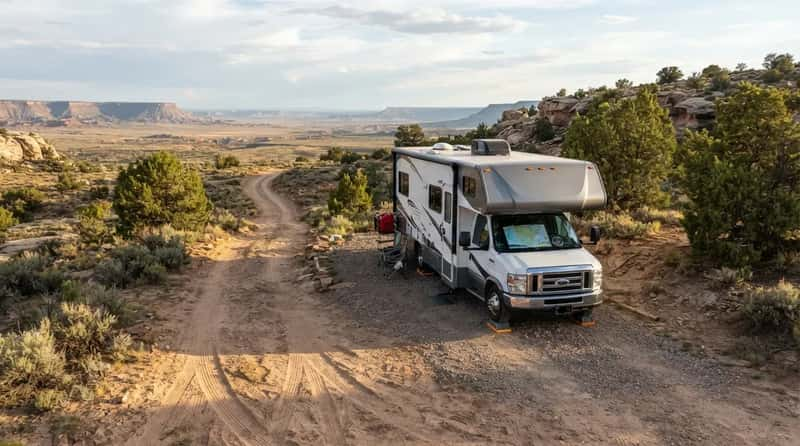
Veterans never let the tank drop to fumes when heading to remote camps. Many follow a quarter-tank rule, since the nearest gas station can be an hour or more away.
Running out of fuel in a remote area turns a small mistake into a rescue.
They think about leaving, too. Where would they go if a storm hit, a fire started, or a road closed? Keeping the tow vehicle ready and the rig mostly packed and pointed outward is a habit many swear by. Most never need it, but the one time they do, it matters more than anything else.
#1 – They Leave the Site Better Than They Found It
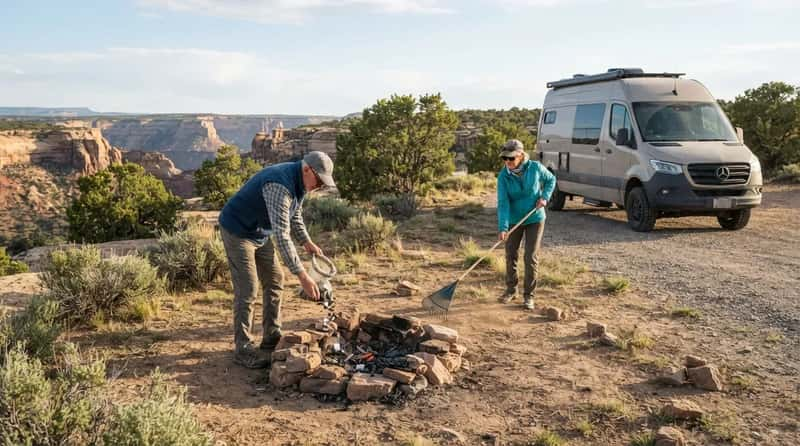
This is the habit that holds the whole lifestyle together. Free camping on public land depends on people treating it well, and land managers have restricted or closed popular dispersed areas in some places after repeated trash, damage, and overuse.
Those closures usually follow the behavior of a few, but everyone loses access.
So veterans take a last walk around the site before leaving. They scatter extra fire ring stones, pick up stray litter, and check for anything left behind. Some even tidy sites they never used, not to be saints, but to make sure the next camper, and next year’s trip, still exists.
The best boondockers aren’t the ones with the biggest solar array or the fanciest rig. They’re the ones who prepare, pay attention, and leave a place the way they’d want to find it.
Most of these habits cost little or nothing. They save water, power, money, and sometimes the whole trip, and they keep the free land open. Which one do you wish you’d learned sooner?