Most passengers assume the flight deck runs on secrecy – dim lights for “ambiance,” turbulence that means danger, seatbelt signs that flip on just to annoy you. Almost none of that is true, and pilots have been quietly rolling their eyes at these myths for decades.
The real explanations are stranger, more procedural, and honestly more reassuring than the guesses passengers make up. Here’s what actually happens behind that locked cockpit door on a long-haul flight, starting with the detail that’s misunderstood most often.
#22 – The Dimmed Cabin Lights Aren’t for Comfort, They’re a Survival Trick
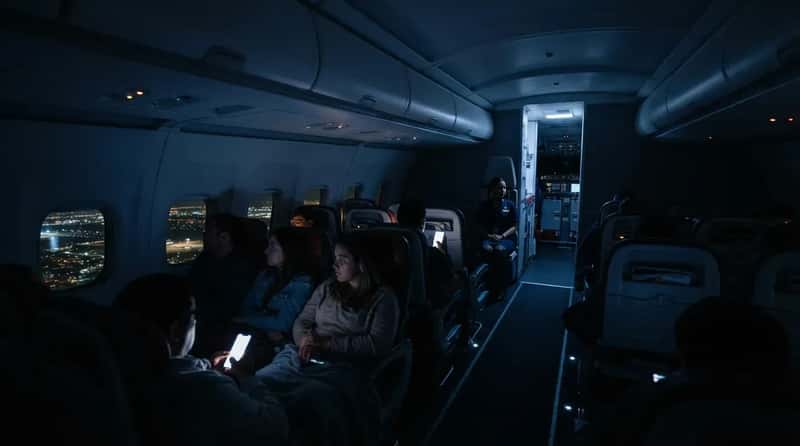
Pilots dim the cabin before a night takeoff or landing for one reason only: your eyes. Flight crews dim the lights during dawn, dusk, and night so that in an emergency evacuation, passengers’ eyes are already adjusted to the dark, since it can take five to ten minutes for eyes to adapt to low light.
Crews aren’t guessing about when this matters most, either. Takeoff and landing are by far the most dangerous phases of flight, with 21% of fatal accidents happening during takeoff and initial climb and 46% during final descent and landing. Most passengers think it’s mood lighting. It’s actually a rehearsed survival buffer.
#21 – Long-Haul Turbulence Is Genuinely Getting Worse
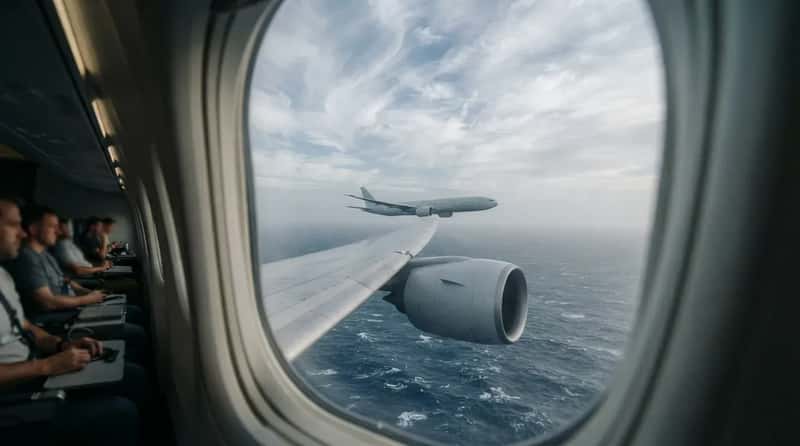
This isn’t a nervous flyer’s exaggeration. Research from the University of Reading and other aviation climatology studies suggests clear-air turbulence over the North Atlantic and other high-traffic routes has increased by 15 to 55 percent since the 1980s, meaning passengers on long-haul flights may feel more frequent turbulence than earlier generations did.
Pilots aren’t panicked about it, but they have adjusted how they brief crews and plan routes. The study, published in Geophysical Research Letters, links the rise to climate change strengthening jet streams, though the effect is described as real but manageable as airlines and forecasting systems adapt. The skies themselves are changing – and pilots have quietly been adapting to it for years.
#20 – Your Pilots Are Sometimes Asleep in a Hidden Room You’ll Never See
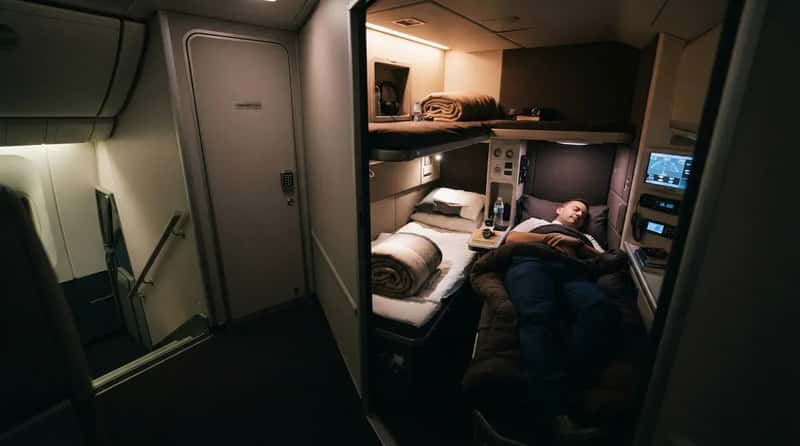
On genuine long-haul routes, sleeping isn’t a scandal – it’s regulation. Airlines use what’s called an augmented crew, meaning instead of the standard two pilots there may be three or four onboard, rotating through scheduled breaks while at least two qualified pilots stay on the flight deck at all times.
Where do they actually go? Most newer wide-body jets have crew rest compartments built for exactly this – tucked behind a discrete, locked door, hidden from passenger view, with size and location varying by aircraft. That “extra crew” announcement isn’t filler – it’s a legally required nap schedule.
Fast Facts
- Flights longer than about 8 hours often require an augmented crew of three pilots.
- Ultra-long-haul routes past 16 hours can carry four pilots rotating in pairs.
- Crew rest compartments are typically rated by class based on privacy and bunk space.
- At least two qualified pilots must stay on the flight deck at all times during cruise.
#19 – That Cockpit Door Is Basically a Bank Vault
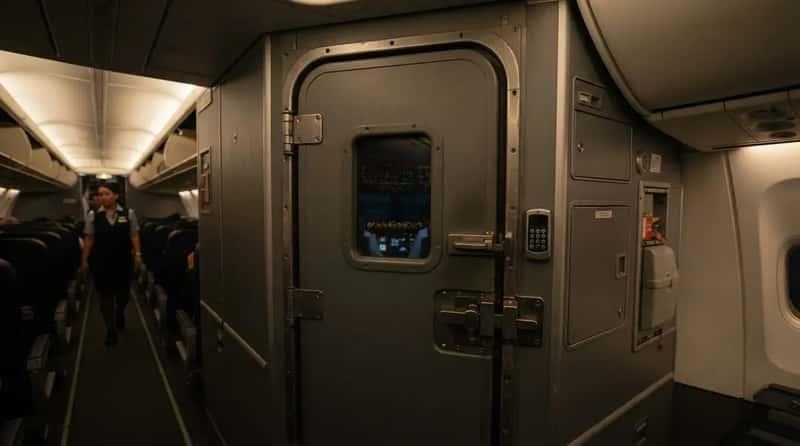
The cockpit door on your long-haul flight isn’t just locked, it’s engineered to survive an attack. After September 11, 2001, regulators required reinforced doors on many aircraft depending on size, weight, and flight type – doors that look ordinary from your seat but are built from tough, bulletproof material.
Pilots treat that door as a hard boundary, not a formality. It stays locked for the entire flight, and any access follows strict verification steps passengers never see. The plain-looking door a few feet from your seat is quietly one of the most reinforced parts of the whole aircraft.
#18 – Raising Your Window Shade Isn’t a Suggestion
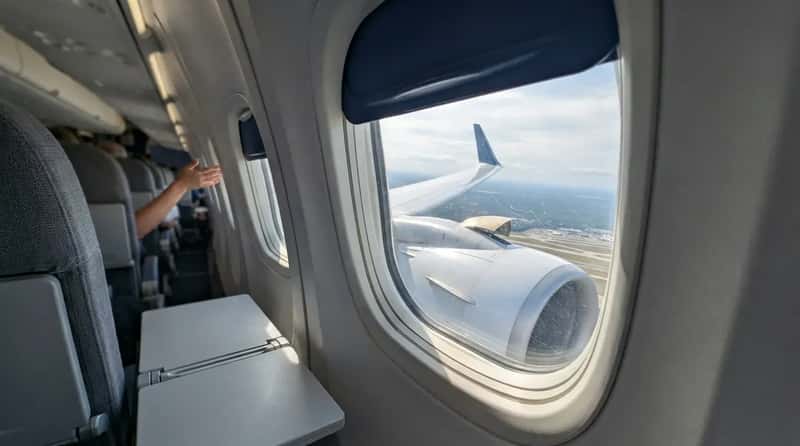
Flight attendants asking you to lift your shade for takeoff and landing isn’t about the view. It’s standard practice on daytime flights so the cabin interior stays visible even if power goes out, and so everyone onboard has a clear line of sight to the aircraft’s exterior.
There’s precedent behind that rule, too. In a 2013 British Airways incident, an engine cover popped open after takeoff, and because the problem was visible through the windows, the crew made a quick emergency landing. In another case, a United Airlines passenger spotted fuel leaking from the wing before anyone else noticed. A raised shade has genuinely caught real mechanical problems before they became emergencies.
#17 – Your “Straight Line” Flight Path Almost Never Is
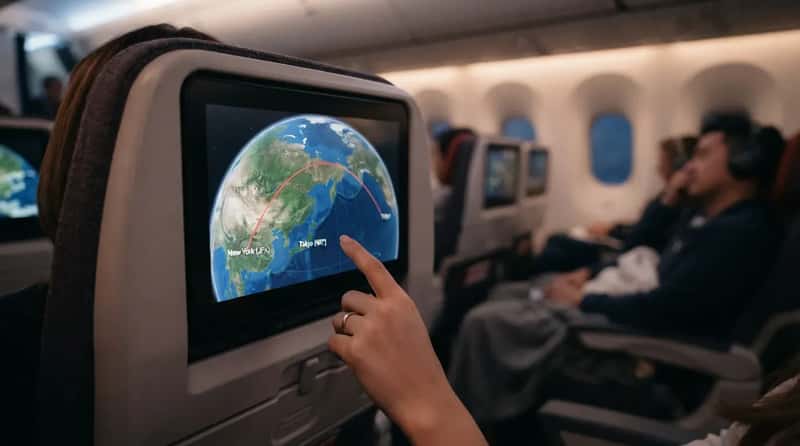
Passengers glance at the moving map and assume the curved route is inefficient, but it’s actually the shortest possible path. On a globe, the straight line between two far-apart cities becomes a curve once it’s flattened onto a flat map – pilots fly the great circle route because it saves fuel and time, not because of wind or air traffic.
This is why a New York-to-Tokyo flight might swing near the Arctic instead of cutting straight across the Pacific. The route that looks like the “long way” on your screen is actually the shortest one physics allows. Most passengers never realize the map itself is what’s distorting reality.
#16 – Turbulence Cannot Flip a Plane Out of the Sky
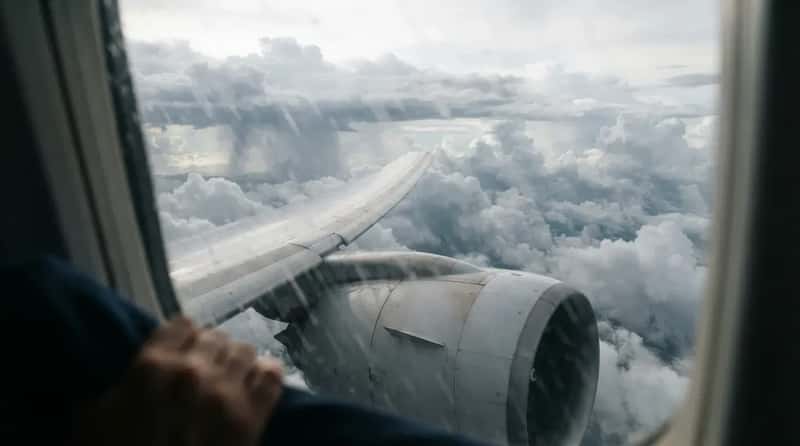
The bumps that make passengers grip their armrests are, to pilots, background noise. Aircraft are engineered to withstand severe turbulence, and a plane simply does not fall out of the sky because of it.
Even when the ride gets rough, the underlying math is unglamorous. Commercial aircraft are built, tested, and certified to handle forces far greater than anything passengers ever feel in normal operation. The plane can handle far more violence than your stomach can – that’s the actual gap.
#15 – Your Seat Number Matters More Than Window vs. Aisle
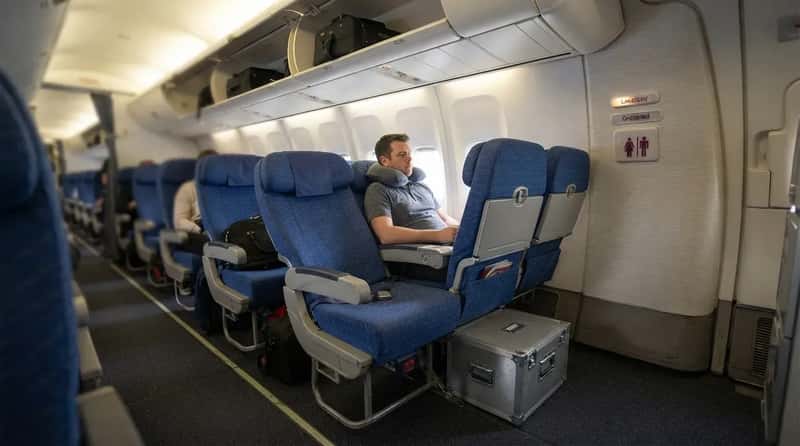
Pilots and frequent-flying crew know something most travelers skip entirely: the specific seat, not just the seat type, decides your comfort. SeatGuru maps every aircraft for every airline, and on a Boeing 777, for example, certain economy seats in the last row cannot recline at all – yet cost the same as every other seat.
The trap gets worse with configuration changes. Some seats have no under-seat storage because of equipment boxes hidden below, and bulkhead seats offer extra legroom but no overhead storage during takeoff and landing. You could pay the same fare and land in the plane’s worst seat without ever knowing it.
Quick Compare
- Standard economy: Reclines fully, storage under the seat ahead isn’t guaranteed.
- Back-row economy: Often doesn’t recline at all and sits near galleys or lavatories.
- Bulkhead: Extra legroom, but no overhead bin access during takeoff and landing.
- Exit row: Most legroom, but frequently no window and armrest tray tables.
#14 – Cabin Air Is Drier Than Any Desert You’ve Visited
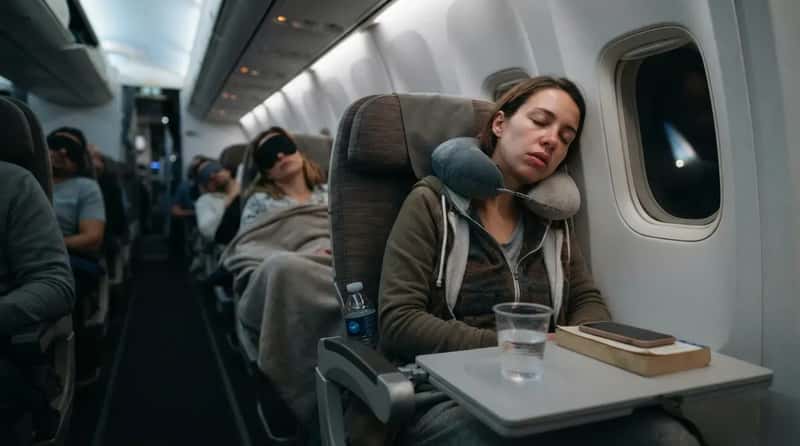
That scratchy throat mid-flight isn’t in your head. Cabin air runs extremely dry, which is why crews recommend sipping water every 30 to 45 minutes as one of the main ways to fight jet lag on board.
Crew members deal with this constantly, which is why the water cart comes around so often on long routes. Dehydration is considered one of the biggest comfort threats on planes, and frequent flyers often end up drinking two to three times their normal daily water intake just to keep up. A dry mouth at hour six isn’t discomfort – it’s your body reacting to genuinely desert-level humidity.
#13 – Sitting Behind the Wings Buys You a Smoother Ride
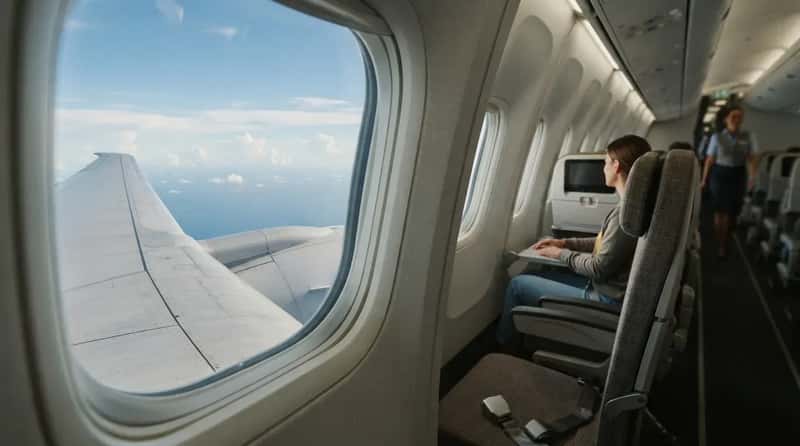
Nervous flyers who ask crew where to sit almost always get the same answer: pick any seat behind the wings. The ride will likely feel smoother and less bumpy if turbulence hits, compared to seats up front or far in the back.
It comes down to the aircraft’s center of gravity – the wings act like a pivot point, so seats near or behind them feel less exaggerated movement. The seats near the wings aren’t just structurally central – they’re the calmest real estate on the plane.
#12 – Your Sleep Strategy Should Decide Your Seat, Not the Other Way Around
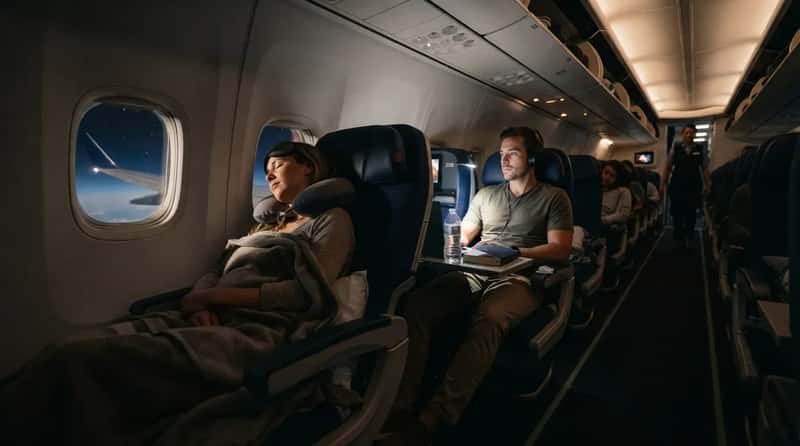
Window or aisle isn’t a personality trait – it’s a strategy decision pilots and crew make deliberately. The window seat is the better bet if the goal is sleep, since you get a place to lean your head and won’t be disturbed by seatmates climbing over you.
But if rest isn’t the goal, the advice flips completely. If you want to stay up and move around freely, the aisle seat wins, while the window suits anyone who’d rather not be disturbed at all. Picking your seat by “sleeper” or “mover” beats picking by habit every time.
#11 – Jet Lag Hits Twice As Hard Flying East

Pilots who fly transcontinental routes for a living notice a pattern most travelers never connect. For the aircraft, time zones mean nothing, but for humans they mean everything – crossing multiple zones disrupts the internal body clock, and that disruption hits far harder traveling east than west.
That’s why a flight from Los Angeles to Tokyo often wrecks travelers more than the return leg. The human body finds it easier to stay up later than to fall asleep earlier, and eastbound travel forces exactly that. The direction of your flight secretly decides how brutal your jet lag will be.
Worth Knowing
- The body clock typically adjusts about one time zone per day after eastward travel.
- Westward jet lag usually resolves faster, often within a day or two.
- Morning sunlight after landing helps reset the circadian rhythm faster eastbound.
- Frequent long-haul crews sometimes stay on origin-city sleep schedules to limit disruption.
#10 – Your Jet Might Have Landed From Another Continent Two Hours Ago
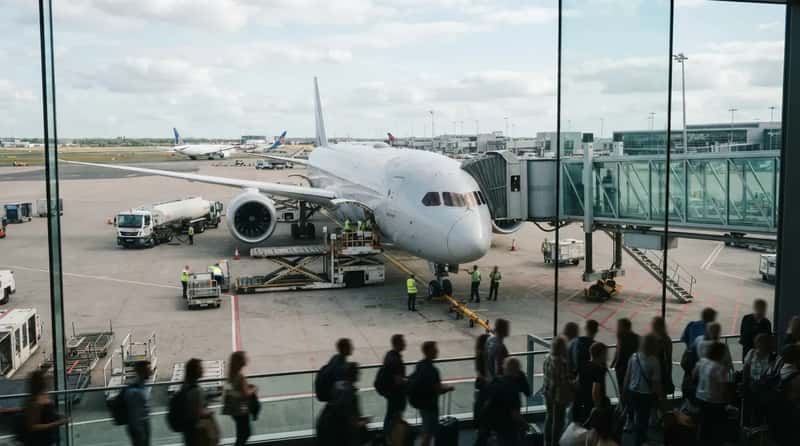
Long-haul aircraft rarely get downtime between flights. As soon as inbound passengers and crew disembark, ground teams move in – cleaners, caterers, engineers, a fresh crew – and within 60 to 90 minutes, new passengers are already boarding.
Pilots inheriting that tight window rely on precise handoffs from the previous crew about maintenance notes and fuel status. There’s no slack built in – a delay at the gate on one continent can ripple into a missed window on another. The plane sitting at your gate may have crossed an ocean earlier that same morning.
#9 – Ultra-Long-Haul Routes Quietly Double Up on Pilots
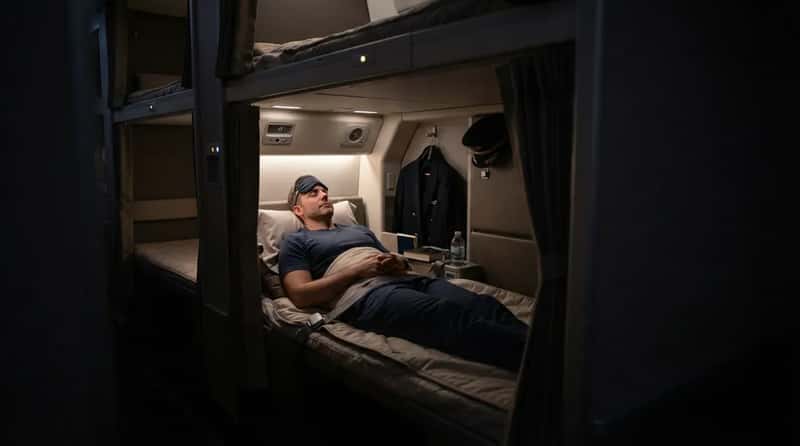
Some long-haul flights carry more flight deck staff than passengers ever assume. This isn’t a cost-cutting afterthought – it’s a fatigue-management requirement baked into the schedule long before the plane leaves the gate, with pilots rotating through scheduled rest in shifts.
At least two qualified pilots remain on the flight deck at every moment of cruise, which keeps everyone sharp for the descent and landing phases when workload spikes hardest. You’ve likely flown with a pilot resting in the back that you never knew existed.
#8 – Captains and First Officers Often Eat Different Meals on Purpose
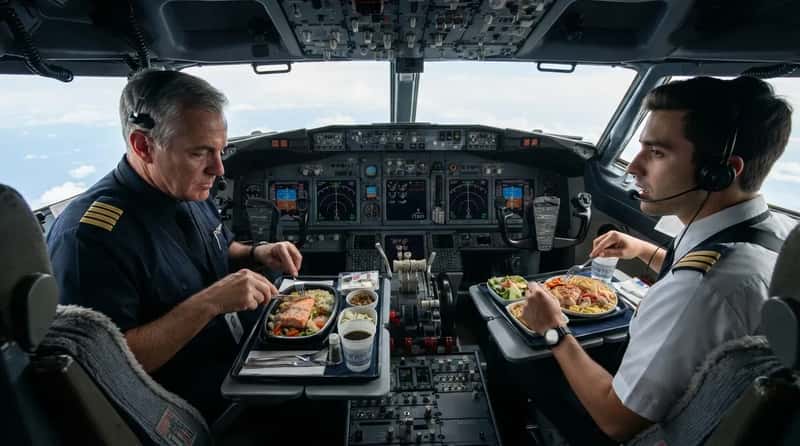
This one sounds like an urban legend, but it’s a genuine, long-standing airline safety practice. Many carriers require the captain and first officer to choose different meals during the flight, specifically so food poisoning can’t disable both pilots at once.
It’s a low-drama precaution that solves a high-stakes problem: if one pilot gets sick mid-flight, the other stays fully capable of flying and landing the aircraft. Passengers rarely notice it happening a few rows ahead of them in the galley. A rule built around lunch choices is quietly one of the simplest safety nets in aviation.
#7 – A Seatbelt Sign Staying On in Calm Air Isn’t Overcaution
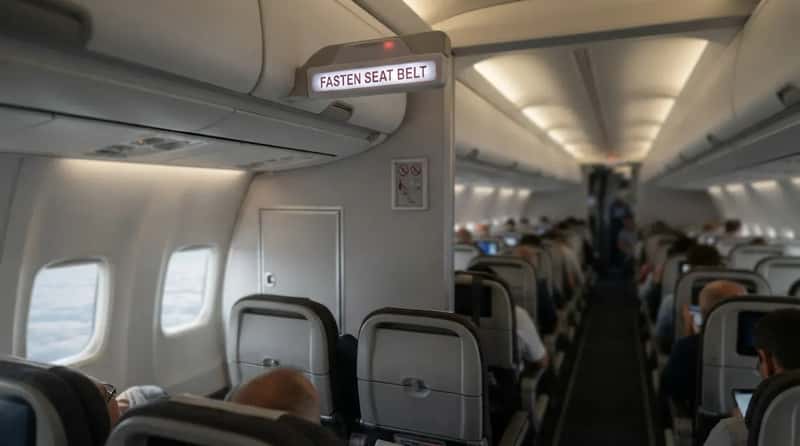
Passengers grumble when the sign stays lit during smooth cruising, assuming it’s an overreaction. In reality, pilots often leave it on because they’ve received turbulence reports from other aircraft ahead on the same route, even if the air outside their own window currently feels still.
Passengers can prevent injuries from unexpected turbulence by keeping their seat belt buckled at all times.
Federal Aviation Administration
Regulators back this caution heavily, requiring passengers to stay seated and belted from the gate through the climb. The sign isn’t reading the air in your row – it’s reading a report from thirty minutes ahead.
#6 – There’s a Secret Handhold Hiding Above Your Seat
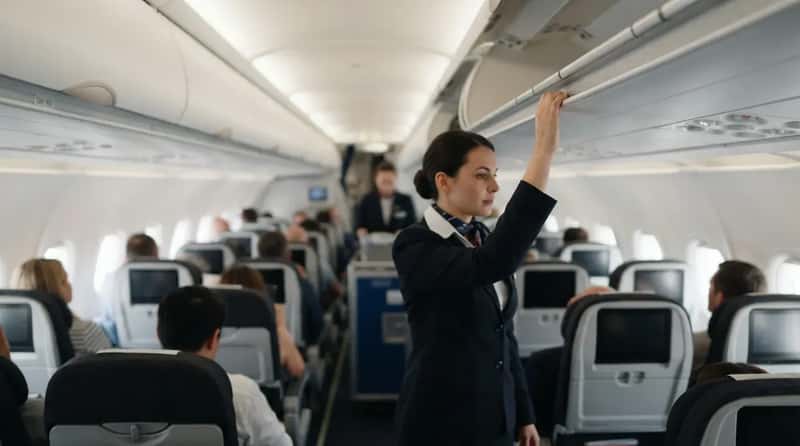
Most passengers never notice this detail exists, even after hundreds of flights. Beneath the overhead bins on many newer aircraft, a narrow rail runs the length of the cabin – cabin crew use it to steady themselves in turbulence, and passengers can grab it too, though not every plane has one.
Pilots and flight attendants rely on that rail constantly during service carts and drink runs, especially on bumpy long-haul legs. Passengers who spot it early have an easier time moving through the cabin without grabbing seatbacks or strangers’ shoulders. A handrail has been sitting above your head this whole time, and almost nobody notices it.
#5 – That Extra-Legroom Exit Row Comes With a Hidden Trade-Off
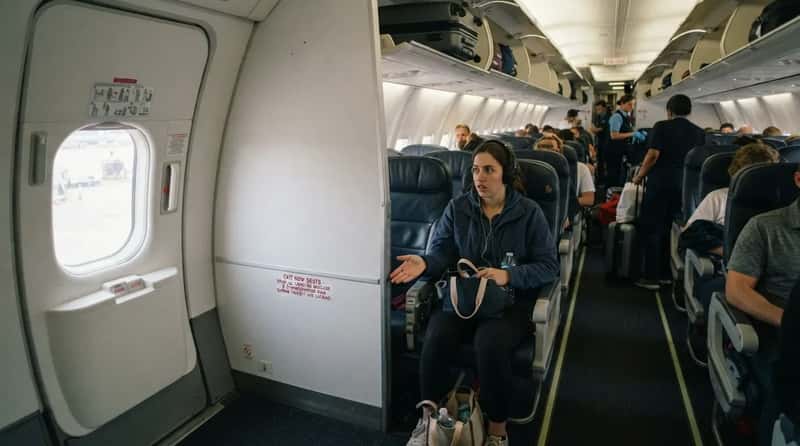
Exit rows look like a free upgrade, but there’s a catch pilots and cabin crew watch passengers discover too late. Bulkhead seats offer extra legroom but no overhead storage space above you during takeoff and landing.
That means your bag has to go somewhere else entirely for the flight’s most critical minutes, which can mean an inconvenient walk to retrieve it after landing. For flights over 12 hours, exit rows are often still worth grabbing anyway, since they can frequently be selected for free at check-in. The extra legroom is real – but so is losing your personal storage space for two of the flight’s busiest moments.
#4 – One Airline Proved Ending Cabin Service Earlier Cuts Injuries by 20%
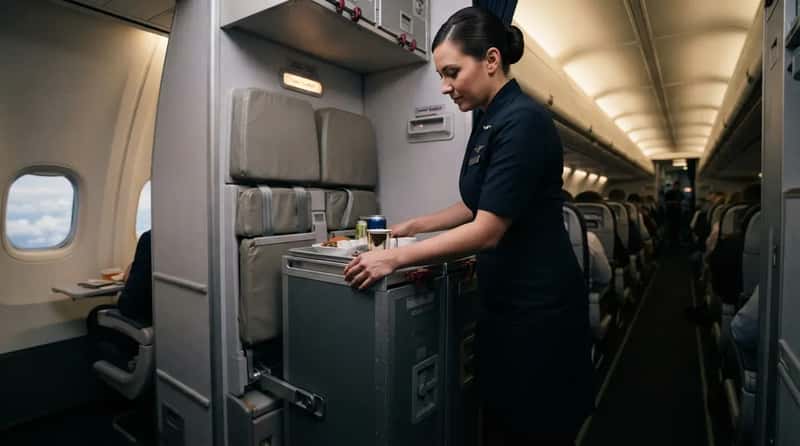
This isn’t theoretical – it’s measured data from a real operational change. Southwest Airlines shifted its procedures so cabin service ends at 18,000 feet instead of 10,000 feet, and that single change cut turbulence-related injuries by 20%.
The logic is simple: carts, hot drinks, and unbuckled flight attendants in the aisle are exactly what gets hurt when unexpected turbulence hits. Airbus reported 240 cases of severe turbulence between 2014 and 2018, with 30% occurring on long-haul flights. A single altitude change to a drink-cart policy measurably reduced real injuries.
At a Glance
- Southwest’s service cutoff change (18,000 ft vs. 10,000 ft) cut turbulence injuries by 20%.
- Airbus logged 240 severe turbulence events between 2014 and 2018.
- Roughly 30% of those severe turbulence cases happened on long-haul flights.
- Most turbulence injuries involve unbuckled passengers or crew caught in the aisle.
#3 – Nearly Every Turbulence Injury Happens to Someone Who Unbuckled
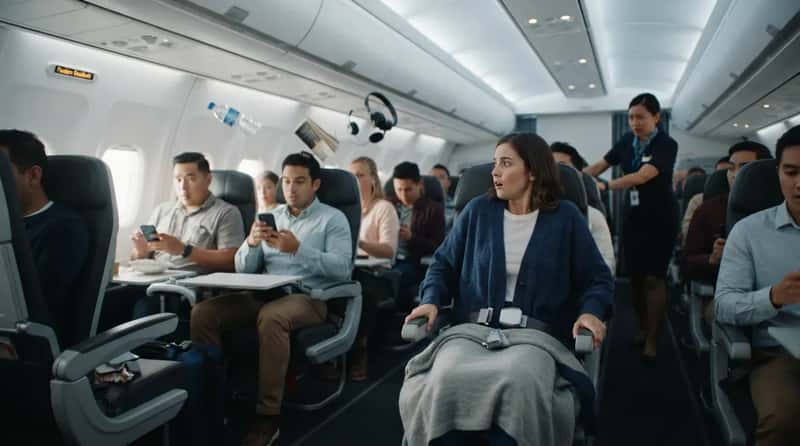
Pilots will tell you the pattern is remarkably consistent across incidents. Safety agencies strongly recommend keeping your seatbelt loosely fastened whenever you’re seated, even with the sign off, because most turbulence injuries come from unbelted passengers hitting the ceiling or cabin fixtures during sudden clear-air turbulence.
It’s rarely the passenger who stayed buckled that gets hurt – it’s the one who unclipped for “just a minute” during a calm stretch. Loose objects in the cabin can become projectiles too, which is why keeping the galley and aisle tidy matters just as much. The injury pattern isn’t random – it almost always traces back to an unbuckled belt.
#2 – First Class Isn’t Always the Smarter Long-Haul Buy
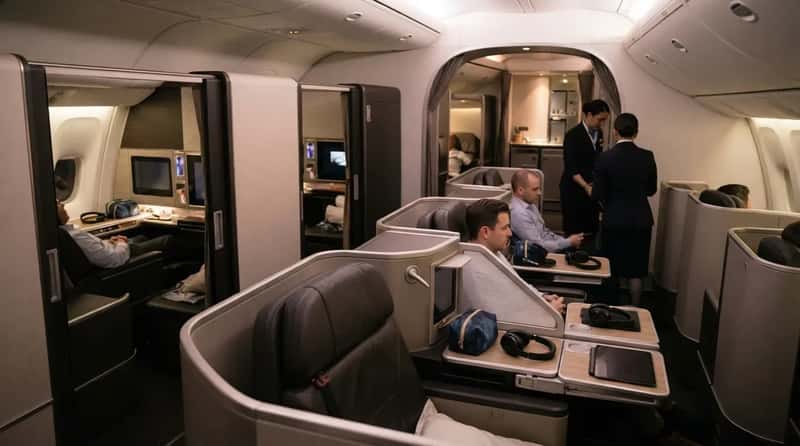
Here’s the take that tends to start arguments in the comments: pilots and crew who fly both cabins regularly aren’t convinced first class is worth the markup on most routes. It’s advertised with private suites, free-flowing champagne, and chocolate-covered strawberries, but compared to business class it often doesn’t earn its sky-high price tag when it comes to actual rest.
Business class frequently delivers 90% of the comfort – lie-flat seats, better food, quieter cabins – for a far smaller price jump than the leap from business to first. Most travelers assume first class is the ultimate flex, but insiders increasingly call it the least efficient upgrade on the plane.
#1 – The One Habit Pilots Wish Every Passenger Never Broke
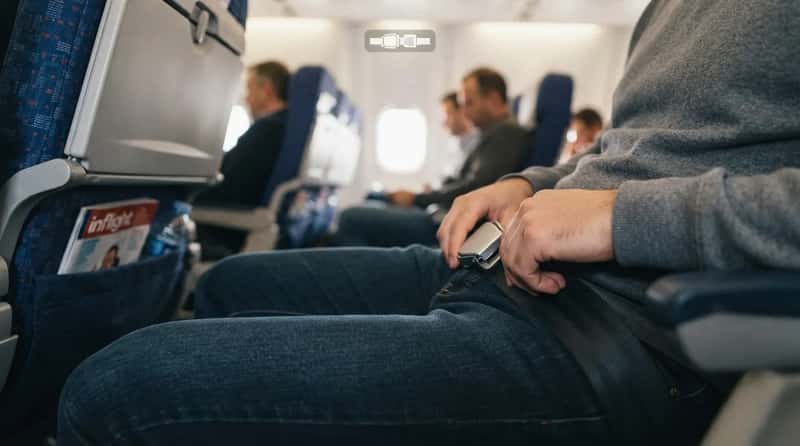
After every other detail on this list, pilots keep coming back to the same simple ask. Keeping your seatbelt on while seated is a single habit that eliminates the vast majority of turbulence-related injury risk, while the aircraft itself handles everything else.
It costs nothing, requires no skill, and works no matter how experienced a flyer you are. When crews warn that turbulence is coming, taking it seriously matters just as much as the belt itself. Every other tip on this list is optional. This one is the difference between a bumpy memory and an actual injury.
None of this is really about secrets – it’s about small, boring habits that pilots see prevent almost every real problem on a long-haul flight. The seatbelt stays on, the shade goes up, and the seat map matters more than the seat letter. The rest, as most captains will tell you, is just physics doing exactly what it’s built to do.
Which one of these surprised you the most? Drop it in the comments – and tell us if your last long-haul flight proved any of these right.