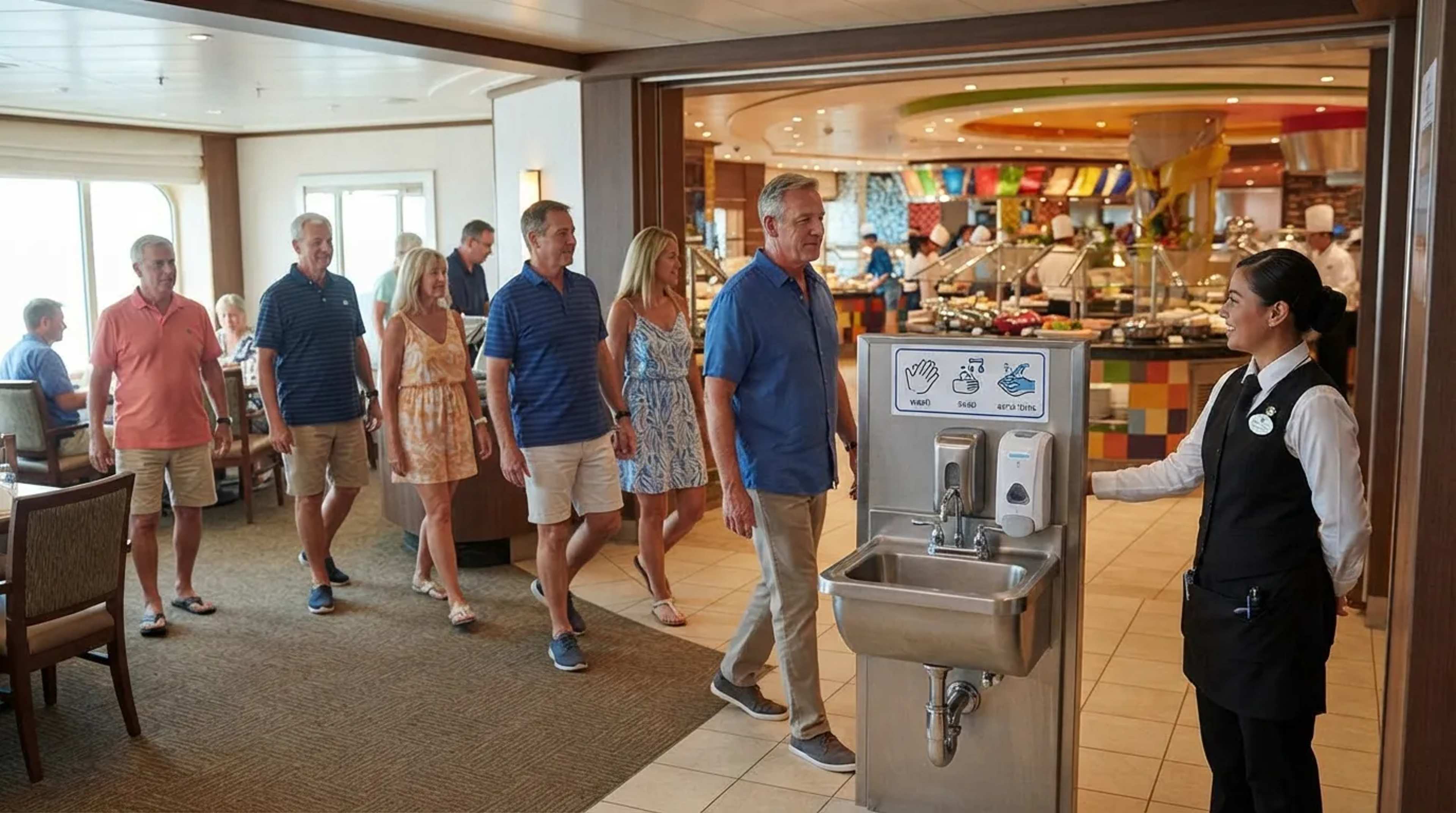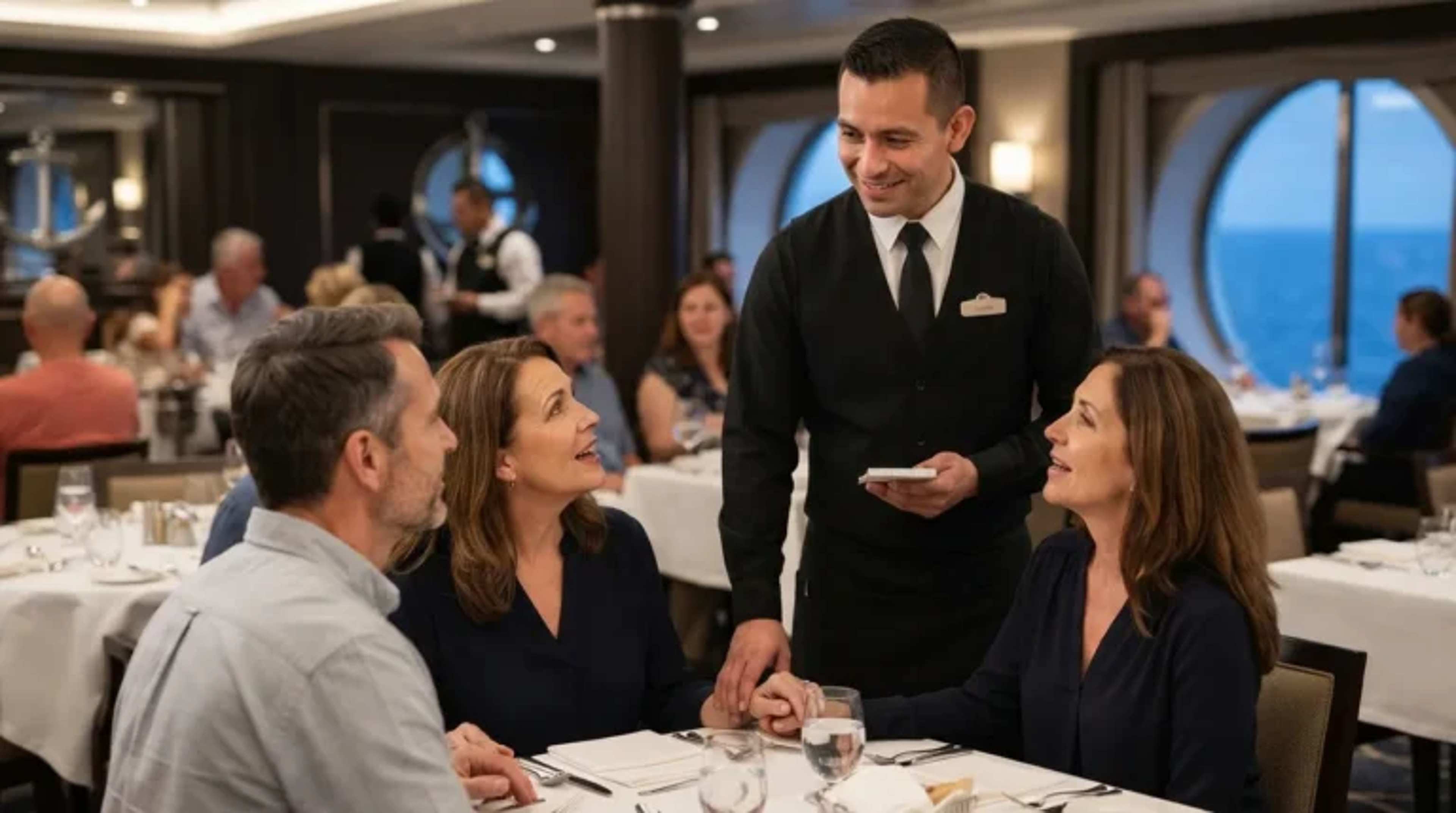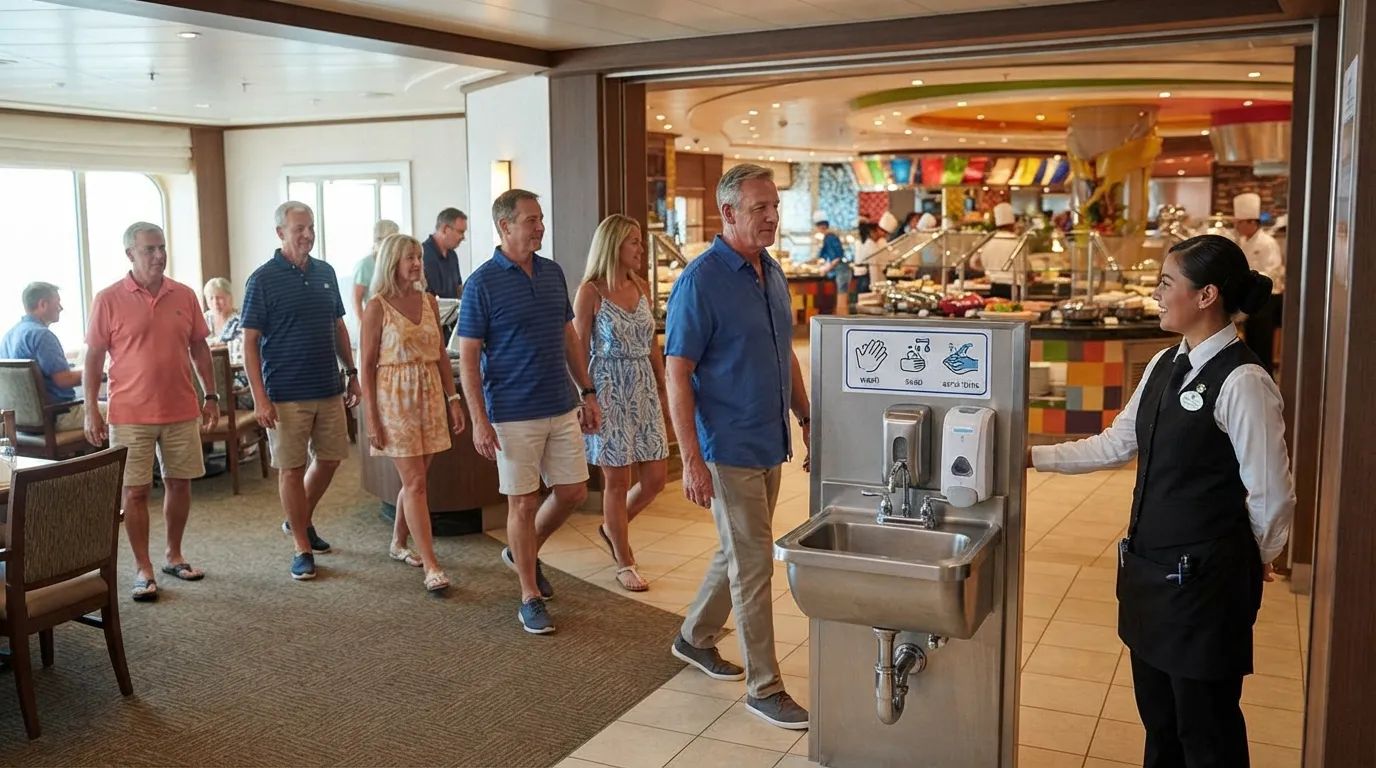
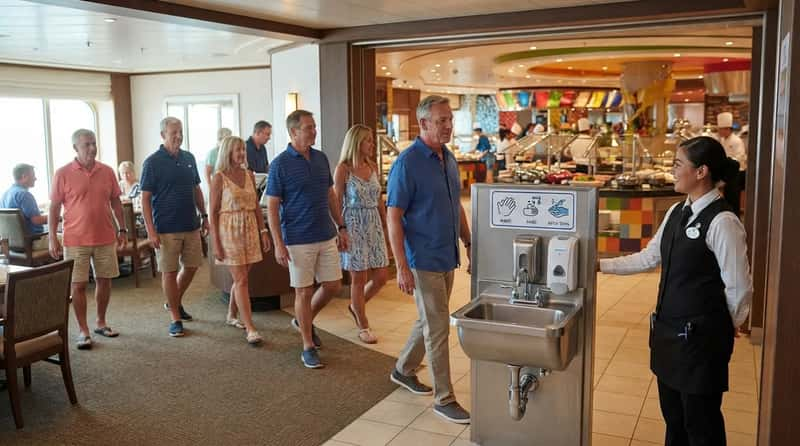
Cruise lines don’t hand out a “please stop doing this” list from their galley crews. They don’t have to. Look at what ships build around the buffet: handwashing sinks, crew greeters posted at the door, plastic barriers, and sometimes whole lines where crew do the serving. Every one of those is a clue about what keeps going wrong.
Most people assume the buffet’s big sin is simply eating too much. The habits behind the rules turn out to be smaller, stranger, and far more common, and they play out in plain sight on nearly every sailing. Here’s what the data and the onboard policies actually say, and the last habit is the one almost nobody thinks counts.
#23 – The Plate Piled Like the Food Is About to Vanish
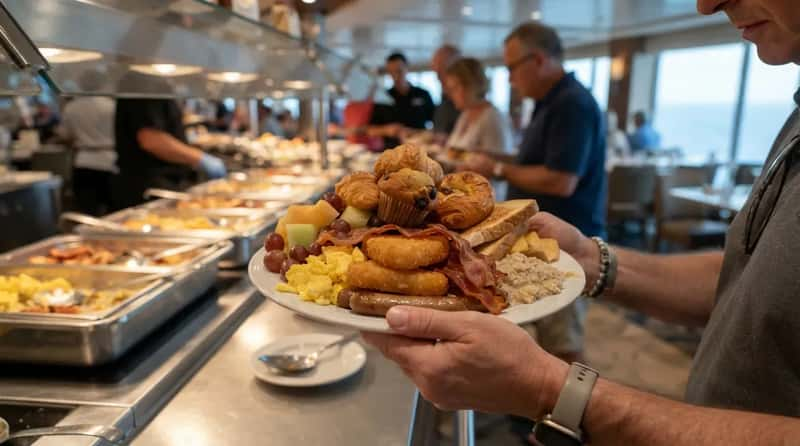
One cruise etiquette guide calls the amount of food thrown away on ships “staggering,” and says most of it comes from passengers overloading their plates. Nobody publishes exact figures. A Boston University student project notes that data is scarce, but estimates that as much as 30% of the food loaded each day goes to waste.
That 30% is an estimate, so treat it as a rough signal, not a hard number. The behavior behind it is easy to spot on any ship, though. The first plate is where it starts, and the next 22 habits only get more specific.
#22 – The Quick Splash That Doesn’t Count as Washing
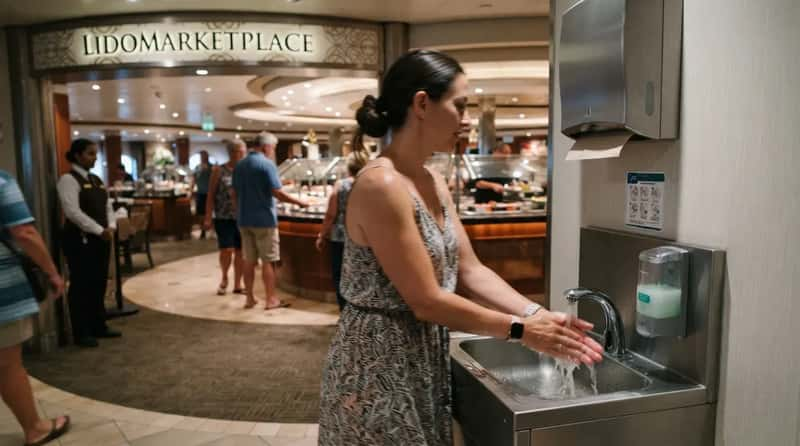
Frommer’s reports that the CDC recommends washing with basic soap and water for at least 20 seconds. That’s longer than most people expect. It’s also why real handwashing basins sit at the buffet entrance and anywhere food is self-service.
Cruise Critic points out that the CDC’s main advice is hot water and soap, especially before eating and after using the restroom. A fast rinse on the way past the sink isn’t that. It’s the most common shortcut at the door, and it undercuts the whole setup.
Fast Facts
- The CDC guidance Frommer’s cites calls for soap and water for at least 20 seconds.
- Hot water and soap matter most before eating and after restroom visits.
- Handwashing basins sit at buffet entrances and wherever food is self-service.
- A quick rinse on the way past the sink doesn’t count.
#21 – Trusting a Squirt of Sanitizer to Do the Job
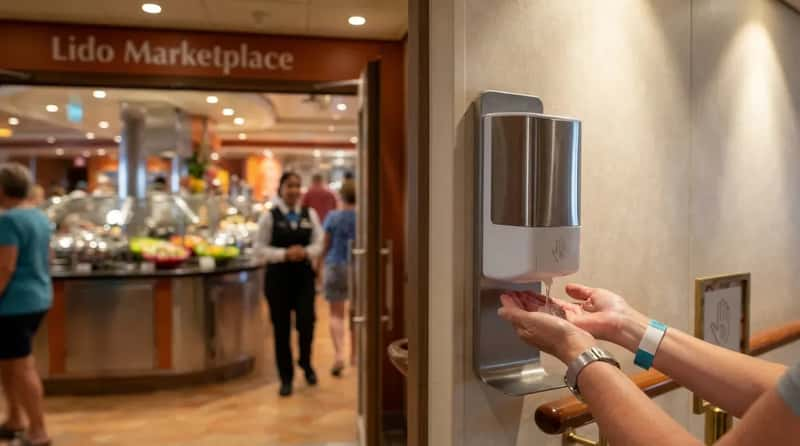
Here’s the part that surprises many travelers. Frommer’s notes that hand sanitizer is not fully effective against norovirus. The CDC says it is not a substitute for washing with soap and water.
Dispensers are everywhere on ships, which makes them feel like enough. They aren’t enough on their own. Think of them as the backup, not the plan.
#20 – Grabbing Food With Bare Hands
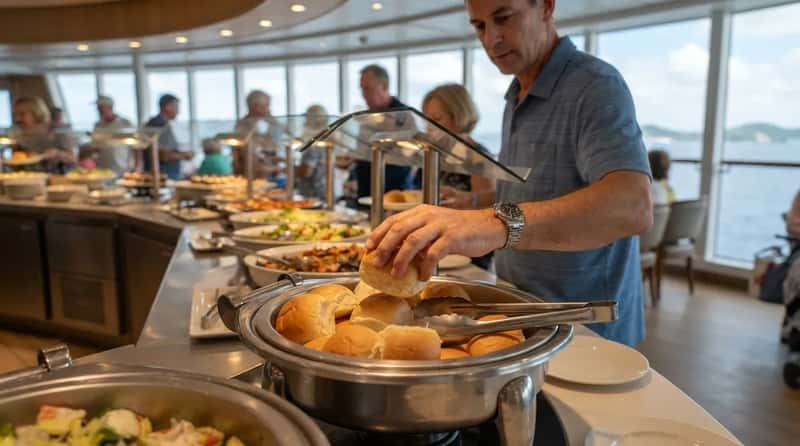
The Points Guy says crews do an excellent job, but buffets are one of the easiest places for germs to spread because they’re self-service. Its advice is blunt: never grab buffet food with your bare hands. That includes the “just one” roll.
One writer there describes watching passengers skip the utensils and grab food by hand. The tongs are right there, so skipping them is a choice. And sometimes the utensils themselves are where things go wrong.
#19 – The Sneeze, Then the Serving Spoon
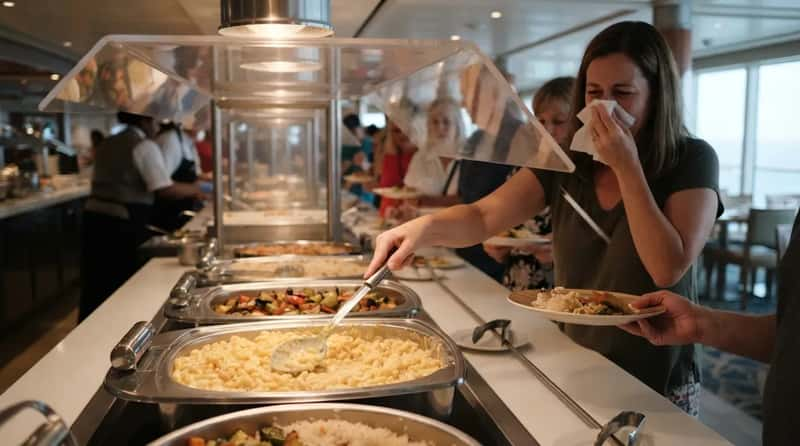
The Points Guy’s writer describes seeing people sneeze and then touch the communal serving utensils without washing up. Every guest after that touches the same handle. It’s a small moment with a very long line behind it.
Cruise Critic’s advice points the same way. If you touch the serving utensils, wash your hands afterward and before eating any hand foods.
#18 – Refilling the Same Plate All Morning
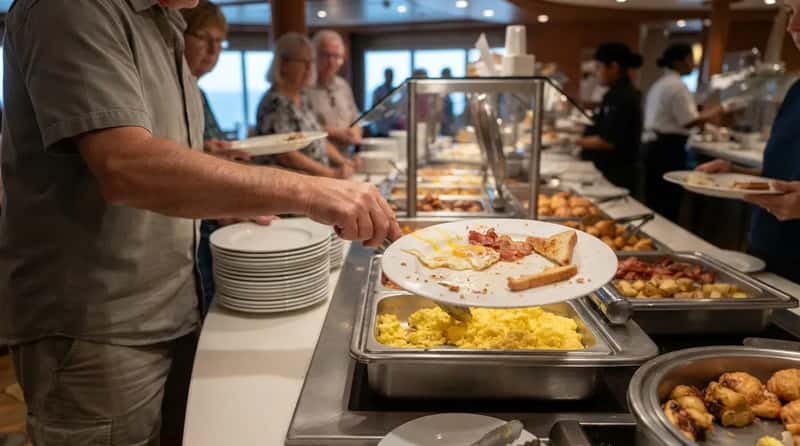
It feels efficient and even eco-friendly. But one etiquette guide warns that reusing your plate drags whatever is on it back to the serving line. That’s the opposite of what a clean line needs.
The fix is simple: leave the dirty plate at your table and start fresh for each trip. The ship has plenty of plates. The opposite habit, meanwhile, quietly feeds the waste pile.
#17 – One of Everything, Finished of Nothing
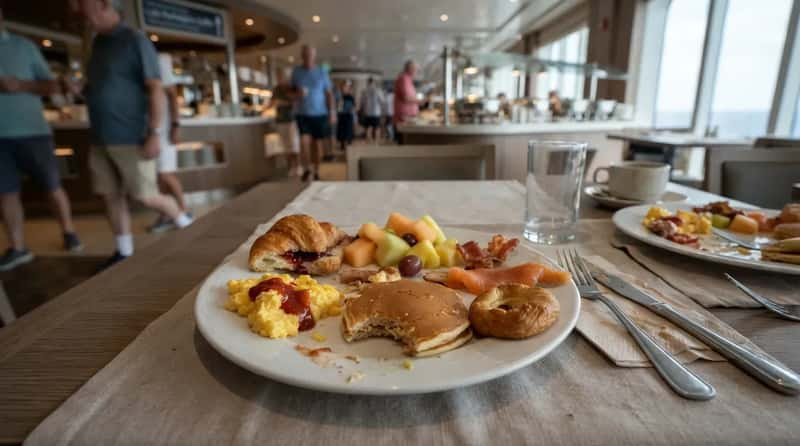
Cruises.com.au says the biggest waste comes from guests who order large meals or pick one of everything from the buffet and don’t finish their plate. The sampler plate looks like restraint. In practice it’s a lot of half-eaten food headed for the bin.
The site adds a fair note: cruise ships are highly experienced at working out how much food is needed based on cruise length and passenger count. So the galley plans for normal appetite, not for plates abandoned half full. That’s a gap the crew sees at every meal.
#16 – Camping at the Best Window Table
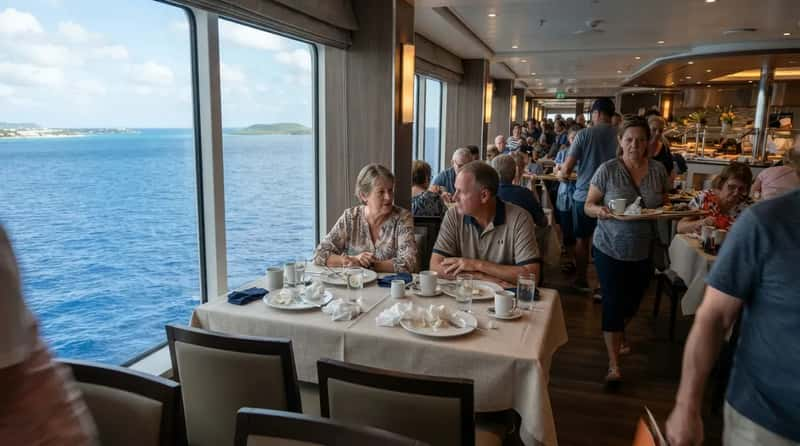
An etiquette guide says that during busy times, you shouldn’t camp out at a prime window table long after your plates are cleared. It calls this the buffet version of pool chair hogging. Anyone who has circled a packed room with a tray knows the feeling.
Here’s a slightly unpopular opinion: the view isn’t worth an hour of someone else’s lunch. Tables are the buffet’s real bottleneck. And the table problem can start before anyone even sits down.
#15 – Loading Up Before Finding a Seat
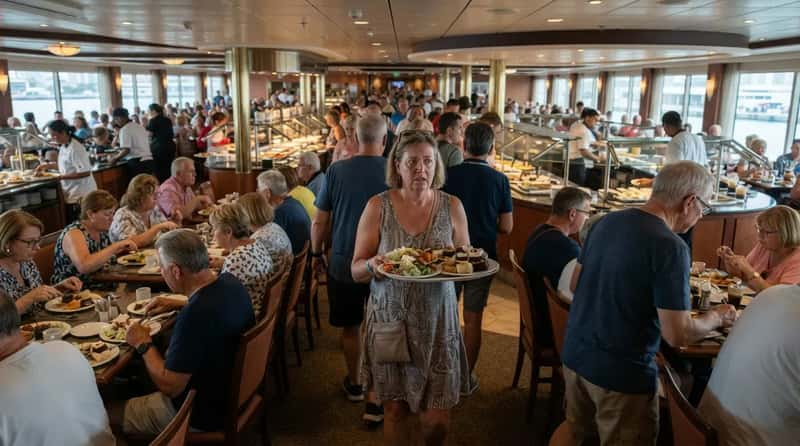
One guide describes the scene perfectly: standing in the middle of a packed buffet, full plate in hand, with nowhere to sit. Nobody wins in that moment. The line stalls and the food cools.
The same guide adds that buffet seating generally turns over quickly, but only if people use tables as intended. Seating is a shared system. The biggest crowd of the whole cruise, though, hits before the ship even leaves port.
#14 – The Boarding-Day Stampede
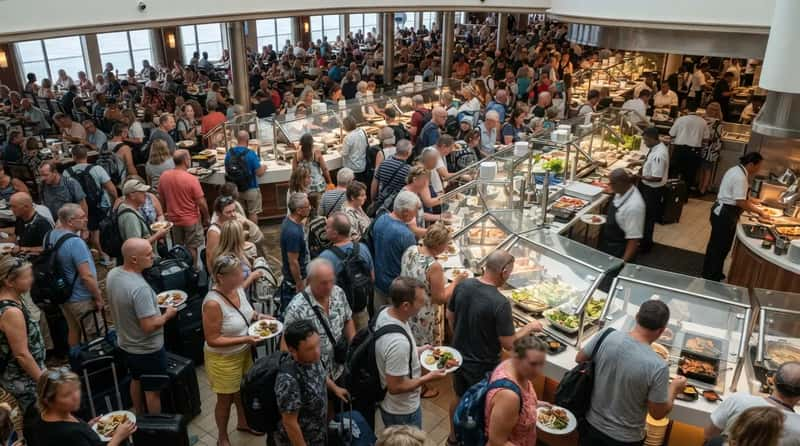
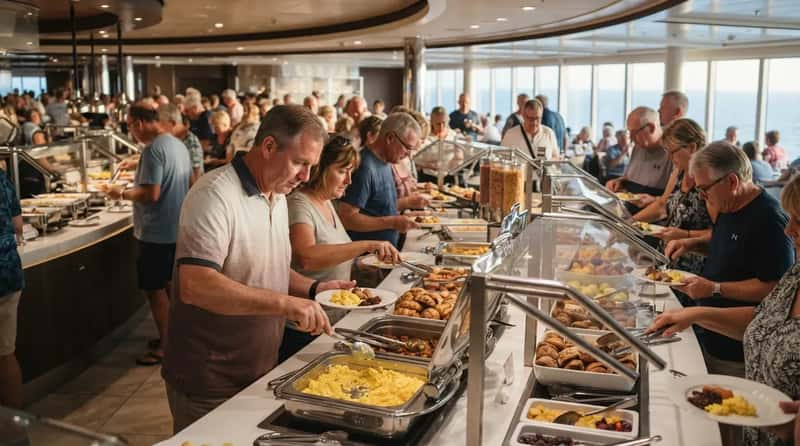
AOL reports that on embarkation day, most people board and head straight to either the pool deck or the buffet while waiting for their cabins to be ready. That means thousands of hungry guests arrive at the same hour. The buffet becomes the default waiting room.
For galley crews, that’s a rush they can predict but can’t spread out. Everything about the first lunch, from the lines to the seats, gets tested at once. If you want a calmer buffet, wait and go later. Some lines try to solve the crowding another way entirely.
#13 – Grumbling About the Crew-Served Line
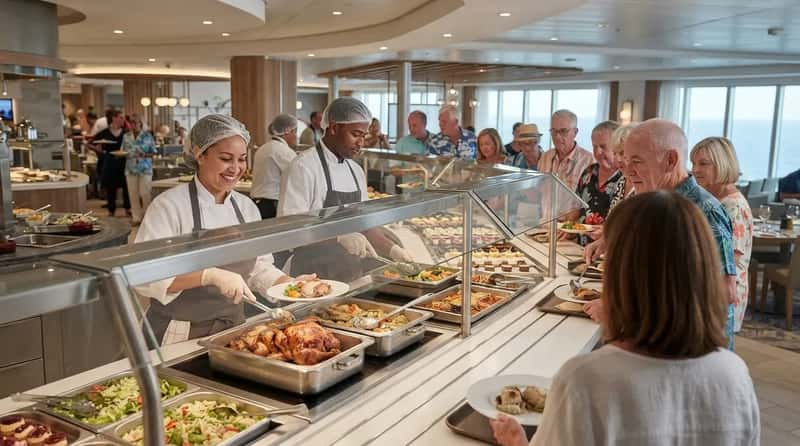
Some cruisers call crew-served buffets a downgrade. AOL reports that Disney Cruise Line, Marella Cruises and Holland America Line run crew-served buffets, and Princess offers them on certain ships such as Sun Princess. The Points Guy’s writer sees the other side: it can be considered an upgrade.
AOL says there’s a side effect, too: it stops people piling up their plates and wasting food. You may miss the freedom, but the system quietly solves two problems at once.
#12 – Believing the Crew Eats Your Leftovers
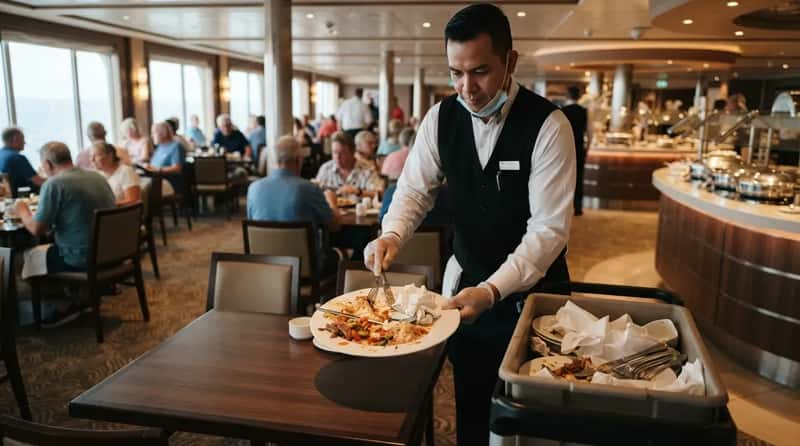
This is one of the most repeated cruise myths, and it’s false. Cruises.com.au says crew only eat food that never left the galley, not what passengers leave behind. Your abandoned plate doesn’t get a second life.
It gets stricter. The same source says a crew member caught nibbling on passenger food without permission can be fired. So “someone will eat it” is no reason to leave extra.
Quick Compare
- Myth: Crew finish what guests leave. Reality: They only eat food that never left the galley.
- Myth: “Someone will eat it.” Reality: Nibbling on passenger food without permission can cost a crew member their job.
- Myth: Leftovers get a second life. Reality: Abandoned plates are processed as waste.
The real route for that waste is far less comfortable to think about.
#11 – Assuming Wasted Food Just Disappears
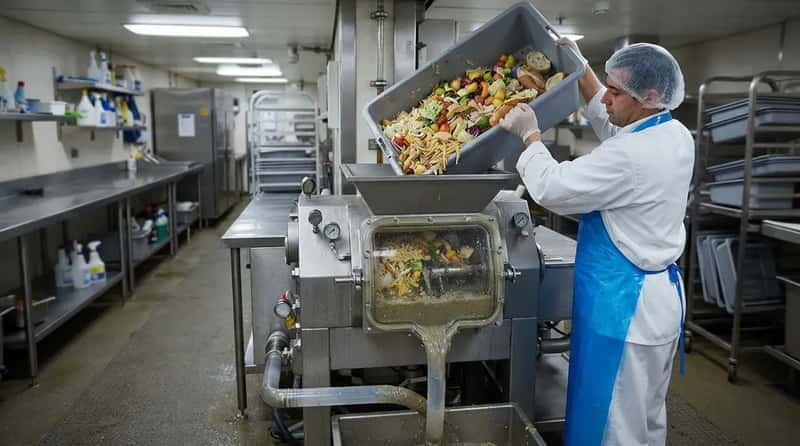
Cruises.com.au describes the process this way: food is blended with water into a smooth mixture, then disposed of in port, incinerated, or pumped out to sea in deep water away from coastlines. There is no magic bin. Every untouched plate gets processed somewhere.
The BU project argues ships should donate edible surplus at ports or compost, and avoid emission-heavy incineration. That’s an opinion from a student report, not an industry standard. Either way, the smartest fix happens before the food leaves the buffet.
#10 – Complaining When Self-Service Suddenly Stops
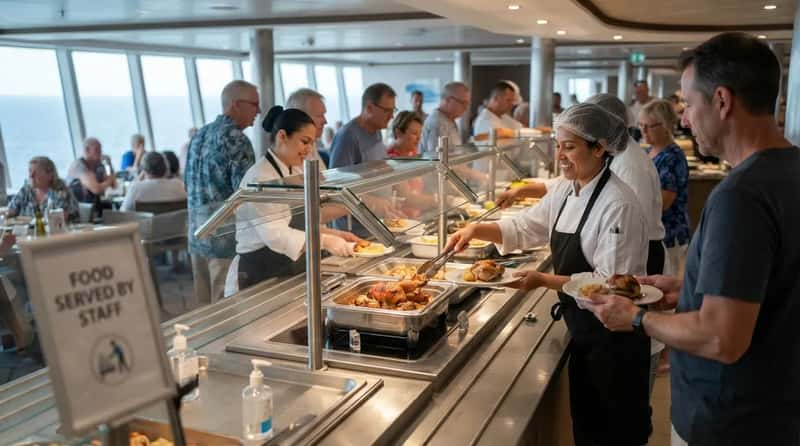
After one Star Princess voyage, the CDC confirmed norovirus had sickened 135 passengers and 16 crew. A passenger said the ship stopped letting people get their own food in the buffet line. Frommer’s says that’s typical: if an outbreak happens, the ship will probably halt self-service and have crew serve portions.
One cruise blogger notes lines don’t love doing this. Crew-serving every guest ties up staff who could be used elsewhere. So when it happens, it’s deliberate.
#9 – Skipping Soap Once You’re Back in the Cabin
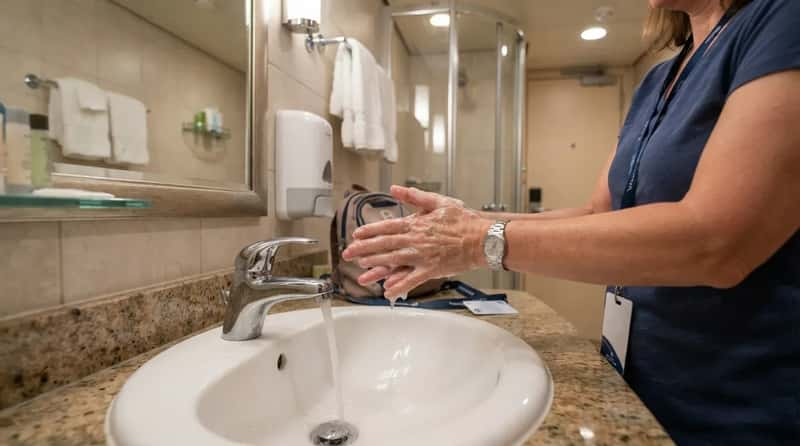
Most guests think about handwashing at the buffet door and nowhere else. Frommer’s advises washing your hands in your stateroom every time you’re in it. That’s a lot of sink time for a vacation.
The logic is simple. Germs travel on hands, railings, and room keys long before they reach a serving spoon. The buffet door is just the last checkpoint.
#8 – Sharing Forks and Tasting Off Each Other’s Plates
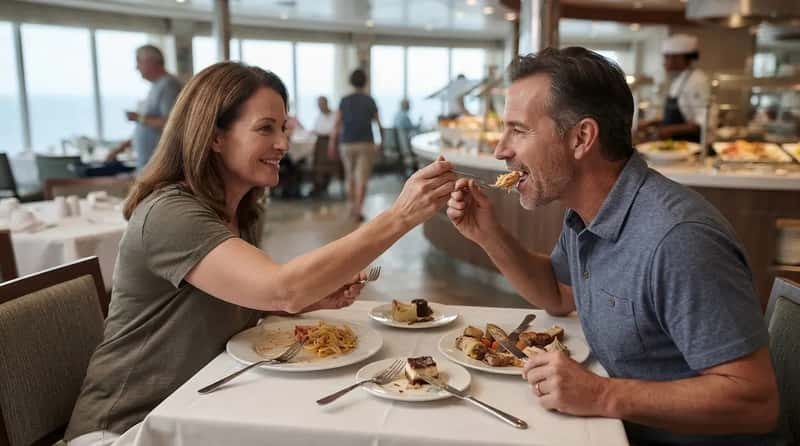
It feels friendly at a family table. But Cruise Critic notes that on ships, norovirus is typically spread through physical contact with ill people or the surfaces they touched. The list of risky behaviors includes sharing food or eating from the same utensils.
A buffet is built around shared tools, so you can’t fully avoid shared surfaces. What gets added at the table is a second layer of sharing. “Try this bite” is the habit that cuts against everything the line is trying to control.
#7 – Treating Every Outbreak Headline as a Dirty-Kitchen Verdict
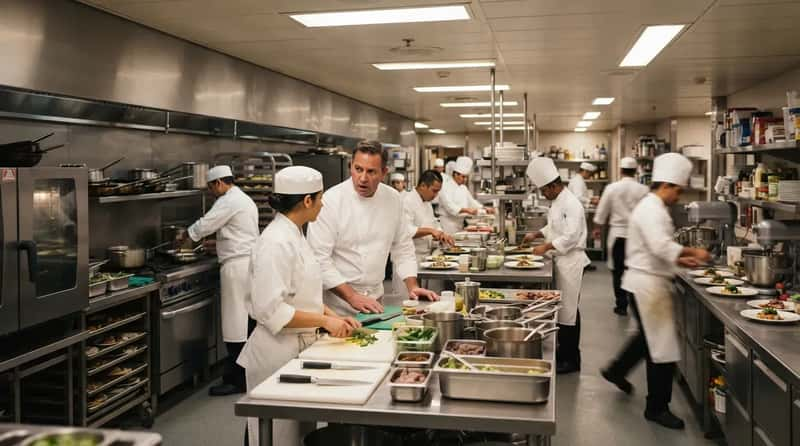
Cruise Critic says norovirus spreads in crowded places, not just ships, and cruise outbreaks get reported quickly because health officials track illnesses at sea. Industry group CLIA also argues that you’re more likely to contract norovirus in a healthcare facility or a restaurant than on a cruise ship. That’s an industry claim, so take it with that context.
That context matters to galley teams, who work under a very bright spotlight. But it doesn’t mean the numbers on ships are small or flat. The recent counts are climbing.
#6 – Shrugging Off the Record Outbreak Counts
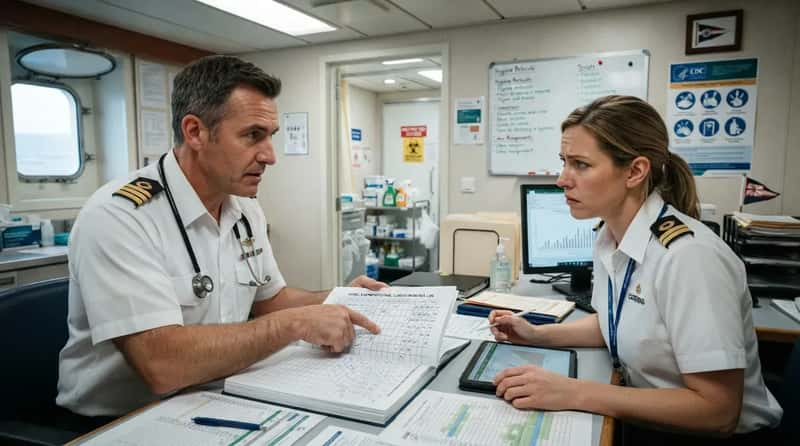
One recent tally says the CDC posted 23 cruise ship gastrointestinal outbreaks in 2025, up from 18 in 2024 and 14 in 2023, with norovirus behind 18 of them. Other counts differ by a few. A cruise law blog had reached 20 outbreaks by October 2025 and called it the most ever reported.
The same blog argues the industry treats outbreaks as unavoidable and quickly blames passenger hygiene. That’s a legal commentator’s view, and the cruise lines would push back. But everyone agrees on one thing: the numbers are up.
At a Glance
- 2023: 14 CDC-posted outbreaks.
- 2024: 18 outbreaks.
- 2025: 23 outbreaks in one tally, with norovirus behind 18.
- Counts vary by source, and one law blog had logged 20 by October 2025.
#5 – Making the Buffet the Default for Every Meal
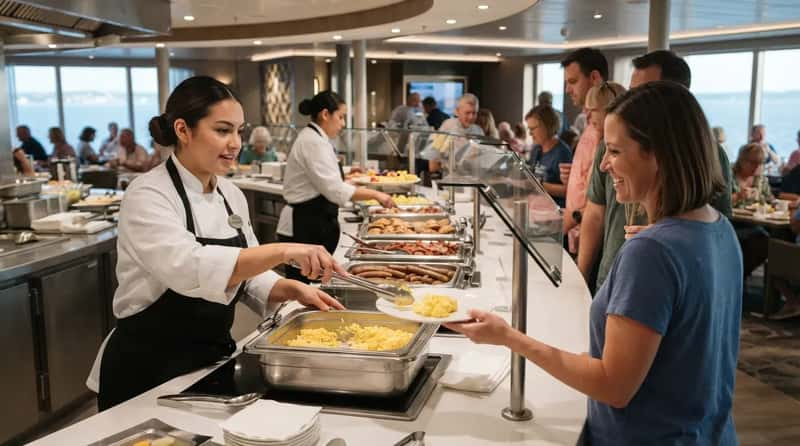
The Points Guy suggests that if you want extra protection, you can choose onboard restaurants where waiters serve you at your table or hand you food at a counter. It admits buffets are fine. It just points out the trade-off.
Some will call that overcautious on a vacation built around abundance. Here’s the counterpoint: your plate tastes just as good when someone else holds the tongs. Meanwhile, the crews who run the line have been fighting one habit with a song.
#4 – Walking Past the Hand-Wash Greeter
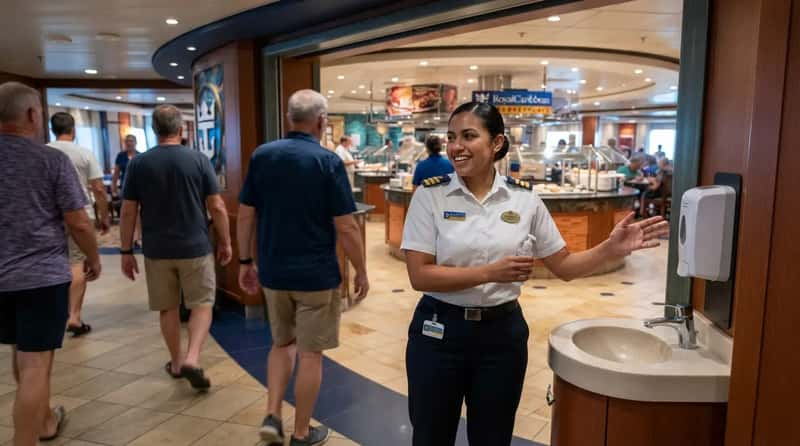
On Royal Caribbean ships, a character called Washy Washy has stood outside dining venues for about 15 years. The character sometimes offers a spritz of sanitizer and sometimes directs guests to nearby sinks to scrub up before eating. One writer complains that a lot of passengers willfully ignore the signs, sinks, and dispensers.
Imagine doing that job all day. You sing, you point, and guests step around you. It may be the most visible sign of what crews would change first.
#3 – Assuming Someone Else Is Policing the Ship
In April 2025, CBS News reported that all full-time employees in the CDC’s Vessel Sanitation Program were laid off, leaving 12 U.S. Public Health Service officers and one epidemiologist. The CDC’s response, as reported, was that inspections and outbreak monitoring had not stopped. Passengers were left with mixed signals.
The takeaway isn’t panic. The program has been inspecting ships since 1975, and its status is a moving target. It just shows that the habits at your own table matter more than any rule on paper.
#2 – Eating to “Get Your Money’s Worth”
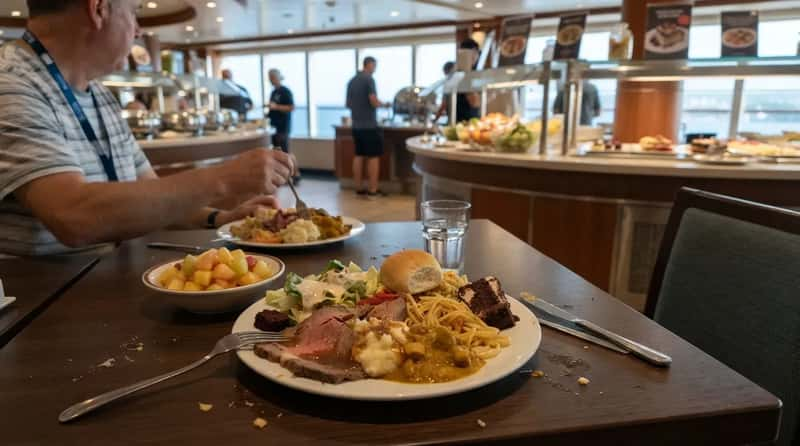
Cruise buffets are, in most cases, all-inclusive, so you can tuck into as much food as you’d like. That’s the whole appeal. It’s also the root of the “I paid, so I’ll take it all” plate.
The cost doesn’t vanish, though. As one cruise outlet puts it, every piece of wasted food is money down the drain. Another notes that food waste could affect cruise prices and the overall guest experience. The money is already spent. The only question is whether the food gets eaten.
#1 – Walking In With “I Feel Fine”
Here’s the habit that matters most, and it doesn’t look like a habit at all. Frommer’s warns that if you board carrying sickness, you could start making other people ill within 24 to 48 hours. And you may be carrying norovirus and not know it yet.
That ship’s October 2025 outbreak left 74 passengers and 1 crew member sick. A single skipped wash before a single plate can start it. That’s why the sinks, the greeters, and the crew-served lines exist.
The buffet isn’t going anywhere. Neither, it seems, are the habits.