Most people think senior discounts at parks begin and end with one famous pass. They don’t. Across federal land, state parks and even county systems, there are quiet price cuts for older travelers that almost never show up on the entrance sign.
Some are free. Some need a phone call. Some hide fine print that decides whether you save $5 or $500, and one of them just got a surprising new twist in 2026. Here’s what the fee pages actually say.
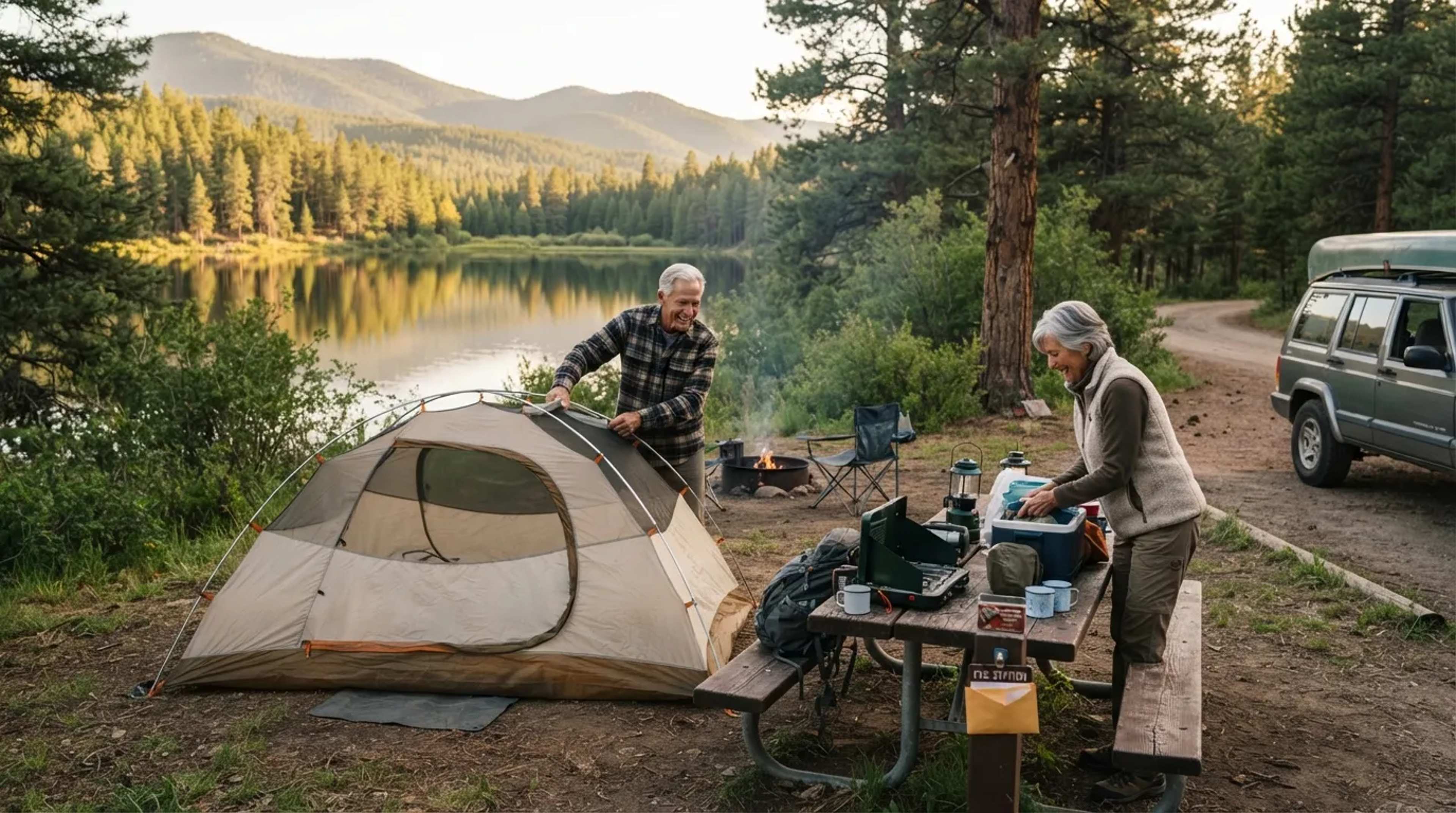
#23 – Maryland’s $10 Lifetime Pass Cuts Camping in Half on Weeknights
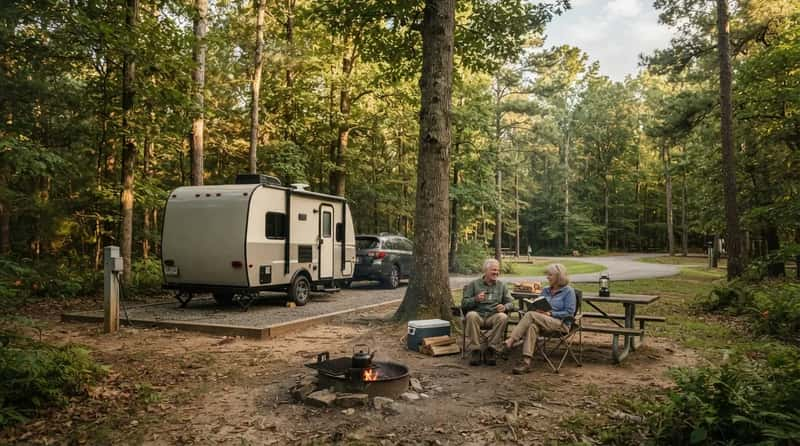
Maryland has one of the cheapest senior deals in the country. For a one-time $10, anyone 62 or older can get lifetime free admission to Maryland state parks and 50% off camping fees Sunday through Thursday. That is a single payment, not a yearly renewal.
The catch is the calendar. The camping discount covers Sunday through Thursday and excludes holidays. One roundup lists no residency requirement, but state rules can change, so confirm before you drive. A single weeknight stay can plausibly cover the entire $10 pass. Next up is a pass that costs even less.
#22 – Ohio’s Golden Buckeye Card Costs Nothing and Still Slashes Camping
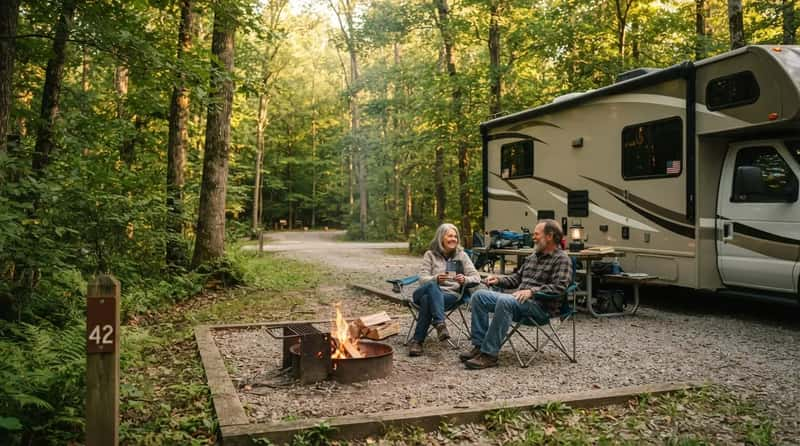
Ohio’s version of the senior perk is free. The Golden Buckeye Pass costs nothing for Ohio residents 60 and older, which makes it younger than most programs on this list.
It offers 50% camping discounts on weeknights. Ohio state parks have no entrance fees, so the savings come entirely from camping. The age bar is 60, two years lower than the federal pass. Most visitors never ask about it at check-in.
But that’s nothing compared to what Florida does with a single age number at #21…
#21 – Florida Quietly Halves the Base Campsite Fee at 65
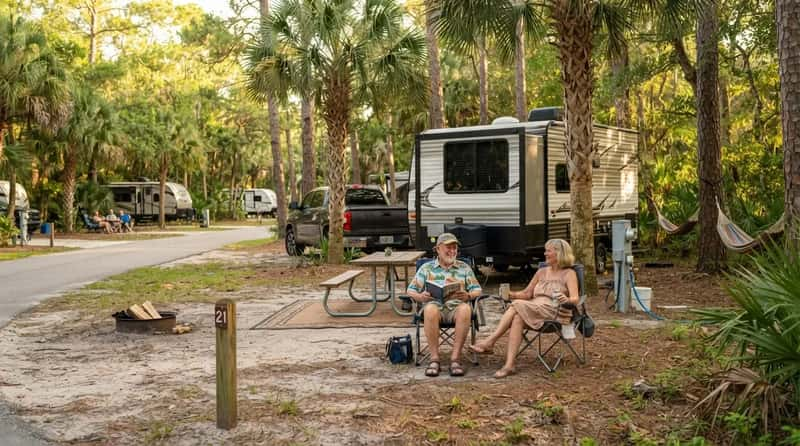
Florida’s discount is real, but it comes with conditions. A Florida resident age 65 or older may get 50% off the base camping fee at many state park campsites. Out-of-state visitors shouldn’t count on it.
The fine print matters here. Reservation and utility fees are excluded, and one roundup says the discount applies only to family or full-facility campsites. It is also not a free entrance pass, which is a common mix-up. Your savings show up on the camping line only.
At a Glance
- Age: 65 or older
- Who qualifies: Florida residents
- What you save: 50% off the base camping fee
- What’s excluded: reservation and utility fees
- What it isn’t: a free entrance pass
Still, Arkansas does something odd with weekdays at #20…
#20 – Arkansas Charges Seniors Half Price Early in the Week, Quarter Off Weekends
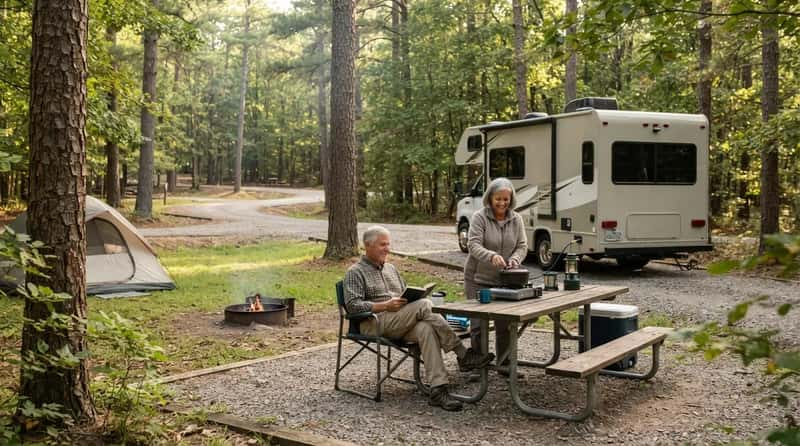
Arkansas splits its senior rate by day. Arkansas citizens 62 and over pay one-half the regular campsite fee Sunday through Thursday nights, with 25% off on weekends and holidays. That’s one of the deeper cuts on this list.
Out-of-state travelers get less. Visitors 62 and over from other states receive 25% off Sunday through Thursday and nothing on weekends or holidays. The same campsite can carry three different prices depending on your license plate and the day. Many campers never realize it.
Next, a southern state that keeps things simple at #19…
#19 – Louisiana Has Offered Seniors 62+ Half Off Campsite Stays
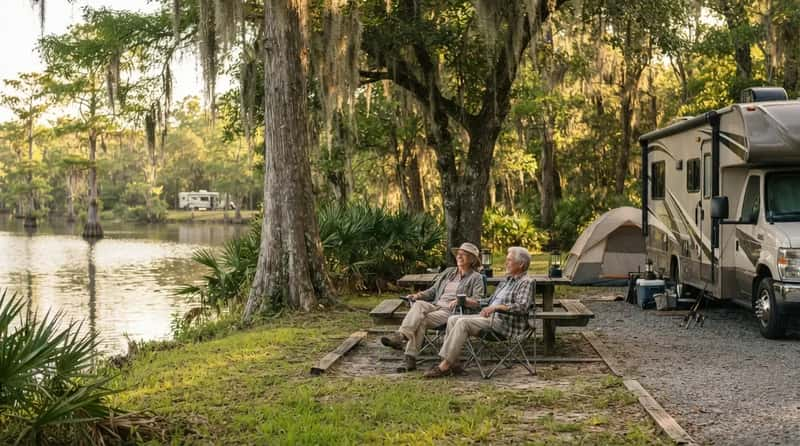
Louisiana’s deal is short and easy to remember. State parks there offer a 50% discount on campsite stays for visitors 62 and older. No complicated tier system, no weekday maze.
That source is a couple of years old, so treat it as a starting point. Park fees and eligibility rules shift often. The smartest move is a two-minute call to the park office before you book. Rangers can tell you exactly what applies to your dates.
The next one rewards a different kind of senior, the one who camps a lot, at #18…
#18 – New Mexico Lets 62+ Residents Camp All Year for One Flat Fee
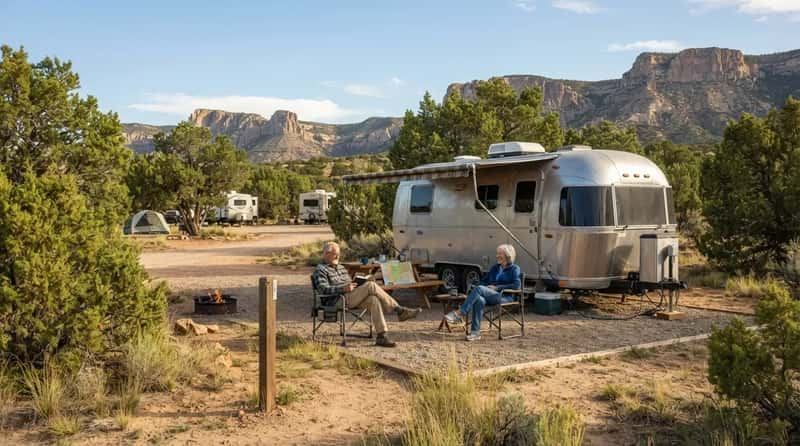
New Mexico’s pass is a camper’s dream on paper. Residents 62 and above can get an annual camping pass for $100, versus $180 for other residents. That one price covers a full year of camping.
Visitors from elsewhere face a steeper bill. One source lists $225 for out-of-state residents, no matter their age. The deal is built for locals, not road-trippers. If you live there, the math is hard to beat.
Virginia takes a different route at #17…
#17 – Virginia’s $40 Senior Pass Undercuts the Regular Price by More Than Half
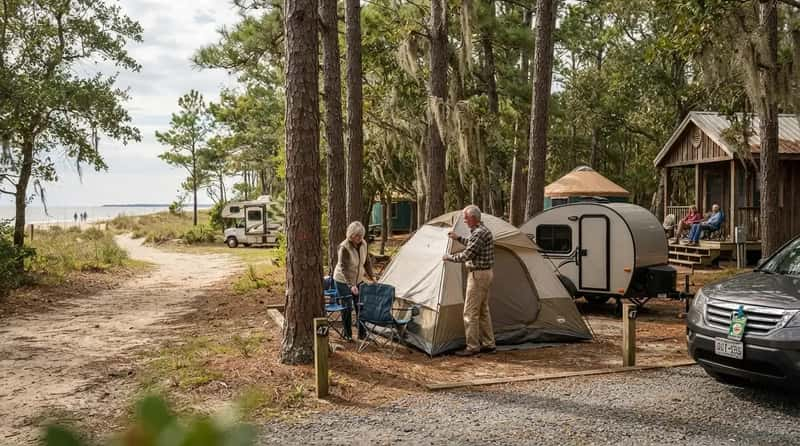
Virginia puts its discount on the pass itself. The senior pass is $40 a year for people 62 and older, compared to the normal $85. That’s a clean, easy-to-verify saving.
It’s worth a look if you visit often. At First Landing State Park, for example, visitors can camp in tents, RVs, yurts or cabins near the beach. The pass only pays off if you really go. A single visit rarely justifies it.
The next state turns one pass into a group outing at #16…
#16 – Utah Seniors Pay Roughly Half for a Pass That Covers Eight People
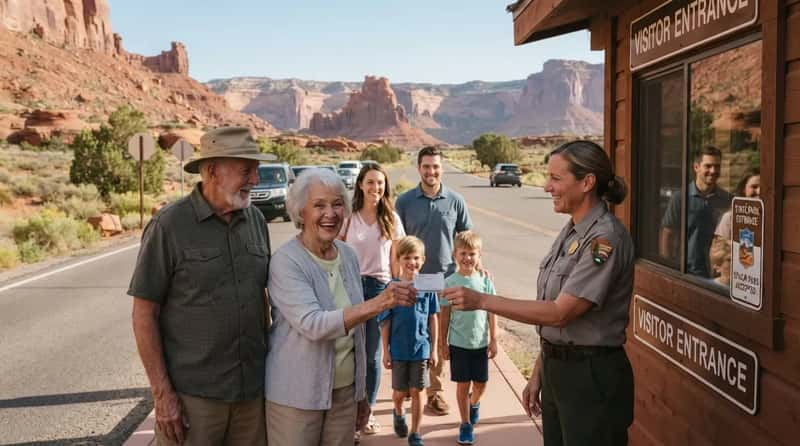
Utah’s senior pass is cheaper and reaches further than you’d expect. The state sells an annual park day pass to residents for $125, but seniors can get it for $65. That’s a sizable cut.
Here’s the surprising part. The pass can admit up to eight people, including the holder. One grandparent’s pass can cover a whole family outing. Check the current terms before you count on it.
Massachusetts has an even smaller price tag at #15…
#15 – Massachusetts Sells a Lifetime Parking Pass for Just $10
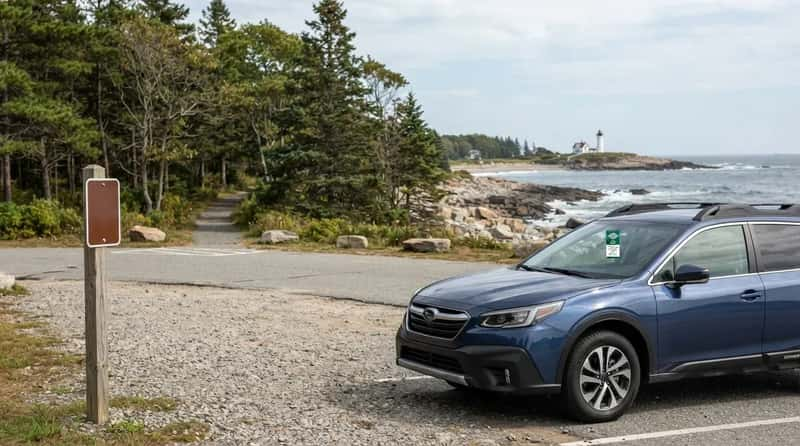
This one sounds too cheap to be real. Massachusetts residents 62 and older can get a lifetime parking pass for $10, which permits access to most state parks. It’s a one-time purchase.
Parking fees in popular coastal areas add up fast. A lifetime pass turns a recurring annoyance into a closed chapter. Few discounts on this list are cheaper to buy. The source is a few years old, so confirm current terms with the state.
Quick Compare
- Massachusetts: $10 one-time, lifetime parking pass for residents 62+
- Maryland: $10 one-time, lifetime free admission plus 50% off weeknight camping at 62+
- Ohio: free Golden Buckeye Pass, 50% off weeknight camping for residents 60+
- Oklahoma: free entrance for residents 62+ and their spouses
Oklahoma goes one step further at #14, and it’s free…
#14 – Oklahoma Waives Entrance Fees for Residents 62+ and Their Spouses
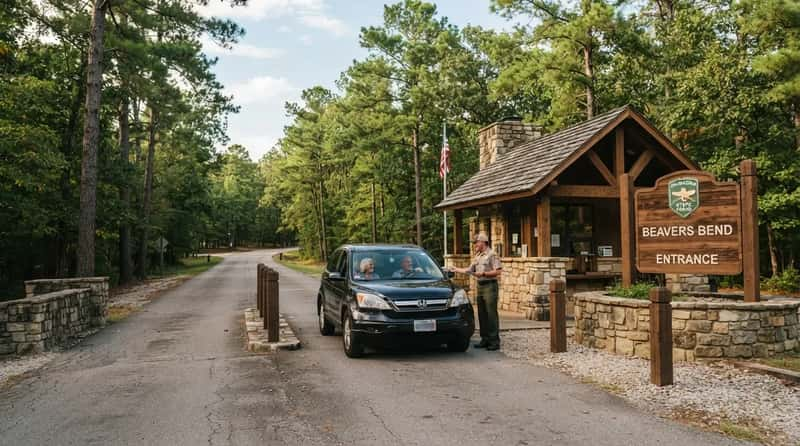
Oklahoma doesn’t just discount the entrance fee. It waives it for Oklahoma residents age 62 and older and their spouses. The spouse clause is the part many couples miss.
The fees aren’t huge, but they add up. Daily fees are charged per vehicle and start at $10, or $8 for residents. For a couple who visit often, a waiver beats any discount pass. You’ll need to show proof of age and residency.
West Virginia flips the calendar at #13…
#13 – West Virginia Gives 62+ Residents Half Off When the Crowds Leave
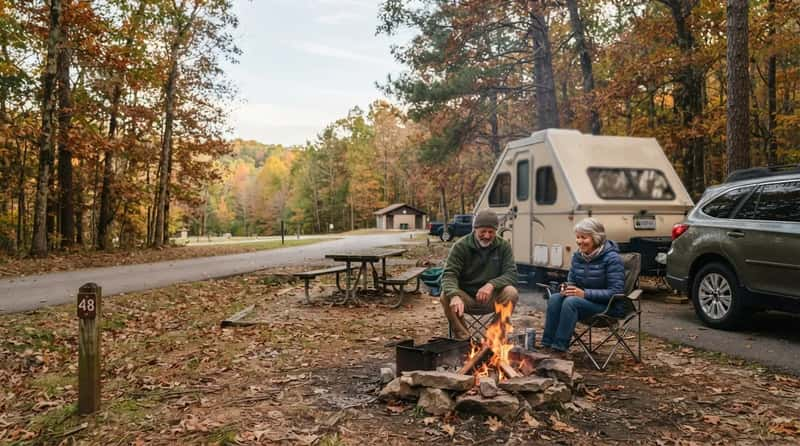
West Virginia ties its discount to the season. Residents 62 and older get a 50% campground reduction during the statutory off-season. A separate lodging discount may apply from age 60.
Off-season camping isn’t for everyone. Nights get cold and some facilities close. But quiet campgrounds at half price are a combination most travelers rarely see. Pack right, and the bargain is real.
Pennsylvania has a rare feature that most states lack at #12…
#12 – Pennsylvania Cuts the Base Camping Fee Without a Loud Residency Rule
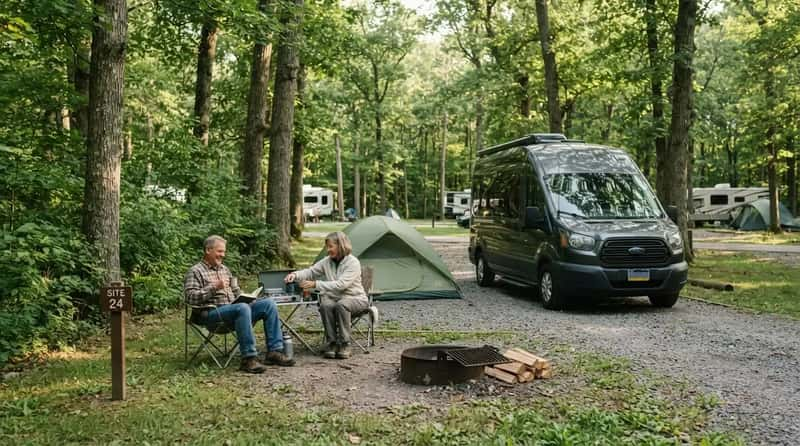
Pennsylvania offers older campers a discount on the base fee. Its state park system takes a cut off the base camping fee for those over 62. The discount applies to the site itself, not extras.
The detail that stands out is who can use it. One source says there’s no mention of a residency requirement, only that campers should carry proof of age. Out-of-state seniors may qualify, which is uncommon. Call ahead to be sure.
Colorado’s version comes with a surprising age at #11…
#11 – Colorado’s Senior Pass Starts at 64, Not 62
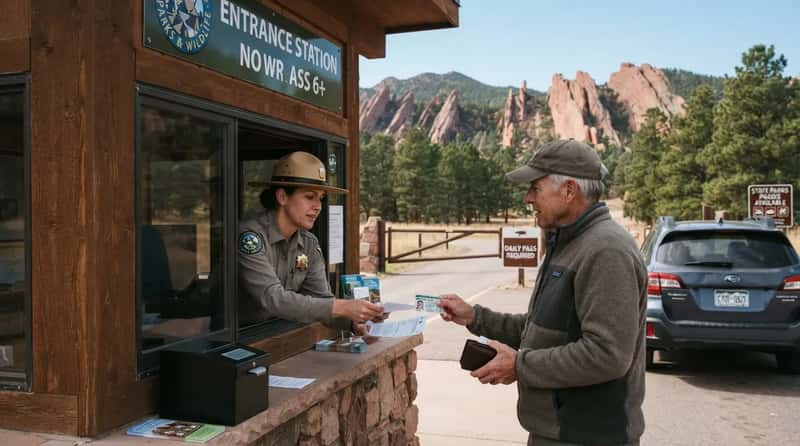
Colorado breaks the usual age pattern. It has an annual senior pass for those 64 and over that’s discounted by $10, but only for in-state residents. That’s a smaller saving than many others on this list.
The residency rules are strict. Eligible visitors must show Colorado-issued vehicle registration and a Colorado driver’s license. If you’re 62 or 63, you may be too young to qualify. Plenty of people assume they’re eligible and get turned away at the booth.
Not every discount is big, and California proves it at #10…
#10 – California’s Senior Break Is Just $1 for Day Use and $2 for Camping
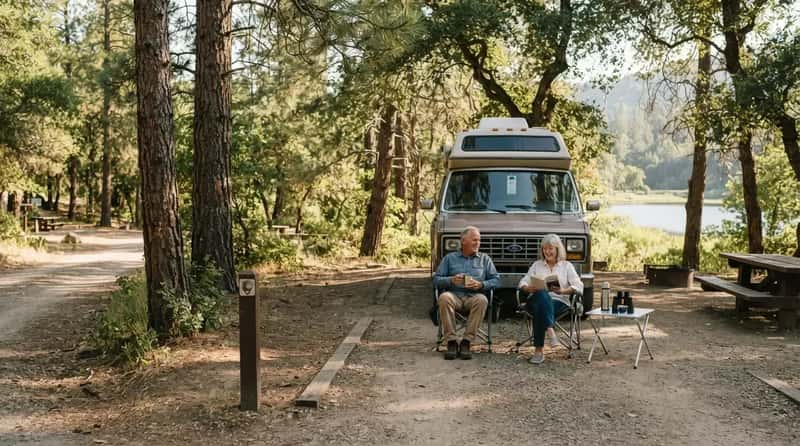
California’s discount is small, but it exists. With a valid ID, visitors get $1 off vehicle day use and $2 off family camping. That’s less than a coffee.
Compare that with the $10 lifetime passes elsewhere. It’s one of the thinnest senior perks on this list. Some travelers say it isn’t worth the bother. Others say free money is free money.
The next discount isn’t run by any state at #9…
#9 – Oakland County, Michigan, Hands Local Seniors a Free Annual Vehicle Pass
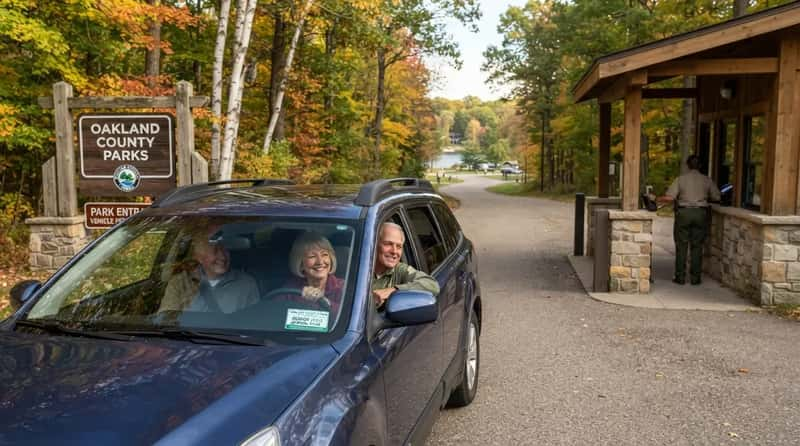
Some of the best deals come from counties. In Michigan, Oakland County operates several large parks and campgrounds, and an annual vehicle pass for county residents 62 and over is free. You won’t find it on a national list.
That’s the sneakiest lesson in this whole countdown. Local park systems often have their own senior breaks that no big website tracks. Your own county’s parks department may have one too. Look it up before you pay full price.
Now the federal discounts begin, starting with a lake you may have overlooked at #8…
#8 – Army Corps of Engineers Lakes Honor the Senior Pass at Half Price
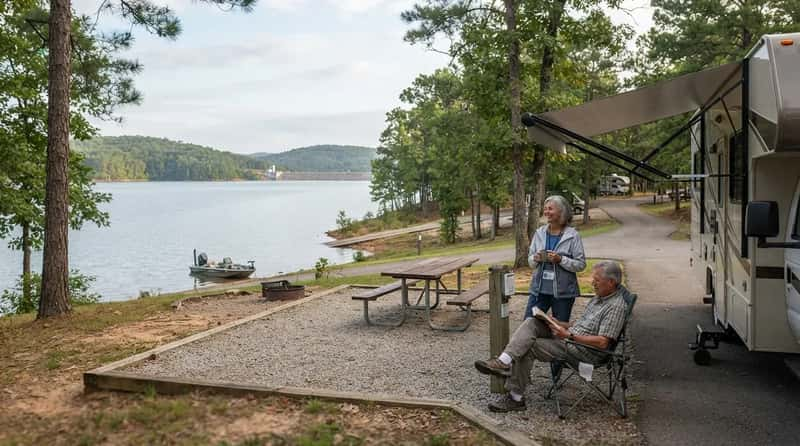
Many travelers forget that the Corps of Engineers runs campgrounds. The Senior and Access passes give free access to boat launch ramps and swimming beaches, plus 50% off campsites at Corps-managed campgrounds. Those lakes are often cheaper and quieter than the famous parks.
Corps campgrounds follow the federal rule. One district’s page says the discount applies to the campsite the cardholder is occupying. Boat ramps and swim beaches can be free with the same pass. That’s three savings from a single card.
Wait until you see how many agencies honor the same card at #7…
#7 – One Card Works Across Six Federal Agencies
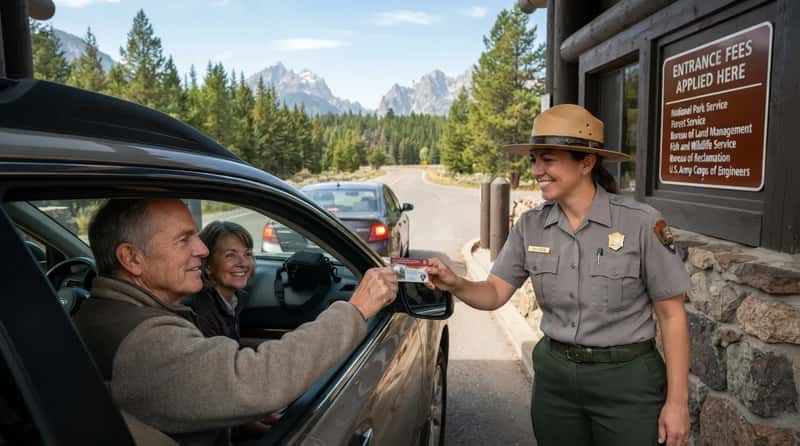
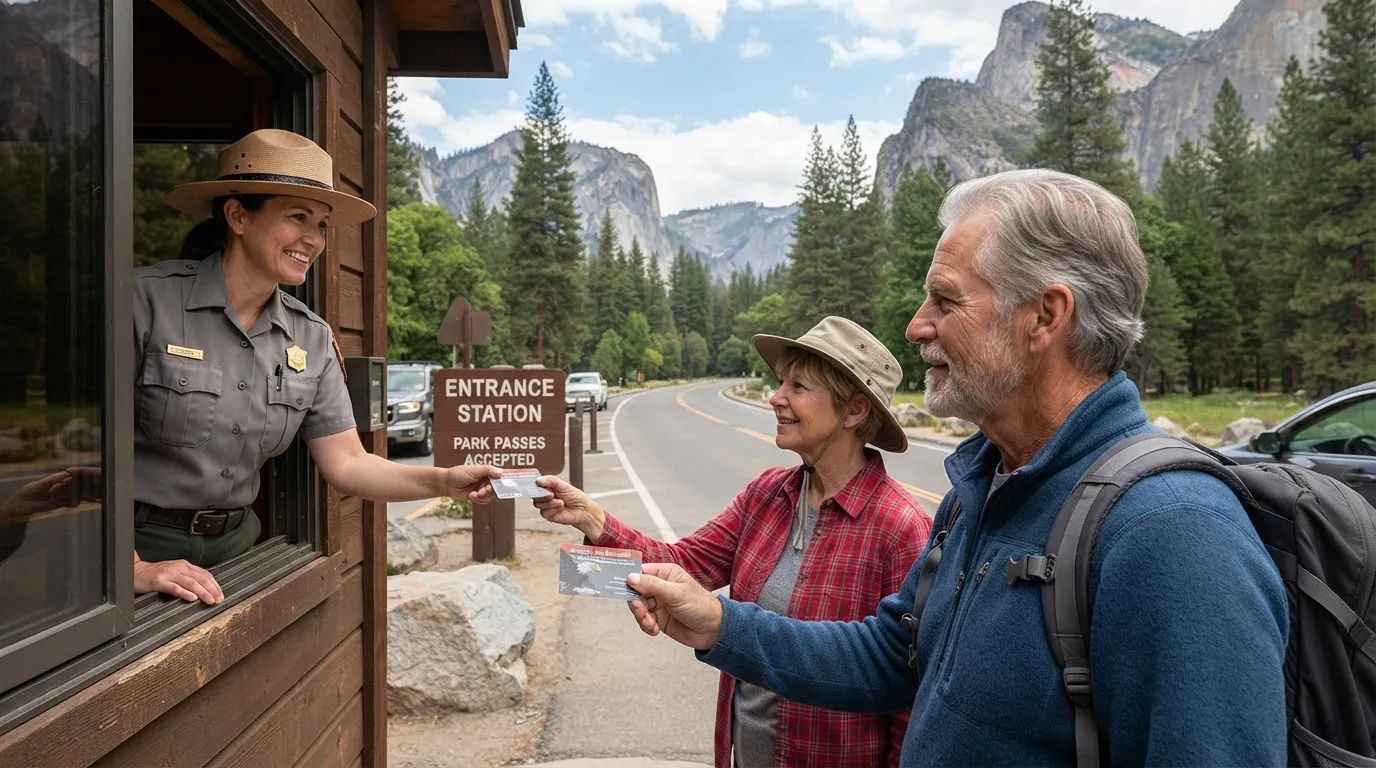
The Senior Pass isn’t just for national parks. It covers entrance fees and standard amenity fees at more than 2,000 sites run by the National Park Service, Forest Service, Bureau of Land Management, Fish and Wildlife Service, Bureau of Reclamation and Army Corps of Engineers. That’s a lot of ground.
It reaches beyond camping, too. It can give 50% off amenity fees like boat launches and cave tours. Most seniors only flash it at the gate of a big park. The rest of its value sits unused in their wallets.
Fast Facts
- More than 2,000 federal recreation sites
- Six agencies: NPS, Forest Service, BLM, Fish and Wildlife, Reclamation and the Corps
- Covers entrance fees and standard amenity fees
- Can take 50% off extras like boat launches and cave tours
The next feature saves your whole family money at #6…
#6 – The Pass Covers Everyone in Your Car
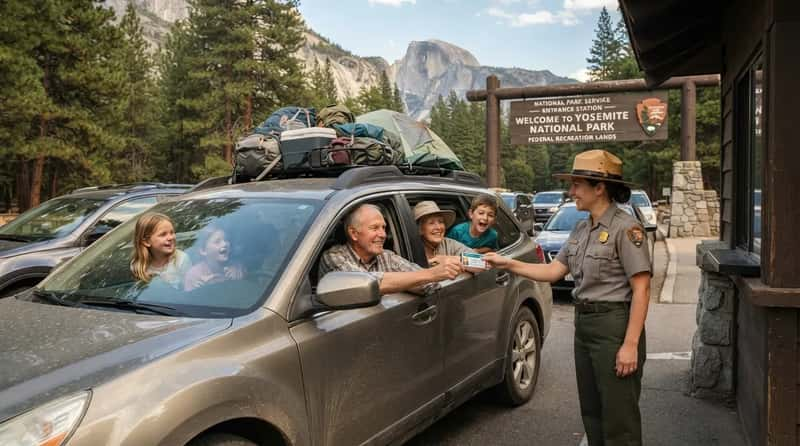
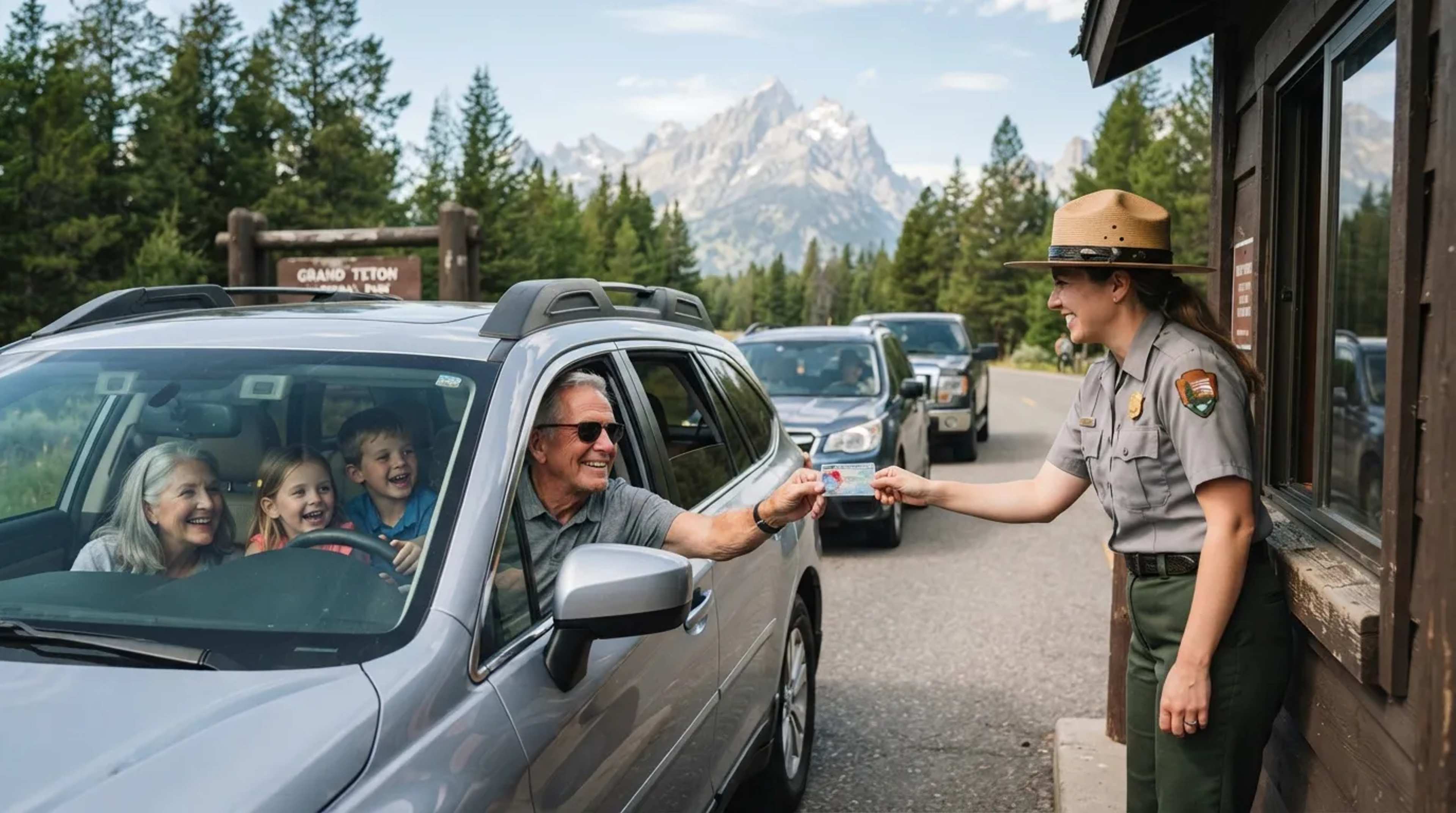
This is the part people forget to mention. At sites that charge per vehicle, the pass covers the holder and every passenger in a private, non-commercial vehicle. That includes the grandkids in the back seat.
Per-person sites work differently. There, it covers the holder plus three adults. One senior in the car can unlock free entry for the entire group. Younger relatives often have no idea.
But here’s a trick that effectively splits the price at #5…
#5 – Four $20 Passes Can Be Traded In for a Lifetime Pass
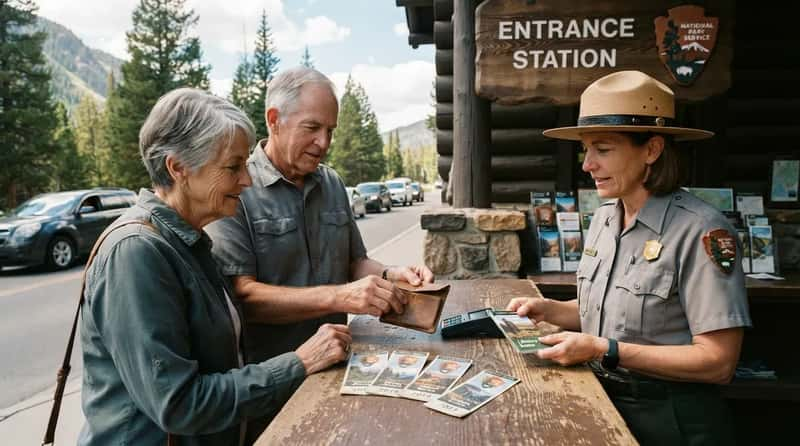
You don’t have to pay $80 upfront. Four annual Senior Passes can be traded in for a lifetime pass, which effectively spreads the $80 over four years. That’s a budget-friendly way in.
The sources describe it as a little-known option. One calls it a tip that most guides miss and warns against throwing old annual passes away. Tossing the old cards can cost you the trade-in. Keep every one.
And if you already own a very old pass, you may be sitting on something valuable at #4…
#4 – Your Old Golden Age Passport Is Still Good
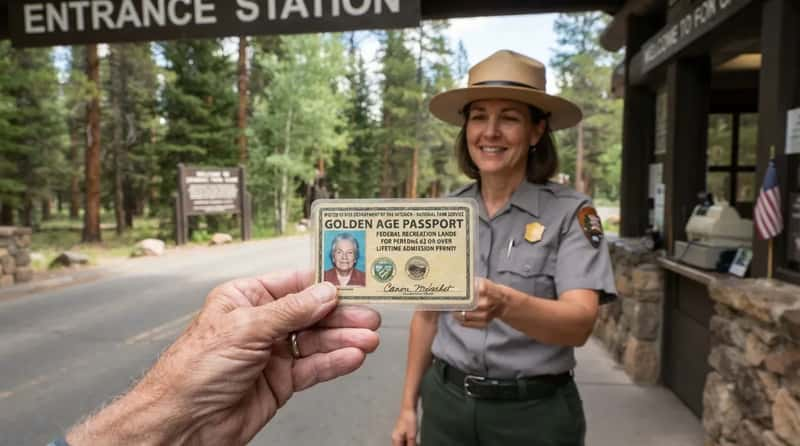
Some seniors have a pass from decades ago sitting in a drawer. The Golden Age Passport was replaced by the Senior Pass, but it’s still valid for anyone who has one. Nobody needs to buy a new one.
This is easy to miss, because people assume old documents expire. An aging card in a junk drawer may still earn you free entry and half-price camping. It’s worth digging out before your next trip.
Before you celebrate, though, the fine print at #3 deserves attention…
#3 – The Fine Print Is Where the Discount Quietly Shrinks

Half off doesn’t mean half off everything. The discount doesn’t apply to utility surcharges, cabins or flat-rate group sites. Your final bill may be higher than you expect.
Private operators are another gap. The pass does not cover fees charged by concessionaires, such as guided tours or lodges, operating inside a park. The lodge in the park doesn’t take your pass. Plan your budget around that.
So how fast does it actually pay for itself? That’s #2…
#2 – The Pass Can Pay for Itself in About Seven Nights
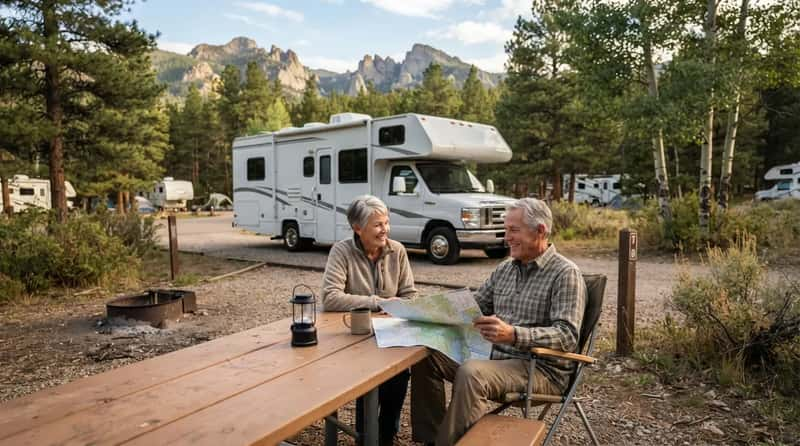
The math is simpler than it sounds. One estimate says the Senior Pass breaks even in about seven nights at federal campgrounds. It rests on typical site prices.
The assumptions are modest. Basic federal sites without hookups run $15 to $30 a night, which puts the saving at roughly $11 a night. That’s an estimate, not a guarantee. Camp a week or two a year and the pass is paid off in a season. After that, the savings are yours.
But the biggest surprise about the price comes at #1…
#1 – The $80 Senior Lifetime Pass Now Costs the Same as One Year for Everyone Else
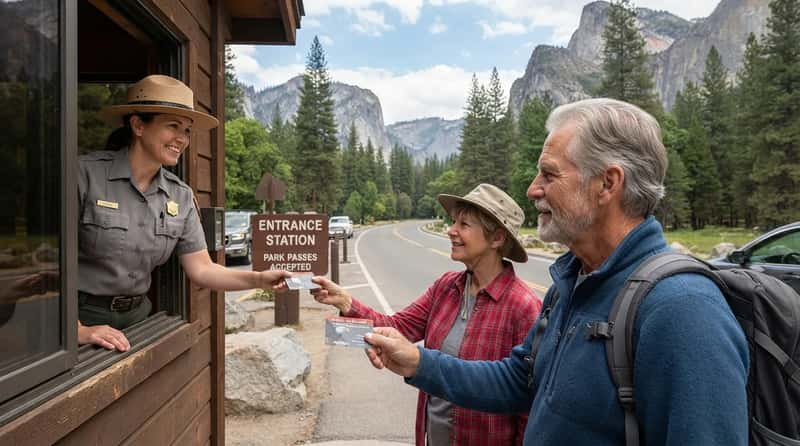
Here’s the twist that changes everything. The Senior Lifetime Pass costs $80, the same price the general public pays for a single year of the standard America the Beautiful annual pass. One group pays for twelve months. The other pays once and is done.
The gap gets wider for visitors from abroad. A new nonresident annual pass was introduced for 2026 at $250. For U.S. citizens and permanent residents 62 and over, the lifetime senior pass is arguably the best deal in public land recreation. Prices can change, so verify at Recreation.gov before you buy, and bring a photo ID.
Worth Knowing
- Senior Lifetime Pass: $80, paid once
- Standard annual pass for the general public: $80 per year
- New nonresident annual pass for 2026: $250
- Always bring a photo ID and check current prices at Recreation.gov
The biggest savings on this list aren’t tucked inside one pass. They’re scattered across federal, state and county rules that shift with your age, your zip code and even the day of the week.
The $80 Senior Pass is the strongest of them, but a free Ohio card, a $10 Maryland pass and an Oklahoma waiver prove that small local deals can quietly rival it. Most of them are sitting right there on a fee page, waiting for someone to ask.