Everyone assumes the real buffet chaos hits at dinner, when the crab legs run low and the line backs up to the door. Ask the people who actually run these places, though, and they’ll tell you the wildest stuff happens before 10 a.m., while the coffee is still brewing and the waffle irons are barely warm. Morning shifts pull in a very specific kind of guest, the kind who treats a sneeze guard like a personal dare.
Ask any longtime buffet manager what their mornings actually look like, and you’ll get a very different picture than the relaxed, syrup-drizzled scene on the brochure. Here’s what the people behind the counter actually deal with, hour after hour, before most customers have even finished their first cup of coffee.
#23 – The Coffee-Station Camper Who Never Orders Food
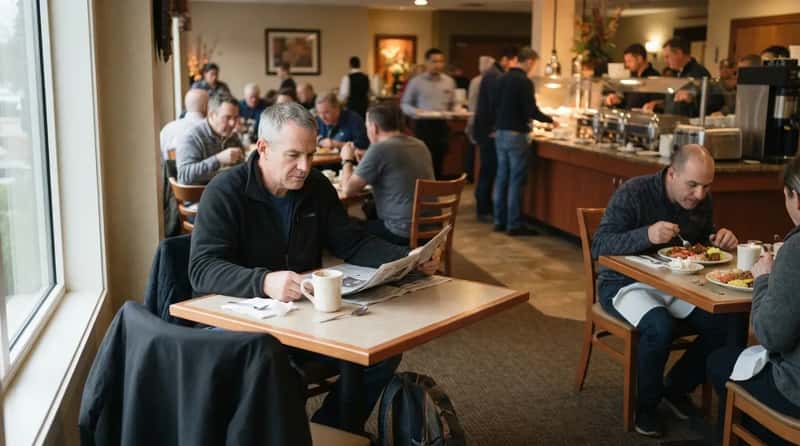
Every morning has one: a guest who claims a table, fills a mug, and never actually pays for the buffet itself. They’ll refill three or four times over an hour, treating the self-serve coffee station like a personal subscription service.
Managers rarely say anything the first time. But when it happens daily, with the same face, it starts eating into table turnover during the busiest hour of the shift. The real cost isn’t the coffee – it’s the occupied seat a paying family could have used.
#22 – The Waffle-Iron Toddler Left Unsupervised
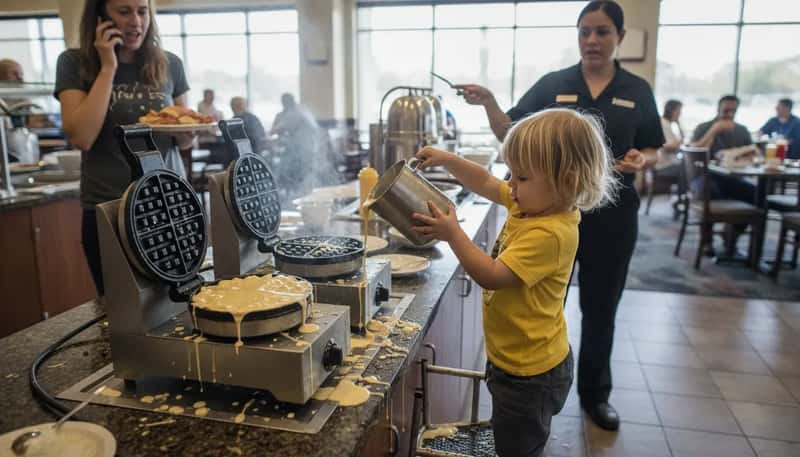
Hot batter, a spinning iron, and an unattended four-year-old is a combination every morning manager dreads. Kids left alone at the waffle station aren’t just a mess risk, they’re a burn risk, and staff end up playing referee instead of restocking the line.
Unsupervised kids near hot equipment is one of the most common safety complaints buffet staff quietly log every single morning. It rarely makes a review, but it makes every shift harder. And the moment a plate leaves the table unsupervised too, things get worse in a different way.
Fast Facts
- Most buffets are legally required to keep hot food above 135°F to slow bacterial growth.
- Federal food-safety guidance specifically warns against eating directly from a serving line.
- The 7-to-9 a.m. window is typically the busiest stretch of any all-day buffet.
- Kids-eat-free cutoffs usually land between ages 10 and 12 – exactly where most age disputes start.
#21 – The Purse-and-Napkin Smuggler
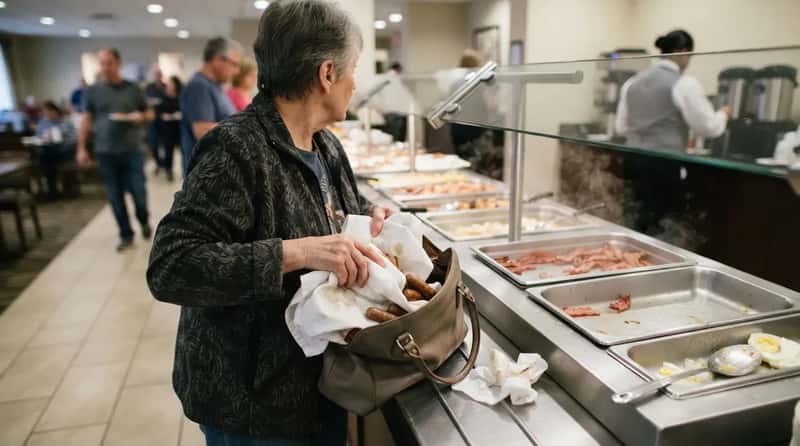
Bacon wrapped in napkins, sausage links tucked into a jacket pocket, a to-go container pulled from a diaper bag – morning smuggling is real, and it’s more common than most guests would admit. Staff say they spot it almost daily, usually from the same regulars.
It’s technically theft of food already priced into the buffet, and it forces kitchens to restock faster than portions were planned for. Some buffet workers say they’ve watched entire trays of protein disappear into bags before the breakfast rush even peaks.
#20 – The “One Ticket, Six Forks” Family
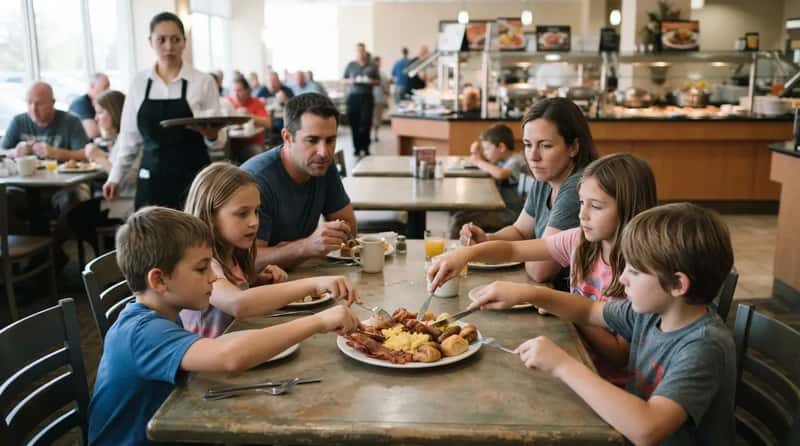
One adult pays for the buffet, then five family members quietly sit down and start eating off that single plate. Servers notice instantly, but confronting a family over shared forks is an awkward conversation nobody wants before 9 a.m.
Managers say this habit costs more revenue over a month than almost any single “bad customer” story. It’s rarely malicious – it’s just an entire family treating one paid ticket as an all-access pass.
#19 – The Senior Discount Fibber

Senior citizen breakfast pricing exists at plenty of buffets, and plenty of guests who don’t qualify try their luck anyway. Some restaurants have specifically noted heavier item usage on senior discount days, which staff quietly attribute to the discount pulling in more traffic than the age bracket alone.
One manager who ran a buffet with senior discount days remembers exactly how fast that special disappeared.
On Tuesdays, we had senior citizen discounts, so we would have livers and gizzards on the buffet.
Buffet Manager
Portions vanished far faster than the modest crowd should have allowed. Staff eventually realized the same regulars were taking home multiple servings, not just eating one plate.
#18 – The Bare-Hand Bacon Grabber
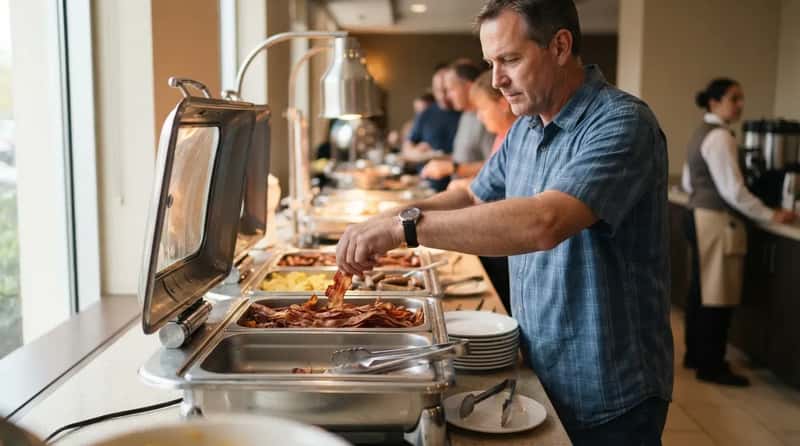
Tongs exist for a reason, yet nearly every morning shift includes at least one guest who reaches straight into the bacon or sausage tray with their bare hand. It’s one of the fastest ways a buffet ends up mid-morning with a half-empty pan nobody wants to touch.
Health inspectors treat this seriously, not casually. Bare-hand contact with shared food is exactly the kind of habit that turns a routine health inspection into a written violation. The condiment station, unfortunately, has its own version of this problem.
#17 – The Double-Dipping Syrup Bandit
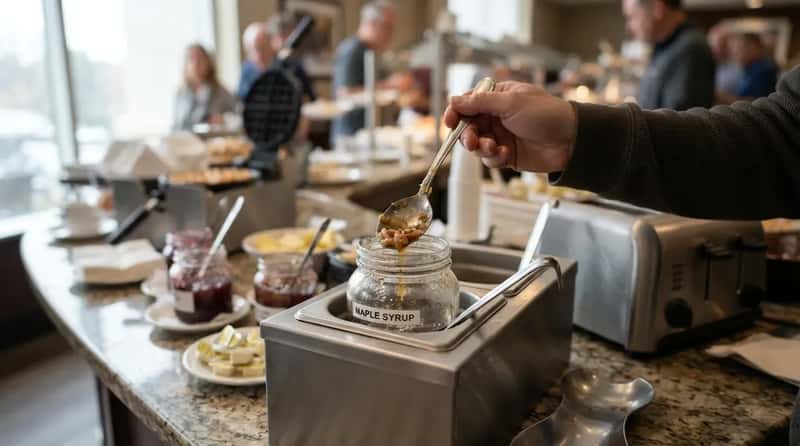
Dipping a used spoon back into shared syrup, jam, or butter is one of the quietest but most repeated violations managers see every morning. It looks harmless to the guest doing it and disgusting to everyone in line behind them.
Workers have reported watching people dip cookies in ranch, put gelatin in ranch, and even drink cups of ranch dressing straight, alongside stories of bare-handed sauce scooping. Cross-contamination from shared condiments is one of the top reasons buffets quietly swap out entire containers mid-shift.
#16 – The “I Just Need One Thing” Line-Cutter

Every buffet line has one guest who slides in sideways, claiming they “just need one thing,” and skips ten people who’ve been waiting patiently. It sounds minor, but it’s one of the fastest ways a calm morning line turns tense.
Staff say the complaints this generates outnumber almost any food-quality issue. Managers privately admit line-cutting causes more guest-versus-guest arguments than any pricing dispute. The chocolate fountain, though, brings out an entirely different kind of guest.
#15 – The Chocolate Fountain Finger-Dipper
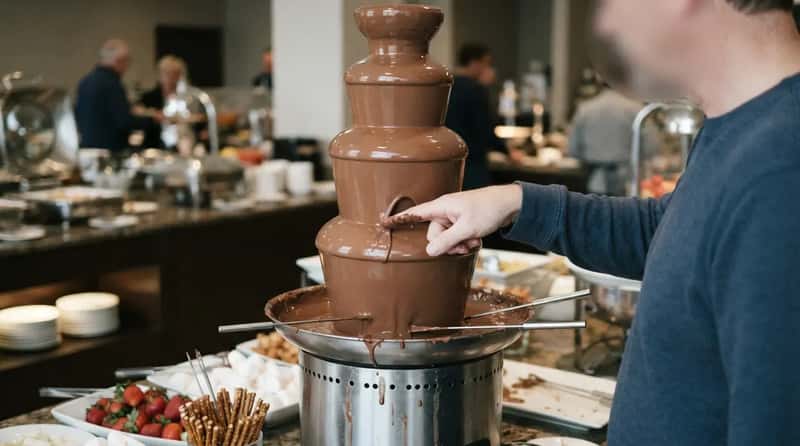
Sticking a finger, or worse, a tongue, straight into a shared chocolate or syrup fountain sounds like an urban legend until you ask someone who’s worked mornings at a buffet. It happens, and it’s expensive.
Licking spoons, slurping soup straight from a shared ladle, and sticking a tongue under the chocolate fountain are habits that are gross, rude, and force the kitchen to replace the entire dish and every serving utensil involved. One fountain incident can shut down an entire station for the tear-down and cleaning it requires.
#14 – The Plate-Scale Arguer
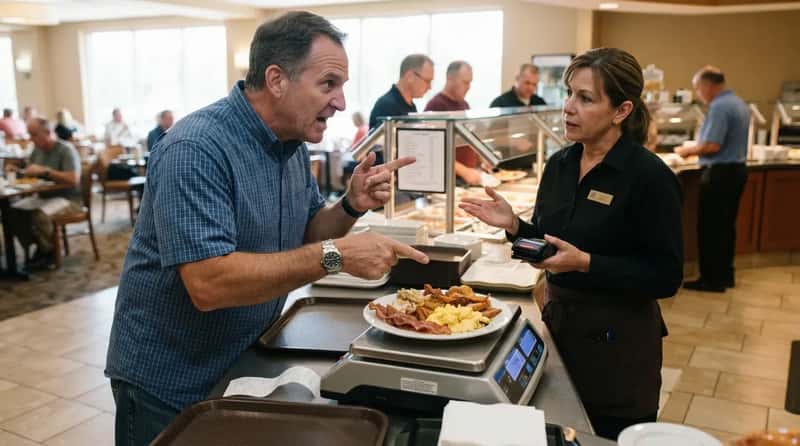
At buffets that weigh plates instead of charging a flat rate, morning arguments over the scale reading are practically scheduled. Guests insist the scale is wrong, that their plate is lighter than it looks, or that the price should be negotiable.
Managers say these disputes rarely end with the customer backing down quietly. Some guests will hold up an entire line arguing over a few extra ounces of eggs. Somehow, the guest who eats everything first causes even more trouble.
#13 – The Clean-Plate Refund Demander

This one baffles staff every time: a guest eats an entire plate, sometimes goes back for seconds, and then complains loudly enough to demand a discount or free meal. The empty plate itself becomes the evidence against their own complaint.
Handling this well matters, because poor customer service often gets defined by ignoring guests or rushing them, and rude treatment in either direction makes guests feel undervalued. Managers say the “clean plate, angry complaint” combo happens almost every single morning shift.
Worth Knowing
- Comped meals and quiet discounts are one of the most common “invisible” costs a buffet absorbs each week.
- Staff are usually trained to document every complaint, even ones they suspect aren’t genuine.
- One habitual freebie-seeker can cost a location more over a year than a single bad online review.
#12 – The Whole-Tray Hoarder
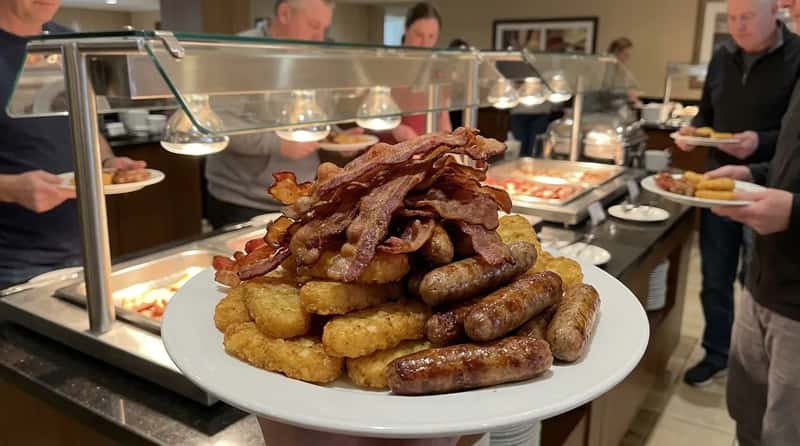
Rather than taking a normal portion, some guests pile an entire tray’s worth of bacon, sausage, or hash browns onto one plate, leaving the station empty for everyone behind them. It’s rarely about hunger – it’s about control of a favorite item.
Kitchens end up restocking that single station three or four times faster than planned. One over-loaded plate can single-handedly empty a protein station for ten minutes. Some guests don’t even wait for a plate before they start snacking, though.
#11 – The Stand-and-Snack Line Eater
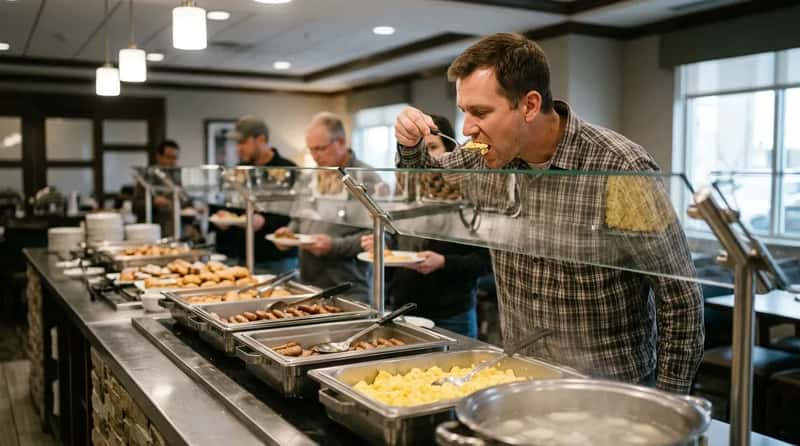
Eating straight from the serving line, before food even reaches a plate, is one of the most common – and most regulated – habits managers deal with every morning. It looks casual to the guest doing it, but it’s a genuine food-safety issue.
This kind of snacking actually breaks FDA guidelines, since eating while standing in the buffet line can contaminate food and let saliva pass bacteria on to other diners. Restaurants can lose points on health inspections specifically because of this habit.
#10 – The “He’s Only 11” Age Fibber

Kids-eat-free promotions are a morning magnet for creative math. Managers say they routinely encounter clearly teenage guests introduced as “still 10” the moment a host mentions the age cutoff.
It’s a small dispute individually, but it repeats constantly across a single shift. Some hosts say they field an age-related pricing argument nearly every morning the promotion runs. The next habit on this list isn’t about saving money at all – it’s pure mess.
#9 – The Napkin-in-the-Glass “Helper”

Some guests think they’re being considerate by wadding up a used napkin and stuffing it inside their empty glass before leaving. In reality, it just adds an extra, unpleasant step to cleanup.
What looks like helping actually means staff have to fish a soggy napkin out before they can dump the drink, and pulling apart sticky stacked plates to scrape smashed leftovers underneath takes far longer than a normal clear. A habit meant to be polite ends up slowing down the whole table-turn process.
#8 – The Buffet Influencer Blocking the Line
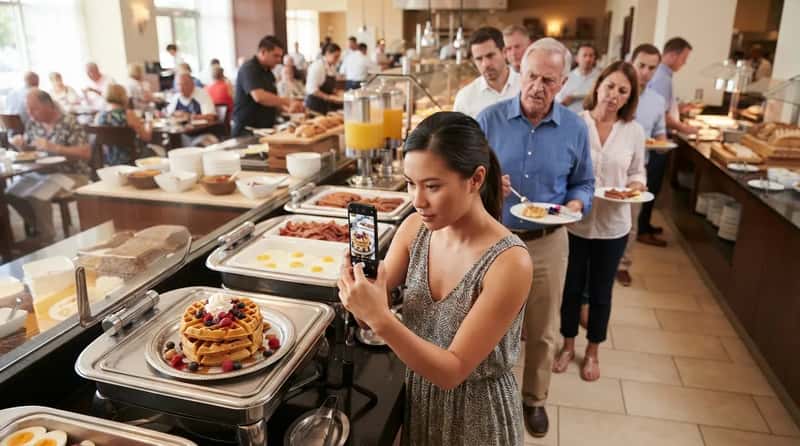
Phones out, tripods occasionally in tow, some guests treat the breakfast spread like a content shoot rather than a meal. They’ll pause the entire line to get the “perfect” angle of a waffle tower.
Staff generally tolerate the occasional photo, but repeat offenders create real bottlenecks during peak hours. One extended photo session can back up an entire station’s line for several minutes. Blocking a line is annoying, but it’s tame next to guests who ruin the food on purpose.
#7 – The Food Saboteur
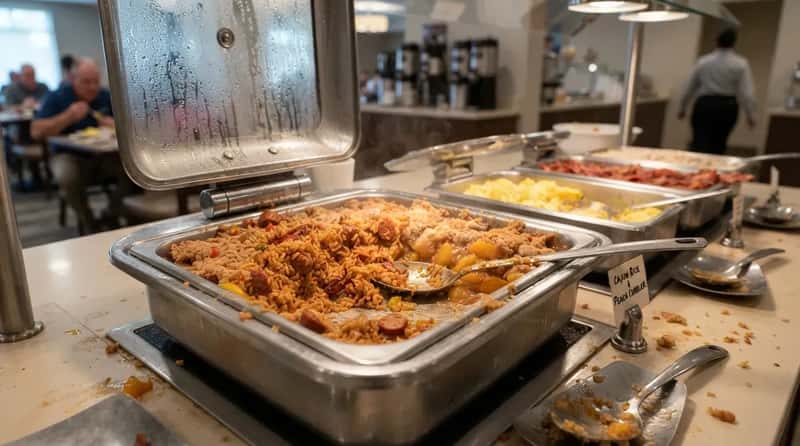
Every so often, a guest doesn’t just make a mess – they deliberately mix items to ruin them for the next person. It sounds petty, but staff say it happens more than anyone would guess.
One buffet worker described watching a woman spoon Cajun rice into the peach cobbler and walk away like she’d achieved a great victory, calling it intentional behavior from people who simply want to mess things up. Intentional sabotage forces staff to toss and remake an entire dish, no exceptions.
#6 – The Extra-Mouth Smuggler

Sneaking an extra unpaid guest into a paid buffet headcount is a surprisingly frequent morning problem. A family of four books for three, and a fourth appears at the table mid-meal, quietly digging in.
Restaurants generally have the right to address this directly, since owners and managers have the right to refuse service to customers who are aggressive or abusive with staff or other customers, and unpaid extra guests fall into a similar enforcement gray area most staff hate confronting. Most managers say they let the first offense slide, then start counting heads at the door.
#5 – The Room-Service Runner
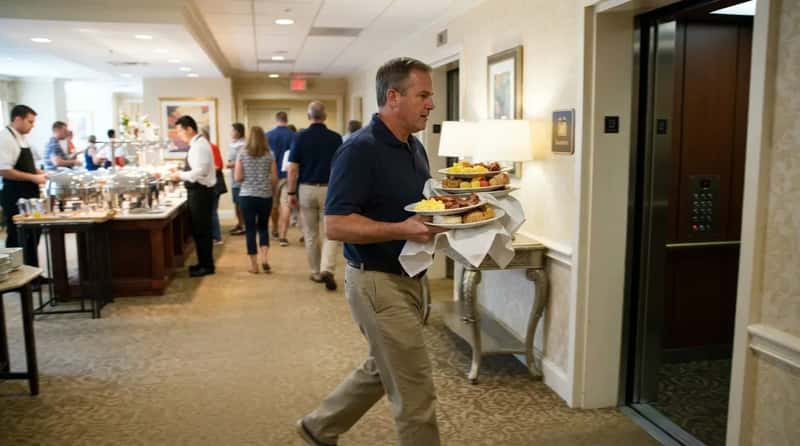
At hotel breakfast buffets specifically, guests sneaking full plates back up to their rooms is one of the most repeated morning complaints. Policies against it exist almost everywhere, and almost everyone ignores them.
It’s rarely one plate – staff say it’s often several, stacked and covered with napkins for the elevator ride. Some hotel buffet managers estimate they lose entire trays of food to room smuggling before 9 a.m. alone. Table hogging during the morning rush creates its own kind of daily headache, too.
Quick Compare
- Hotel buffets: Often bundled into the room cost, which makes smuggled plates feel like a loophole to some guests rather than theft.
- Standalone buffets: Priced per visit, so food taken off-site is a direct loss with no bundled cushion.
- Shared trait: Both rely on the same honor system that gets tested every single morning.
#4 – The Table Campers Who Won’t Leave

Buffets depend on table turnover, especially during a packed morning rush, and campers who linger for hours throw the whole system off. Standard etiquette suggests a limit most guests never think about.
Restaurants generally allot around 90 minutes for a table to sit and eat, and even upscale buffets like Bacchanal Buffet in Las Vegas stick to that same rule. Guests who camp well past that window directly cause other paying customers to wait outside.
#3 – The Public Shamer Who Demands a Manager

Some guests skip a quiet conversation entirely and go straight to a loud, public confrontation the moment something isn’t perfect. It puts staff in an impossible position in front of a room full of other diners.
This kind of public blowup went viral once, when a well-known comedian was removed from a popular New York restaurant over alleged rude behavior toward staff, and even after he reportedly apologized, both sides ended up embarrassed. Most buffet managers say a public shaming scene happens on a smaller scale nearly every week.
#2 – The Diaper-on-the-Table Diner
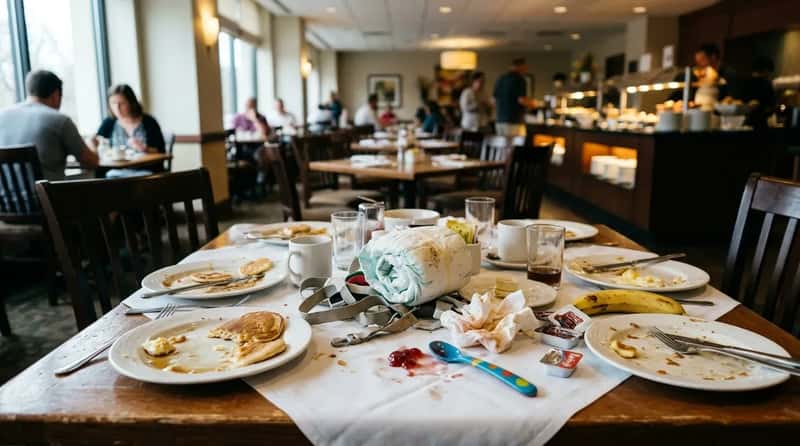
Of every mess morning staff describe, this one comes up again and again as the worst: guests leaving genuinely shocking trash behind at their table. It’s not napkins or crumbs – it’s items no server should ever have to touch.
Spilled condiments, excessive garbage, and even baby diapers have reportedly turned up at tables staff were responsible for clearing, which is disrespectful to both employees and the business itself. This single habit generates more disgusted staff complaints than almost anything else on this list.
#1 – The Health Code Violation Waiting to Happen

Every buffet manager has a version of this story: a small, repeated habit that eventually triggers a real health department problem. It’s rarely dramatic in the moment – a bare hand here, a shared spoon there – but it adds up fast.
Between guests eating directly from the line, dipping used utensils back into shared trays, and bare-handed scooping at condiment stations, buffets sit closer to a violation than most customers realize. Managers say it only takes one bad morning, and one inspector visit, for years of good habits to unravel.
None of these behaviors make headlines on their own. But stacked together, morning after morning, they explain why buffet managers develop such a specific, weary kind of patience.
The food is rarely the hardest part of the job. The people standing in front of it, tongs in hand and rules quietly ignored, usually are.