Most guests assume the real evaluation starts the moment they open their mouth at the counter. It doesn’t. Front desk agents are trained to read arrivals within seconds, clocking dozens of tiny signals before a single “hi, checking in” ever gets spoken.
None of it is about judging you – it’s about triage. The picture staff quietly build in those first few seconds can shape everything from your room assignment to how warmly you’re treated for the rest of your stay. Here’s what insiders actually watch for, and why it matters more than you’d think.
#23 – The Way You Walk In Tells Them Your Whole Mood

Long before you reach the counter, your gait is already talking. Staff are trained to read posture, pace, and facial expression within seconds of an arrival, and a slow, heavy shuffle reads completely differently than a bouncy, excited stride.
A slumped walk after a delayed flight signals exhaustion, while a brisk pace with a phone already out signals someone in business mode. Front desk teams often quietly adjust their approach before you’ve said a word, simply based on how your body moves through the lobby doors.
#22 – Whether You Look at Them or Just the Counter
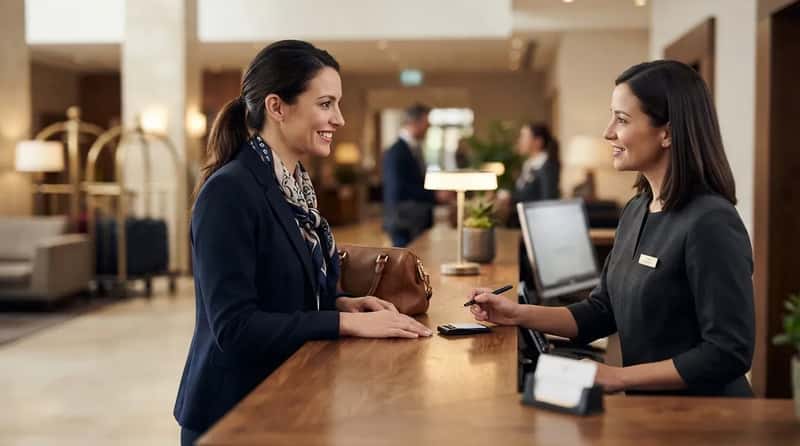
Eye contact happens before hello, and it sets the entire tone of the interaction. One bellhop put it bluntly: some guests look straight through the person checking them in, treating them like furniture, while others make eye contact and use the name right off the tag.
That split-second read matters more than most travelers realize. Staff communicate about guests constantly, and a single dismissive glance can travel from the bellhop to the front desk to housekeeping before you even reach the elevator. A glance and a smile cost nothing, but they buy real goodwill.
#21 – How You Treated the Valet Before You Even Walked In
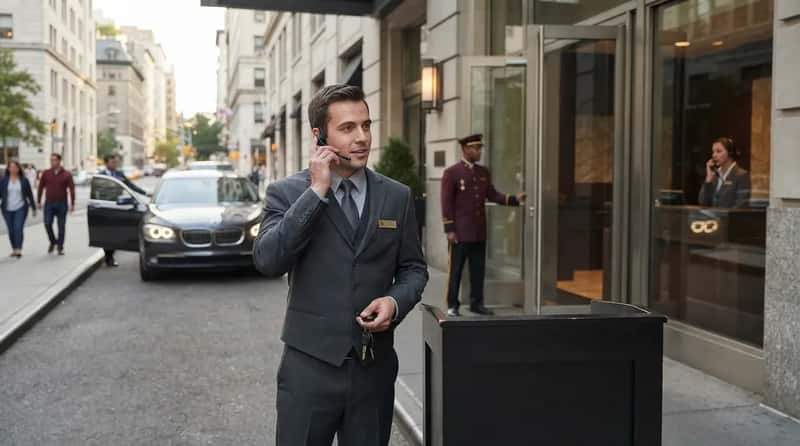
Your reputation is built before you ever reach the lobby doors. Treat the valet poorly, and the front desk already knows before you cross the threshold.
This isn’t idle chatter between coworkers – it’s an operational pipeline that runs through every department, firing up the second your car pulls in. The doorman, the bellhop, and the person who held the elevator all quietly feed the front desk a preview of who’s coming, so by the time you say your name, they may already have a sense of what kind of guest you’ll be.
Fast Facts
- Valet attendants, doormen, and bellhops often alert the front desk before a guest ever reaches the counter.
- A single interaction outside can quietly set the tone before any words are exchanged at check-in.
- Staff describe this relay as constant during busy arrival windows, not occasional gossip between shifts.
#20 – Whether Your Phone Is Out, Away, or Frantically Buzzing
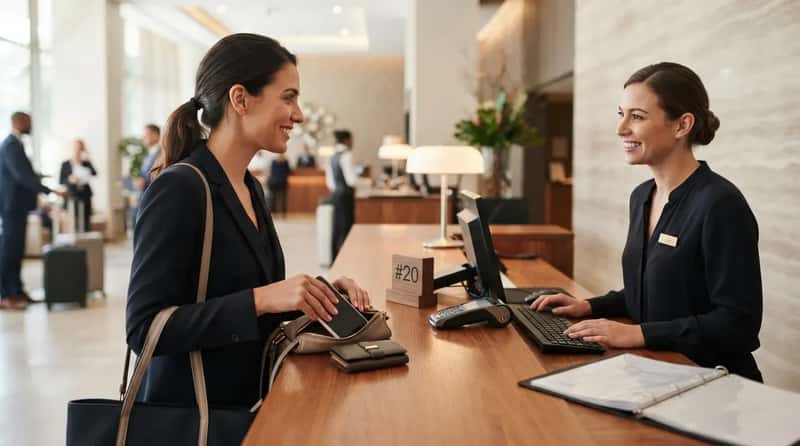
Your device is a mood ring you didn’t know you were wearing. Staff notice if you’re frantically texting, snapping photos of the lobby ceiling, or keeping your phone tucked away entirely – it’s a behavioral signal, and hotel staff read it fluently.
The payoff for putting it away is real, too. A guest who pockets the phone and makes eye contact during check-in almost always gets a warmer, more personalized interaction, shifting an agent from transaction mode into genuine hospitality mode. Two entirely different check-ins, based on one small habit.
#19 – The Exact Moment You Wince at a Fee
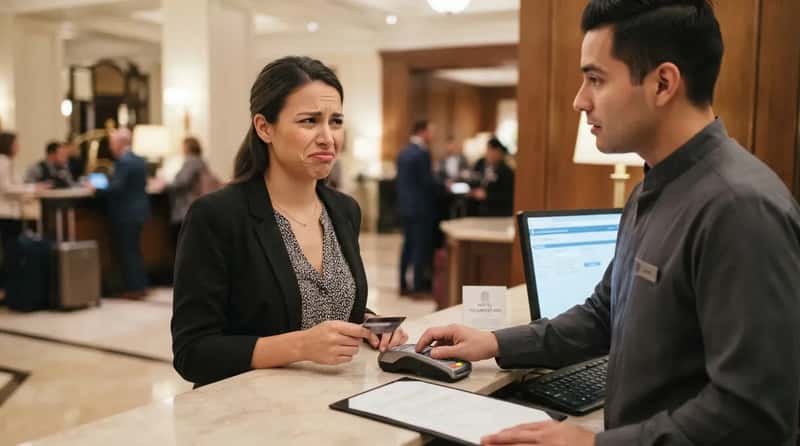
Your face gives away your budget faster than your wallet does. Facial expressions leak financial anxiety faster than words ever could, and staff catch the wince at the mention of valet parking just as fast as they catch a guest asking about free breakfast or happy hour timing instead.
It’s become one of the most talked-about tells in the industry. Many hoteliers now argue resort fees have made this the single most reliable financial tell at check-in – more revealing than clothing, luggage, or even the room category booked. A tiny facial twitch, and suddenly the whole conversation shifts direction.
#18 – How Prepared You Are With Your ID and Confirmation
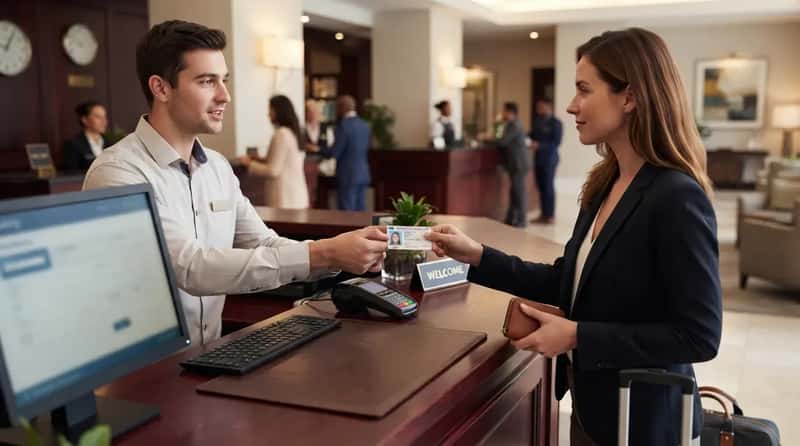
Nothing signals a seasoned traveler faster than a smooth handoff. Seasoned travelers have their ID and credit card ready before they reach the counter, know exactly what the desk needs, and don’t fumble for a confirmation number buried in a week-old email.
Staff clock this instantly because it changes the entire pace of the interaction. A frictionless 45-second handoff signals experience immediately, while a guest digging through three different apps for a reservation number gets read as a first-timer within seconds – no judgment, just a different kind of guidance ahead.
#17 – Whether You Acknowledge the Person Cleaning the Lobby
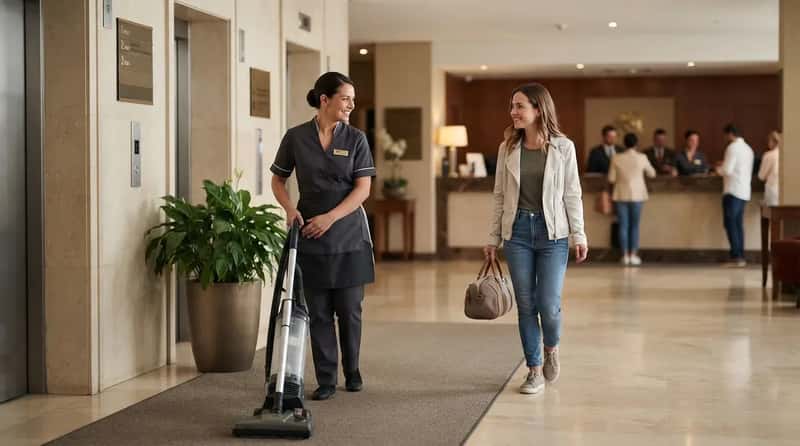
The housekeeper vacuuming near the elevators is watching too, and what they see travels. Guests who nod, smile, or say a quick thank-you to cleaning staff get quietly filed away as easy, low-drama arrivals before the front desk even looks up.
It sounds small, but it’s one of the fastest character reads in the building. Staff who work the floors and the desk talk constantly, and a guest who’s warm to everyone – not just the person handing over the room key – tends to get remembered fondly for the rest of the stay, sometimes with small, unspoken perks to match.
#16 – The Luggage Tag That Tells Its Own Story
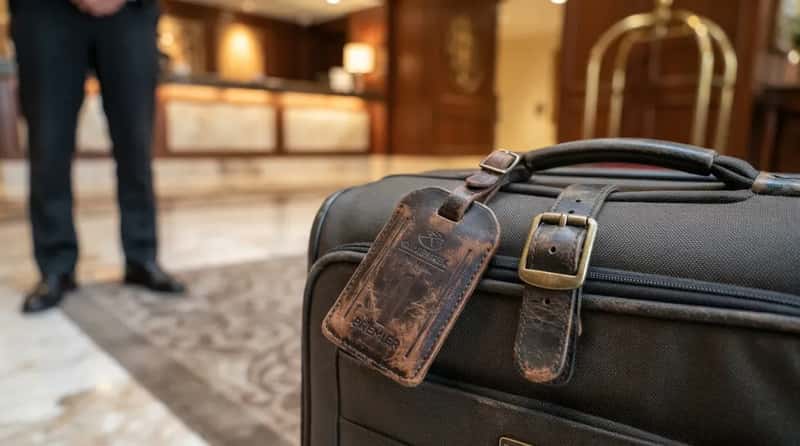
A worn tag can say more than an entire conversation. A beat-up leather tag from an airline elite program or a hotel loyalty brand is basically a resume clipped to the handle.
Staff take this seriously because it predicts behavior down the line. Bellhops notice these instantly because they usually predict how the rest of the stay will go – these guests know the drill, ask sharper questions, and rarely need the basics explained twice, and loyalty tags also tend to correlate with better tipping habits.
#15 – The Way You Cross the Lobby Floor
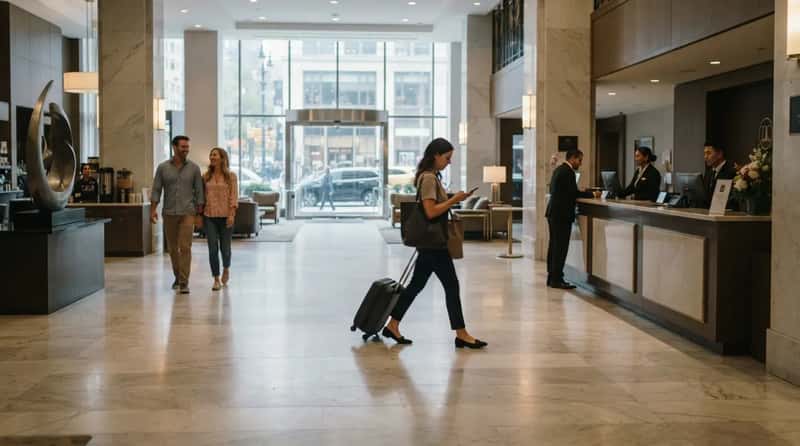
Your walk across forty feet of marble tells a story before you open your mouth. A rushed, darting path with constant glances at a phone reads as travel-day stress, while a slow, relaxed stroll with eyes up reads as someone settling in for a proper break.
Front desk teams use this to gauge how much small talk to offer. A guest who drifts toward the lobby art or the coffee station usually wants a little conversation, while one who beelines straight for the counter is signaling they want the transaction done fast – and staff generally know to match that energy without being asked.
#14 – Whether You’re Alone, in a Rushed Pair, or Traveling With Kids
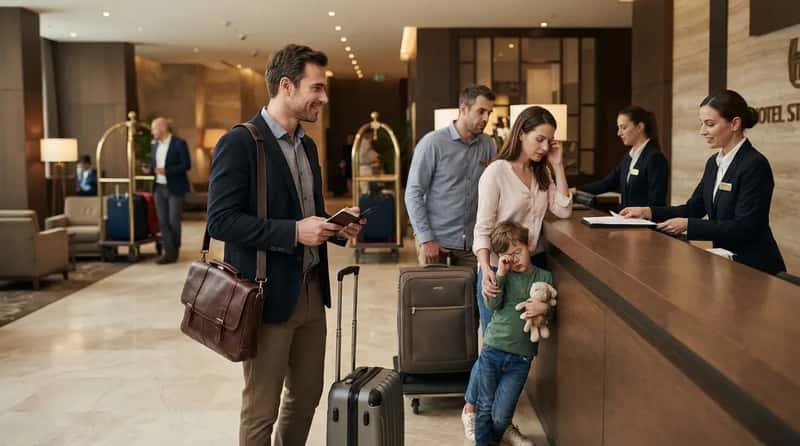
Group dynamics get read instantly, and they change everything about the approach. A couple bickering quietly about directions gets a very different greeting than a solo business traveler who’s clearly done this fifty times before.
Families with visibly tired kids often get fast-tracked, since staff know a cranky five-year-old in a lobby is a ticking clock. A solo guest, meanwhile, might get a slightly longer, friendlier check-in simply because there’s no one else to rush the conversation along.
Quick Compare
- Solo travelers: Often get longer, more relaxed conversations since there’s no one else to rush the exchange.
- Families with tired kids: Usually get fast-tracked check-ins, since staff recognize the clock is ticking on patience.
- Rushed pairs or couples: Get read the fastest of all, since visible tension speeds up the whole exchange.
#13 – How You React to the Lobby Itself
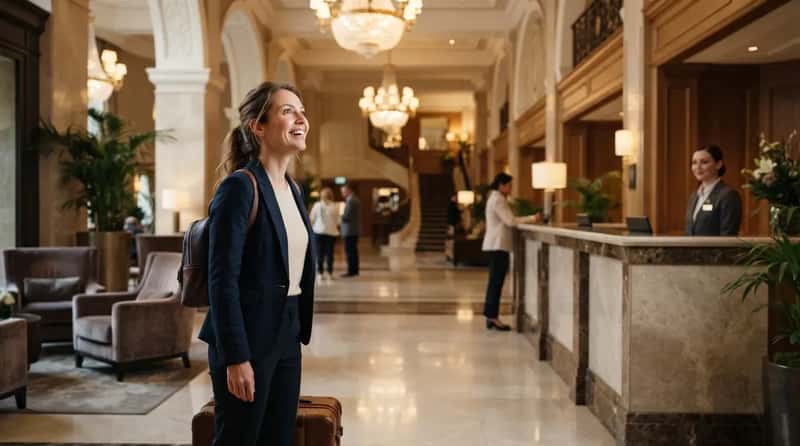
The first flicker across your face when you see the lobby is impossible to fake. A genuine look of delight at the design or the smell of the space tells staff you’re already primed to enjoy your stay, while a flat, unimpressed glance signals someone harder to win over.
Veteran front desk workers say this reaction often predicts how guests will respond to minor hiccups later. A guest who lights up at first sight tends to shrug off small issues, while one who walks in unmoved is more likely to escalate a complaint that a happier guest would’ve laughed off.
#12 – The Car You Pull Up In (If There’s Valet)
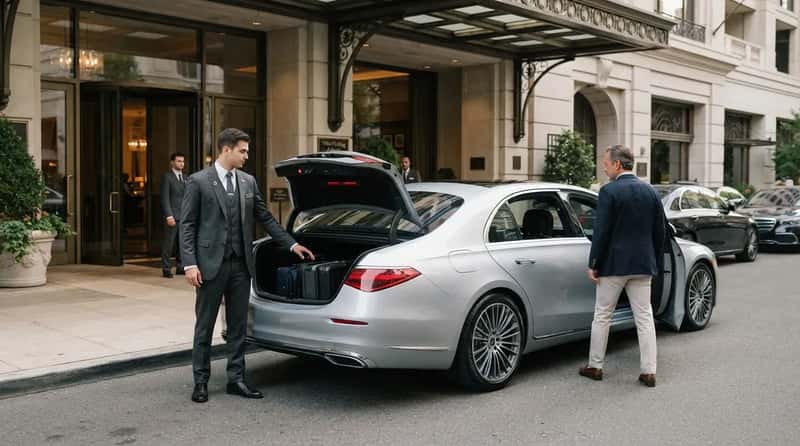
Valet arrivals hand staff information before a word is spoken. A car left running with the hazards blinking is an instant tell that a guest is stressed, running late, or juggling something that has nothing to do with the hotel at all.
A calm, orderly pull-up with the trunk already popped signals the opposite – a guest who’s organized and unlikely to create friction. Staff quietly use these tiny cues to decide who might need extra patience versus who’s ready to move fast.
#11 – Whether You’re Mid-Call When You Reach the Desk
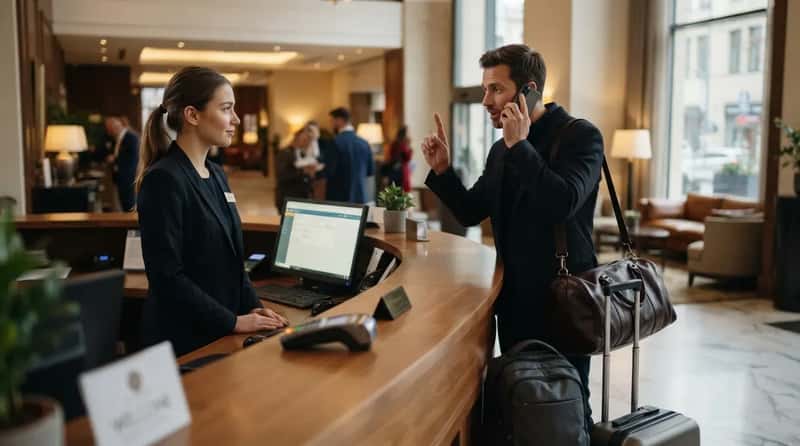
Holding up one finger while finishing a phone call is one of the most noticed habits in hospitality. Walking up mid-call and flashing that “one second” signal to the clerk feels invisible to guests, but it never actually goes unnoticed.
It’s not necessarily held against you, but it does shift the tone. Staff often use the extra seconds to size up your luggage, your outfit, and your general demeanor while waiting for you to wrap up – meaning the call itself becomes part of the read, not just an interruption to it.
#10 – The Posture You Hold at the Counter
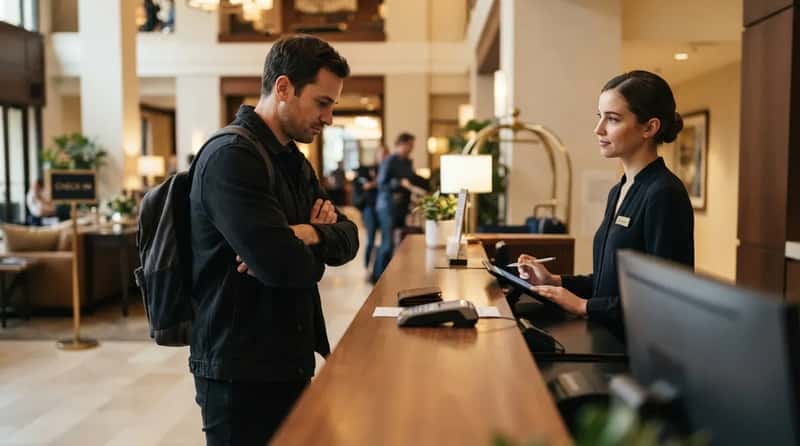
Body position at the counter is basically a silent conversation. An open stance with feet and shoulders facing the agent and arms uncrossed often reads as someone interested and open to a sales proposition or simply willing to chat.
The opposite posture sends an equally clear signal. Staff are trained to notice closed-off body language immediately – guests standing at an angle with arms crossed get read as far less receptive to upgrade offers, which quietly shapes whether you’re offered a free one at all.
#9 – Whether Your Lips Are Pursed or Relaxed
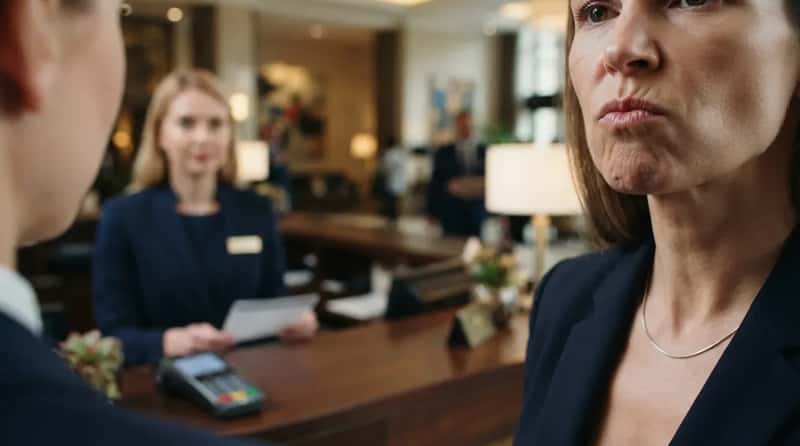
A tight mouth is one of the fastest tension signals in the book. Pursed lips often signal tension – a subtle anger cue that can mean a guest is unhappy but not ready to say why yet.
Front desk agents are taught to catch this before the conversation even starts, because it lets them soften their tone preemptively. A guest with pursed lips and a stiff jaw often gets a calmer, more deferential greeting than one who’s visibly relaxed, simply because staff are trying to defuse a problem before it’s spoken aloud.
#8 – Whether You’re Drumming Your Fingers on the Counter
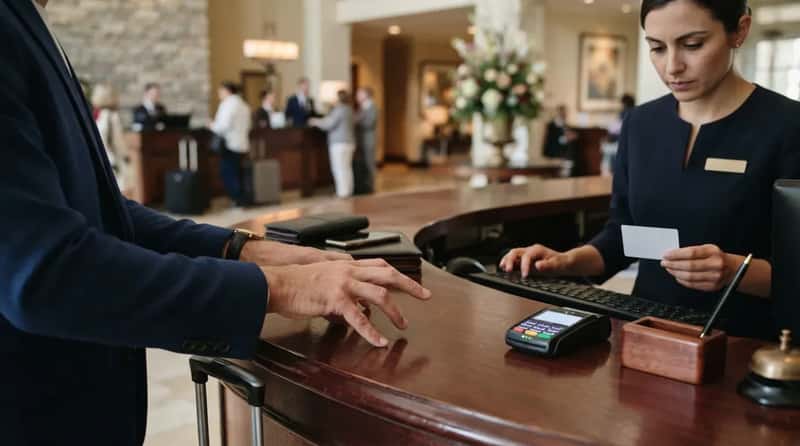
Impatience has a sound, and staff know it well. Drumming fingers is a classic sign of boredom or irritation, and when a guest is doing it, they usually don’t want chitchat – they want the transaction done and a key in hand.
This one quietly rewrites the entire script for the agent. Instead of offering local restaurant tips or upgrade options, a good front desk worker will shorten the conversation, skip the small talk, and get you moving fast – reading the room, quite literally, off your hands.
Worth Knowing
- Pursed lips and a stiff jaw often prompt a calmer, more deferential greeting from staff.
- Drumming fingers or tapping feet usually signal a guest who wants the transaction sped up, not small talk.
- Crossed arms and an angled stance can quietly reduce the odds of being offered a free upgrade.
- None of these reads are permanent – they just shape the first few minutes of service.
#7 – Whether Your Eyes Are on Them or Somewhere Else Entirely
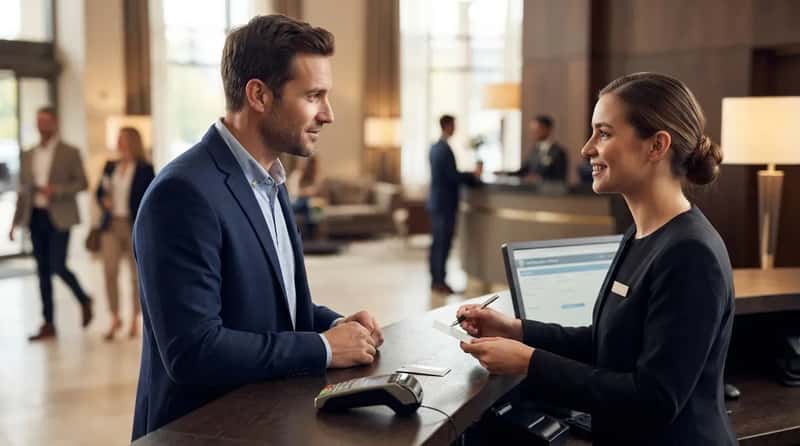
Where your eyes land during check-in tells staff how present you actually are. A guest who isn’t looking at them probably isn’t very engaged in the transaction, and may come across as impatient or simply uninterested.
But the flip side is just as telling. A guest making steady eye contact signals full attention, and that’s often the exact moment a staffer decides it’s worth trying an upsell. One small habit, and suddenly you’re either getting the standard room or a surprise upgrade offer.
#6 – The First Question Out of Your Mouth
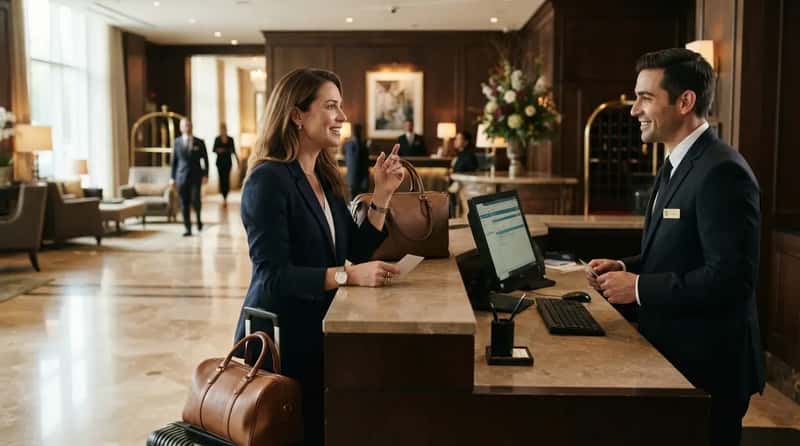
What you ask first reveals more than any outfit ever could. Forget the luggage brand – your opening question is the real tell, since guests who feel financially comfortable tend to ask about experiences rather than expenses.
The contrast is strikingly consistent across properties. Guests with more financial breathing room ask about restaurant recommendations instead of the nearest grocery store, spa availability rather than gym hours. Staff say this single detail often predicts the entire tone of the stay ahead.
At a Glance
- Budget-conscious opener: “Is breakfast included?” or “Where’s the nearest grocery store?”
- Comfort-focused opener: “What’s good for dinner nearby?” or “Is the spa open tonight?”
- Staff say the very first question often previews the tone of the entire stay.
#5 – How Many Questions You Fire Off in a Row
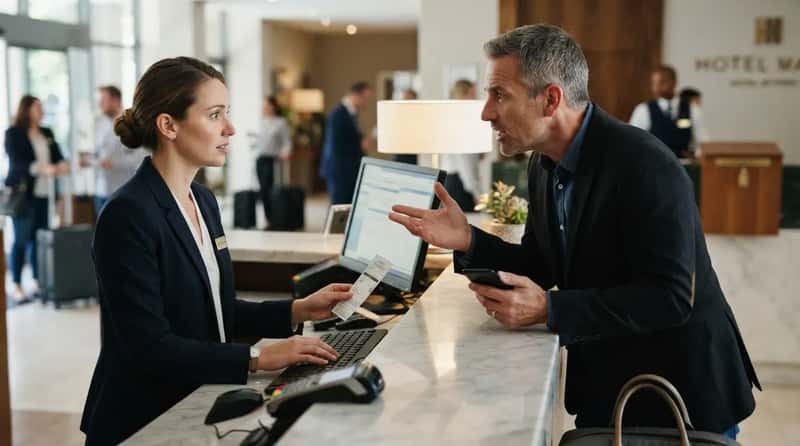
There’s a fine line between curious and disruptive, and staff feel it fast. Curiosity is welcome; breaking the rhythm of the line with rapid-fire questions is a different story, and front desk staff know exactly when an interaction tips into difficult-guest territory.
It’s a slightly controversial take, but many veteran agents will admit it privately: a guest who front-loads ten unrelated questions before the room key is even printed often ends up calling down at midnight over something minor. Staff brace for it, whether they say so or not.
#4 – Whether You’re Still Wearing Sunglasses Indoors
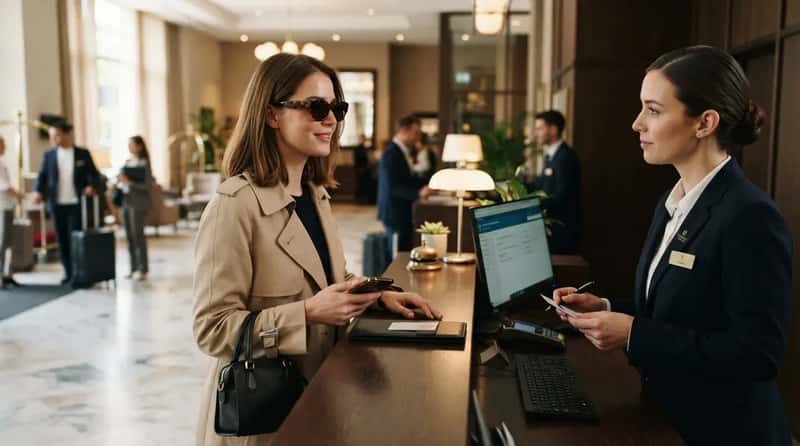
Small style choices get read as personality traits instantly. A phone-locked guest reads as a stark contrast to one still wearing sunglasses indoors, and staff quietly file both as very different kinds of arrivals – one closed off, one performing confidence.
Neither is right or wrong, but the read happens regardless. Sunglasses indoors often get filed under “wants to feel seen,” while a phone glued to the face gets filed under “wants to be left alone” – two guests who’ll likely get two very different styles of small talk from the same front desk agent within minutes of each other.
#3 – Whether You’re Visibly Exhausted or Wired From Excitement
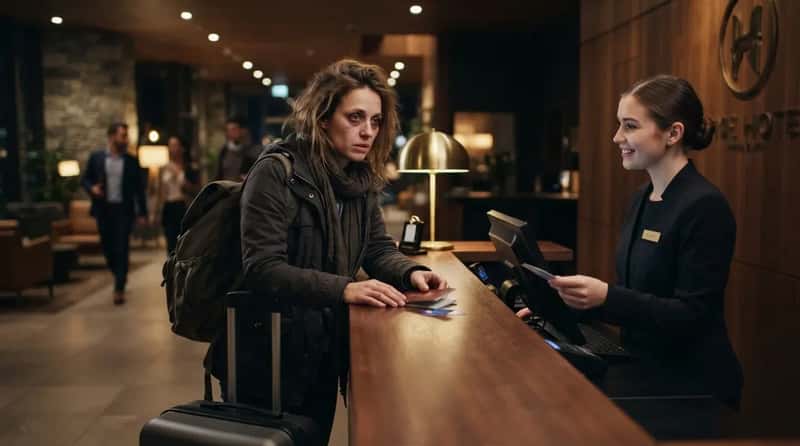
Energy is the first thing that registers, long before words do. A guest arriving at 11 PM after a cancelled connecting flight radiates something completely different than a couple strolling in for a weekend anniversary.
Staff don’t just clock the difference – they act on it immediately. An exhausted guest who gets a 90-second check-in and a genuine “you look like you need a good night’s sleep” often remembers that moment more than the room itself, because the energy you carry essentially sets the service tone before a single word is exchanged.
#2 – Whether You Look Like You Need to Be Closer to the Elevator
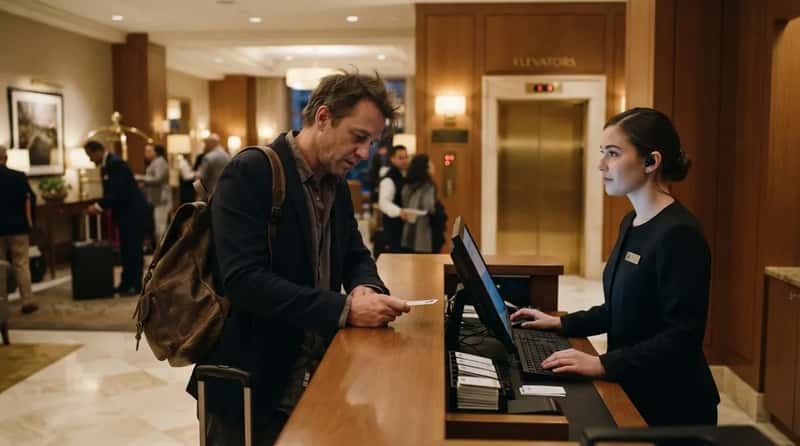
This is one of the quietest, most consequential reads in the entire check-in process. A visibly tired guest may quietly be moved to a room closer to the elevator without ever asking for it.
Anticipatory service isn’t about reading minds. It’s about caring enough to notice.
Danny Meyer
It’s a small, invisible act of hospitality that most guests never even realize happened. Noticing a need before it’s spoken is treated as a genuine skill at many properties, not a favor. Somewhere between the lobby doors and the counter, your fatigue quietly rewrote your room assignment.
#1 – Whether You Treat the Front Desk Agent Like a Person
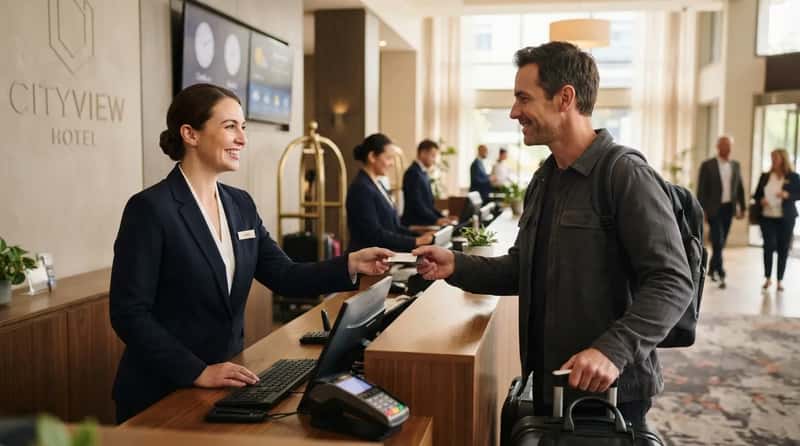
Everything else on this list feeds into one final, decisive read: do you see the person behind the counter as a human being or as a vending machine that hands out keys? Staff know that the guest who walks past every employee without blinking is often the same one who calls at midnight over a minor inconvenience, while guests who treat everyone in the building with basic dignity tend to receive a measurably different quality of service throughout their stay.
This isn’t folklore – it’s an operational pattern hotel workers describe again and again, across brands and price points. The housekeeper you ignored on the way in might be the one who turns your room over first tomorrow morning. A little warmth costs nothing, and by the time you’ve said your first sentence, it’s often already decided how the rest of your stay will feel.
None of these 23 signals are really about class, money, or manners in the way most people assume – they’re about pattern recognition built from thousands of check-ins. Staff aren’t judging you for being tired, distracted, or a little awkward at 11 PM after a delayed flight. They’re simply reading the same silent language every arriving guest speaks, whether they realize it or not.
The through-line across nearly every one of these tells is simple: the guests who get the warmest, smoothest, most generous treatment are rarely the best-dressed or the highest-spending. They’re the ones who make eye contact, say thank you, and treat every person in the building – not just the one behind the counter – like they matter. Which of these surprised you the most? Drop it in the comments.