Most people assume travel insurance disasters happen because of bad luck – a freak storm, a stolen suitcase, a sudden fever in a foreign country. But insurance adjusters who process thousands of these claims every year say something different. The disaster almost never starts with the emergency itself. It starts weeks earlier, with one small, forgettable decision the traveler didn’t even realize mattered.
The scary part is how ordinary these mistakes look in the moment. Nobody thinks twice about buying a policy a few days late, skimming past a paragraph of fine print, or assuming a credit card “has them covered.” Here’s what claims experts actually say happens next.
#24 – Buying the Policy the Night Before the Flight

Waiting until the last minute to buy travel insurance feels harmless, but it quietly erases entire categories of coverage. Among the most obvious errors travelers make is purchasing travel insurance right before their departure, which usually leaves out major pre-travel benefits like coverage against cancellation, natural calamities, or unforeseen personal emergencies that arise before the trip. By the time something goes wrong before departure, the window to claim for it has already closed.
Late buyers also rush the paperwork. Late purchases restrict the traveler from making a careful evaluation of policy terms, so exclusions, waiting periods, and sub-limits might not be noticed when insurance is bought hastily. That means travelers often think they’re protected against something the policy never actually promised. The fix costs nothing – buy the day you book the trip, not the week before you leave.
#23 – Trusting “Cancellation Coverage” Without Reading the Covered-Reason List

Standard trip protection doesn’t reimburse cancellations for just any reason – only for reasons specifically named in the contract. Trip protection plans can reimburse prepaid, nonrefundable trip expenses if you cancel for covered reasons, but if you decide to cancel for a reason not listed – like being nervous about safety at your destination – the claim will be denied. Feeling uneasy about a destination simply isn’t a covered event.
Most travelers never open that list until it’s too late. Experts suggest reading it before booking, not after packing. Reading the plan document and understanding the covered reasons in advance lets travelers know if they’re protected, or adjust to a different plan before discovering the protection they wanted wasn’t there. It’s a five-minute read that prevents a five-figure argument later.
#22 – Grabbing the Cheapest Plan on the Comparison Page
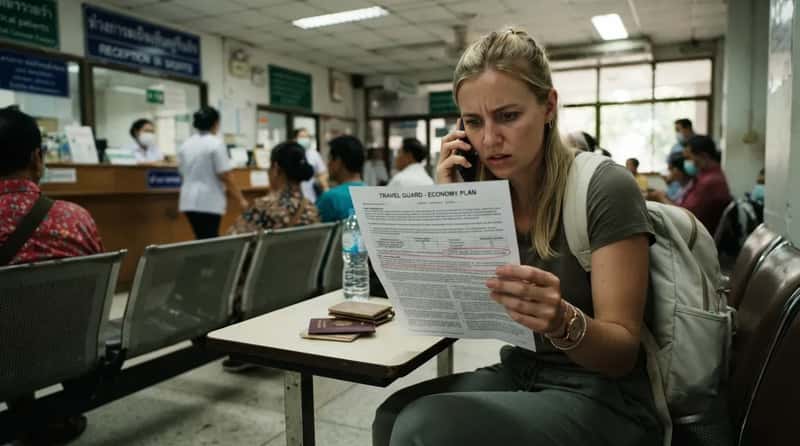
A bargain-basement policy often looks identical to a solid one until the claim comes in. Price-based decision-making is a common error, because low-cost travel insurance policies are usually limited in benefits – reduced medical coverage limits, higher deductibles, capped hospital room charges, or reduced emergency evacuation services – which can cause high out-of-pocket costs in places with expensive healthcare.
Sub-limits are the sneaky part. Travelers may also miss sub-limits in outpatient care, ambulance services, or follow-up care. A traveler might see “$100,000 medical coverage” on the label and never realize ambulance rides are capped at a few hundred dollars. That gap alone bankrupts more vacations than lost luggage ever will.
Worth Knowing
- Cheap plans often shrink medical coverage limits and raise deductibles
- Hospital room charges are frequently capped, regardless of the actual bill
- Emergency evacuation benefits may be reduced or dropped entirely
- Outpatient care and ambulance rides often carry their own hidden sub-limits
#21 – Assuming Any Hurricane Means an Automatic Payout
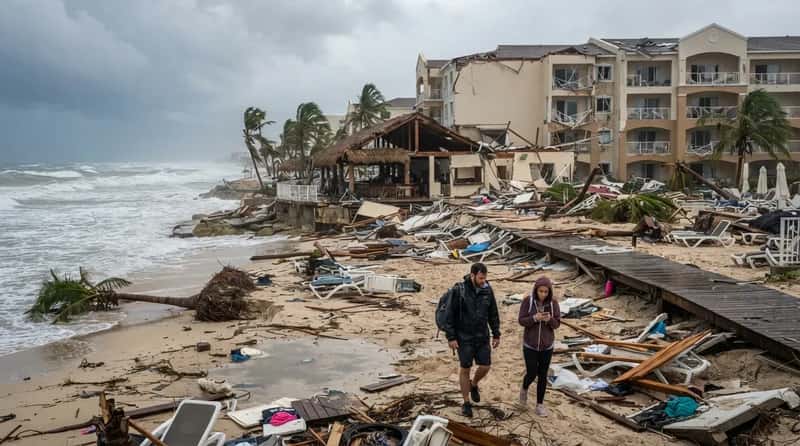
Storms are the single biggest driver of denied claims every hurricane season, and the reason is almost always timing. With forecasters predicting an above-normal Atlantic hurricane season, claims related to hurricanes and severe weather spike during summer and fall – and insurers have identified the top reasons storm-related claims get denied or delayed.
The number one culprit is buying too late. The most common claim mistake is waiting too long to buy travel insurance, since policies must be purchased before a storm is named to qualify for hurricane-related coverage. Even a policy purchased before the trip may not help if the destination isn’t formally uninhabitable. Even if you buy travel insurance before a storm is forecasted, a covered event like a mandatory evacuation would be needed for cancellation coverage to kick in.
#20 – Skipping the Doctor’s Note Before Cancelling for Illness

Getting sick before a trip feels like an obvious, sympathetic reason to cancel – but insurers need proof, not just a story. Illness or injury that prevents travel is a covered reason for cancelling a trip, but travelers need to see a doctor before cancelling and have them complete a physician statement advising that travel isn’t possible.
Skip that step, and the claim collapses no matter how sick you actually were. Don’t simply cancel your trip and file a claim without taking those steps – when in doubt, always call your insurance company first. A missing signature is often the entire difference between reimbursement and rejection.
#19 – Relying on a Credit Card’s “Free” Travel Protection

Plenty of travelers skip buying a policy entirely because their credit card claims to include travel coverage. That confidence usually backfires. Credit card perks typically come with low limits, exclusions, and no strong medical or evacuation coverage, and domestic health plans rarely cover care abroad – so cards should be used as a backup only, not a replacement for dedicated travel insurance.
The gap becomes obvious the moment a real emergency hits. Medical evacuation alone can run into six figures, and a card’s built-in perk rarely stretches that far. Most travelers only discover this limitation while sitting in a foreign hospital, which is the worst possible time to learn it. That “free” perk was never designed to be your only safety net.
#18 – Forgetting Gadgets, Cameras, and Gear Need Their Own Add-On
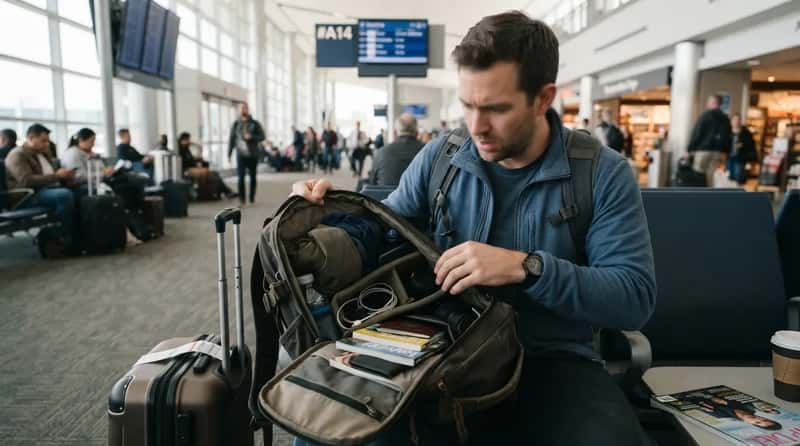
Standard policies quietly exclude the expensive electronics travelers pack most. One of the most common mistakes people make is forgetting to add the cover extensions they need – things like gadget cover, cruise cover, and winter sports or adventure activities aren’t automatically included in every policy.
High-end camera gear is a particular blind spot. It’s also worth bearing in mind that certain things you’ll pack, such as top-of-the-range cameras, aren’t usually covered as standard. A traveler assumes “my stuff is insured” and finds out only after the camera is stolen that it never was. That’s not a bad-luck story – it’s a paperwork story.
#17 – Signing Up for a One-Size-Fits-All Policy
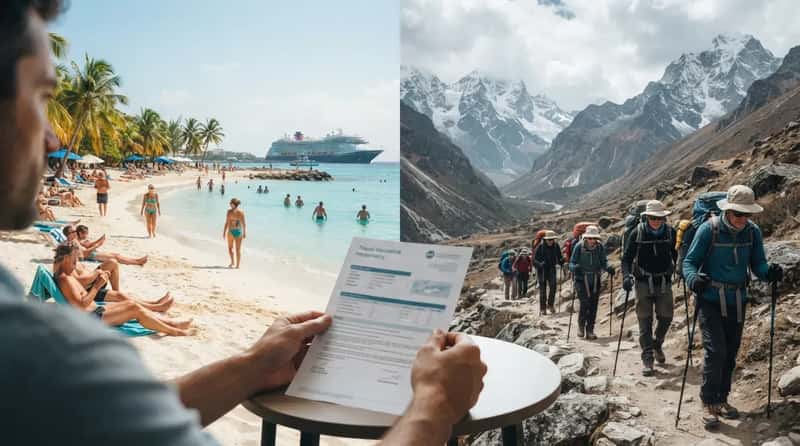
Insurance experts increasingly point to mismatched policies as the root cause of disaster claims, not the disaster itself. Many travelers buy identical coverage whether they’re headed to a resort or a remote trek, never realizing the risks – and the required protections – are nothing alike.
The biggest mistake people make is treating travel insurance like a one-size-fits-all product.
Joe Cronin, president of International Citizens Group
A relaxing beach trip and a trek through an unstable region simply don’t carry the same risks, yet many travelers buy identical coverage for both. You wouldn’t wear a parka to a beach in Cabo, so why buy the same insurance for a Caribbean cruise that you would for a trek through a politically sensitive region? The policy that protected a friend on a cruise may leave you completely exposed somewhere riskier.
#16 – Booking an Adventure Activity Without the Extreme-Sports Rider

Skiing, jet-skiing, and mountain biking sound like ordinary vacation activities, but plenty of standard policies quietly wall them off. Don’t even consider going near a jet-ski if your insurance doesn’t cover that type of water sport – the same applies to skiing, snowboarding, and mountain biking, while more extreme activities like skydiving or high-altitude treks will often need specialist insurance policies.
This exclusion also shows up in the claims data as one of the most common denial reasons on record. The second most common cause for rejection is that the accident occurred while participating in an extreme sport, though some policies do have coverage for some of these activities. The activity that made the trip memorable is often the exact one the policy doesn’t cover.
#15 – Missing the Claim Filing Deadline

Even a completely valid, well-documented claim can be thrown out for one reason alone: submitting it too late. Failing to file within the specified timeframes is one of the most clear-cut denial reasons, since insurance policies are legal contracts with strict deadlines for reporting an incident and submitting a claim.
These deadlines are shorter than most people expect. A travel insurance claim might be rejected if filed after the policy’s 20-day limit, and the clock starts ticking the moment the incident occurs. Travelers dealing with a real emergency abroad often forget paperwork entirely until they’re home – which is precisely when it’s already too late.
#14 – Losing the Receipts

Documentation, not drama, is what actually wins or loses a travel insurance claim. To successfully file a claim, travelers typically need to provide necessary documentation like medical bills, receipts, police reports, and airline tickets, and the insurer reviews the claim and determines reimbursement based on that documentation and the policy terms.
Digital processing has made this stricter, not looser. Over 60% of claims are now processed digitally, which requires precise uploads of receipts, and many insurers use fraud-detection algorithms that flag incomplete or inconsistent documentation. A crumpled receipt tossed in a suitcase pocket has quietly killed more claims than actual fraud ever has.
Fast Facts
- More than 60% of claims are now processed through digital systems
- Required proof typically includes medical bills, receipts, police reports, and airline tickets
- Fraud-detection algorithms automatically flag incomplete or inconsistent uploads
- Missing or mismatched documentation is one of the easiest ways to lose an otherwise valid claim
#13 – Believing “Nervous About Safety” Counts As a Covered Reason

This is one of the most emotionally loaded mistakes on the list, because it feels justified in the moment. A traveler hears troubling news about a destination, cancels out of genuine fear, and assumes any reasonable insurer would understand. If you decide to cancel or interrupt for a reason not listed, such as being nervous about the safety at your destination, your claim will be denied.
Feelings aren’t contract language, and insurers only pay against the contract. Unless the destination triggers a specific, named event – like a government evacuation order – general anxiety about safety simply isn’t reimbursable. This is arguably the single most misunderstood rule in all of travel insurance.
#12 – Missing the Cancel For Any Reason Purchase Window

Travelers who want true flexibility need a specific add-on, and that add-on has a brutally short shopping window. Most travelers don’t realize that the best coverage options, including Cancel For Any Reason, are only available within 14 to 21 days of your first trip deposit.
Miss that window, and no amount of money thrown at the problem later fixes it – the option simply disappears from the table. It’s no surprise this flexible coverage has exploded in popularity. Demand for Cancel for Any Reason add-ons has risen 22% year-on-year, reflecting travelers’ desire for flexibility. Most people just find out about the deadline after it’s already passed.
#11 – Ignoring What Happens After the Trip Already Started
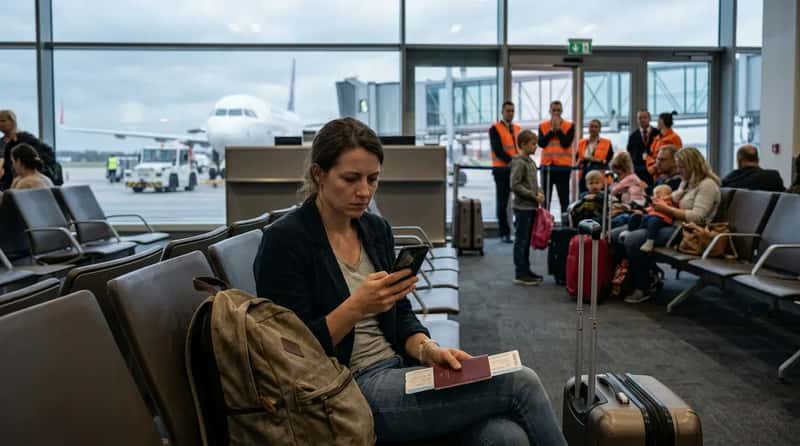
Most travelers obsess over cancellation coverage and completely forget the trip can still go wrong after departure. Trip cancellation is usually top of mind, but travelers should also review their policy’s post-departure benefits, since these can come into play if the unexpected happens after the trip has already started, potentially covering trip delays, trip interruptions, medical needs, and travel concierge services.
By the time a mid-trip emergency hits, it’s far too late to add this protection. The traveler who thought only about the flight home never checked what happens if the flight home itself gets cancelled. That blind spot causes some of the most expensive disasters on record.
#10 – Traveling Solo and Assuming Someone Else Has Your Back
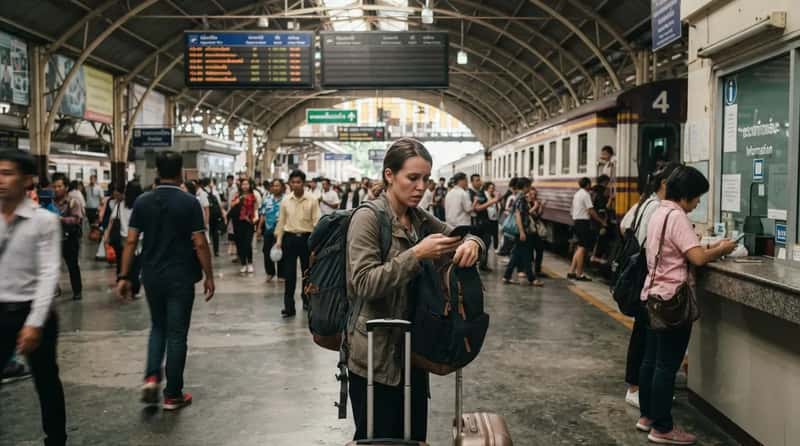
Solo travelers are actually the most likely group to buy travel insurance, which makes their mistakes even more surprising. Solo travelers buy the most travel insurance according to a new study, yet turns out they’re not so great at it – new data suggests solo travelers may be buying their insurance too late, choosing the wrong policies, and assuming their employer has their back.
The fine print quietly assumes a companion is present to help. It often assumes someone else is there with you – to witness an incident, help meet reporting windows, communicate with local authorities, or simply hold your phone. Traveling alone doesn’t just change the risk – it changes what the policy actually expects you to be able to do by yourself.
#9 – Buying a Policy After the Storm Already Has a Name
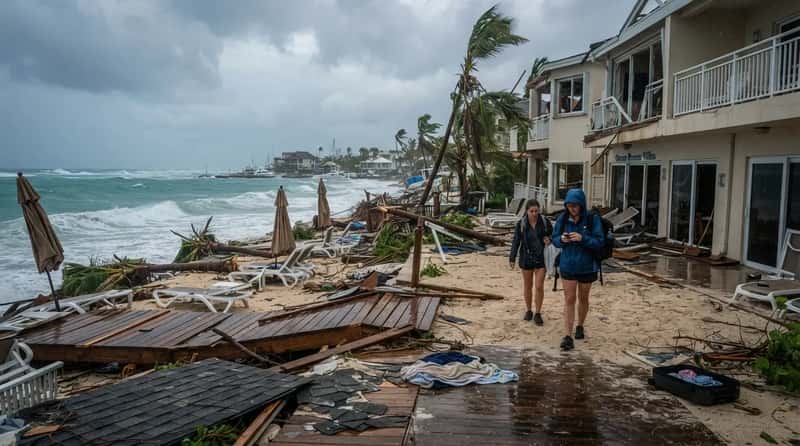
Timing decides almost everything in weather-related claims, and most travelers only learn this after it’s too late to matter. Daniel Durazo, director of external communications at Allianz Partners USA, says the distinction usually comes down to what was already known when you bought the policy – if a disaster strikes after your policy is in place, covered losses may be reimbursed, but buy the policy after a storm is already forecast, and it’s a different story.
This single rule quietly separates two identical-looking travelers into “covered” and “completely out of luck.” One bought insurance on a calm, boring Tuesday. The other bought it the moment the news started using scary words. Only one of them gets paid.
Quick Compare
- Policy bought before a storm is named: covered losses may be reimbursed
- Policy bought after a storm is already forecast: hurricane-related coverage typically doesn’t apply
- Storm hits with no mandatory evacuation ordered: cancellation benefit is often still denied
- Mandatory evacuation ordered before departure: cancellation coverage is more likely to activate
#8 – Not Checking Whether Coverage Matches Every Leg of the Trip
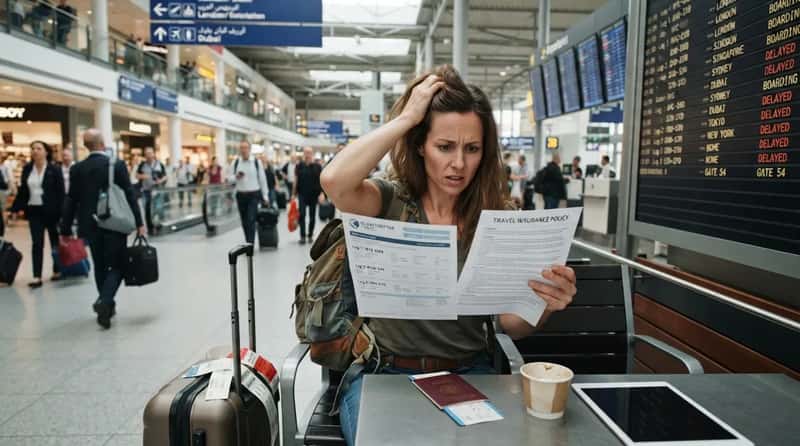
Multi-city itineraries and layovers create coverage gaps that single-destination travelers never think about. Travelers should check whether the plan is designed for their type of trip and confirm the coverage region matches the itinerary, including stopovers.
A policy built for a straightforward beach vacation may not extend to a business layover added in a completely different country. Most travelers assume “international coverage” means every country they touch, when it often means only the primary destination listed on the application. That mismatch surfaces at the worst possible moment – mid-claim, not mid-booking.
#7 – Filing a Claim for a Routine Checkup or Elective Procedure

Not every hospital visit abroad counts as an emergency, and insurers are strict about the difference. Visiting the hospital for routine care or checkups, elective treatments and surgeries, or medical tourism are all common reasons travel insurance claims are denied, since these items are not covered by most policies designed for unforeseen medical emergencies.
Travelers sometimes conflate “I saw a doctor abroad” with “this qualifies as emergency medical care.” To avoid a denial, avoid filing a claim for elective treatments and routine care, and provide documentation showing any emergency treatment was brought on by unforeseen circumstances. The word “emergency” is doing a lot of legal work in every policy – and most people never notice until they need it.
#6 – Skipping the Call to the Insurer Before Changing Plans
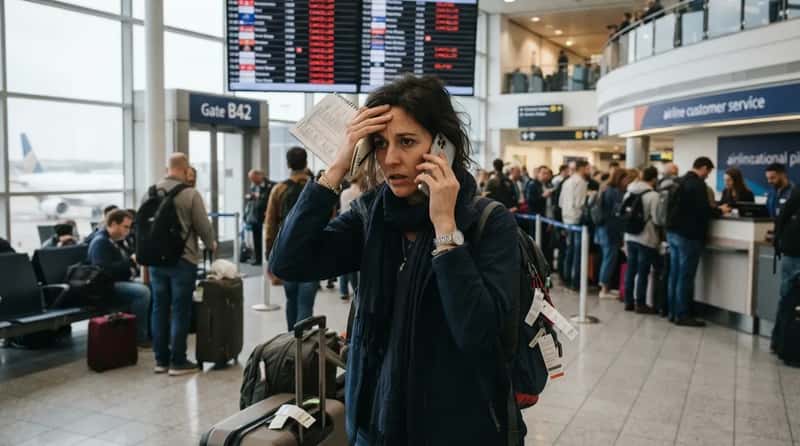
Panicking and cancelling first, then figuring out the paperwork later, is one of the fastest ways to void a legitimate claim. Experts consistently recommend the opposite order. When in doubt, always call your insurance company first.
A five-minute phone call before making a decision can reveal whether an event is actually covered, whether documentation is needed in advance, or whether a different plan of action preserves the claim. Travelers who cancel first and call second frequently find out the sequence itself invalidated everything. Order of operations matters more than most people realize.
#5 – Never Actually Reading the Policy Wording

Marketing pages and glossy benefit tables are not the same document that determines whether a claim gets paid. Marketing summaries are short by design, and claim assessment follows the policy wording – if you only read a benefits table, you may miss exclusions and conditions that change how coverage actually works.
The gap between the two documents is where most disasters quietly begin. Most travel insurance disappointment comes from avoidable mistakes: skipping the wording, misunderstanding exclusions, missing reporting steps, or failing to keep proof. A traveler who skims the sales page instead of the actual contract is essentially betting money on a document they never opened.
#4 – Hiding a Pre-Existing Condition on the Application

Withholding health information feels like a shortcut, but it’s one of the most damaging mistakes a traveler can make. Withholding information about your health, travel plans, or any other relevant details can lead to claim denial – be transparent during the application and treatment process.
Older travelers are hit hardest by this exact issue. Travelers over 60 have a 25% higher chance of denial due to pre-existing condition issues. The irony is brutal: the travelers who most need reliable medical coverage abroad are also the ones most likely to lose it over an undisclosed condition on page one of the application.
#3 – Assuming a “Do Not Travel” Advisory Doesn’t Affect the Claim
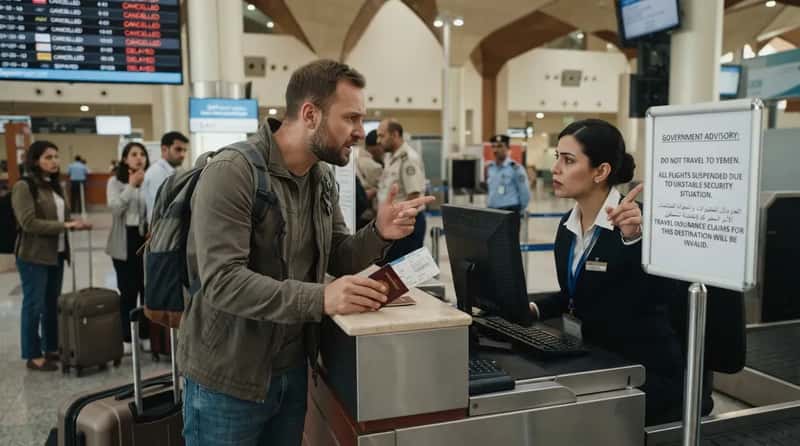
Government advisories carry real weight in the fine print, even when travelers barely notice them. Without these specific hard triggers, you might find yourself stuck with a nonrefundable ticket to a city that’s currently under a “do not travel” advisory.
Insurers also scrutinize claims tied to illegal activity or destinations under active warning, and that scrutiny is only getting sharper. Claims for reasons such as a pre-existing medical ailment, personal change of plans, missed connections not covered by the policy, or incidents involving illegal activity will not be approved. A traveler who books anyway and later cites the advisory as the reason for cancelling often discovers the advisory alone isn’t the covered trigger they assumed it was.
#2 – Confusing Travel Medical Insurance With Trip Protection
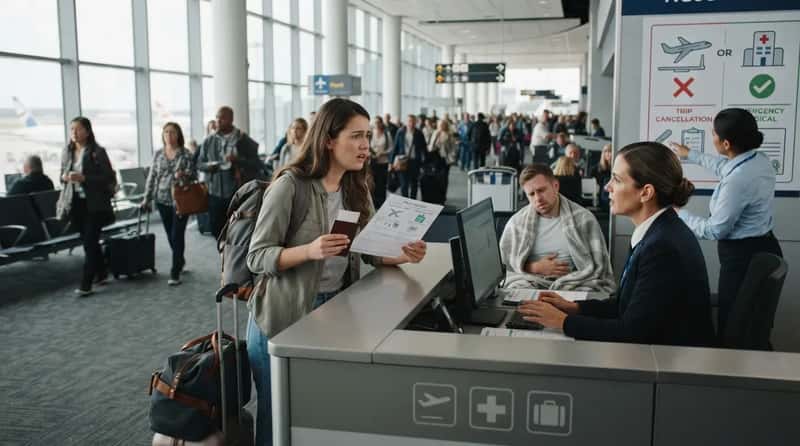
These are two entirely different products, and mixing them up is one of the quietest, most expensive mistakes travelers make. There are two main types of travel insurance: trip protection and travel medical insurance. One reimburses prepaid trip costs; the other pays for care if you get sick or hurt.
A traveler who buys only one, assuming it covers both, discovers the gap at the worst possible time. The claims data backs up how costly this confusion gets. Top denial categories break down as medical (45%), trip cancellation (30%), lost baggage (15%), and other (10%). Nearly half of all disputed claims trace back to this exact medical-versus-trip confusion.
#1 – Assuming “I Have Insurance” Means “I’m Covered”
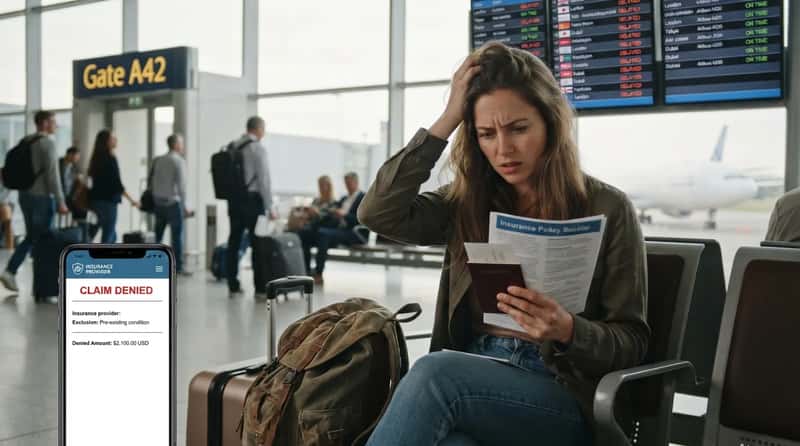
This is the mistake every other mistake on this list quietly feeds into. Having a policy number is not the same as having coverage for the specific thing that went wrong. Most travel insurance disappointment comes from avoidable mistakes: skipping the wording, misunderstanding exclusions, missing reporting steps, or failing to keep proof.
The scale of this confusion shows up clearly in the industry’s own numbers. ITIJ’s 2025 survey shows 18-20% of claims are denied, mainly due to policy exclusions or incomplete documentation. And when a denial does land, it’s rarely a small inconvenience – the average denied claim value reached $2,100 in 2025 due to higher medical costs abroad. The travelers who feel safest, simply because a policy exists, are often the ones most exposed to a payout that never comes.
At a Glance
- 18-20% of claims are denied, mostly over exclusions or missing paperwork
- Average denied claim value hit $2,100 in 2025
- Top denial categories: medical (45%), trip cancellation (30%), lost baggage (15%), other (10%)
- Travelers over 60 face a 25% higher denial rate tied to pre-existing conditions
Every disaster on this list started small – a skipped phone call, an unread paragraph, a policy bought three days too late. None of them required bad luck. They required one ordinary, forgettable decision that quietly closed a door nobody realized was open. The travelers who avoid these disasters aren’t lucky or wealthy; they’re just the ones who read the fine print before they needed it, not after.
Which one of these mistakes have you seen ruin a trip? Tell us your story in the comments – the next traveler reading this might avoid your exact disaster.