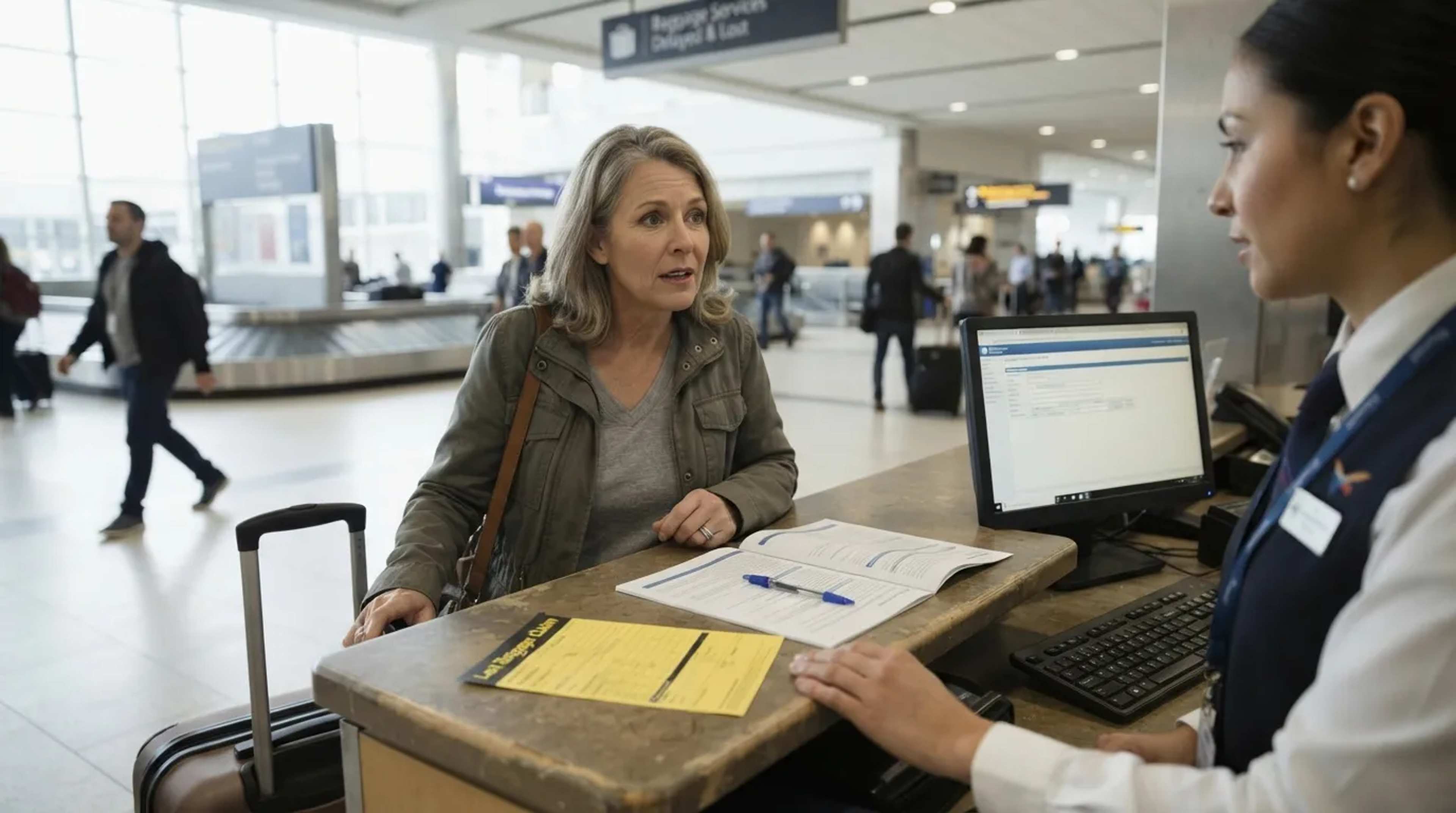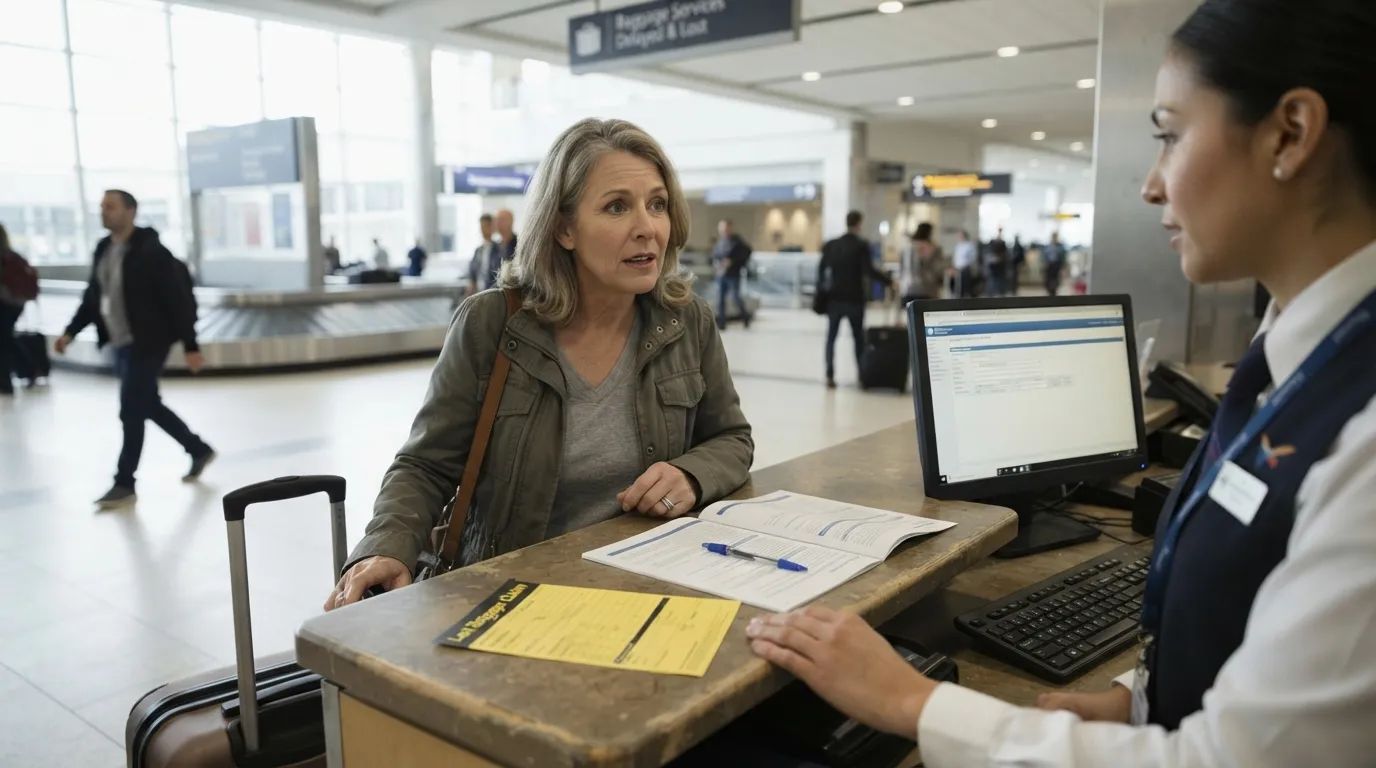
You wave goodbye to your suitcase at the counter and watch it vanish behind rubber flaps. It feels like the hard part is over. In reality, that bag is about to run a relay race through scanners, carts, chutes and tight connections, and plenty of things can go wrong before you see it again.
Even in a record-setting year, about 24 million checked bags were still mishandled worldwide in 2025. The causes are rarely the ones travelers blame. Below are 25 warnings, built from airline rules, federal requirements and industry data, that most flyers never hear. The first one is a number that makes “good news” sound very strange.
#25 – 24 Million Bags Went Wrong in 2025, and That Was a Record Low
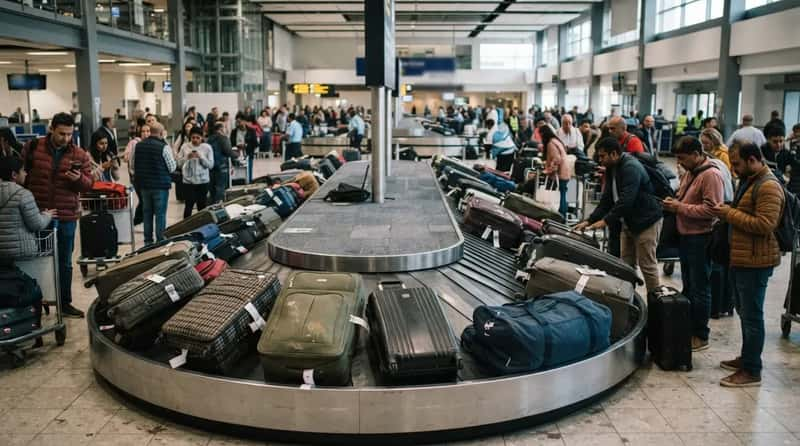
Even the best year on record still meant millions of unhappy suitcases. SITA reported a global rate of 4.9 mishandled bags per 1,000 passengers in 2025, the lowest ever. Roughly 24 million bags still went astray in the best year ever recorded. “Mishandled” covers bags that were delayed, mislaid, misdirected, pilfered or stolen.
The progress is real. The 2024 rate was 6.3, so 2025 was a steep drop, and SITA credits AI-assisted routing, real-time data sharing and biometric bag drop. Even so, mishandling still costs the industry billions of dollars a year.
But the next fact changes what “lost luggage” really means.
#24 – Most “Lost” Luggage Isn’t Lost at All
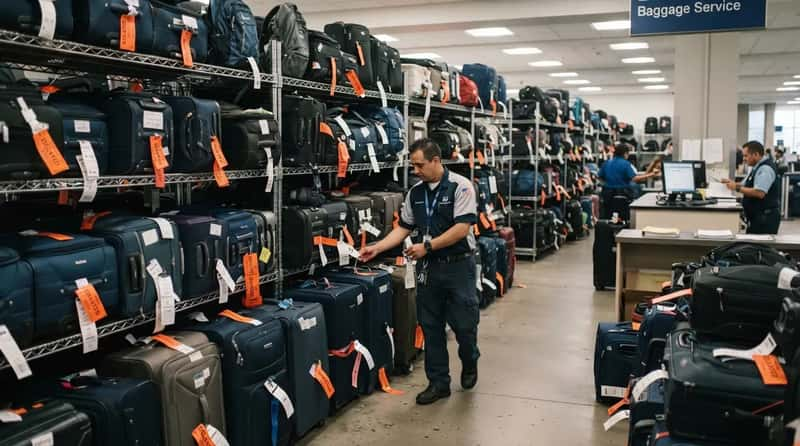
The word “lost” is mostly a myth. In SITA’s 2025 report, delayed bags made up 74% of mishandled baggage, damaged or pilfered bags 18%, and lost or stolen bags 8%. Only about one in twelve mishandled bags is lost or stolen for good.
Most late bags also come back quickly. In 2024, more than 66% of mishandled bags, about 22 million, were resolved within 48 hours in SITA’s WorldTracer system. That’s still a painfully long wait if your cruise leaves tomorrow.
At a Glance
- Delayed bags: 74% of mishandled cases in 2025
- Damaged or pilfered bags: 18%
- Lost or stolen for good: 8%
- Resolved within 48 hours in 2024: more than 66%
#23 – Your Black Roller Bag Has a Twin, and It’s Circling the Carousel
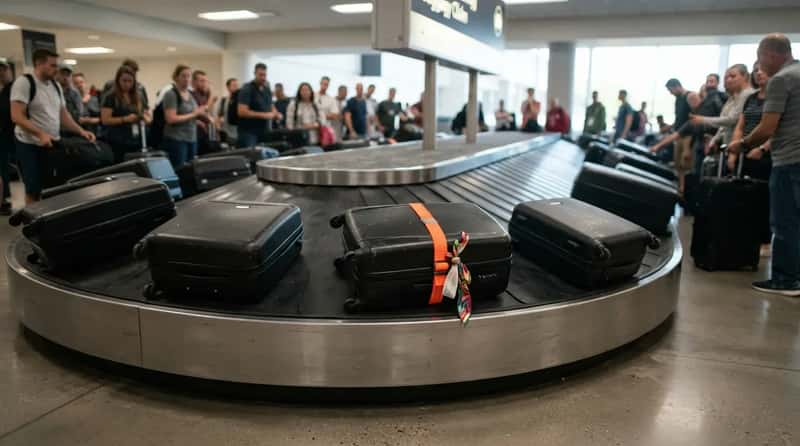
Black is among the most common luggage colors, and identical hard-shell cases are everywhere. Bag switches even appear as their own category in SITA’s list of mishandling causes. A bag that looks like everyone else’s is easy to grab by mistake.
The fix costs almost nothing. Add a loud color, a sticker or a distinctive strap, and check the name on the tag before you leave the carousel. It heads off a very awkward conversation in the parking lot.
#22 – The Overstuffed Suitcase Is a Zipper Waiting to Fail
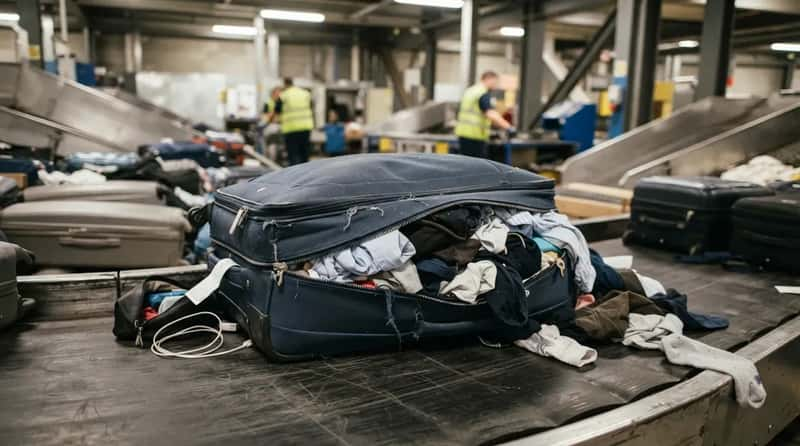
A bag that’s one tug from bursting rarely survives the trip. In transit it passes over belts, down chutes and onto carts, often stacked with other luggage. A tightly packed zipper can split long before the bag reaches the weight limit. Damage and pilferage together are a real slice of the mishandling picture, and a burst bag is an easy target for both.
Many airlines set the standard economy limit at 50 pounds, but weight isn’t the only number that matters. Bulging seams, strained zippers and overloaded expansion panels are what give out first. Leave some slack so the contents can settle without pressure.
#21 – That Old Tag From Your Last Trip Can Send Your Bag the Wrong Way
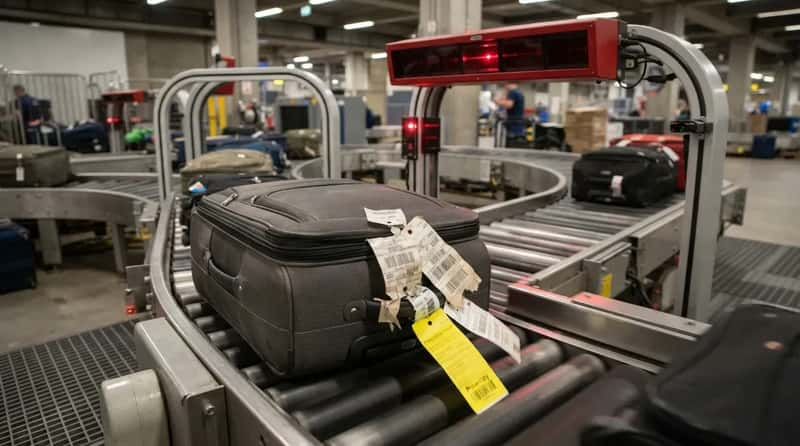
Souvenir tags look harmless, but they carry barcodes. Automated sorting lines scan those barcodes to decide where a bag goes. A leftover tag from a past trip hands the system extra data it was never meant to read. Airlines routinely tell travelers to strip off old tags before checking in.
Peel off the stub, the sticker and any loose paper barcode before you reach the counter. The same goes for old priority tags. A clean handle is the simplest way to give the system one unambiguous instruction.
#20 – Dangling Straps Are Snag Magnets on Conveyor Belts
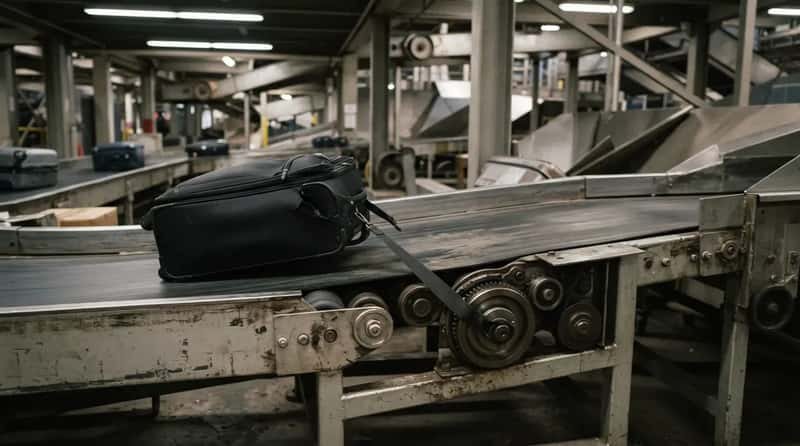
Anything that hangs off a bag is a risk on a conveyor belt. Loose shoulder straps, backpack cords and long luggage tags can catch on moving parts. Many airlines say outright that they won’t cover damage to straps, wheels and handles.
Their contracts of carriage often exclude protruding parts and external attachments. A ripped strap may be your problem, not theirs. Tuck straps into pockets and keep tags short and secure, because a streamlined bag has fewer places to catch.
#19 – The “Fragile” Sticker Is Mostly Wishful Thinking
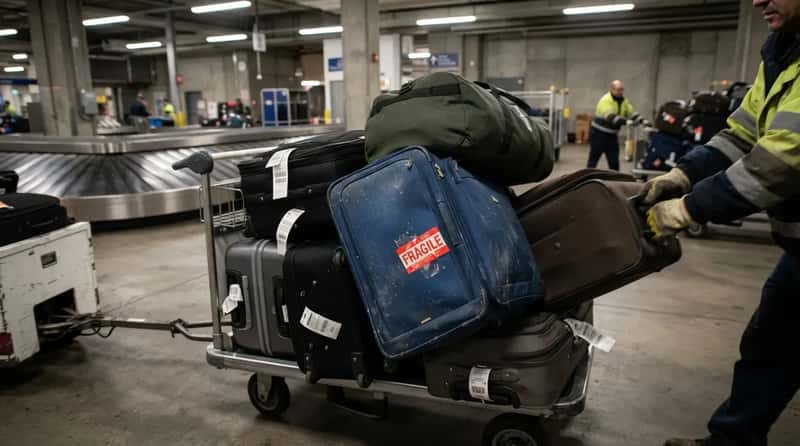
It feels like protection, but a bright “FRAGILE” label is closer to a polite suggestion. Checked bags travel in carts, bins and stacked loads, not on a velvet cushion. Many airlines state in their contracts that fragile items in checked bags are carried at the passenger’s own risk.
Pad breakables thoroughly or keep them in the cabin. A label might get someone to slow down for a second. It won’t change the physics of a bag shifting on a cart.
#18 – Airport Plastic Wrap: Smart Shield or $15 Security Blanket?
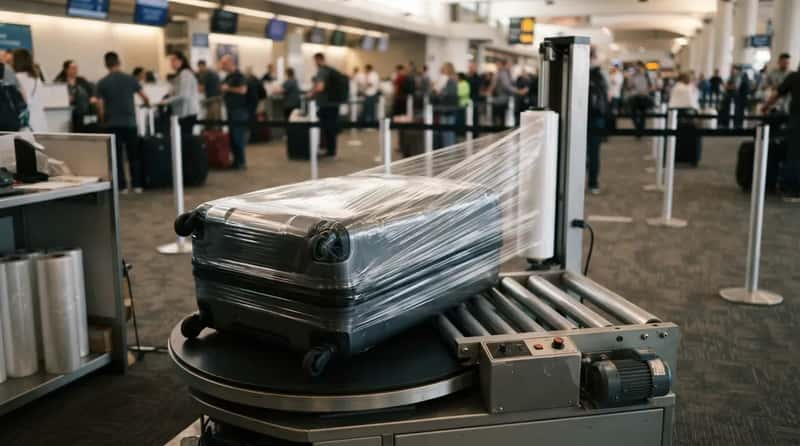
Those wrapping machines near check-in charge a fee, and travelers are split. Fans say the wrap keeps zippers from popping open and cuts down on scuffs. Skeptics call it a waste of money that doesn’t stop the damage that really matters. If TSA needs to inspect a wrapped bag, the wrap can simply be cut off.
Wrap does little against crushing or hard impacts. Some travelers love the peace of mind, and others see it as an expensive comfort blanket. Treat it as light cosmetic protection, not armor.
Quick Compare
- Where wrap helps: keeps zippers from popping open and softens scuffs
- Where it doesn’t: crushing and hard impacts still get through
- The catch: TSA can cut it off if your bag is pulled for inspection
#17 – The Wrong Lock Can Get Cut Off in Seconds
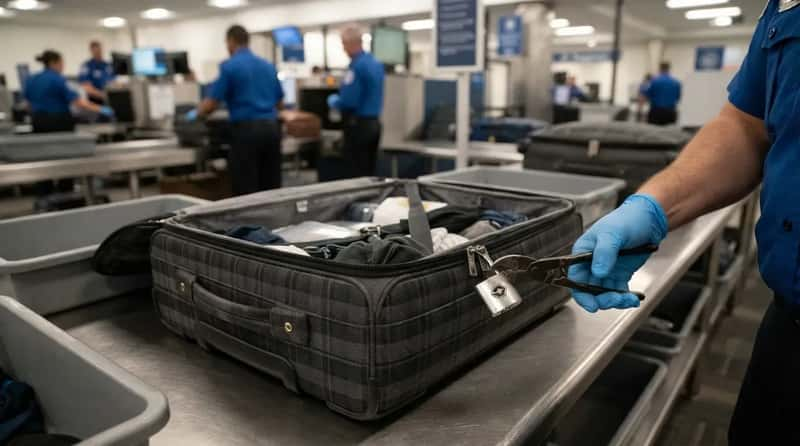
A lock feels reassuring until it meets a security officer. TSA can open checked bags for screening. If a lock isn’t one TSA can open, officers may cut it off. That leaves you with a broken lock and a bag that was opened anyway.
Some experts argue locks are a false sense of security anyway, since thieves can often get past basic zippers with simple tricks. A lock mostly deters casual tampering. Don’t count on it to protect anything valuable.
#16 – Your Laptop Is the Riskiest Thing in the Suitcase
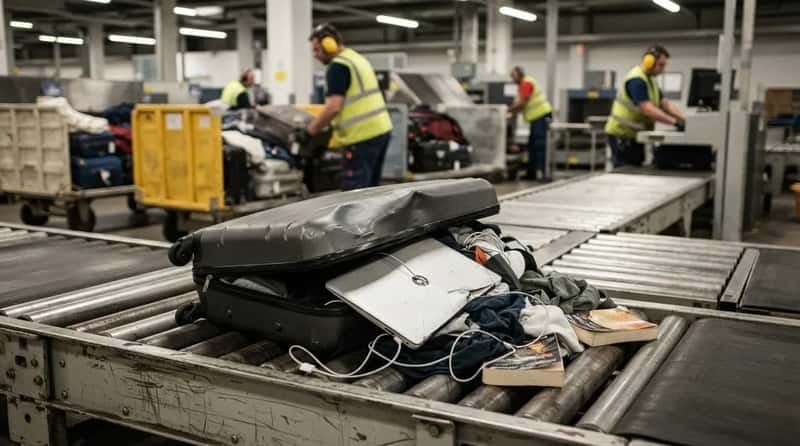
Most flyers never read the fine print on what’s covered. Airline contracts frequently exclude certain items from checked-bag claims. Many carriers exclude cash, jewelry and electronics from liability for checked luggage. A lost laptop could leave you arguing for a payout you were never owed.
Theft and damage are part of the mishandling mix, too. SITA’s breakdown attributes 18% of mishandled bags to damage or pilferage. Anything valuable is safer riding in your own hands.
#15 – Arrive Late and Your Bag May Stay Behind While You Fly
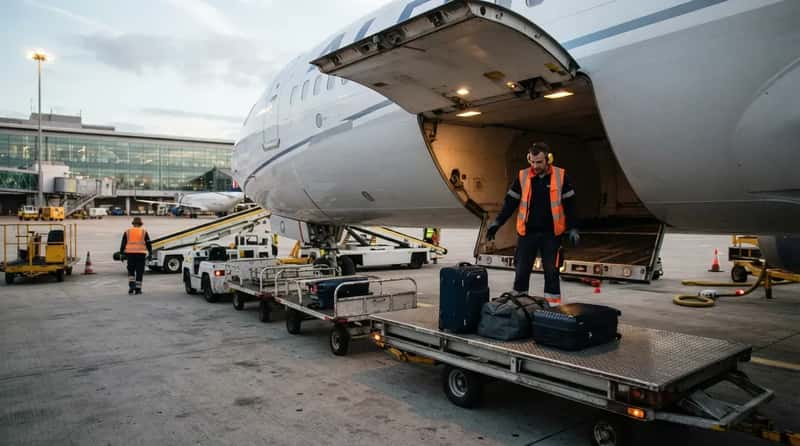
Making your flight doesn’t mean your bag makes it. Airlines set bag cutoff times before departure, and bags checked after the cutoff can be refused or sent later. Loading failures are a standing cause of mishandled bags. In SITA’s 2024 breakdown, they accounted for 16% of cases.
Bags need time to be screened, sorted and loaded onto the right aircraft. A late arrival squeezes all of those steps into minutes. Check the cutoff in your airline’s app and give yourself a buffer.
#14 – The Paper Inside Your Bag Is the Backup That Saves It
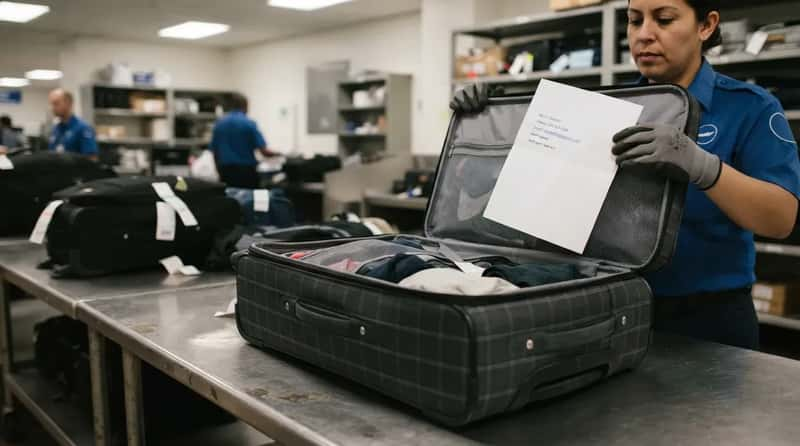
Tags tear off, and when they do, a bag can become anonymous. Staff at airline baggage offices may open an unidentified bag to look for contact information. A bag that has lost its tag may have only the paper inside it to prove who owns it.
Tuck in a sheet with your name, phone number and email. Add the address where you’ll be staying, not just your home address. That way a reunited bag heads to where you are, not where you left.
#13 – A Photo at the Curb Is Your Best Evidence
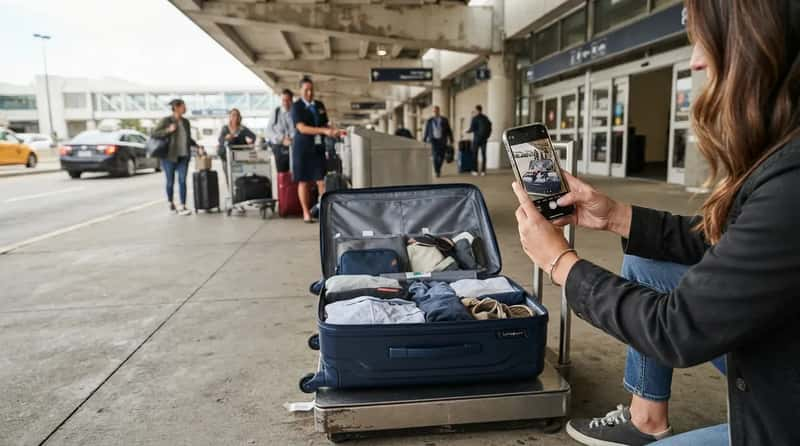
Claim forms ask for specifics, and most people can’t remember them under stress. Photograph the bag’s outside and the contents before you hand it over. A claim often turns on what you can prove you packed. A photo of a packed suitcase is far stronger than a list scribbled from memory.
Keep receipts for expensive items, too. Those details are what separate a quick claim from a drawn-out one. Thirty seconds of effort pays for itself the first time a bag goes missing.
#12 – A Thunderstorm Can Bench Your Bag Even If Your Flight Leaves
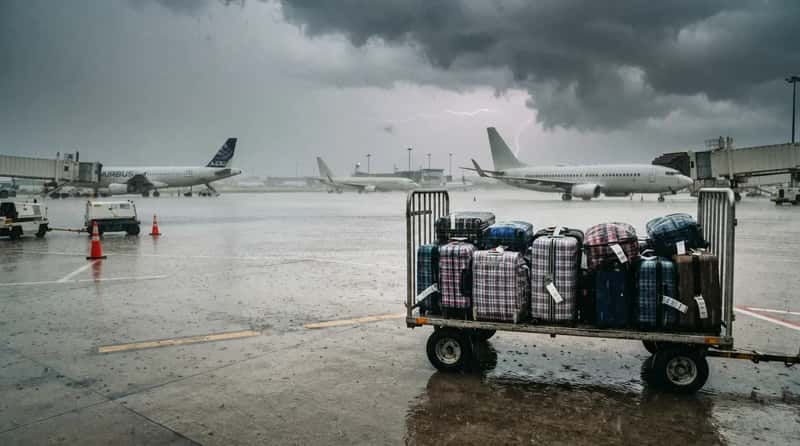
Weather doesn’t just delay planes. Operational issues such as customs delays, weather and capacity constraints accounted for about 10% of mishandled bags in 2024. Roughly one in ten mishandled bags that year traced back to problems like these.
Many airports pause outdoor ramp work when lightning is close, for safety reasons. Bags can pile up behind schedule, and a plane may leave with space limits that force some luggage off. When that happens, your bag might trail you by a flight.
#11 – Skis, Golf Bags and Strollers Take a Secret Second Route
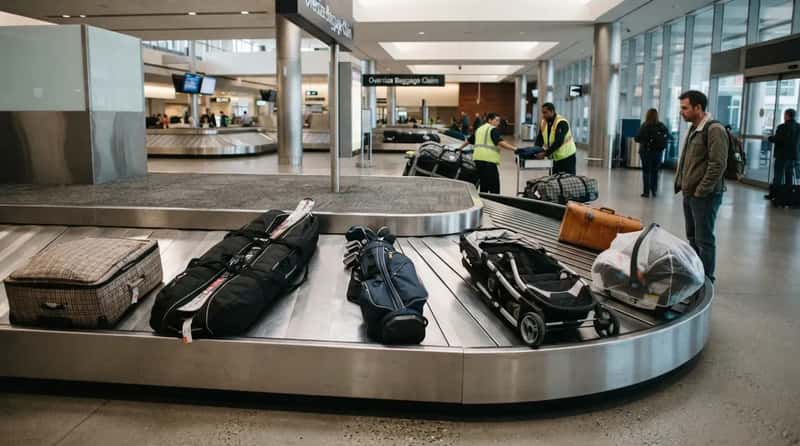
If it won’t fit on the main belt, it goes elsewhere. Oversize items often travel through separate drop points and arrive at separate pickup areas. Your skis may not show up on the carousel where everyone else’s bags do. That surprises more flyers than you’d think.
Hard cases and padded covers help these items survive the trip. Strollers and car seats are often gate-checked, so confirm where to collect them. Knowing the route saves you a long, confused wait.
#10 – One Cracked Bottle Can Ruin the Whole Suitcase
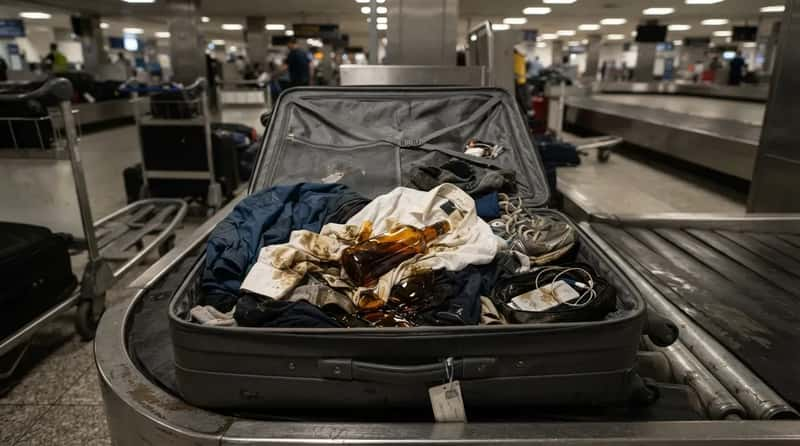
A leak is a chain reaction. Bags get stacked, squeezed and bumped, and a single bottle can soak everything inside. The 3-1-1 liquid limit applies only to carry-ons, so checked bags have no such cap. That freedom is exactly why leaks happen so often.
Seal bottles in zip bags and tape the caps. Wrap anything glass in clothing. One spill can stain clothes, damage electronics and leave a suitcase smelling for weeks.
#9 – Three Letters on the Tag Decide Where Your Bag Lands
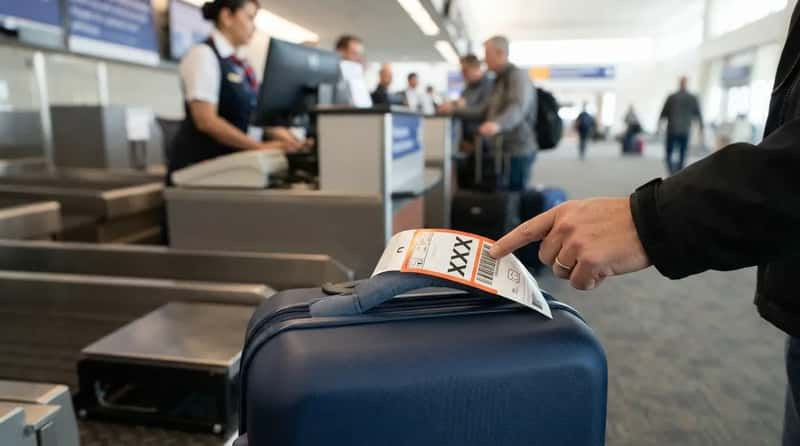
Your bag follows its tag, not your ticket. Each tag shows an airport code for the destination, and sorting systems route by it. If the code on the tag is wrong, the bag goes where the code says. Tagging errors show up as their own cause in SITA’s breakdown of mishandling.
Glance at the tag before you walk away from the desk. If you use a self-service kiosk, check the code and make sure the tag is attached securely. It’s a ten-second check that can save you days.
#8 – International Flights Lose Far More Luggage
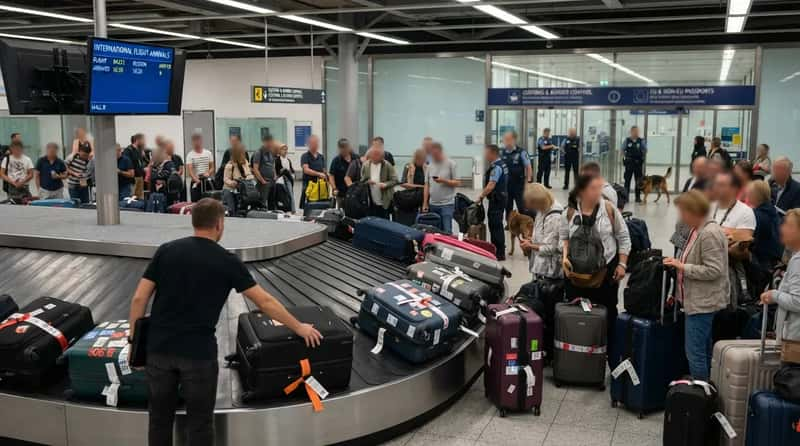
Crossing a border multiplies the ways a bag can go wrong. SITA says international routes are about five times more likely to lose luggage than domestic flights. That’s a multiple, not a margin.
Regions differ widely, too. Europe’s 2024 rate was 12.3 bags per 1,000 passengers, about double the global rate of 6.3. More handoffs, more airlines and customs checks all add up.
Fast Facts
- International routes: about 5x more likely to lose luggage than domestic ones, per SITA
- Europe in 2024: 12.3 mishandled bags per 1,000 passengers
- Global rate in 2024: 6.3 per 1,000
- The extra risk comes from more handoffs, more airlines and customs checks
#7 – A Pocket Tracker Now Talks to Airline Lost-Bag Systems
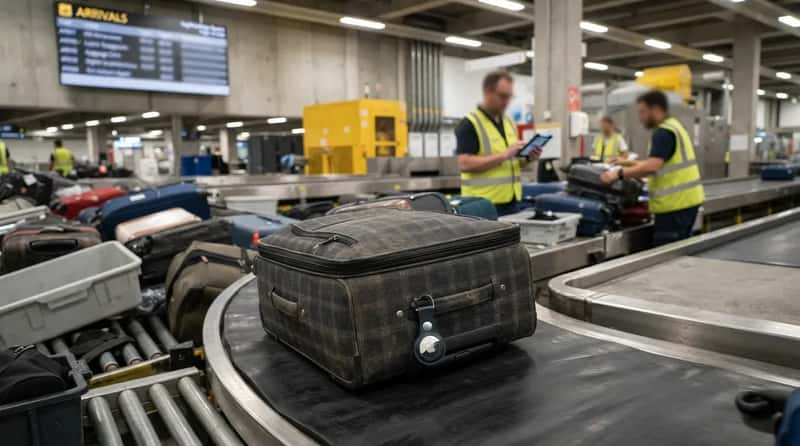
Tracking used to be a gamble, but it’s becoming standard. SITA reported that Apple’s Share Item Location feature has been integrated with its WorldTracer system. Your tracker’s location can now be shared with the airline’s own lost-bag database. Meanwhile, adoption of IATA Resolution 753 baggage tracking has passed 50%, with full compliance targeted for 2027.
Some frequent flyers argue trackers just create anxiety, since you can watch the dot sit in the same terminal for hours. Others say the data ends arguments with the airline. Either way, it’s a different game than it was a few years ago.
#6 – Heavy Bags Hurt People, Not Just Zippers
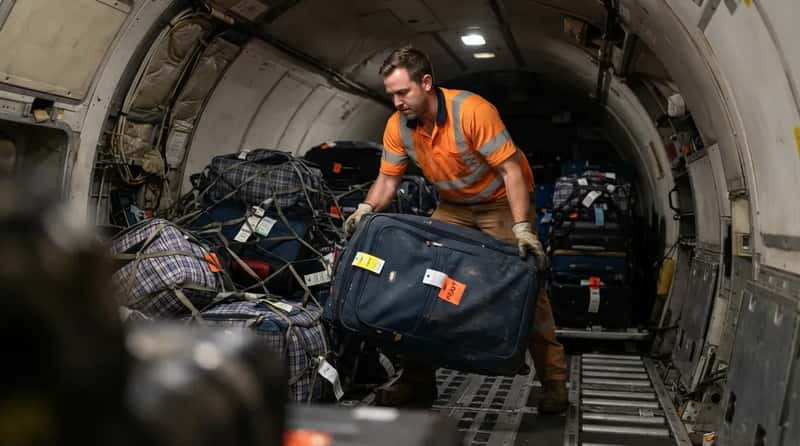
Behind every bag is a person who has to lift it. On many aircraft, especially smaller planes, bags are loaded into tight holds by hand. Many airlines cap standard checked bags at 50 pounds. Those limits protect workers as much as they protect your suitcase.
Overweight bags usually trigger fees, and some airlines add heavy-bag tags. Two lighter bags are easier on everyone than one that barely closes. They’re also less likely to split on the way.
#5 – The Bag-Fee Refund Exists, but Only If You File First
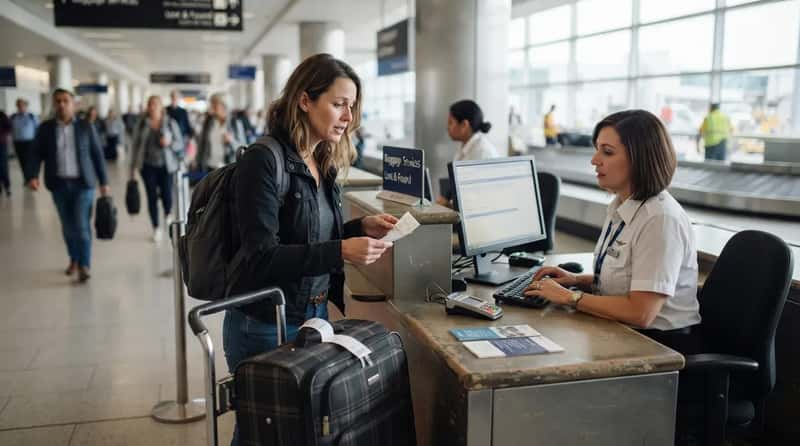
Few flyers know they may be owed money. Passengers who file a mishandled baggage report are entitled to a bag-fee refund if the bag isn’t delivered within 12 hours of a domestic flight arriving at the gate, or within 15 to 30 hours on international flights. The rule has been in force since October 28, 2024. You get the refund only after you file a mishandled baggage report.
Refunds are due within seven business days for credit card payments and 20 calendar days for other methods. The rule covers the bag fee, not the whole ticket. Still, it’s money that many travelers never claim.
#4 – The Payout for a Lost Bag Has a Ceiling
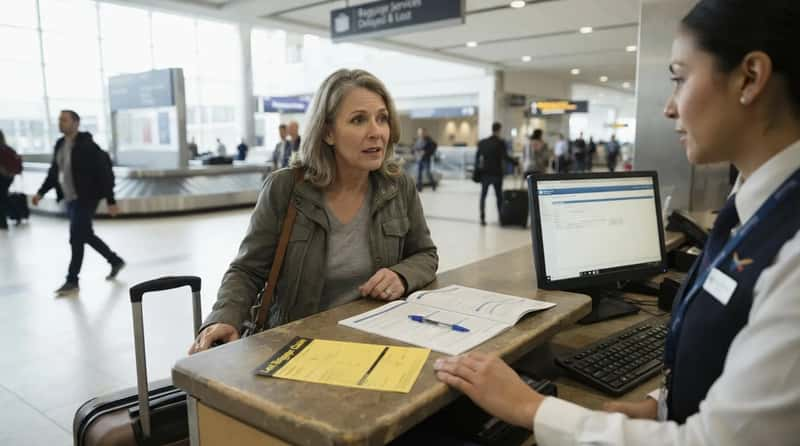
The reimbursement for a lost bag isn’t unlimited. Airlines must refund checked baggage fees and reimburse you for lost items, a requirement since 2007. The current maximum reimbursement is $4,700. That cap was reported by PIRG, and claims are typically based on an item’s depreciated value rather than replacement cost.
There’s one important exception. Wheelchairs, scooters and other assistive devices count as baggage, but they aren’t subject to that liability limit on domestic flights. For travelers who depend on that equipment, a damaged device is far more than an inconvenience.
#3 – Spare Lithium Batteries Don’t Belong in the Cargo Hold
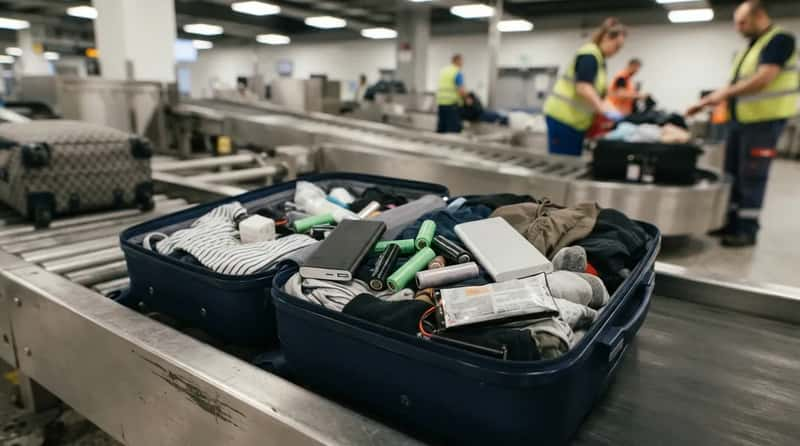
This one is a safety rule, not a suggestion. The FAA says spare lithium batteries and power banks must travel in carry-on bags. Spare lithium batteries and power banks are banned from checked bags. Devices with installed batteries are generally allowed but are best kept with you.
The point isn’t to scare anyone. A problem in the cabin gets noticed and handled fast, while one in the hold can go unseen. Check your bag for stray power banks before you drop it off.
#2 – Connecting Flights Are Where Most Bags Go Missing
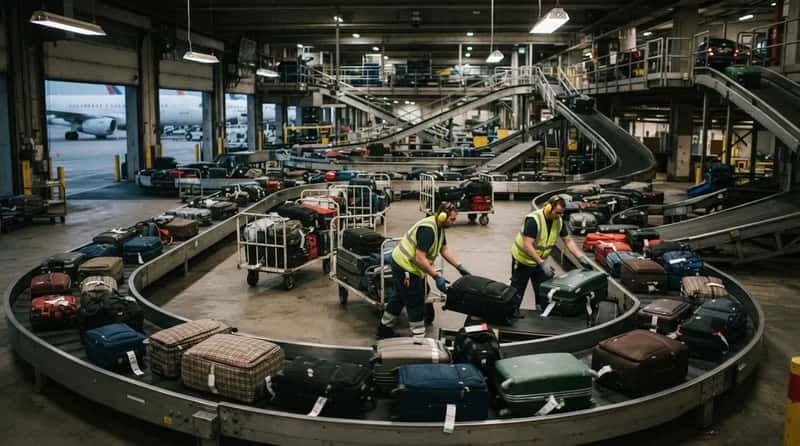
The leading cause of mishandled bags isn’t what most people guess. In SITA’s 2025 report, transfers were responsible for 39% of mishandling cases. A year earlier, transfer mishandling accounted for 41%. Roughly four in ten mishandled bags go wrong during a connection.
Short layovers leave little time to move bags between planes. Booking everything on one ticket lets the airline check your bag through to the final destination. A longer connection gives your suitcase a better shot at making it.
Worth Knowing
- Transfers caused 39% of mishandled bags in 2025 and 41% in 2024
- One ticket means the airline can check your bag through to the end
- Confirm the final-destination code on the tag before you leave the desk
- A longer layover gives your bag more time to make the switch
#1 – Never Check Anything You Can’t Replace
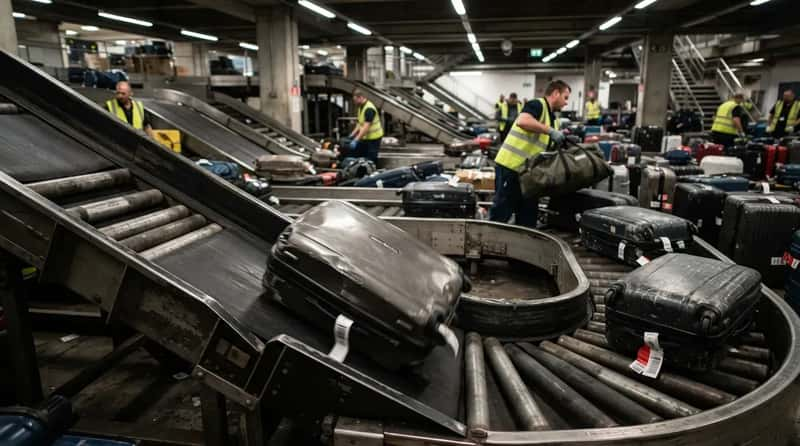
The costliest mistake isn’t a broken zipper. It’s putting something irreplaceable in the hold. Medications, travel documents, glasses, chargers and sentimental items can’t be bought back at a store. Reimbursement formulas pay for things, not for what they meant to you.
Even a short delay can derail a wedding, a funeral or a long-planned trip. SITA estimates a mishandled bag costs the industry an average of $260, but that number can’t capture what a family heirloom is worth.
Your suitcase is going to take a rougher ride than you imagine, and most of the time it will arrive just fine. Pack it like it might be late, tag it like it might get swapped, and keep whatever you couldn’t bear to lose in your own two hands.