Most travelers assume the worst thing that can happen to a suitcase is a scuffed corner or a slow lap around the carousel. Baggage handlers know a rougher truth. The choices passengers make at the check-in counter quietly decide whether a bag sails through the system or becomes one of the millions that get delayed, damaged, or lost every single year.
Some of these habits feel like common sense. Others are almost the exact opposite of what handlers actually want you to do, and a few might make you rethink everything you pack next time. Here’s what the people who load and unload bags for a living say passengers keep getting wrong.
#26 – The Ribbon Trick That Actually Backfires
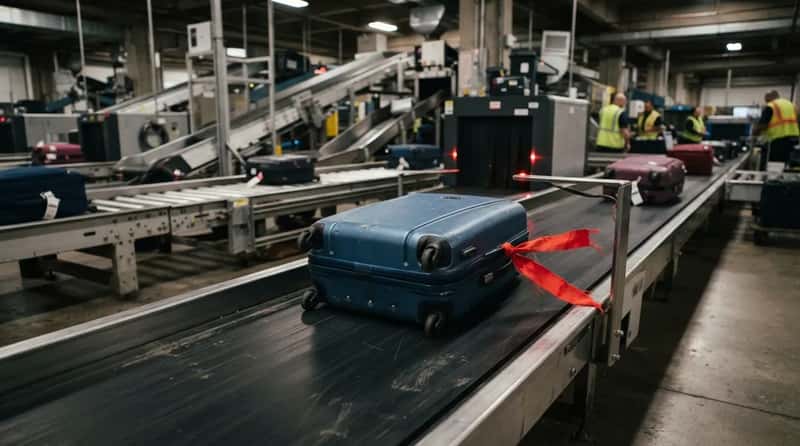
Tying a bright ribbon to your zipper feels like a smart way to spot your bag faster at the carousel. Handlers say it often does the opposite.
Ribbons that people tie onto their suitcases to help identify them can cause issues with the bag being scanned in the baggage hall, according to one Dublin Airport handler. When a scanner can’t read the bag, it can end up in manual processing, which sometimes means it doesn’t make the flight at all.
#25 – Old Flight Stickers Are Silently Confusing Every System
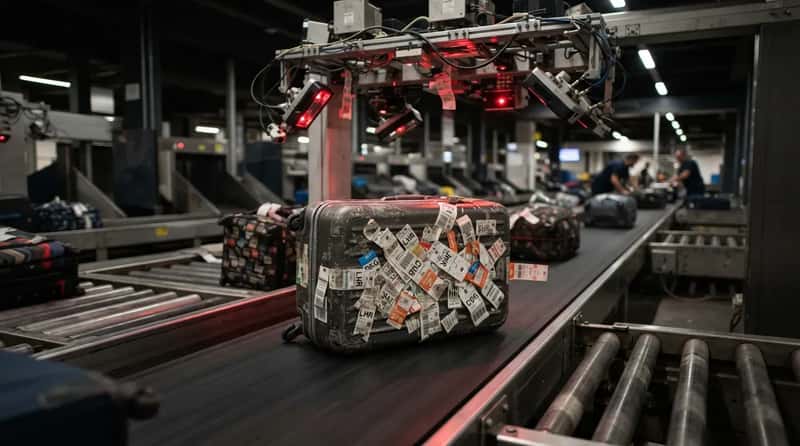
That collage of stickers from past trips looks charming. To a conveyor scanner, it looks like noise.
One baggage worker explained it plainly: bags miss flights or get misrouted because passengers leave old tags on, and that confuses both handlers and the belt scanners. It’s a habit that costs nothing to fix, yet handlers say they see it on nearly every belt, every shift.
#24 – “Fragile” Stickers Rarely Change a Thing
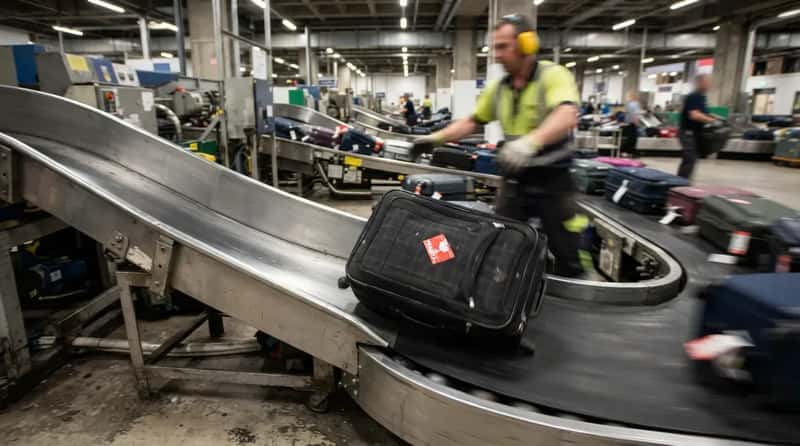
Slapping a fragile sticker on a suitcase feels like insurance. Insiders say it barely registers.
Handlers moving hundreds of bags an hour simply don’t have time to hand-sort by sticker, so fragile labels are mostly ignored once a bag hits the belt. If something inside genuinely can’t survive a drop or a stack, the sticker isn’t what protects it.
#23 – Cramming In “Just One More Pair” of Shoes
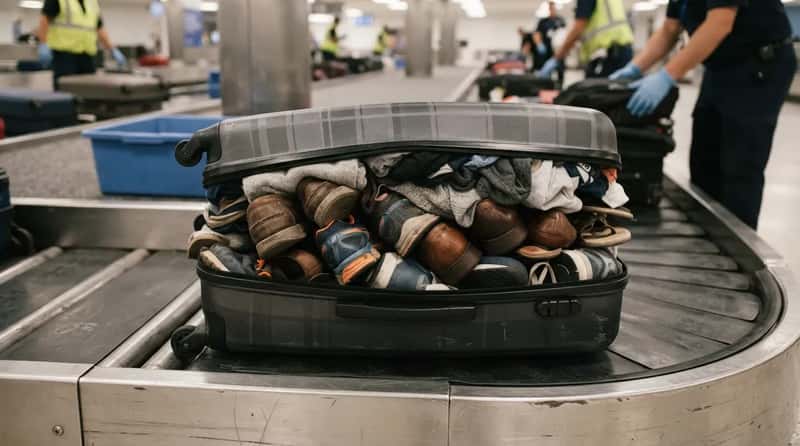
Shoes quietly wreck more suitcases than almost anything else packed inside them.
Handlers point out that shoes are the single most common source of wasted space and unnecessary weight in checked luggage. That extra pair is usually what pushes a bag over the limit, triggering fees and making it harder to load safely alongside everything else.
#22 – Sneaking a Bag Onto the First-Class Cart
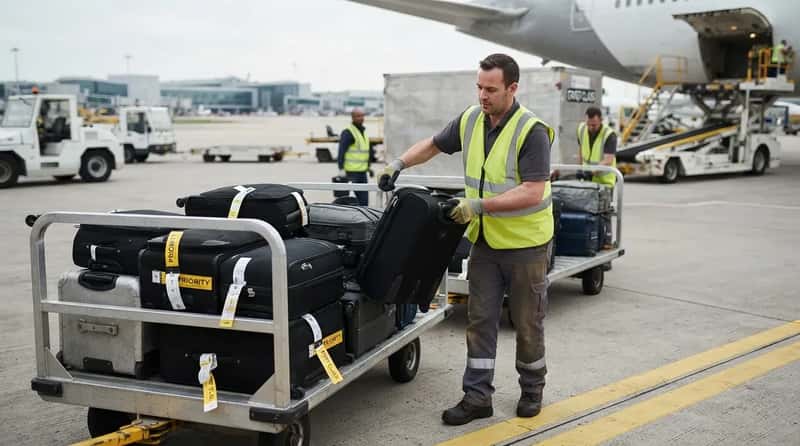
Some flyers try to slide their suitcase into premium loading in hopes of faster handling. It rarely works the way they hope.
Many passengers try to weasel their luggage into the first-class cart, one handler admitted, but staff are trained to catch it. Genuine priority handling is tied to your fare or status, not to which cart you managed to slip a bag onto.
#21 – Assuming a Polite Request Changes How a Bag Is Handled
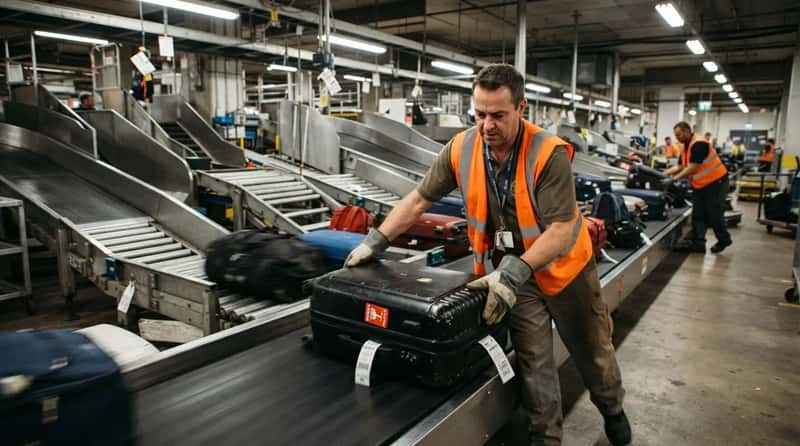
Asking an agent to “please be careful” with a bag feels reasonable. Handlers say it mostly falls flat in the moment.
Passenger requests to take special care of a suitcase are largely futile, and they rank among the things airport staff find most annoying. The speed of the operation, not the request itself, decides how a bag gets treated in transit.
#20 – Skipping the Plastic Wrap on Strollers and Car Seats
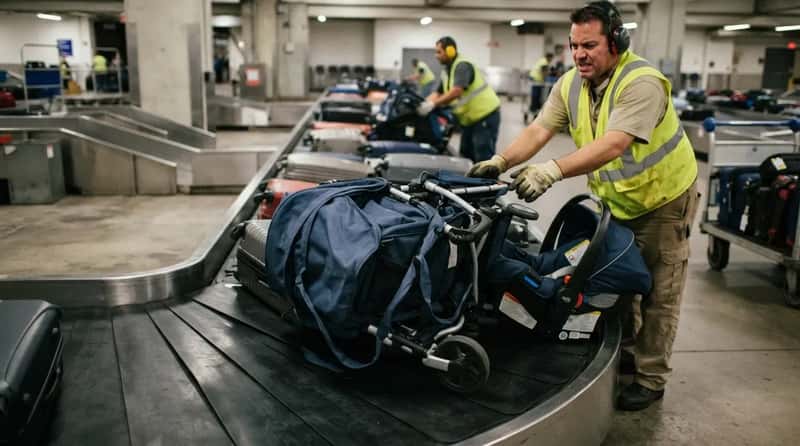
Bulky gear without wrap creates a bottleneck that slows down an entire loading line.
Handlers explain that strollers, car seats, and odd-shaped gear cause real problems when they’re not wrapped, since straps catch on belts and buckles get stuck. Wrapped items move quicker and stack without issue, while unwrapped gear risks getting shoved aside if it’s dirty or awkward.
#19 – Not Realizing How Physically Punishing This Job Actually Is
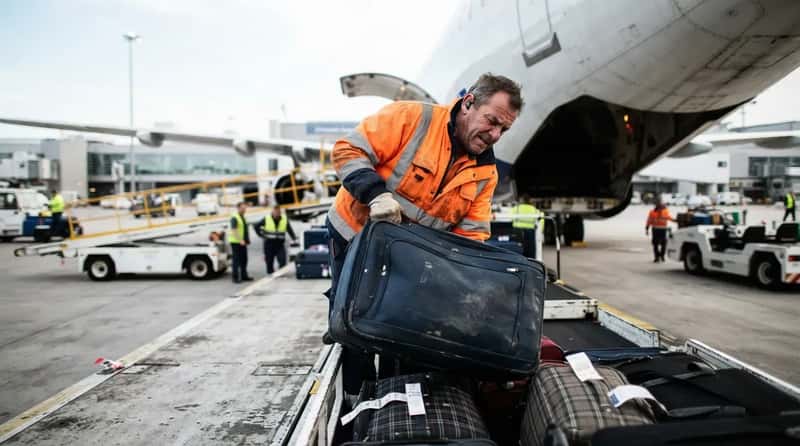
Passengers picture handlers casually tossing bags around. The reality is closer to an industrial job with a real injury toll.
Industry data shows over half of baggage handlers report shoulder, knee, or lower-back pain, and workers with 20-plus years on the job report double the low-back injury rate of newer hires. That physical toll shapes why speed, not gentleness, often wins on a busy ramp.
Fast Facts
- Over half of baggage handlers report chronic shoulder, knee, or lower-back pain
- Handlers with 20+ years on the job report double the low-back injury rate of newer hires
- Ramp crews often work under tight turnaround windows that reward speed over gentle handling
- The physical toll is one reason handlers push back on extra requests for “special care”
#18 – Packing a Bag Right Up to the Weight Limit
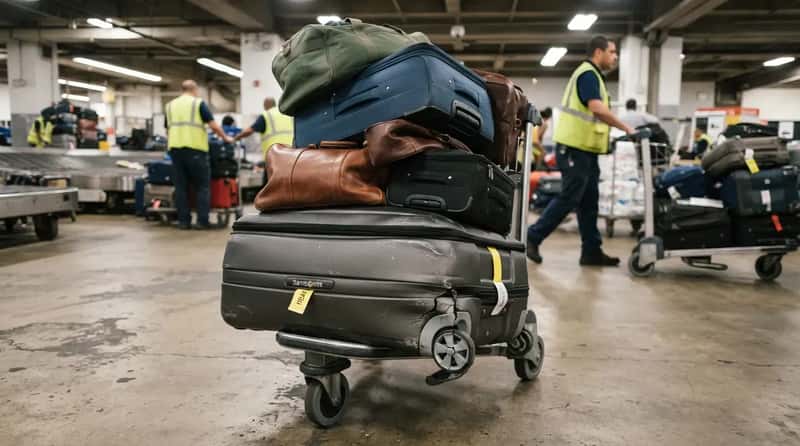
Maxing out a suitcase to exactly 50 pounds feels efficient. It also puts that bag at the bottom of every stack.
One handler was direct about it: timing helps, but size, shape, and weight matter too – if a bag weighs 80 pounds, it’s going on the bottom whenever possible. Heavier bags absorb more pressure from everything piled on top, raising the odds of a cracked wheel or busted zipper.
#17 – Believing an Early Check-In Guarantees a Smoother Ride
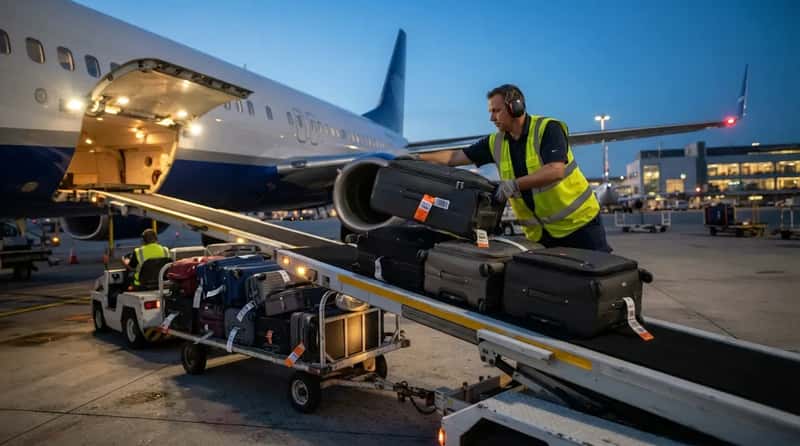
Most flyers assume showing up early protects their bag. Handlers say the opposite timing often works better.
One handler’s advice, shared widely online, was to arrive mostly late but not last-second, since that bag typically gets stacked on top of the cart, loaded first onto the plane, unloaded last, and placed first onto the carousel. By his own estimate, it’s probably 70 to 80 percent effective – not a guarantee, but far from a myth either.
#16 – Choosing a Bargain Hard-Shell for a Multi-Connection Trip
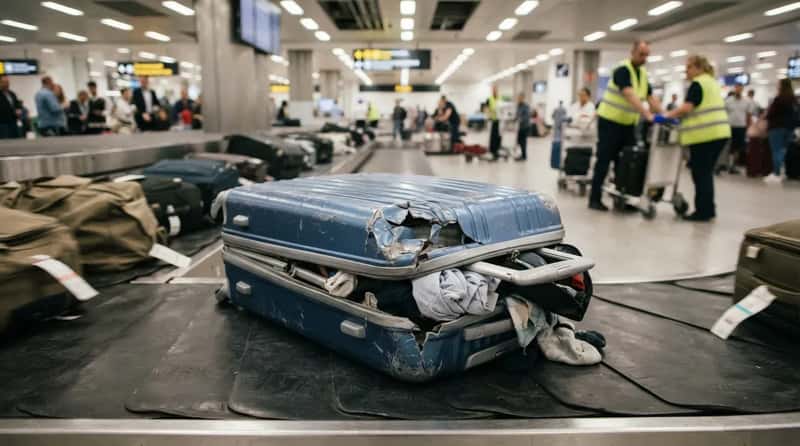
A cheap, thin hard-shell suitcase might look sleek at the store. Handlers can spot which ones won’t survive a long international itinerary.
Baggage crews consistently flag thin, brittle hard-shells as the models least likely to arrive intact, since international routes involve more transfers, more handlers, and more chances for a fragile shell to take a serious hit. On a route with three or four connections, durability stops being a style choice and becomes basic math.
#15 – Cutting a Layover Too Close
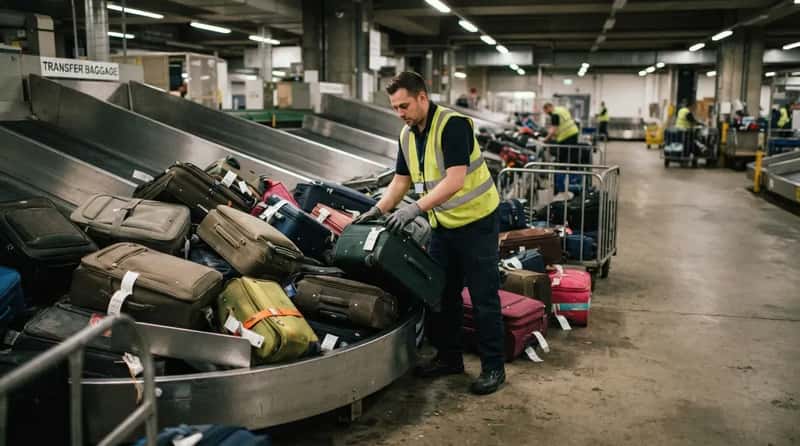
A tight connection feels like a personal time crunch. For your bag, it’s one of the biggest risk factors in the entire system.
Industry data shows transfer-related mishandling accounted for more than 40 percent of incidents in recent reporting. When a passenger barely makes a connection, the bag often doesn’t make it at all, landing in the delayed pile instead of the plane.
#14 – Treating a Wrong or Missing Tag as a Minor Slip
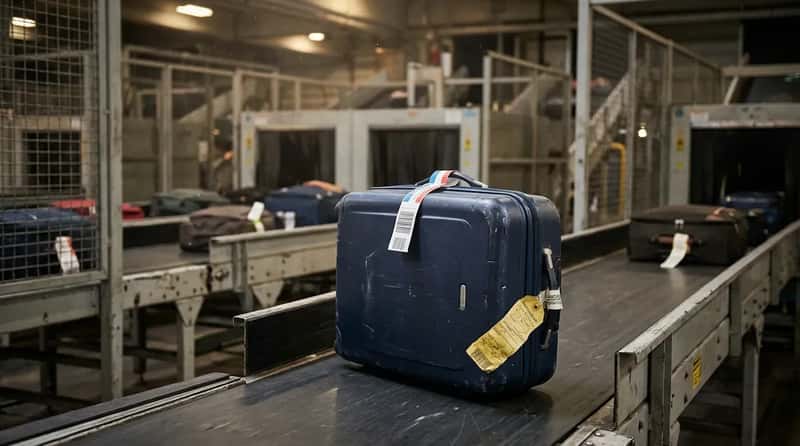
A tag that’s slightly wrong or missing feels like a paperwork issue. To the system, it’s often the entire reason a bag disappears.
It’s the same logic behind old stickers: a stray or outdated tag confuses both human sorters and the automated scanners reading the belt. A clean, single, current tag is one of the simplest things a flyer actually controls in an otherwise automated chain.
#13 – Assuming “My Bag Will Never Get Lost”
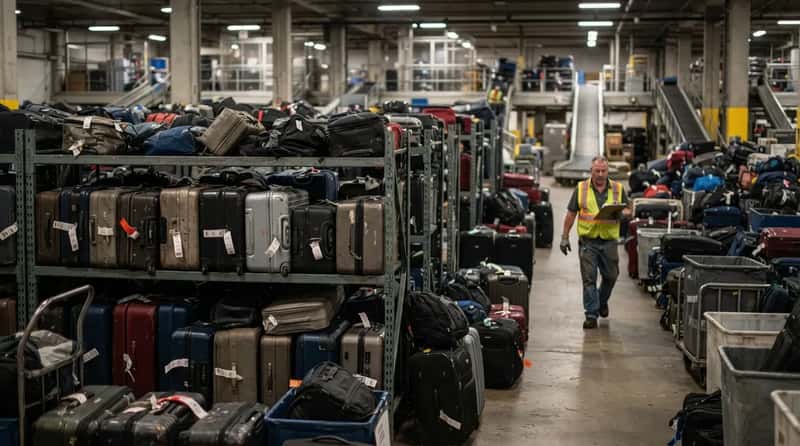
Most flyers treat lost luggage as something that happens to other people. The scale of the industry says otherwise.
Even after years of improvement, the overall mishandling rate dropped to 6.3 bags per 1,000 passengers, down from 6.9 the previous year, with total mishandled bags falling to 33.4 million. That’s still tens of millions of bags a year going somewhere other than where their owner expected.
At a Glance
- Global mishandling rate: 6.3 bags per 1,000 passengers, down from 6.9 the year before
- Total mishandled bags in the most recent full year: 33.4 million worldwide
- The improvement trend has held for several straight years
- Even a small failure rate adds up fast at record global passenger volumes
#12 – Assuming Full Compensation If a Bag Disappears
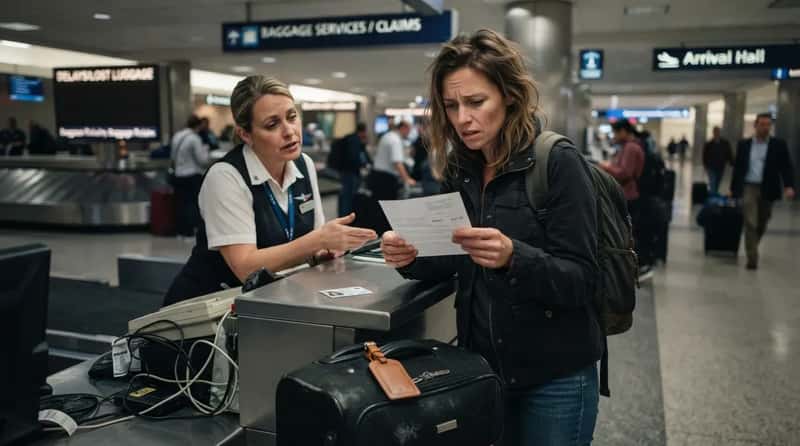
Losing a bag is stressful enough. Discovering what airlines actually pay out afterward adds a second frustration.
Despite tech-driven improvements, baggage mishandling still cost the industry an estimated $5 billion in 2024, with newer benchmarking showing airlines absorbing roughly $260 per mishandled bag and total costs reaching $6.3 billion. Passengers rarely see reimbursement anywhere near that scale for sentimental or irreplaceable items.
#11 – Believing Handlers “Have It Out” for a Particular Bag
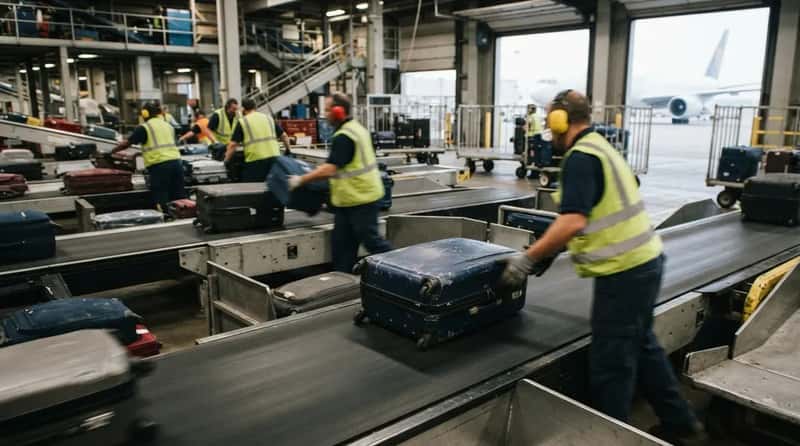
A cracked handle or a scuffed corner can feel personal. Handlers insist it almost never is.
Frequent flyers who’ve watched the process up close point out how unlikely that theory really is, since passengers have zero contact with handlers once bags are checked at the counter. Rough handling is almost always about speed and volume, not a grudge against your specific suitcase.
#10 – Not Understanding the “Tetris” Loading System
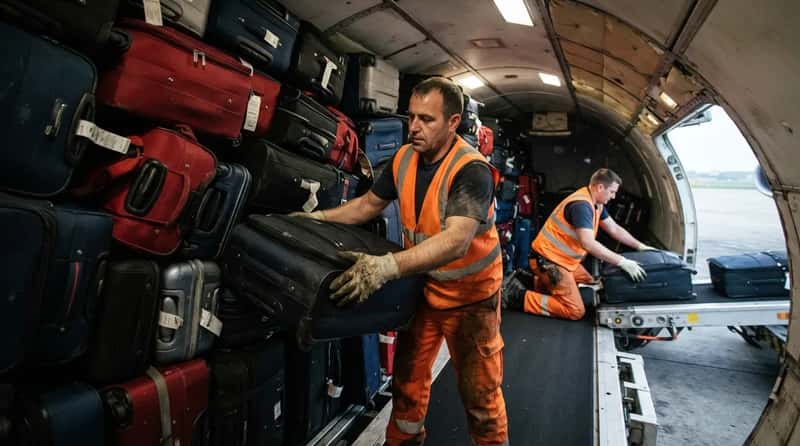
Passengers picture a neat row of bags loaded gently by hand. The real process is closer to a fast-moving puzzle.
As one handler put it, crews get strict instructions to fit bags by weight, size, and shape, and anything that doesn’t fit cleanly delays the whole process during short turnarounds. Your bag’s placement is decided by geometry and cargo balance, not by how gently it was packed.
#9 – Assuming Plastic Wrap Is Just Paranoid Overkill
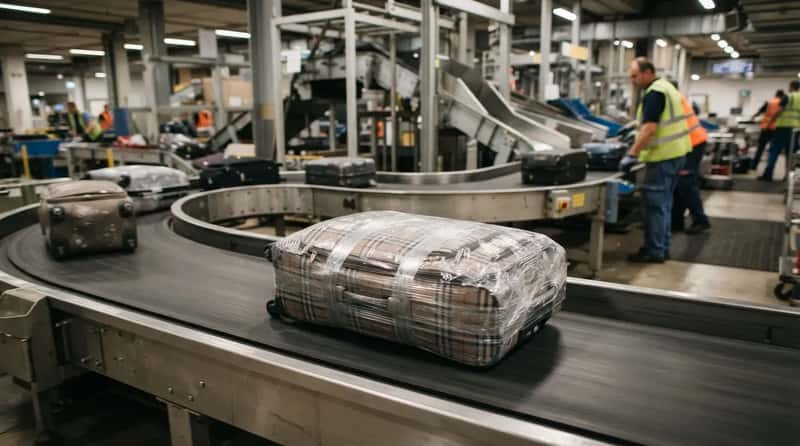
Some travelers see wrapped suitcases at the airport and assume it’s an anxious habit. Handlers see it as one of the smartest moves a flyer can make.
Odd-shaped or awkward items move through the system far easier when wrapped, since unwrapped straps catch on belts and unwrapped buckles get stuck. A wrapped bag skips the manual sorting pile that slower, snagged items often end up in.
#8 – Packing Jewelry and One-of-a-Kind Keepsakes in the Hold

Sentimental items go into checked bags every day. Handlers say most flyers underestimate exactly what they’re risking.
Jewelry, electronics, and one-of-a-kind souvenirs still show up in checked bags constantly, and handlers say that’s a gamble most travelers wouldn’t take if they understood the odds. For passengers, the cost of lost luggage is deeply personal – cherished souvenirs, essential work equipment, and keepsakes that simply can’t be replaced.
#7 – Treating Priority Tags as Just a Sticker
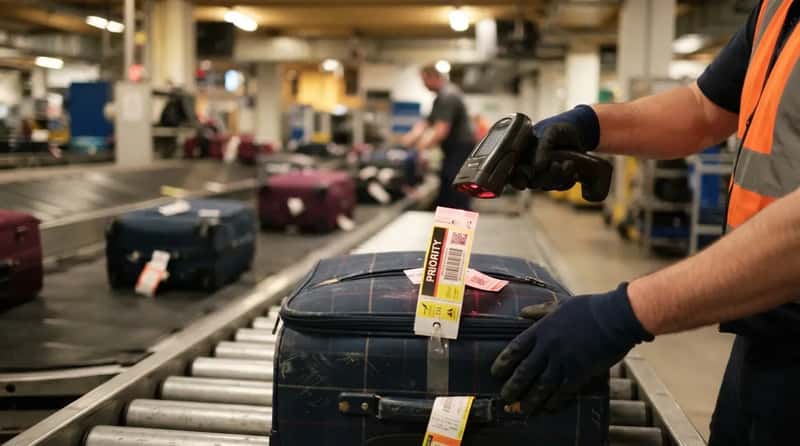
Some flyers assume any tag with fancy lettering gets special treatment. The system is more particular than that.
Priority tags are linked to your booking class and tracked electronically, with frequent flyers or business-class passengers receiving them as part of their fare. Fake or reused tags get caught because field workers scan and check them all – the electronic record, not the tag’s appearance, is what actually moves a bag faster.
#6 – Assuming Baggage Handling Works the Same Everywhere
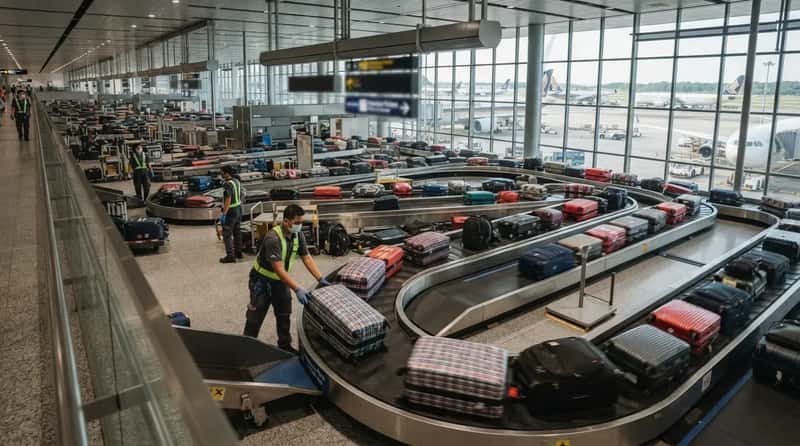
Flyers often assume a lost bag is equally likely no matter where they’re flying. Regional numbers tell a very different story.
Recent data shows Asia-Pacific’s aviation sector recorded the lowest mishandling rate worldwide in 2024, at just 3.1 bags per 1,000 passengers, roughly half the global average. A connection through a high-traffic European or North American hub carries meaningfully more transfer risk than a straight regional hop.
Quick Compare
- Asia-Pacific: about 3.1 mishandled bags per 1,000 passengers, the lowest rate worldwide
- Global average: roughly double that, at 6.3 per 1,000
- High-traffic hubs in Europe and North America: more transfer points, more risk
- Straight regional hops: fewer connections, fewer chances for a bag to go astray
#5 – Believing a Bag Is Only Touched Once or Twice
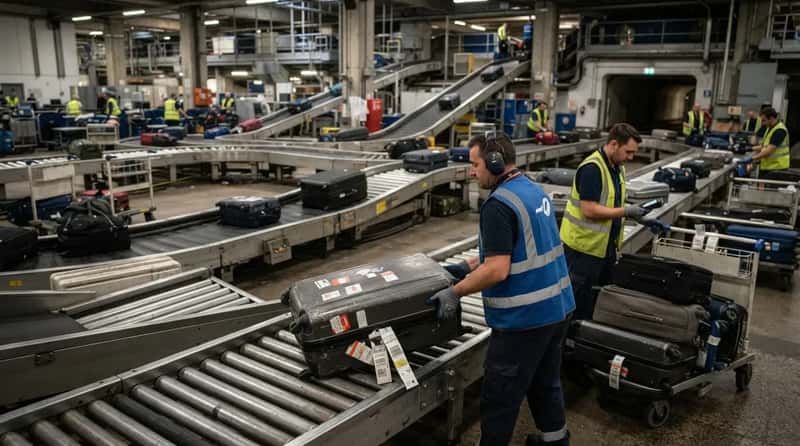
Most passengers imagine their suitcase moving straight from counter to plane. In reality, it passes through far more hands, especially on connecting itineraries.
Handlers note that international routes involve more transfers, more handlers, and more chances for a fragile shell to take a serious hit. Every additional transfer point is another moment where a scan can fail, a tag can slip, or a stack can shift.
#4 – Underestimating the Sheer Scale of the Hidden System

It’s easy to think of your bag as a small, personal item. Inside the system, it’s one of billions moving through an enormous machine.
2024 was a record-breaking year for air travel, with global passenger numbers reaching 5.3 billion, the highest in aviation history, and baggage volume grew right alongside it. Even a tiny error rate at that scale still means tens of millions of individual bags going astray.
#3 – Assuming Viral “Bag Toss” Videos Are Rare Exceptions
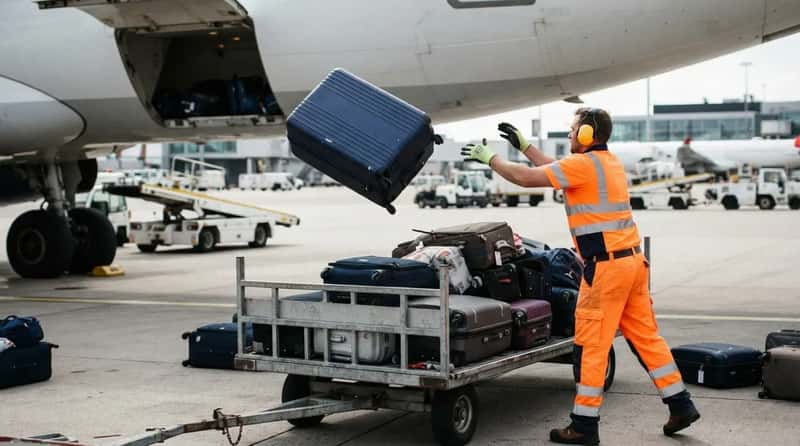
Footage of suitcases flying through the air feels shocking the first time you see it. Handlers say it’s been documented repeatedly at major airports, not just once.
One widely shared clip showed a worker tossing bags with such force that some flew straight through the trailer and onto the ground, with five bags toppling over like skittles before anyone stepped in. A separate viral clip from another airport showed a staffer throwing heavy suitcases down a metal chute onto a plane, sparking widespread debate about how routine that kind of handling really is.
#2 – Assuming Theft Stories Reflect the Norm
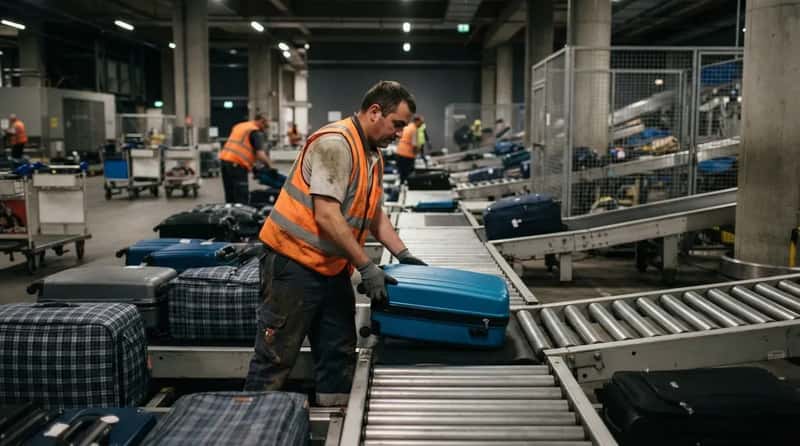
Headlines about stolen items from checked bags understandably scare flyers. Most handlers say those cases are real but isolated, not standard practice.
One widely reported case involved a baggage handler facing trial after being caught on camera opening a suitcase and pocketing a speaker, only to be fired days into the job. Airlines treat these incidents seriously precisely because they’re rare enough to make national news rather than blend into the daily routine.
#1 – Packing Spare Lithium Batteries or Power Banks in a Checked Bag
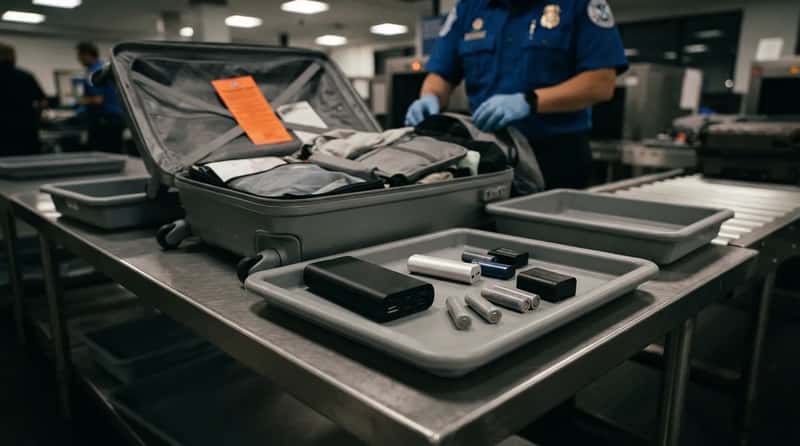
Of every habit on this list, this is the one regulators now consider dangerous enough to ban outright.
As of March 1, 2025, TSA rules prohibit passengers from packing portable chargers, power banks, and cellphone battery charging cases with lithium-ion batteries in checked luggage, a rule that also covers spare external lithium batteries. The change followed real incidents, including one where an exploding power bank was blamed for a fire that burst out on a plane in South Korea in January, forcing the evacuation of all 179 passengers and six crew. Regulators also note lithium-ion battery fires increased by more than 42 percent over the last five years, with at least one incident on a U.S. passenger plane every week since 2021.
Worth Knowing
- Effective March 1, 2025: portable chargers and power banks are banned from checked bags
- The rule also covers spare external lithium-ion batteries and battery charging cases
- Lithium-ion battery fire incidents have risen more than 42 percent over five years
- At least one U.S. passenger-plane battery incident has been reported every week since 2021
None of these habits are really about blame. They’re about the enormous gap between what a checked bag looks like from the check-in counter and what actually happens to it on the other side of that curtain.
Handlers aren’t asking for perfection – just for flyers to understand that speed, weight, tags, and timing matter more than ribbons, stickers, or polite requests ever will. Which one of these habits are you guilty of? Tell us in the comments.