Most people assume cruise dining is basically foolproof. The food is free, the menu never runs out, and someone else does all the cooking. But ask any longtime cruise waiter what actually wears them down after a seven-night sailing, and you’ll hear a very different story.
The real trouble almost never comes from the kitchen. It comes from small, repeatable guest habits that happen every single night, at nearly every table, on nearly every ship. Here’s what dining staff actually notice behind that friendly “good evening, how are we tonight?”
#26 – Ordering Like It’s a Regular Restaurant, Not an All-You-Can-Try Feast
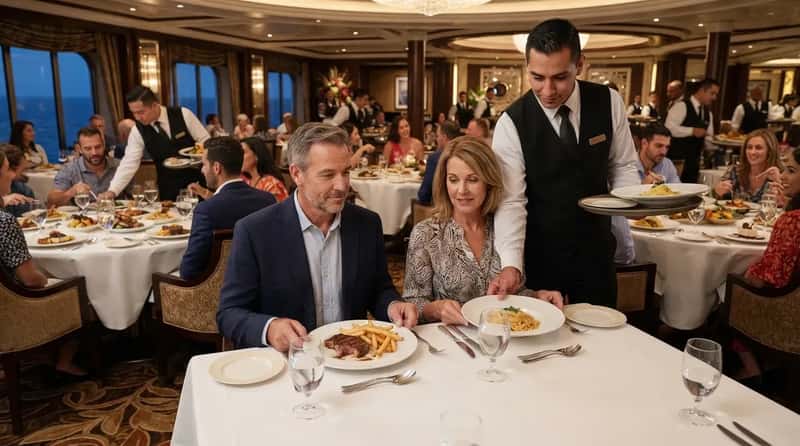
Most first-timers treat the main dining room exactly like a restaurant back home: one appetizer, one entrée, one dessert. That’s just how dinner works everywhere else, so why would a cruise ship be different?
Waiters watch this play out constantly, and it quietly wastes one of the best perks onboard. Guests can usually order two entrées, three desserts, or a little of everything without paying a cent more. Servers rarely volunteer that fact – but they wish more people just asked.
#25 – Skipping the Main Dining Room for the Buffet, All Week Long
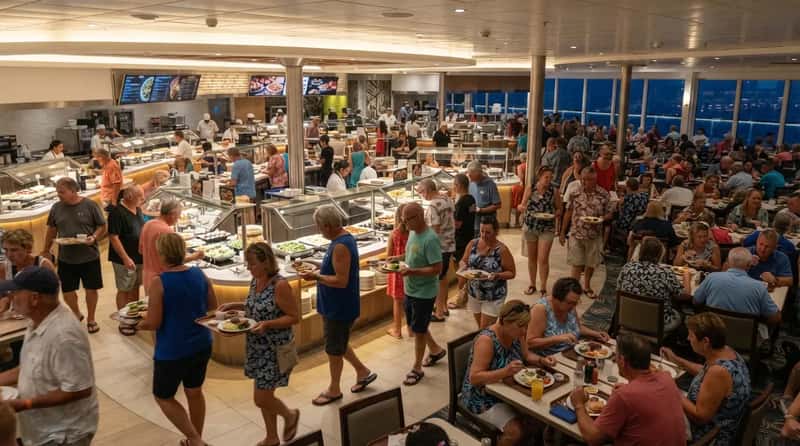
Waiters genuinely hate watching this happen, because it’s the most avoidable regret on the whole ship. Plenty of travelers assume “free” means “forgettable” and default to the buffet every night without ever giving the dining room a real shot.
Some guests finish an entire seven-day cruise without ever stepping foot inside the main dining room. Servers say the fix is simple: try it on night one. Some of the best multi-course meals on the ship are the ones nobody paid extra for.
#24 – Taking Speakerphone Calls Right at the Table
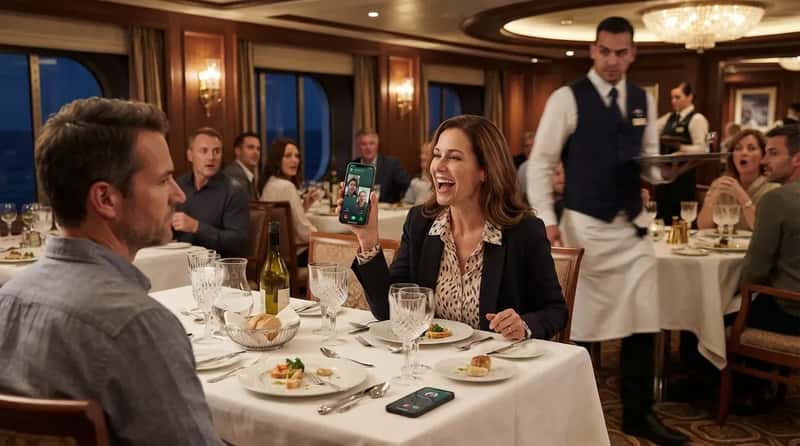
Nothing pulls a waiter’s attention away from six other tables faster than a guest holding up a phone mid-course. One passenger complained directly to a cruise line about the growing trend of loud calls filling the dining room during dinner service.
I have noticed that more people are talking on their cell phones out loud at dinner time. I have witnessed people have long video calls with family and friends, or just watch a video while they wait for their meal.
Cruise passenger complaint
It’s not just crew who notice – tablemates do too. Speakerphone use has quietly become one of the biggest nuisances in cruise ship dining rooms, and roughly three out of four U.S. adults say using speakerphone in public is flat-out unacceptable. Dinner tables rank among the worst places for it.
#23 – Asking If the Fish Is “Really Fresh” Out Here
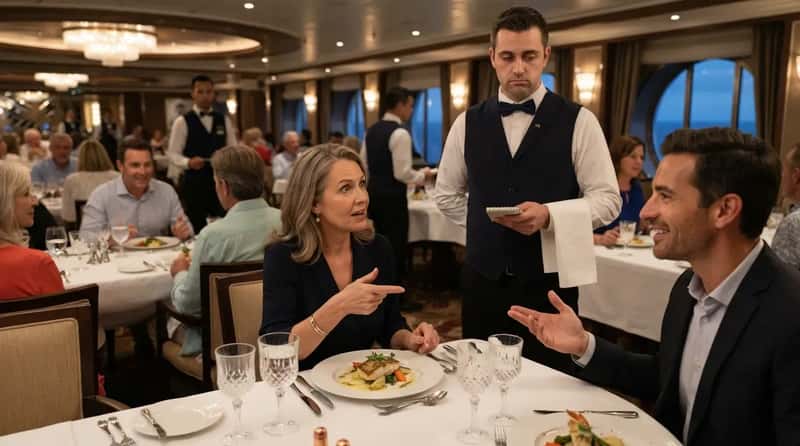
Waiters hear this question so often it’s practically scripted. The truth is unglamorous: almost all fish served on cruise ships, and most land-based restaurants, comes frozen, because you simply can’t keep fish truly fresh for more than a few hours at sea.
A fellow passenger usually jumps in before the waiter can even answer. “Of course it’s fresh, we’re on a boat!” someone at the table will confidently declare. No crew member has ever pulled dinner off a fishing line mid-cruise, no matter how sure a tablemate sounds.
#22 – Pocketing the Table Number Sign as a “Souvenir”
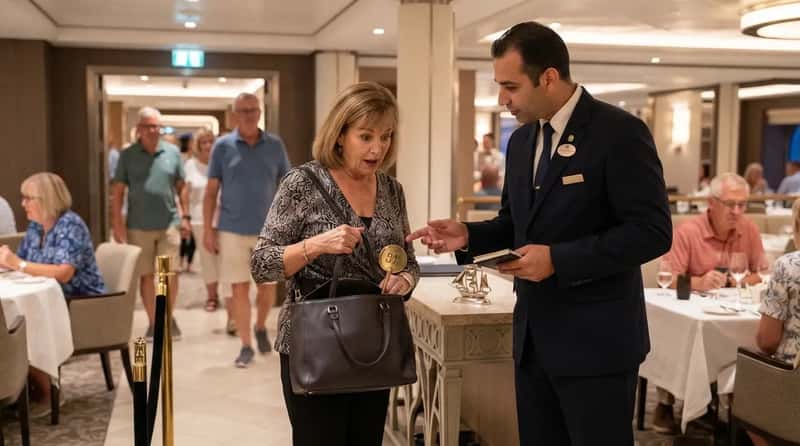
This sounds too strange to be common, but crew say it happens on almost every sailing. Small dining room items have a way of quietly disappearing by the end of each cruise.
One guest was stopped near the exit after a maître d’ noticed something odd tucked into her bag. He politely pulled her aside, away from other guests, and asked her to return the table ornament and the table number sign that had somehow ended up in her purse. Staff say it’s never a one-off – someone tries it almost every week.
#21 – Snapping a Napkin to Shake Off Crumbs
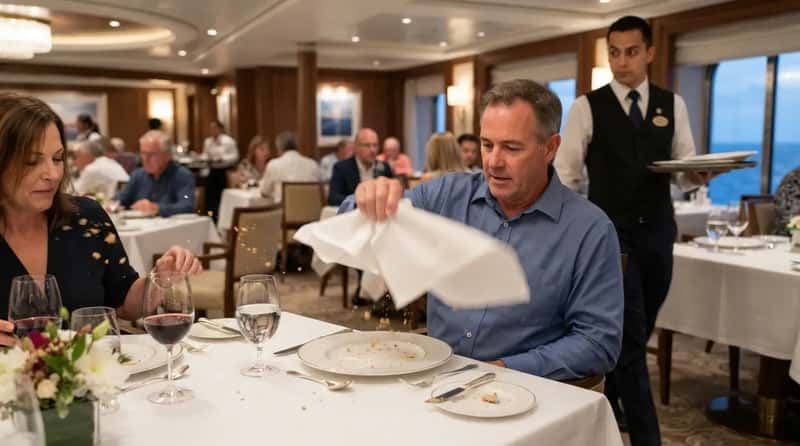
It seems harmless, but it’s one of those habits that quietly annoys everyone at the table, crew included. Basic dining etiquette says don’t twirl or snap your napkin – nobody wants someone else’s crumbs flying into their food.
Waiters rarely say anything in the moment, since correcting a paying guest mid-meal feels awkward for everyone involved. Instead, they just quietly reset the table later and hope the next seating skips the habit entirely.
#20 – Strolling In Late to an Assigned Dinner Seating
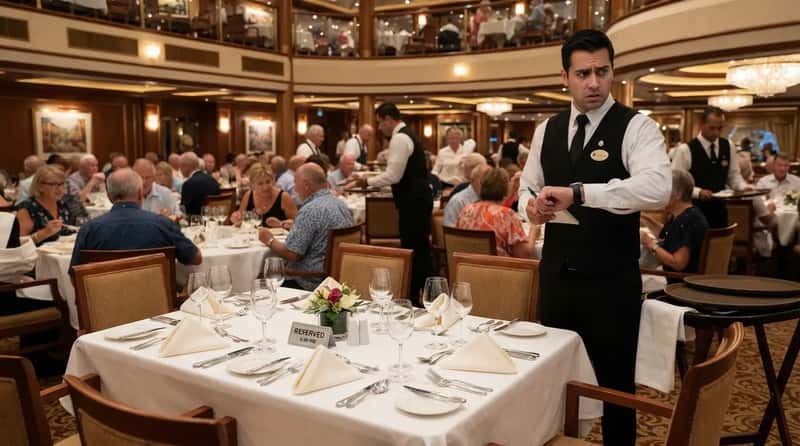
This is the one that puts the most invisible pressure on a waiter’s entire night. Traditional dining rooms run on tight timing, and if you’re more than a few minutes late, staff have to rush your whole meal so the table can be reset before the next seating arrives.
Waiters won’t even take orders until every seat at the table is filled. These reserved dinner times exist for a reason, and some ships now quietly redirect chronic latecomers straight to the buffet instead of holding up an entire table.
Quick Compare
- Traditional (fixed) dining: Same table, same waiter, same time every night – built for routine and familiarity.
- Flexible (anytime) dining: Arrive within a window, with a different table or server possible each night.
- Late arrivals: Fixed seatings often hold the whole table waiting; flexible dining absorbs stragglers far more easily.
#19 – Asking Why the Waiter Keeps Clearing “Unused” Silverware
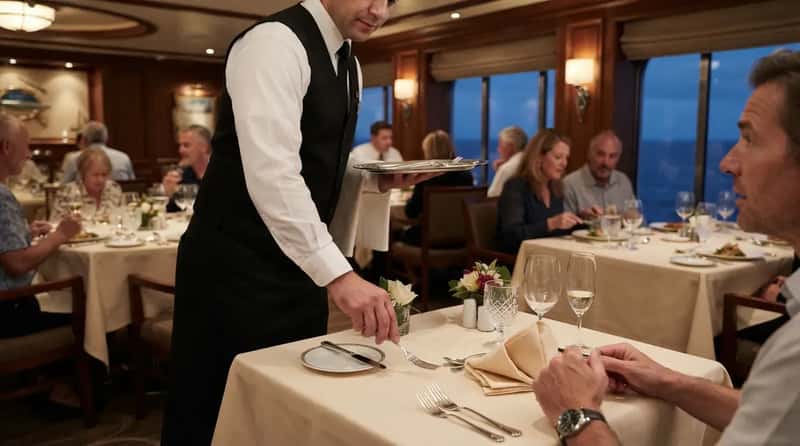
It’s a small moment, but it repeats at nearly every table, every single night. An assistant waiter quietly clears unused utensils from the place setting, and guests almost always ask the same polite question: why?
The real answer is one servers usually keep to themselves. “Because you will not need these any longer,” one waiter answered, sidestepping the fact that the guest had simply used the wrong fork for the course. It’s a small kindness that spares diners an embarrassing correction they never even realize they needed.
#18 – Piling the Plate, Then Leaving Most of It Untouched
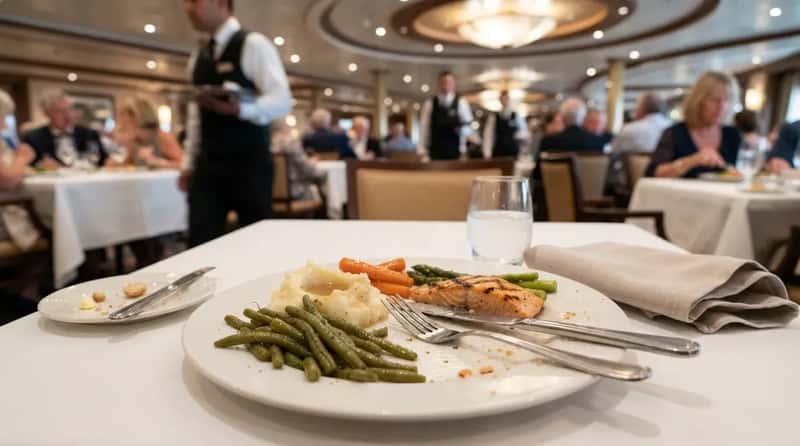
Waiters see wasted food constantly, and it has directly reshaped how meals get served. Cruise lines routinely watch passengers eat nothing but the main protein, forcing crew to throw away large amounts of untouched sides.
That’s part of why side portions can look smaller than expected. Lines don’t want to pay for food that ends up in the trash, but your waiter will happily bring more vegetables or mashed potatoes if you simply ask. Most guests never realize a two-second request would have solved it.
#17 – Pressuring a Tablemate Into Ordering Dessert They Don’t Want
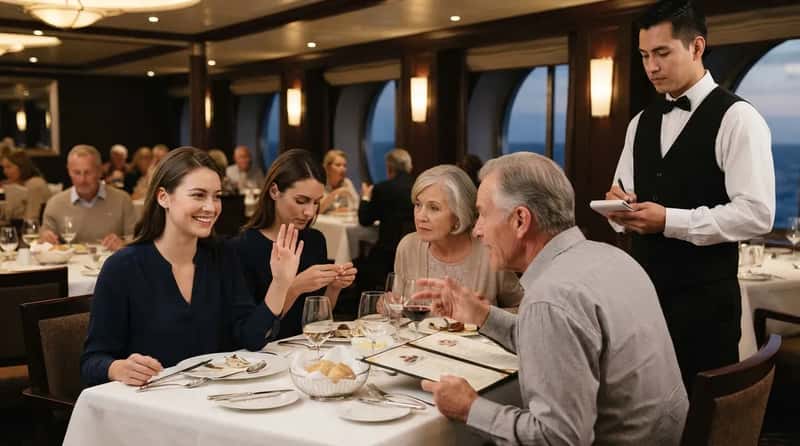
Waiters end up caught in the middle of this one more than guests realize. If someone at the table is full and says so, that should be the end of it – not the start of a group campaign to change their mind.
It’s a small social pressure that turns an easy request into an awkward standoff for everyone at the table, including the waiter. Servers say the guests who politely decline without apologizing are the easiest tables in the room, night after night.
#16 – Commenting on a Tablemate’s Dessert Order or Dietary Restriction
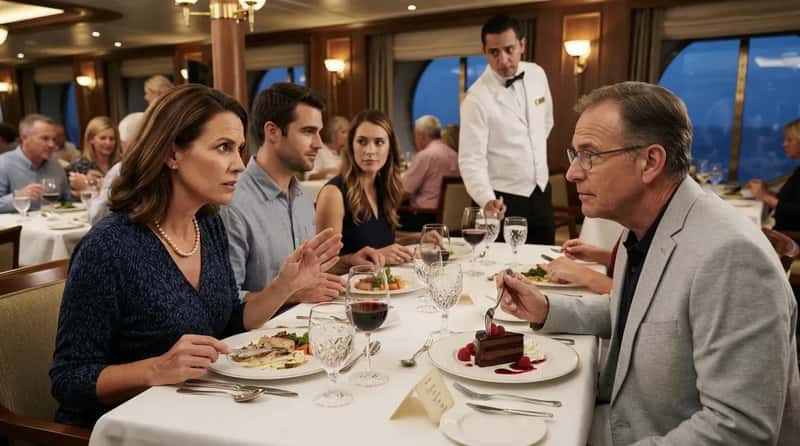
Dinner conversation can make or break a table, and waiters notice exactly which topics turn a shared table sour. Poking fun at someone’s dietary restriction or their calorie-heavy dessert choice rarely leads to a better night for anyone.
Servers say the tables that swap travel stories instead – asking about past cruises or upcoming ports of call – are far safer and more enjoyable than picking apart someone’s plate. It sounds obvious, yet it’s one of the most common friction points at shared seatings.
#15 – Skipping the Envelope at the End of the Cruise
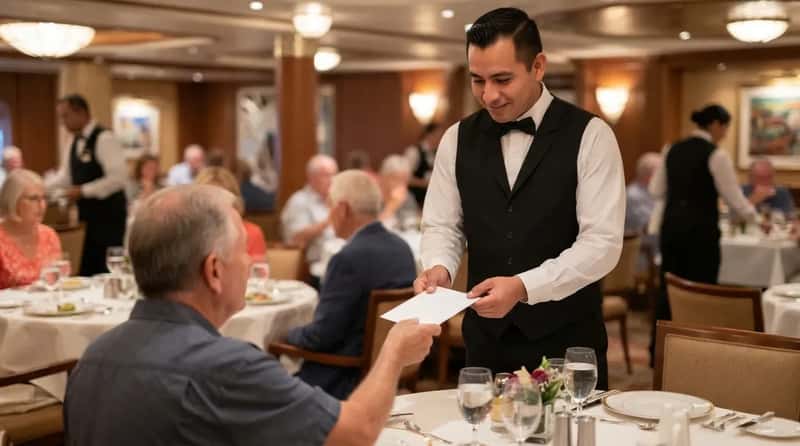
Even with gratuities built into most fares, tradition still runs deep on the last formal night. Plenty of longtime cruisers still hand their waiter and assistant waiter a white envelope of cash, on top of what’s already been charged, simply because of how hard they worked.
Most guests never see how physically demanding the job actually is. A single waiter can be responsible for a dozen tables across two nightly seatings, memorizing names, allergies, and drink orders for every one of them. Skipping that final envelope after weeks of that effort is one habit crew notice immediately, even if they’d never say so out loud.
#14 – Not Canceling a No-Show Reservation
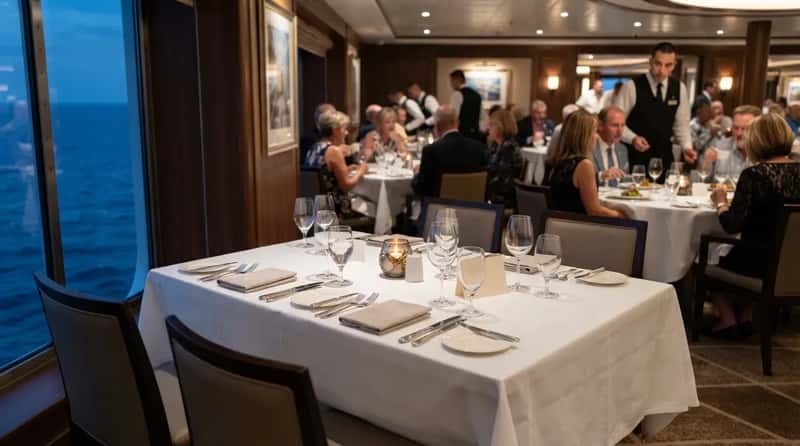
A missed dinner without a heads-up creates a ripple effect most guests never think about. If you’re going to be absent, telling tablemates in advance means they can pass it along, so the waiter isn’t holding empty seats and delaying everyone else’s food.
The same courtesy applies to specialty restaurants with their own booking windows. A quick cancellation call frees the table up for someone else. Staff plan an entire evening around headcounts – one silent no-show throws off far more than a single seat.
#13 – Turning a Slow Kitchen Night Into a Personal Attack on the Waiter
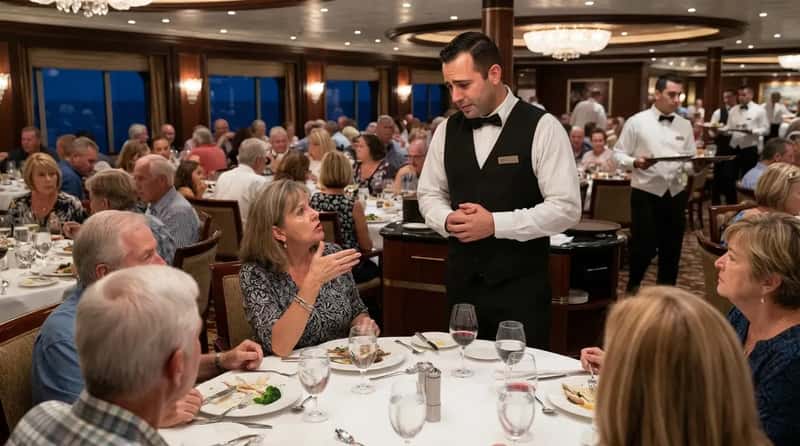
Waiters absorb blame for things entirely outside their control more than anyone else on the ship. On a fully booked sailing, one dining room alone can be serving close to a thousand guests during a single seating.
Picture a ship carrying 1,800 passengers, with over 900 of them eating in the dining rooms at once, every single plate expected to arrive hot and perfect. A kitchen delay isn’t personal – it’s math. Guests who take that frustration out on the person carrying the tray rarely realize how little control that person actually has.
Fast Facts
- A single dining room can serve close to 1,000 guests in one seating.
- Ships carrying 1,800-plus passengers may have 900-plus eating in the main dining rooms at once.
- Every plate is timed to arrive hot, no matter how many entrées the kitchen is juggling at once.
#12 – Escalating a Complaint to the Wrong Person
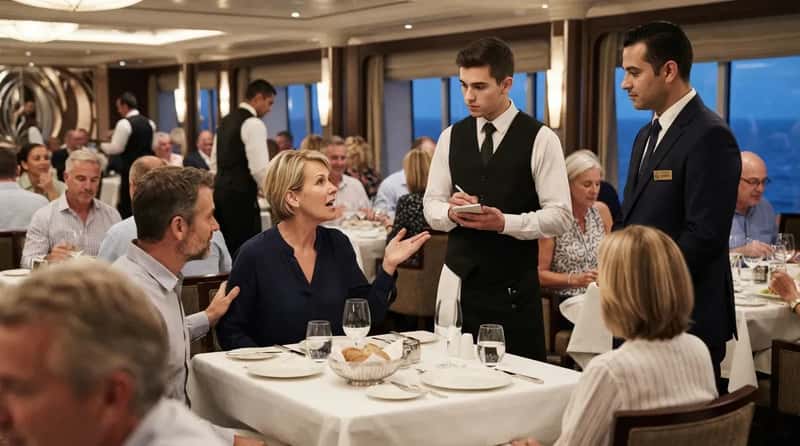
Waiters wish more guests understood the chain of command before venting at dinner. If something’s wrong with a dish, ask your waiter nicely and it can usually be fixed on the spot; if it’s about your dining time or table assignment, that’s a conversation for the maître d’, not the server bringing your bread.
Politeness genuinely changes the outcome, not just the mood at the table. Guests who stay calm and explain the problem clearly are far more likely to walk away satisfied than the ones who raise their voice first. Servers notice the difference immediately, and so does the fix they’re able to offer.
#11 – Overdoing the Drink Package at Dinner
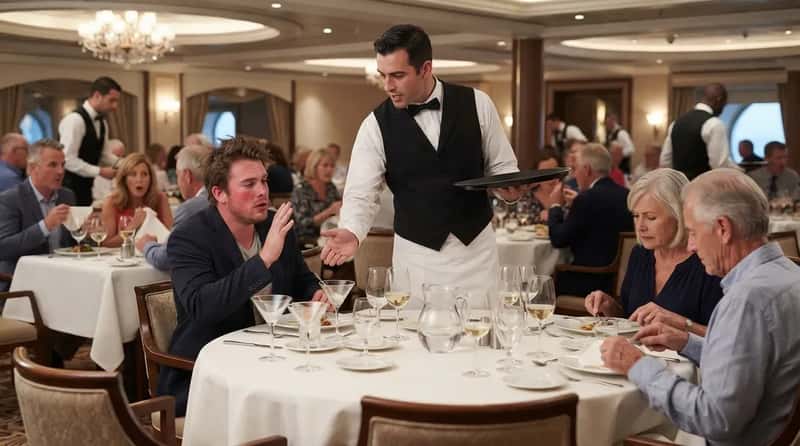
An unlimited drink package feels like a green light to some guests, but waiters see exactly where that road leads. Overdoing it at the table is generally considered bad form, especially when sharing a table with people who aren’t your travel companions.
It rarely stays contained to one guest’s night. Crew members are responsible for cutting someone off once they’ve clearly had enough, and everyone nearby notices when that line gets crossed. Waiters are the ones left managing the fallout while still trying to serve six other tables.
#10 – Assuming Every Formal Night Rule Is Optional
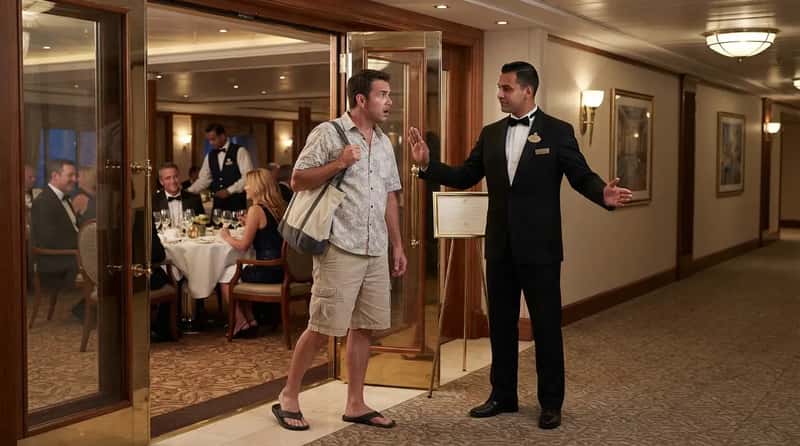
Dress codes at specialty and formal dinners have quietly gotten stricter, and plenty of guests haven’t caught up. What used to get a friendly wink now gets a firm no at the dining room door.
Waiters and hosts are the ones stuck enforcing standards guests used to be able to bend. It puts staff in an awkward spot, turning away a paying guest over shorts or flip-flops on a night that’s supposed to feel special for everyone else at the table too.
At a Glance
- Formal nights typically call for at least a collared shirt and slacks for men.
- Shorts, flip-flops, and swimwear are commonly turned away at the formal dinner entrance.
- Many lines have relaxed strict tuxedo-and-gown rules but still enforce a firm no-beachwear baseline.
#9 – Wandering Straight From the Pool to the Dinner Table

Some guests treat the dining room like an extension of the pool deck, and it happens more than most people would guess. One cruiser described watching a passenger go straight from the waterslide into the buffet line, still dripping wet, shirtless, and towel-free.
Dress codes exist for a reason beyond formality. Nobody wants puddles next to the pasta station or someone shaking off water beside the bread rolls. Waiters end up quietly mopping around wet footprints while still trying to serve a full room on schedule.
#8 – Snapping Fingers or Waving Down a Waiter Like a Prop
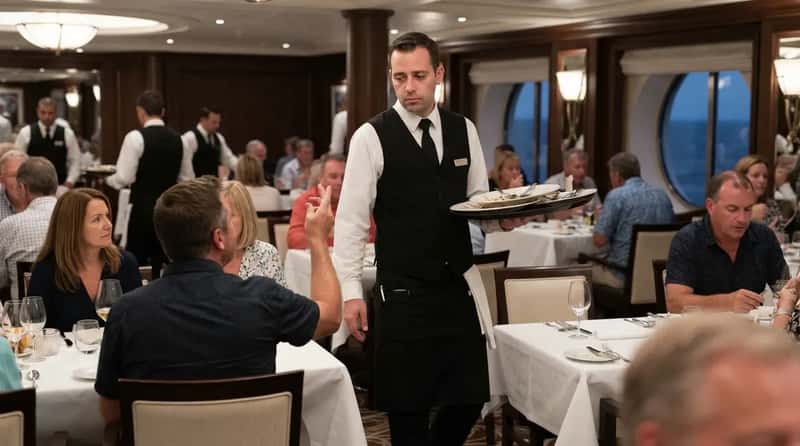
Waiters juggle far more per seating than most guests realize, and it changes how “urgent” requests actually feel from their side of the tray. By the time you sit down for dinner, that server has likely already worked a ten-hour day, taking dozens of orders while remembering your name, your allergies, and how your day went.
A little patience goes further than guests expect. Staff say a simple wave and a smile gets faster service than snapping fingers ever will, mostly because it’s the tables that treat them like people, not props, that get remembered and prioritized night after night.
#7 – Letting Kids Run the Dining Room Like a Playground
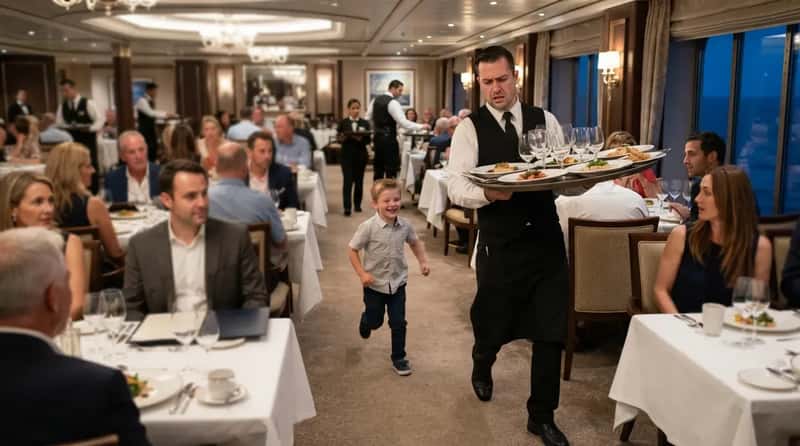
Family cruises are common, and most kids behave fine at dinner – but waiters remember the exceptions vividly. Unattended children weaving between servers carrying full trays isn’t just chaotic, it’s genuinely dangerous for everyone involved, including the kids themselves.
A single dropped tray can mean an entire course delayed for six other tables. Servers rarely say anything directly to parents in the moment, since it’s an awkward conversation nobody wants to start on vacation. But it’s consistently one of the most stressful, least talked-about parts of the job.
#6 – Treating a Long-Assigned Table Like It Doesn’t Matter If You’re Late to It
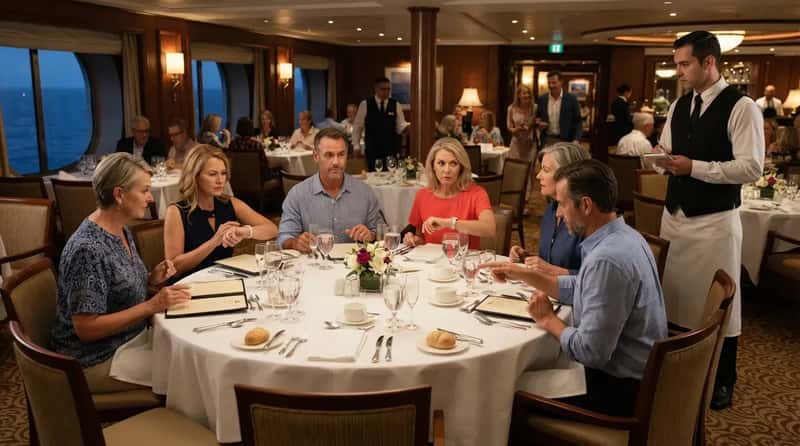
Traditional dining rooms are still built around a schedule that guests sometimes forget exists. If six of eight guests show up right on time and two drag in fifteen minutes late, the waiter waits until everyone is seated before taking any orders – leaving the punctual guests quietly fuming.
It’s a small courtesy that keeps an entire table’s night on schedule. Waiters say the fix is simple: a quick heads-up to tablemates saves everyone, including the crew member trying to time seven courses for eight different appetites.
#5 – Rushing Off Before Dessert Without a Word
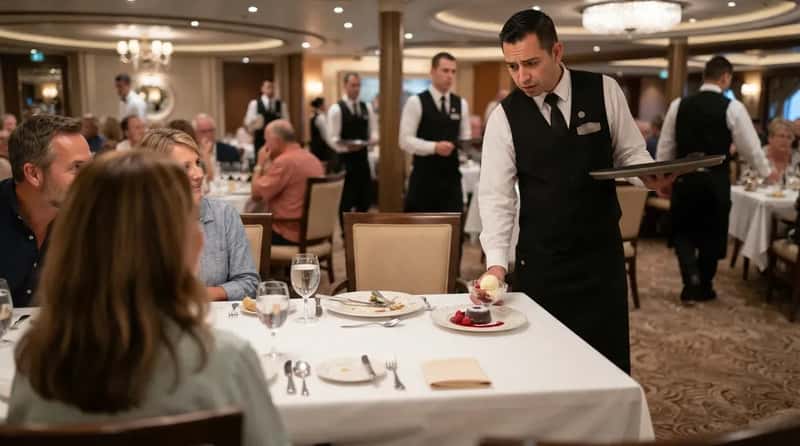
Cruise dinners run on a rhythm, and abruptly leaving mid-course throws that rhythm off more than guests think. Waiters plan pacing around every seat at the table, timing each course so nobody’s plate sits too long before the next one arrives.
A quiet “we’re heading out early tonight” changes everything on the service side. It lets a waiter reset that seat, adjust the pacing for the rest of the table, and skip the awkward moment of setting dessert down in front of an empty chair. It’s a thirty-second courtesy most guests simply never think to offer.
#4 – Complaining Loudly About Pacing Without Knowing What’s Behind It
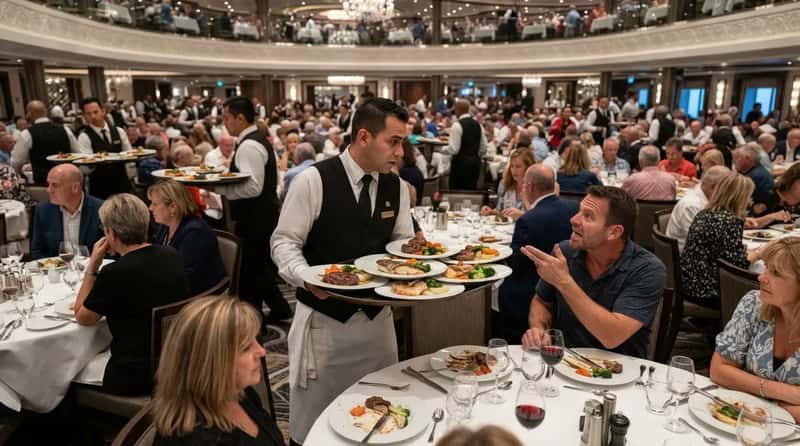
Guests rarely see the full picture of what a single dining room is juggling during peak dinner hour. On a large ship, one team can be feeding over 900 people in a single seating, with every plate expected to land hot and on time no matter what’s happening in the kitchen.
Pacing complaints are understandable, but waiters wish more guests asked calmly instead of assuming the delay means neglect. Most delays trace back to the kitchen, not the person carrying the tray. A patient guest who simply asks for an update tends to get honest answers – and often faster food, too.
#3 – Filming or Photographing the Waiter Without Asking
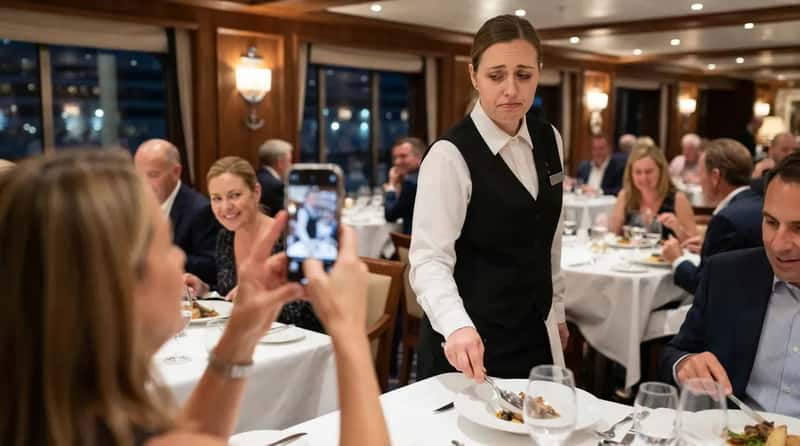
Cruise dining has become a content opportunity for plenty of guests, and waiters end up in the background of it constantly. Most don’t mind a quick photo of the table or the food – it’s being filmed repeatedly, without ever being asked, that wears on staff over a seven-night contract.
A simple “mind if I get you in this shot?” changes the entire interaction. Waiters say guests who ask first almost always get a warmer, more personal moment on camera than the ones who just point a phone and start recording.
#2 – Refusing to Try Anything Unfamiliar, Every Single Night
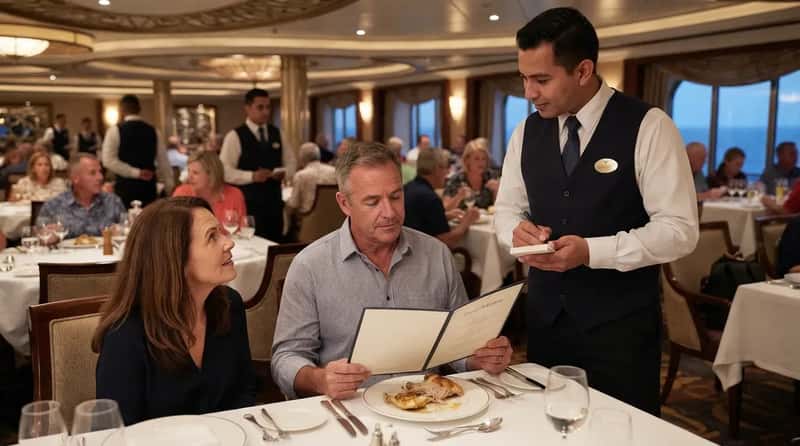
With a free menu that changes daily, waiters genuinely want guests to explore it – but plenty stick to the same three “safe” dishes the entire cruise. It’s one of the more quietly frustrating habits, because the whole point of unlimited courses is trying things without any real risk.
The guests who ask “what would you order?” almost always end up with the best meal at the table. Waiters know the menu better than anyone onboard, including which dish the chef is genuinely proud of that night. Skipping that question every single evening means missing the one perk that actually separates cruise dining from eating at home.
Why It Stands Out
- The nightly menu changes completely, so no two dinners onboard have to look the same.
- Waiters usually already know which dish the chef is proudest of before it even reaches the table.
- Asking for a recommendation costs nothing extra and works on any night of the cruise.
#1 – Never Learning the Waiter’s Name All Cruise Long
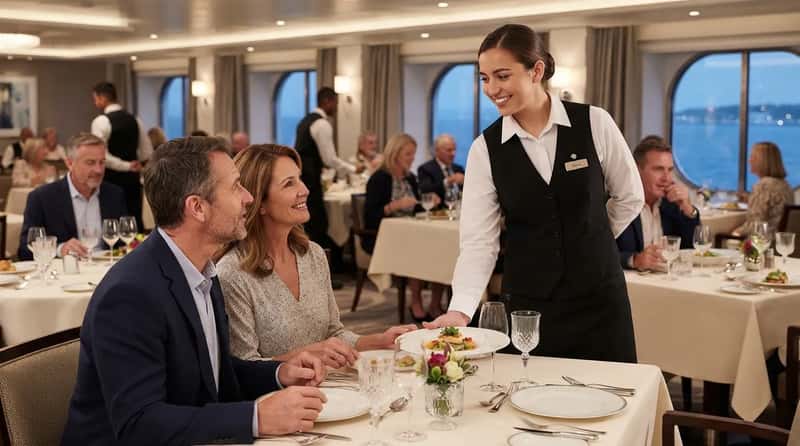
Of every habit on this list, waiters say this is the one that stings the most – and the one that changes service the most in return. A server who works the same table for seven nights straight remembers birthdays, allergies, favorite wines, and inside jokes, often without ever hearing their own name said back.
The guests who ask, remember, and use it consistently get something no amount of tipping alone buys. It’s the difference between generic service and a waiter who quietly brings your favorite dessert unprompted by night five. It’s the smallest habit on this entire list – and the one crew remember longest after the cruise ends.
None of these habits are dramatic on their own. But multiply them across a seven-night cruise and hundreds of tables, and it’s easy to see why waiters remember the guests who broke the pattern far more than the ones who followed it.
The good news is every single one of these is an easy fix – a name learned, a question asked, a phone put down for twenty minutes. Which one of these did you not know about until now?