Most first-time cruisers assume the buffet is the easiest meal on the ship – grab a tray, pile it high, sit anywhere. Veteran cruisers know that’s exactly how you end up standing at a counter eating cold eggs while someone else’s kid licks the tongs from the mac and cheese station.
The real buffet playbook isn’t written on any deck plan, and crew members rarely explain it out loud. Here’s what people who’ve sailed dozens of cruises actually do differently, and why the gap between a smooth meal and total chaos usually comes down to habits nobody tells you about.
#27 – They Treat “Washy Washy” As Law, Not a Suggestion
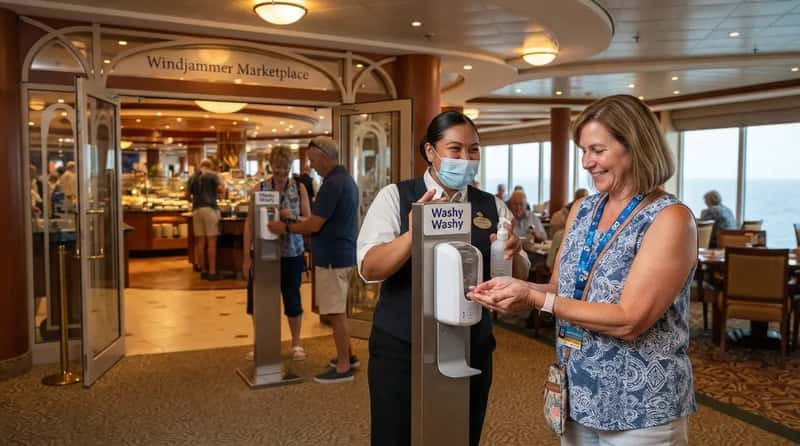
Veteran cruisers stop at the sink or sanitizer station every single time, no exceptions, even if they just washed up two minutes earlier. Royal Caribbean has had a character called Washy Washy stand in front of food venues for the past 15 years singing about handwashing, and that’s not just for show. Stomach viruses spread easily in close quarters like a cruise ship, and outbreaks can affect hundreds of passengers if hygiene protocols aren’t followed.
Rookies treat the sanitizer pump as optional decoration. Veterans treat it like a toll booth – you don’t get through without paying. Crew are required to remind passengers to wash their hands before entering the buffet, and some passengers respond rudely when reminded, which is exactly the behavior that marks someone as new to cruising.
#26 – They Never Leave a Tip at the Buffet Table
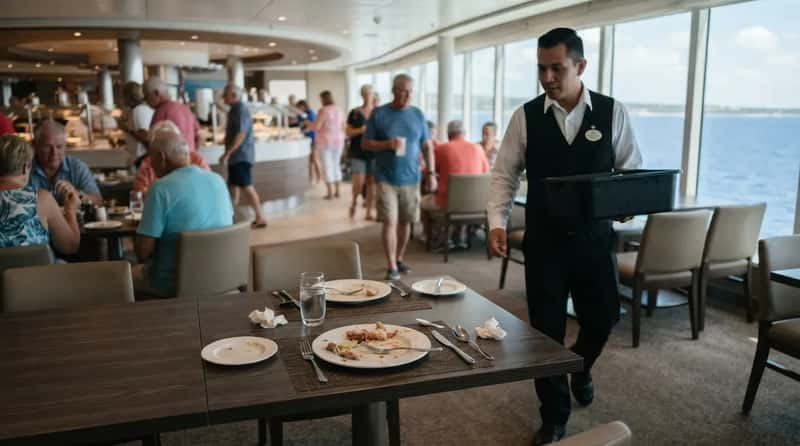
New cruisers instinctively want to leave cash on the table like they would at a diner back home. Veterans know that’s unnecessary, because a daily gratuity charge of around $15-18 per person covers staff like the crew in the buffet who clean tables and clear plates, meaning the tip is already taken care of.
That doesn’t mean tipping is banned – some cruisers still slip a few dollars to standout staff. But the anxious tip-hunting rookies do, patting pockets for cash after every meal, is simply not how this works onboard. You simply get up and leave when you’re done, and the system handles the rest quietly in the background.
#25 – They Never Touch Food With Their Hands

It sounds obvious, but it’s the single most-broken rule on the ship. Veterans always use the tongs and resist the urge to grab food with their hands or sneak a taste, because gastro bugs like E. coli and Salmonella can ruin a cruise fast.
One cruiser summed up the reaction perfectly in a Facebook etiquette discussion: “The minute I see someone grab food with their hands, I lose my…” appetite, essentially. Veterans know this isn’t about manners – it’s about not becoming the reason 200 cabins get a knock on the door from the medical team.
#24 – They Never Let One Tong Touch Two Dishes
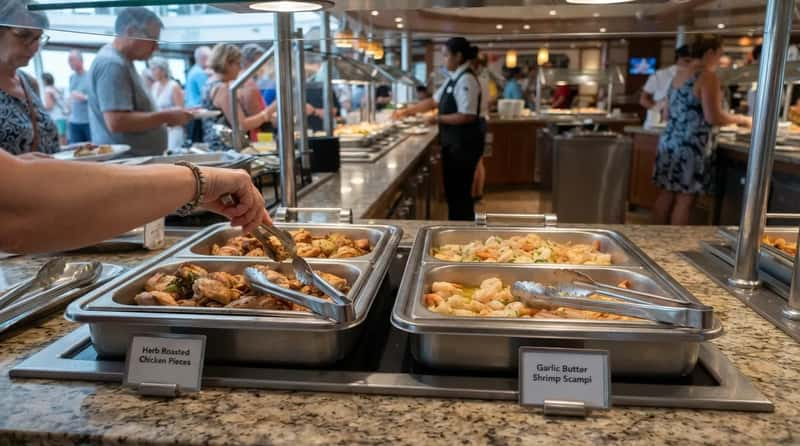
This is the habit most rookies have never even considered. Every food item at a buffet should have its own serving utensil, and you’re supposed to only use the utensil that matches the food you’re picking up.
Why does it matter so much? Food allergies are extremely common, and if you pick up shrimp with tongs then use the same tongs on chicken, you could be endangering someone with a shellfish allergy. Veterans quietly police this themselves – grabbing a clean utensil rather than dipping the wrong one into the wrong tray, even when nobody’s watching.
#23 – They Skip the Embarkation Day Buffet Entirely
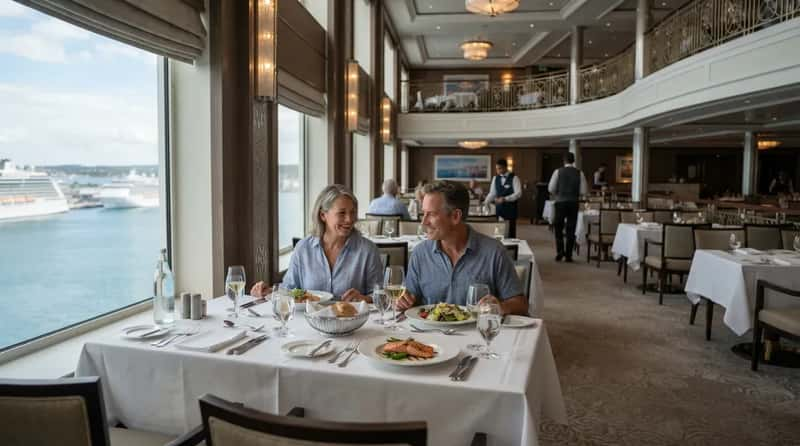
Every rookie makes a beeline for the buffet the second they board, and it shows. Veterans go a different direction – smart cruisers mostly go to the Main Dining Room for embarkation day lunch instead of the buffet, dodging the crowd on the single busiest buffet day of the entire cruise.
Blind Travels puts it bluntly: on embarkation day especially, resist the urge to follow the crowd straight to the buffet, since pizza, lighter venues, or even the main dining room can be far less chaotic. Rookies fight for a table on day one. Veterans are already eating in peace somewhere else.
#22 – They Know the Exact Hours to Avoid
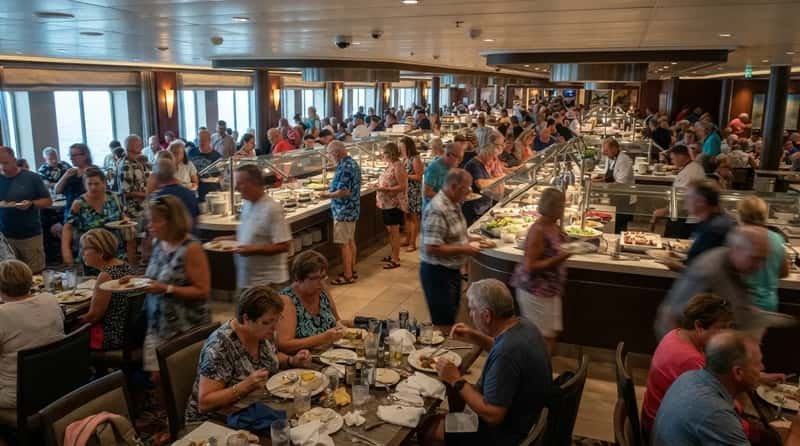
Timing is everything, and rookies never bother to learn it. Breakfast between 8-9 a.m. and lunch from 12-1 p.m. create the perfect storm of hungry passengers converging on the buffet, when finding a table becomes a competitive sport.
Veterans shift their clock instead. Lunch peaks between 12:30 p.m. and 1:30 p.m. when excursions all arrive back, so smart cruisers try to eat before or after that window. A 30-minute shift is the difference between a calm meal and a plate held hostage while circling for a seat.
Fast Facts
- Breakfast rush: roughly 8-9 a.m.
- Lunch rush: roughly 12-1 p.m., spiking again 12:30-1:30 p.m. as shore excursions return
- Smoothest windows: right when the buffet opens or after 1:30 p.m.
#21 – They Claim a Table Before They Touch a Single Plate
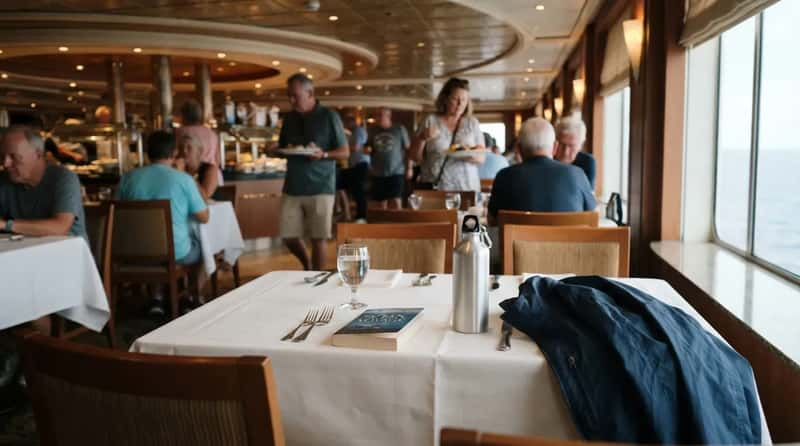
This is the habit that separates panic from strategy. Veteran cruisers look for a table when they first enter and leave an item like a water bottle, book, or jacket so others know the spot is reserved – long before they’ve picked up a single piece of food.
Rookies do the opposite, and it backfires constantly. Frantic passengers nervously walk in circles around the buffet holding plates of food, and by the time they finally find a table, their food is already cold. Secure the seat first. The food can wait thirty seconds.
#20 – They Never Walk Away From an Unfinished Plate
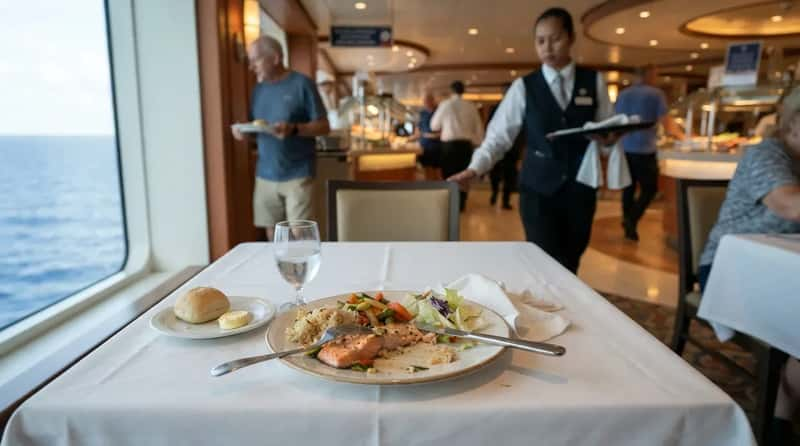
Here’s a mistake almost every rookie makes exactly once. Crew members are likely to clear cups and plates away if you leave them unattended, so to avoid their helpful hands, you shouldn’t leave the table until you’ve finished your serving.
Veterans learn this the hard way early in their cruising life and never repeat it. Step away to grab a napkin, and there’s a real chance your hard-won table – and your half-eaten plate – vanishes before you’re back. It’s not malicious; the crew is simply doing their job efficiently, and rookies just haven’t learned to work around it yet.
#19 – They Don’t Turn Buffet Tables Into a Card Game Lounge
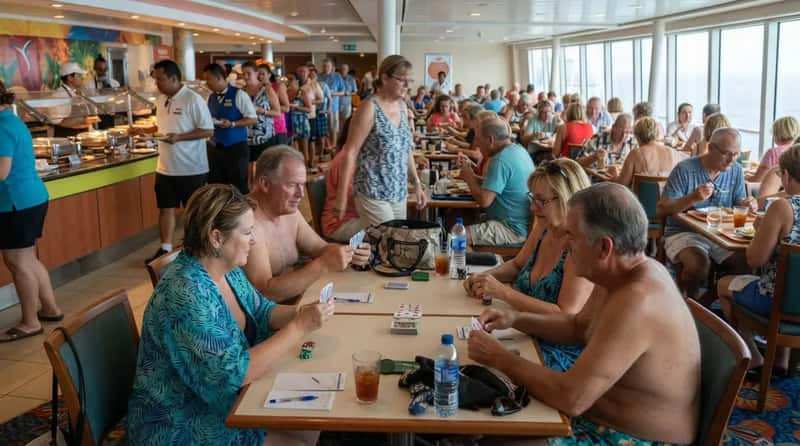
This one causes genuine onboard tension. Passengers often complain it’s hard to find a table during peak times, a problem made worse when tables are reserved by people who aren’t even eating a meal.
Cruise lines have noticed. Carnival is taking steps to solve the table-hogging problem so more Lido Deck tables stay available for people eating, while still trying not to leave card players without a place to gather. Veterans know the buffet floor is for eating, not for an all-afternoon poker session – that’s what the casino and lounges are for.
#18 – They Leave the Pajamas in the Cabin
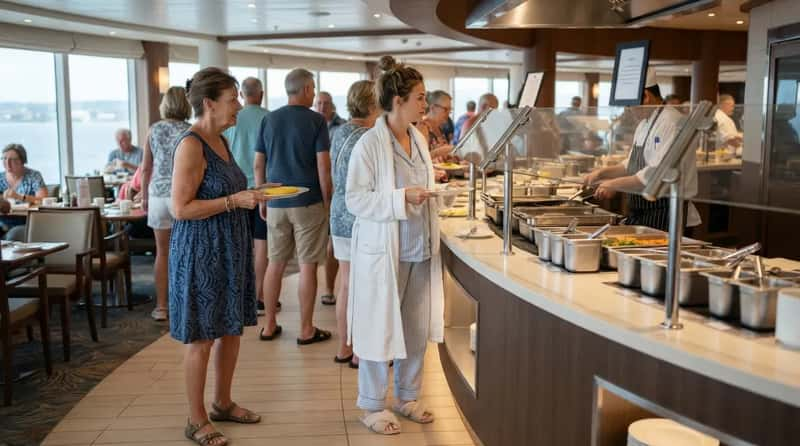
The buffet is casual, but there’s a limit, and veterans instinctively know where it is. A Life Well Cruised Facebook thread lit up after one cruiser described a fellow passenger who showed up in “pyjamas and robes and slippers,” missing only hair curlers to complete the look.
Opinions split hard on this one, which is exactly why it’s such a good comment-starter. Plenty of cruisers say comfort rules on vacation. Just as many say a nightgown at the omelet station crosses a line the buffet was never meant to allow. Veterans tend to save the robe for room-service breakfast and get dressed – even minimally – before heading out.
#17 – They Never Fight the Direction of the Line
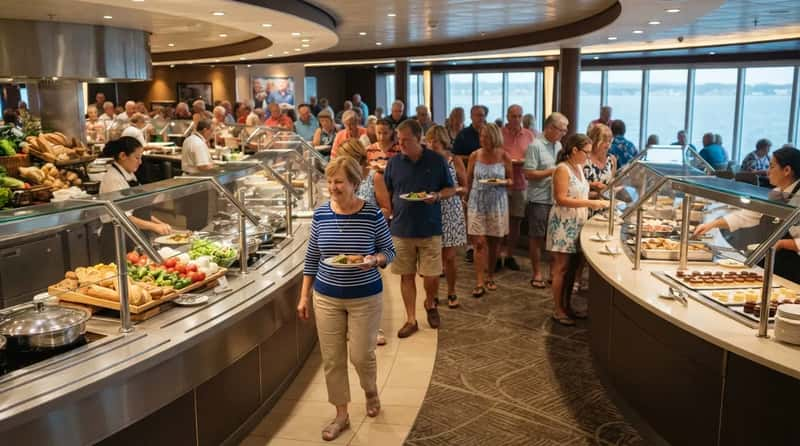
It seems tiny until you’re the person blocking forty hungry passengers. Buffets go in one direction only, and cutting through the line from the opposite direction is a basic etiquette break that instantly marks someone as new.
Veterans scan the flow before they even pick up a plate, moving with the current instead of against it. Rookies backtrack for a food they forgot, cutting straight into the flow of traffic, and wonder why they’re getting glared at. The line has a rhythm – veterans just follow it without thinking.
#16 – They “Window Shop” the Whole Buffet First
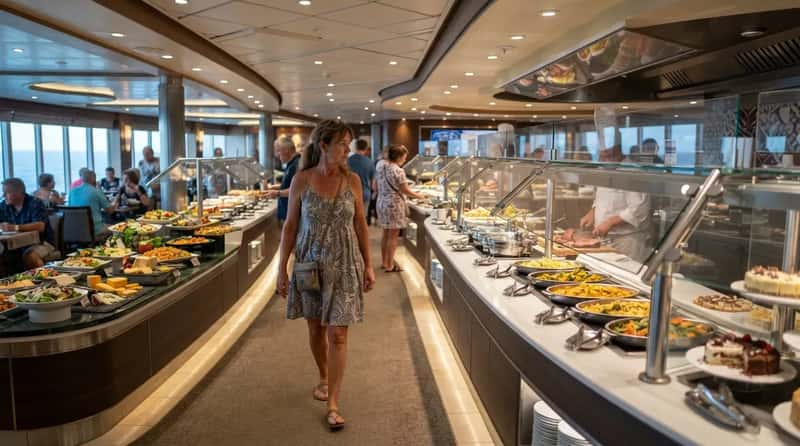
Rookies load their first plate at the first station they see, then regret it three stations later. Veterans do a full lap first. Especially on larger ship buffets, doing some “window shopping” to note what’s available before starting lets you prioritize what you most want rather than filling up on filler before reaching the good stuff.
It sounds like a small habit, but it changes the whole meal. A full walkthrough means no wasted plate real estate on bread when the carving station is two tables down. This single five-minute scan is one of the clearest tells of a repeat cruiser versus a first-timer.
#15 – They Chase Down Themed Buffet Nights
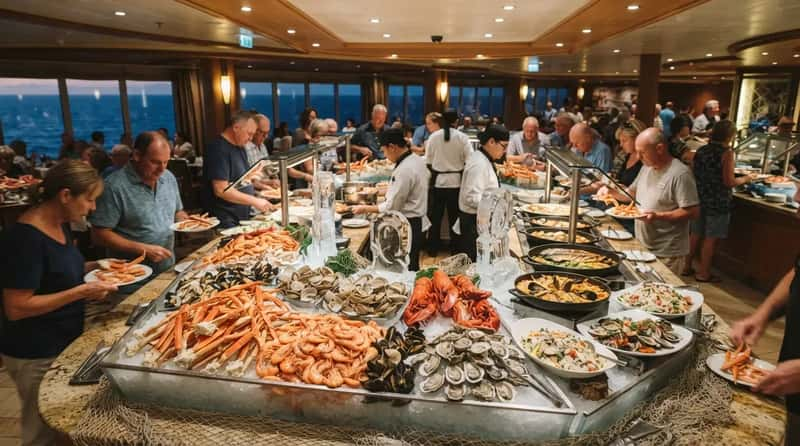
Rookies think every buffet night looks the same. Veterans know better. Some buffets add interest with themed days, including regional dishes based on the itinerary, dessert-focused evenings, or the ever-popular seafood buffet, which often draws large crowds and becomes a highlight for seasoned guests.
These nights aren’t always advertised loudly, so veterans ask crew or check the daily planner specifically for them. Missing seafood night because you didn’t know it existed is a classic rookie regret – one that experienced cruisers plan their whole evening schedule around instead.
#14 – They Know That Apple Isn’t Leaving the Ship

This one trips up more people than you’d think. Many ports don’t allow guests to bring fruit and other non-packaged foods off the ship, so it’s worth checking with Guest Services before grabbing that apple or sandwich to take ashore.
Rookies grab a banana “for later” without a second thought and get stopped at the gangway. Veterans either eat it onboard or double-check first, because agricultural inspection rules at certain ports are strict and non-negotiable – no amount of charm gets a smuggled orange through customs.
#13 – They Use Their Loyalty Status for a Secret Lunch
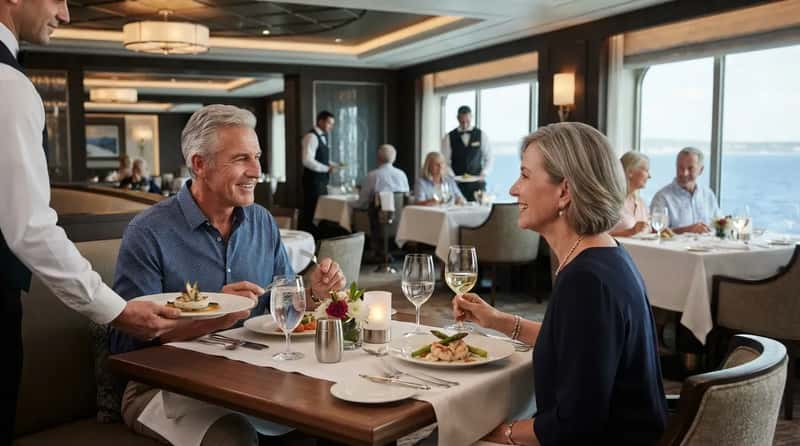
This is one of the quieter perks most rookies never even hear about. If you have loyalty status, it’s worth checking whether there’s a special Main Dining Room lunch and menu exclusively for you, since many lines offer it.
It’s not loudly marketed, so veterans have to know to ask. While first-timers are elbow to elbow at the buffet, repeat cruisers with status are sometimes seated in a quiet dining room enjoying a menu built specifically for loyal guests – a reward most passengers don’t even realize they’re missing.
#12 – They Speak Up About Allergies Instead of Guessing
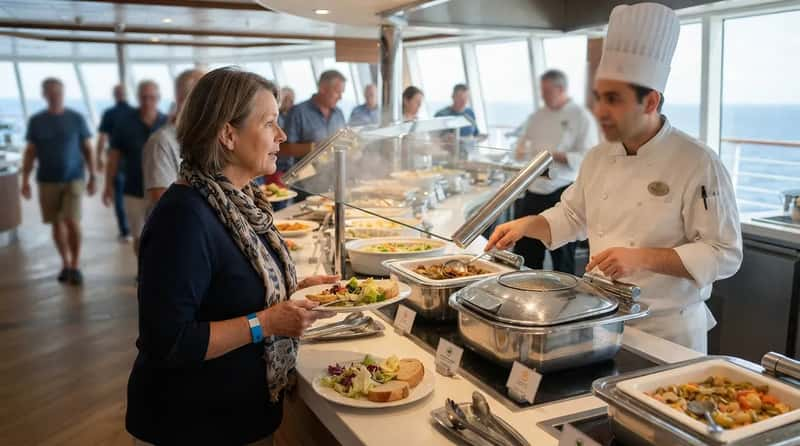
Rookies often assume they have to just avoid a dish entirely or risk it blind. Veterans ask. Buffets often have options like gluten-free, vegan, or low-salt dishes, and it’s always wise to confirm what fits your needs by speaking up.
The payoff is bigger than most people expect. For more flexibility, the main dining room is your best bet since they can often customize meals to suit dietary preferences – but if you don’t ask, you don’t get. Silence is the rookie move here, not caution.
#11 – They Know One Major Cruise Line Skips the Buffet Completely
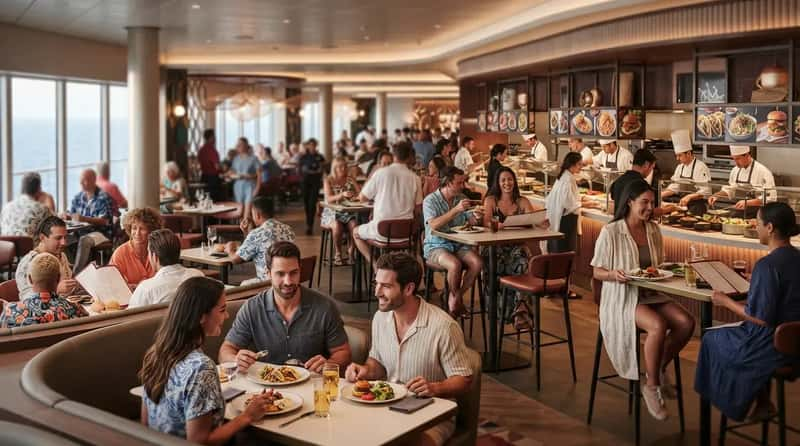
This surprises almost everyone who hasn’t sailed it. Virgin Voyages is the one exception among major cruise lines – it doesn’t have a buffet at all, breaking a format that’s existed on nearly every other ship for decades.
Rookies booking a Virgin sailing sometimes plan their whole dining strategy around a buffet that simply isn’t there. Veterans research this in advance, because showing up expecting a Lido Deck spread on a ship that intentionally ditched the concept is a fast way to feel lost on day one.
Quick Compare
- Traditional lines like Royal Caribbean, Carnival, and NCL: a casual buffet included on every ship
- Virgin Voyages: no buffet at all – dining is built entirely around smaller restaurants instead
- Rookie risk: expecting a Lido-style spread that simply doesn’t exist on a Virgin ship
#10 – They Never Put a Dropped Utensil Back in the Dish
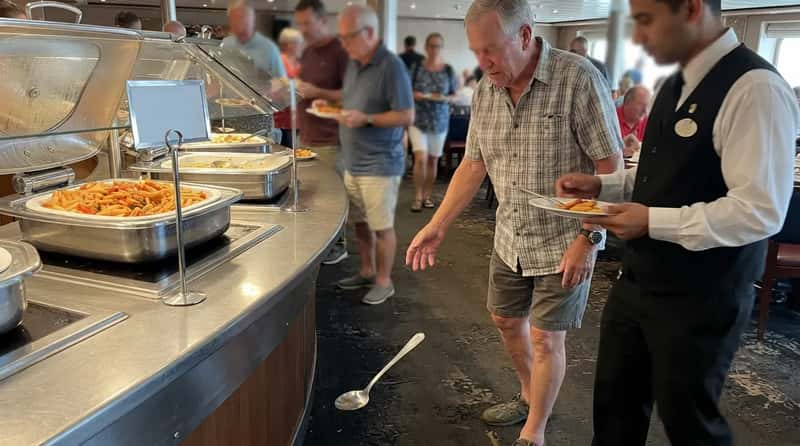
This is the moment that makes an entire buffet line audibly cringe. One cruiser’s now-viral complaint says it all: “Drop the spoon on the floor and put it back in the dish. Yes, I’ve seen it.”
Veterans flag down a crew member for a replacement instead, every time, no exceptions. It takes ten extra seconds and it’s the difference between a clean serving line and an entire station everyone secretly avoids for the rest of the cruise. Rookies rinse it on a napkin and move on – veterans know that’s nowhere near enough.
#9 – They Know the Buffet Changes Completely During an Outbreak
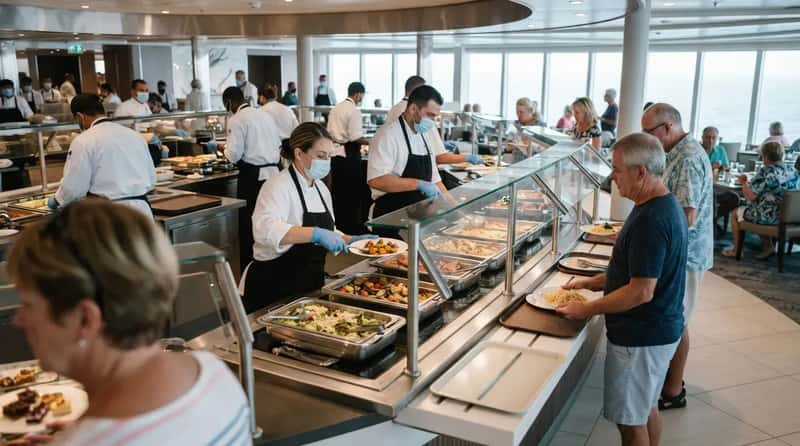
Most rookies have never seen this happen and don’t know it’s coming. If there’s a norovirus outbreak, one of the first things you’ll notice is that crew serve all food and drinks in the buffet, because allowing passengers to self-serve means more contact with serving utensils.
It’s a real protocol, not a rumor. Cruise lines have confirmed that when illness spreads onboard, buffets get served by staff wearing gloves, with multiple announcements about hand washing and more sanitizer stations added. Veterans recognize the shift immediately and don’t complain about the “inconvenience” – they know exactly why it’s happening.
#8 – They Know the Tea and Coffee Bar Never Actually Closes
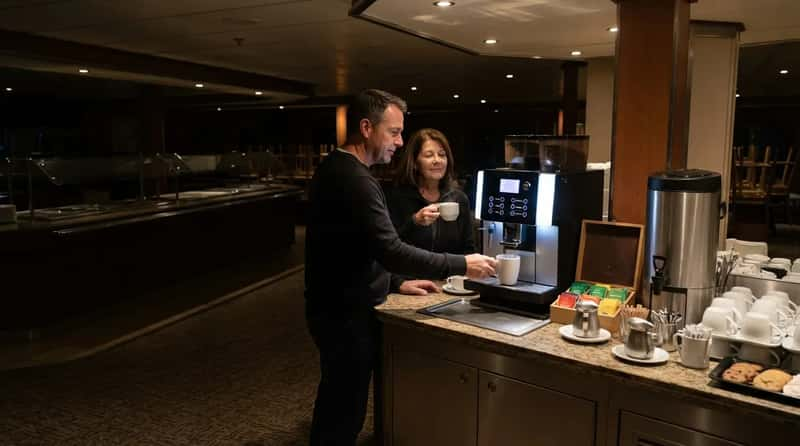
Rookies assume the buffet has strict open and close hours across the board. Veterans know the caffeine exception. Tea and coffee stations usually stay open around the clock, even when the hot food lines have long since shut down for the night.
It’s a small detail with a big payoff for early risers or jet-lagged night owls. While rookies wander the ship looking for a 3 a.m. coffee fix, veterans already know exactly which corner of the buffet stays lit and staffed no matter the hour.
#7 – They Time a Late-Night Snack Run Like Clockwork
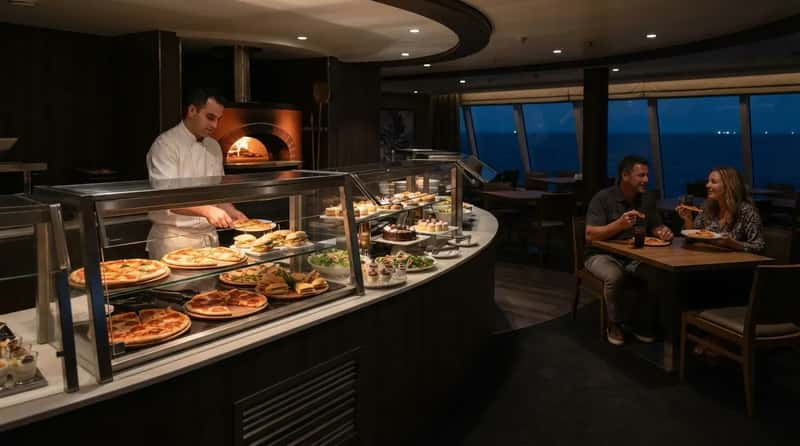
This is a habit almost exclusive to repeat cruisers. Many ships convert part of the buffet into a specialty restaurant in the evening, and some also offer a late-night snack area serving pizza, sandwiches, cakes, or other treats long after dinner service ends.
Rookies go to bed hungry after a late show, unaware anything is still open. Veterans have already scoped this out on day one and know exactly when and where to find a midnight slice – turning what feels like a hidden secret into a nightly ritual by the end of the cruise.
At a Glance
- Typical window: an hour or two after regular dinner service wraps up
- Common offerings: pizza, sandwiches, and sweets
- Smart move: scope out the location on day one so it’s not a surprise at midnight
#6 – They Never Show Up Without Shoes or a Cover-Up
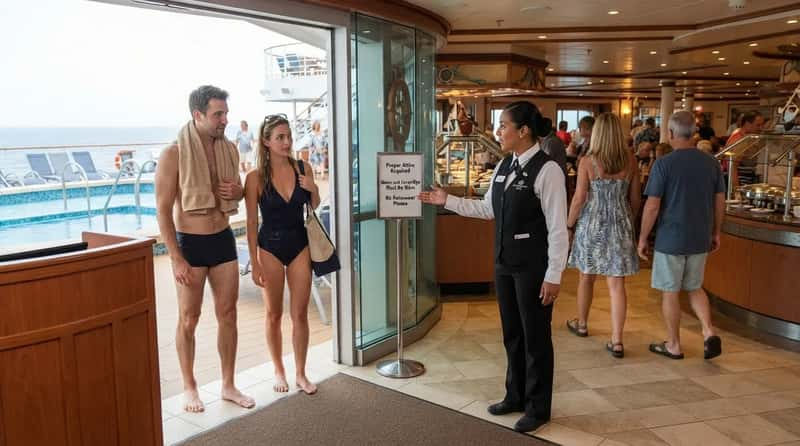
Rookies assume “casual” means anything goes, especially fresh off the pool deck. It doesn’t. Proper attire is required at buffets – shoes, cover-ups over bathing suits, and shirts for men, even during the most relaxed lunch hour of the day.
Veterans keep a cover-up or T-shirt within arm’s reach at the pool specifically for this reason. Getting turned away – or awkwardly called out – at the buffet entrance because you walked over straight from the water is a distinctly rookie experience, and one that’s completely avoidable with a five-second wardrobe check.
#5 – They Don’t Pile Plates “Just in Case”
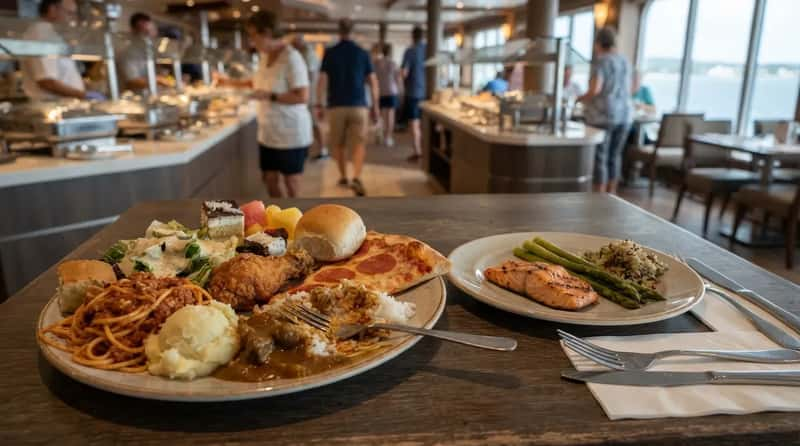
Rookies load a single plate like it’s their only trip, stacking mismatched food into a towering, half-eaten mess. Veterans know the buffet isn’t a one-shot deal – you can go back as many times as you want, so there’s no reason to gamble everything on one overloaded plate.
This habit isn’t about rules, it’s about strategy. A smaller, focused plate lets you actually taste what you grabbed instead of drowning one flavor in six others. It also means less food ends up scraped straight into the trash, something crew members quietly notice far more than passengers realize.
#4 – They Find the Quiet Corner Instead of Fighting for the Center
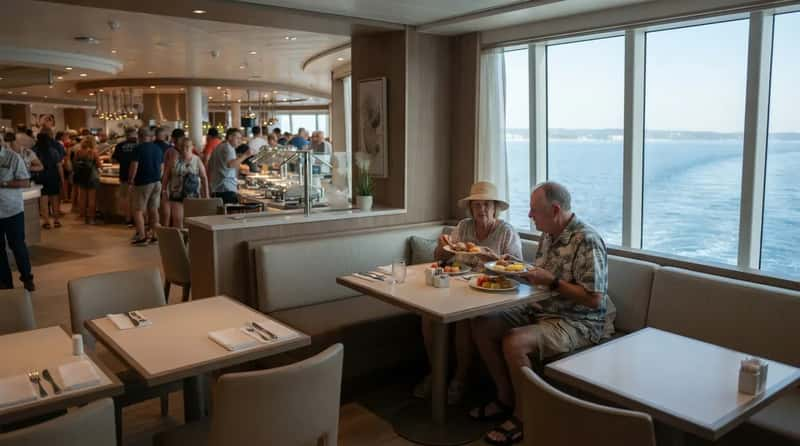
Rookies head straight for the middle of the buffet, where every other overwhelmed passenger is also aiming. Veterans peel off toward the edges instead. Heading to the far ends of the buffet area often reveals empty tables when the center sections are packed.
People searching for seats during busy periods rely on tables turning over regularly, so if you want to linger, it’s better to choose a quieter corner or return later when the rush has passed.
David Nikel, Forbes
Rookies fight the crowd and stand there fuming. Veterans just walk around it, plate in hand, already halfway to a seat.
#3 – They Ask a Crew Member the Real Schedule on Day One
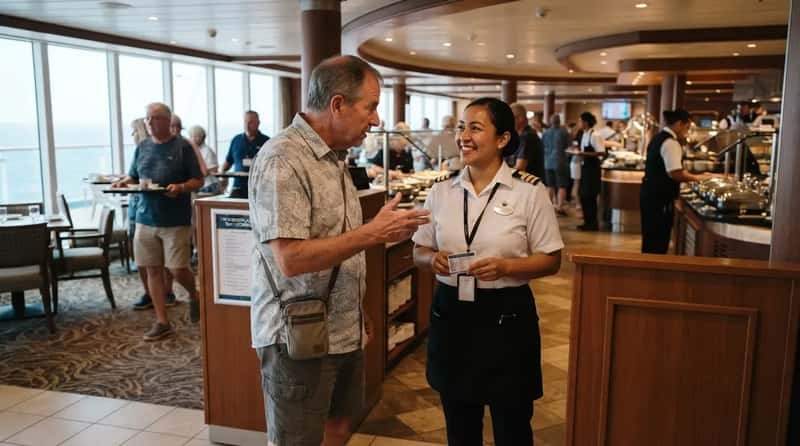
This tiny five-second conversation saves an entire week of guesswork. Talking to one of the crew members greeting guests at the buffet on the first day sets you up for the rest of the cruise, since these staff are experts on guests’ habits and know the ebbs and flows.
Rookies never think to ask, assuming every ship and every sailing behaves the same. But whether the crowd is mostly older travelers, families, or a younger party crowd changes exactly when the buffet gets busiest, so a packed 7 a.m. on one cruise doesn’t guarantee the same on the next. Veterans treat that first-day chat like insider intel, because it is.
#2 – They Recognize the Handwashing Standoff Splitting Cruisers Online
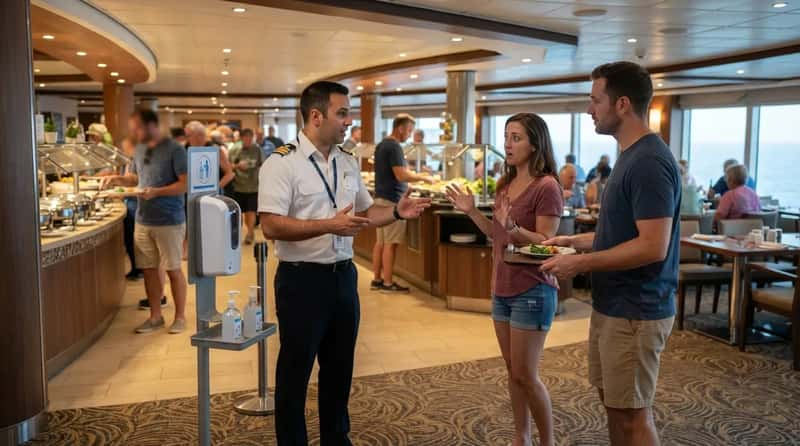
This is one of the most genuinely divisive buffet debates happening right now. On certain family cruise lines, crew members physically stop passengers from entering the buffet without sanitizing first, while other lines take a far more relaxed, unenforced approach.
One frustrated passenger wrote directly to Carnival’s brand ambassador after comparing lines: “They had workers standing at the start of the buffet line singing and dancing and telling people they could not get anything from the buffet if they did not use the hand sanitizer.” Veterans have sailed both styles and quietly pick a side – and it’s rarely a neutral opinion once you ask them about it.
#1 – They Know Exactly When the Buffet Is Actually Closing
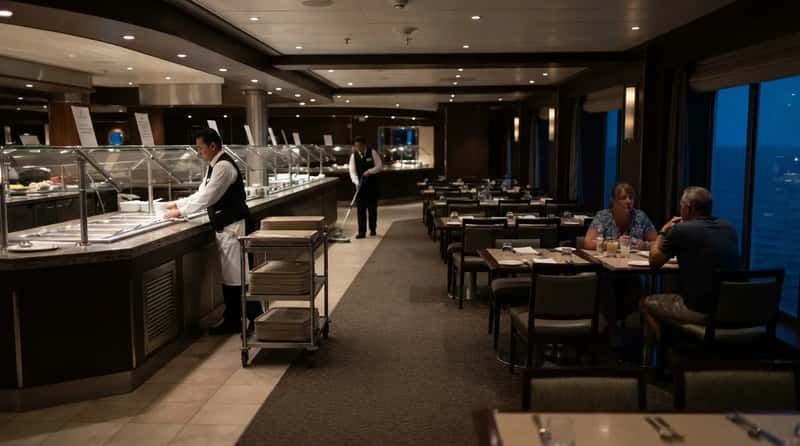
This is the habit that takes the longest to earn, and it shows the most. Once the buffet is closed, it’s time to leave – if the food trays are being removed and the serving tables wiped down, that’s the cue to find another place to unwind.
Rookies linger past this point without noticing, chatting at an empty table while staff quietly work around them. The dining room isn’t the time or place for after-dinner conversation or a relaxing game, since there are plenty of other spaces onboard for that. Veterans read the room – literally – and clear out before they become the reason the crew’s night runs long.
Worth Knowing
- Closing signal: trays disappearing and tables getting wiped down
- Lingering past that point means chatting while staff work around you
- Better spots to keep hanging out: lounges, the casino, or your own balcony
Twenty-seven habits, one common thread: the veteran cruiser isn’t smarter, just quieter about paying attention. They notice the sanitizer station, the clock, the line direction, and the empty corner table nobody else bothered to check. None of it is complicated. It’s just the kind of thing you only learn by getting it wrong once first.
Somewhere on your next cruise, you’ll spot it happening in real time – someone grabbing food bare-handed, or standing frozen with a full plate and no table in sight. That’s the moment you’ll know exactly how far you’ve come.