There’s a particular kind of irony in watching someone spend twenty minutes scrolling through five different apps trying to book a simple weekend trip, then giving up and calling their aunt’s travel agent instead. It happens more than you’d think. Somewhere between the AI itineraries, the endless comparison sites, and the algorithm-fed destination lists, a handful of travelers have started reaching backward instead of forward, and they’re not doing it out of nostalgia alone.
These habits didn’t survive by accident. Each one solves a problem that all the new technology somehow keeps recreating, whether that’s decision fatigue, information overload, or the slow realization that a phone full of photos doesn’t actually feel like a memory. Here’s a closer look at three of them.
1. Booking through a real, human travel agent

For a while it looked like travel agents were headed the way of the fax machine. Then something shifted. Travel professionals are increasingly going independent because the model finally matches how clients buy: fast, personal, and always-on.[1] Advisors who used to work out of storefronts now run their businesses from home, communicating through text and video calls, which turns out to suit a generation raised on instant replies.
The appeal isn’t really about giving up control. It’s about what a human notices that an algorithm doesn’t. As one industry piece put it, an advisor can offer something specific and contextual rather than generic, explaining that a trip “will suit you because your toddler naps at 1pm and you hate buffets.”[1] That kind of situational judgment, built from actually listening to a client, is nearly impossible to automate[1]. Data backs up the shift in priorities too: research shows 82% of Millennials and Gen Z seek experiences that become stories to share, while 73% prioritise supporting local small businesses[1], and that’s exactly the kind of nuanced planning a good advisor is built for.
2. Carrying a printed guidebook or paper map

It sounds almost defiant in 2026 to pack a paperback guidebook instead of relying on five travel apps and a chatbot. Yet plenty of people are doing it anyway, and the guidebook industry is paying attention. The revival was notable enough to get spotlighted at the International Travel Book Award ceremony, held during the Wunderwelt Festival in Friedrichshafen on November 7, 2025[2], where publishers and travelers alike reaffirmed the format’s staying power.
Part of the reason is practical, not sentimental. A printed guide never needs charging, never loses signal, and doesn’t try to upsell a tour halfway through a paragraph, which is why a proper guidebook never runs out of battery, does not care about Wi-Fi, and tells you where the nearest bus actually stops instead of trying to sell you a sponsored tour[3]. Many travelers aren’t choosing sides at all. A recent survey found that 60 percent of travelers combine both digital and print guides for planning, maximizing flexibility and preparedness[4], treating the paper copy as a backup brain rather than a relic.
3. Keeping a physical travel journal and sending postcards
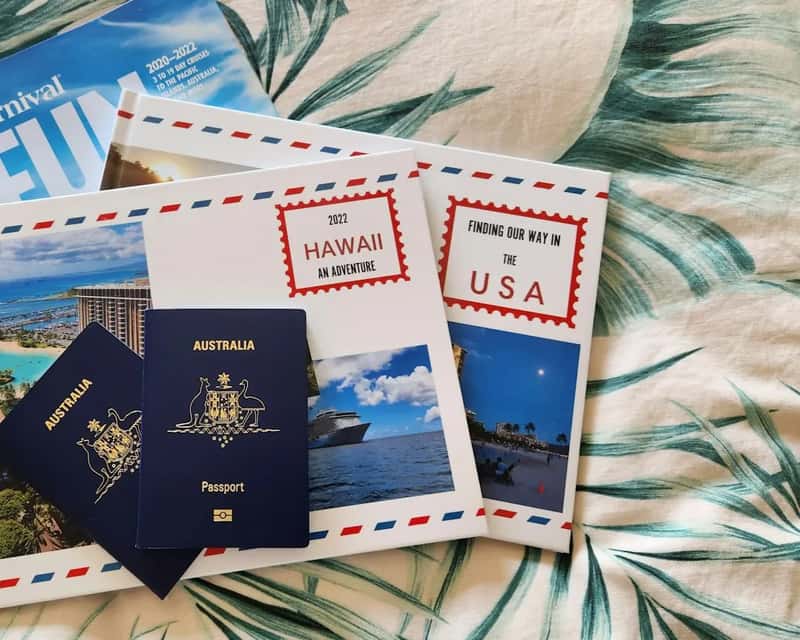
Somewhere along the way, a lot of travelers realized their phones were full of thousands of photos they never looked at again. The fix, oddly enough, has been going backward to glue and paper. Travel journaling is now noted as a genuine trend, with travelers collecting tickets, postcards and small souvenirs instead of only photos[5], and social platforms have amplified it: videos about travel journaling have gained millions of views on TikTok and Instagram under hashtags such as #traveljournal and #traveljournaling[5].
Postcards themselves never fully disappeared, and the numbers suggest they’re holding steadier than most people assume. Postcrossing, a platform built around swapping postcards internationally, reported that as of March 2026, Postcrossing had more than 805,000 members in 207 countries and territories, and over 85 million registered postcards had been exchanged[6]. What draws people back isn’t just the object itself but what it represents, since a postcard is a physical object that someone touched, chose, wrote on, and mailed[7], and that’s a kind of proof a screenshot simply can’t offer.
None of these habits are replacing the apps, the AI planners, or the instant bookings that now define most trips. They’re filling in the gaps those tools leave behind, the parts of traveling that were never really about efficiency in the first place. A guidebook that works without Wi-Fi, an advisor who remembers your kid naps at one, a notebook page smudged with a café receipt, these are small, stubborn reminders that some parts of travel were never broken to begin with.