Step off a plane in certain capitals around the world and the first thing you notice isn’t a language barrier or a currency exchange booth. It’s the realization that almost everyone around you, from the taxi driver to the office worker next to you at lunch, came from somewhere else. In a handful of countries, this isn’t a passing impression but a demographic reality, one where the people who call a city home were, statistically speaking, born somewhere entirely different.
The countries on this list didn’t end up this way by accident. Oil wealth, financial services, and decades of deliberate labor recruitment have reshaped who actually lives in these places day to day. What follows is a look at five nations where, in their most important urban centers, immigrants and foreign residents now outnumber people born within the country’s own borders.
United Arab Emirates: Dubai’s Population Is Overwhelmingly Foreign
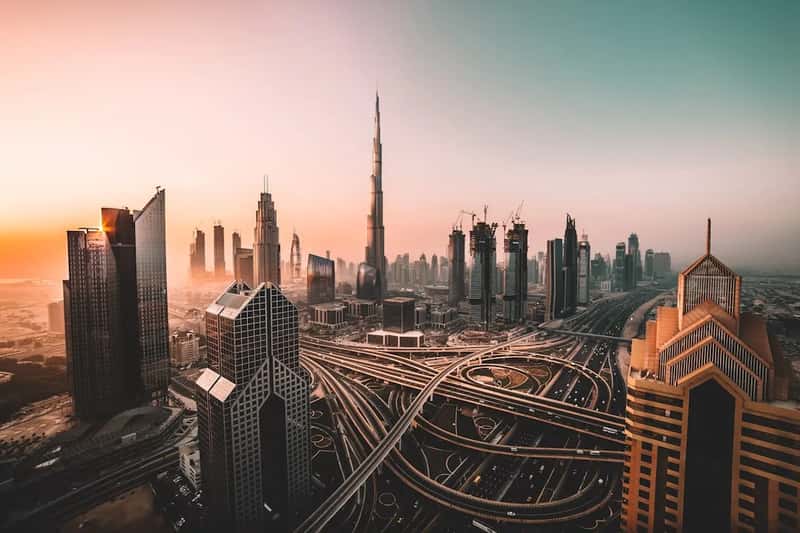
Few places on earth illustrate this shift as starkly as Dubai. Expatriates in the United Arab Emirates represent about 89% of the population, while Emiratis constitute roughly 11% of the total population, making the UAE home to the world’s highest percentage of expatriates after Vatican City. The country’s overall population reflects this trend clearly, since the UAE reached 11.3 million people in 2024, marking a 5.7% increase over the prior year, growth driven almost entirely by incoming workers rather than births.
Dubai itself has become the clearest example of this pattern in action. On 8 September 2025, Dubai’s population surpassed 4 million for the first time, reaching 4,006,656 residents, according to the Population Clock by Dubai Statistics Centre. Indian nationals make up the single largest community, with the Indian community in the UAE estimated at nearly 4.39 million people, accounting for approximately 37.96% of the country’s total population in recent estimates, followed closely by Pakistani, Bangladeshi, and Filipino workers who form the backbone of Dubai’s construction, hospitality, and retail sectors.
Qatar: Doha and a Country Built Largely by Outsiders
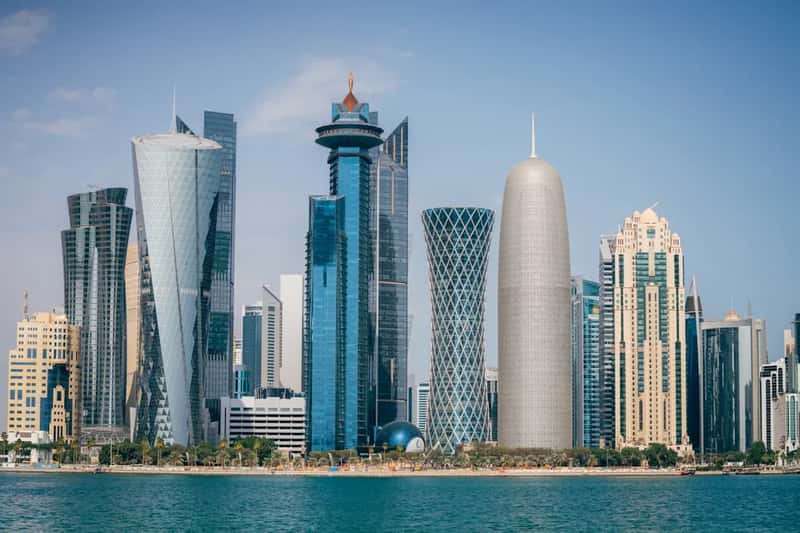
Qatar’s demographic makeup rivals its Gulf neighbors in how thoroughly foreign labor dominates the population count. Foreigners constitute 85% to 90% of Qatar’s population, with migrant workers making up approximately 95% of the workforce. The country’s overall headcount continues climbing too, with the current population of Qatar standing at roughly 3.19 million as of mid 2026, according to United Nations based estimates.
Doha, the capital and undisputed economic center, absorbs the largest share of this expatriate influx. Indians make up 21.8% of Qatar’s total population, solidifying their status as the largest expatriate group in the country, with large Bangladeshi and Nepali communities close behind. Qatari citizens, meanwhile, remain a small minority in their own capital, concentrated mostly in government roles rather than the private sector jobs that keep the city running.
Kuwait: Kuwait City’s Workforce Runs on Expatriate Labor
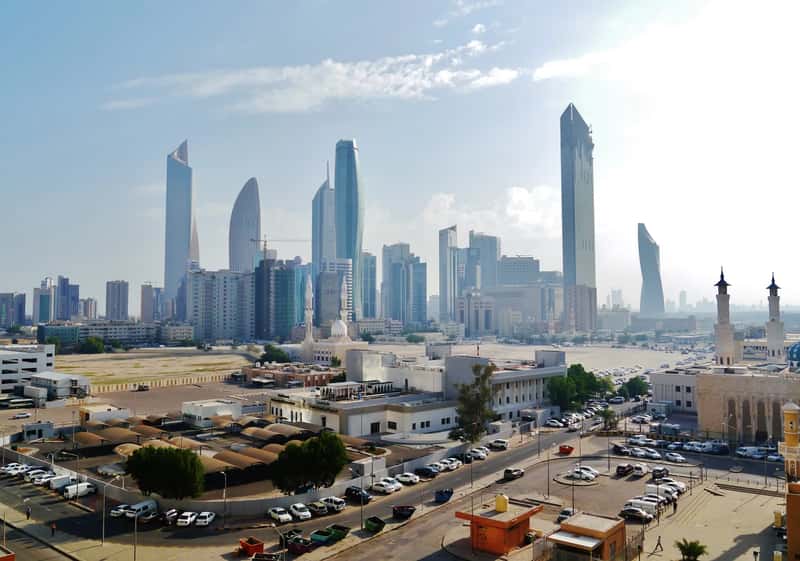
Kuwait presents a slightly less extreme but still striking case of citizens being outnumbered at home. The country’s total population stood at 4,987,826 as of December 2024, of which only 1,567,983 were Kuwaiti citizens, while non-Kuwaitis numbered 3,419,843, representing approximately 68.6 percent of the total population. That means roughly seven in ten people living in the country hold a foreign passport rather than a Kuwaiti one.
This imbalance is felt most directly in Kuwait City, since most of the country’s expatriates reside in the capital of Kuwait City and its surrounding suburbs. Indians form the largest expatriate group, numbering over 1 million, followed by Egyptians at 657,280, and together these two nationalities account for nearly half of all foreign residents. The labor market split reinforces the divide further, as Kuwaitis make up 78 percent of the public sector workforce, but their presence in the private sector remains minimal at just 4 percent, compared to 96 percent for non-Kuwaitis.
Luxembourg: A European Capital Where Foreign-Born Residents Are the Majority
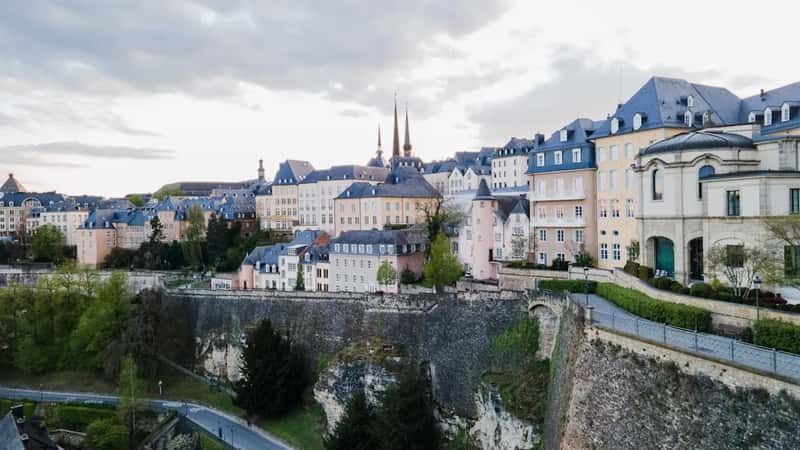
Luxembourg offers a very different picture from the Gulf states, yet the outcome looks similar when you focus on its capital. On 2024 International Migrants Day, the OECD released a report unveiling that 51.2% of Luxembourg’s population is foreign-born, making it the first OECD country to cross that threshold nationally. With nearly 691,000 residents and continued population growth, the small Grand Duchy has quietly become one of Europe’s most internationally composed nations.
The gap widens considerably once you narrow the focus to Luxembourg City itself. Most inhabitants of Luxembourg’s rural areas were born in the country, while more than two thirds of the inhabitants of the urban centre were born abroad. Portuguese nationals form the single largest foreign community, since the largest group of foreign nationals in Luxembourg were the Portuguese, who numbered nearly 94 thousand, followed by the French and the Italian, a mix that gives the capital’s streets, cafes, and workplaces a distinctly multilingual character.
Monaco: A Principality Where Locals Are a Minority at Home

Monaco is a special case simply because the entire country functions as one dense urban center, so there is no separating “the city” from “the nation.” Long standing demographic patterns show that native Monegasques have made up only a small fraction of the principality’s residents for decades, a situation shaped by Monaco’s tiny land area, its tax status, and its appeal to wealthy foreign residents and workers from neighboring France and Italy. French nationals have consistently formed the largest single group living in Monaco, followed by Italians, with Monegasques trailing behind both groups in raw numbers despite giving the country its name and government.
This isn’t a recent phenomenon tied to any particular economic boom, but rather a structural feature of how Monaco has operated for generations. Thousands of additional workers also commute in daily from French towns just across the border to staff Monaco’s hotels, casinos, and financial firms, further tilting the daytime population even more heavily toward non-citizens. The result is a principality where hearing Monegasque spoken natively on the street is far rarer than hearing French or Italian, even steps from the royal palace.
Taken together, these five places show that a country’s population figures and its capital’s daily life can tell very different stories. Oil economies in the Gulf built their cities on imported labor almost from the start, while Luxembourg and Monaco arrived at similar outcomes through finance, tax policy, and sheer geographic smallness. Either way, walking through Dubai, Doha, Kuwait City, Luxembourg City, or Monaco means spending your day surrounded mostly by people who, like the city itself in some sense, came from somewhere else.