Missing a connecting flight ranks among the most gut-wrenching moments in travel. One minute you’re strolling off a plane feeling accomplished, the next you’re sprinting through a terminal watching the departure board flip to “Gate Closed.” The frustrating part is that most missed connections aren’t random bad luck. They trace back to a handful of predictable, avoidable decisions made weeks or even months before departure day.
From booking habits to packing choices, small errors compound quickly when you’re navigating a tight window between flights. Below are seven of the most common mistakes that trip up even experienced travelers, along with the reasoning behind why they matter so much in 2026’s crowded, delay-prone airports.
1. Booking Separate Tickets to Save a Few Dollars
Splitting an itinerary across two separate bookings, sometimes called self-transferring, can shave money off a fare, but it strips away nearly every protection you’d normally get. On a self-transfer with separate tickets, minimum connection time does not apply, since you collect bags, re-check in and re-clear security, so you should allow three to four hours or more.[1] That’s a dramatically different risk profile than a single through-ticket itinerary.
The real danger shows up when things go wrong. If you miss a connection on a single ticket because of an airline delay, the airline rebooks you free, and EU261 cash compensation may apply, but if you miss it on separate tickets, the cost is yours to bear.[1] Airlines treat the two bookings as entirely unrelated journeys, so a late arrival on flight one becomes your problem alone, not theirs.
2. Trusting the Bare Minimum Connection Time
Every airport publishes an official minimum connection time, or MCT, and it’s tempting to book exactly that window to maximize time at your destination. That instinct backfires often. A 30-minute delay on your incoming flight causes roughly 40 percent of passengers to miss their connection, according to an EU academic study, which is why experts advise always booking more than the bare minimum.[2] The official number assumes perfect conditions that rarely materialize.
Airports themselves are quietly acknowledging this problem. British Airways raised its minimum connection time at Heathrow Terminal 5 from 60 to 75 minutes in 2024, citing high passenger volumes as the primary driver of missed connections.[3] If the airlines are padding their own official numbers, that’s a strong signal travelers should do the same when building their itineraries.
3. Ignoring How Risky Your Specific Hub Really Is

Not all airports carry equal connection risk, yet many travelers book layovers without checking whether their hub has a reputation for chaos. Dallas/Fort Worth ranks as the second riskiest airport in the world for missed connections, with an AirHelp risk score of 4.03 out of 10 as of May 2026, while Frankfurt ranks third at 4.05.[2] These scores aren’t arbitrary; they reflect real operational patterns.
Chicago’s O’Hare deserves particular caution too. Roughly 19 percent of O’Hare flights are delayed 30 minutes or more during peak periods.[4] Meanwhile, sprawling international hubs bring their own complications. Bergamo, Dallas/Fort Worth, Frankfurt, São Paulo Guarulhos, and Philadelphia all feature at the top of the missed-connections list, since these are major international hubs where travelers frequently connect between flights.[5] A little research into your specific airport before booking can save enormous stress later.
4. Checking a Bag on a Tight Layover

Checked luggage feels convenient until it becomes the reason you’re stuck overnight in an unfamiliar city. A flight attendant interviewed on the subject put it plainly: checking a bag adds real risk when connections are tight, because checking luggage adds extra risk, since if your connection is tight, a checked bag can slow you down, and if you booked flights on different airlines, your bag might not transfer at all.[6] Even when you make the flight yourself, your suitcase might not.
This becomes even more pronounced with separate-ticket itineraries. On a single booking reference, bags are usually checked through to your final destination and you don’t need to collect luggage, but that protection disappears once you’re managing two independent tickets.[7] If your connection window is under two hours, carrying on your bag whenever possible removes one major point of failure.
5. Skipping Morning Flights for a “Better” Schedule

Booking an afternoon or evening departure often looks more appealing on paper, letting you sleep in or finish errands first. Unfortunately, that convenience comes with a hidden cost. Skipping early morning flights can cost travelers more than they think, since morning departures usually have the fewest delays because planes and crews are starting fresh and aren’t affected by problems from earlier in the day.[6] Delays cascade throughout the day, and by evening, minor morning hiccups have often snowballed into hour-long setbacks.
Seasonal timing matters just as much as time of day. July is statistically the riskiest month to book a tight connection, with only about 68 percent of US flights arriving on time in July 2024, while October is the safest at around 86 percent.[2] If your travel dates are flexible, avoiding peak summer congestion can meaningfully lower your odds of a missed connection.
6. Overlooking Immigration and Customs Time on International Routes
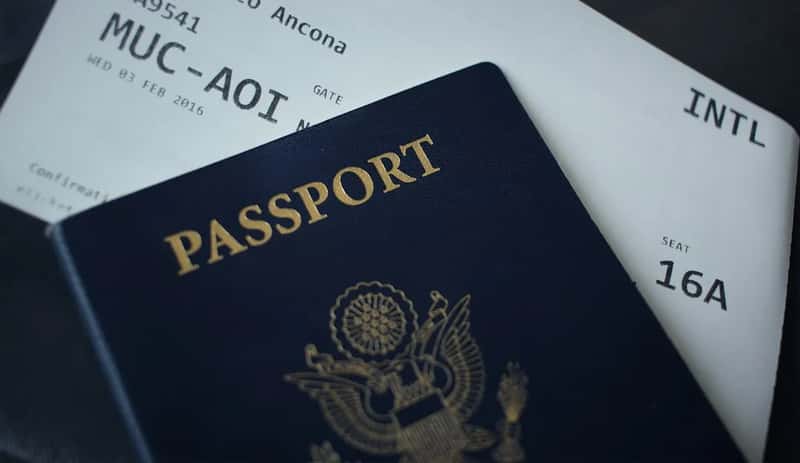
Domestic connections and international connections are simply not comparable in terms of required buffer time, yet travelers frequently apply the same mental math to both. For international-to-domestic connections, experts recommend allowing two and a half to three hours to account for immigration, customs, and re-screening.[8] Skipping that math is one of the fastest ways to watch a connecting flight leave without you.
Passport control lines vary wildly depending on nationality and destination, and that unpredictability is exactly the problem. Common reasons travelers miss flights include delays at security, and depending on your nationality and the place you’re visiting, immigration can take time and be a serious headache.[9] A traveler holding a passport that requires extra screening should build in noticeably more cushion than official minimums suggest.
7. Assuming Technology Will Save You
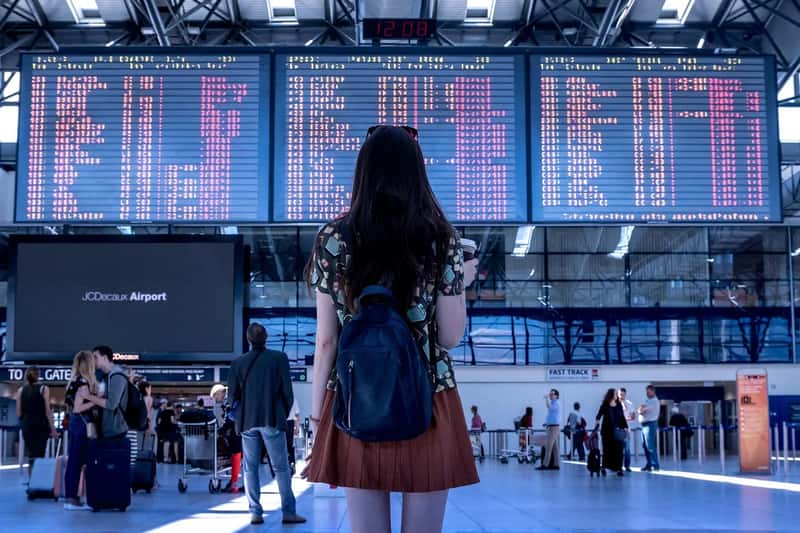
Airport apps, gate notifications, and GPS directions are genuinely useful, but leaning on them exclusively creates a false sense of security. While smartphones and digital navigation tools have revolutionised travel, over-reliance on technology can sometimes backfire, since relying solely on GPS navigation or airline apps without a backup plan in case of technical glitches or battery failures can lead to confusion and missed connections.[10] A dead phone battery or a glitchy app at the wrong moment can turn a comfortable layover into a frantic dash.
Communication breakdowns compound the problem further. Effective communication is paramount in air travel, yet misunderstandings can occur at various junctures, from misinterpreting flight times due to time zone differences to confusion regarding terminal changes or gate assignments.[10] Glancing at a physical departure board occasionally, confirming gate numbers with staff, and keeping a printed itinerary as backup are old-fashioned habits that still pay off.
None of these mistakes are exotic or hard to avoid once you know to look for them. The common thread running through all seven is a simple willingness to build in more buffer than feels strictly necessary, whether that means paying slightly more for a through-ticket, choosing a morning departure, or carrying your bag instead of checking it. Airports in 2026 are busier and less forgiving than they were even a few years ago, and the itineraries that used to work with minimal padding often don’t anymore. A little extra planning at the booking stage remains the cheapest insurance policy against a ruined trip.