For years, certain cities and islands sat comfortably atop everyone’s travel wish list. Now the mood on the ground has shifted, and the numbers back it up. Housing prices have spiked, protests have turned physical, and local governments are quietly rewriting the rules for visitors, sometimes even discouraging them altogether.
This isn’t about fear-mongering or telling people to cancel their trips. It’s about paying attention to what residents, statistics agencies, and tourism boards are actually reporting in 2025 and 2026. Below are seven destinations where the data, not just anecdotes, shows a place under real strain.
1. Barcelona, Spain

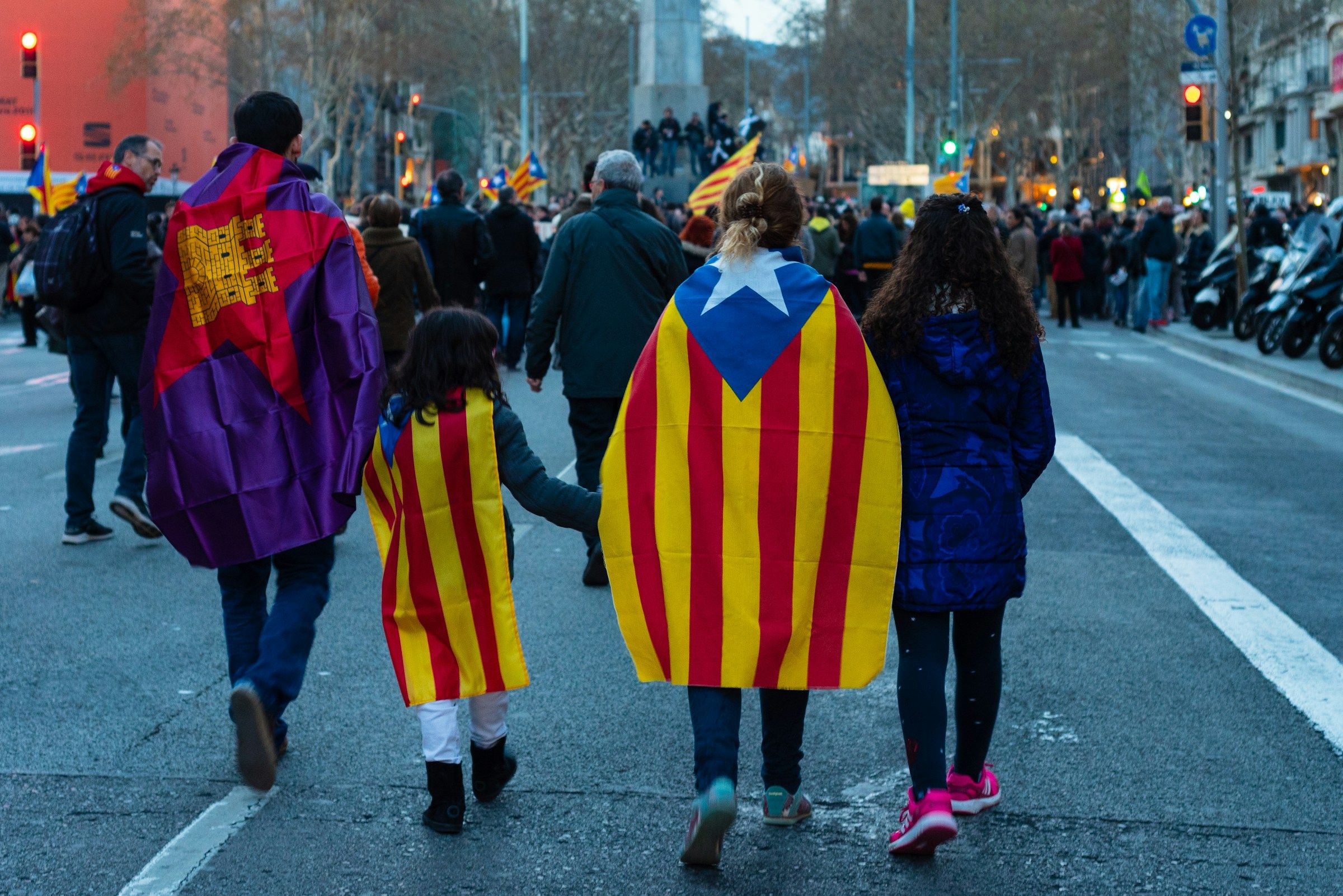
Barcelona has become the poster child for overtourism fatigue, and the images from the past two summers explain why. In the summer of 2024, locals in Barcelona ramped up their protest, with thousands gathering to chant “tourists go home.”[1] The anger did not fade with a change of season, either. Protesters used water pistols against unsuspecting tourists in Barcelona and on the Spanish island of Mallorca in June 2025 as demonstrators marched to demand a rethink of an economic model they believe is fueling a housing crunch.[1]
The frustration traces back to affordability more than anything else. Local authorities say the cost of housing has risen 68% in the Spanish city over the past decade, becoming one of the main points of contention for the disgruntled residents.[2] With Barcelona attracting over 15 million tourists a year[1], the city has started acting on the pressure, announcing it will close two of its seven cruise terminals from 2026[3], while daytripper fees have also expanded, since in 2026, daytrippers are required to pay from Friday to Sunday across April, May, June, and July, which marks an increase from the 54 days during which the fee was applied in 2025.[1]
2. Venice, Italy
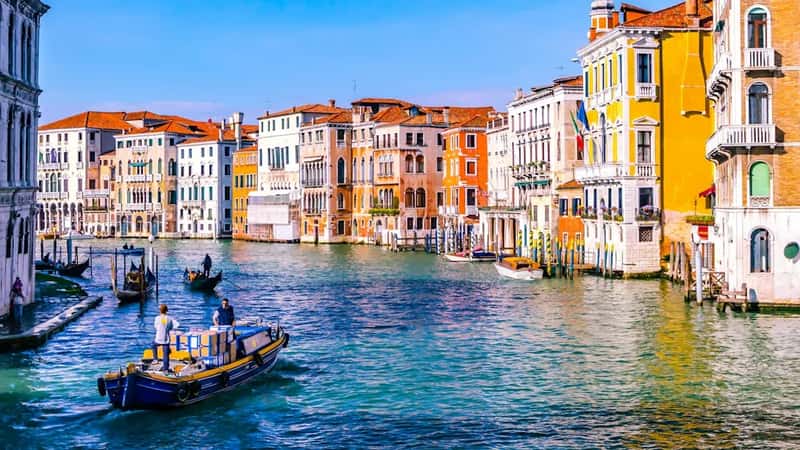
Venice was arguably the first city to prove that a place could be loved to death, and it’s still fighting to reverse the damage. The city has kept its entry-fee system in place for a second year, since Venice is keeping its summer tourist entry tax, introduced in 2024, reducing outdoor dining in Florence, and reducing its ski passes in the Dolomites[4] as part of a broader Italian effort to manage crowds. The lagoon city was also one of the first to ban large cruise ships from its historic center, a decision that produced measurable environmental gains.
Officials pointed to Venice as proof that restrictions can actually work, noting that sulfur emissions have fallen by 80 percent[5] since large ships were rerouted away from the city center. Other European capitals have since studied Venice’s playbook closely, using it as a template for their own cruise limits. Still, day-tripper crowds around Saint Mark’s Square remain intense during peak season, and locals continue to warn that a shrinking full-time population and a city increasingly built around short stays is not a sustainable trade.
3. Amsterdam, Netherlands
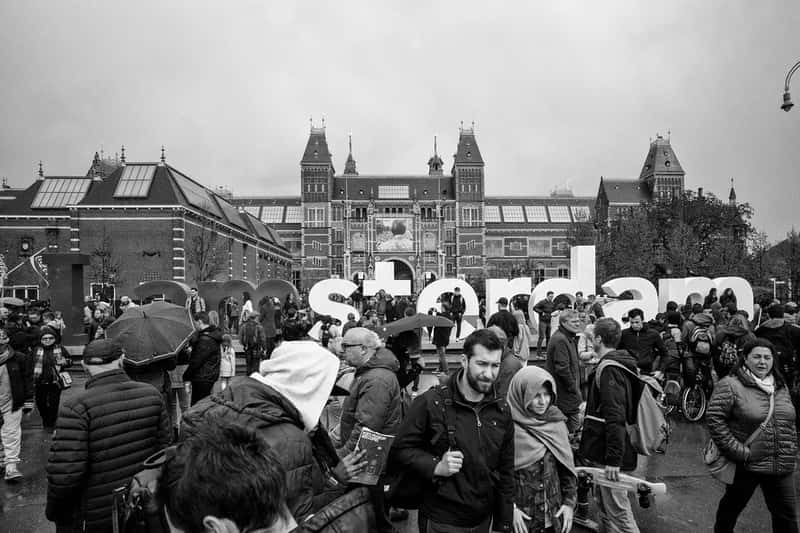
Amsterdam has spent the past few years trying to shed its reputation as a party destination, and the city has been remarkably blunt about it. Officials launched what became known as the “Stay Away” campaign as part of its efforts to discourage travelers from tainting Amsterdam with their “nuisance,” as Deputy Mayor Sofyan Mbarki put it.[6] The campaign initially targeted young British men, but the broader message was aimed at anyone planning to misbehave.
The numbers explain the urgency. Tourist arrivals climbed from 12.6 million in 2019 to 15.1 million in 2023[7], a spike that overwhelmed public transport and narrow historic streets. In response, the city plans to limit cruise ships in its harbor to 100 by 2026 and ban them by 2035 to combat overtourism and pollution[8], on top of a ban on new hotel construction and tighter rules around cannabis use in public. Starting this year, the squeeze got financial too, as the Dutch national VAT rate on hotel accommodation jumped from 9 percent to 21 percent[9] on January 1, 2026, hitting a city that already charges Europe’s steepest local tourist tax.
4. The Canary Islands, Spain

The Canary Islands have gone from a quiet winter-sun escape to one of the loudest overtourism flashpoints in Europe. The numbers alone are staggering for an archipelago this size, since the Canary Islands received 7.8 million visitors in the first half of 2025 alone, with protests multiplying as locals chant “Canarias tiene un límite”[2], meaning “the Canaries have a limit.” That chant has spread across the islands as a genuine rallying cry rather than a fringe slogan.
What makes the Canary Islands situation notable is that the anger isn’t really about visitor volume in isolation. Locals argue overtourism is putting a strain on housing, ecosystems, and local life[2], and residents increasingly frame the issue as one of who actually benefits from the tourism boom. Marches have grown larger and more coordinated each year, drawing attention from national Spanish media and prompting regional officials to at least discuss caps on rental car numbers and new hotel permits, even if binding limits remain rare.
5. Mallorca and the Balearic Islands, Spain

Mallorca has become a case study in what happens when a destination tries to physically cap its own popularity. The island capped cruise ship arrivals years ago, and Palma has gone further still, since it banned short-term rental apartments and Airbnbs in city-center residential buildings and has set a cap of 12,000 hotel beds: for a new hotel to open, another must close.[3] The city has even built a dedicated fund to shrink its own hotel stock, having built up a 50-million-euro fund to buy and remove outdated hotels from circulation, typically cheaper properties that tend to attract budget tourists.[3]
The frustration boiled into the streets in mid-2025, when protesters used water pistols against unsuspecting tourists in Barcelona and on the Spanish island of Mallorca in June 2025 as demonstrators marched to demand a rethink of an economic model[1] they blame for pricing out locals. Organizers hung notices with blunt messaging, since stickers reading “One more tourist, one less resident” and notices saying “Citizen Self-Defense” and “Tourist Go Home”[1] appeared on hotel and hostel doors across the archipelago. It’s a striking shift for islands long marketed purely as a beach paradise.
6. Bali, Indonesia
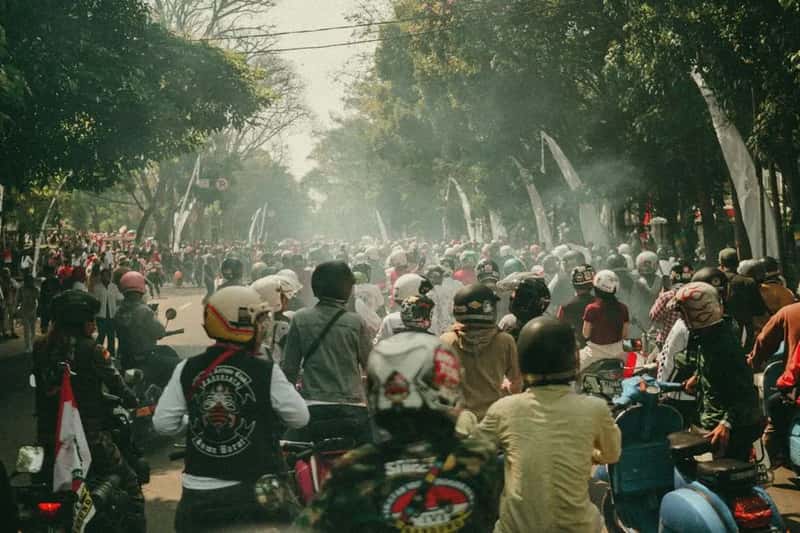
Bali’s tourism recovery since the pandemic has been so strong that it’s now creating its own backlash. The island welcomed approximately 6.94 million foreign visitors in 2025, an increase of 9.72 percent compared to the previous year[10], numbers that have strained roads, water supplies, and patience in equal measure. Authorities have responded with an unusually aggressive enforcement push, and in just the first half of 2026, Bali immigration authorities deported 342 foreigners, mainly for visa overstays or misuse, while also targeting breaches of local customs and public-order rules.[11]
Officials insist the crackdown targets misbehavior rather than tourists as a whole, and the shift in language reflects that. Indonesian officials are now promoting “quality tourism,” with stronger enforcement against visitors who breach immigration rules or disrespect Balinese culture[11], and the province has even launched a public hotline for reporting foreign violations. Combined with earlier restrictions like the motorbike rental ban for tourists, the message is clear: Bali still wants visitors, but it’s done tolerating chaos in exchange for their money.
7. Jamaica
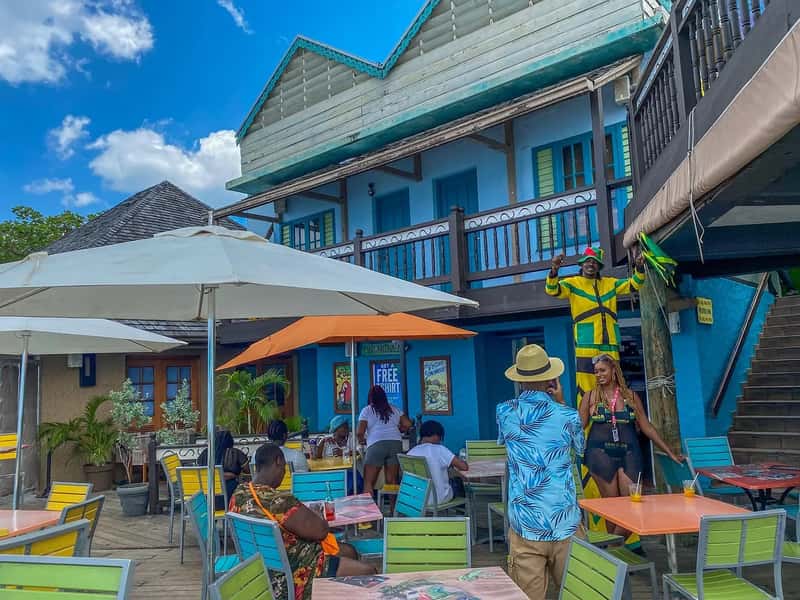
Jamaica’s situation looks different from the European protest movements, but the data tells an equally cautionary story. The country’s safety picture has been genuinely unstable, and the State Department lowered Jamaica’s advisory level to Level 2: Exercise Increased Caution on January 17, 2026, citing crime, health, and natural disaster risks[12], a downgrade that followed an earlier upgrade to Level 3 after a spike in violence[12] just months prior.
The underlying numbers explain why caution persists even after the improvement. The advisory notes that while violent crime in Jamaica has decreased since 2024, it remains statistically high throughout the country, with tourist areas generally seeing lower rates of violent crime than other parts of the country, and the homicide rate reported by the Jamaican government among the highest in the Western Hemisphere.[12] Resort corridors around Montego Bay and Negril remain largely insulated from the worst of it, but the back-and-forth advisory status over the past year shows just how quickly the calculus can change for travelers weighing a trip.
None of this means these places have stopped being worth visiting. Millions of people still land in Barcelona, Venice, Amsterdam, the Canaries, Mallorca, Bali, and Jamaica every year and come home with great memories. What’s changed is the margin for error. Governments are tightening rules, residents are speaking up louder, and the easy, no-questions-asked version of mass tourism that defined the last decade is fading fast.
The smarter move for travelers isn’t necessarily crossing these destinations off a list. It’s arriving with more awareness, spending in ways that actually support local communities, and checking current advisories and local rules before booking rather than after. The data suggests that the places most worth watching aren’t necessarily the dangerous ones, but the ones quietly running out of patience.